
Похожие презентации:



Famous People
1.
Famous Peoplethe work was done by
Tarakanov Dima
8b
2.
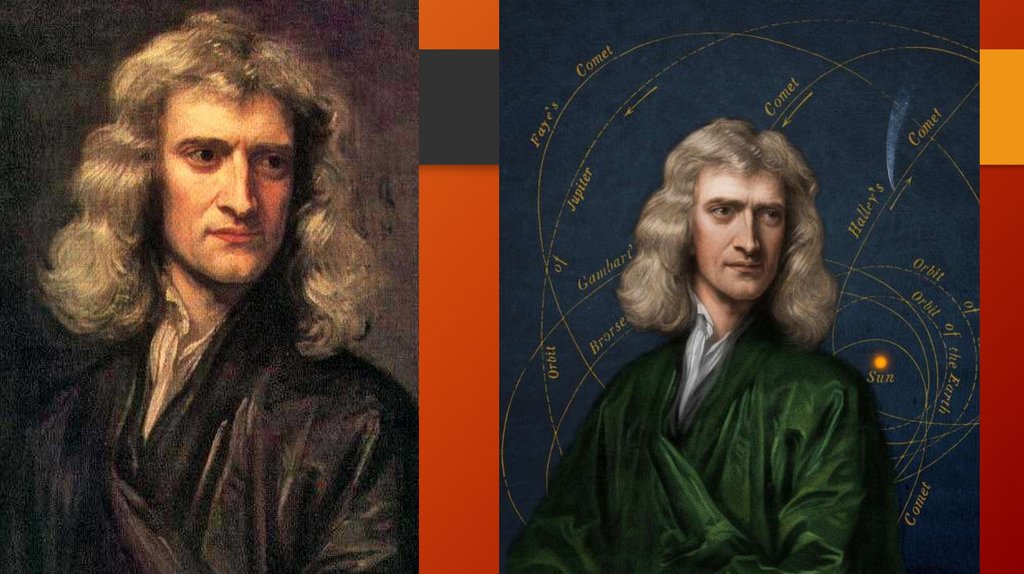
Isaac Newton• Sir Isaac Newtonˈ— English, mathematician, mechanic and astronomer, one of the
founders of classical physics. The author of "Mathematical principles of natural
philosophy", in which he outlined the law of universal gravitation and the three laws
of mechanics, which became the basis of classical mechanics. He developed the
theory of color, laid the foundations of modern physical optics, and created many
other mathematical and physical theories.Member and President of the Royal society
of London.
3.
4.
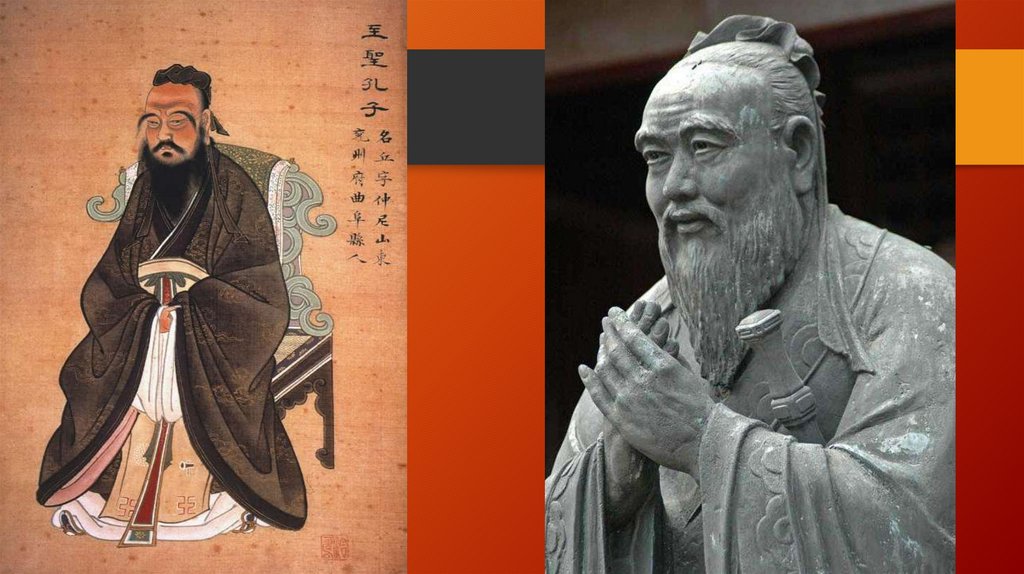
Confucius• Confucius is an ancient thinker and philosopher of China. His teachings had a
profound impact on the life of China and East Asia, becoming the basis of the
philosophical system known as Confucianism. Confucius founded the first University
and systematized the Chronicles compiled in various principalities. The teachings of
Confucius on the rules of conduct for princes, officials, soldiers, and peasants were
as widely spread in China as the teachings of the Buddha were in India. The real
name is kun Qiu 孔丘, but in literature it is often referred to as kun-Tzu, kun fu-Tzu,
or simply Tzu - "teacher". Already at the age of a little more than 20 years, he
became famous as the first professional teacher of the middle Kingdom.Before the
victory of legism, the school of Confucius was only one of many directions in the
intellectual life of the Warring kingdoms, during the period known as the Hundred
schools. It was only after the fall of Qin that the revived Confucianism reached the
status of state ideology, which remained until the beginning of the twentieth
century, only temporarily giving way to Buddhism and Taoism. This led to the
exaltation of the figure of Confucius and its inclusion in the religious Pantheon.
5.
6.
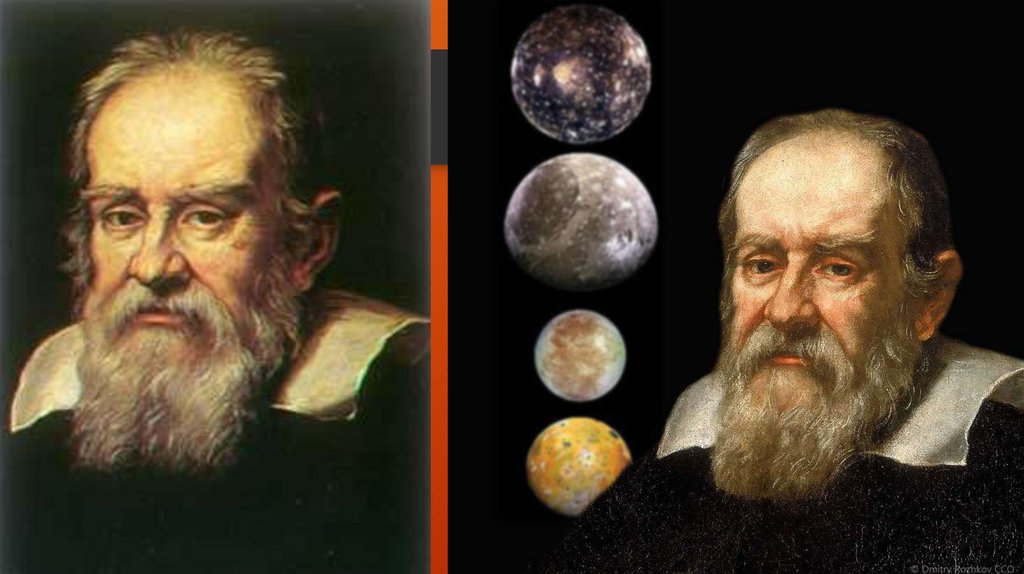
Galileo Galilei• Galileo Galilei was an Italian physicist, mechanic, astronomer, philosopher, and
mathematician who greatly influenced the science of his time. He was one of the
first to use a telescope to observe celestial bodies and made a number of
astronomical discoveries. Galileo is the founder of experimental physics. With his
experiments, he refuted the metaphysics of Aristotle and laid the Foundation of
classical mechanics.
7.
8.
George Washington• George Washington — the first President of the United States of America, one of the
founders of the United States, a participant in the war of independence and the
Creator of the American Institute of the presidency.Washington was elected President
of the constitutional Convention that drafted the United States Constitution in 1787.
In 1789, George Washington was unanimously elected the first President of the
United States, and in 1792, he was re-elected for a second term. As head of state, he
helped strengthen the Union, implement the principles of the Constitution, and build
the capital of the United States. He was involved in the formation of Central
government bodies and the management system. Maintained friendly relations with
Congress. In 1794, he suppressed the first revolt against state power in the history of
the United States. In foreign policy, he avoided interfering in the Affairs of European
States. Refused to run for the presidency for a third time.Congress gave Washington
the title of Father of the Fatherland. During the strained relations with France in the
summer of 1798, Washington was symbolically appointed commander-in-chief of the
army.