Похожие презентации:




Psychology’s Big Issues & Approaches
1. Psychology’s Big Issues & Approaches
Psychology’sBig Issues
&
Approaches
2. Philosophical Developments
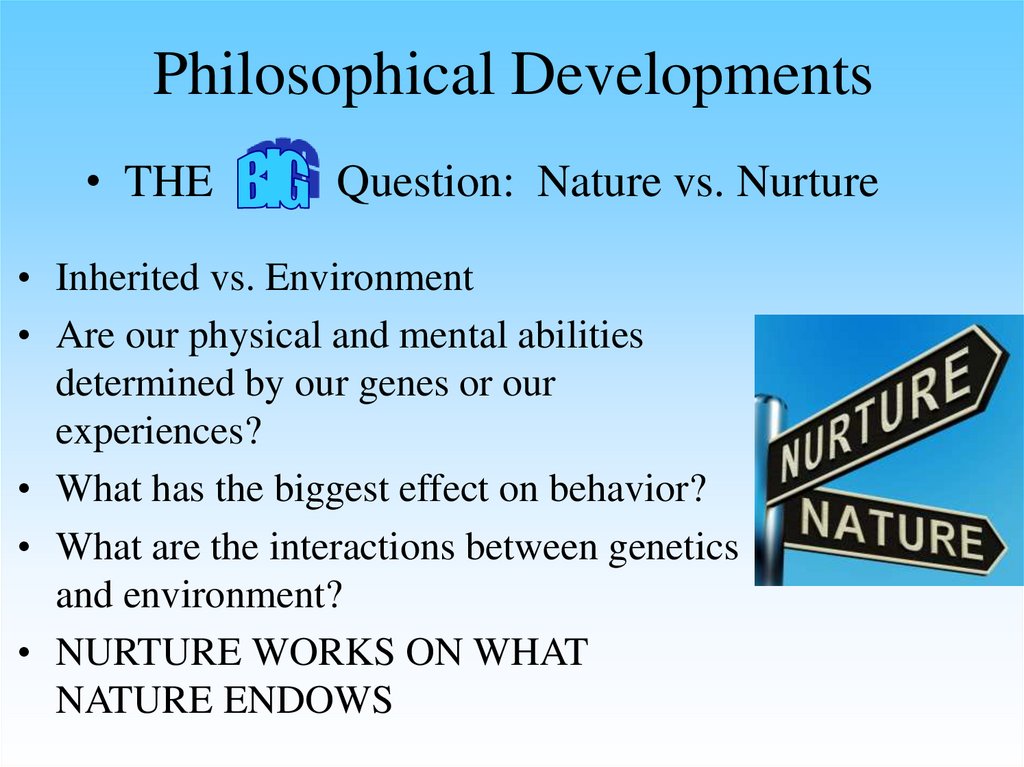
• THEQuestion: Nature vs. Nurture
• Inherited vs. Environment
• Are our physical and mental abilities
determined by our genes or our
experiences?
• What has the biggest effect on behavior?
• What are the interactions between genetics
and environment?
• NURTURE WORKS ON WHAT
NATURE ENDOWS
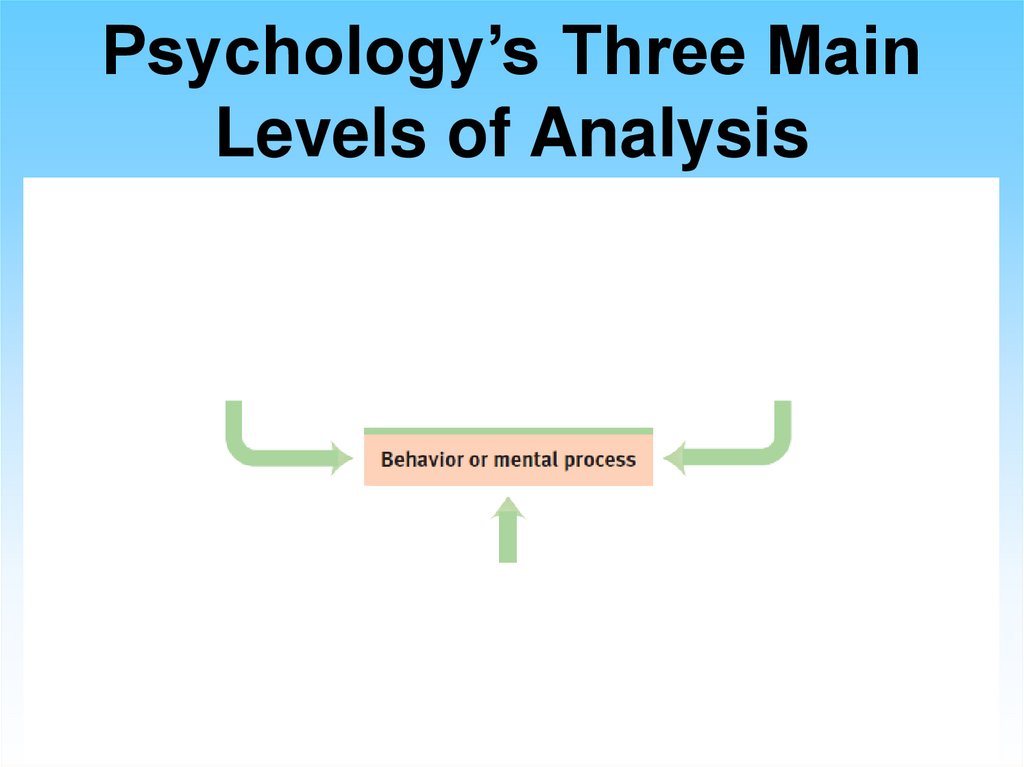
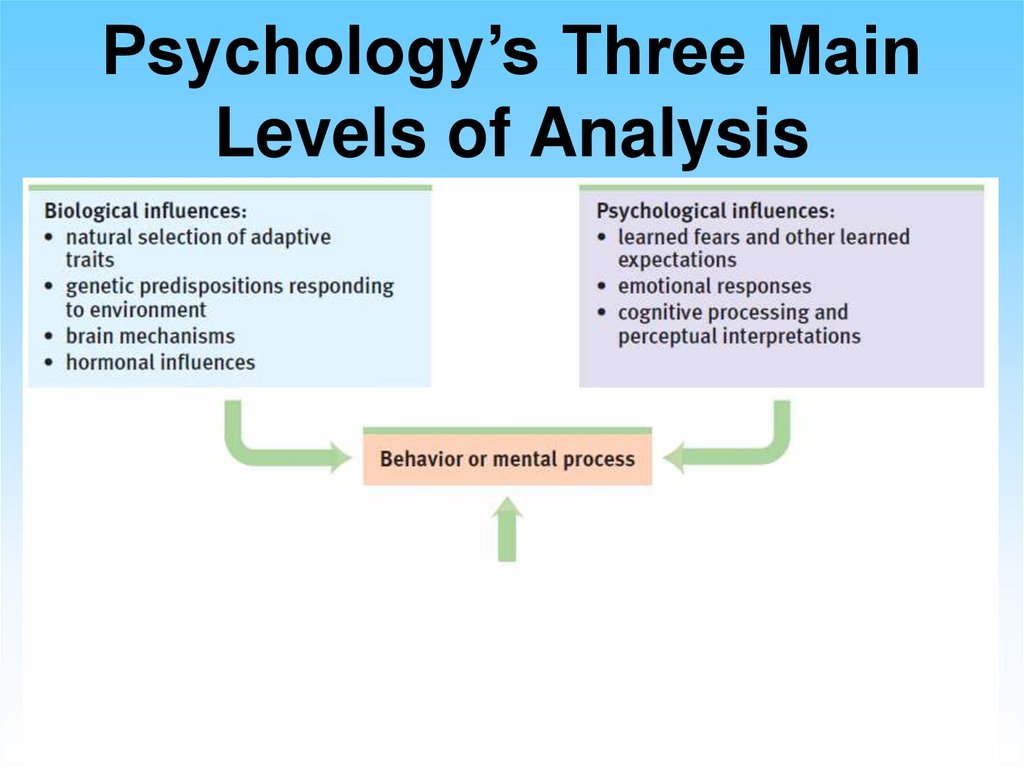
3. Psychology’s Three Main Levels of Analysis
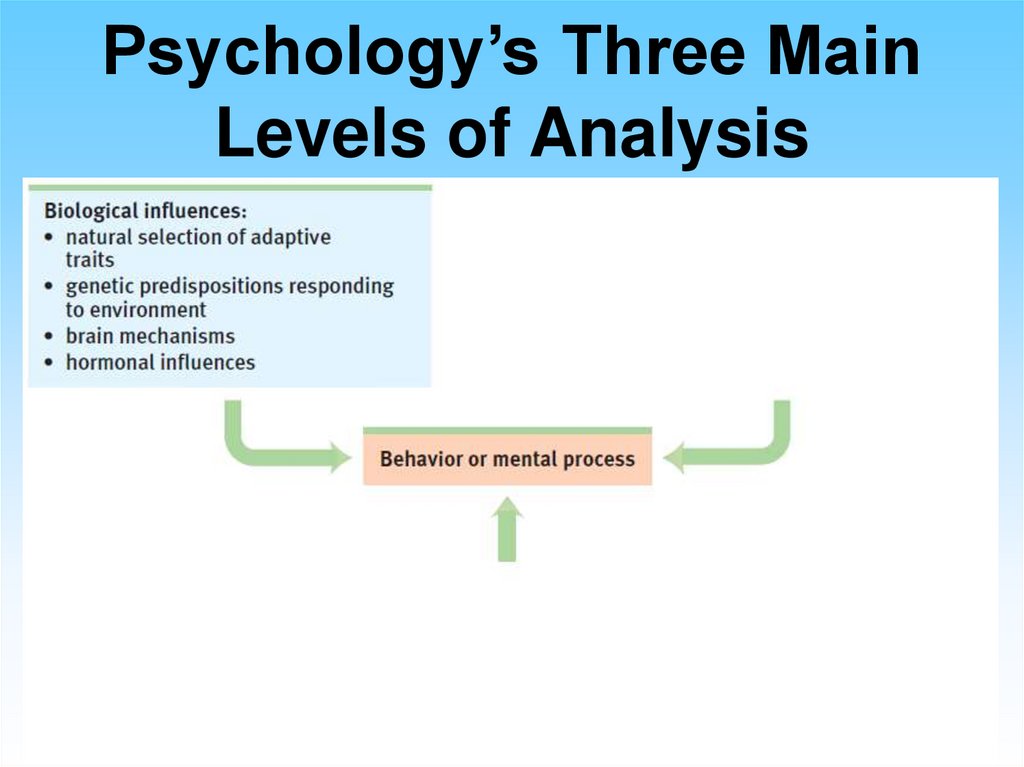
4. Psychology’s Three Main Levels of Analysis
5. Psychology’s Three Main Levels of Analysis
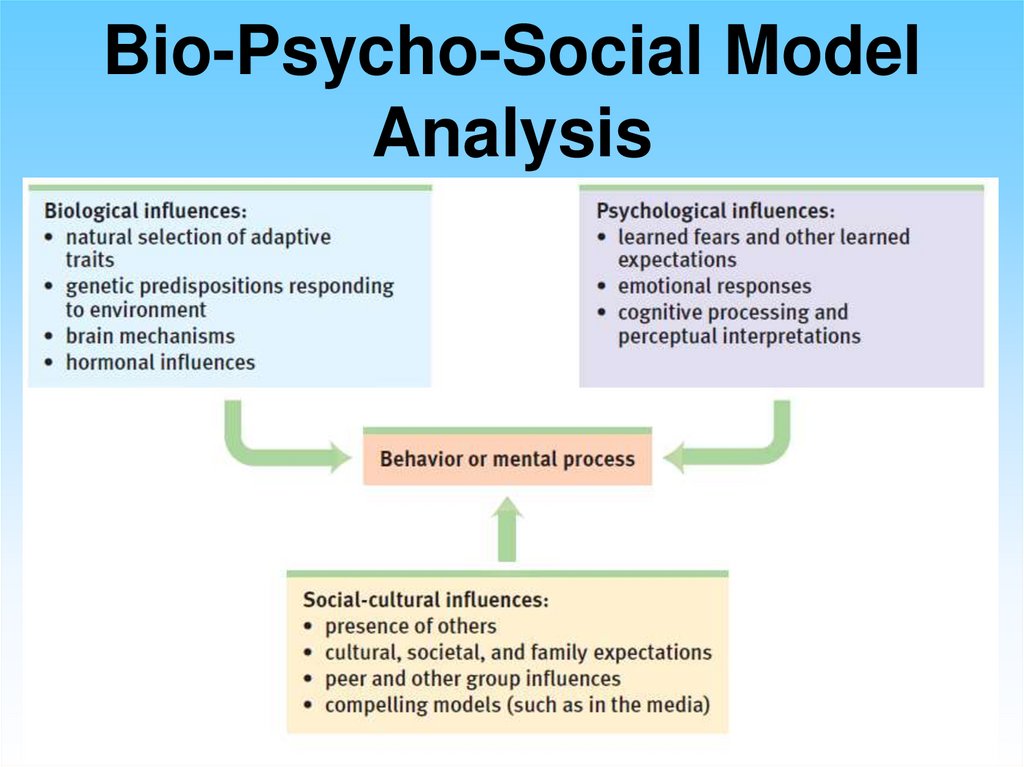
6. Bio-Psycho-Social Model Analysis
7. Psychological Approaches
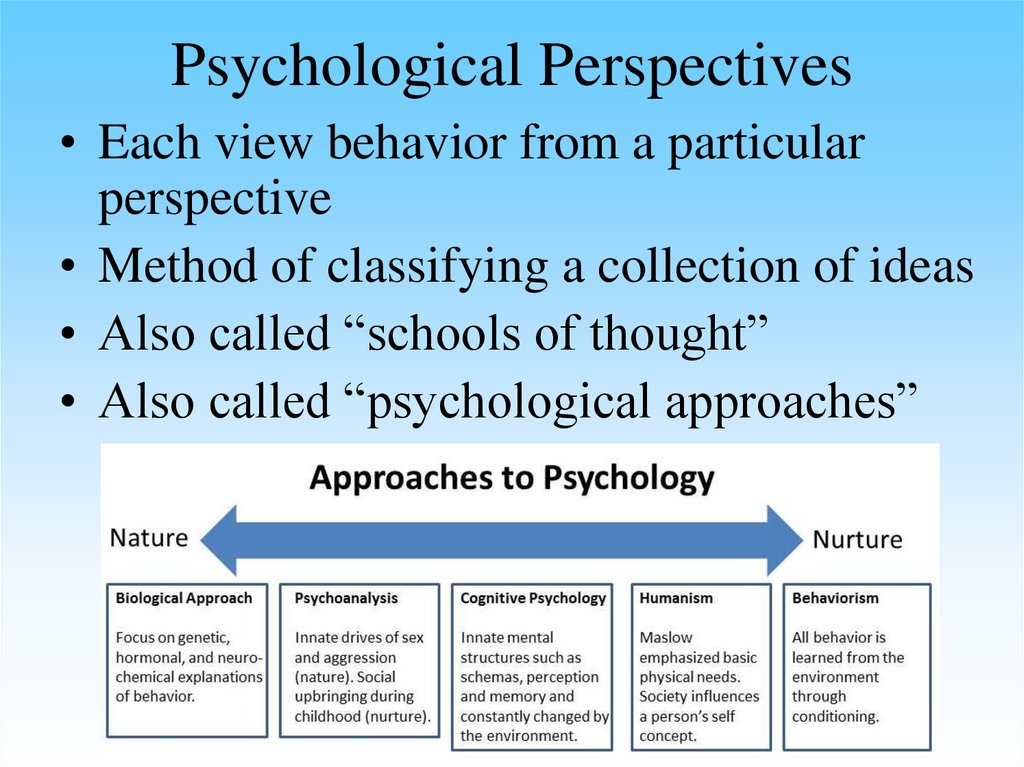
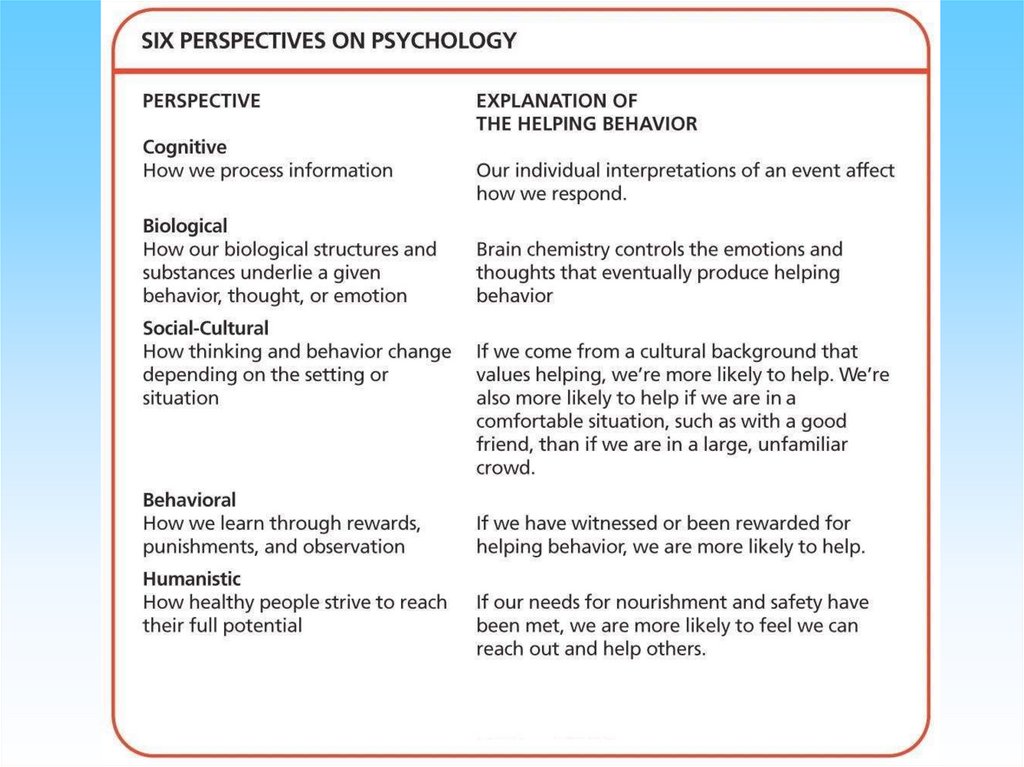
8. Psychological Perspectives
• Each view behavior from a particularperspective
• Method of classifying a collection of ideas
• Also called “schools of thought”
• Also called “psychological approaches”
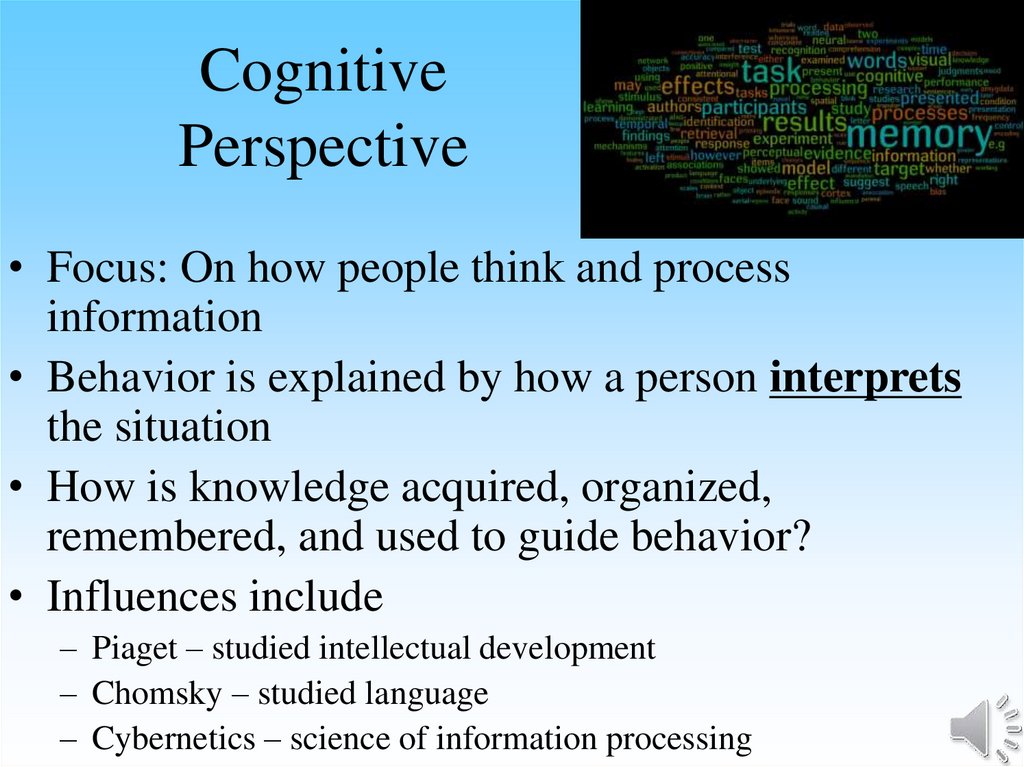
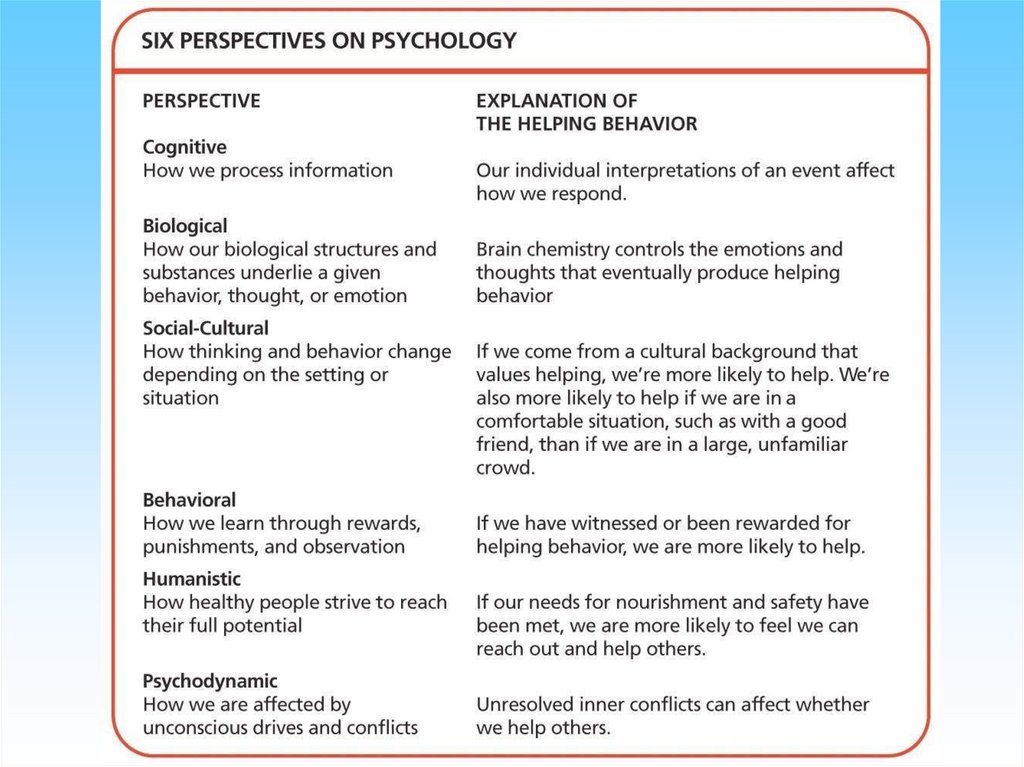
9. Cognitive Perspective
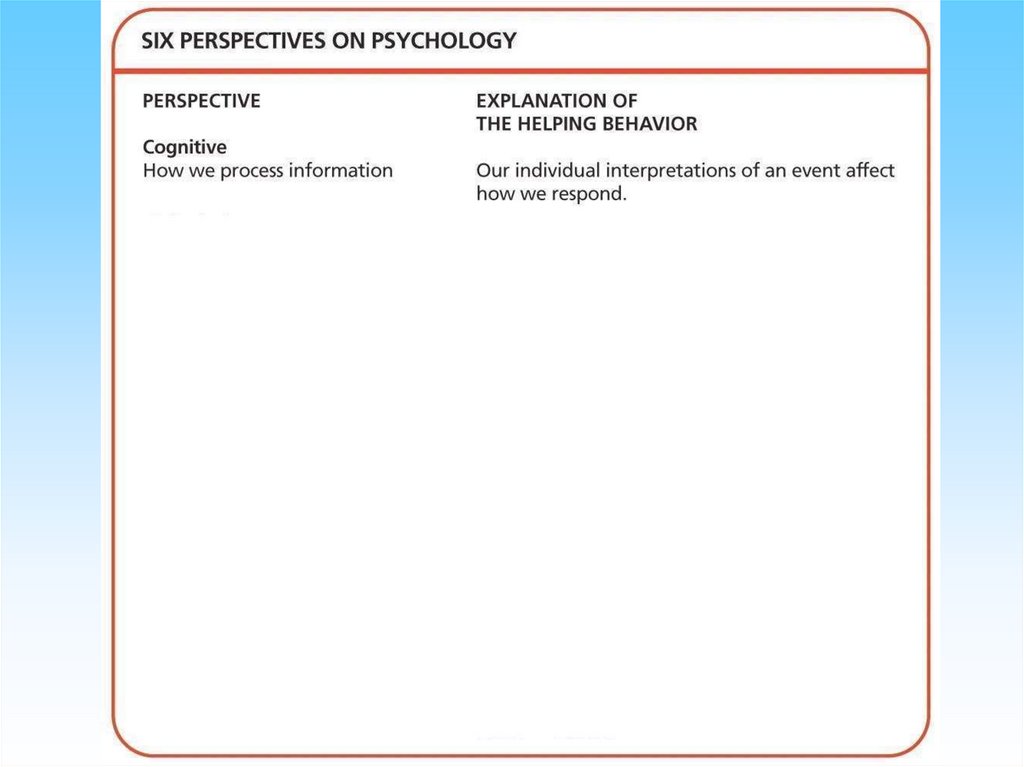
• Focus: On how people think and processinformation
• Behavior is explained by how a person interprets
the situation
• How is knowledge acquired, organized,
remembered, and used to guide behavior?
• Influences include
– Piaget – studied intellectual development
– Chomsky – studied language
– Cybernetics – science of information processing
10.
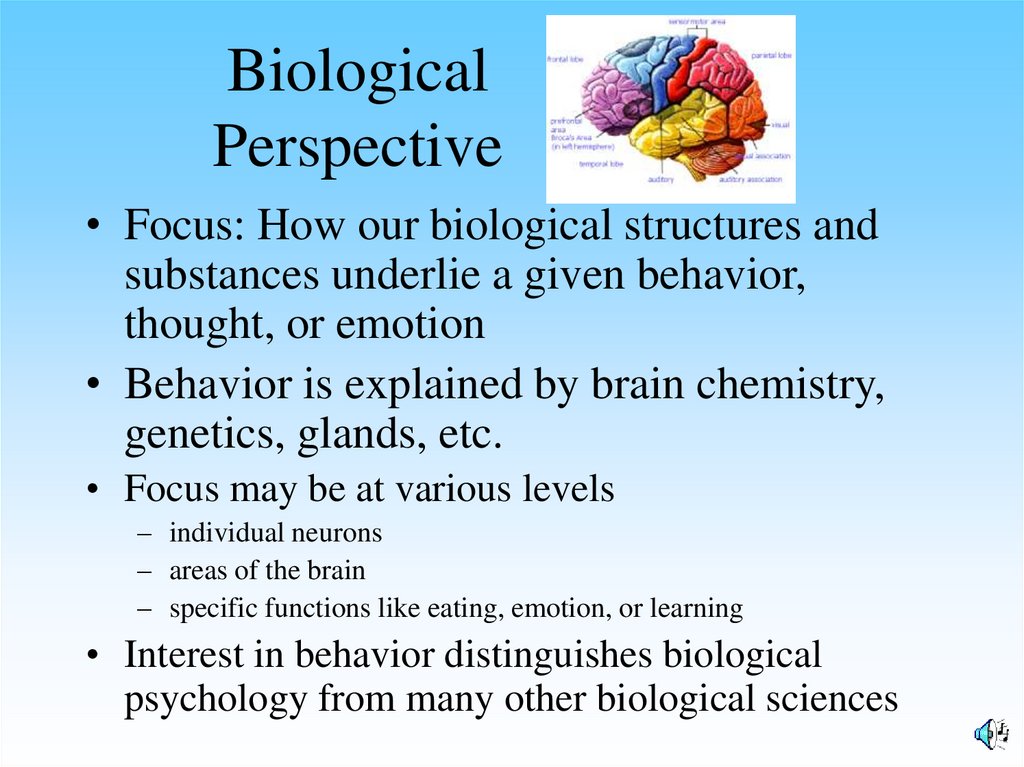
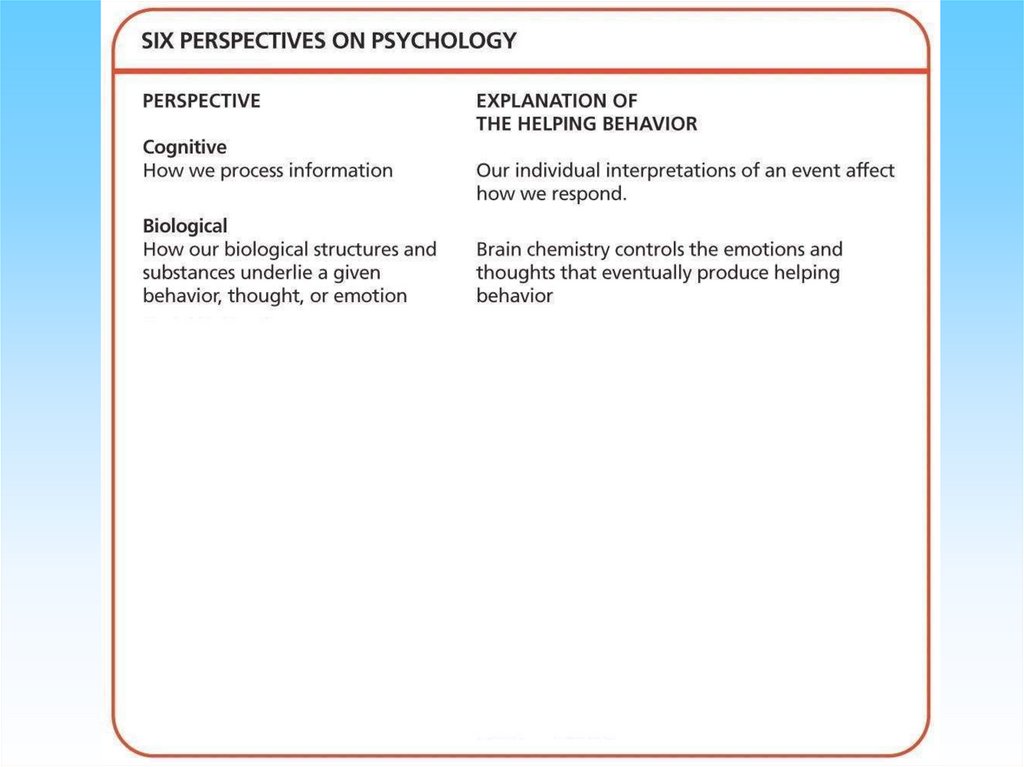
11. Biological Perspective
• Focus: How our biological structures andsubstances underlie a given behavior,
thought, or emotion
• Behavior is explained by brain chemistry,
genetics, glands, etc.
• Focus may be at various levels
– individual neurons
– areas of the brain
– specific functions like eating, emotion, or learning
• Interest in behavior distinguishes biological
psychology from many other biological sciences
12.
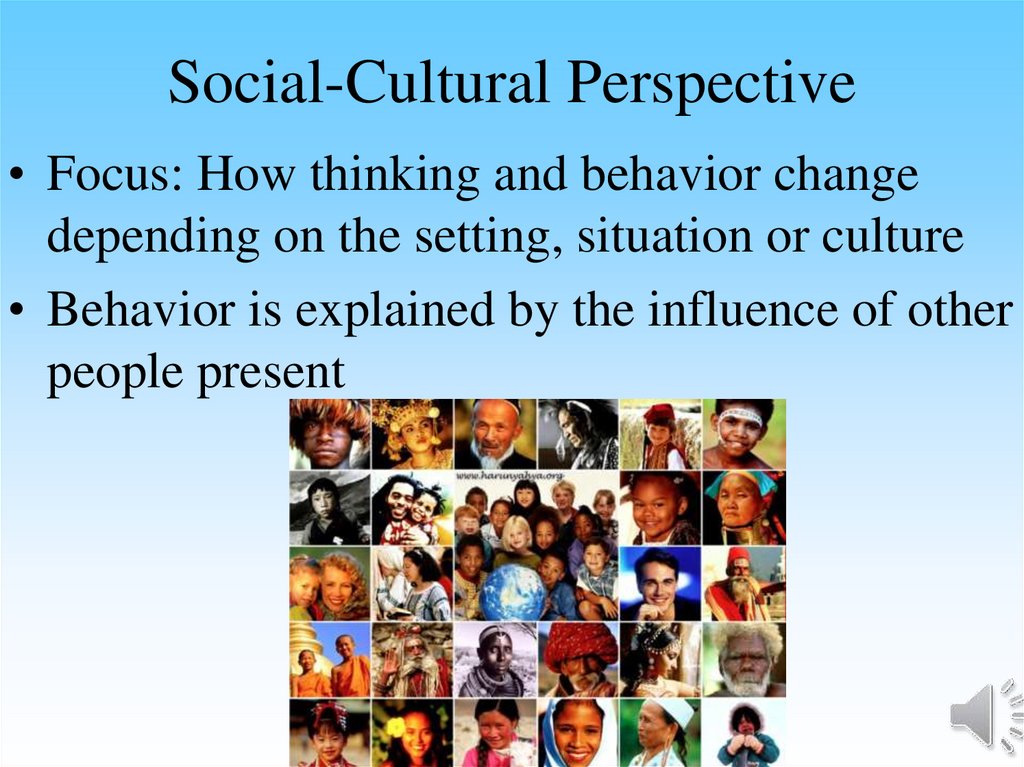
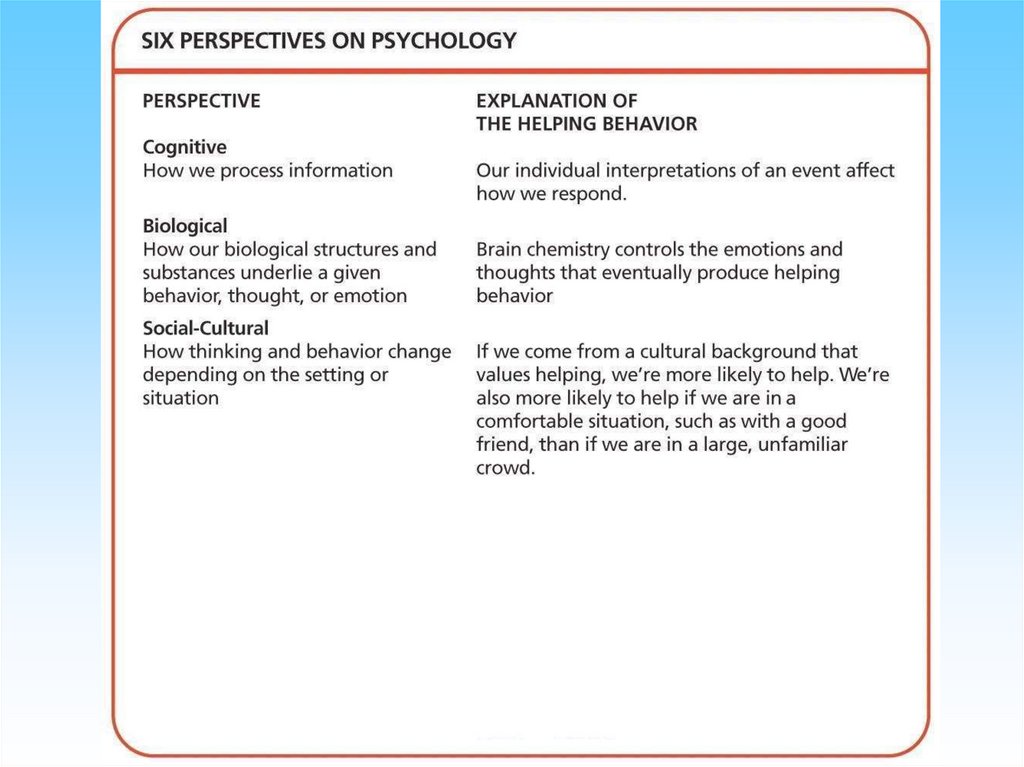
13. Social-Cultural Perspective
• Focus: How thinking and behavior changedepending on the setting, situation or culture
• Behavior is explained by the influence of other
people present
14.
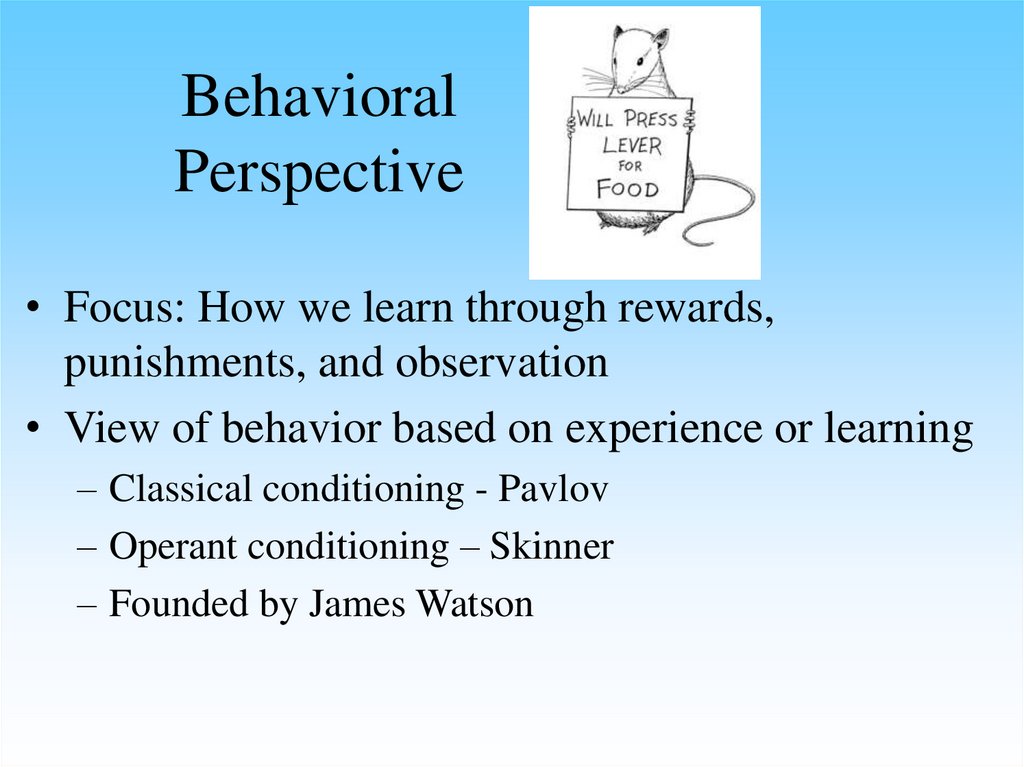
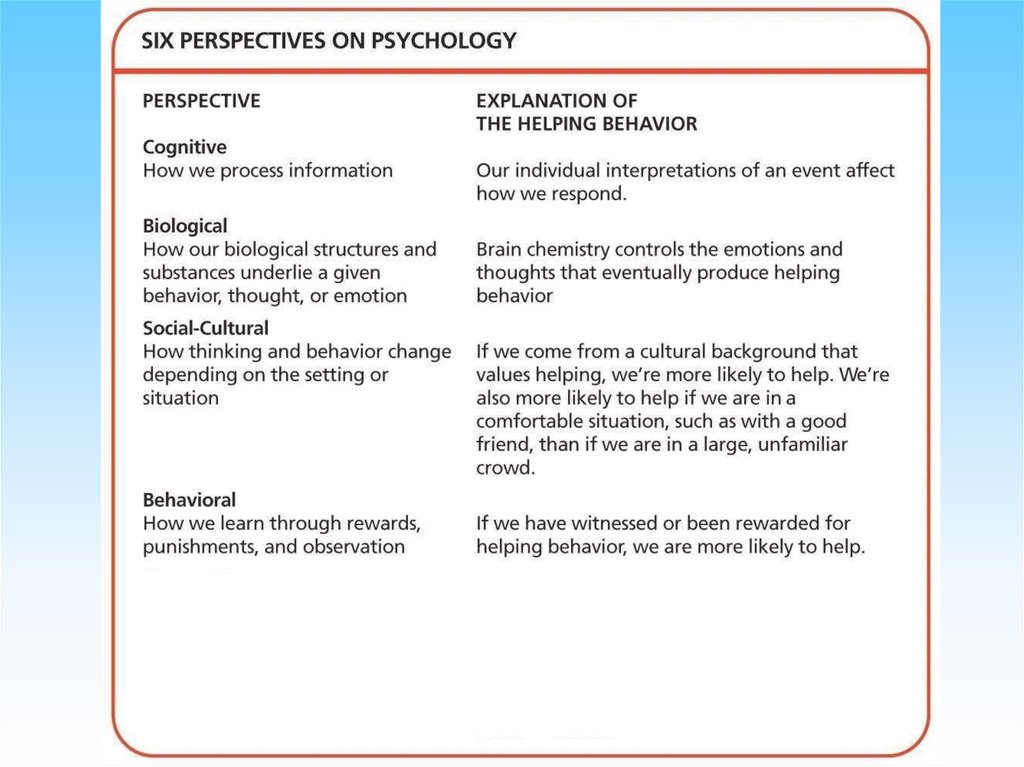
15. Behavioral Perspective
• Focus: How we learn through rewards,punishments, and observation
• View of behavior based on experience or learning
– Classical conditioning - Pavlov
– Operant conditioning – Skinner
– Founded by James Watson
16.
17. Humanistic Perspective
• Focus: How healthy people strive to reachtheir full potential
• Behavior is explained as being motivated
by satisfying needs (safety, hunger, thirst,
etc.), with the goal of reaching one’s full
potential once basic needs are met.
• Developed by Abraham Maslow and Carl Rogers
– behavior reflects innate ‘actualization’
– focus on conscious forces and self perception
– more positive view of basic forces than Freud’s
18. Positive Psychology
• Modern “Humanistic Psychology”• Focus: To study and promote optimal human
functioning
– Help people discover their human potential and
fullfillment
• Martin E.P. Seligman is a major advocate
• Should promote building positive qualities of
people rather than focus on what’s wrong
with people
19.
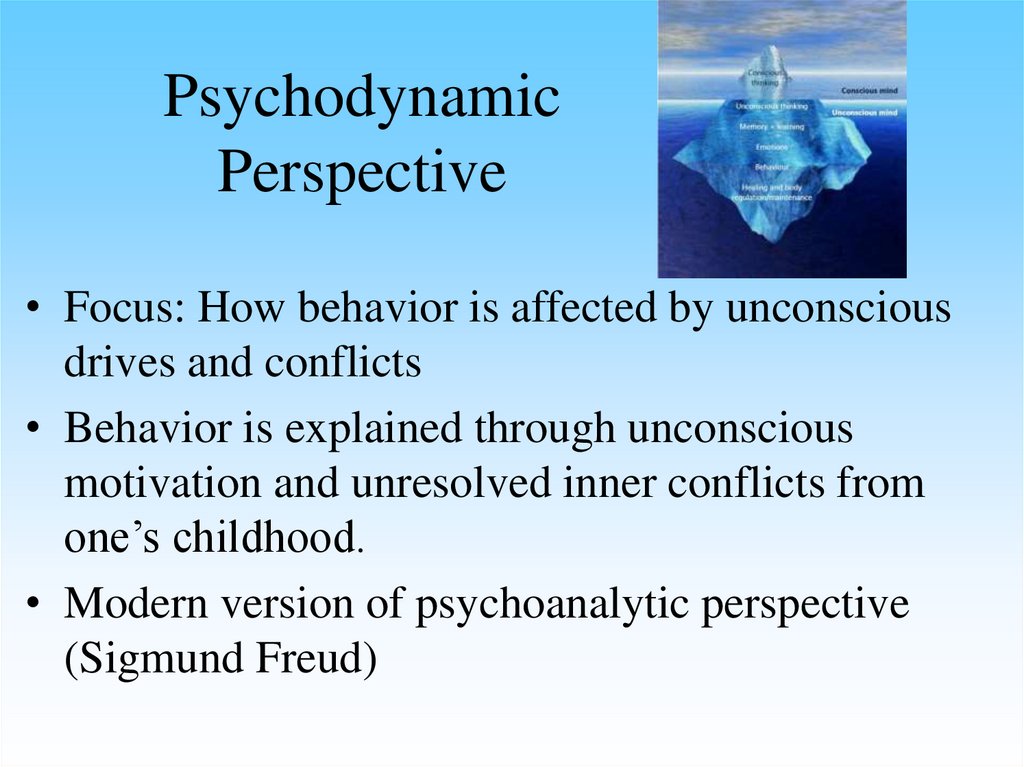
20. Psychodynamic Perspective
• Focus: How behavior is affected by unconsciousdrives and conflicts
• Behavior is explained through unconscious
motivation and unresolved inner conflicts from
one’s childhood.
• Modern version of psychoanalytic perspective
(Sigmund Freud)
21.
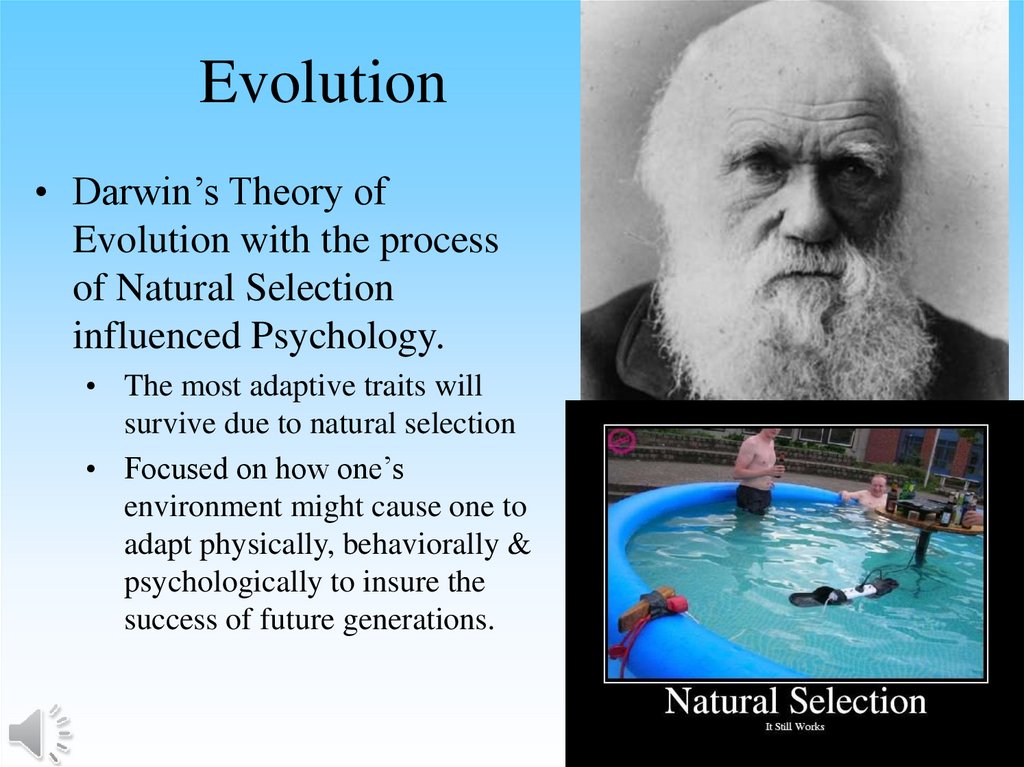
22. Evolution
• Darwin’s Theory ofEvolution with the process
of Natural Selection
influenced Psychology.
• The most adaptive traits will
survive due to natural selection
• Focused on how one’s
environment might cause one to
adapt physically, behaviorally &
psychologically to insure the
success of future generations.
23. Evolutionary Psychology
• Influenced by Darwin and the emphasis oninnate, adaptive behavior patterns
• Combines aspects of biological,
psychological, and social perspectives
• Behavior is explained by how the behavior
may have helped our ancestors survive
long enough to reproduce successfully.
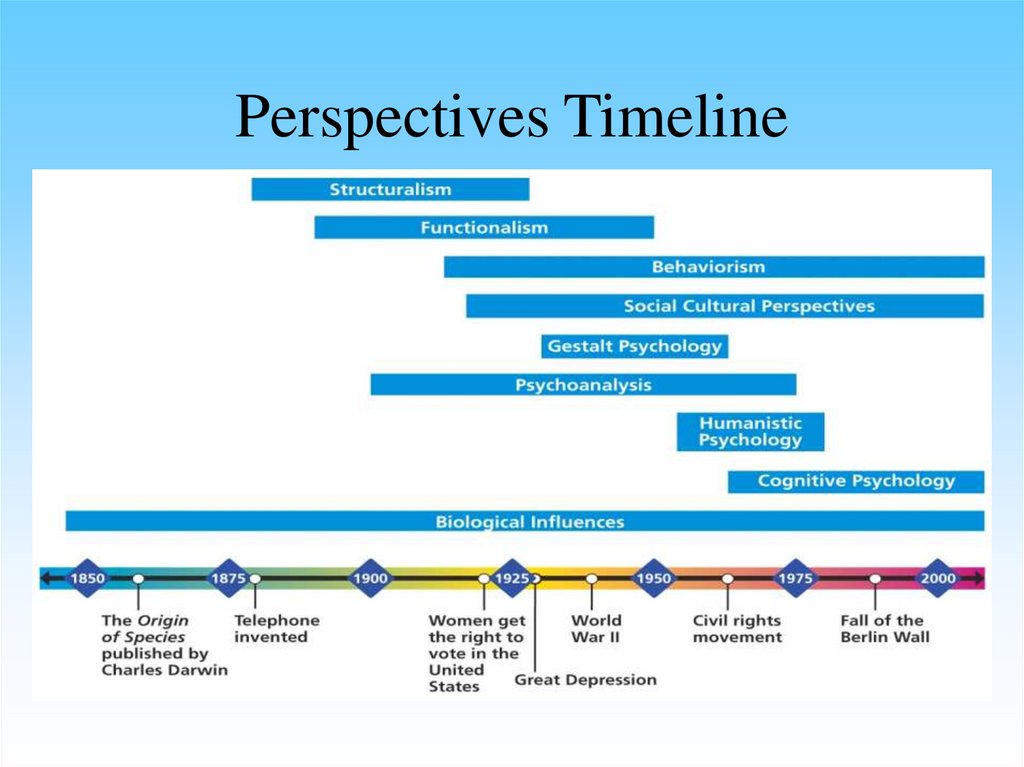
24. Perspectives Timeline
25. Psychology’s Subfields
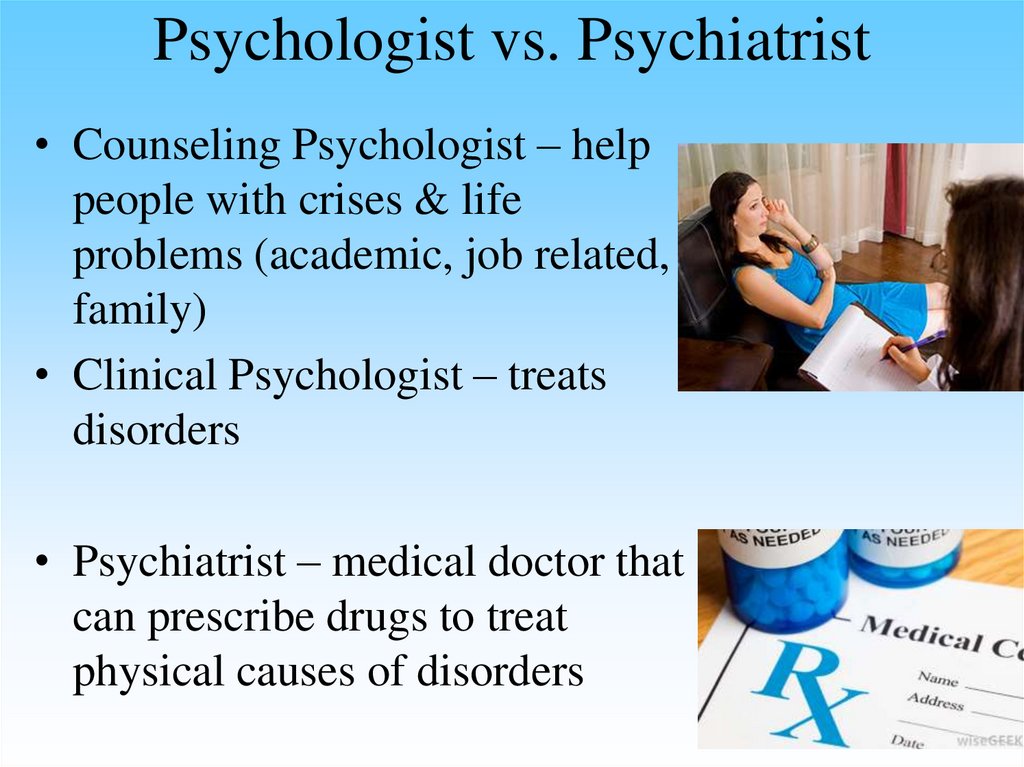
26. Psychologist vs. Psychiatrist
• Counseling Psychologist – helppeople with crises & life
problems (academic, job related,
family)
• Clinical Psychologist – treats
disorders
• Psychiatrist – medical doctor that
can prescribe drugs to treat
physical causes of disorders
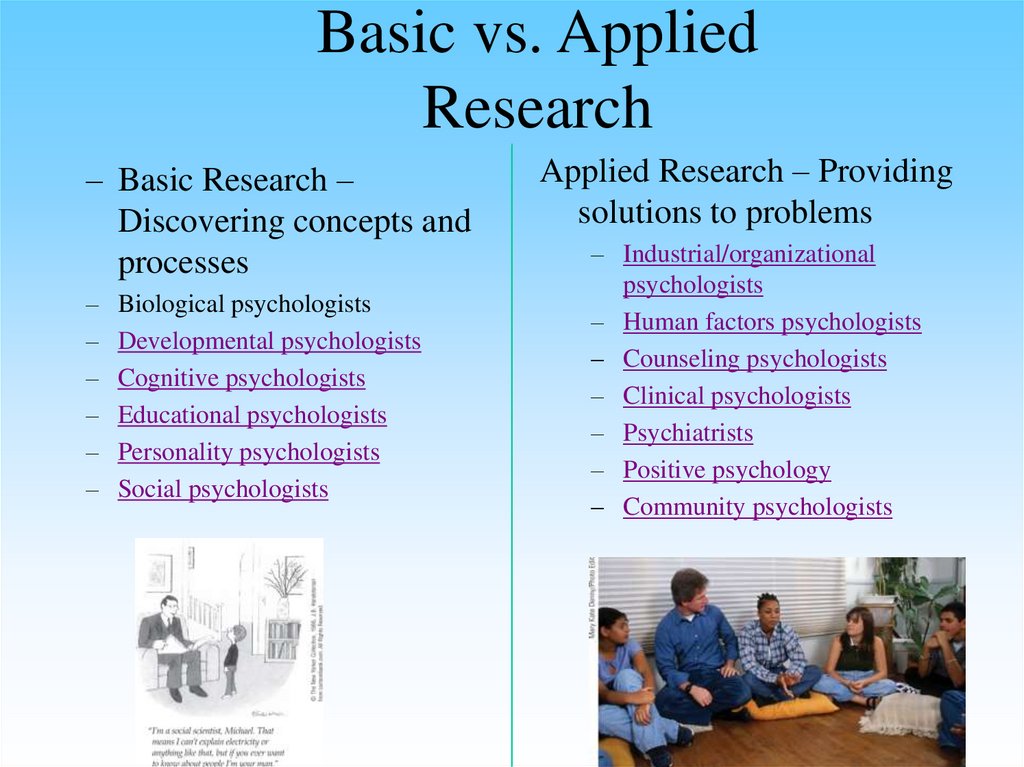
27. Basic vs. Applied Research
– Basic Research –Discovering concepts and
processes
–
–
–
–
–
–
Biological psychologists
Developmental psychologists
Cognitive psychologists
Educational psychologists
Personality psychologists
Social psychologists
Applied Research – Providing
solutions to problems
– Industrial/organizational
psychologists
– Human factors psychologists
– Counseling psychologists
– Clinical psychologists
– Psychiatrists
– Positive psychology
– Community psychologists
28.
DefinitionSlides
29. Biological Psychology
= the scientific study of the links betweenbiological (genetic, neural, hormonal) and
psychological processes.
• Some biological psychologists call themselves
– behavioral neuroscientists,
– neuropsychologists,
– behavior geneticists,
– physiological psychologists, or
– biopsychologists.
30. Cognitive Psychology
= the scientific study of all the mentalactivities associated with thinking,
knowing, remembering, and
communicating.
31. Evolutionary Psychology
= the study of the evolution of behaviorand mind, using principles of natural
selection.
32. Psychodynamic Psychology
= a branch of psychology that studies howunconscious drives and conflicts
influence behavior, and uses that
information to treat people with
psychological disorders.
33. Social-Cultural Psychology
= the study of how situations and culturesaffect our behavior and thinking.
34. Psychometrics
= the scientific study of the measurementof human abilities, attitudes, and traits.
35. Developmental Psychology
= a branch of psychology that studiesphysical, cognitive, and social change
throughout the life span.
36. Educational Psychology
= the study of how psychologicalprocesses affect and can enhance
teaching and learning.
37. Personality Psychology
= the study of an individual’scharacteristic pattern of thinking,
feeling, and acting.
38. Social Psychology
= the scientific study of how we thinkabout, influence, and relate to one
another.
39. Industrial-Organizational (I/O) Psychologists
= the application of psychologicalconcepts and methods to optimizing
human behavior in workplaces.
40. Human Factors Psychologists
= an I/O subfield that explores howpeople and machines interact and how
machines and physical environments
can be made safe and easy to use.
41. Counseling Psychology
= a branch of psychology that assistspeople with problems in living (often
related to school, work, and marriage)
and in achieving greater well-being.
42. Clinical Psychology
= a branch of psychology that studies,assesses, and treat people with
psychological disorders.
43. Community Psychology
= a branch of psychology that studies howpeople interact with their social
environments and how social
institutions affect individuals and
groups.