 Программное обеспечение
Похожие презентации:


Computer Architecture
1.
Computer Architecture(Unit I)
Teacher: Daniele De Sensi
Slides based on Prof. Pontarelli slides
2.
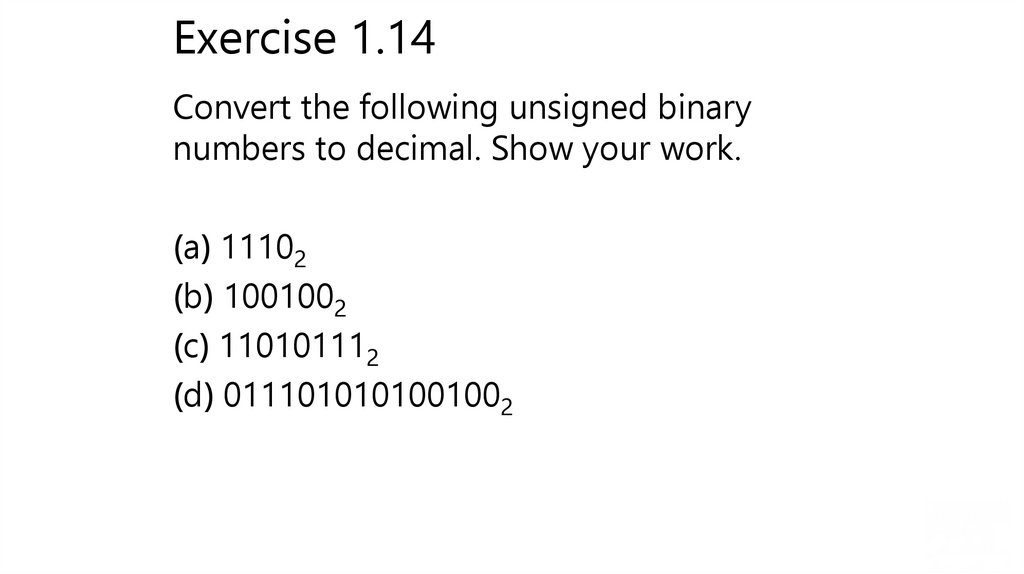
Exercise 1.14Convert the following unsigned binary
numbers to decimal. Show your work.
(a) 11102
(b) 1001002
(c) 110101112
(d) 0111010101001002
Digital Design and Computer Architecture: ARM® Edition © 2015
Chapter 1 <2>
3.
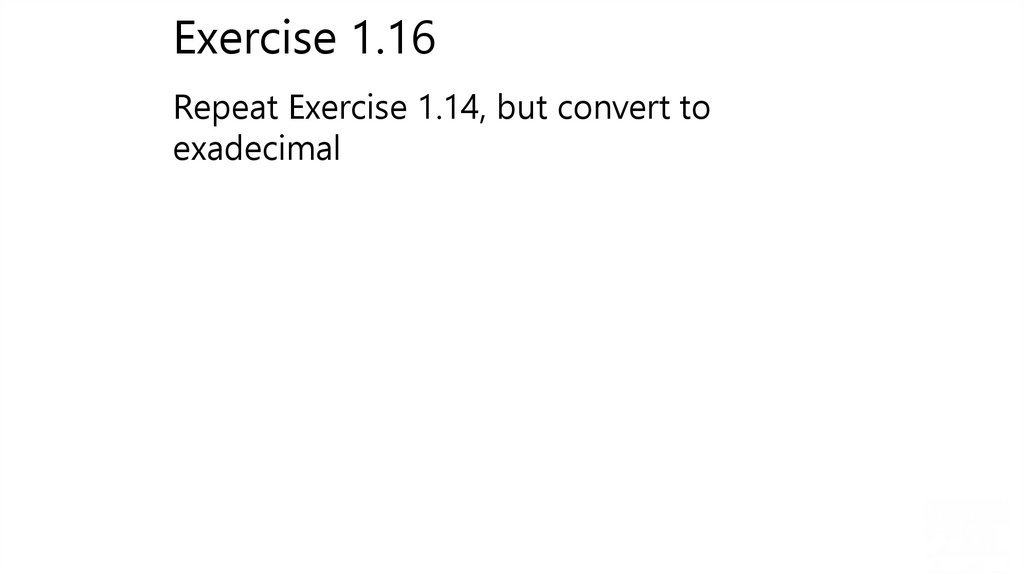
Exercise 1.16Repeat Exercise 1.14, but convert to
exadecimal
Digital Design and Computer Architecture: ARM® Edition © 2015
Chapter 1 <3>
4.
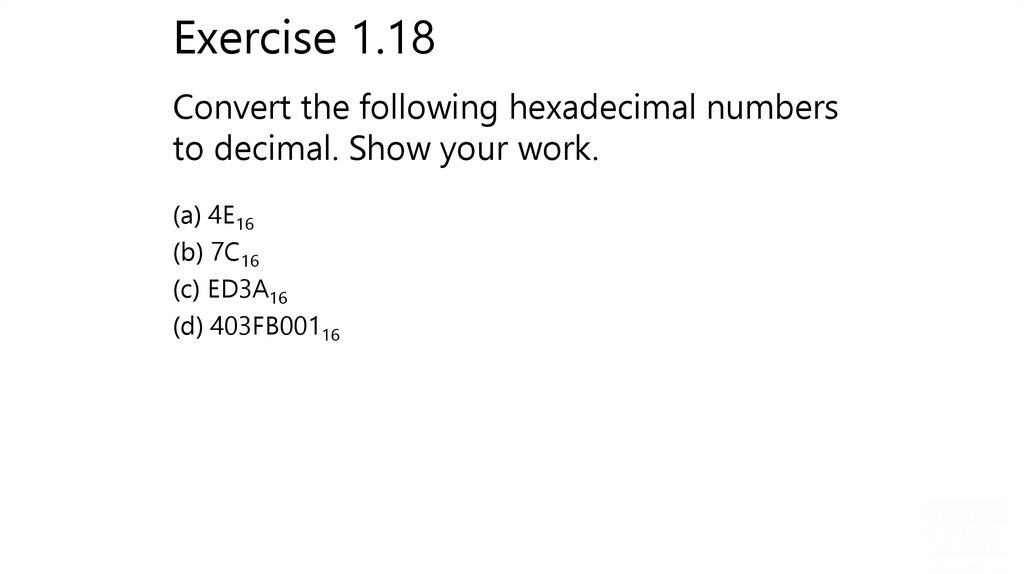
Exercise 1.18Convert the following hexadecimal numbers
to decimal. Show your work.
(a) 4E16
(b) 7C16
(c) ED3A16
(d) 403FB00116
Digital Design and Computer Architecture: ARM® Edition © 2015
Chapter 1 <4>
5.
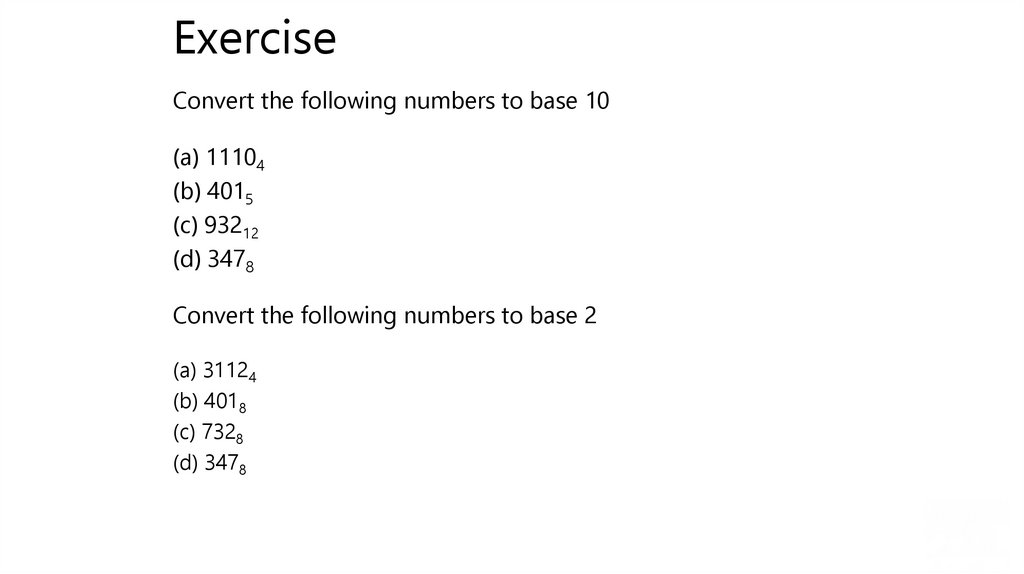
ExerciseConvert the following numbers to base 10
(a) 11104
(b) 4015
(c) 93212
(d) 3478
Convert the following numbers to base 2
(a) 31124
(b) 4018
(c) 7328
(d) 3478
Digital Design and Computer Architecture: ARM® Edition © 2015
Chapter 1 <5>
6.
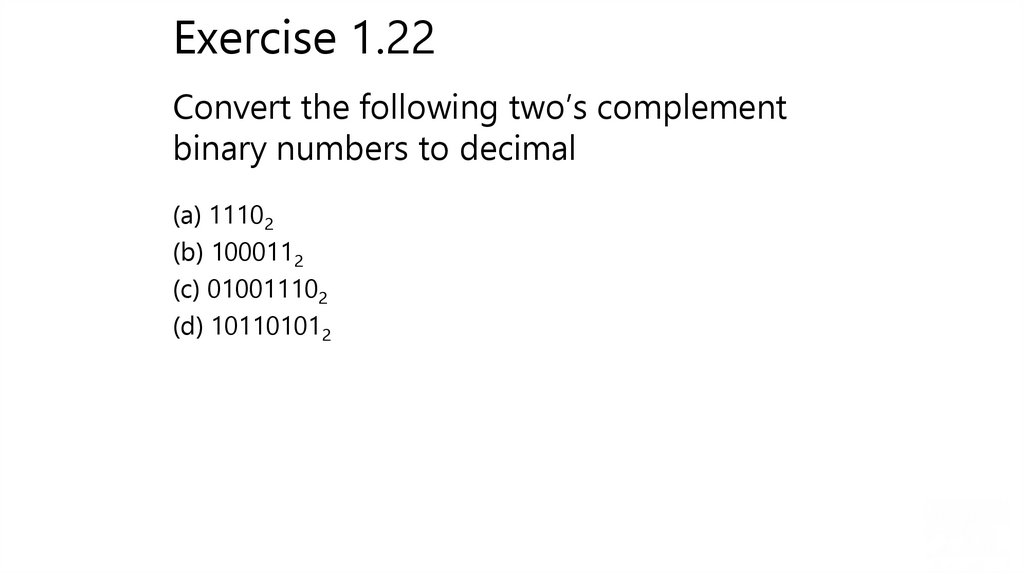
Exercise 1.22Convert the following two’s complement
binary numbers to decimal
(a) 11102
(b) 1000112
(c) 010011102
(d) 101101012
Digital Design and Computer Architecture: ARM® Edition © 2015
Chapter 1 <6>
7.
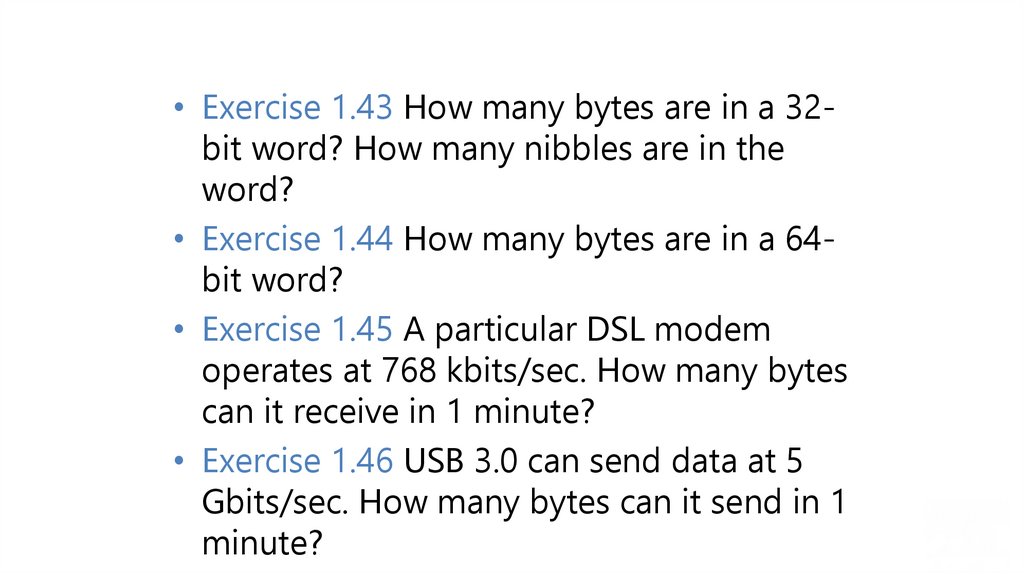
• Exercise 1.43 How many bytes are in a 32bit word? How many nibbles are in theword?
• Exercise 1.44 How many bytes are in a 64bit word?
• Exercise 1.45 A particular DSL modem
operates at 768 kbits/sec. How many bytes
can it receive in 1 minute?
• Exercise 1.46 USB 3.0 can send data at 5
Gbits/sec. How many bytes can it send in 1
Digital Design and Computer Architecture: ARM® Edition © 2015
Chapter 1 <7>
minute?