


 География
Похожие презентации:









National Park Elk Island History and facts
1.
National ParkElk Island
History and facts
2.
Elk Island - one of the first national parksin Russia established in 1983, is located
on the territory of Moscow and the
Moscow region. The largest forest in
Moscow and the largest among the
forests located within the city limits.
Specially protected territory of federal
significance, category II according to the
IUCN classification.
3.
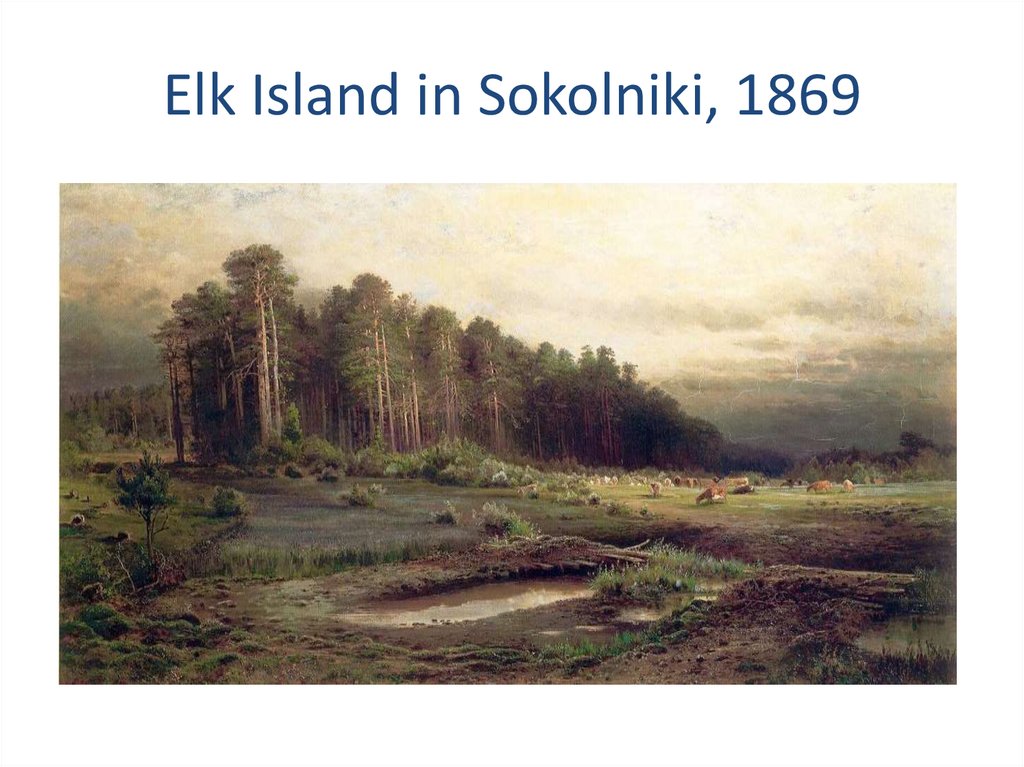
Elk Island in Sokolniki, 18694.
Geographyand
history
5.
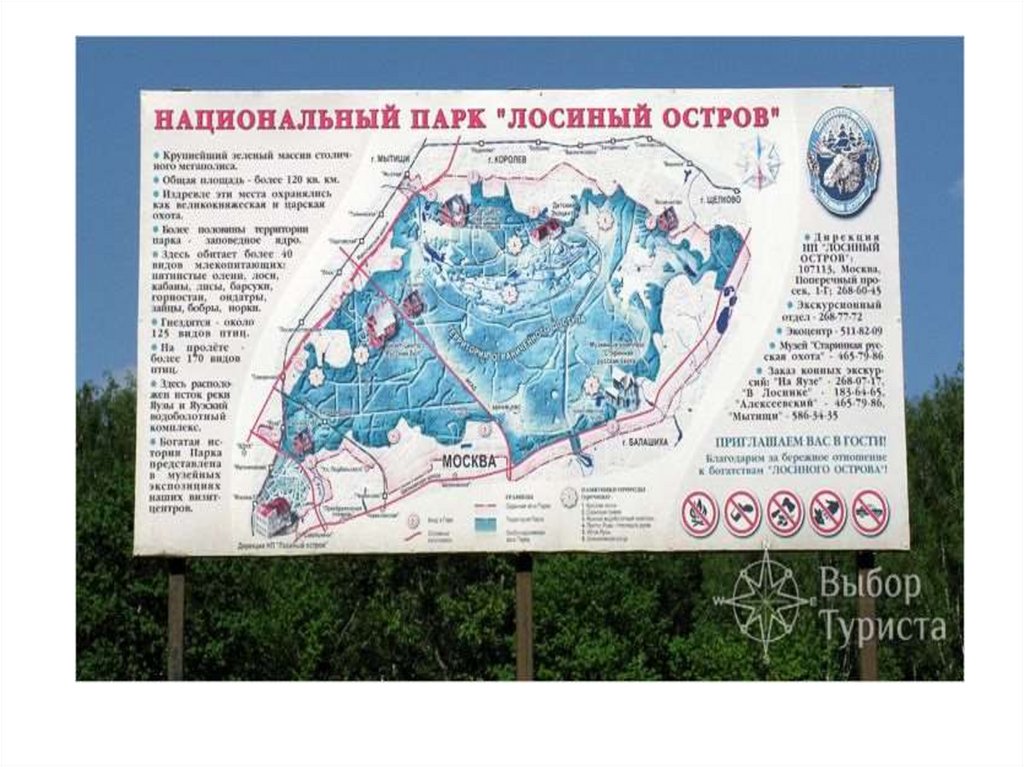
GeographyThe total area of the national park for 2001 was 116,215 km ².
The forest occupies 96.04 km ² (83% of the territory), of which
30.77 km ² (27%) are located within the city limits of Moscow.
The rest is occupied by water bodies - 1.69 km ² (2%) and marsh 5.74 km ² (5%). An additional 66.45 km² are prepared for the
expansion of the park.
The park is divided into five functional zones:
Reserved zone, strictly prohibited access and any economic
activity - 1.8 km² (1.5% of the territory);
Specially protected area, access is allowed in agreement with the
administration or accompanied by the park's staff - 42.9 km ²
(34.6%);
6.
The zone of protection of historical and cultural monuments is opento visitors, activities that change the historical appearance of the
landscape are forbidden - 0,9 km² (0,7%);
Recreational area, open to free access - 65.6 km ² (52.8%);
The economic zone includes objects that are important for ensuring
the life of the park and adjacent residential areas - 12.9 km² (10.4%).
It includes 6 forest parks: Yauzsky and Losinoostrovsky (located within
the boundaries of Moscow), as well as near Mytishchi,
Losinopogonniy, Alekseevsky and Shchelkovsky. Geographically, the
park is located at the borders of the Meshchera lowland and the
southern spurs of the Klin-Dmitrovsky ridge, which is a watershed
between the Moscow River and Klyazma
7.
HistoryElk Island is famous since 1406. From the XV to the XVIIth centuries.
The land was part of the mysterious palace parish, whose land since
ancient times served as hunting grounds for Russian princes and kings.
So, in 1564 Ivan IX was hunting for bears here. In general, the Elk
Island preserved the reserve regime. In 1799, the forests are
transferred to the treasury department and the first topographic
survey is conducted; The forest is divided into quarters, the area
of each is equal to a square verst. The first forestry was founded here
in 1842, at the same time the senior tax collector Yegor Grimm and
the junior tax collector Nikolai Shelgunov completed the first forest
ordering. According to its results, the forest fund was dominated by
spruce (67%), which was later replaced by pine and birch.
8.
In 1844, forester Vasily Gershner was the beginning of the creation inElk Island of man-made forests. Active forestry work, with
predominantly sowing and planting of pine, was conducted for 115
years. These plantations are still resistant to severe anthropogenic
impact.
In the middle of the XIX century was organized Losinoostrovskaya
forest cottage, the period of systematic forestry began.
The idea of creating a national park in 1912 was put forward by the
head of the forestry collegiate adviser Sergei Vasilyevich Dyakov. In
1934, Elk Island was included in the 50-kilometer "green belt" around
Moscow.
9.
10.
Flora andfauna
11.
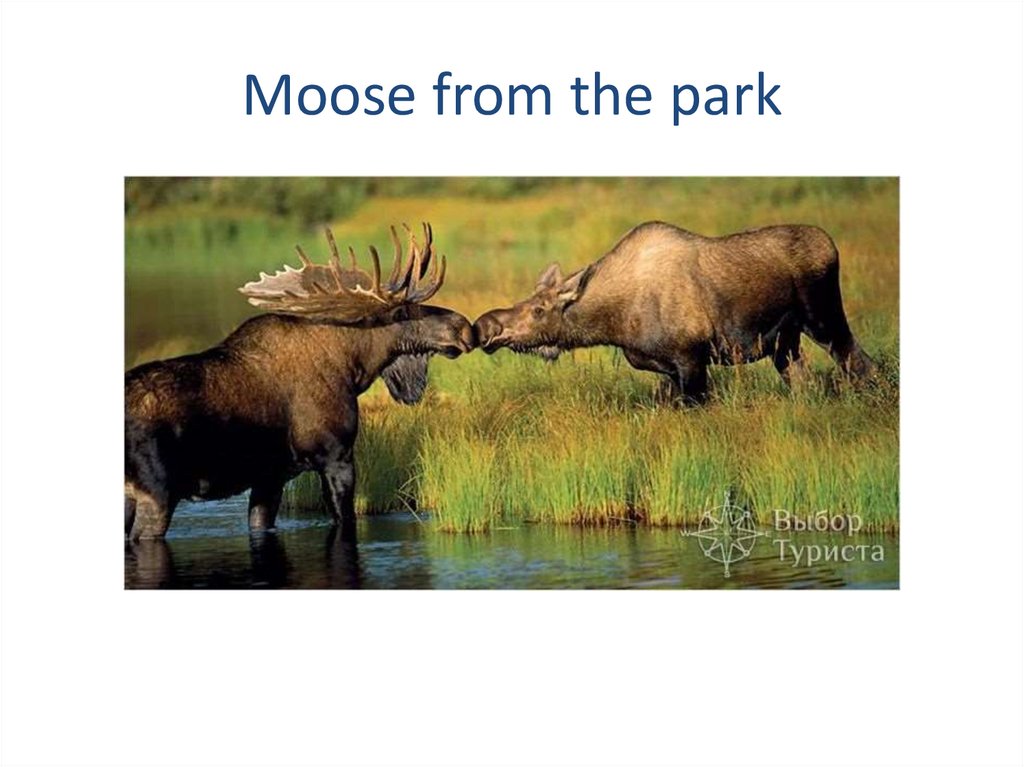
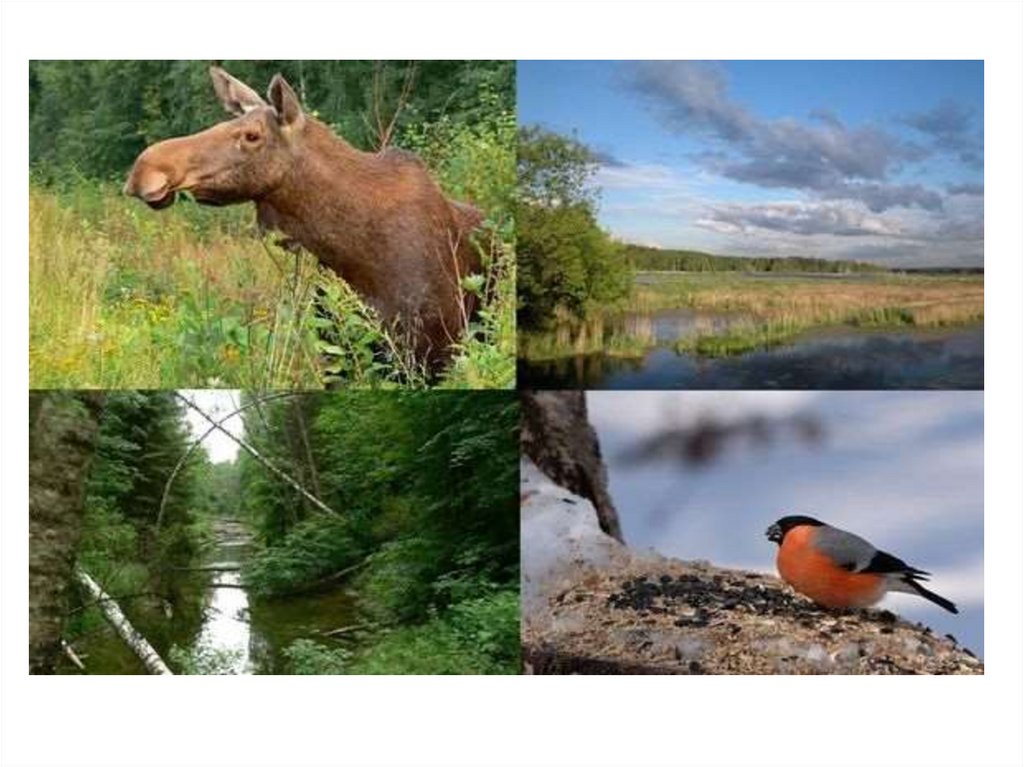
Moose from the park12.
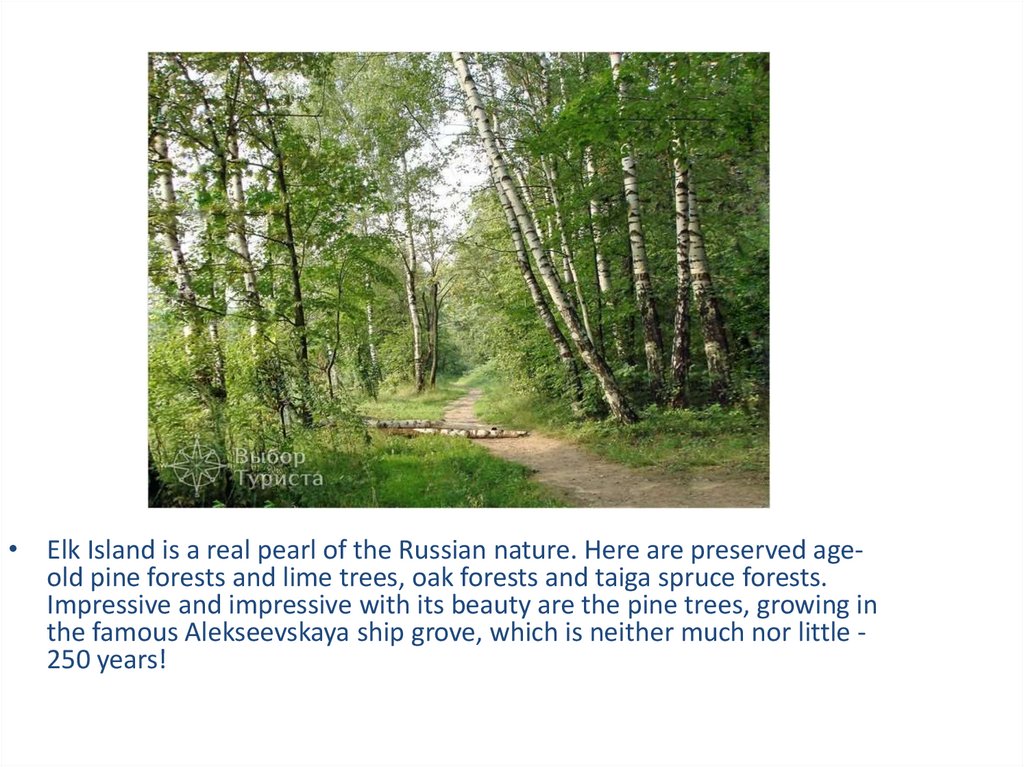
• Elk Island is a real pearl of the Russian nature. Here are preserved ageold pine forests and lime trees, oak forests and taiga spruce forests.Impressive and impressive with its beauty are the pine trees, growing in
the famous Alekseevskaya ship grove, which is neither much nor little 250 years!
13.
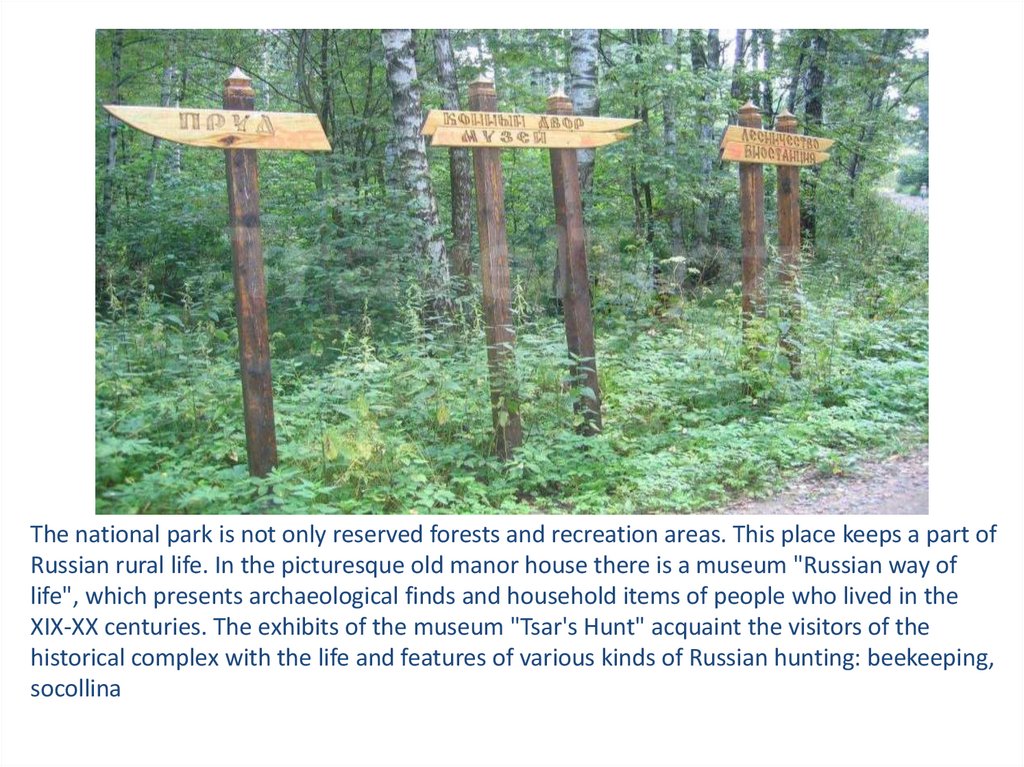
The national park is not only reserved forests and recreation areas. This place keeps a part ofRussian rural life. In the picturesque old manor house there is a museum "Russian way of
life", which presents archaeological finds and household items of people who lived in the
XIX-XX centuries. The exhibits of the museum "Tsar's Hunt" acquaint the visitors of the
historical complex with the life and features of various kinds of Russian hunting: beekeeping,
socollina
14.
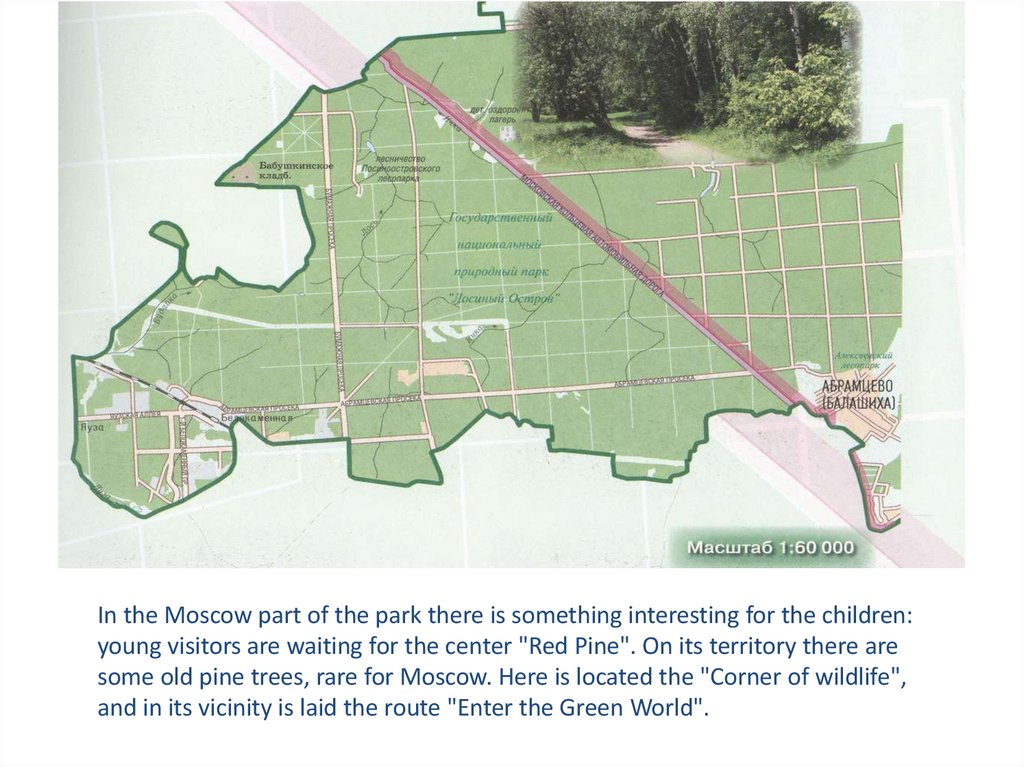
In the Moscow part of the park there is something interesting for the children:young visitors are waiting for the center "Red Pine". On its territory there are
some old pine trees, rare for Moscow. Here is located the "Corner of wildlife",
and in its vicinity is laid the route "Enter the Green World".