

 БЖД
БЖДПохожие презентации:




Healthy Eating
1.
2.
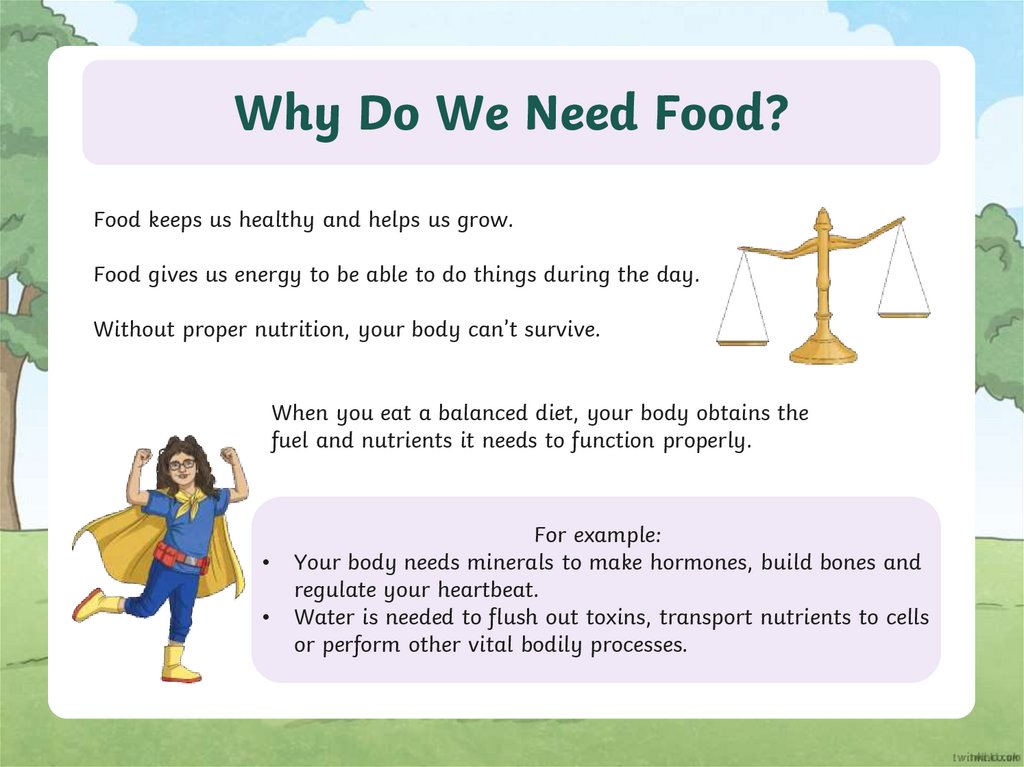
Why Do We Need Food?Food keeps us healthy and helps us grow.
Food gives us energy to be able to do things during the day.
Without proper nutrition, your body can’t survive.
When you eat a balanced diet, your body obtains the
fuel and nutrients it needs to function properly.
For example:
Your body needs minerals to make hormones, build bones and
regulate your heartbeat.
Water is needed to flush out toxins, transport nutrients to cells
or perform other vital bodily processes.
3.
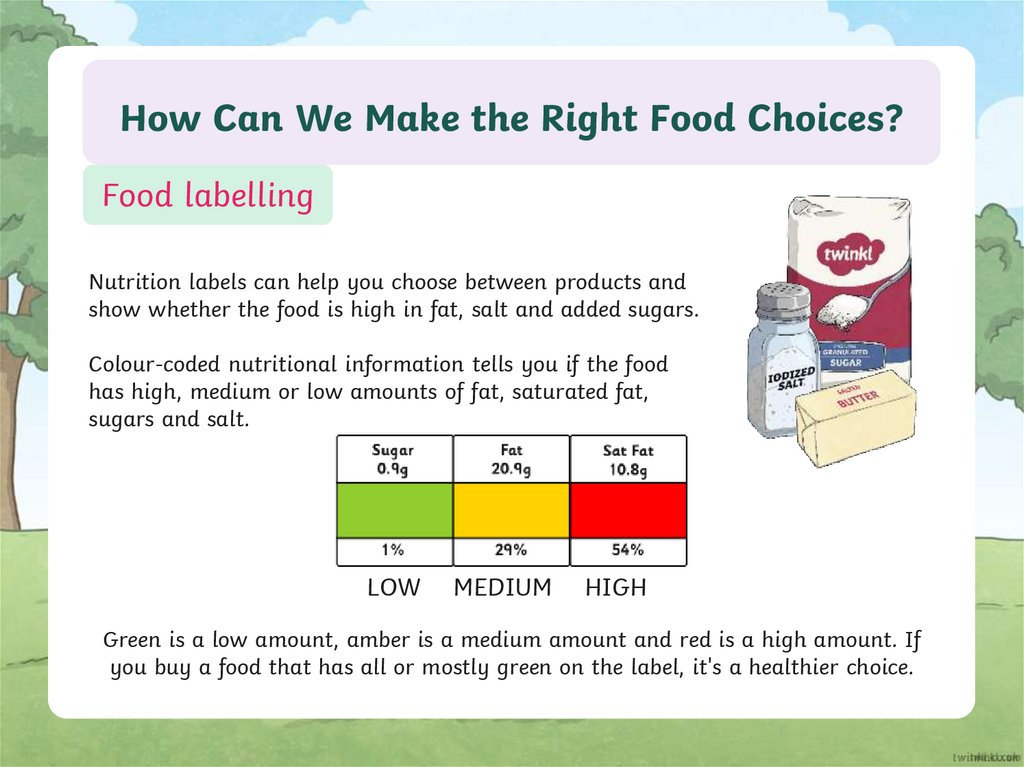
How Can We Make the Right Food Choices?Food labelling
Nutrition labels can help you choose between products and
show whether the food is high in fat, salt and added sugars.
Colour-coded nutritional information tells you if the food
has high, medium or low amounts of fat, saturated fat,
sugars and salt.
LOW
MEDIUM
HIGH
Green is a low amount, amber is a medium amount and red is a high amount. If
you buy a food that has all or mostly green on the label, it's a healthier choice.
4.
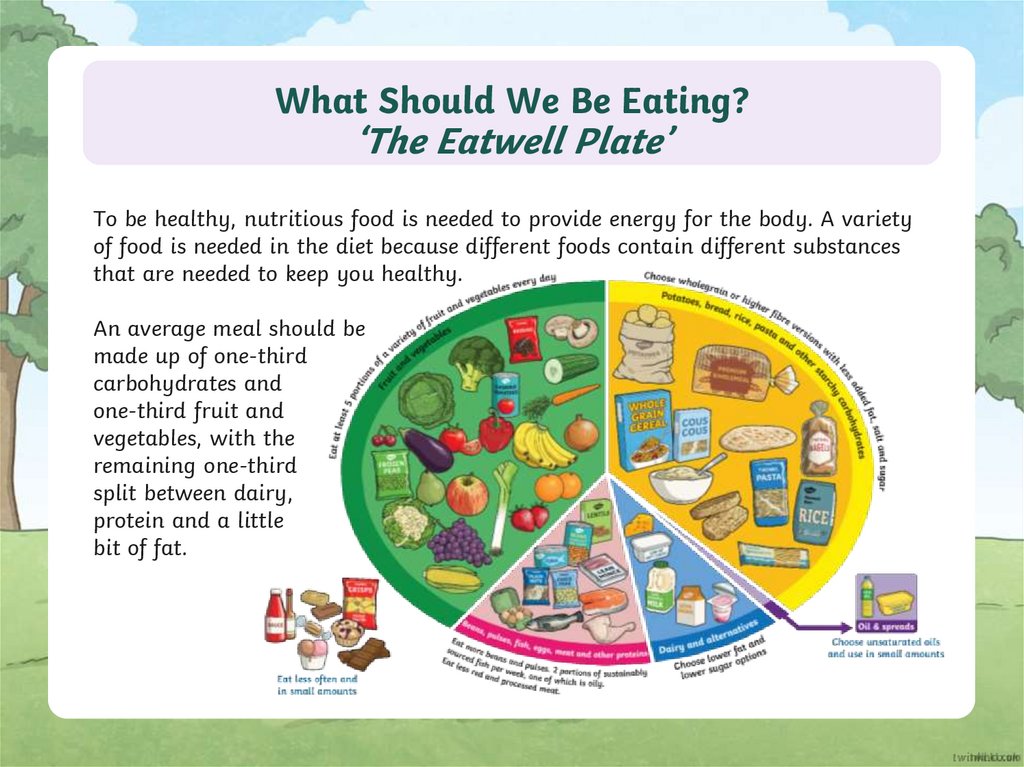
What Should We Be Eating?‘The Eatwell Plate’
To be healthy, nutritious food is needed to provide energy for the body. A variety
of food is needed in the diet because different foods contain different substances
that are needed to keep you healthy.
An average meal should be
made up of one-third
carbohydrates and
one-third fruit and
vegetables, with the
remaining one-third
split between dairy,
protein and a little
bit of fat.
5.
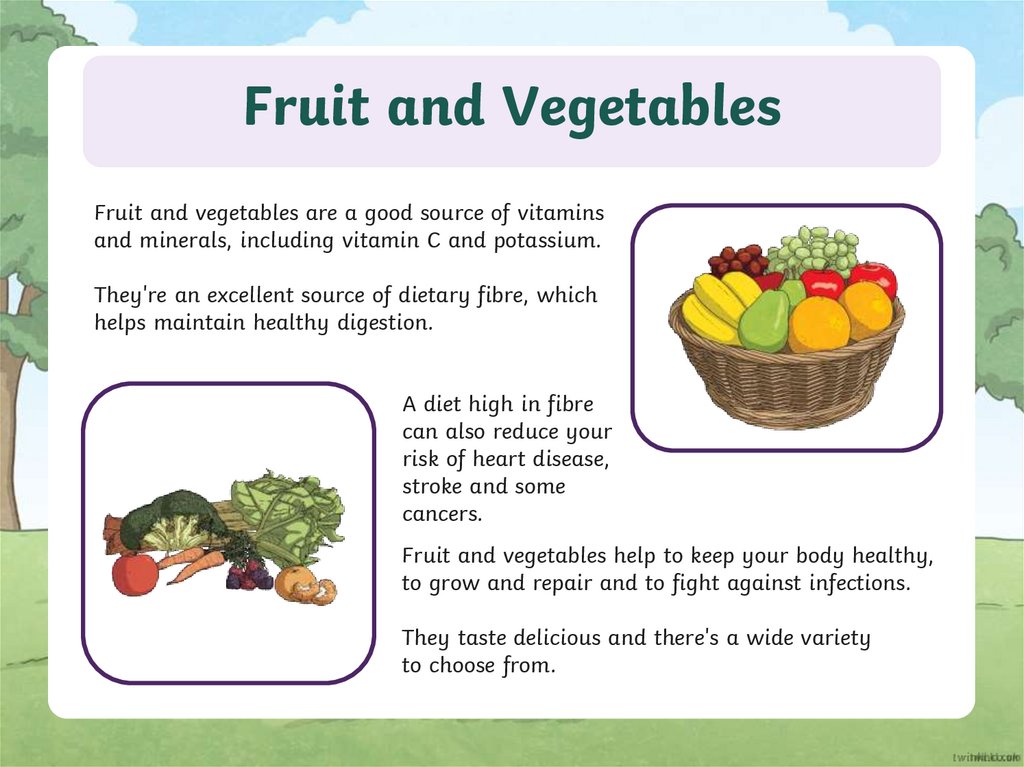
Fruit and VegetablesFruit and vegetables are a good source of vitamins
and minerals, including vitamin C and potassium.
They're an excellent source of dietary fibre, which
helps maintain healthy digestion.
A diet high in fibre
can also reduce your
risk of heart disease,
stroke and some
cancers.
Fruit and vegetables help to keep your body healthy,
to grow and repair and to fight against infections.
They taste delicious and there's a wide variety
to choose from.
6.
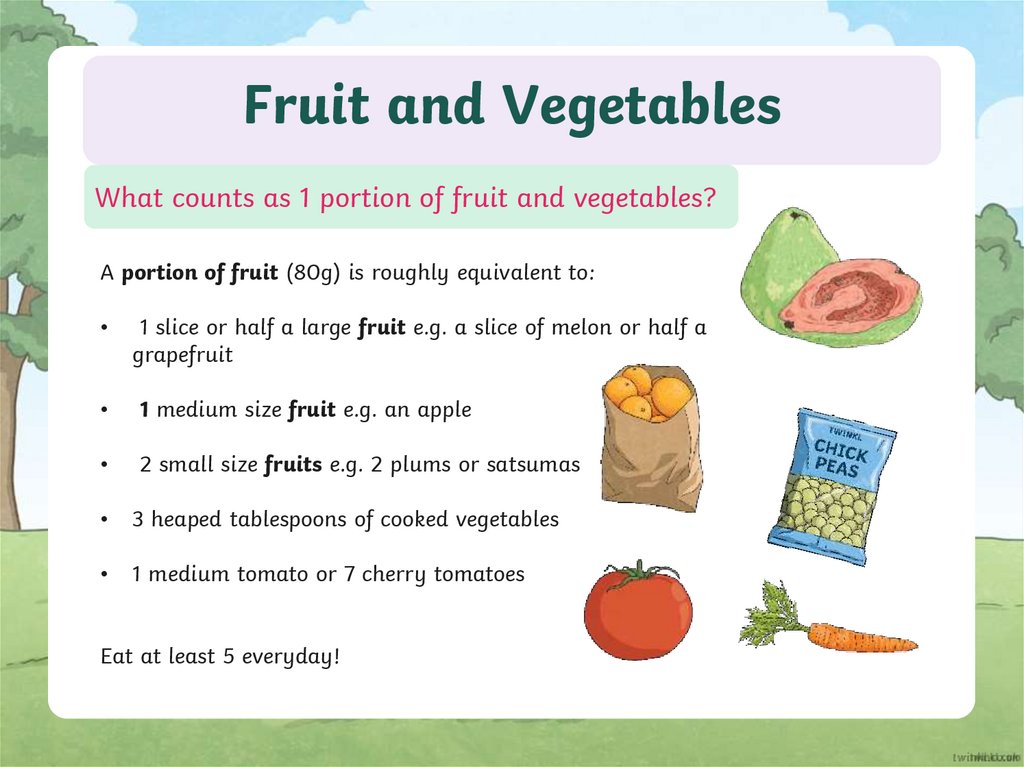
Fruit and VegetablesWhat counts as 1 portion of fruit and vegetables?
A portion of fruit (80g) is roughly equivalent to:
1 slice or half a large fruit e.g. a slice of melon or half a
grapefruit
1 medium size fruit e.g. an apple
2 small size fruits e.g. 2 plums or satsumas
3 heaped tablespoons of cooked vegetables
1 medium tomato or 7 cherry tomatoes
Eat at least 5 everyday!
7.
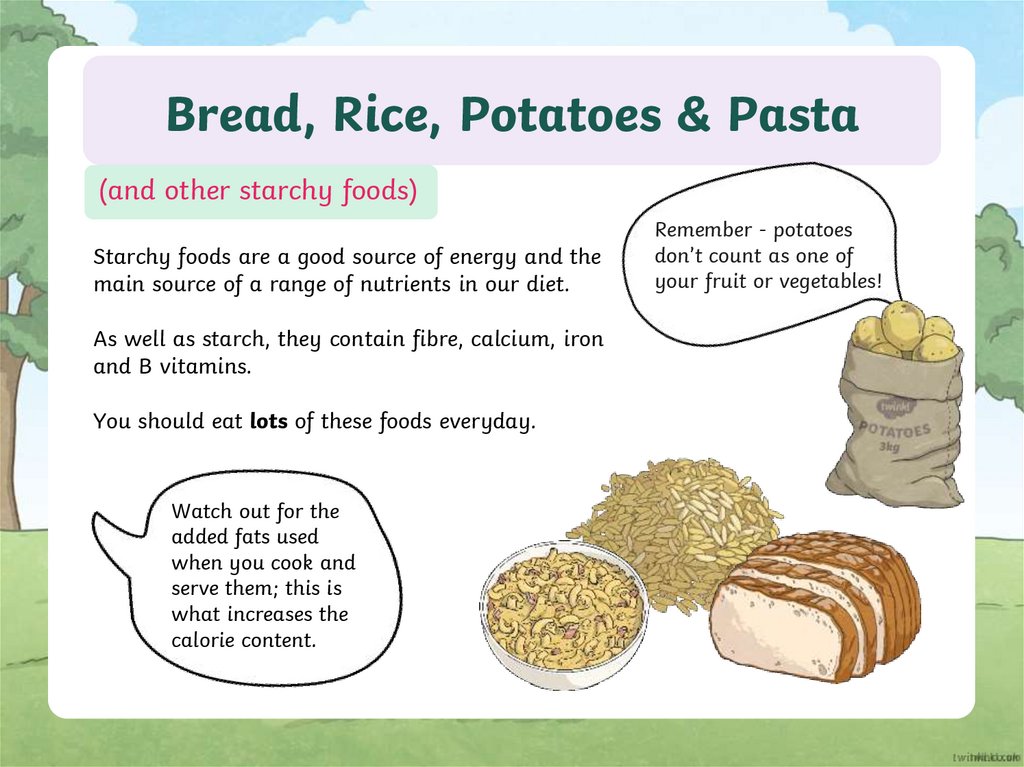
Bread, Rice, Potatoes & Pasta(and other starchy foods)
Starchy foods are a good source of energy and the
main source of a range of nutrients in our diet.
As well as starch, they contain fibre, calcium, iron
and B vitamins.
You should eat lots of these foods everyday.
Watch out for the
added fats used
when you cook and
serve them; this is
what increases the
calorie content.
Remember - potatoes
don’t count as one of
your fruit or vegetables!
8.
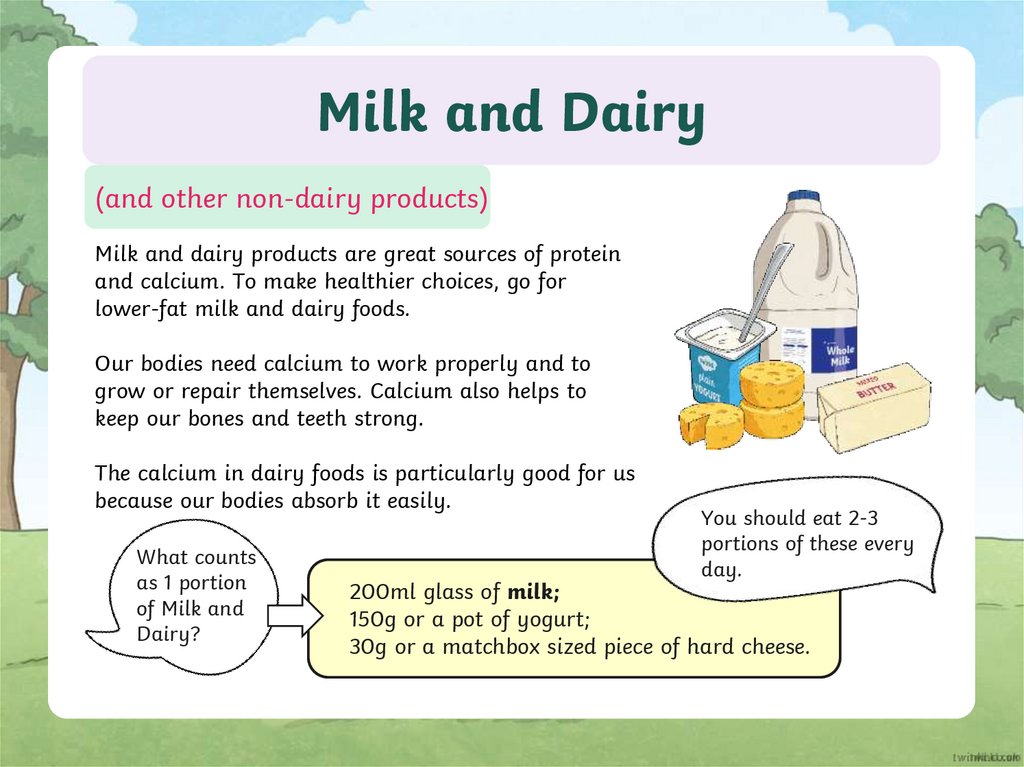
Milk and Dairy(and other non-dairy products)
Milk and dairy products are great sources of protein
and calcium. To make healthier choices, go for
lower-fat milk and dairy foods.
Our bodies need calcium to work properly and to
grow or repair themselves. Calcium also helps to
keep our bones and teeth strong.
The calcium in dairy foods is particularly good for us
because our bodies absorb it easily.
What counts
as 1 portion
of Milk and
Dairy?
You should eat 2-3
portions of these every
day.
200ml glass of milk;
150g or a pot of yogurt;
30g or a matchbox sized piece of hard cheese.
9.
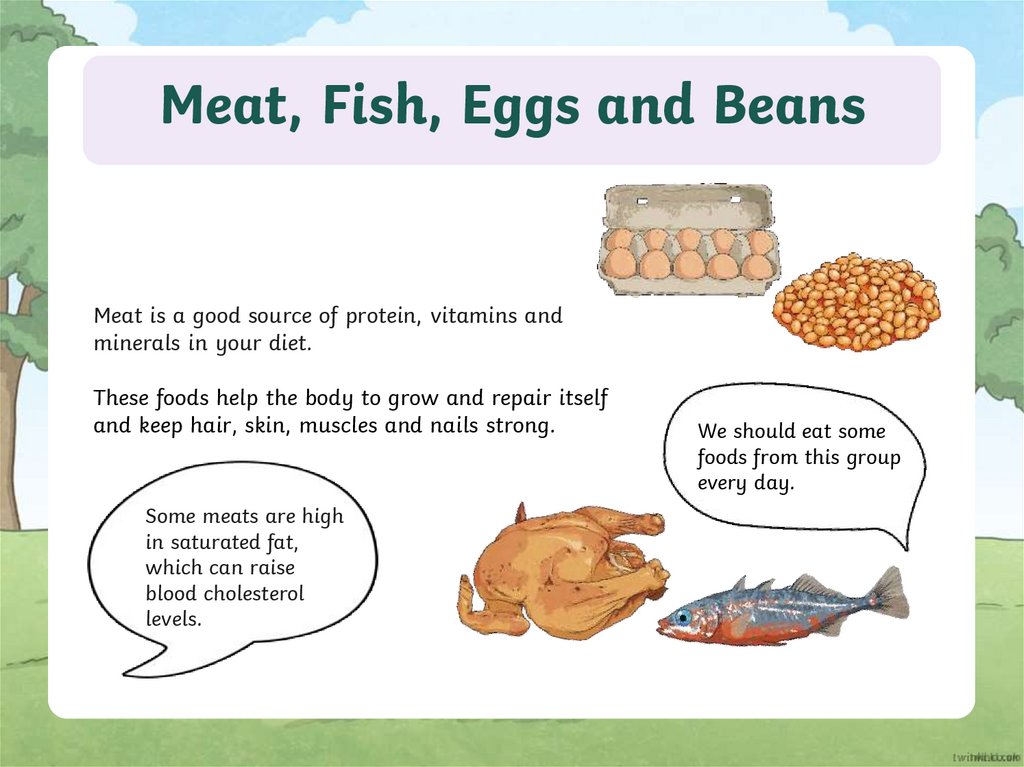
Meat, Fish, Eggs and BeansMeat is a good source of protein, vitamins and
minerals in your diet.
These foods help the body to grow and repair itself
and keep hair, skin, muscles and nails strong.
Some meats are high
in saturated fat,
which can raise
blood cholesterol
levels.
We should eat some
foods from this group
every day.
10.
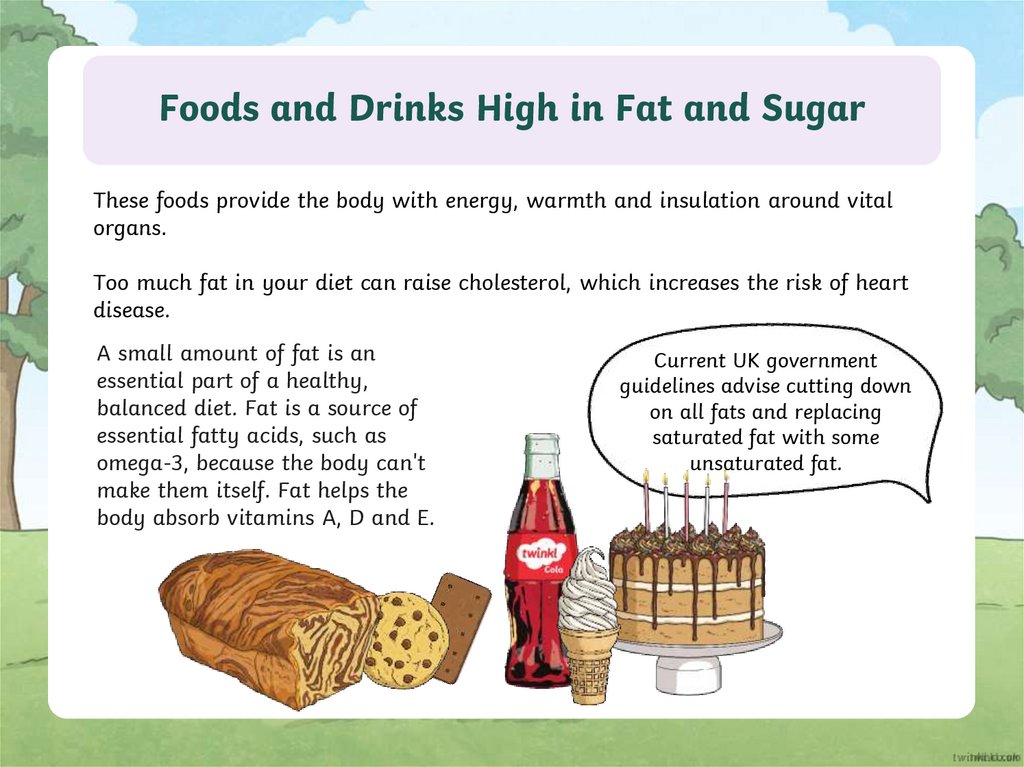
Foods and Drinks High in Fat and SugarThese foods provide the body with energy, warmth and insulation around vital
organs.
Too much fat in your diet can raise cholesterol, which increases the risk of heart
disease.
A small amount of fat is an
essential part of a healthy,
balanced diet. Fat is a source of
essential fatty acids, such as
omega-3, because the body can't
make them itself. Fat helps the
body absorb vitamins A, D and E.
Current UK government
guidelines advise cutting down
on all fats and replacing
saturated fat with some
unsaturated fat.
11.
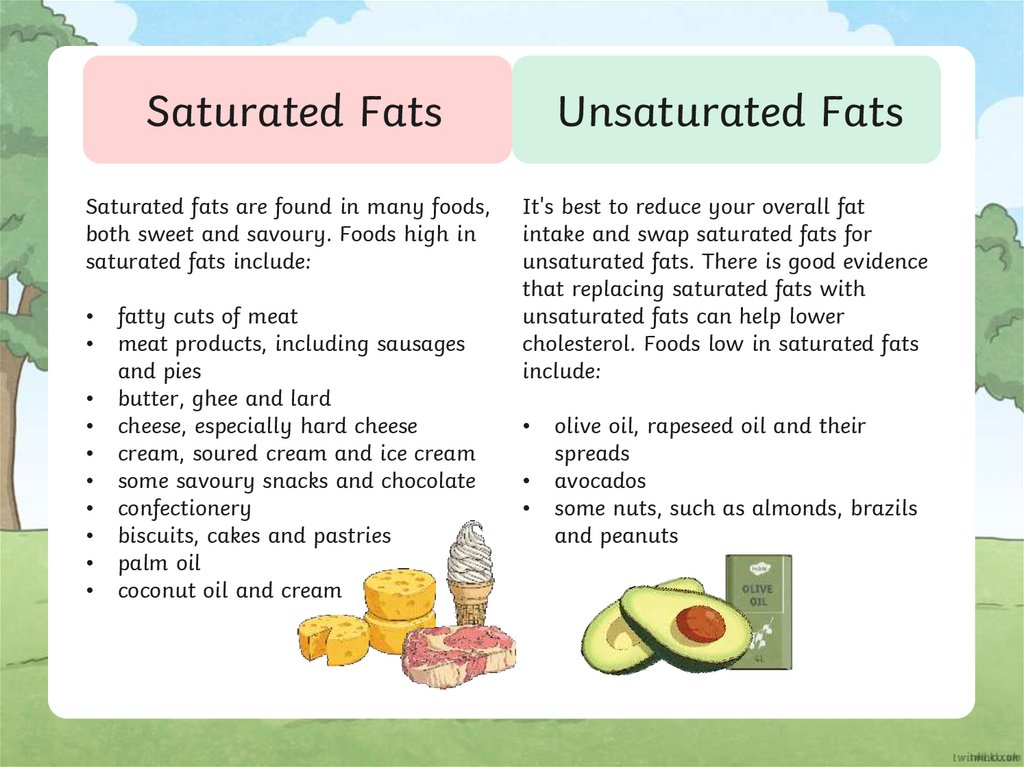
Saturated FatsUnsaturated Fats
Saturated fats are found in many foods,
both sweet and savoury. Foods high in
saturated fats include:
It's best to reduce your overall fat
intake and swap saturated fats for
unsaturated fats. There is good evidence
that replacing saturated fats with
unsaturated fats can help lower
cholesterol. Foods low in saturated fats
include:
fatty cuts of meat
meat products, including sausages
and pies
butter, ghee and lard
cheese, especially hard cheese
cream, soured cream and ice cream
some savoury snacks and chocolate
confectionery
biscuits, cakes and pastries
palm oil
coconut oil and cream
olive oil, rapeseed oil and their
spreads
avocados
some nuts, such as almonds, brazils
and peanuts
12.
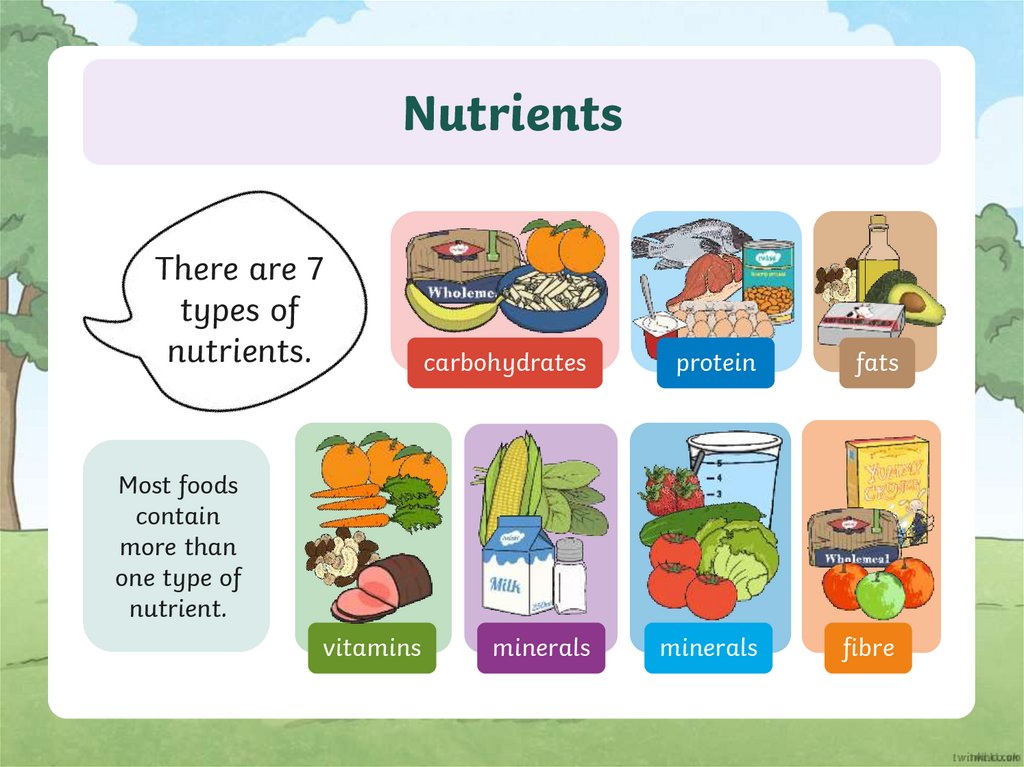
NutrientsThere are 7
types of
nutrients.
carbohydrates
protein
fats
minerals
minerals
fibre
Most foods
contain
more than
one type of
nutrient.
vitamins
13.
NutrientsFor example . . .
Cereal contains fibre, carbohydrates
and vitamins. However, it is included in
the fibre group because this is the main
nutrient you get from eating it.
Did you know that
vegetables contain water?
However, we eat them
because they are high in
vitamins and minerals.
14.
Types of Nutrients - ProteinsProteins help your body to grow and repair itself.
Foods high in
protein include:
Red Meat
Fish
Beans
Yoghurt
15.
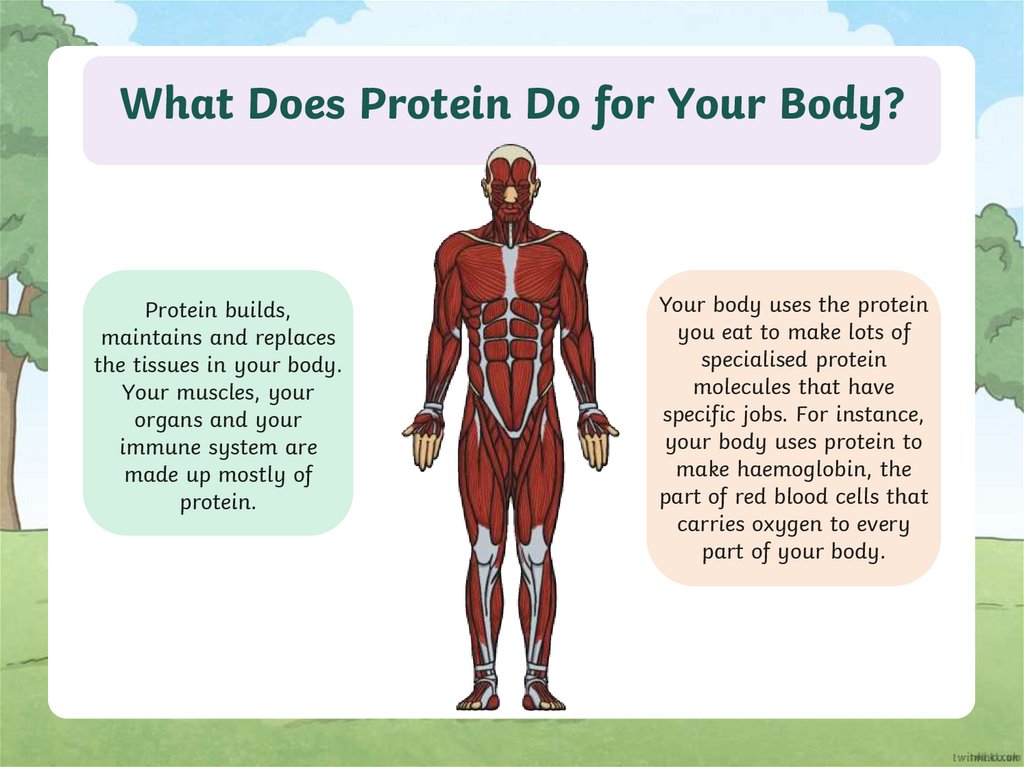
What Does Protein Do for Your Body?Protein builds,
maintains and replaces
the tissues in your body.
Your muscles, your
organs and your
immune system are
made up mostly of
protein.
Your body uses the protein
you eat to make lots of
specialised protein
molecules that have
specific jobs. For instance,
your body uses protein to
make haemoglobin, the
part of red blood cells that
carries oxygen to every
part of your body.
16.
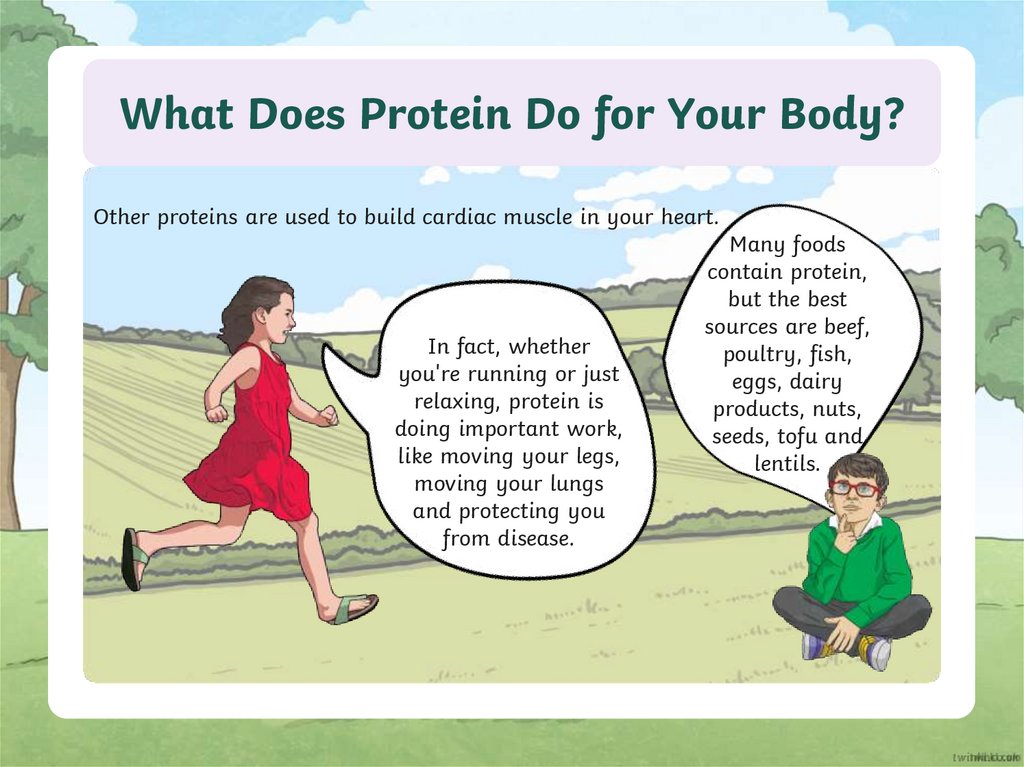
What Does Protein Do for Your Body?Other proteins are used to build cardiac muscle in your heart.
In fact, whether
you're running or just
relaxing, protein is
doing important work,
like moving your legs,
moving your lungs
and protecting you
from disease.
Many foods
contain protein,
but the best
sources are beef,
poultry, fish,
eggs, dairy
products, nuts,
seeds, tofu and
lentils.
17.
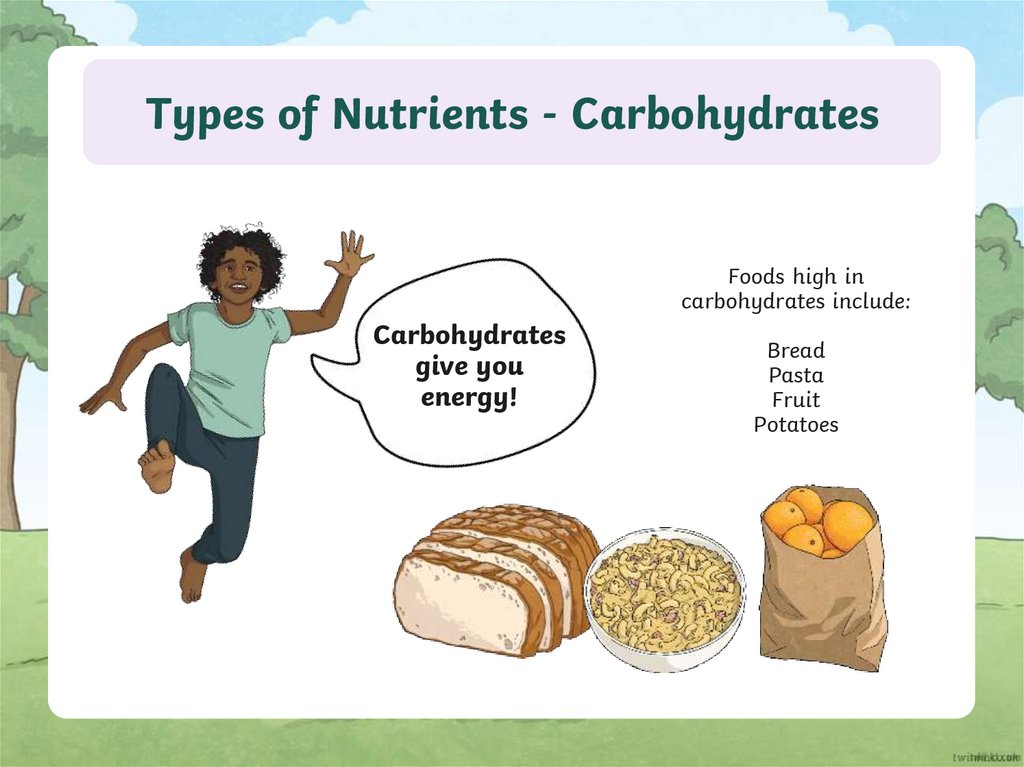
Types of Nutrients - CarbohydratesFoods high in
carbohydrates include:
Carbohydrates
give you
energy!
Bread
Pasta
Fruit
Potatoes
18.
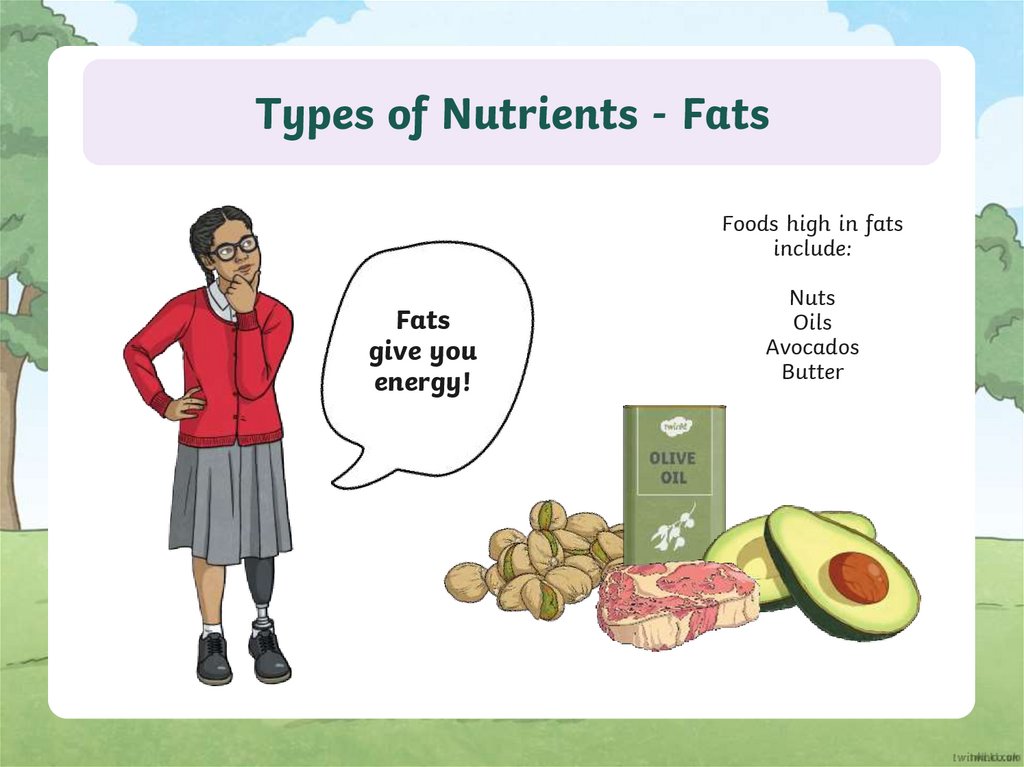
Types of Nutrients - FatsFoods high in fats
include:
Fats
give you
energy!
Nuts
Oils
Avocados
Butter
19.
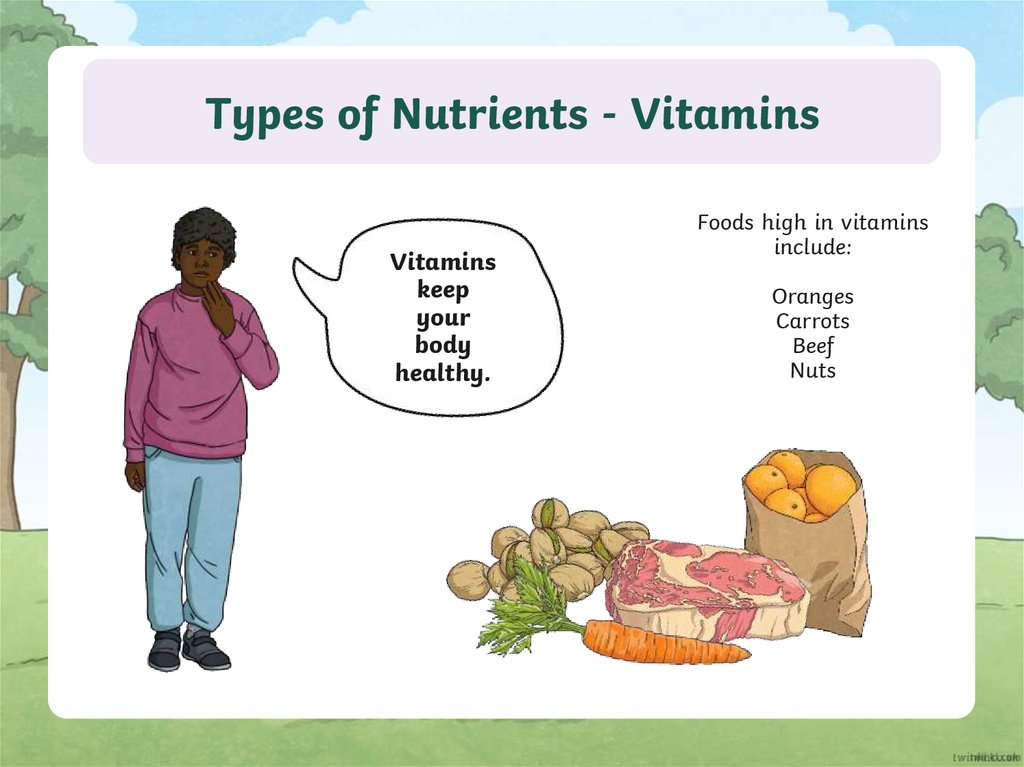
Types of Nutrients - VitaminsVitamins
keep
your
body
healthy.
Foods high in vitamins
include:
Oranges
Carrots
Beef
Nuts
20.
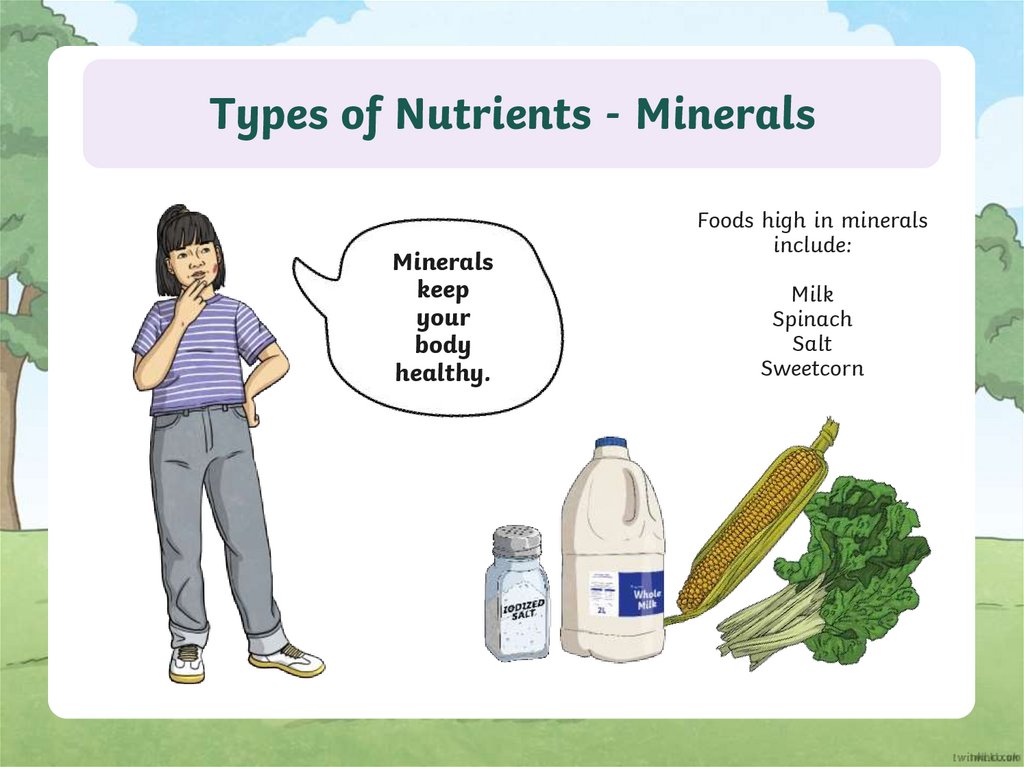
Types of Nutrients - MineralsMinerals
keep
your
body
healthy.
Foods high in minerals
include:
Milk
Spinach
Salt
Sweetcorn
21.
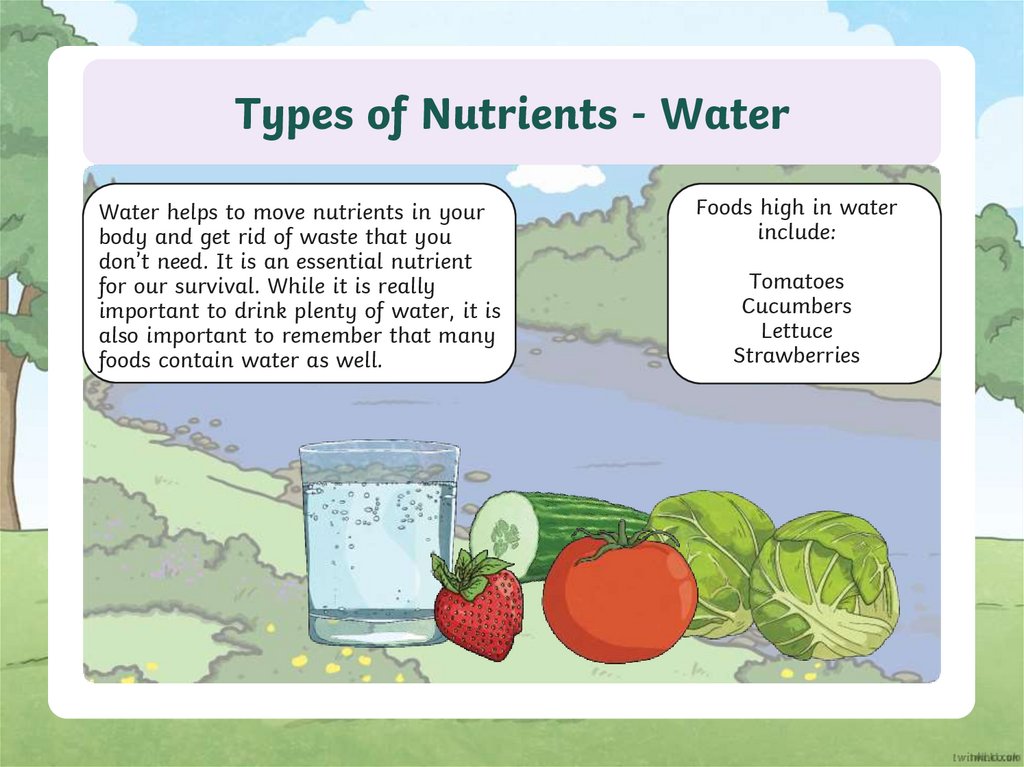
Types of Nutrients - WaterWater helps to move nutrients in your
body and get rid of waste that you
don’t need. It is an essential nutrient
for our survival. While it is really
important to drink plenty of water, it is
also important to remember that many
foods contain water as well.
Foods high in water
include:
Tomatoes
Cucumbers
Lettuce
Strawberries
22.
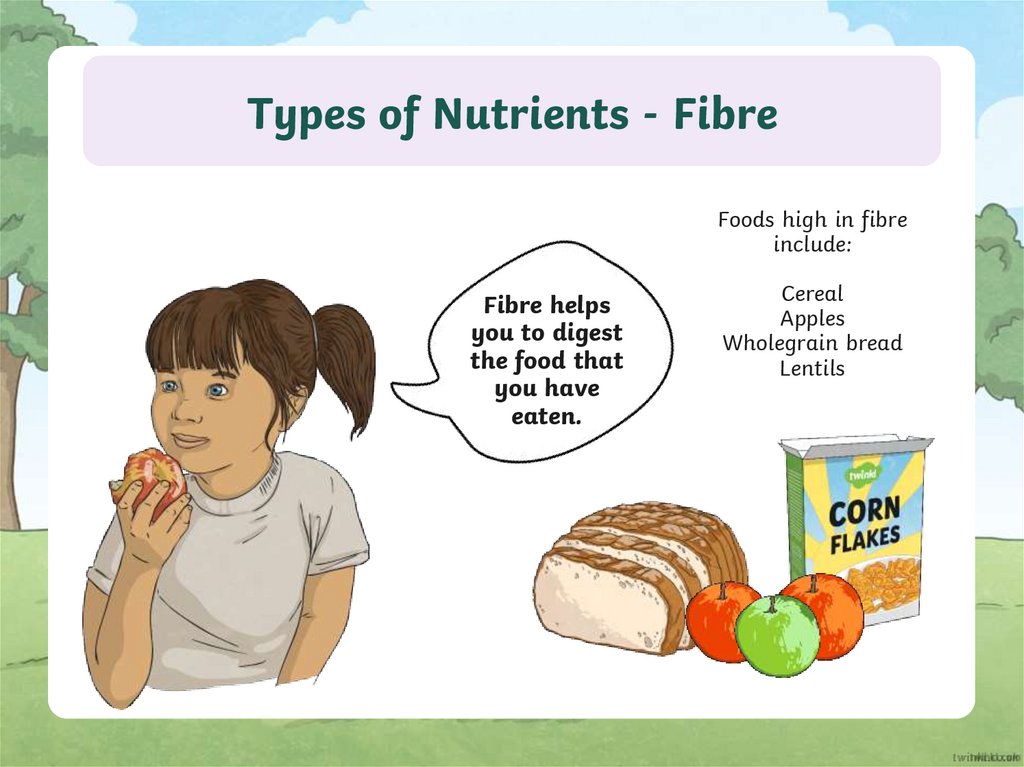
Types of Nutrients - FibreFoods high in fibre
include:
Fibre helps
you to digest
the food that
you have
eaten.
Cereal
Apples
Wholegrain bread
Lentils
23.
Can we all eat every type of food?Food Allergy
Food allergies are rare. About 2%
of the population and 8% of
children under the age of three
are affected.
A food allergy is a rapid reaction
to a food by your immune
system. It can trigger symptoms
such as a rash, wheezing and
itching or sometimes, more
seriously, can affect breathing.
The most common food allergies
are to fish and shellfish and nuts,
including peanuts, walnuts,
hazelnuts and brazil nuts.
Food Intolerance
Food intolerances are more
common than food allergies.
The symptoms of food
intolerance tend to come on
more slowly, often many
hours after eating the problem
food.
Typical symptoms include
bloating and stomach cramps.
It's possible to be intolerant to
several different foods. This
can make it difficult to
identify which foods are
causing the problem.