
 География
Похожие презентации:



Геология и полезные ископаемые океана и полярных регионов. Pertophysics of the ocean sediments
1. Геология и полезные ископаемые океана и полярных регионов Lecture 2 Pertophysics of the ocean sediments
Density, acoustic velocity, electric resistivity,magnetization, radioactivity
Alexey Piskarev
Prof. SPb State University
2.
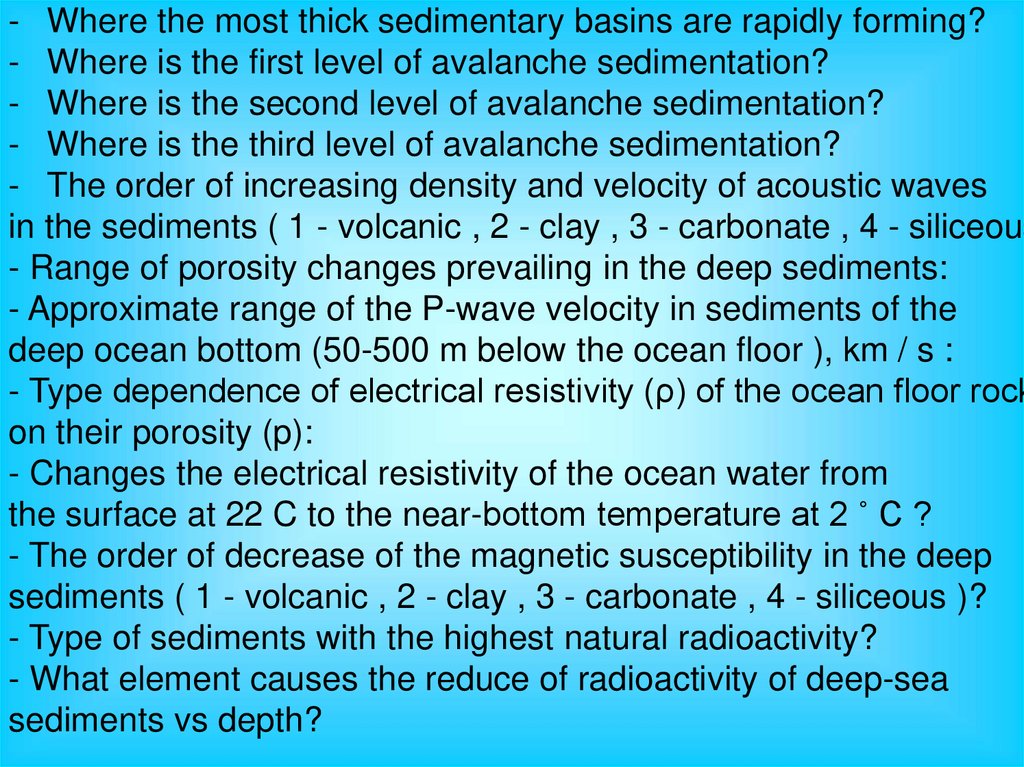
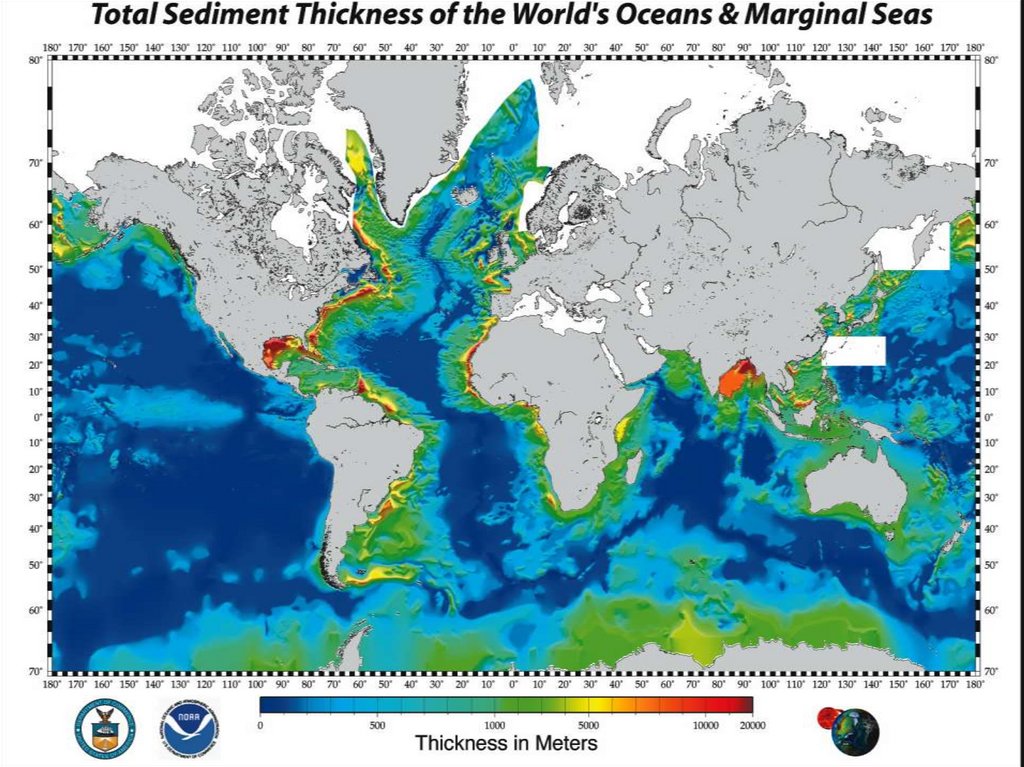
- Where the most thick sedimentary basins are rapidly forming?- Where is the first level of avalanche sedimentation?
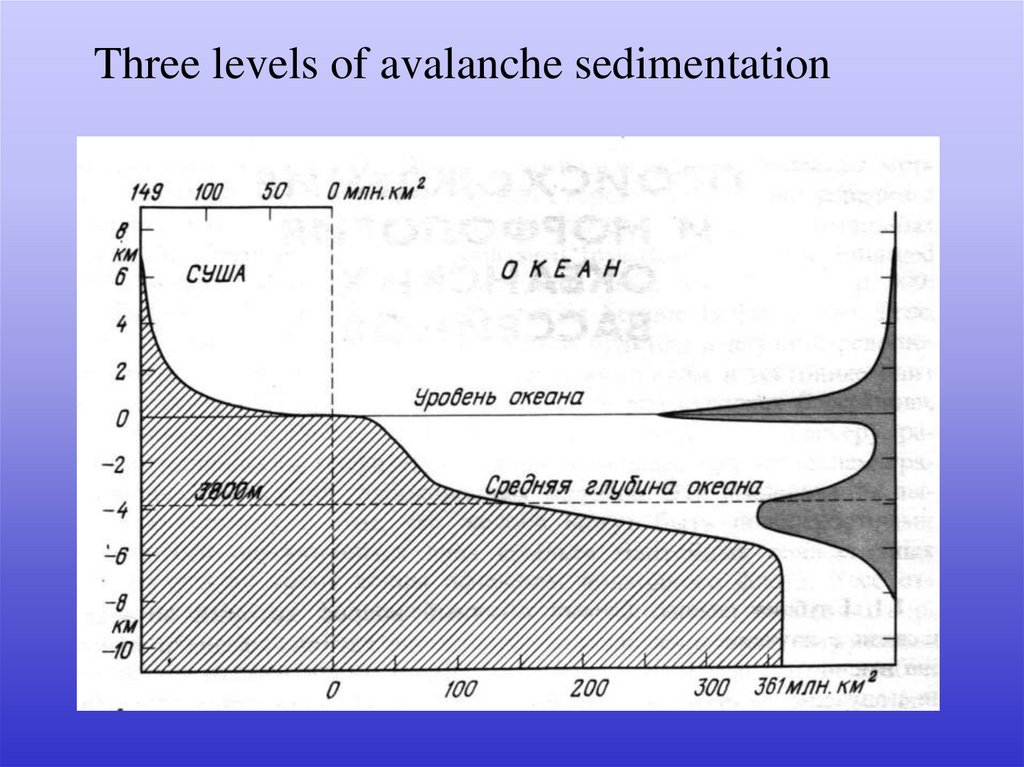
- Where is the second level of avalanche sedimentation?
- Where is the third level of avalanche sedimentation?
- The order of increasing density and velocity of acoustic waves
in the sediments ( 1 - volcanic , 2 - clay , 3 - carbonate , 4 - siliceous
- Range of porosity changes prevailing in the deep sediments:
- Approximate range of the P-wave velocity in sediments of the
deep ocean bottom (50-500 m below the ocean floor ), km / s :
- Type dependence of electrical resistivity (ρ) of the ocean floor rock
on their porosity (p):
- Changes the electrical resistivity of the ocean water from
the surface at 22 C to the near-bottom temperature at 2 ˚ C ?
- The order of decrease of the magnetic susceptibility in the deep
sediments ( 1 - volcanic , 2 - clay , 3 - carbonate , 4 - siliceous )?
- Type of sediments with the highest natural radioactivity?
- What element causes the reduce of radioactivity of deep-sea
sediments vs depth?
3.
4.
Arctic Ocean: Sediment Thickness5.
Three levels of avalanche sedimentation6.
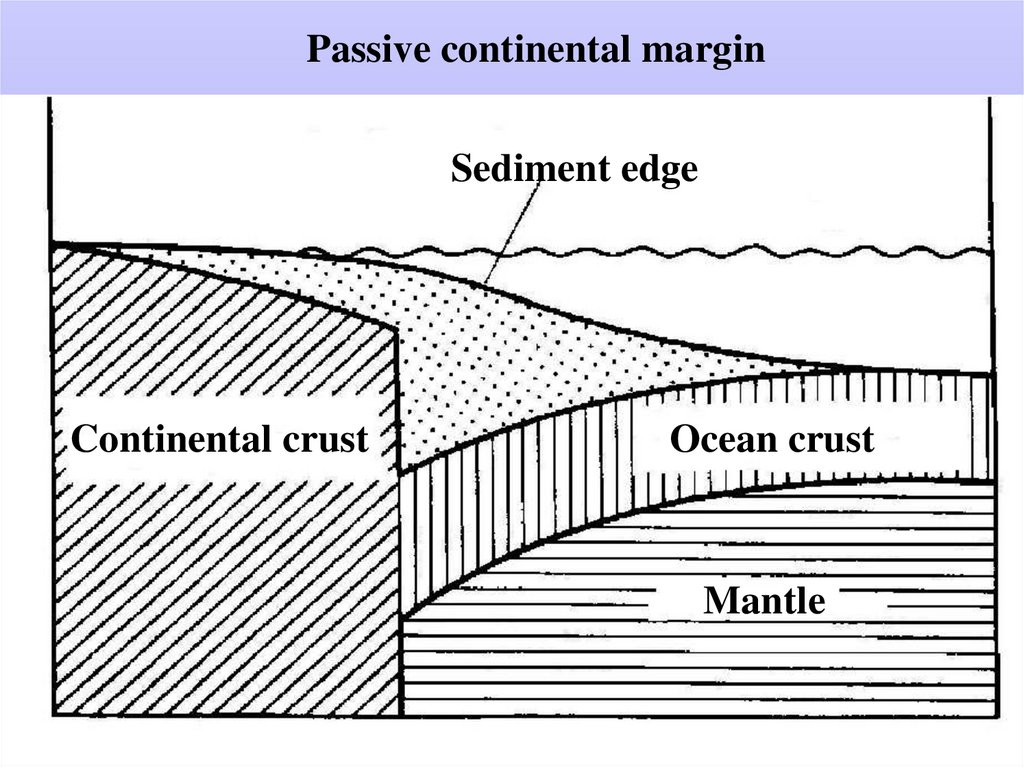
Passive continental marginSediment edge
Continental crust
Ocean crust
Mantle
7.
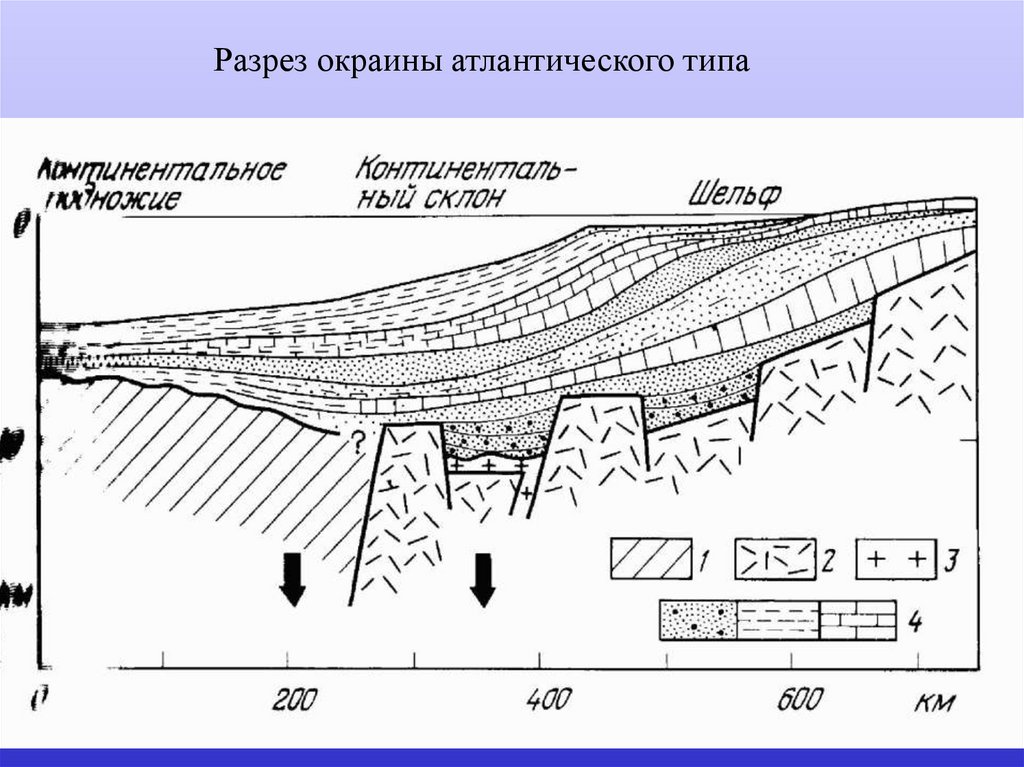
Разрез окраины атлантического типа8.
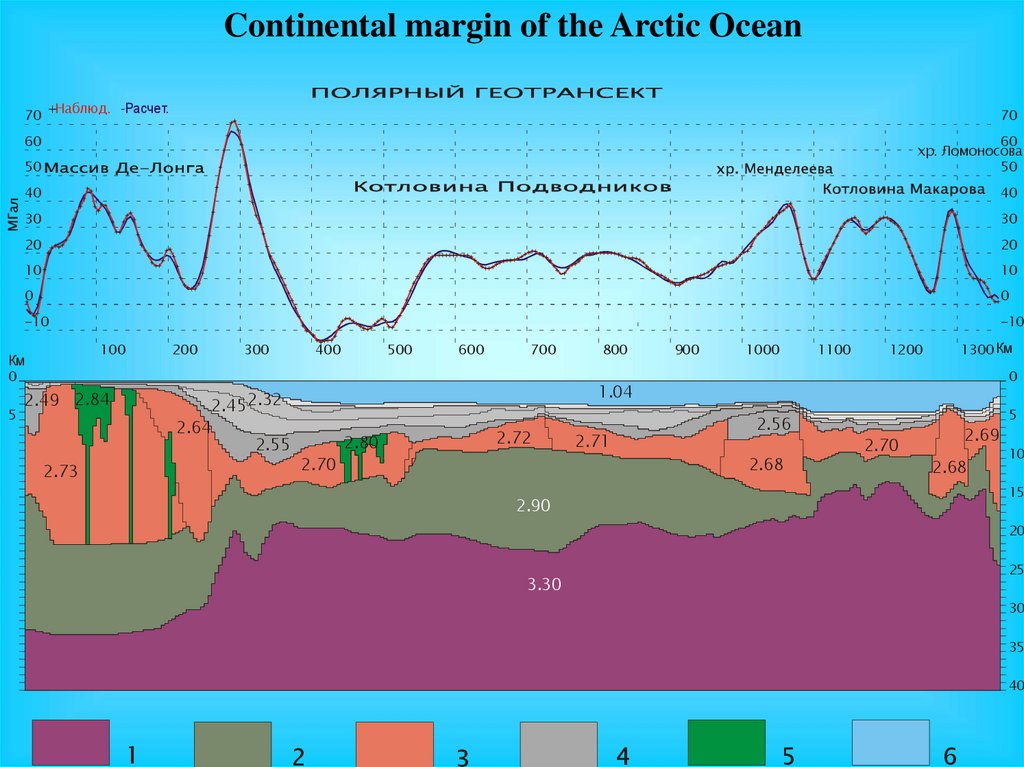
Continental margin of the Arctic Ocean70
+Наблюд. -Расчет.
70
60
50
60
хр. Ломоносова
50
40
40
30
30
20
20
10
10
0
0
-10
-10
100
Км
0
5
200
2.49 2.84
300
400
500
600
700
2.55
70
+Наблюд. -Расчет.
1000
1100
1200
1300 Км
0
2.72
2.56
2.71
60
хр. Ломоносова
50
50
40
40
30
30
20
20
10
5
2.80
70
60
10
0
0
-10
-10
100
Км
0
200
2.49 2.84
300
400
500
600
700
2.55
800
900
1000
1100
1200
1300Км0
1.04
2.452.32
2.64
2.73
2.72
2.80
2.56
2.71
2.70
2.68
2.69
2.70
2.68
5
10
15
2.90
20
25
3.30
30
35
40
1
2.73
900
1.04
2.45 2.32
2.64
800
2
3
4
5
6
2.70
2.68
2.69
2.70
2.68
5
10
15
2.90
20
25
3.30
30
35
40
1
2
3
4
5
6
9.
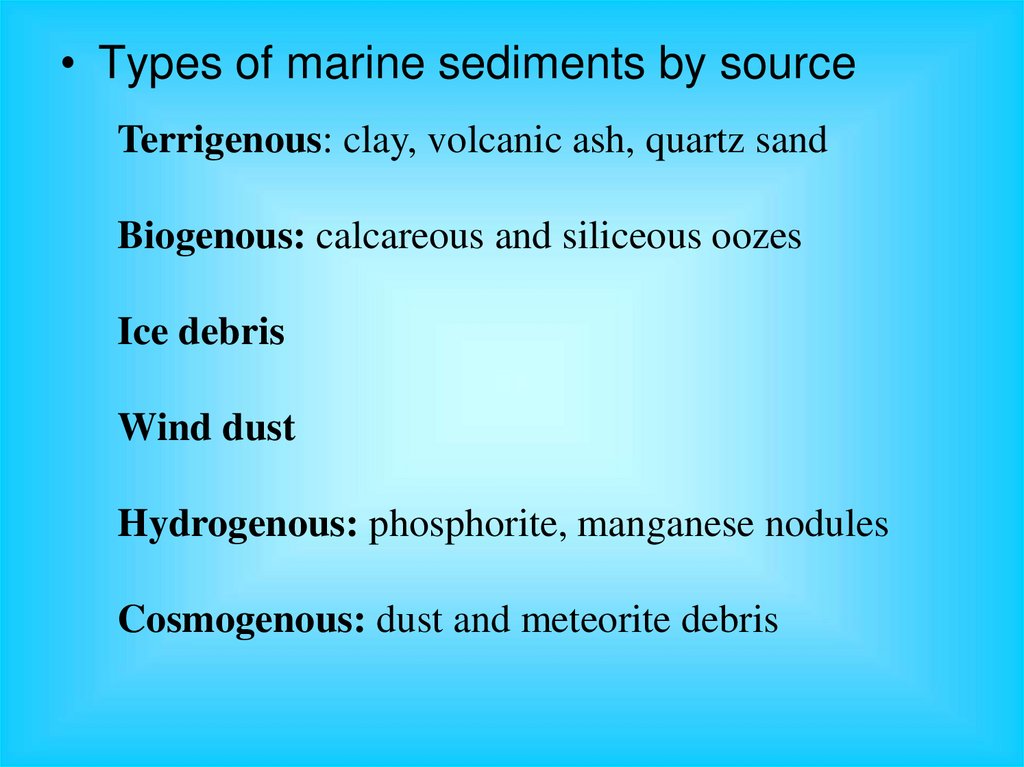
• Types of marine sediments by sourceTerrigenous: clay, volcanic ash, quartz sand
Biogenous: calcareous and siliceous oozes
Ice debris
Wind dust
Hydrogenous: phosphorite, manganese nodules
Cosmogenous: dust and meteorite debris
10.
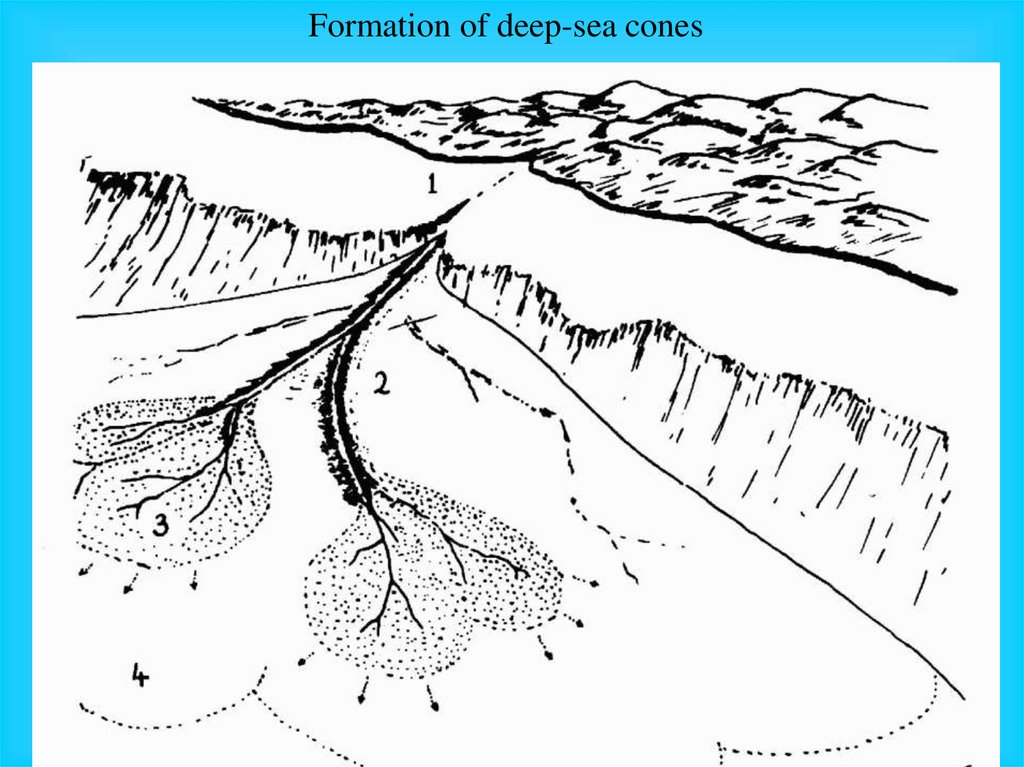
Formation of deep-sea cones11.
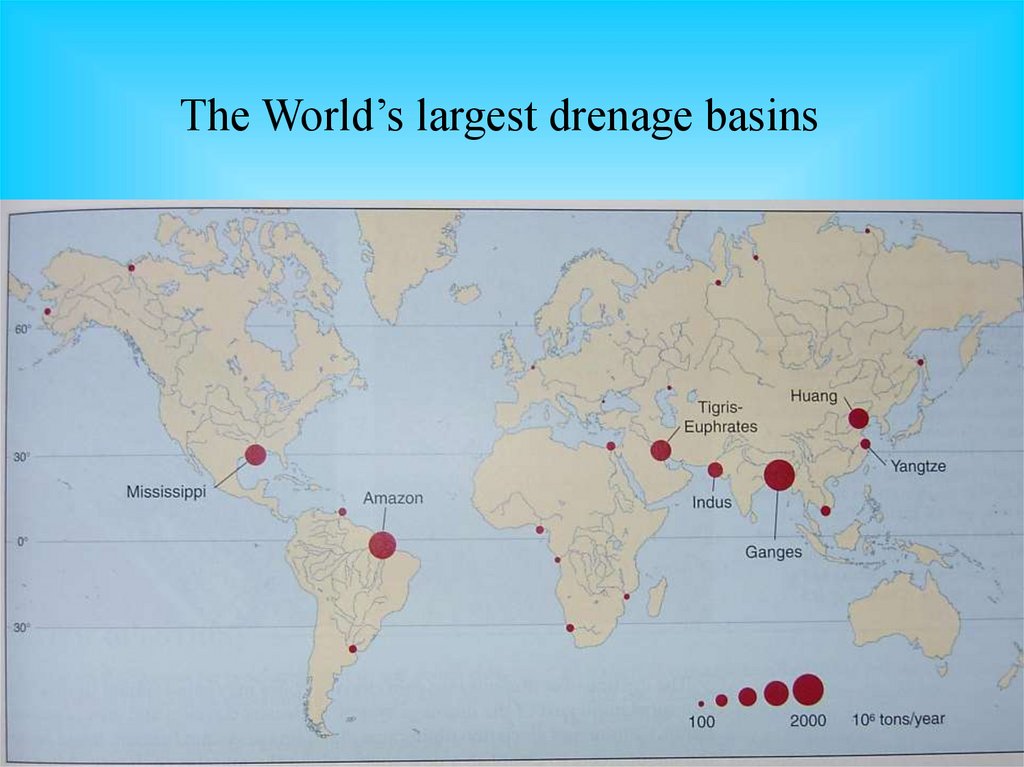
The World’s largest drenage basins12.
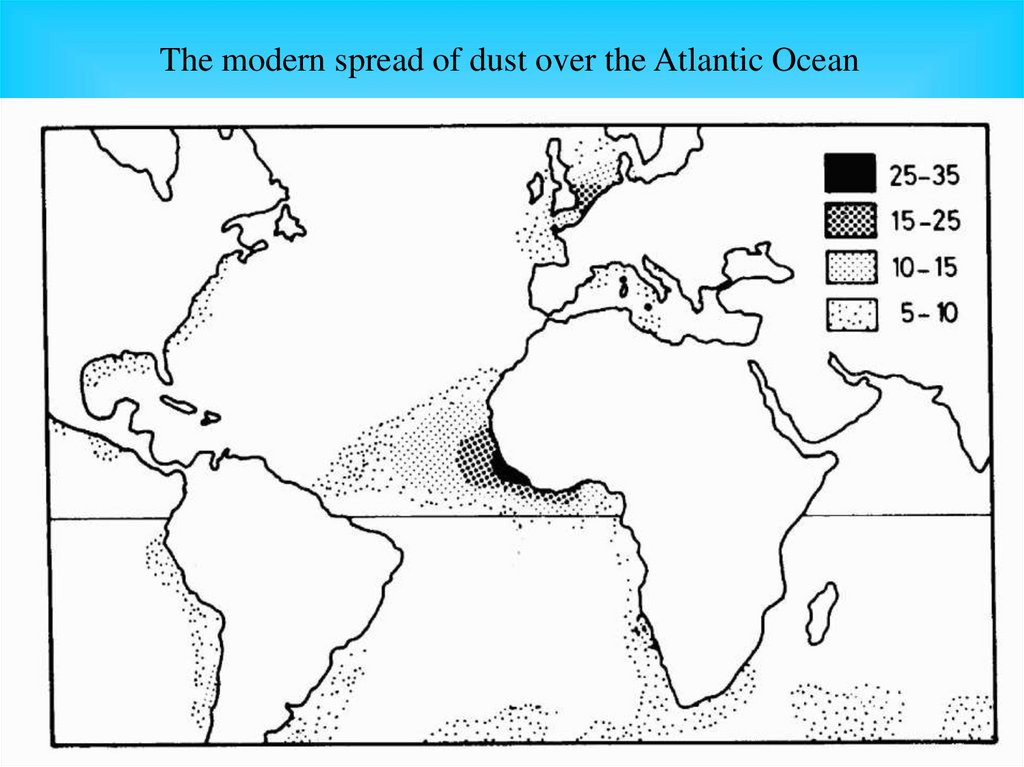
The modern spread of dust over the Atlantic Ocean13.
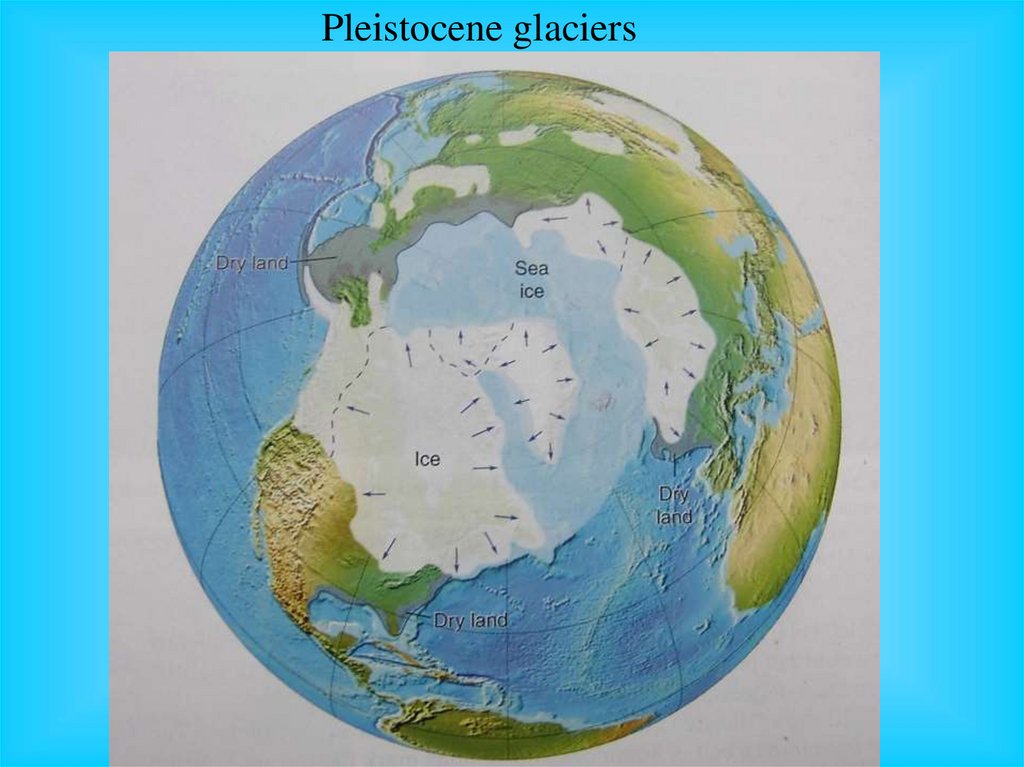
Pleistocene glaciers14.
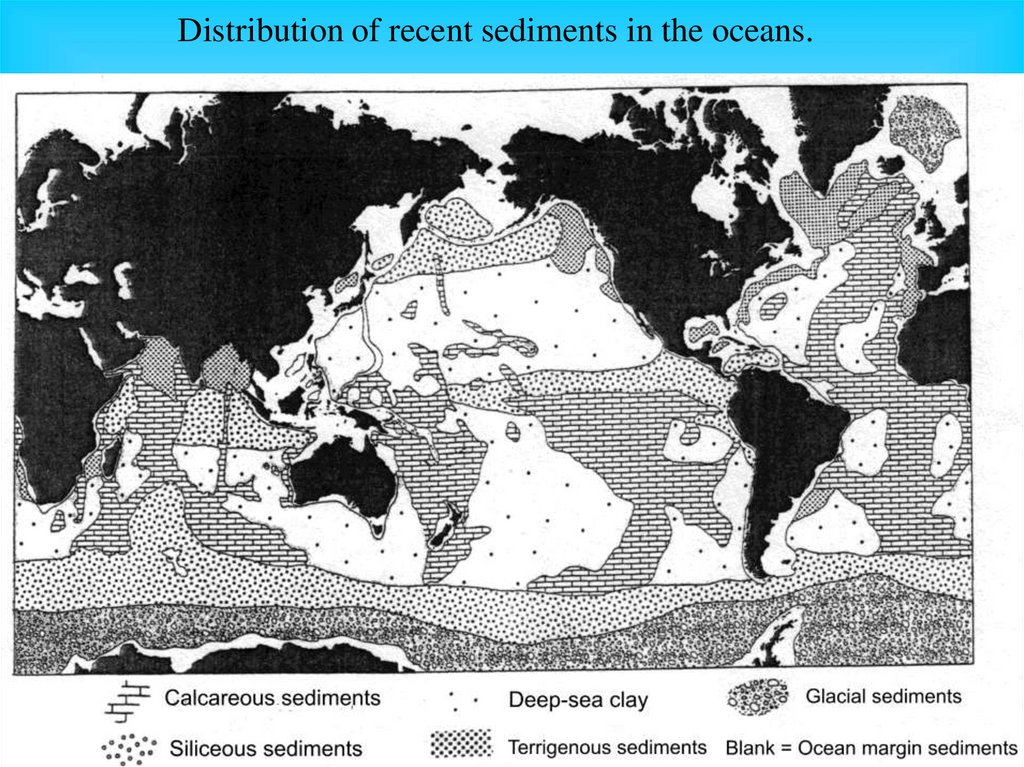
Distribution of recent sediments in the oceans.15.
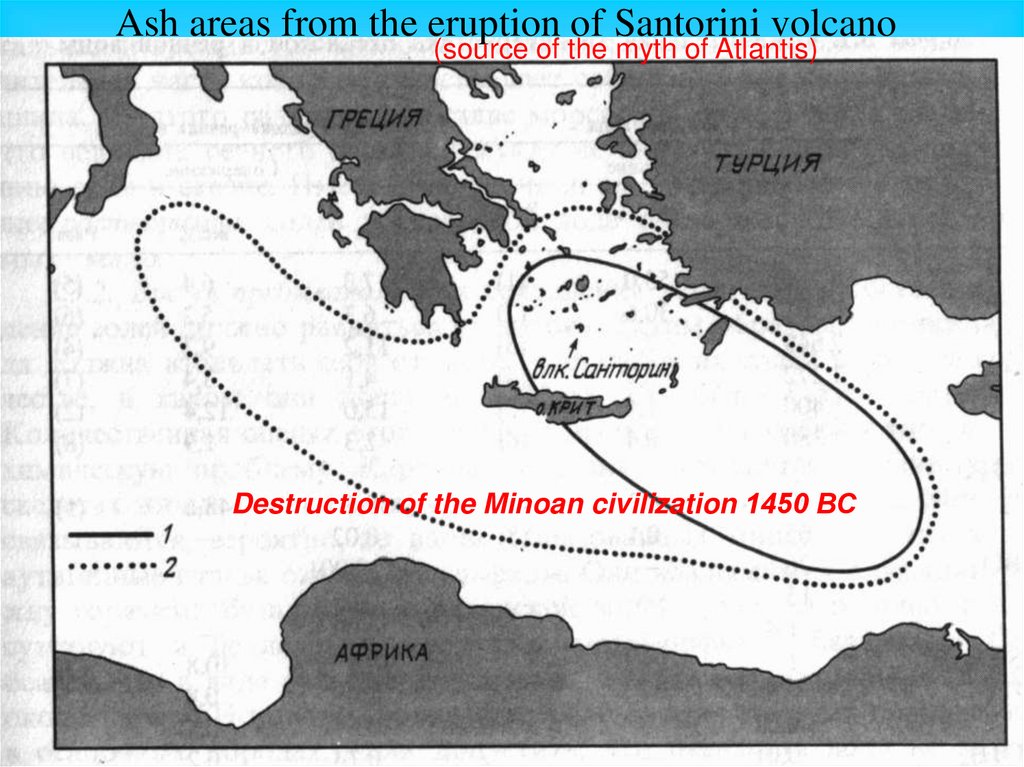
Ash areas from the eruption of Santorini volcano(source of the myth of Atlantis)
Destruction of the Minoan civilization 1450 ВС
16.
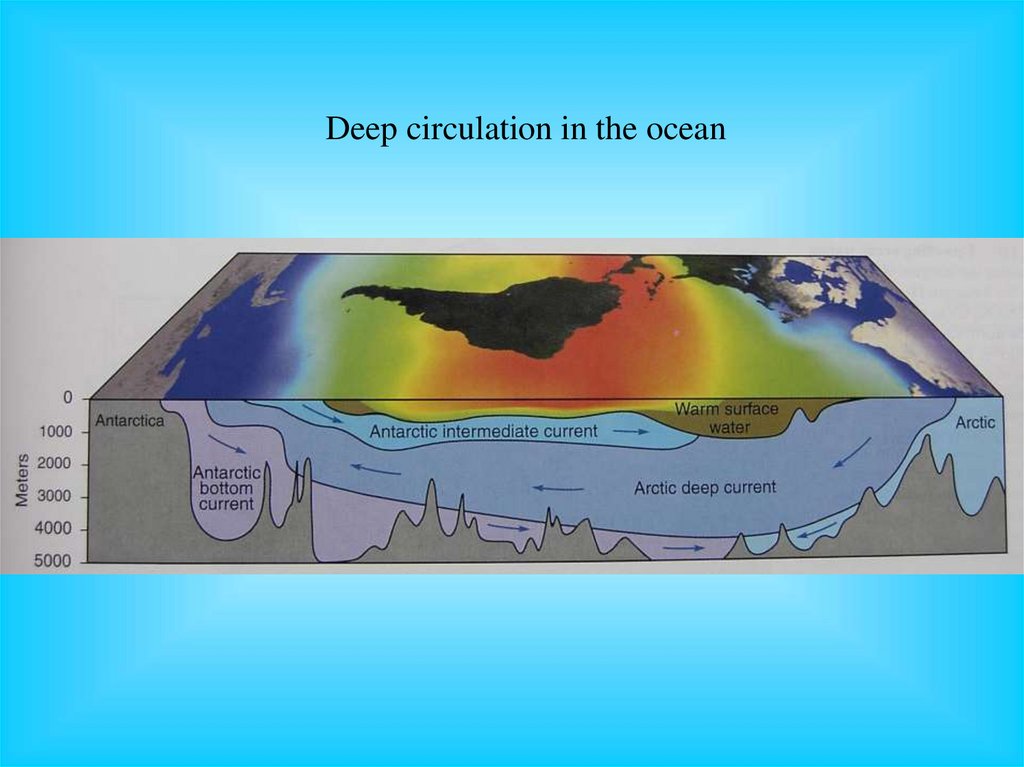
Deep circulation in the ocean17.
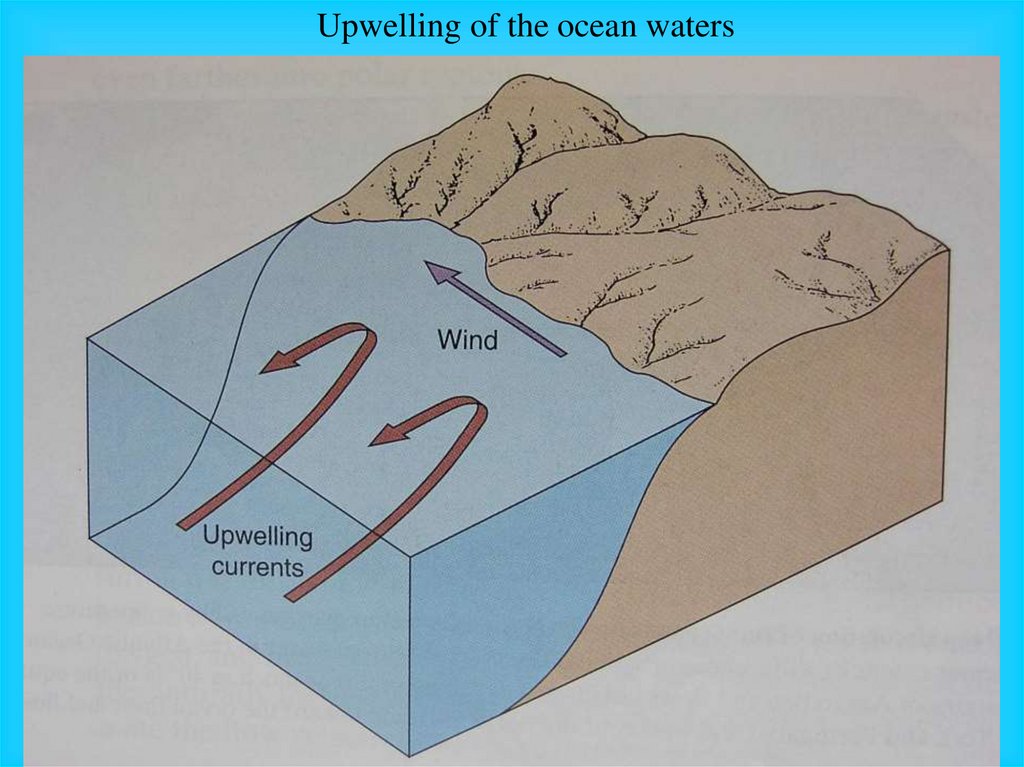
Upwelling of the ocean waters18.
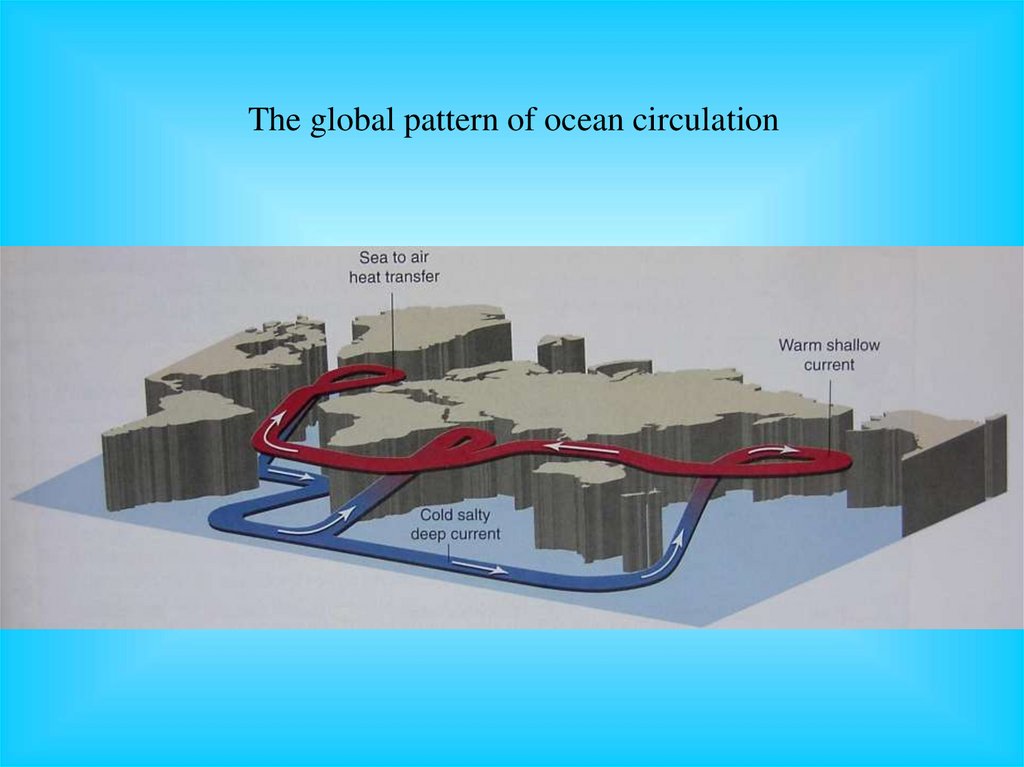
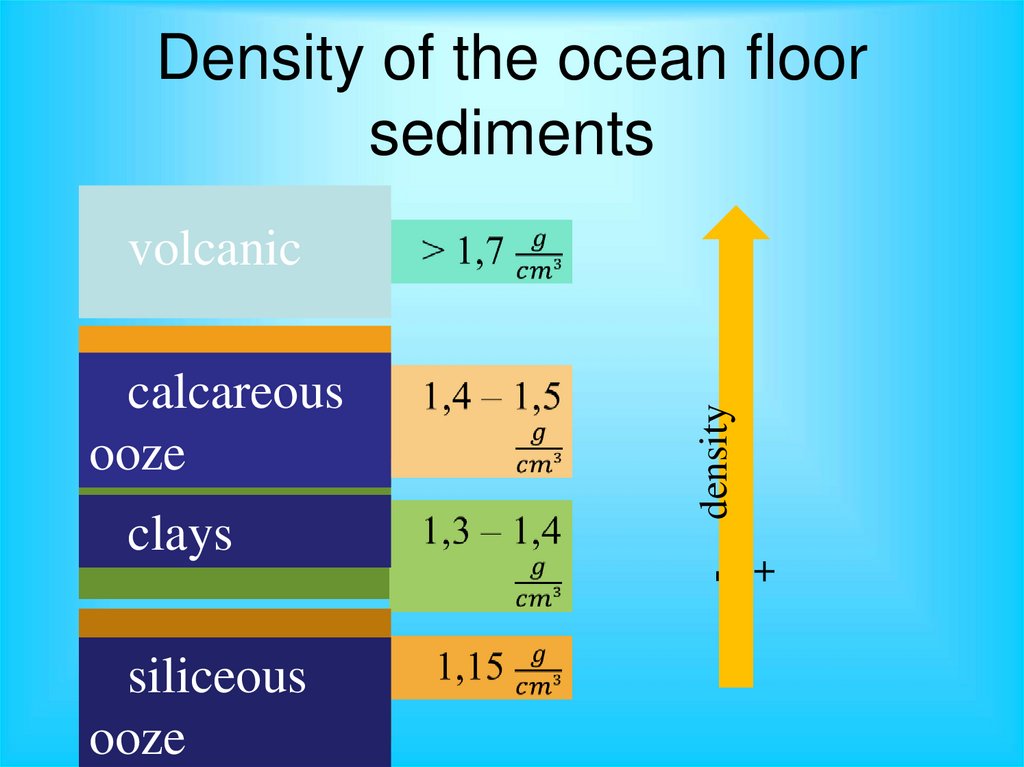
The global pattern of ocean circulation19. Density of the ocean floor sediments
clayssiliceous
ooze
+
calcareous
ooze
density
volcanic
20.
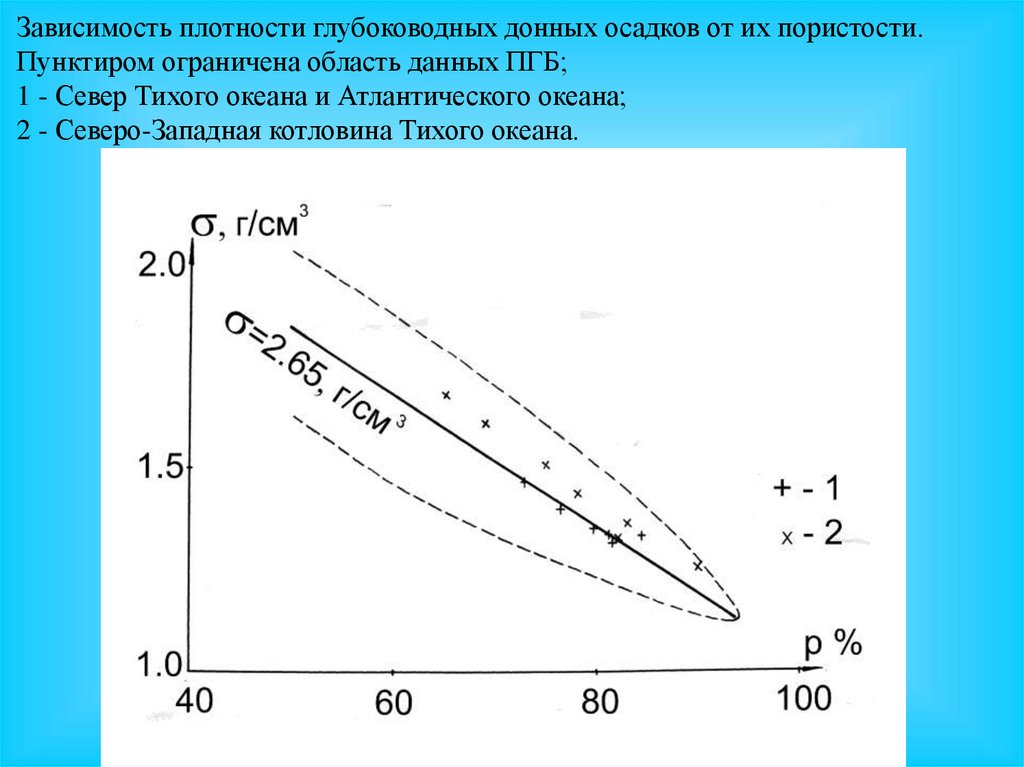
Зависимость плотности глубоководных донных осадков от их пористости.Пунктиром ограничена область данных ПГБ;
1 - Север Тихого океана и Атлантического океана;
2 - Северо-Западная котловина Тихого океана.
21.
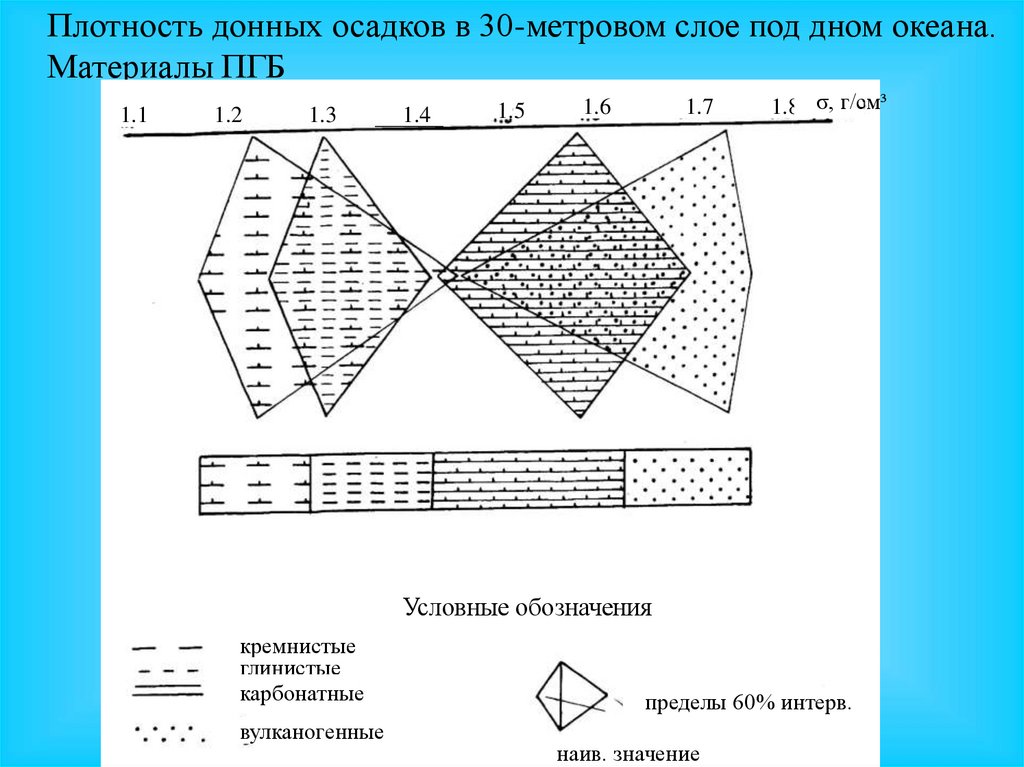
Плотность донных осадков в 30-метровом слое под дном океана.Материалы ПГБ
1.1
1.2
1.3
1.4
1.5
1.6
1.7
1.8 σ, г/см³
Условные обозначения
кремнистые
глинистые
карбонатные
вулканогенные
пределы 60% интерв.
наив. значение
22.
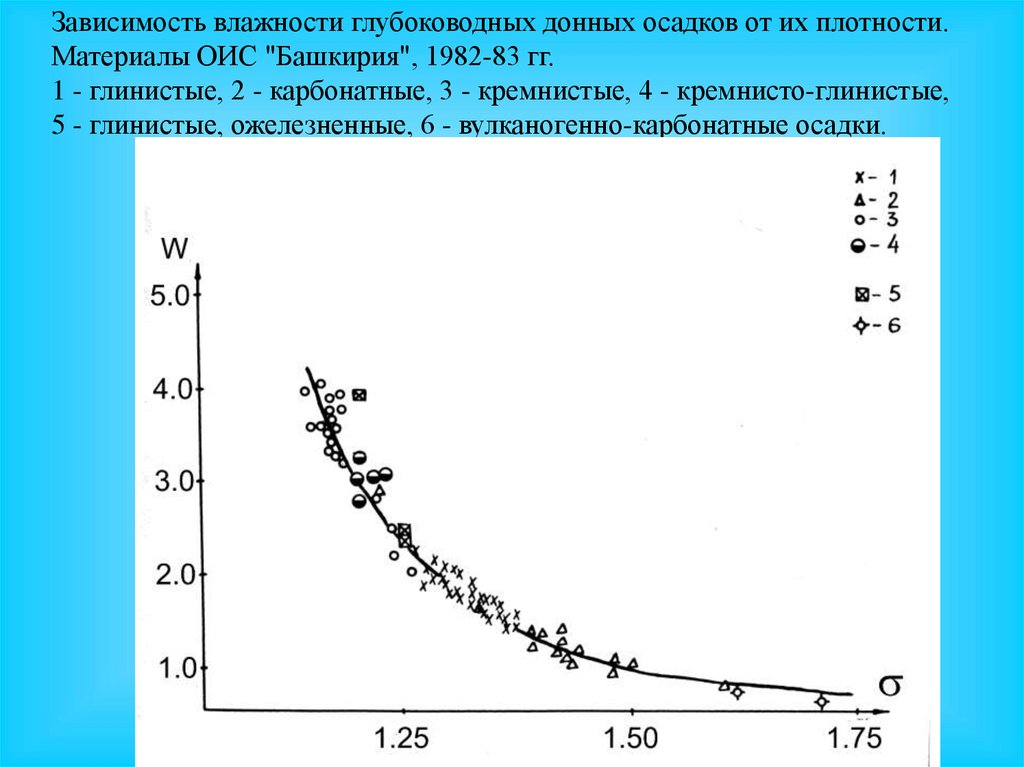
Зависимость влажности глубоководных донных осадков от их плотности.Материалы ОИС "Башкирия", 1982-83 гг.
1 - глинистые, 2 - карбонатные, 3 - кремнистые, 4 - кремнисто-глинистые,
5 - глинистые, ожелезненные, 6 - вулканогенно-карбонатные осадки.
23.
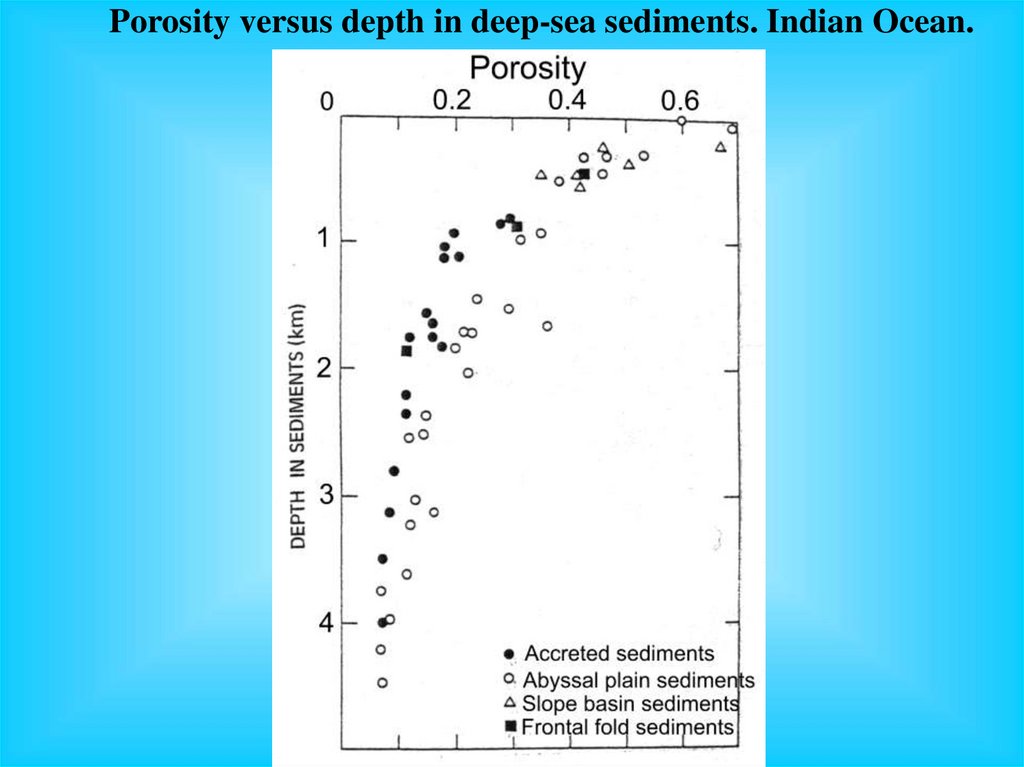
Porosity versus depth in deep-sea sediments. Indian Ocean.24.
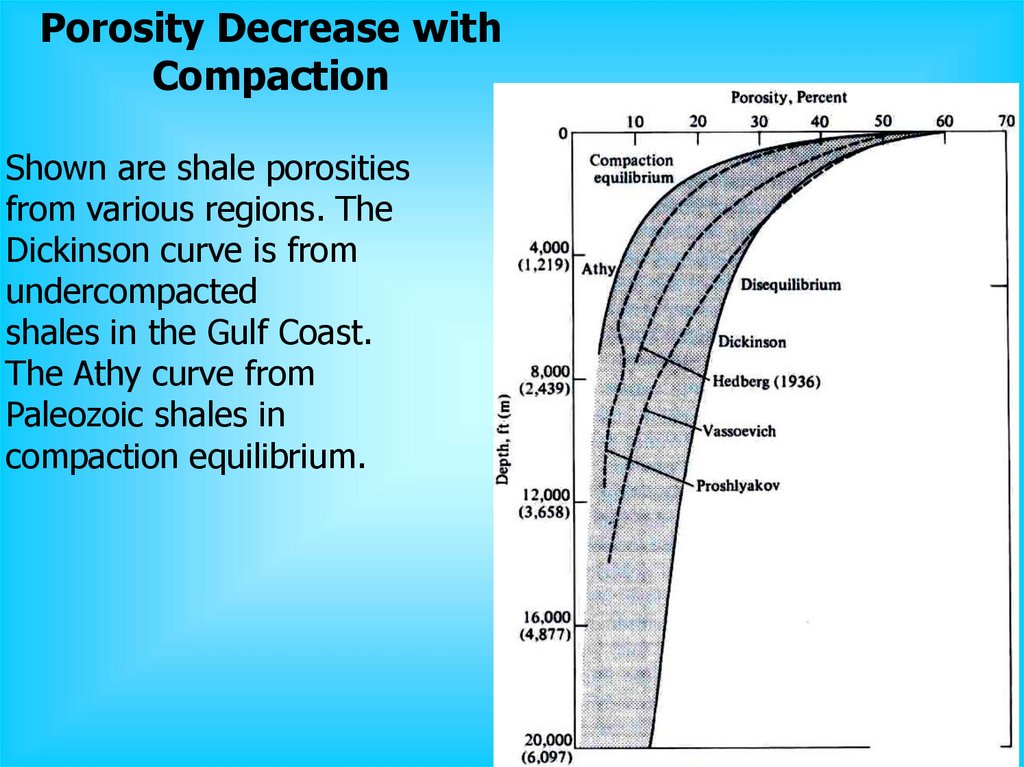
Porosity Decrease withCompaction
Shown are shale porosities
from various regions. The
Dickinson curve is from
undercompacted
shales in the Gulf Coast.
The Athy curve from
Paleozoic shales in
compaction equilibrium.
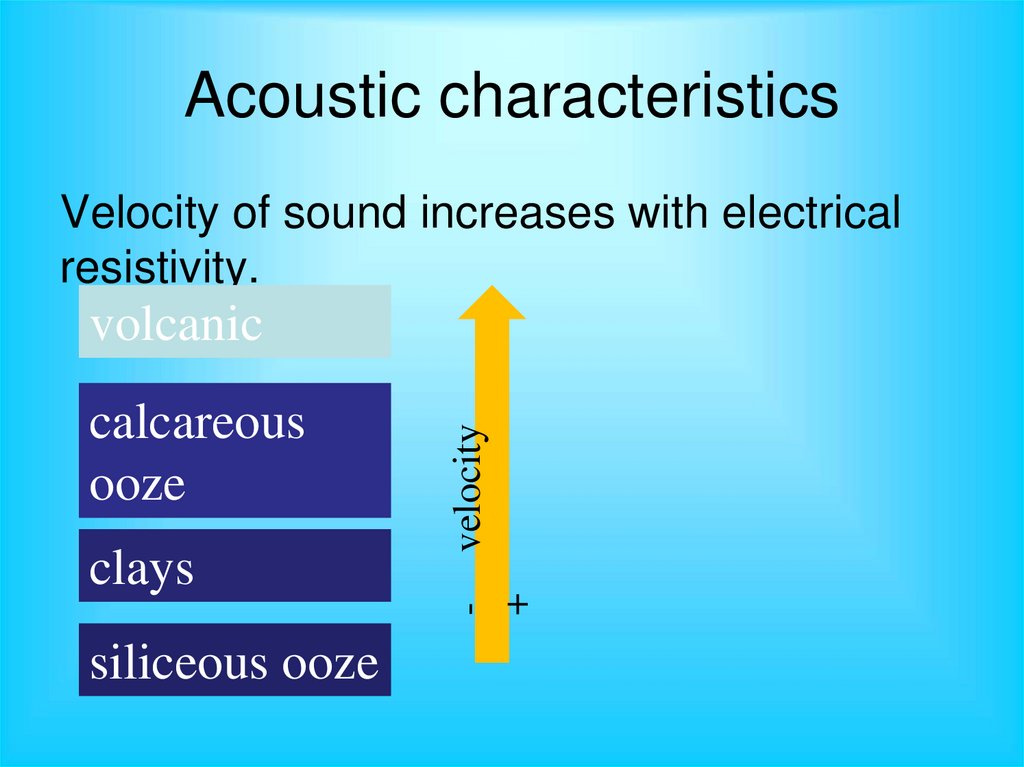
25. Acoustic characteristics
Velocity of sound increases with electricalresistivity.
clays
siliceous ooze
+
calcareous
ooze
velocity
volcanic
26.
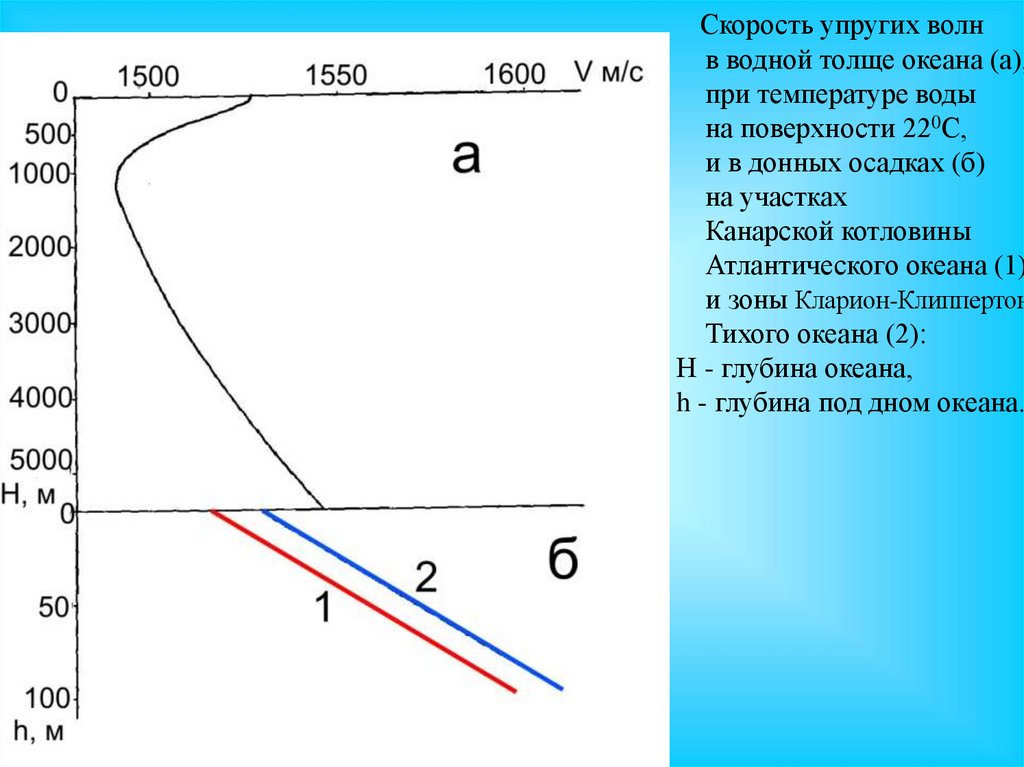
Скорость упругих волнв водной толще океана (а),
при температуре воды
на поверхности 220С,
и в донных осадках (б)
на участках
Канарской котловины
Атлантического океана (1)
и зоны Кларион-Клиппертон
Тихого океана (2):
Н - глубина океана,
h - глубина под дном океана.
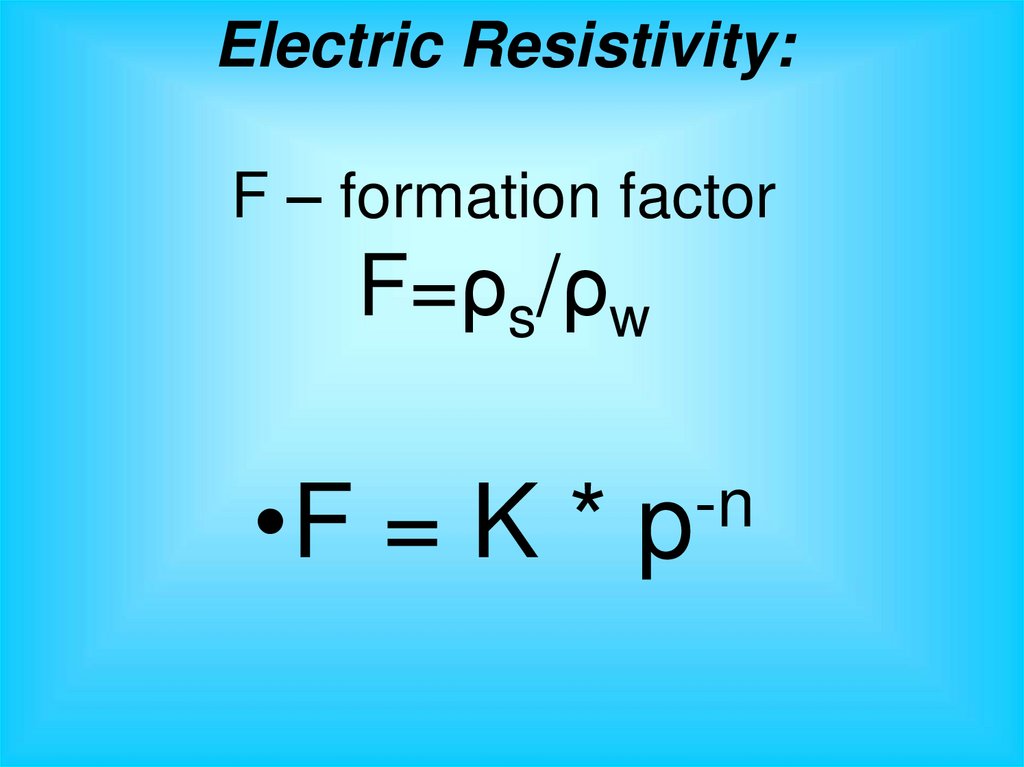
27. Electric Resistivity: F – formation factor F=ρs/ρw
-n•F = K * p
28.
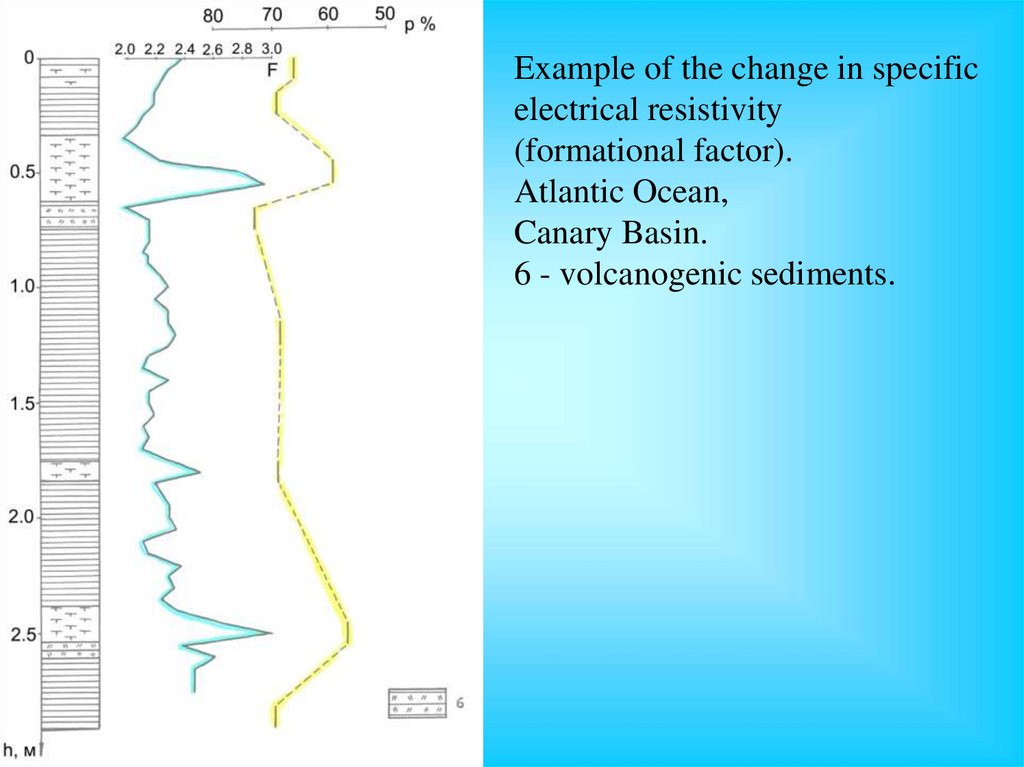
Example of the change in specificelectrical resistivity
(formational factor).
Atlantic Ocean,
Canary Basin.
6 - volcanogenic sediments.
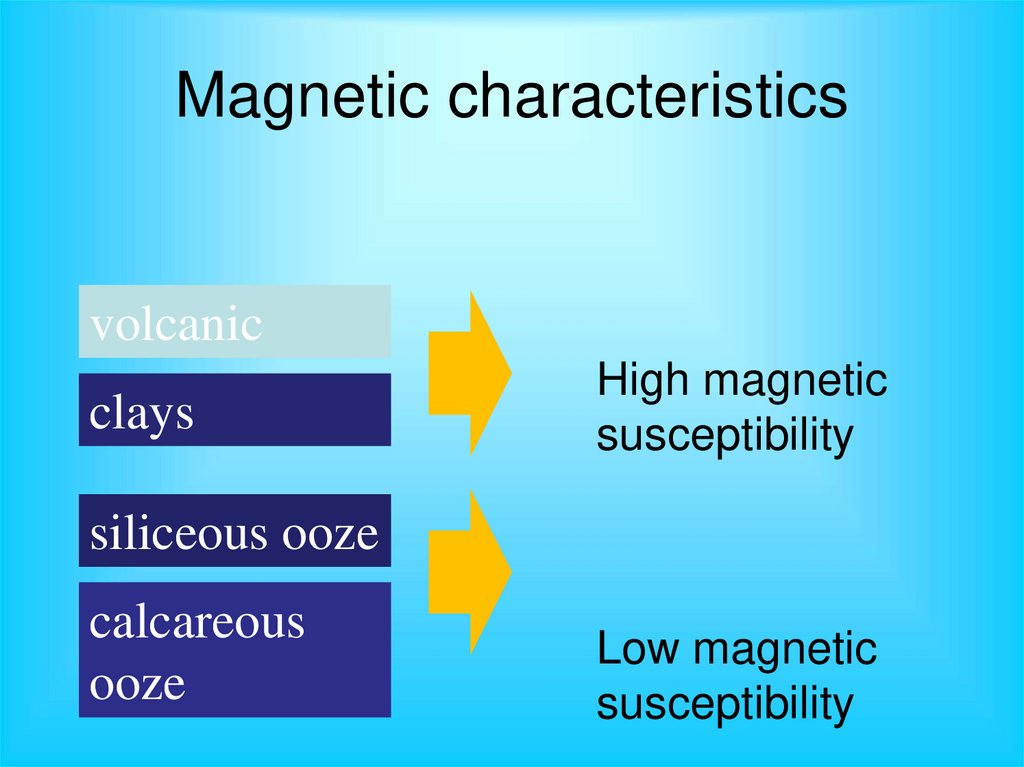
29. Magnetic characteristics
volcanicclays
High magnetic
susceptibility
siliceous ooze
calcareous
ooze
Low magnetic
susceptibility
30.
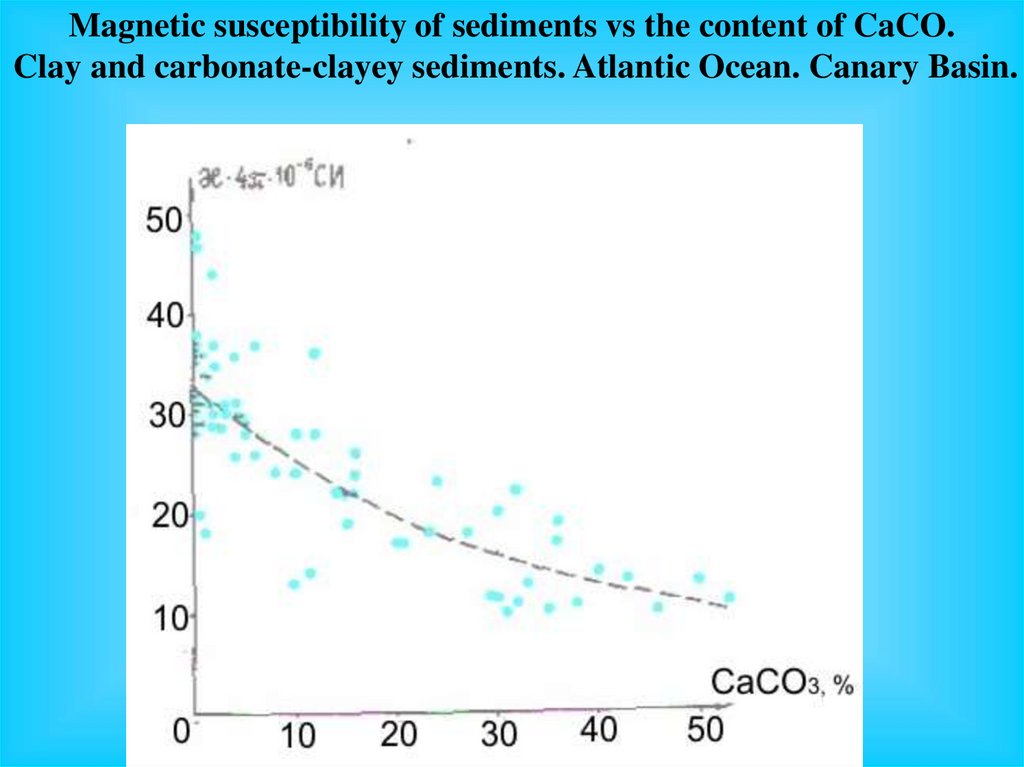
Magnetic susceptibility of sediments vs the content of CaCO.Clay and carbonate-clayey sediments. Atlantic Ocean. Canary Basin.
31.
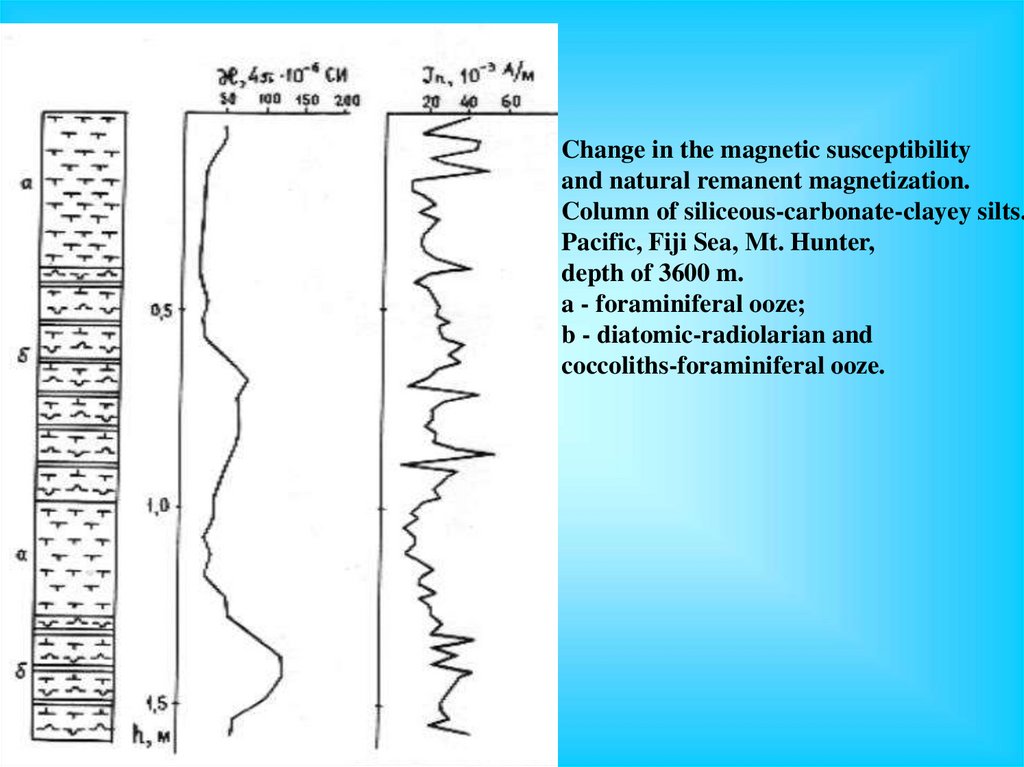
Change in the magnetic susceptibilityand natural remanent magnetization.
Column of siliceous-carbonate-clayey silts.
Pacific, Fiji Sea, Mt. Hunter,
depth of 3600 m.
a - foraminiferal ooze;
b - diatomic-radiolarian and
coccoliths-foraminiferal ooze.
32.
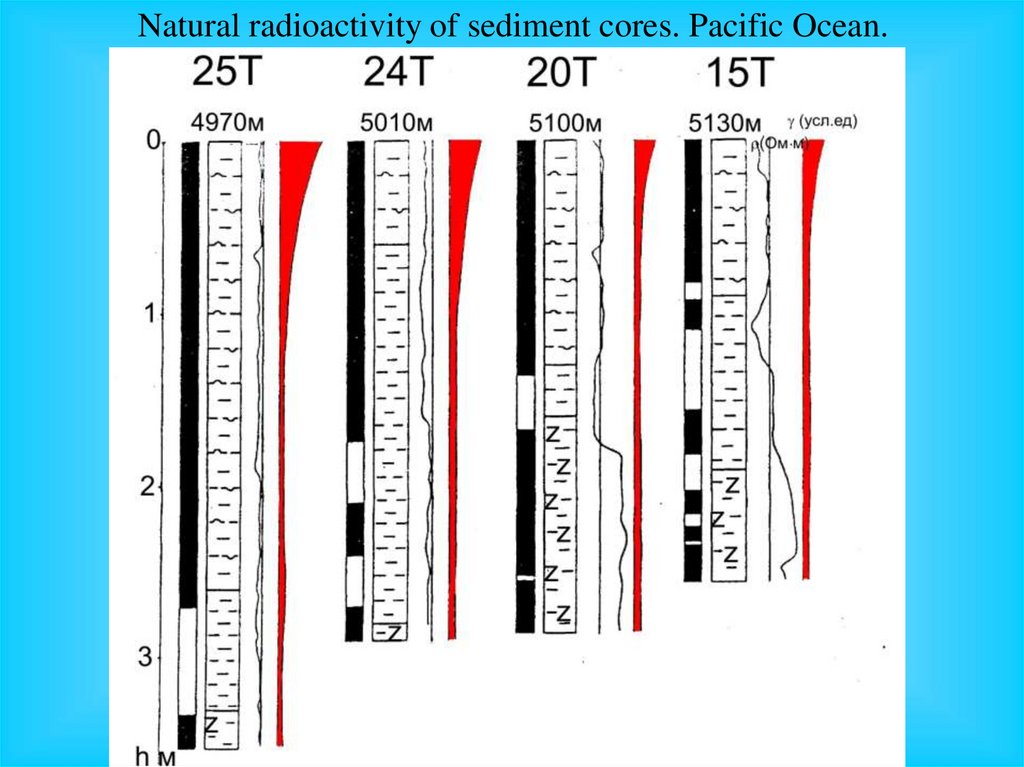
Natural radioactivity of sediment cores. Pacific Ocean.33.
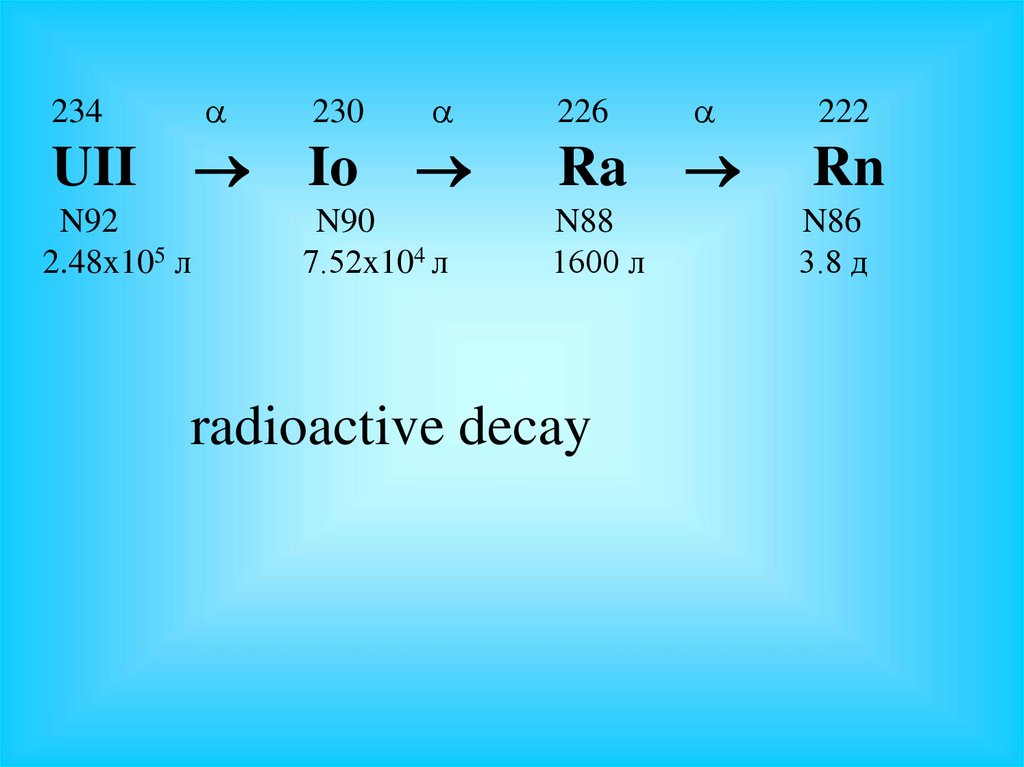
234UII
N92
2.48x10⁵ л
230
Io
N90
7.52x10⁴ л
226
Ra
N88
1600 л
radioactive decay
222
Rn
N86
3.8 д
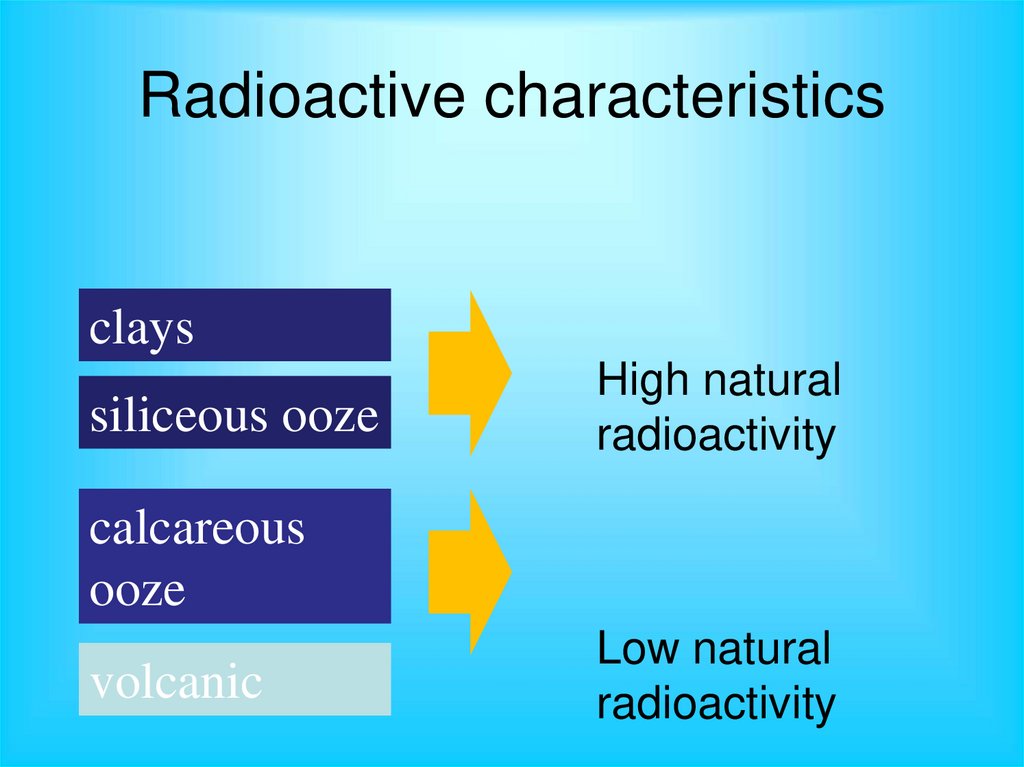
34. Radioactive characteristics
clayssiliceous ooze
High natural
radioactivity
calcareous
ooze
volcanic
Low natural
radioactivity
35.
Giant caldera in the Arctic Ocean:Evidence of the catastrophic eruptive event
36.
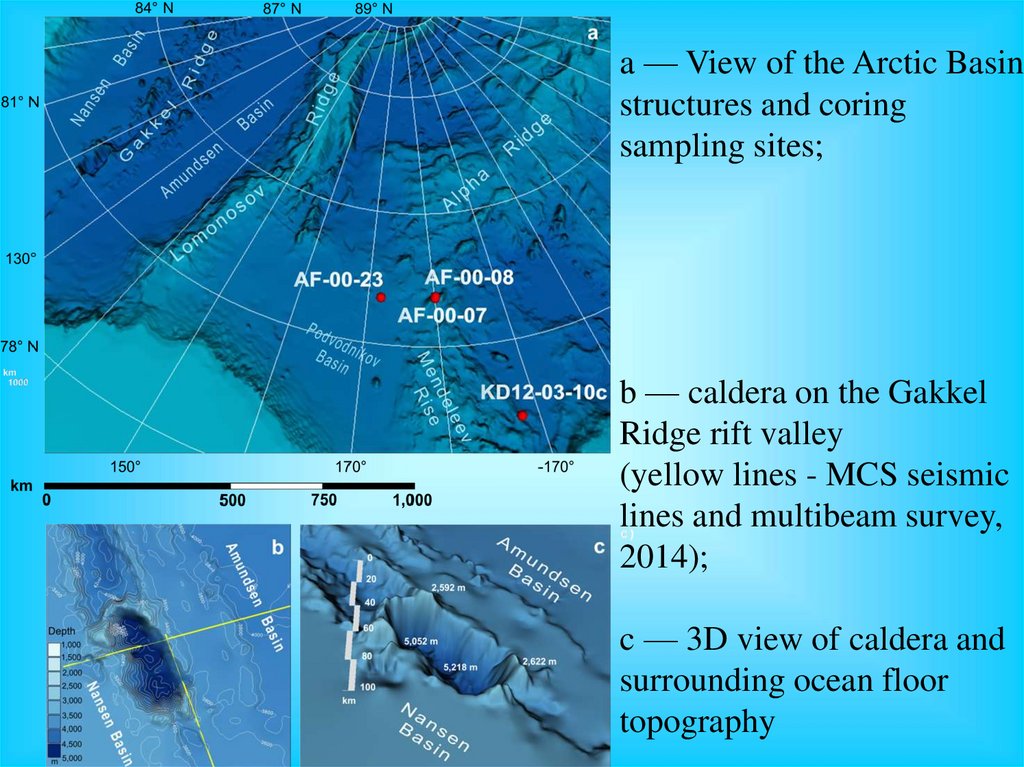
a — View of the Arctic Basinstructures and coring
sampling sites;
b — caldera on the Gakkel
Ridge rift valley
(yellow lines - MCS seismic
lines and multibeam survey,
2014);
c — 3D view of caldera and
surrounding ocean floor
topography
37.
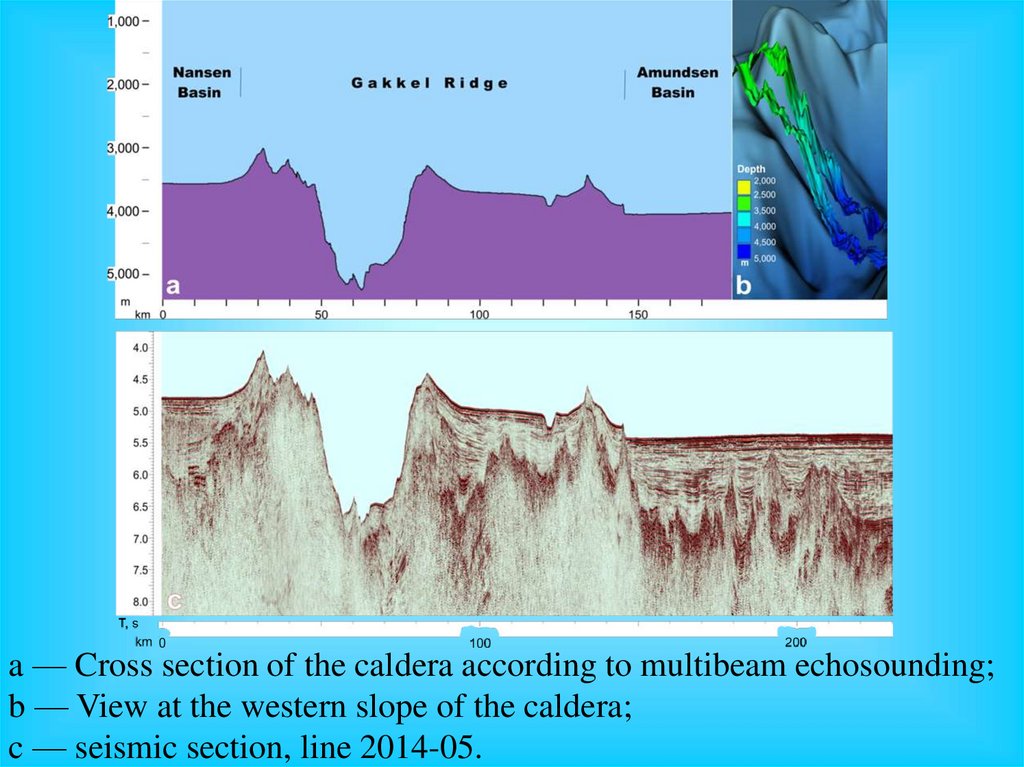
a — Cross section of the caldera according to multibeam echosounding;b — View at the western slope of the caldera;
c — seismic section, line 2014-05.
38.
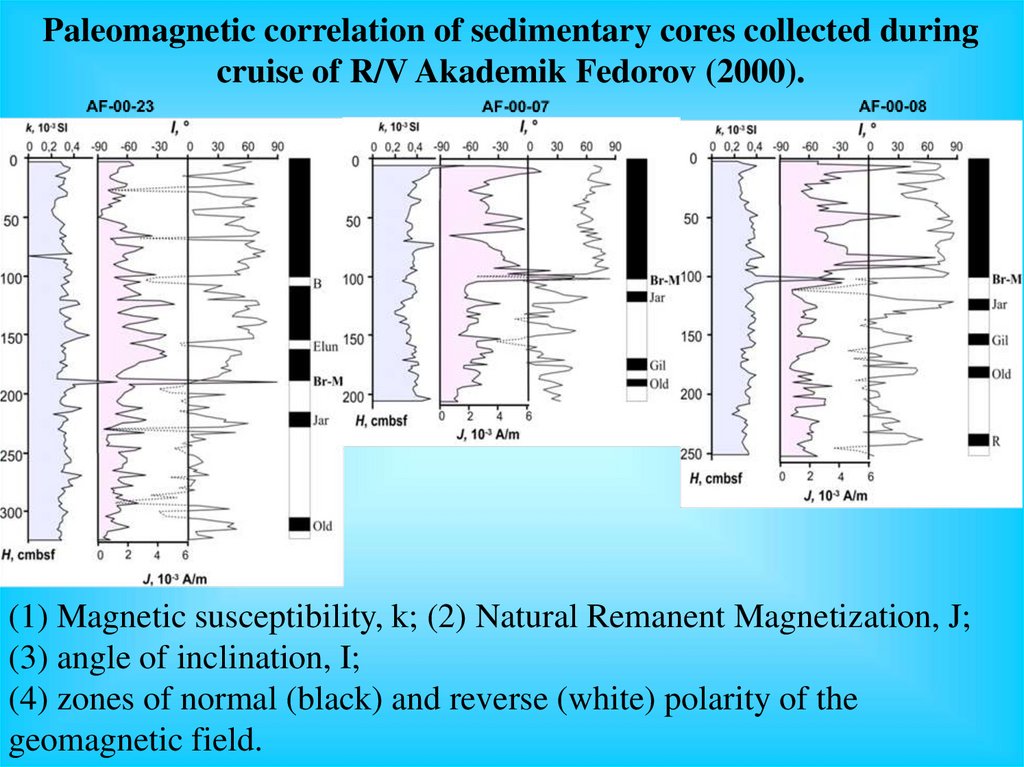
Paleomagnetic correlation of sedimentary cores collected duringcruise of R/V Akademik Fedorov (2000).
(1) Magnetic susceptibility, k; (2) Natural Remanent Magnetization, J;
(3) angle of inclination, I;
(4) zones of normal (black) and reverse (white) polarity of the
geomagnetic field.
39.
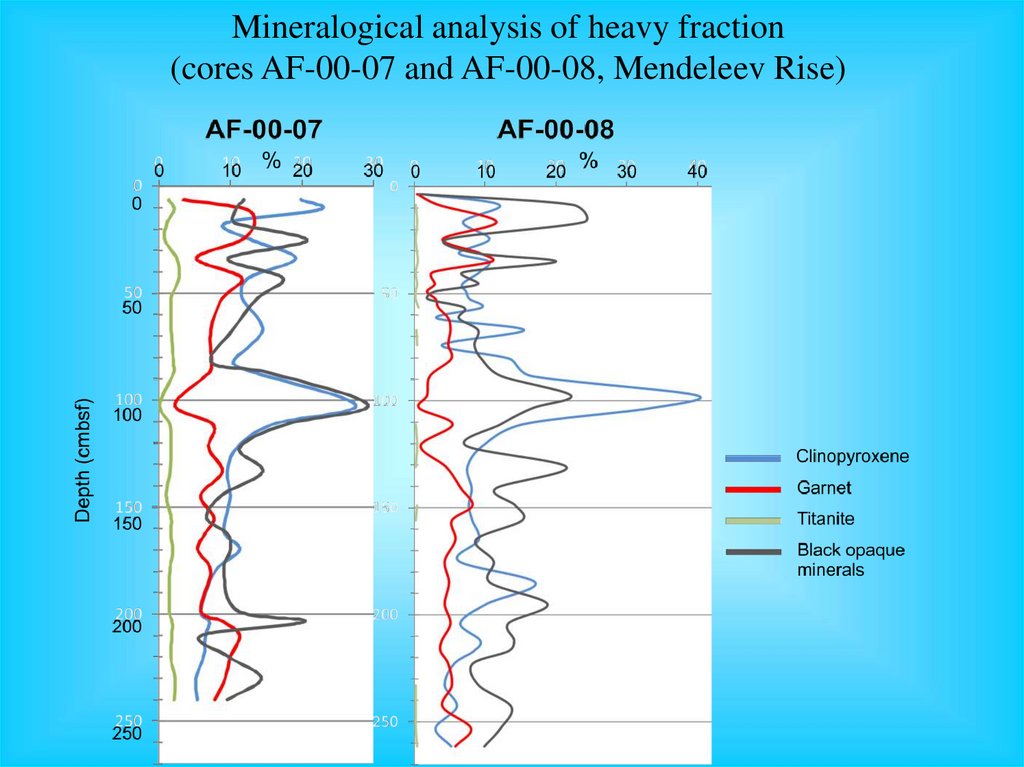
Mineralogical analysis of heavy fraction(cores AF-00-07 and AF-00-08, Mendeleev Rise)
40.
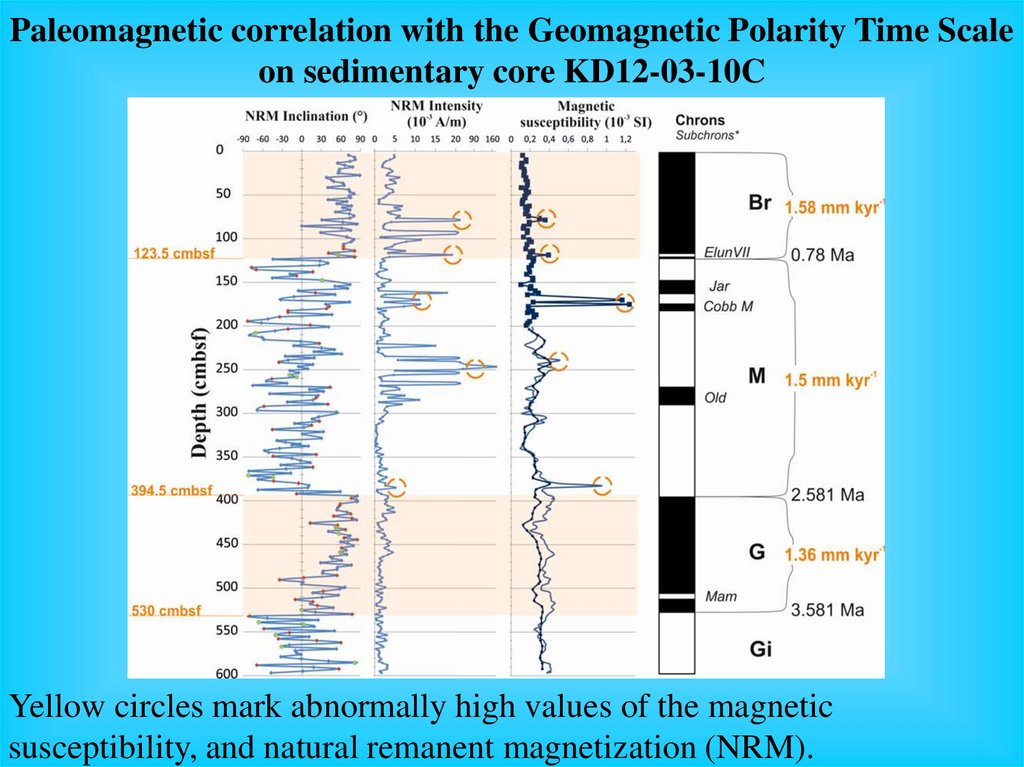
Paleomagnetic correlation with the Geomagnetic Polarity Time Scaleon sedimentary core KD12-03-10C
Yellow circles mark abnormally high values of the magnetic
susceptibility, and natural remanent magnetization (NRM).
41.
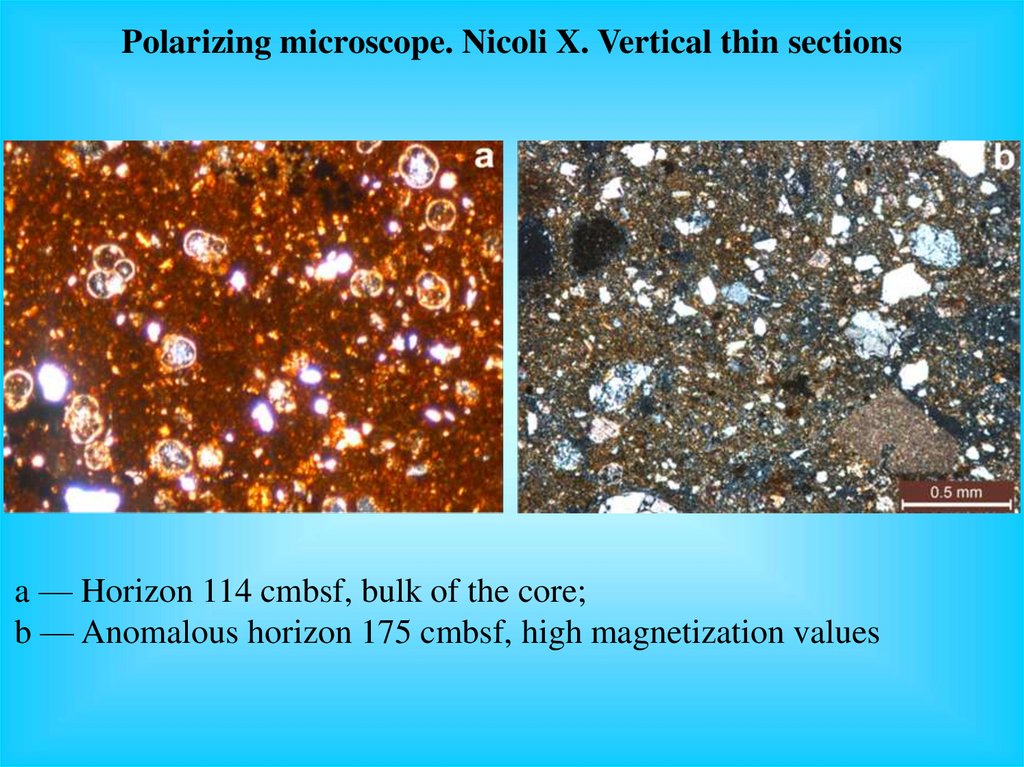
Polarizing microscope. Nicoli X. Vertical thin sectionsa — Horizon 114 cmbsf, bulk of the core;
b — Anomalous horizon 175 cmbsf, high magnetization values
42.
Ascending order of density and velocity of acoustic waves in the deep oceansediments ( 1 - volcanic , 2 - clay , 3 - carbonate , 4 - siliceous )
Range of porosity changes prevailing in the deep ocean sediments
Approximate range of the velocity of P-waves in sediments of the deep
ocean bottom (50-500 m below the ocean floor ), km / s
Type of law: electrical resistivity (ρ) of the ocean floor vs porosity (p):
ρ=kp-n
Changes in electrical resistivity of the water from the surface of water at 22 C
to the near-bottom temperature with 2 ˚ C
43.
Order of decrease of the magnetic susceptibility in the deep sediments( 1 - volcanic , 2 - clay , 3 – siliceous , 4 - carbonate )
Type of the ocean floor sediments with the high natural radioactivity :
(Clay; Siliceous).
Which element gives the effect of radioactivity reducing in the deep sediments :
Thorium-230 ( Ionium )
44.
Семинар 01 марта1 – Магнетизм пород океанического фундамента
2 – Скорость продольных волн по поверхности
океанического фундамента
3 – Петрофизическая композиция земной коры
океанов
4 - Закон Арчи
5 – Естественная радиоактивность донных
осадков