 БЖД
БЖДПохожие презентации:







Safety department
1. SAFETY DEPARTMENT
2.
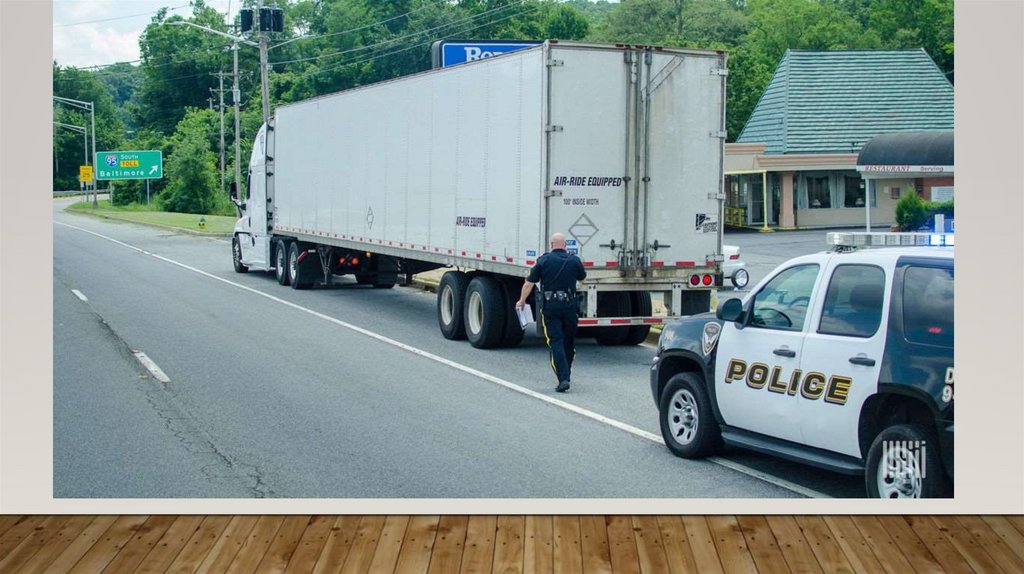
• The Safety Department in a trucking company (USA) plays a critical role inensuring compliance with FMCSA, DOT, and state regulations. It’s not just about
avoiding violations—it's about keeping drivers, the public, and the company safe
and legal.
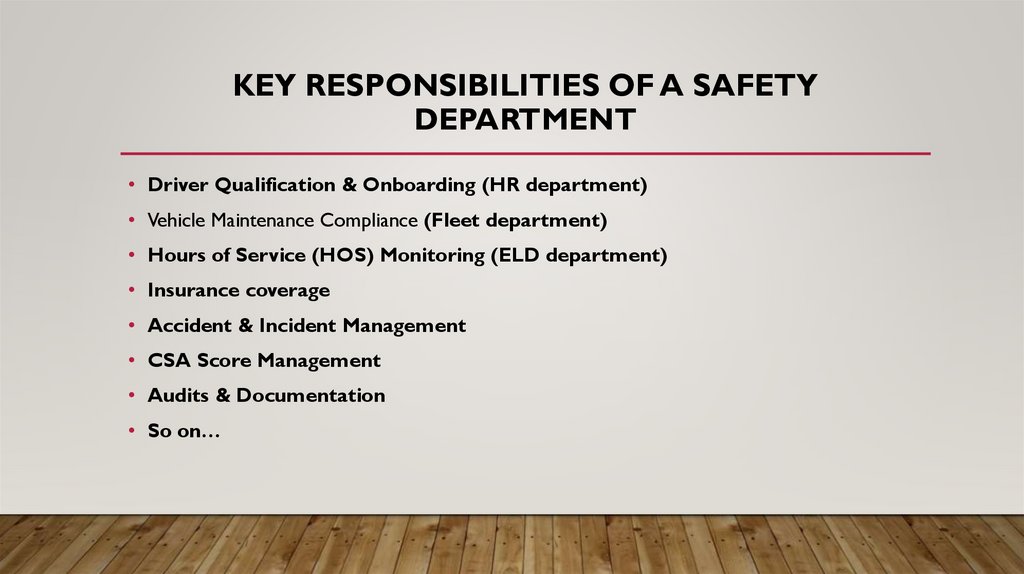
3. Key Responsibilities of a Safety Department
KEY RESPONSIBILITIES OF A SAFETYDEPARTMENT
• Driver Qualification & Onboarding (HR department)
• Vehicle Maintenance Compliance (Fleet department)
• Hours of Service (HOS) Monitoring (ELD department)
• Insurance coverage
• Accident & Incident Management
• CSA Score Management
• Audits & Documentation
• So on…
4. Driver Qualification & Onboarding (HR department)
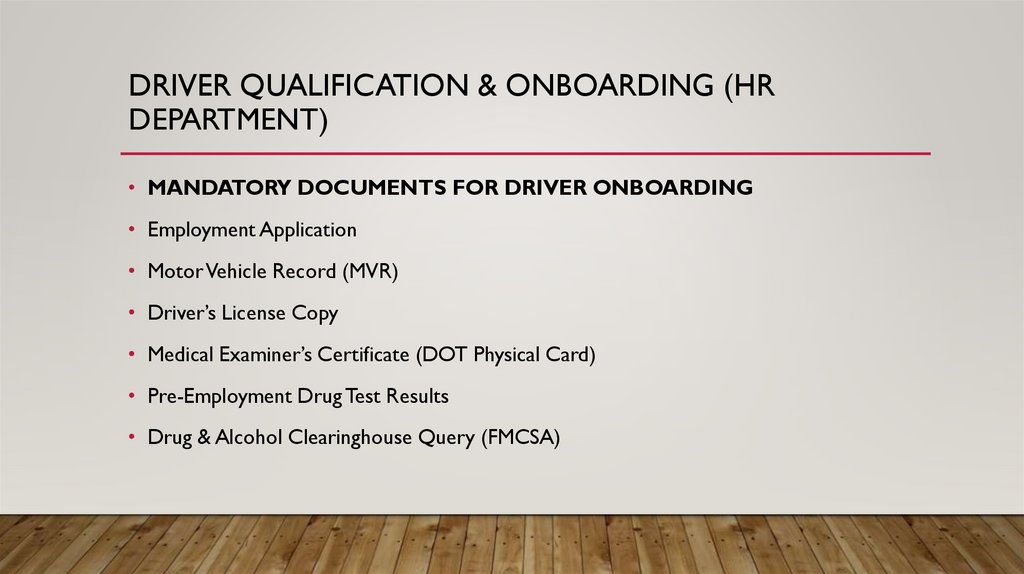
DRIVER QUALIFICATION & ONBOARDING (HRDEPARTMENT)
• MANDATORY DOCUMENTS FOR DRIVER ONBOARDING
• Employment Application
• Motor Vehicle Record (MVR)
• Driver’s License Copy
• Medical Examiner’s Certificate (DOT Physical Card)
• Pre-Employment Drug Test Results
• Drug & Alcohol Clearinghouse Query (FMCSA)
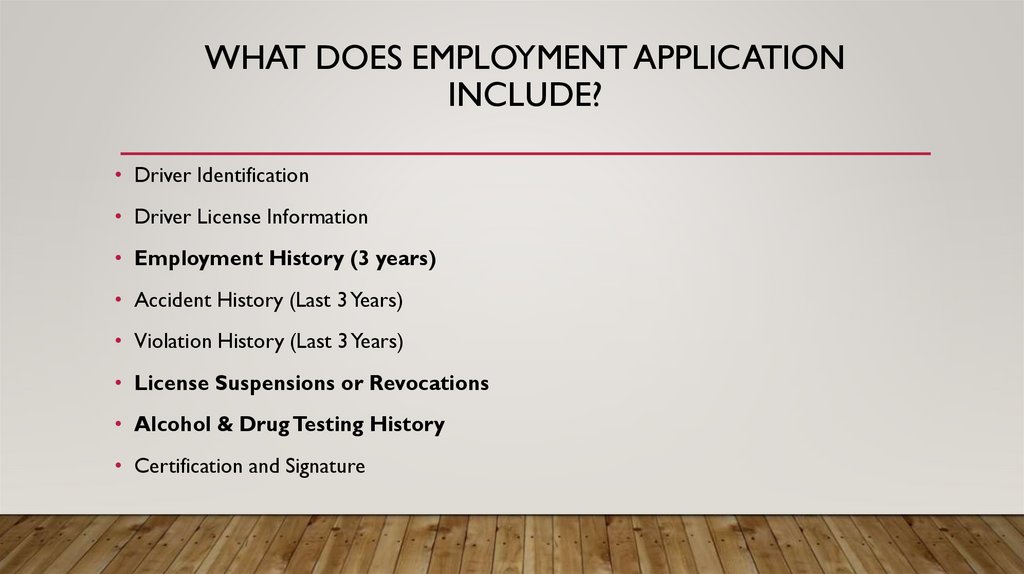
5. What does employment application include?
WHAT DOES EMPLOYMENT APPLICATIONINCLUDE?
• Driver Identification
• Driver License Information
• Employment History (3 years)
• Accident History (Last 3 Years)
• Violation History (Last 3 Years)
• License Suspensions or Revocations
• Alcohol & Drug Testing History
• Certification and Signature
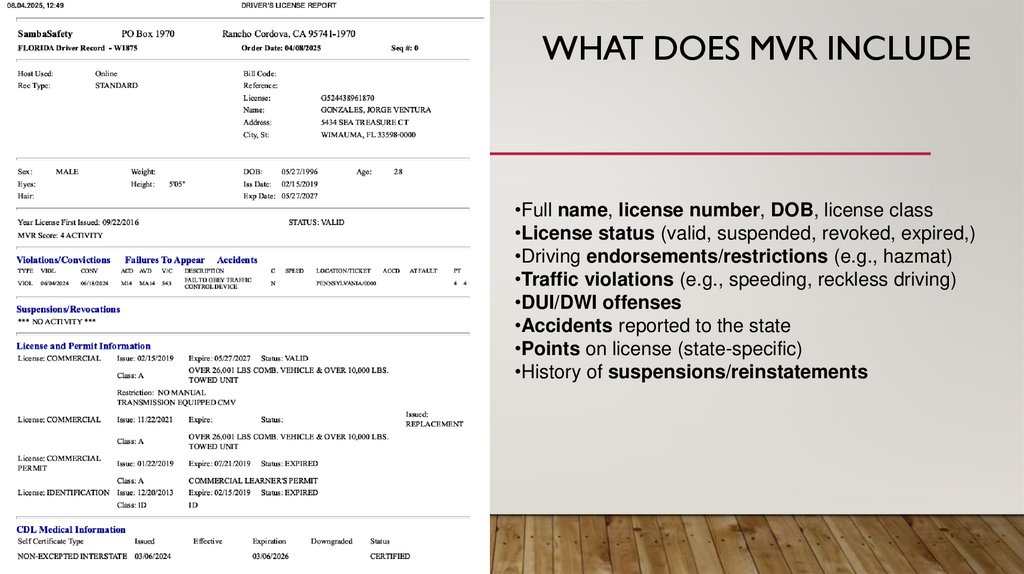
6. What Does MVR include
WHAT DOES MVR INCLUDE•Full name, license number, DOB, license class
•License status (valid, suspended, revoked, expired,)
•Driving endorsements/restrictions (e.g., hazmat)
•Traffic violations (e.g., speeding, reckless driving)
•DUI/DWI offenses
•Accidents reported to the state
•Points on license (state-specific)
•History of suspensions/reinstatements
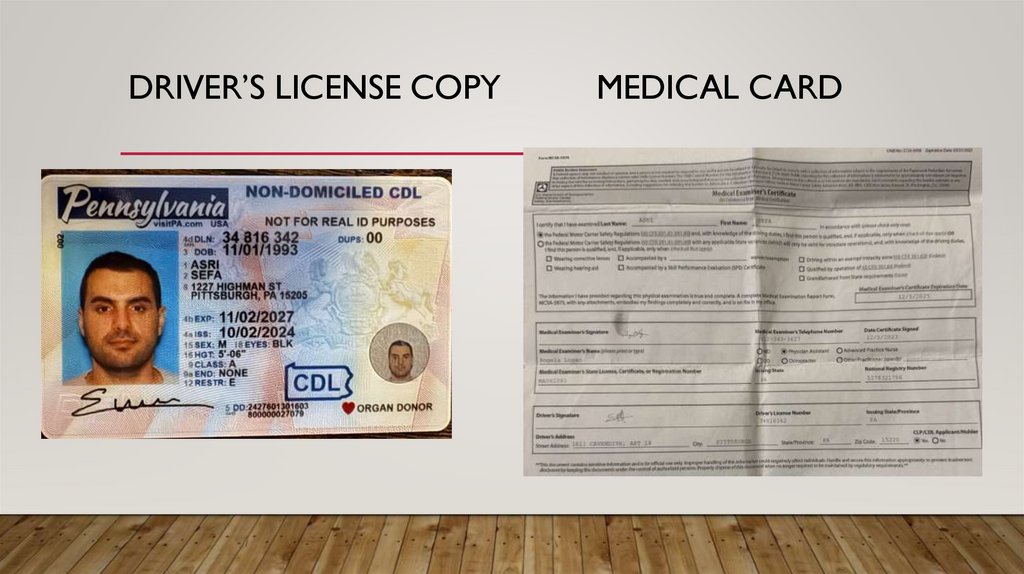
7. Driver’s License Copy Medical Card
DRIVER’S LICENSE COPYMEDICAL CARD
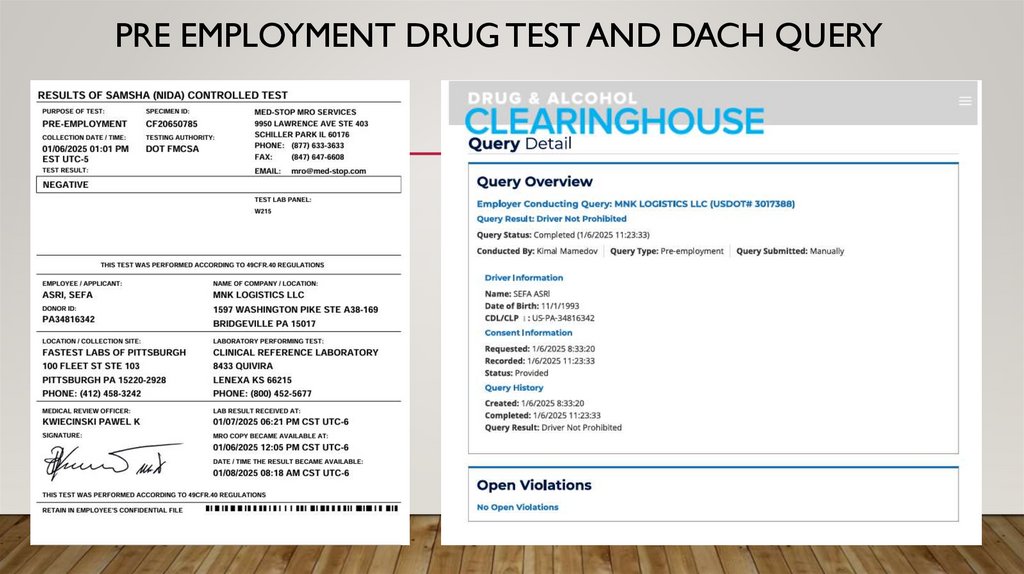
8. Pre Employment Drug test and DACH query
PRE EMPLOYMENT DRUG TEST AND DACH QUERY9. What Insurance coverages we have?
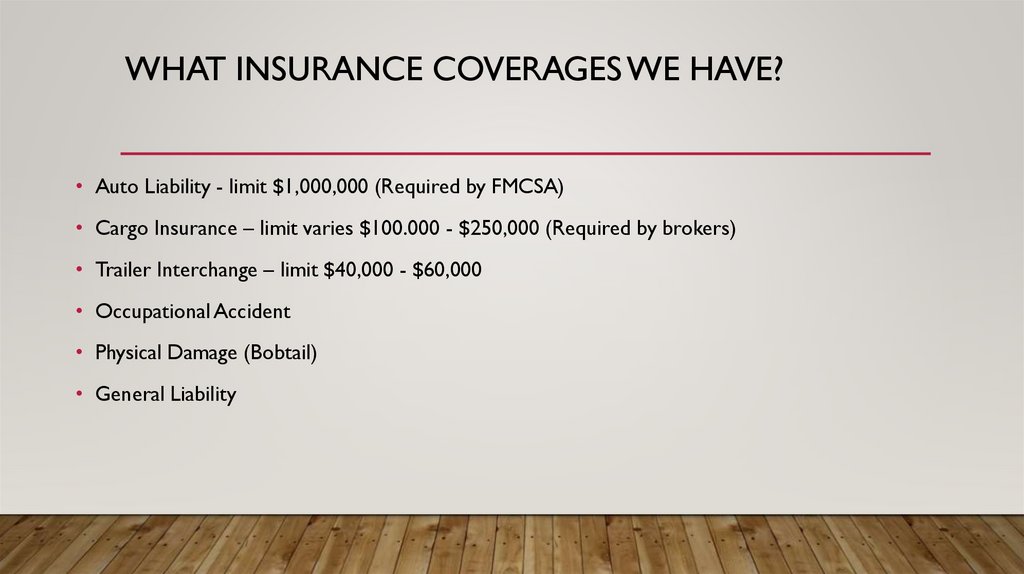
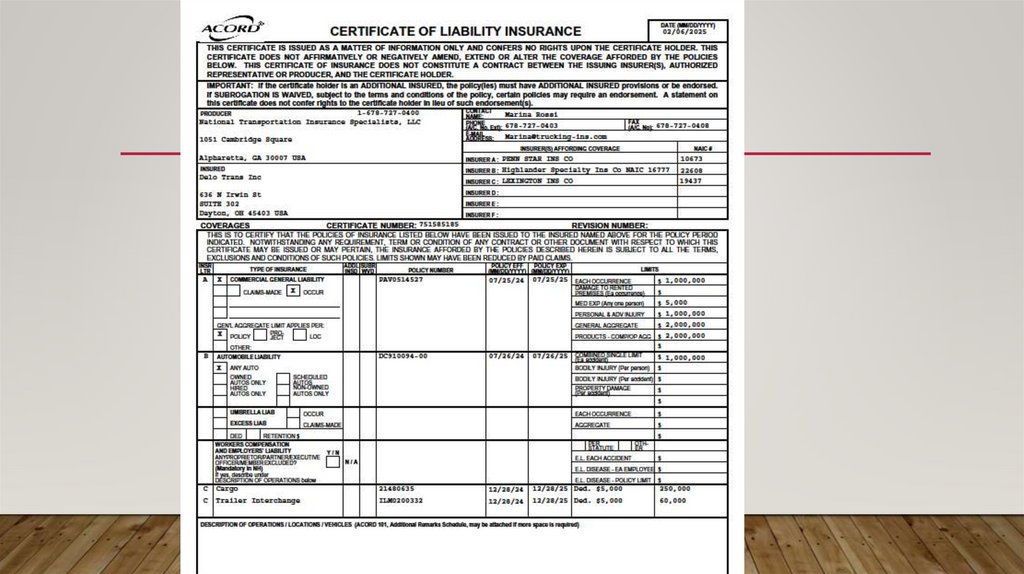
WHAT INSURANCE COVERAGES WE HAVE?• Auto Liability - limit $1,000,000 (Required by FMCSA)
• Cargo Insurance – limit varies $100.000 - $250,000 (Required by brokers)
• Trailer Interchange – limit $40,000 - $60,000
• Occupational Accident
• Physical Damage (Bobtail)
• General Liability
10.
11. Auto Liability - limit $1,000,000 (Required by FMCSA)
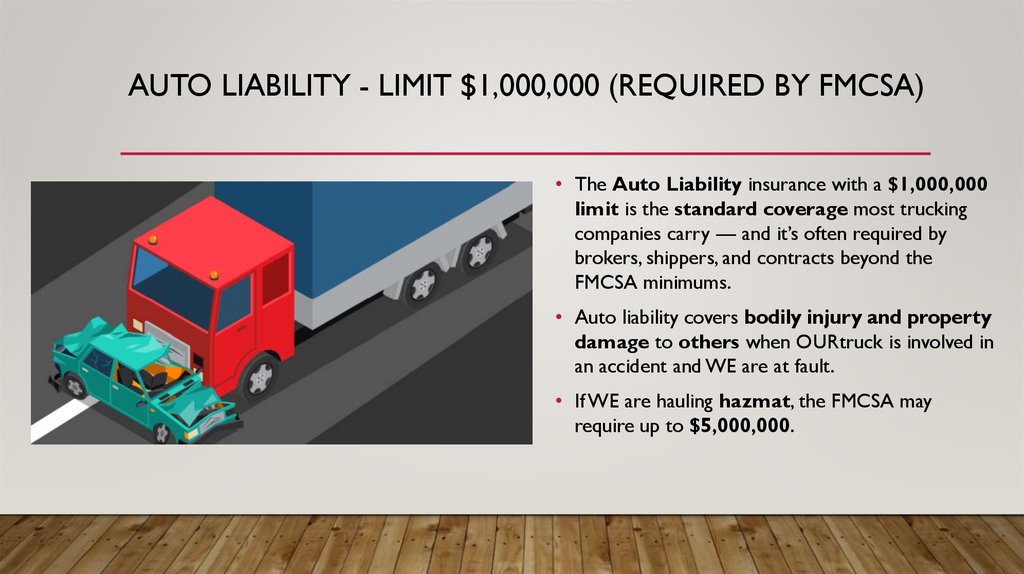
AUTO LIABILITY - LIMIT $1,000,000 (REQUIRED BY FMCSA)• The Auto Liability insurance with a $1,000,000
limit is the standard coverage most trucking
companies carry — and it’s often required by
brokers, shippers, and contracts beyond the
FMCSA minimums.
• Auto liability covers bodily injury and property
damage to others when OURtruck is involved in
an accident and WE are at fault.
• If WE are hauling hazmat, the FMCSA may
require up to $5,000,000.
12. Motor Truck Cargo Insurance
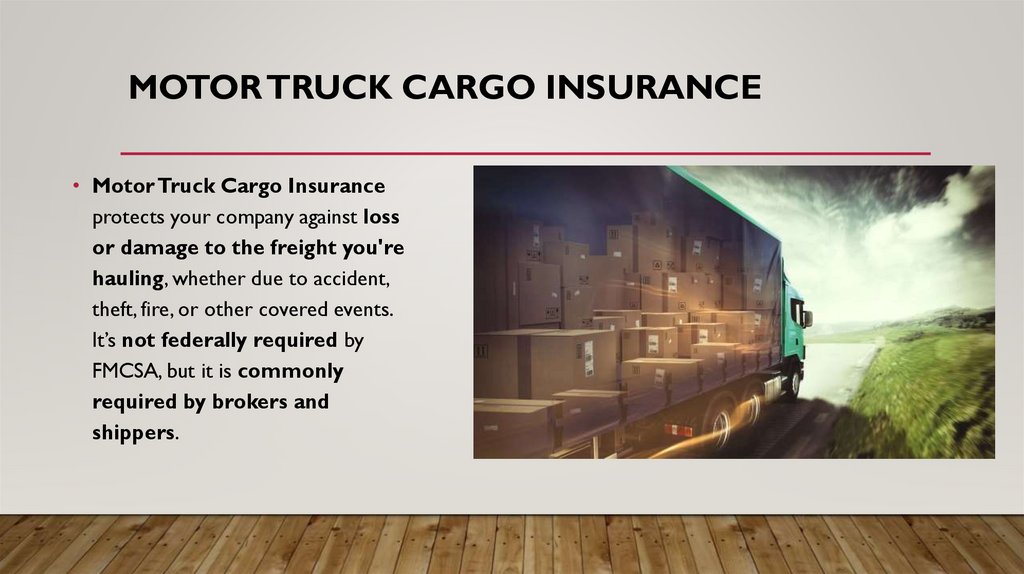
MOTOR TRUCK CARGO INSURANCE• Motor Truck Cargo Insurance
protects your company against loss
or damage to the freight you're
hauling, whether due to accident,
theft, fire, or other covered events.
It’s not federally required by
FMCSA, but it is commonly
required by brokers and
shippers.
13. Trailer Interchange Insurance
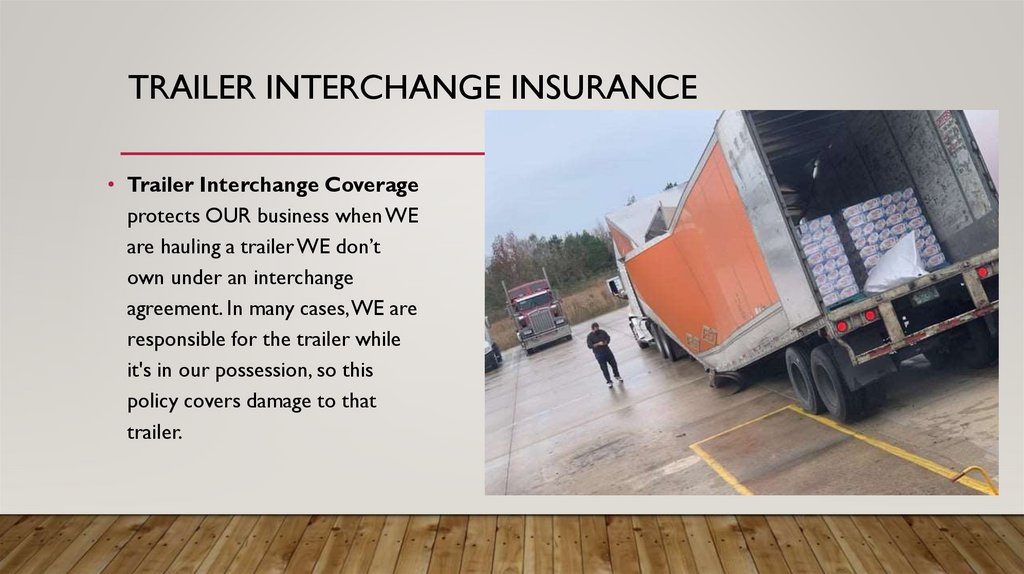
TRAILER INTERCHANGE INSURANCE• Trailer Interchange Coverage
protects OUR business when WE
are hauling a trailer WE don’t
own under an interchange
agreement. In many cases, WE are
responsible for the trailer while
it's in our possession, so this
policy covers damage to that
trailer.
14. Occupational Accident
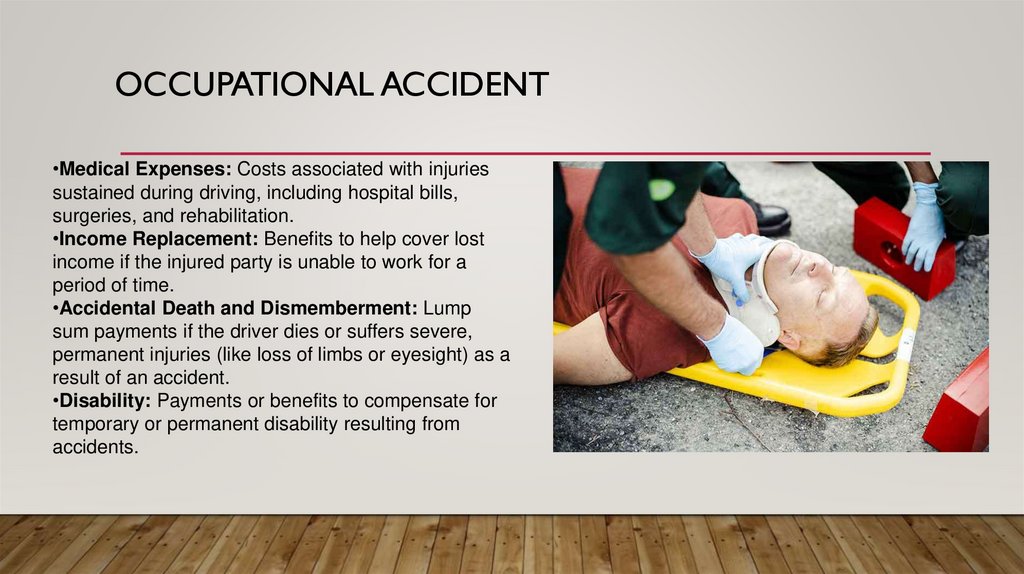
OCCUPATIONAL ACCIDENT•Medical Expenses: Costs associated with injuries
sustained during driving, including hospital bills,
surgeries, and rehabilitation.
•Income Replacement: Benefits to help cover lost
income if the injured party is unable to work for a
period of time.
•Accidental Death and Dismemberment: Lump
sum payments if the driver dies or suffers severe,
permanent injuries (like loss of limbs or eyesight) as a
result of an accident.
•Disability: Payments or benefits to compensate for
temporary or permanent disability resulting from
accidents.
15. PHYSICAL DAMAGE INSURANCE
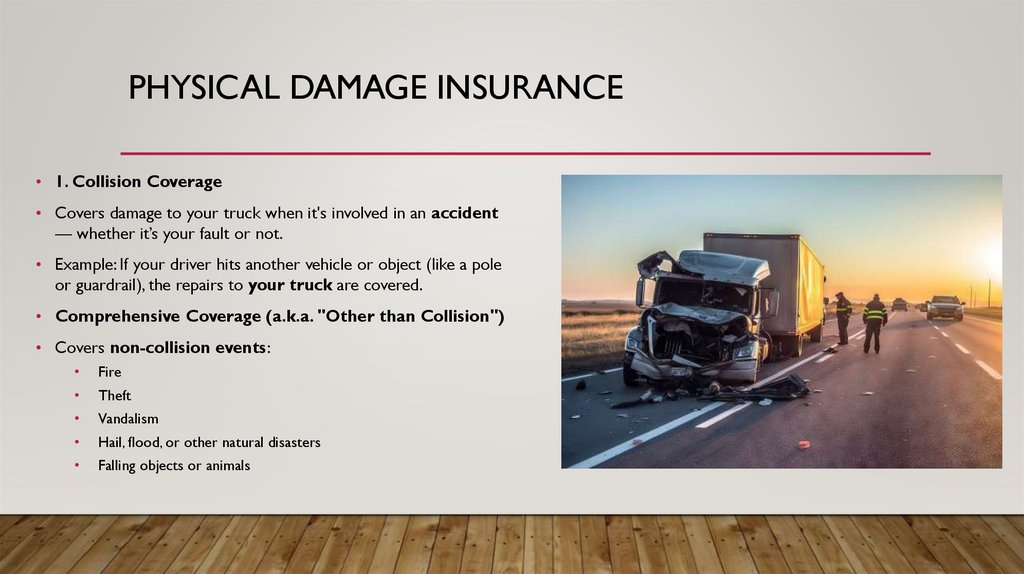
• 1. Collision Coverage• Covers damage to your truck when it's involved in an accident
— whether it’s your fault or not.
• Example: If your driver hits another vehicle or object (like a pole
or guardrail), the repairs to your truck are covered.
• Comprehensive Coverage (a.k.a. "Other than Collision")
• Covers non-collision events:
Fire
Theft
Vandalism
Hail, flood, or other natural disasters
Falling objects or animals
16. Accidents and incidents
ACCIDENTS AND INCIDENTS• Immediate Response
• Collect Documentation
• Photos of vehicles, scene, road, weather, signs
• Witness statements
• Police report (if applicable)
• Dashcam footage
• Drug/alcohol test (within 32 hours if DOT-reportable)
• Driver Statement
• Must provide written report (who, what, when, where, how)
17. CSA score
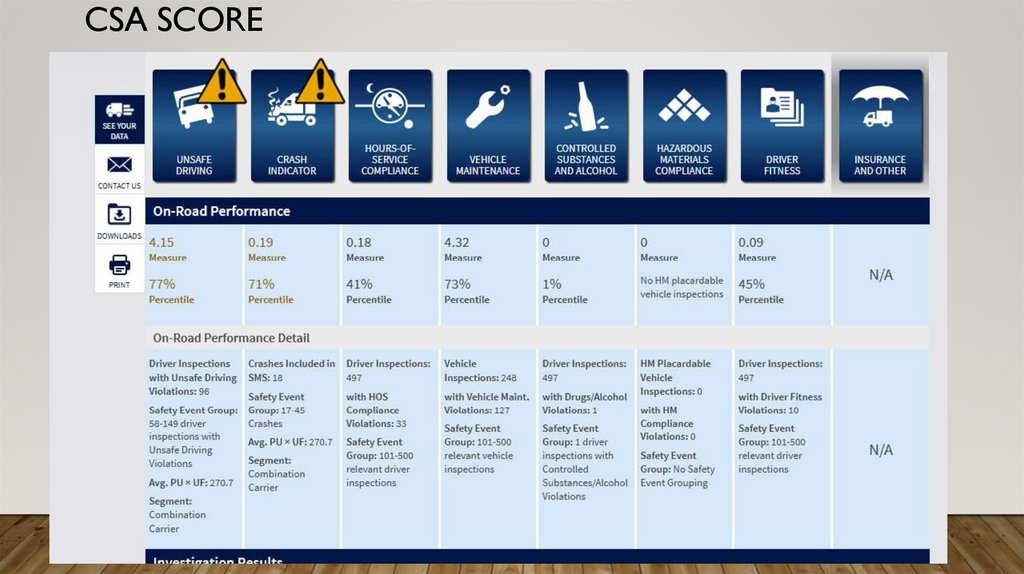
CSA SCORE18.
• How CSA Scores Are Measured?• Scores range from 0% to 100%
• Lower is better
• A high score means more violations or severity
• If you're above the FMCSA threshold in a BASIC, you may be flagged for intervention
(audit, warning letter, etc.)
• Why CSA Scores Matter?
• Brokers and shippers check your score
• Affects insurance premiums
• Can result in DOT audits
• May trigger safety ratings changes or fines
• Can affect your ability to lease on or find good-paying loads