

 Спорт
СпортПохожие презентации:




Exercise physiology. Lecture 5
1. Exercise physiology Lecture 5
2. OBJECTIVES
■ Use the FITT formula to design a fitness program.3. Principles of Fitness Training
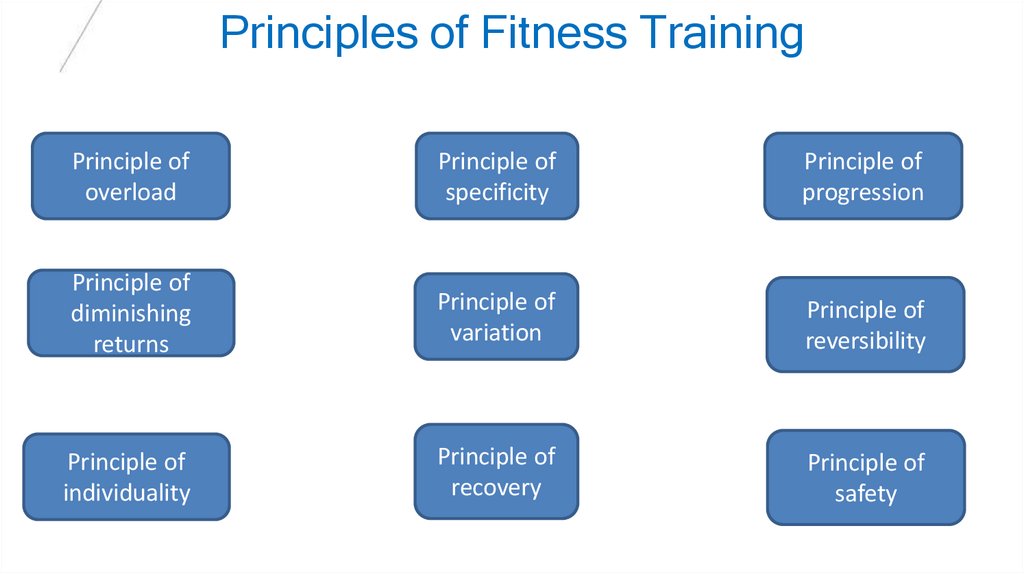
Principle ofoverload
Principle of
specificity
Principle of
progression
Principle of
diminishing
returns
Principle of
variation
Principle of
reversibility
Principle of
individuality
Principle of
recovery
Principle of
safety
4. FITT formula
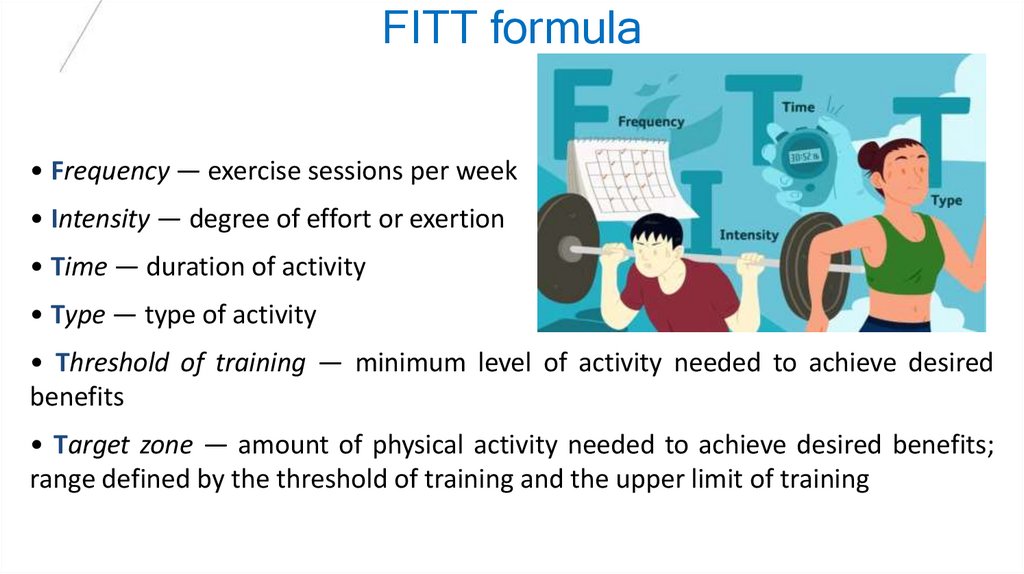
• Frequency — exercise sessions per week• Intensity — degree of effort or exertion
• Time — duration of activity
• Type — type of activity
• Threshold of training — minimum level of activity needed to achieve desired
benefits
• Target zone — amount of physical activity needed to achieve desired benefits;
range defined by the threshold of training and the upper limit of training
5.
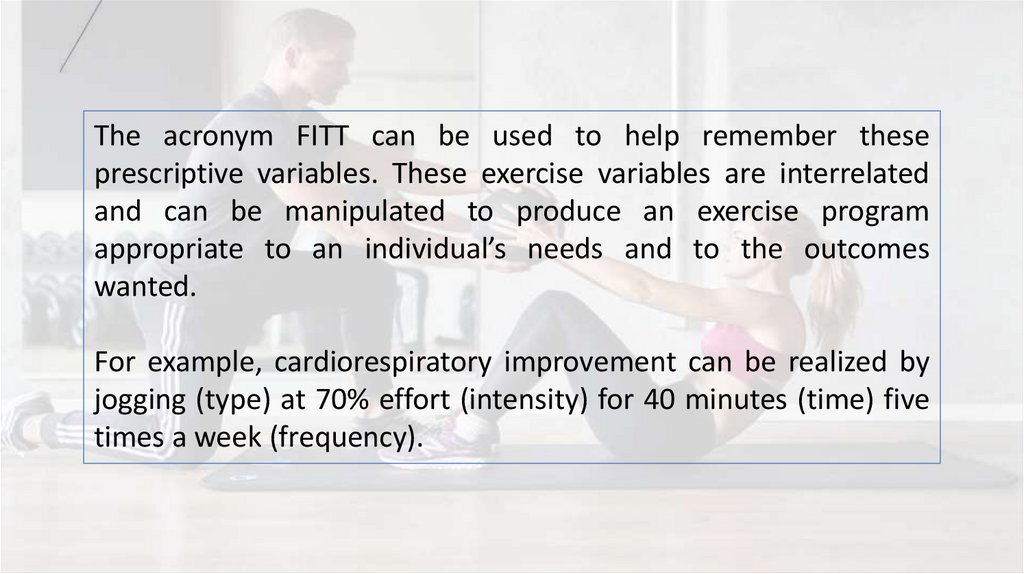
The acronym FITT can be used to help remember theseprescriptive variables. These exercise variables are interrelated
and can be manipulated to produce an exercise program
appropriate to an individual’s needs and to the outcomes
wanted.
For example, cardiorespiratory improvement can be realized by
jogging (type) at 70% effort (intensity) for 40 minutes (time) five
times a week (frequency).
6. Health fitness components
Cardiorespiratory enduranceCardiorespiratory endurance is the body’s ability to deliver oxygen effectively
to the working muscles so that an individual can perform physical activity.
The performance of sustained vigorous physical activities is influenced by the
efficiency of the cardiorespiratory system. The more efficient the system, the
greater the amount of physical activity an individual can perform before
fatigue and exhaustion occur.
7.
Cardiorespiratory endurance isregarded as the most
important component of
health fitness.
Because of the benefits derived from improved
cardiorespiratory function—such as the potential for
reducing the risk of cardiovascular disease, improving
work capacity, and providing greater resistance to
fatigue—this component, if properly developed, can
make a major contribution to an individual’s health
Cardiorespiratory endurance is
concerned with the aerobic
efficiency of the body.
Aerobic efficiency is the body’s ability to supply fuel and
oxygen to the muscles. One of the major factors
influencing aerobic efficiency is the capacity of the heart
to pump blood. Another important factor in
cardiorespiratory endurance is the efficiency of the
lungs.
8.
Many benefits have beenattributed to aerobic
exercise
Aerobic exercise is activity that can be sustained for an
extended period without building an oxygen debt in the
muscles. The benefits of aerobic exercise include the ability to
use more oxygen during strenuous exercise, a lower heart rate
at work, the production of less lactic acid, and greater
endurance. Aerobic exercise improves the efficiency of the
heart and reduces blood pressure.
9. Intensity
During exercise, heart rate changes in proportion to the energy requirements of the task. Asthe energy requirements increase, there is a corresponding increase in heart rate.
Thus, heart rate can be used to monitor the intensity of exercise.
Exercising at the proper intensity is essential for a safe and effective workout. Intensity can
be controlled by speeding or slowing the pace of exercise.
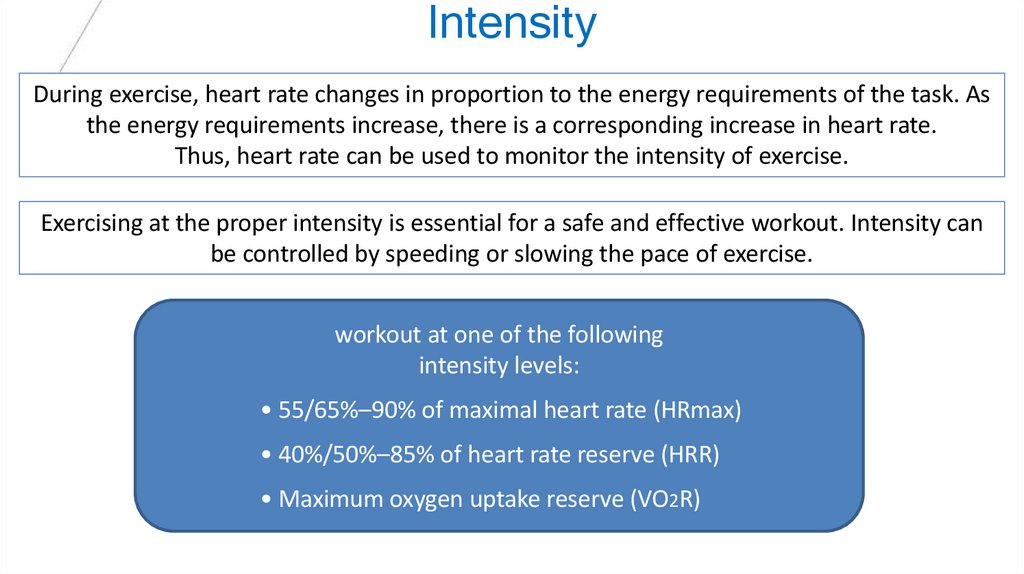
workout at one of the following
intensity levels:
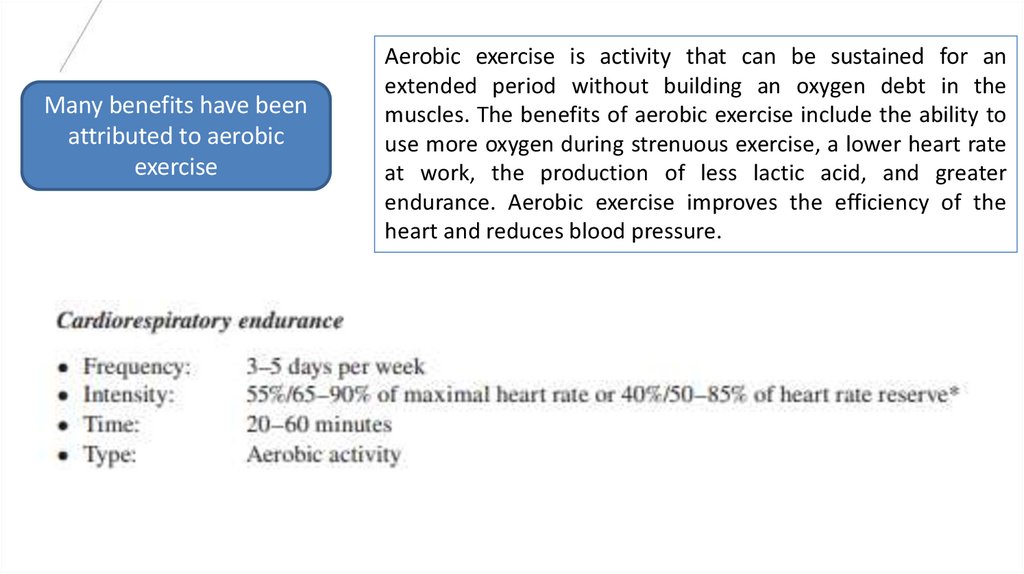
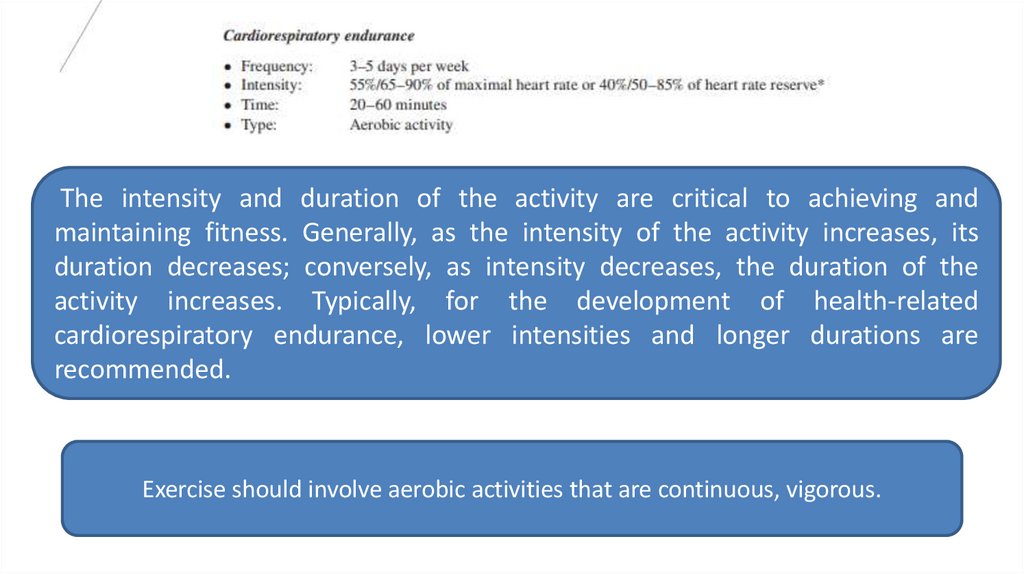
• 55/65%–90% of maximal heart rate (HRmax)
• 40%/50%–85% of heart rate reserve (HRR)
• Maximum oxygen uptake reserve (VO2R)
10.
The lower intensities, 55–64% of HRmax and 40–49% of HRR, are most appropriate forindividuals who have a low level of fitness
Maximal heart rate (HRmax) for both
males and females is estimated to be
220 beats per minute. Maximal heart
rate is related to age; as individuals
age, their maximal heart rate
decreases.
Heart rate reserve (HRR) is the
difference or range between resting
heart rate (RHR) and maximal heart
rate (HRmax).
11.
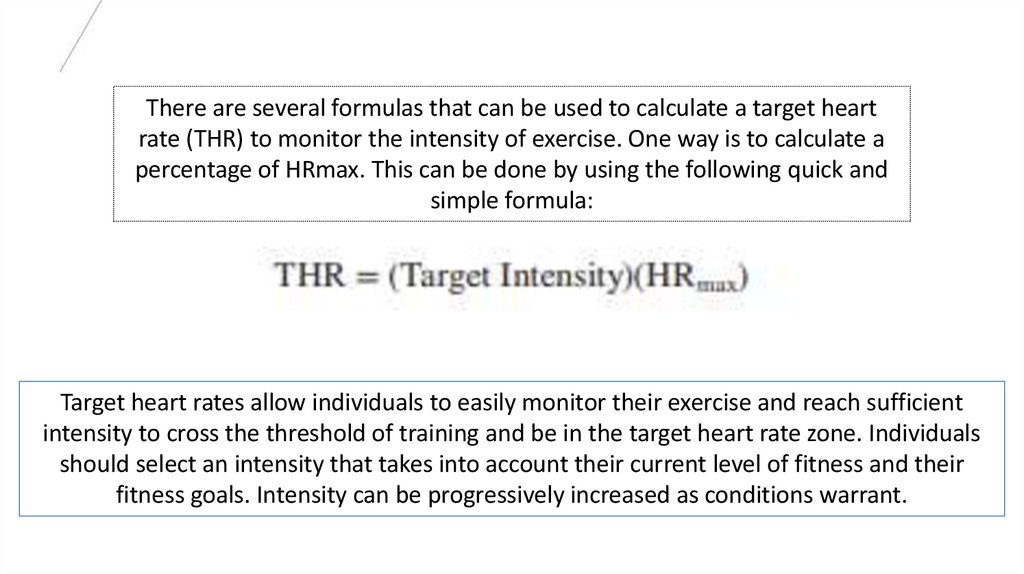
There are several formulas that can be used to calculate a target heartrate (THR) to monitor the intensity of exercise. One way is to calculate a
percentage of HRmax. This can be done by using the following quick and
simple formula:
Target heart rates allow individuals to easily monitor their exercise and reach sufficient
intensity to cross the threshold of training and be in the target heart rate zone. Individuals
should select an intensity that takes into account their current level of fitness and their
fitness goals. Intensity can be progressively increased as conditions warrant.
12.
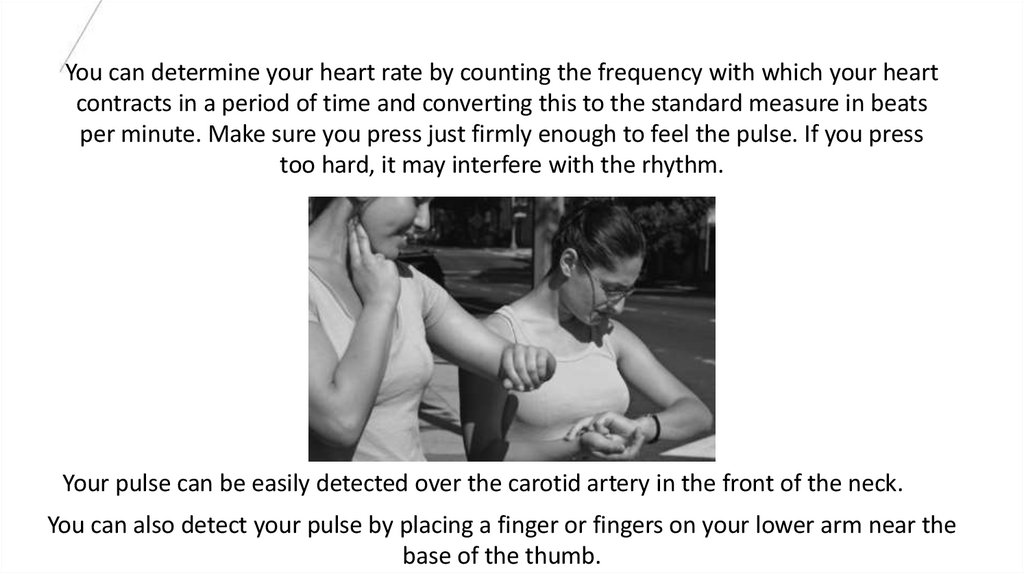
You can determine your heart rate by counting the frequency with which your heartcontracts in a period of time and converting this to the standard measure in beats
per minute. Make sure you press just firmly enough to feel the pulse. If you press
too hard, it may interfere with the rhythm.
Your pulse can be easily detected over the carotid artery in the front of the neck.
You can also detect your pulse by placing a finger or fingers on your lower arm near the
base of the thumb.
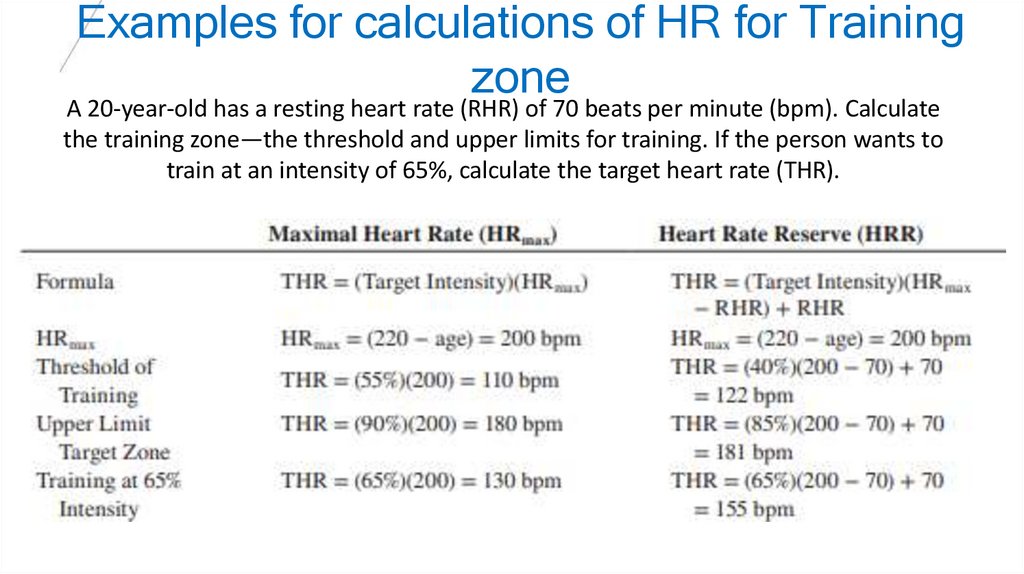
13. Examples for calculations of HR for Training zone
A 20-year-old has a resting heart rate (RHR) of 70 beats per minute (bpm). Calculatethe training zone—the threshold and upper limits for training. If the person wants to
train at an intensity of 65%, calculate the target heart rate (THR).
14.
The intensity and duration of the activity are critical to achieving andmaintaining fitness. Generally, as the intensity of the activity increases, its
duration decreases; conversely, as intensity decreases, the duration of the
activity increases. Typically, for the development of health-related
cardiorespiratory endurance, lower intensities and longer durations are
recommended.
Exercise should involve aerobic activities that are continuous, vigorous.
15. Health fitness components
Body compositionBody composition is a description of the body in terms of muscle, bone, fat, and
other elements. With respect to health fitness, it refers to the percentage of body
weight composed of fat as compared with fat-free or lean tissue. Having a high
percentage of body fat is a serious deterrent to fitness and health.
Height and weight tables traditionally have been used to determine desirable
body weight. However, over recent years, Body Mass Index (BMI) has been the
primary assessment to identify whether a person is underweight, normal,
overweight, or obese.
16.
Although BMI has been statistically proven to be valid and reliable, certain athletescould be classified as overweight according to the BMI calculations. However, when
their body composition is examined, the excess weight is attributable to muscular
development and their overall percentage of body fat is quite low. The important
consideration with respect to health fitness, therefore, is not weight but proportion of
fat to lean tissue.
The average percentage of body fat
is 18% for men and 23% for
women. The percentage of body fat
should not be less than 3% in men
and 12% in women
Extremely low percentages of body fat are
hazardous to one’s health. It is highly
important that professionals and the public
realize that a certain amount of adipose
tissue or fat is essential for the body to
function. Body fat also serves to protect
internal organs.
17.
Body composition isinfluenced by nutrition
and physical activity.
Energy balance is
important to achieving a
favorable body
composition.
Poor nutritional practices contribute to an unfavorable
body composition. Eating more calories than needed and
consuming a high-fat diet lead to high percentages of
body fat. Sedentary individuals have lower levels of
caloric expenditure.
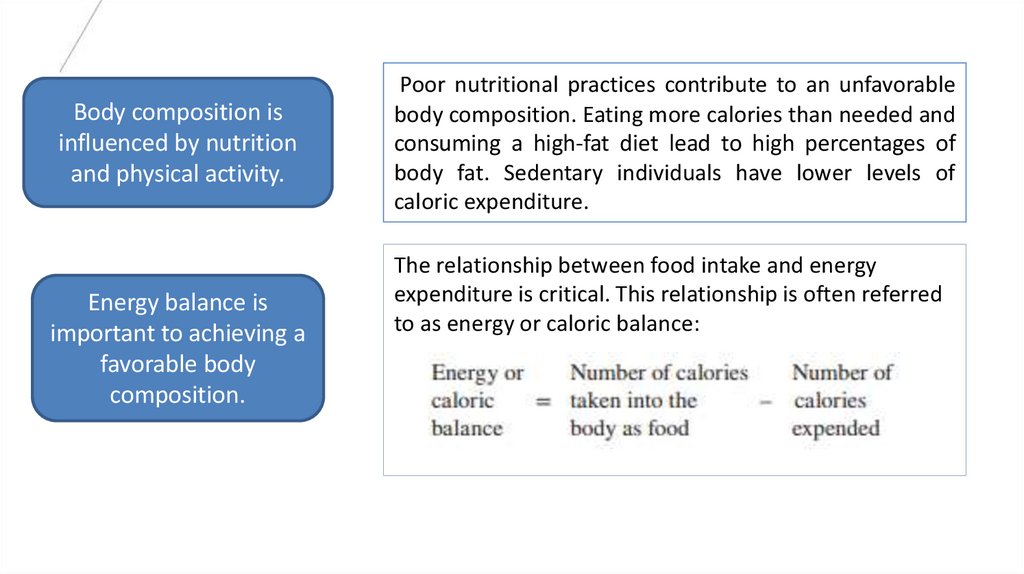
The relationship between food intake and energy
expenditure is critical. This relationship is often referred
to as energy or caloric balance:
18.
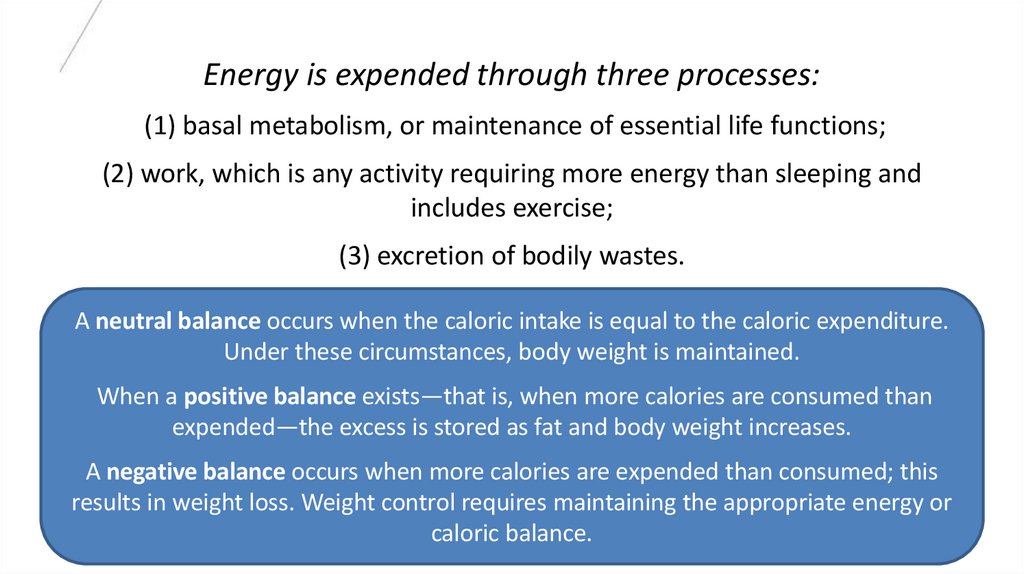
Energy is expended through three processes:(1) basal metabolism, or maintenance of essential life functions;
(2) work, which is any activity requiring more energy than sleeping and
includes exercise;
(3) excretion of bodily wastes.
A neutral balance occurs when the caloric intake is equal to the caloric expenditure.
Under these circumstances, body weight is maintained.
When a positive balance exists—that is, when more calories are consumed than
expended—the excess is stored as fat and body weight increases.
A negative balance occurs when more calories are expended than consumed; this
results in weight loss. Weight control requires maintaining the appropriate energy or
caloric balance.
19.
Body composition canbe improved.
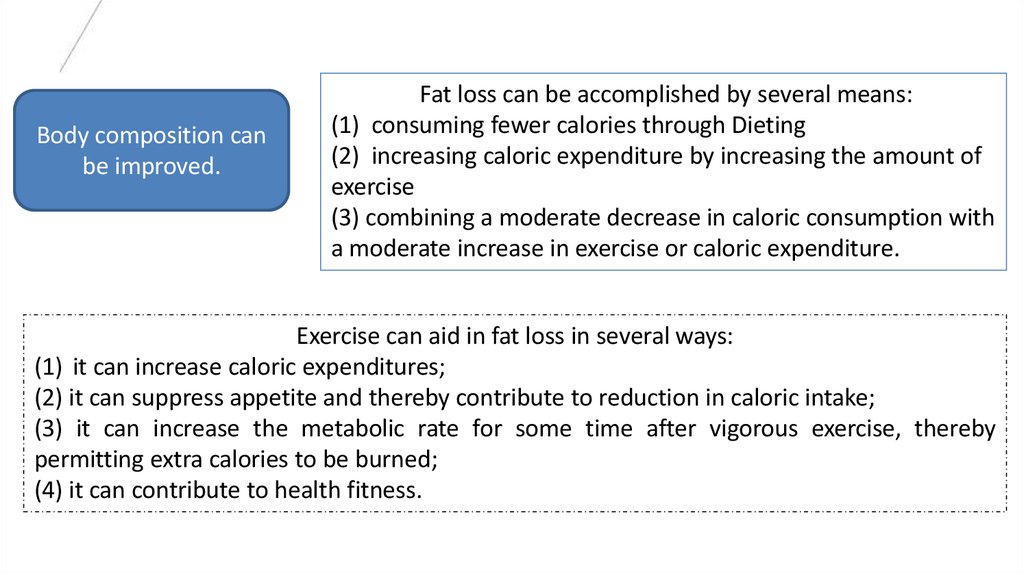
Fat loss can be accomplished by several means:
(1) consuming fewer calories through Dieting
(2) increasing caloric expenditure by increasing the amount of
exercise
(3) combining a moderate decrease in caloric consumption with
a moderate increase in exercise or caloric expenditure.
Exercise can aid in fat loss in several ways:
(1) it can increase caloric expenditures;
(2) it can suppress appetite and thereby contribute to reduction in caloric intake;
(3) it can increase the metabolic rate for some time after vigorous exercise, thereby
permitting extra calories to be burned;
(4) it can contribute to health fitness.
20.
Individuals who desire to gain weight should focus on increasing lean bodymass (muscle) rather than body fat. This can be accomplished by following a
sound muscle training program in conjunction with an appropriate increase in
caloric intake. Failure to incorporate muscle training as part of a total fitness
program will result in excess calories being converted to fat. Thus, even
though the weight gain is achieved, the percentage of body fat may be less
than optimal.
21. Experts suggest the following guidelines regarding fat loss
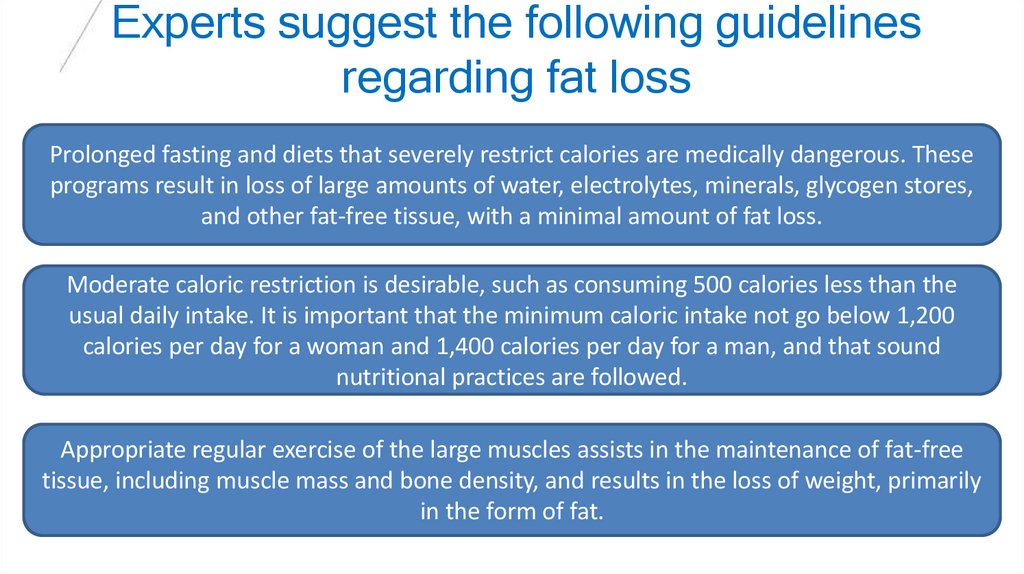
Prolonged fasting and diets that severely restrict calories are medically dangerous. Theseprograms result in loss of large amounts of water, electrolytes, minerals, glycogen stores,
and other fat-free tissue, with a minimal amount of fat loss.
Moderate caloric restriction is desirable, such as consuming 500 calories less than the
usual daily intake. It is important that the minimum caloric intake not go below 1,200
calories per day for a woman and 1,400 calories per day for a man, and that sound
nutritional practices are followed.
Appropriate regular exercise of the large muscles assists in the maintenance of fat-free
tissue, including muscle mass and bone density, and results in the loss of weight, primarily
in the form of fat.
22. Experts suggest the following guidelines regarding fat loss
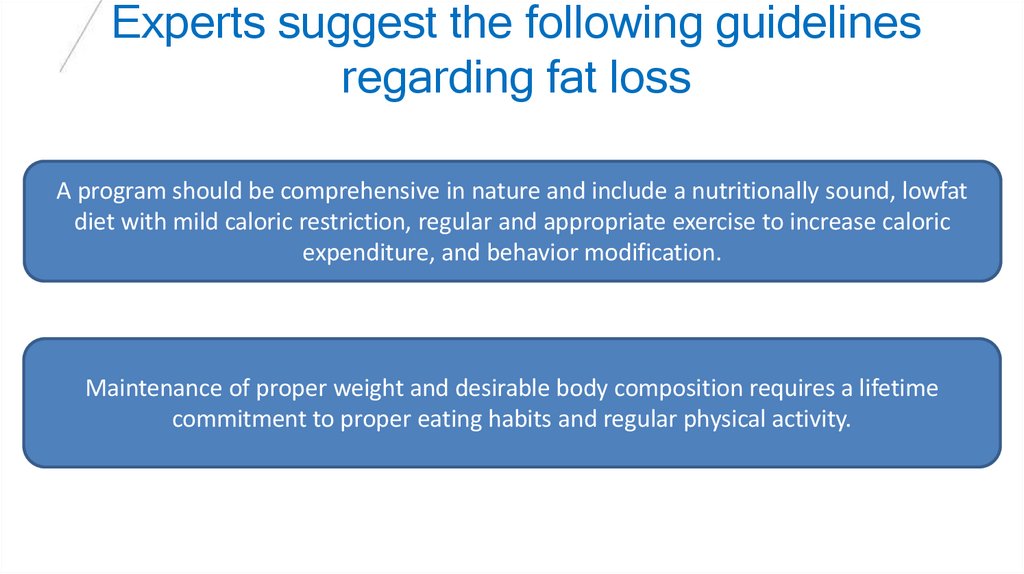
A program should be comprehensive in nature and include a nutritionally sound, lowfatdiet with mild caloric restriction, regular and appropriate exercise to increase caloric
expenditure, and behavior modification.
Maintenance of proper weight and desirable body composition requires a lifetime
commitment to proper eating habits and regular physical activity.
23.
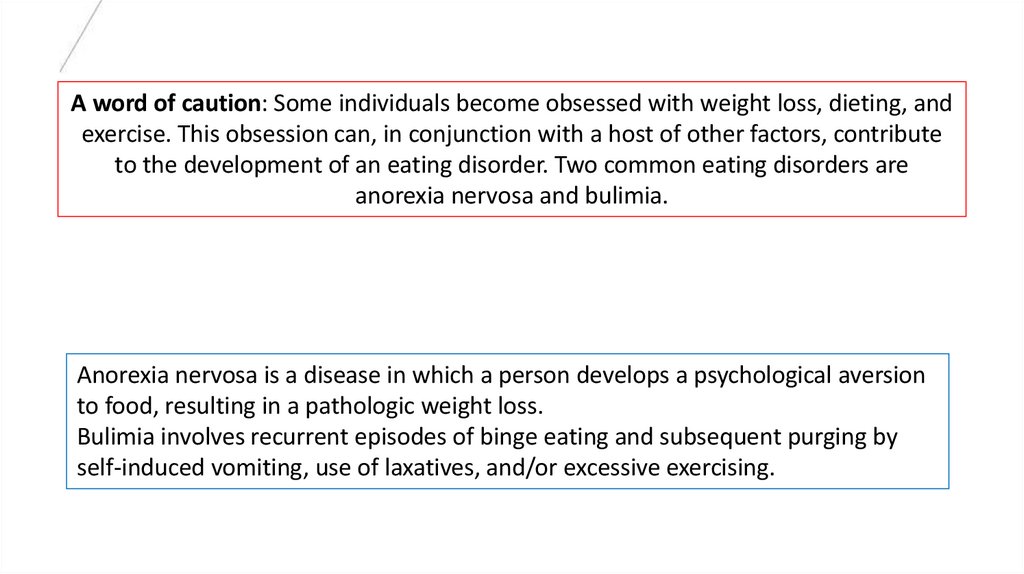
A word of caution: Some individuals become obsessed with weight loss, dieting, andexercise. This obsession can, in conjunction with a host of other factors, contribute
to the development of an eating disorder. Two common eating disorders are
anorexia nervosa and bulimia.
Anorexia nervosa is a disease in which a person develops a psychological aversion
to food, resulting in a pathologic weight loss.
Bulimia involves recurrent episodes of binge eating and subsequent purging by
self-induced vomiting, use of laxatives, and/or excessive exercising.
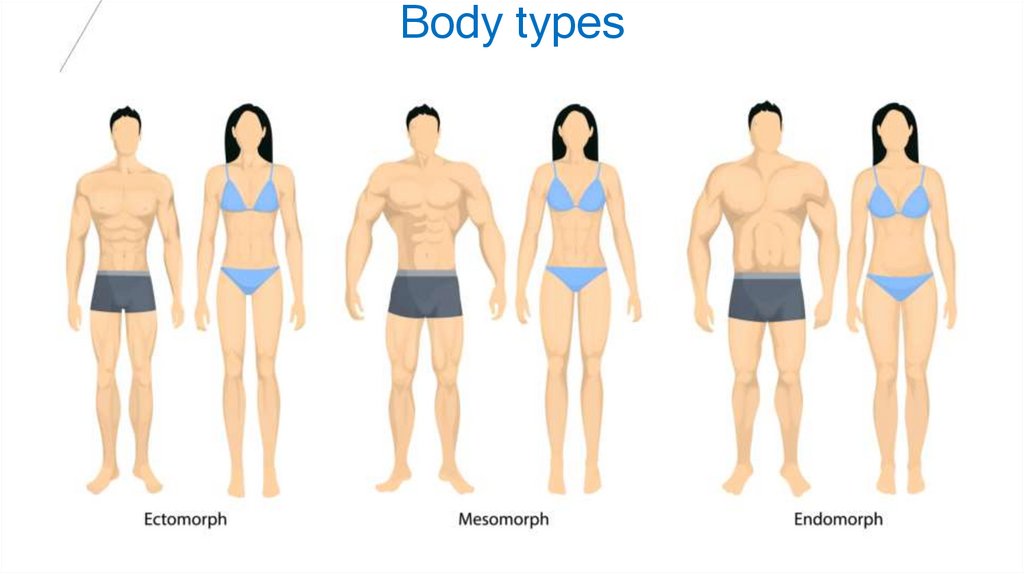
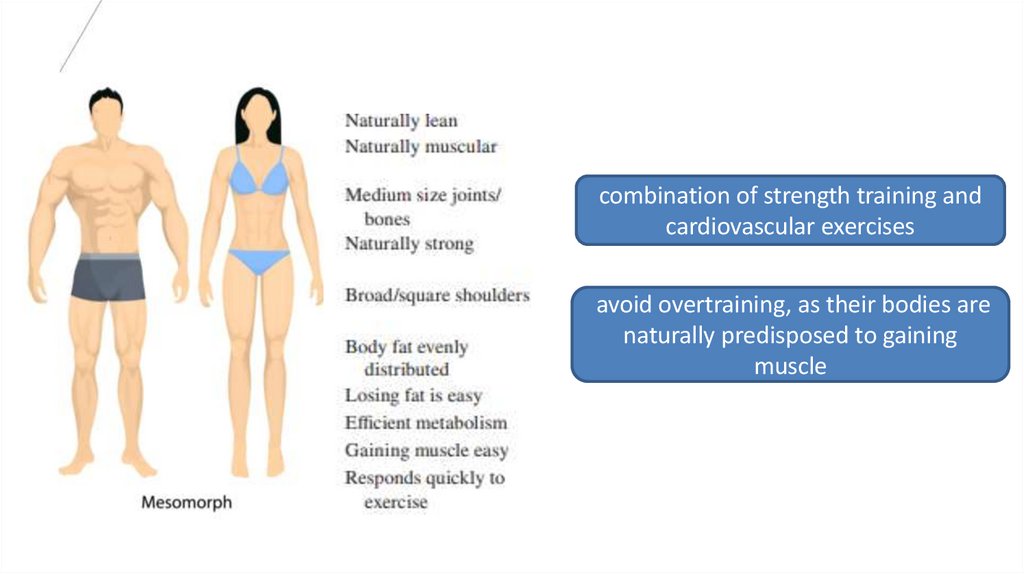
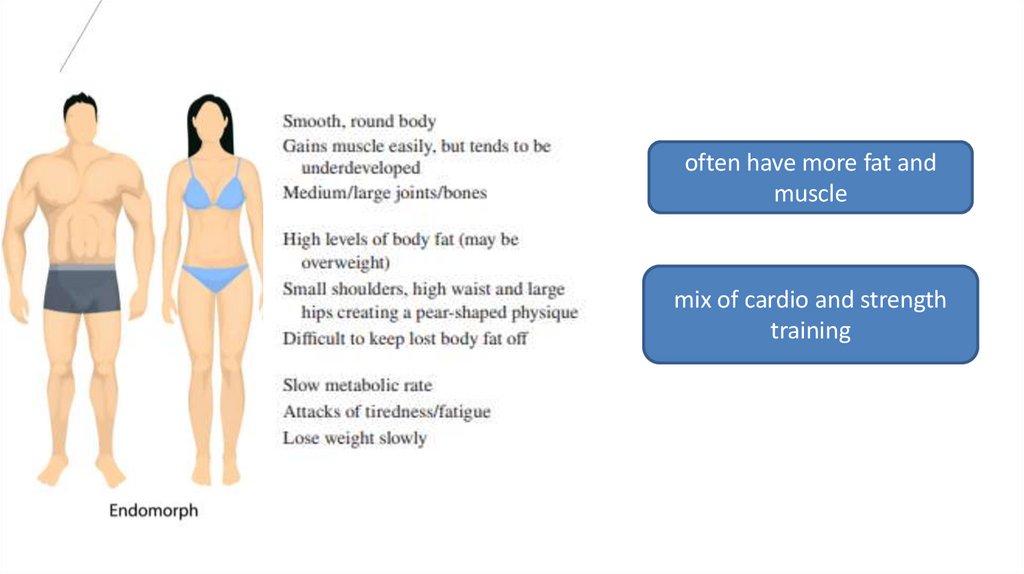
24. Body types
25.
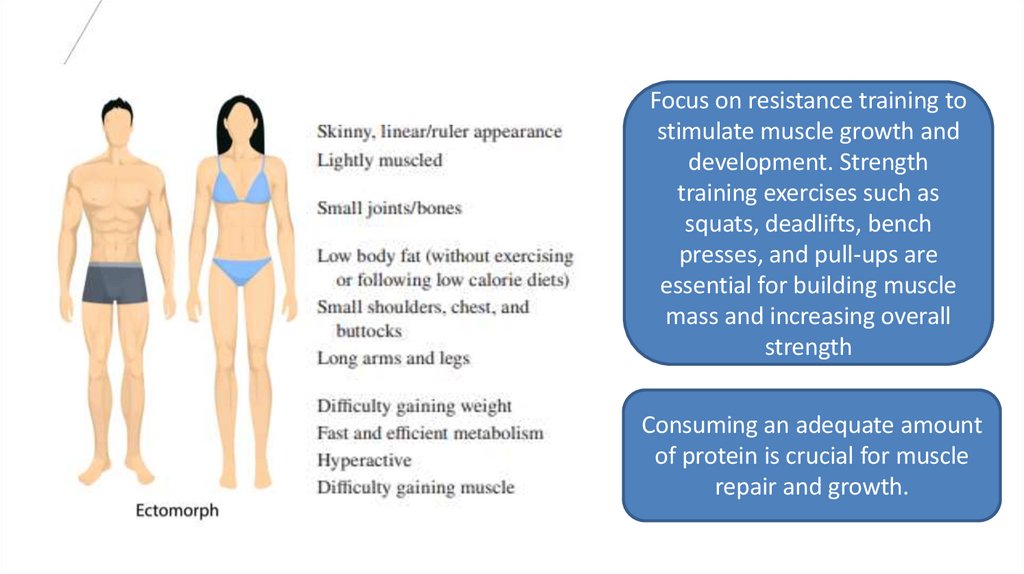
Focus on resistance training tostimulate muscle growth and
development. Strength
training exercises such as
squats, deadlifts, bench
presses, and pull-ups are
essential for building muscle
mass and increasing overall
strength
Consuming an adequate amount
of protein is crucial for muscle
repair and growth.
26.
combination of strength training andcardiovascular exercises
avoid overtraining, as their bodies are
naturally predisposed to gaining
muscle
27.
often have more fat andmuscle
mix of cardio and strength
training
28. Contact information
Vasilyeva Ekaterina Alekseevna, Senior teacher of Higher School of SportsPedagogy, assistant of Department of Physical Training and Sports
email: vasilieva_ea2@spbstu.ru
VK: https://vk.com/kvslv_kvslv
Location:
Политехническая
27,
СК
Monday/Tuesday/Thursday/Friday 08:00-15:30
«Политехник»,
2
корпус,
29.
Thank you for your attention!Спасибо за внимание