


 Финансы
Похожие презентации:










Strategy for Transition to Market Relations Republic of Uzbekistan
1.
Strategy for Transition to MarketRelations
Republic of Uzbekistan
A 15-slide strategic presentation
Prepared: Sept 24, 2025
Author: Prepared with AI assistance
2.
Overview & Current ContextHistorical legacy: centrally planned economy to gradual reforms
Recent progress: liberalization, privatization, improved business climate
Remaining challenges: state dominance in key sectors, weak competition, social
concerns
3.
Strategy ObjectivesEstablish market-based allocation of resources
Promote sustainable private-sector led growth
Ensure inclusive transition and social protection
Attract FDI and integrate into regional/global markets
4.
Macroeconomic StabilizationMaintain low and stable inflation
Gradual fiscal consolidation with social protection
Flexible but managed exchange-rate policy
Strengthen macroeconomic policy coordination
5.
Privatization & Enterprise ReformTransparent, competitive privatization programs
Corporate governance reforms for state-owned enterprises (SOEs)
Support SME development and entrepreneurship
Legal measures to prevent asset stripping and foster competition
6.
Legal & Regulatory FrameworkSimplify business registration and licensing
Strengthen property rights and contract enforcement
Modernize competition law and regulatory agencies
Improve judicial independence and dispute resolution
7.
Monetary & Fiscal PolicyEmpower central bank with clear inflation-targeting mandate
Modernize financial reporting & public financial management
Targeted fiscal support for structural reforms
Gradual removal of implicit subsidies
8.
Trade Liberalization & FDIProgressive tariff reduction and non-tariff barrier removal
Bilateral and regional trade agreements to enhance market access
Investment promotion with clear, non-discriminatory rules
One-stop-shop services and investor aftercare
9.
Banking & Financial Sector ReformStrengthen bank supervision and resolution frameworks
Promote competition and market-based interest rates
Develop capital markets and corporate bond markets
Expand access to finance for SMEs and agriculture
10.
Infrastructure & LogisticsInvest in transport corridors, energy, and digital infrastructure
Public-private partnerships (PPPs) with strong transparency
Improve customs and logistics to reduce trade costs
Rural infrastructure to integrate regional producers
11.
Human Capital & Labor MarketReforms
Modernize education and vocational training to meet market needs
Labor market flexibility with retraining programs
Encourage labor mobility and entrepreneurship
Strengthen links between businesses and training providers
12.
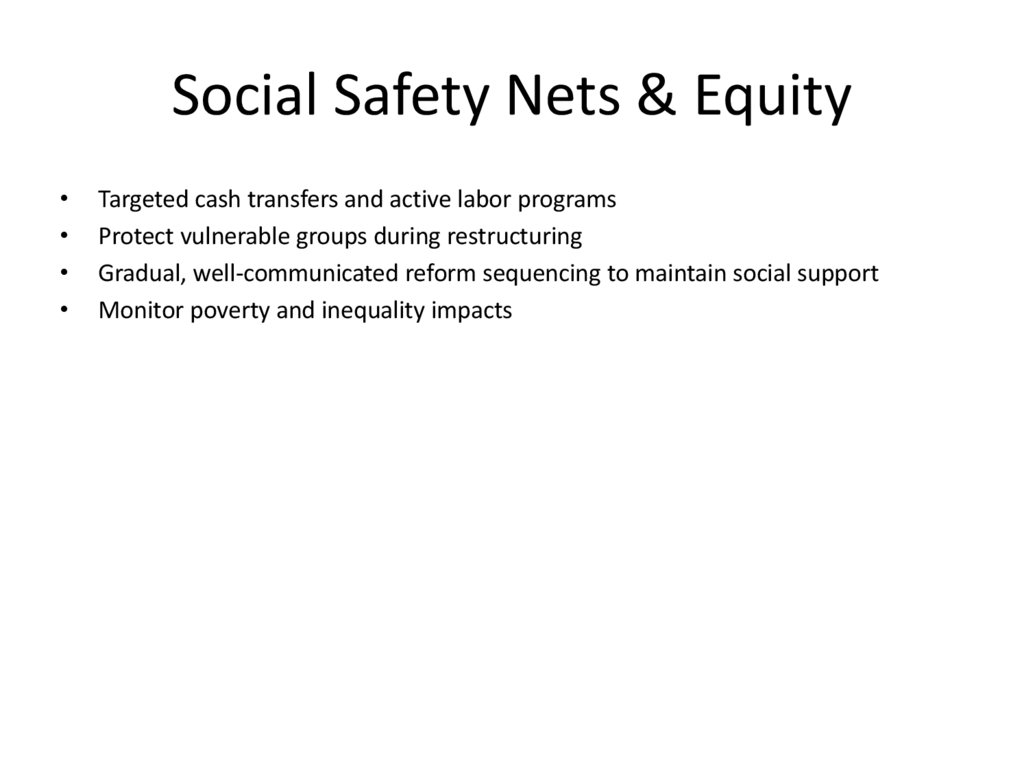
Social Safety Nets & EquityTargeted cash transfers and active labor programs
Protect vulnerable groups during restructuring
Gradual, well-communicated reform sequencing to maintain social support
Monitor poverty and inequality impacts
13.
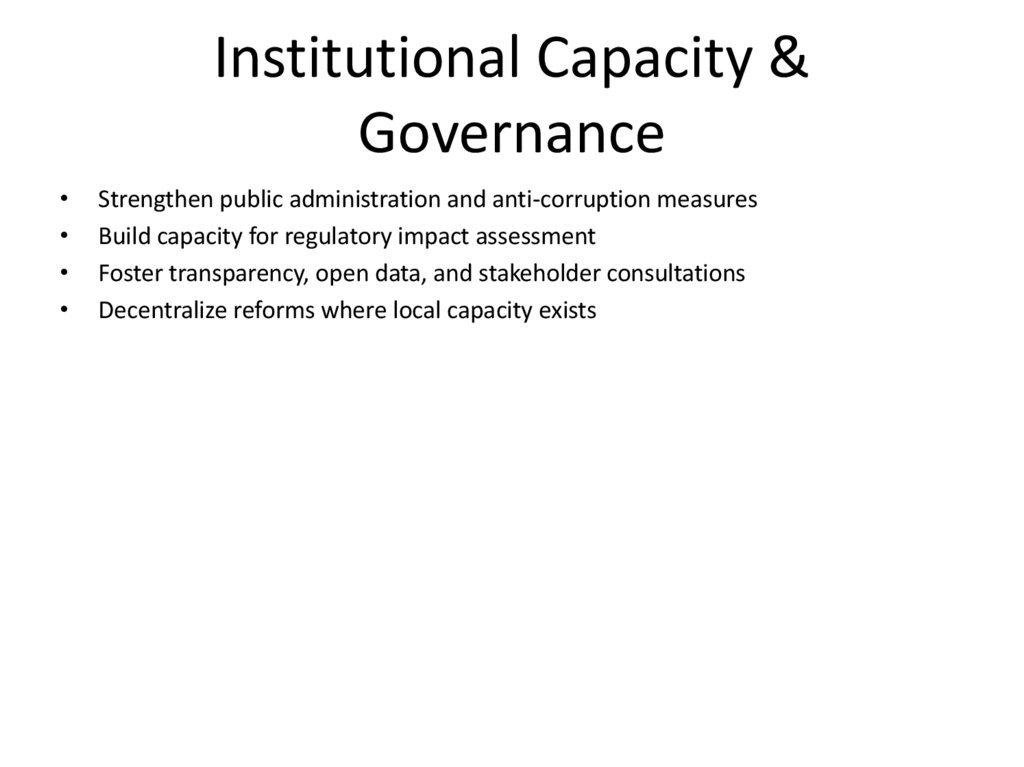
Institutional Capacity &Governance
Strengthen public administration and anti-corruption measures
Build capacity for regulatory impact assessment
Foster transparency, open data, and stakeholder consultations
Decentralize reforms where local capacity exists
14.
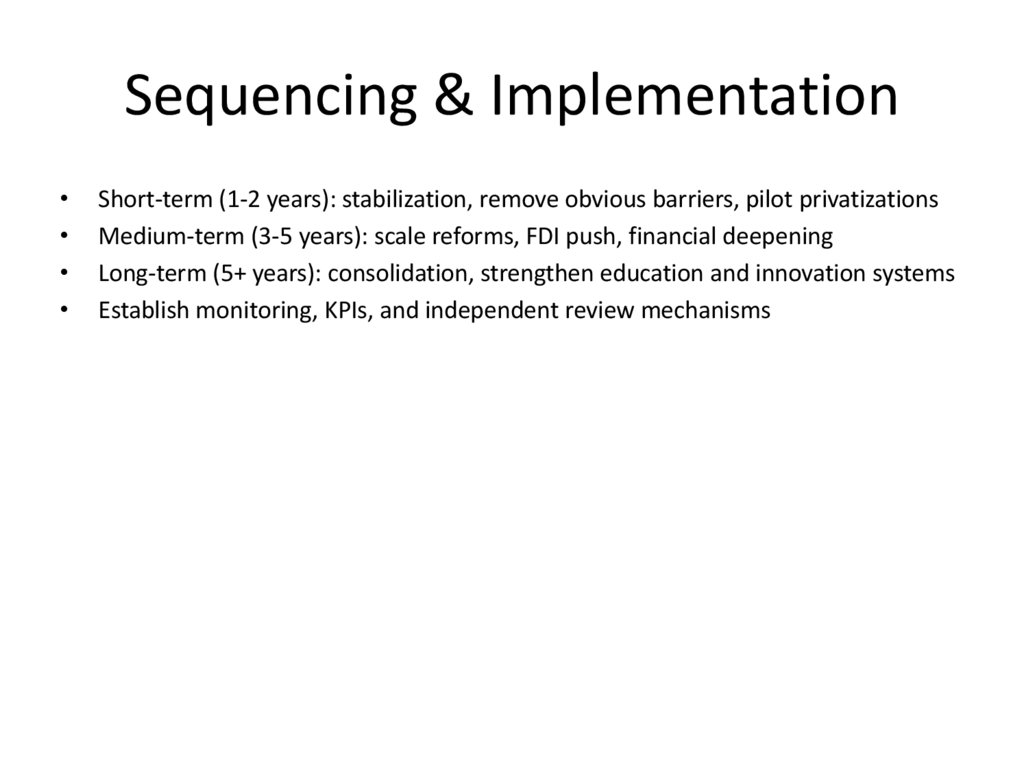
Sequencing & ImplementationShort-term (1-2 years): stabilization, remove obvious barriers, pilot privatizations
Medium-term (3-5 years): scale reforms, FDI push, financial deepening
Long-term (5+ years): consolidation, strengthen education and innovation systems
Establish monitoring, KPIs, and independent review mechanisms
15.
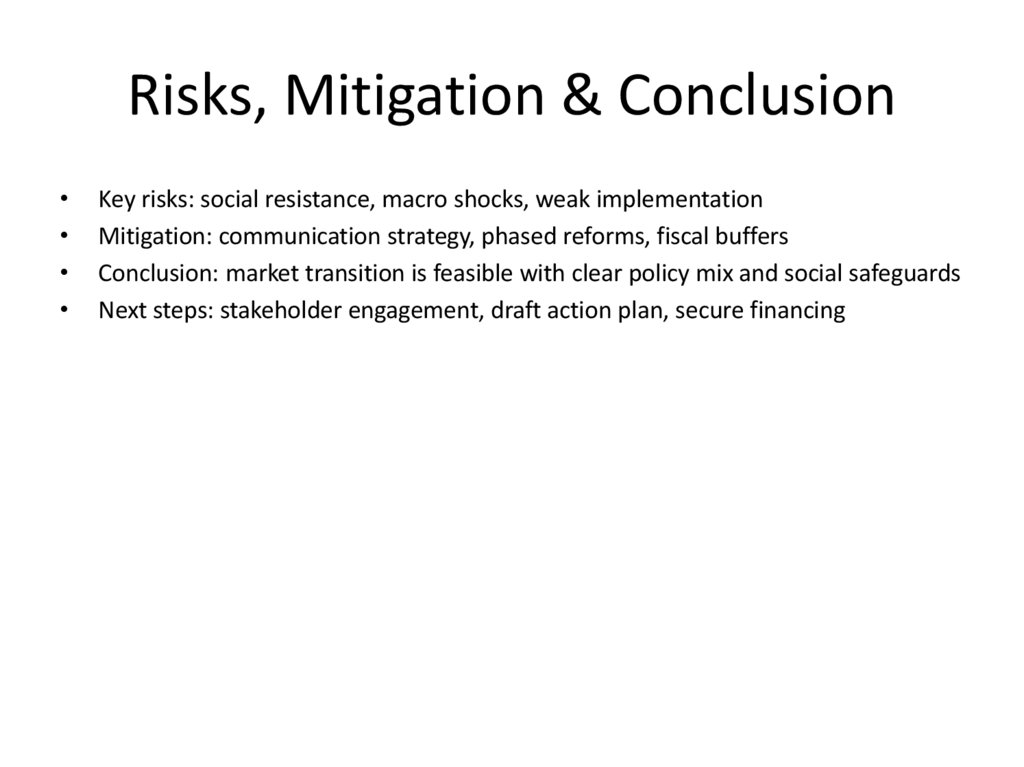
Risks, Mitigation & ConclusionKey risks: social resistance, macro shocks, weak implementation
Mitigation: communication strategy, phased reforms, fiscal buffers
Conclusion: market transition is feasible with clear policy mix and social safeguards
Next steps: stakeholder engagement, draft action plan, secure financing