





 Экономика
Похожие презентации:







Economics Grade 12 Week 3
1. Economics
Grade 12Week 3
2. STOCK AND BONDS
• Learning objectives• LO 1. Distinguish between stocks
and bonds
• LO 2. Understand the types of
investment in real and financial
sectors
3. What is an investment?
• An investment is an asset or items that is purchased with thehope that it will generate income, appreciation in value and
interest.
• In economics, investment allocation of resources, typically
capital, to generate future income or returns.
4. TYPES OF INVESTMENT
• STOCKS/SHARES• BONDS
• MUTUAL FUND
• REAL ESTATE
• SAVINGS/CERTIFICATE OF DEPOSITS
• COLLECTIBLES
5. SHARES OR STOCK
"stock" refers to the overallconcept of ownership, while
"shares" are the individual units
that make up that ownership.
6.
• When you buy shares of a company you become a shareholder of thatcompany.
• Shareholders have the ownership rights of a company and can make
decisions.
• Shareholders get to share the profits of the company in the form of
dividends.
7. Types of stock
1. Preference - shares that pay a fixed rate of dividends.2. Ordinary (common) - shares that do not pay a fixed rate of dividends.
• In case a company becomes bankrupt, and is forced to wind up (close),
the company pays first the debt which may be a bond.
• Next to be paid are the preference shareholders followed by ordinary
shareholders.
8.
9. Bonds
• A bond is loan - the bondholder is lending money to the bond issuer.• Generally, interest is paid to the bondholder.
• The coupon rate is the annual interest rate paid by the bond issuer.
• The maturity date is when the loan ends and the bond issuer repays the
principal to the bondholder.
10.
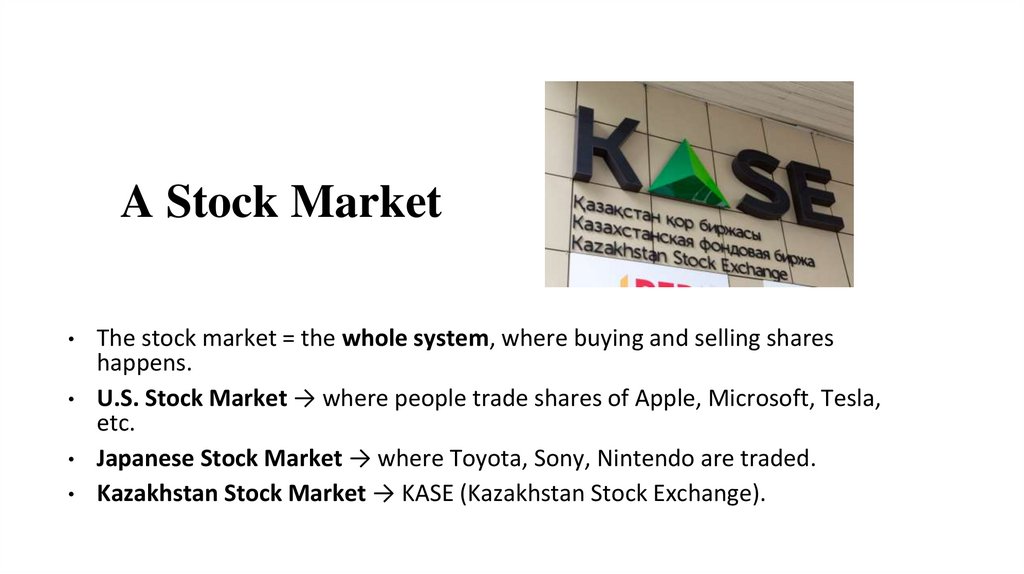
11. A Stock Market
The stock market = the whole system, where buying and selling shares
happens.
U.S. Stock Market → where people trade shares of Apple, Microsoft, Tesla,
etc.
Japanese Stock Market → where Toyota, Sony, Nintendo are traded.
Kazakhstan Stock Market → KASE (Kazakhstan Stock Exchange).
12.
13.
14.
15.
16.
Read the article “What Are Your Investment Choices? From Condosto Gold to Plain Cash” and write a summary paragraph explaining why
stocks and bonds are a popular choice for investments.
17.
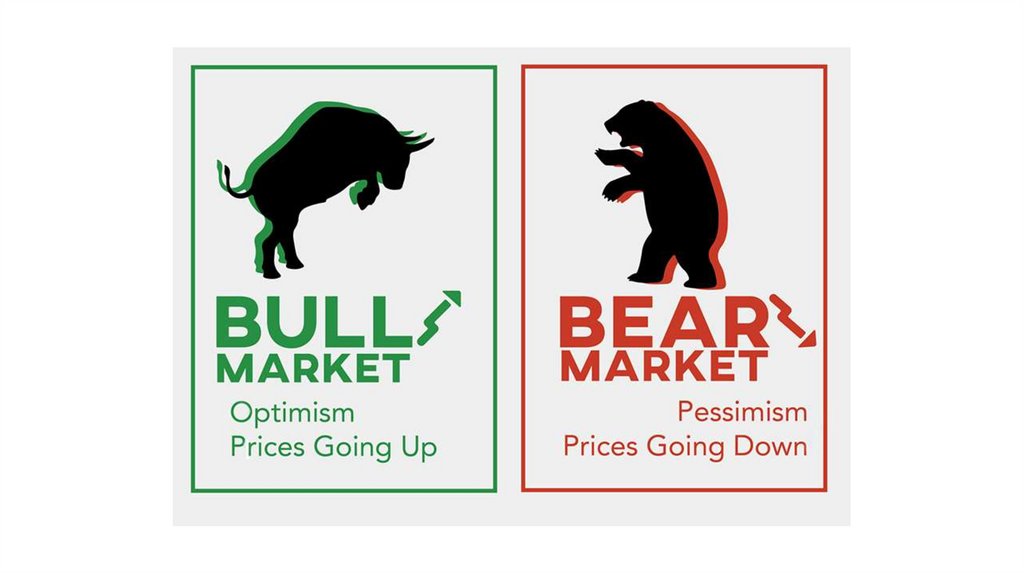
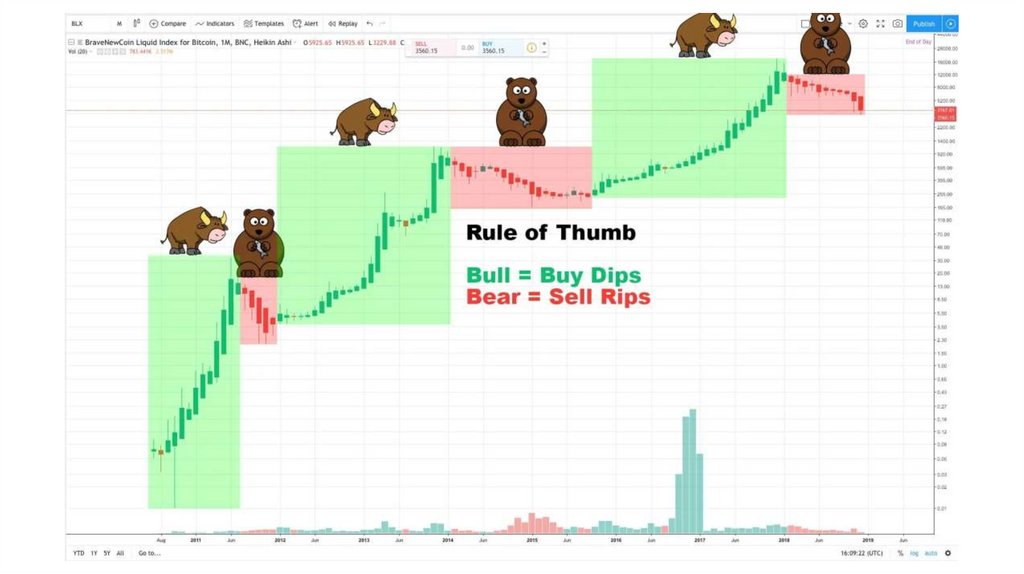
What is a Bull Market?What is a Bear Market?
Bull markets are defined by the market
going up aggressively over a period of time.
It’s a market where quarter after quarter the
market is moving down about 20 percent.
As the market starts to rise, there becomes
more and more greed in the stock market.
You see more and more people thinking,
“Oh yeah let’s put money into the market
because it’s going up.”
That signals a bear market, and when that
happens people start to get really scared
about putting money into the stock market.
What Causes a Bear Market?
What Causes a Bull Market?
Though a wide range of different factors
contributes to a bull market, the two largest are
usually
a bear market is one that is showing signs of
a decline.
Share prices are dropping to the point where
seasoned investors believe that this trend
will continue, at least for the foreseeable
future.
A strong economy
High employment levels across the board
18. CLASS DISCUSSION.
Pretend you are going tostart a lemonade stand.
You need some money to
get your stand started.
What do you do?
19.
You ask your grandmother to lend you$100 and write this down on a piece of
paper: "I owe you (IOU) $100, and I will
pay you back in a year plus 5% interest."
Bonds are loans, or IOUs, that represent
debt that the government or a
corporation must repay to an investor.
The bond holder has NO OWNERSHIP
of the company.
Your grandmother just bought a
bond.
But now you need more money…
20.
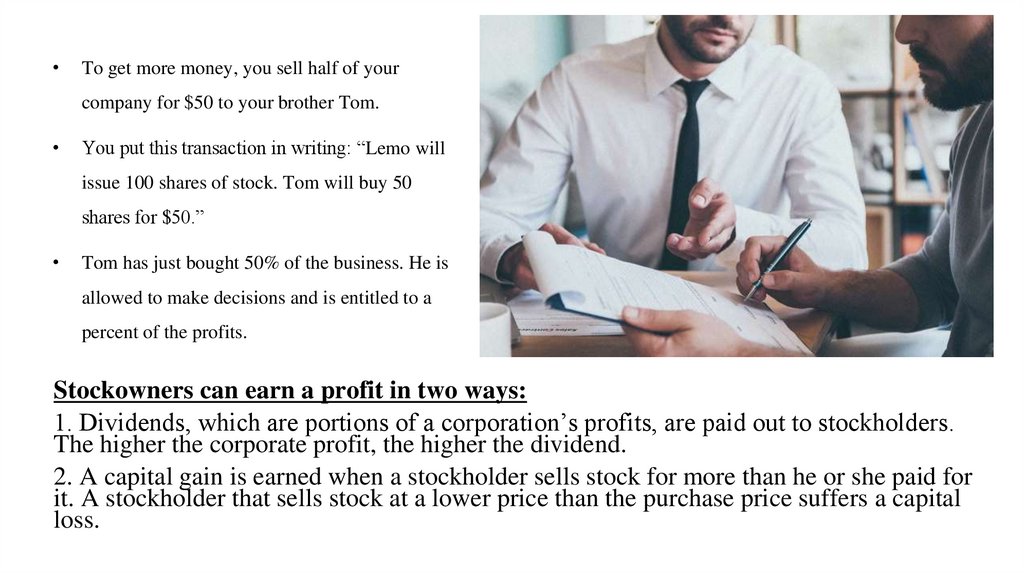
To get more money, you sell half of your
company for $50 to your brother Tom.
You put this transaction in writing: “Lemo will
issue 100 shares of stock. Tom will buy 50
shares for $50.”
Tom has just bought 50% of the business. He is
allowed to make decisions and is entitled to a
percent of the profits.
Stockowners can earn a profit in two ways:
1. Dividends, which are portions of a corporation’s profits, are paid out to stockholders.
The higher the corporate profit, the higher the dividend.
2. A capital gain is earned when a stockholder sells stock for more than he or she paid for
it. A stockholder that sells stock at a lower price than the purchase price suffers a capital
loss.