

Похожие презентации:






The-Legacy-of-Harvard-University (1)
1.
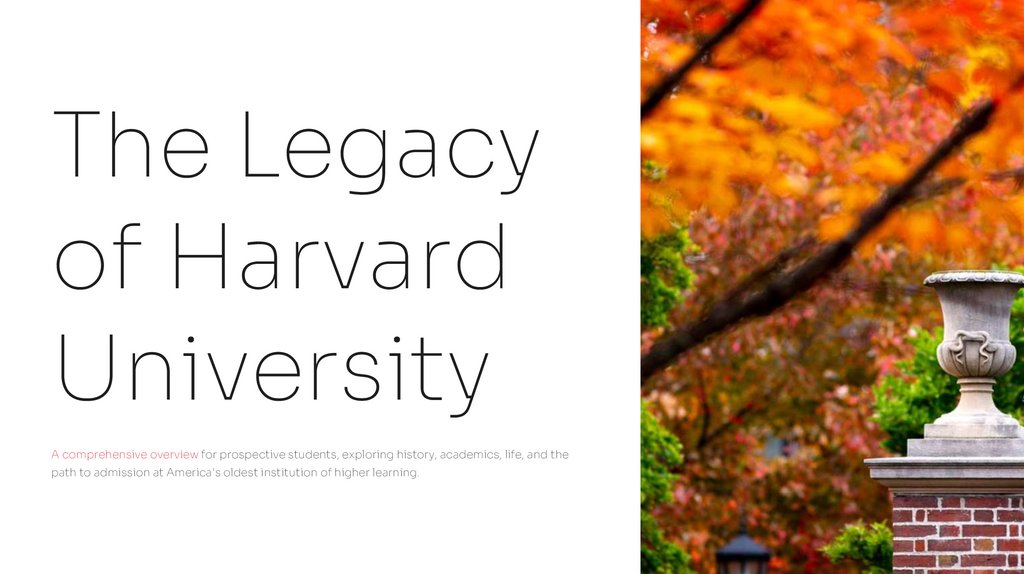
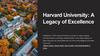
The Legacyof Harvard
University
A comprehensive overview for prospective students, exploring history, academics, life, and the
path to admission at America's oldest institution of higher learning.
2.
A Storied Beginning: The Founding of HarvardEstablished in 1636 by the Massachusetts Bay Colony's Great and General Court, Harvard stands as the
oldest institution of higher education in the United States. It was initially founded to train clergy for the new
commonwealth, reflecting the Puritan commitment to an educated ministry.
Did you know?
Harvard was originally called "New College." It was renamed in 1639 in honor of its first major benefactor,
the young minister John Harvard, who bequeathed his library and half of his estate to the institution.
The early years focused heavily on classical and biblical studies, setting a precedent for academic rigor that
continues to this day. The university's evolution mirrors the history of the nation, from a small colonial
college to a global research powerhouse.
3.
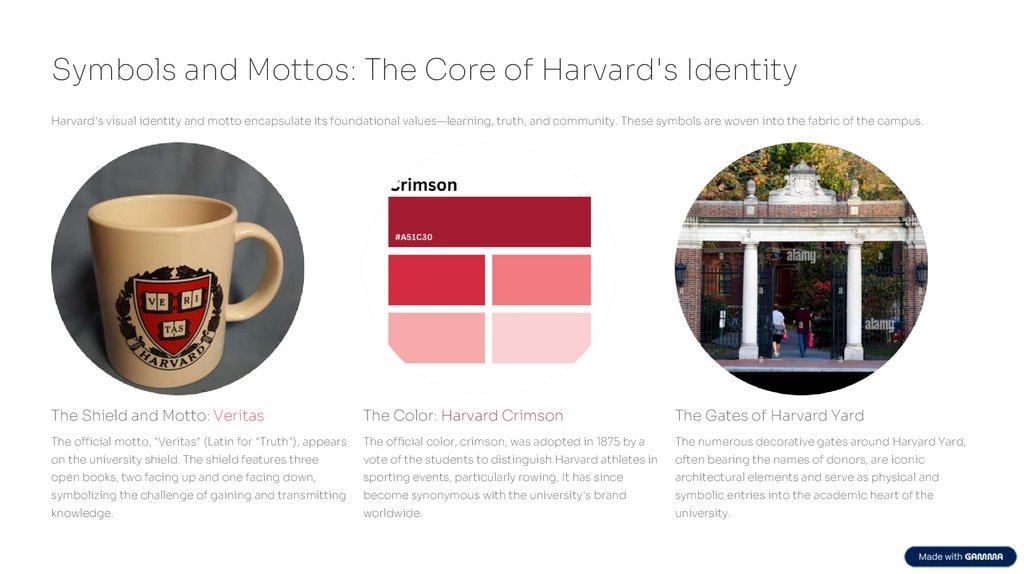
Symbols and Mottos: The Core of Harvard's IdentityHarvard's visual identity and motto encapsulate its foundational values—learning, truth, and community. These symbols are woven into the fabric of the campus.
The Shield and Motto: Veritas
The Color: Harvard Crimson
The Gates of Harvard Yard
The official motto, "Veritas" (Latin for "Truth"), appears
The official color, crimson, was adopted in 1875 by a
The numerous decorative gates around Harvard Yard,
on the university shield. The shield features three
vote of the students to distinguish Harvard athletes in
often bearing the names of donors, are iconic
open books, two facing up and one facing down,
sporting events, particularly rowing. It has since
architectural elements and serve as physical and
symbolizing the challenge of gaining and transmitting
become synonymous with the university's brand
symbolic entries into the academic heart of the
knowledge.
worldwide.
university.
4.
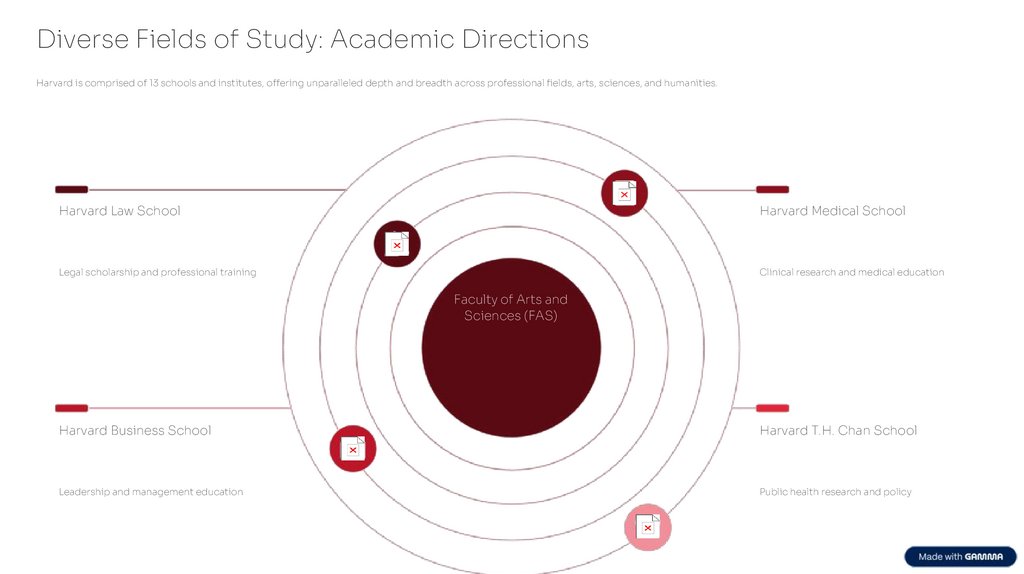
Diverse Fields of Study: Academic DirectionsHarvard is comprised of 13 schools and institutes, offering unparalleled depth and breadth across professional fields, arts, sciences, and humanities.
Harvard Law School
Harvard Medical School
Legal scholarship and professional training
Clinical research and medical education
Faculty of Arts and
Sciences (FAS)
Harvard Business School
Harvard T.H. Chan School
Leadership and management education
Public health research and policy
5.
Student Life and TraditionsLife at Harvard is rich with history, unique traditions, and vibrant student organizations that foster community and connection outside of the
classroom.
Residential Houses
The Harvard-Yale Rivalry
Commencement Ceremony
After their first year in Harvard Yard,
Known simply as "The Game," this annual
The commencement ceremony is
students are sorted into one of 12
football match against Yale is one of the
steeped in centuries of tradition,
undergraduate Houses, which serve as
oldest and most intense collegiate
featuring academic robes, an outdoor
micro-communities providing housing,
rivalries in American sports, sparking
ceremony in Harvard Yard, and often a
dining, and academic support throughout
massive celebrations and school pride.
keynote speech by a globally prominent
their remaining years.
figure.
6.
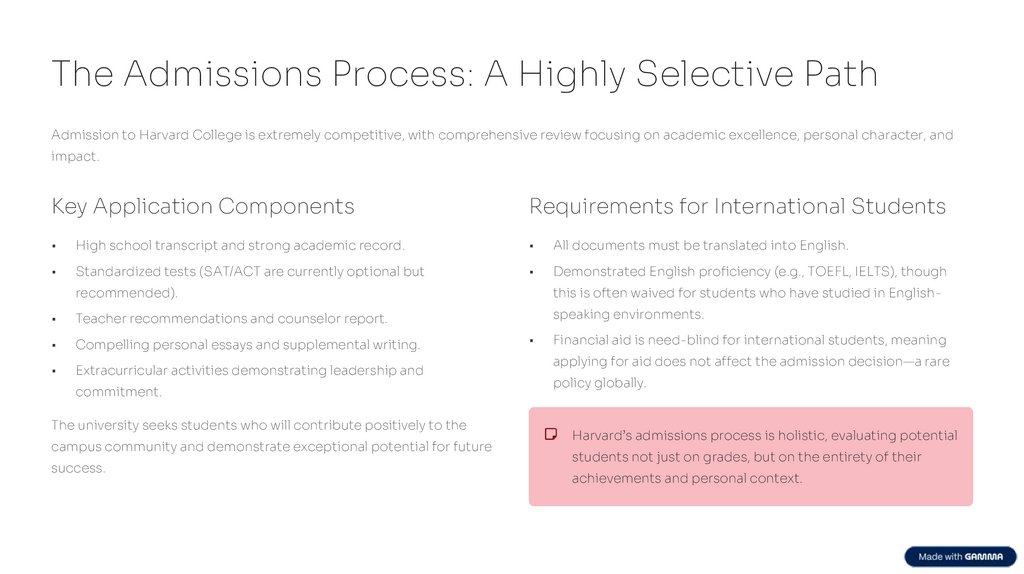
The Admissions Process: A Highly Selective PathAdmission to Harvard College is extremely competitive, with comprehensive review focusing on academic excellence, personal character, and
impact.
Key Application Components
Requirements for International Students
High school transcript and strong academic record.
All documents must be translated into English.
Standardized tests (SAT/ACT are currently optional but
Demonstrated English proficiency (e.g., TOEFL, IELTS), though
recommended).
this is often waived for students who have studied in English-
Teacher recommendations and counselor report.
speaking environments.
Compelling personal essays and supplemental writing.
Extracurricular activities demonstrating leadership and
commitment.
The university seeks students who will contribute positively to the
campus community and demonstrate exceptional potential for future
success.
Financial aid is need-blind for international students, meaning
applying for aid does not affect the admission decision—a rare
policy globally.
Harvard’s admissions process is holistic, evaluating potential
students not just on grades, but on the entirety of their
achievements and personal context.
7.
Tuition and The Cost of AttendanceWhile the sticker price for a year at Harvard is high, the university is committed to making education accessible through one of the most
generous financial aid programs in the world.
Category
Annual Cost Estimate (2023-2024)
Notes
Tuition
$54,768
Covers academic instruction
Room & Board
$21,800
Housing and meal plan
Fees & Personal
$5,000+
Includes health fees, books, and
personal expenses
Total Cost
$81,550+
The published annual comprehensive
cost
It is crucial to note that most students do not pay the full price due to extensive financial aid.
8.
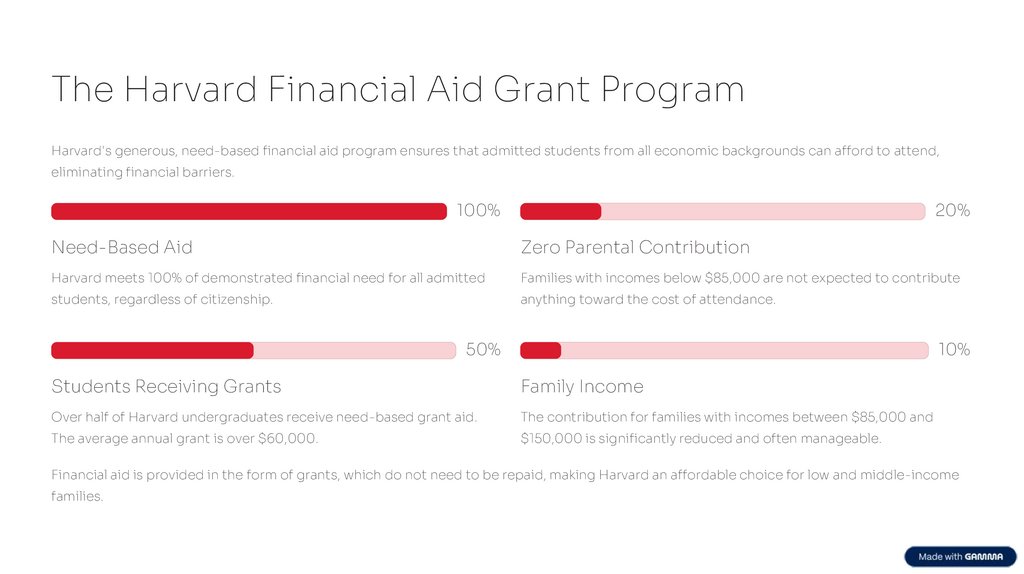
The Harvard Financial Aid Grant ProgramHarvard's generous, need-based financial aid program ensures that admitted students from all economic backgrounds can afford to attend,
eliminating financial barriers.
100%
20%
Need-Based Aid
Zero Parental Contribution
Harvard meets 100% of demonstrated financial need for all admitted
Families with incomes below $85,000 are not expected to contribute
students, regardless of citizenship.
anything toward the cost of attendance.
50%
10%
Students Receiving Grants
Family Income
Over half of Harvard undergraduates receive need-based grant aid.
The contribution for families with incomes between $85,000 and
The average annual grant is over $60,000.
$150,000 is significantly reduced and often manageable.
Financial aid is provided in the form of grants, which do not need to be repaid, making Harvard an affordable choice for low and middle-income
families.
9.
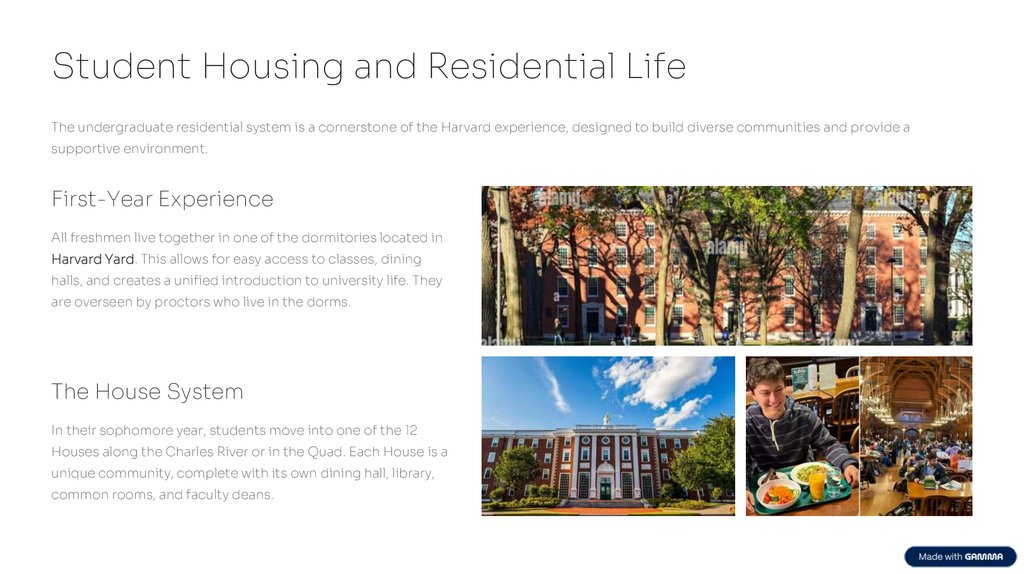
Student Housing and Residential LifeThe undergraduate residential system is a cornerstone of the Harvard experience, designed to build diverse communities and provide a
supportive environment.
First-Year Experience
All freshmen live together in one of the dormitories located in
Harvard Yard. This allows for easy access to classes, dining
halls, and creates a unified introduction to university life. They
are overseen by proctors who live in the dorms.
The House System
In their sophomore year, students move into one of the 12
Houses along the Charles River or in the Quad. Each House is a
unique community, complete with its own dining hall, library,
common rooms, and faculty deans.
10.
A Legacy of Excellence: Notable AlumniHarvard has educated countless leaders, innovators, and thinkers across nearly every field, demonstrating the profound global impact of its
alumni network.
Politics & Leadership
Business & Technology
Eight U.S. Presidents, including John F. Kennedy, Franklin D. Roosevelt,
Founders of major companies like Bill Gates (Microsoft, Law School
and Barack Obama, have graduated from Harvard.
dropout) and Mark Zuckerberg (Facebook, College dropout) started
their journeys here.
Arts & Culture
Legal & Judicial
A long list of renowned figures, including celebrated writers T.S. Eliot
Numerous Supreme Court Justices and influential legal scholars,
and Henry David Thoreau, and actors like Natalie Portman, are Harvard
solidifying Harvard Law School's role in American jurisprudence.
alumni.
The Harvard alumni network comprises over 380,000 individuals worldwide, offering unparalleled connections and opportunities to current
students.