Похожие презентации:









Bad-Habits-of-Young-People-in-Russia-and-China
1.
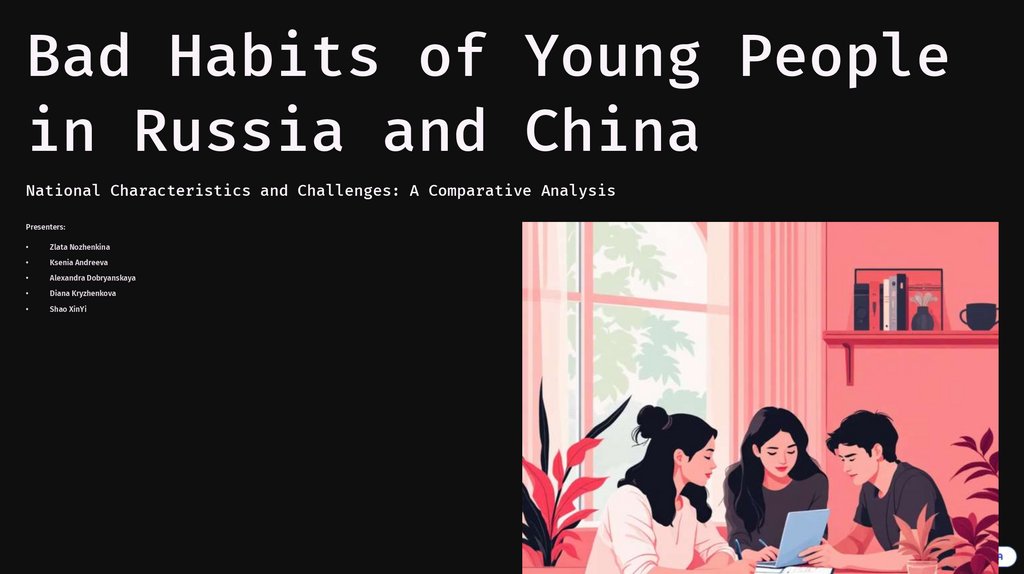
Bad Habits of Young Peoplein Russia and China
National Characteristics and Challenges: A Comparative Analysis
Presenters:
Zlata Nozhenkina
Ksenia Andreeva
Alexandra Dobryanskaya
Diana Kryzhenkova
Shao XinYi
2.
Relevance of the Topic: Why NationalContext Matters
Bad habits in youth transcend mere personal choice; they are a direct reflection of underlying social, economic, and cultural
dynamics. Understanding these nuances is critical for effective public health policy.
Health of the
Nation
Young demographics represent the
Global Problem,
Local
Manifestations
vital future demographic and
While global trends exist, the root
economic potential of both
causes and specific ways in which
countries.
bad habits manifest vary
significantly by country.
Targeted Solutions
Developing effective, high-impact
prevention and intervention
programmes requires a deep
understanding of national and
cultural specifics.
3.
The Evolving Structure of Bad HabitsYouth bad habits can be broadly categorized into traditional substance use and modern digital dependencies, presenting a dual
challenge for policymakers.
Traditional Habits
Modern / Digital Dependencies
Smoking (cigarettes, vaping, hookahs)
Gadget and internet addiction
Alcohol consumption
Online gambling/betting
Illegal drug use
Unhealthy eating behaviours related to digital life
These habits are well-documented but are morphing with the
These are newer, rapidly evolving issues linked to technology
introduction of new consumption methods (e.g., e-
saturation and changing lifestyles.
cigarettes).
4.
National Profiles: Substance Use in Russia andChina
Russia: New Smoking & Shifting Alcohol
China: Traditional Rituals & Strict
Control
Smoking: Despite restrictive anti-tobacco laws, consumption remains high.
Smoking: Characterised by a high rate of male smoking, often tied to social
Vaping and iQOS are aggressively marketed as "less harmful alternatives,"
tradition (e.g., "offering a cigarette" in formal settings). Government
quickly gaining massive popularity among youth.
restrictions on public smoking are very strict. Youth vaping is less
widespread due to tighter regulation.
"According to the Ministry of Health, every third young person in
Alcohol: Consumption is often a social necessity, especially for men,
Russia regularly uses e-cigarettes."
revolving around cultural traditions (e.g., the strong spirit 'Baijiu') during
business dinners and holidays.
Alcohol: Historically linked to strong spirits (vodka). There is a recent,
Gaming Addiction: A nationally recognised public health crisis. The
gradual shift towards lower-alcohol drinks like beer and premixed cocktails,
government has implemented highly restrictive systems limiting minors'
often consumed casually.
time spent on online games.
Drug Addiction: A significant move away from traditional hard drugs
towards highly potent synthetic substances ("salts," "spice") and the misuse
of prescription pharmaceuticals.
5.
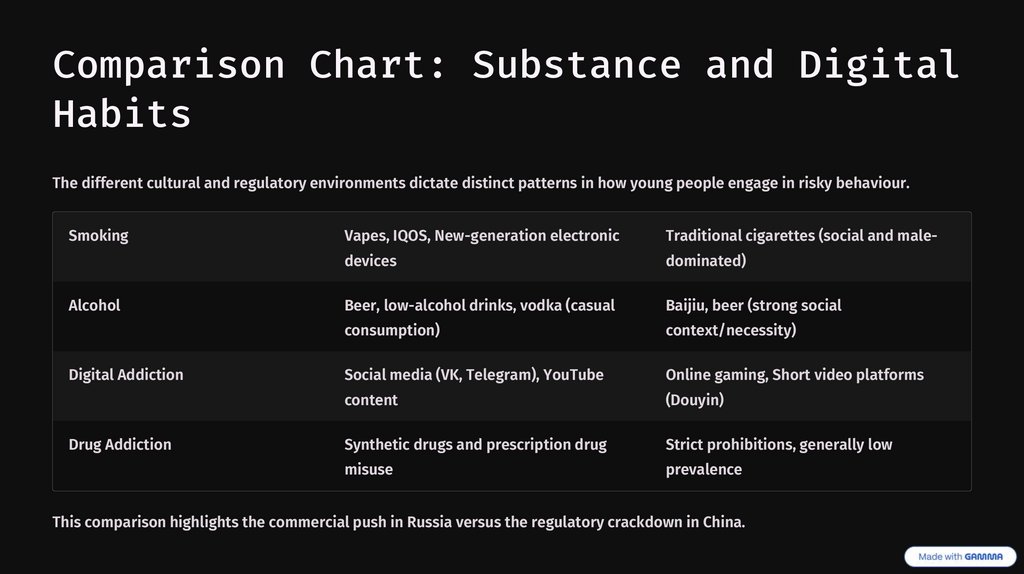
Comparison Chart: Substance and DigitalHabits
The different cultural and regulatory environments dictate distinct patterns in how young people engage in risky behaviour.
Smoking
Alcohol
Digital Addiction
Drug Addiction
Vapes, IQOS, New-generation electronic
Traditional cigarettes (social and male-
devices
dominated)
Beer, low-alcohol drinks, vodka (casual
Baijiu, beer (strong social
consumption)
context/necessity)
Social media (VK, Telegram), YouTube
Online gaming, Short video platforms
content
(Douyin)
Synthetic drugs and prescription drug
Strict prohibitions, generally low
misuse
prevalence
This comparison highlights the commercial push in Russia versus the regulatory crackdown in China.
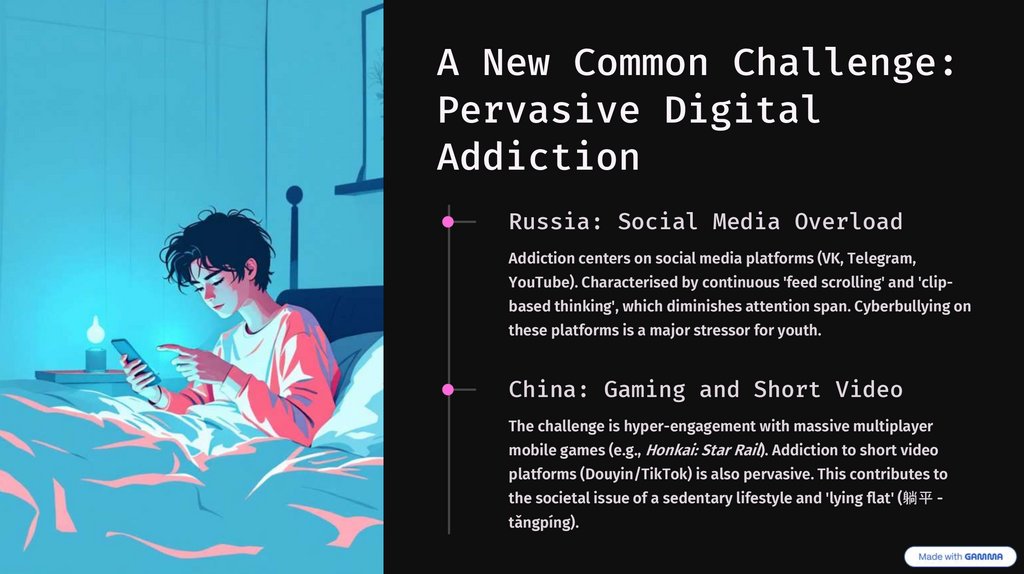
6.
A New Common Challenge:Pervasive Digital
Addiction
Russia: Social Media Overload
Addiction centers on social media platforms (VK, Telegram,
YouTube). Characterised by continuous 'feed scrolling' and 'clip-
based thinking', which diminishes attention span. Cyberbullying on
these platforms is a major stressor for youth.
China: Gaming and Short Video
The challenge is hyper-engagement with massive multiplayer
mobile games (e.g., Honkai: Star Rail). Addiction to short video
platforms (Douyin/TikTok) is also pervasive. This contributes to
the societal issue of a sedentary lifestyle and 'lying flat' (躺平 tǎngpíng).
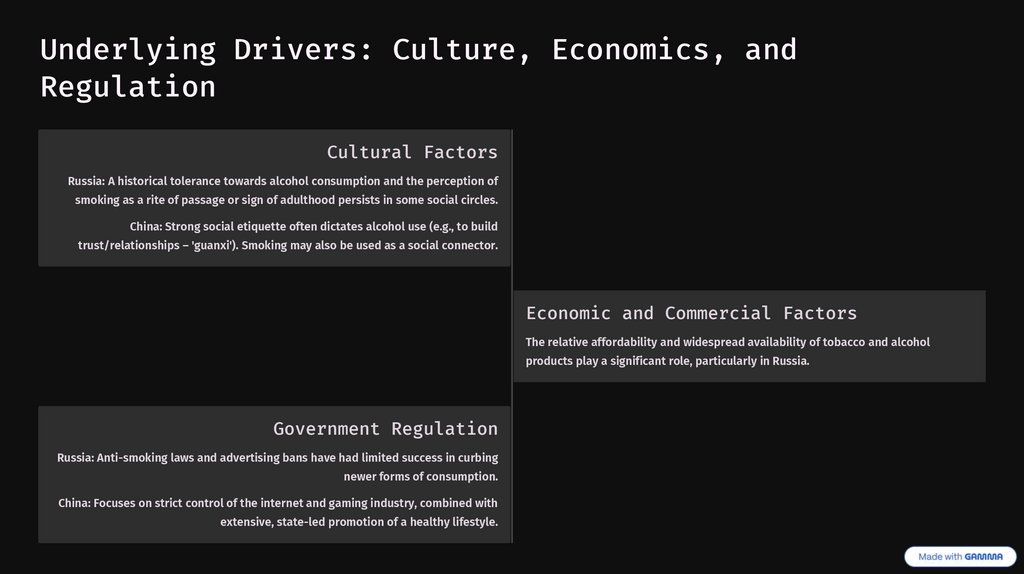
7.
Underlying Drivers: Culture, Economics, andRegulation
Cultural Factors
Russia: A historical tolerance towards alcohol consumption and the perception of
smoking as a rite of passage or sign of adulthood persists in some social circles.
China: Strong social etiquette often dictates alcohol use (e.g., to build
trust/relationships – 'guanxi'). Smoking may also be used as a social connector.
Economic and Commercial Factors
The relative affordability and widespread availability of tobacco and alcohol
products play a significant role, particularly in Russia.
Government Regulation
Russia: Anti-smoking laws and advertising bans have had limited success in curbing
newer forms of consumption.
China: Focuses on strict control of the internet and gaming industry, combined with
extensive, state-led promotion of a healthy lifestyle.
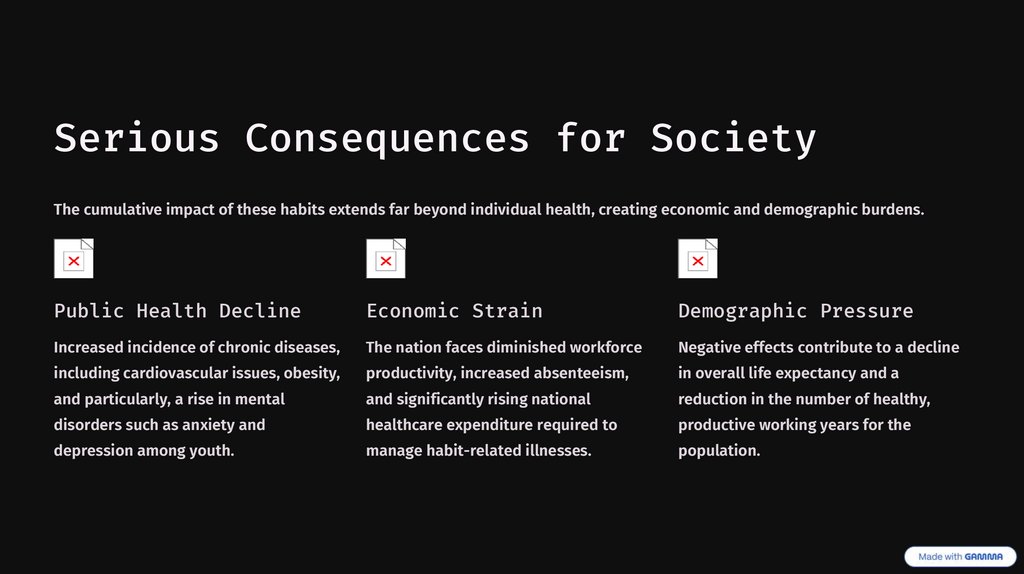
8.
Serious Consequences for SocietyThe cumulative impact of these habits extends far beyond individual health, creating economic and demographic burdens.
Public Health Decline
Economic Strain
Demographic Pressure
Increased incidence of chronic diseases,
The nation faces diminished workforce
Negative effects contribute to a decline
including cardiovascular issues, obesity,
productivity, increased absenteeism,
in overall life expectancy and a
and particularly, a rise in mental
and significantly rising national
reduction in the number of healthy,
disorders such as anxiety and
healthcare expenditure required to
productive working years for the
depression among youth.
manage habit-related illnesses.
population.
9.
Emerging Social Condemnation and ChangingTrends
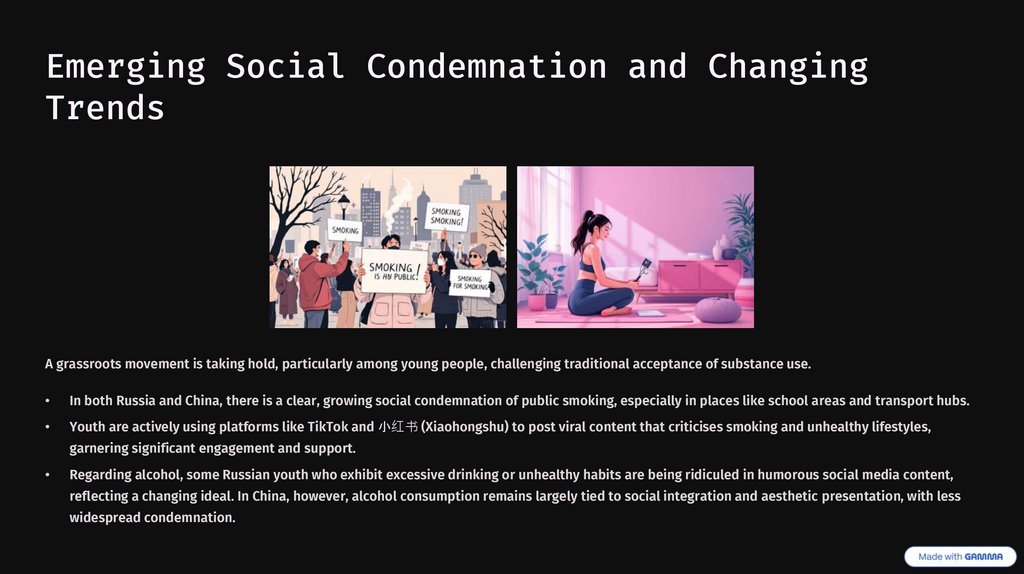
A grassroots movement is taking hold, particularly among young people, challenging traditional acceptance of substance use.
In both Russia and China, there is a clear, growing social condemnation of public smoking, especially in places like school areas and transport hubs.
Youth are actively using platforms like TikTok and 小红书 (Xiaohongshu) to post viral content that criticises smoking and unhealthy lifestyles,
garnering significant engagement and support.
Regarding alcohol, some Russian youth who exhibit excessive drinking or unhealthy habits are being ridiculed in humorous social media content,
reflecting a changing ideal. In China, however, alcohol consumption remains largely tied to social integration and aesthetic presentation, with less
widespread condemnation.
10.
Summary and Policy Implications1
Habit Structure Divergence
2
The specific nature of youth bad habits in Russia and
Russia's Commercial
Challenge
China differs significantly, driven primarily by
The primary ongoing policy challenge in Russia is the
contrasting cultural norms and the extent of
aggressive commercialization and availability of new
government regulatory intervention.
forms of smoking (vaping) and the deep-seated cultural
presence of alcohol.
3
China's Regulatory Focus
4
Need for Targeted Strategy
China's key problems revolve around digital addictions
Universal public health solutions are insufficient.
(gaming, short video) and the persistent social pressure
Effective intervention requires a highly targeted,
embedded within traditional habits like smoking and
segmented approach that directly addresses the
ceremonial drinking.
unique national and cultural context of youth
behaviour in each country.
Thank you for attending. We welcome your questions.