 Бизнес
Похожие презентации:








Session 1 Introduction to the Course Managerial Communication
1. Session I Cross-cultural Managerial Communication
Topics Covered Include:1.
2.
3.
4.
What is managerial communication?
Cross-cultural, intercultural or multicultural
managerial communication.
Business communication, management and
success.
Communication strategy.
2.
3. Communication
Communication is the process of sendingand receiving information.
4. Managerial Communication
Managerial communication is the process ofsending
and
receiving
managerial
information.
5. Communication ability=Promotobility
If you want to stay at the entry level . . . You reallydon't have to write much, if you want promotions,
on the other hand, writing becomes important. If
you want to get into management positions, you're
going to have to speak in front of groups and do
some writing.
6.
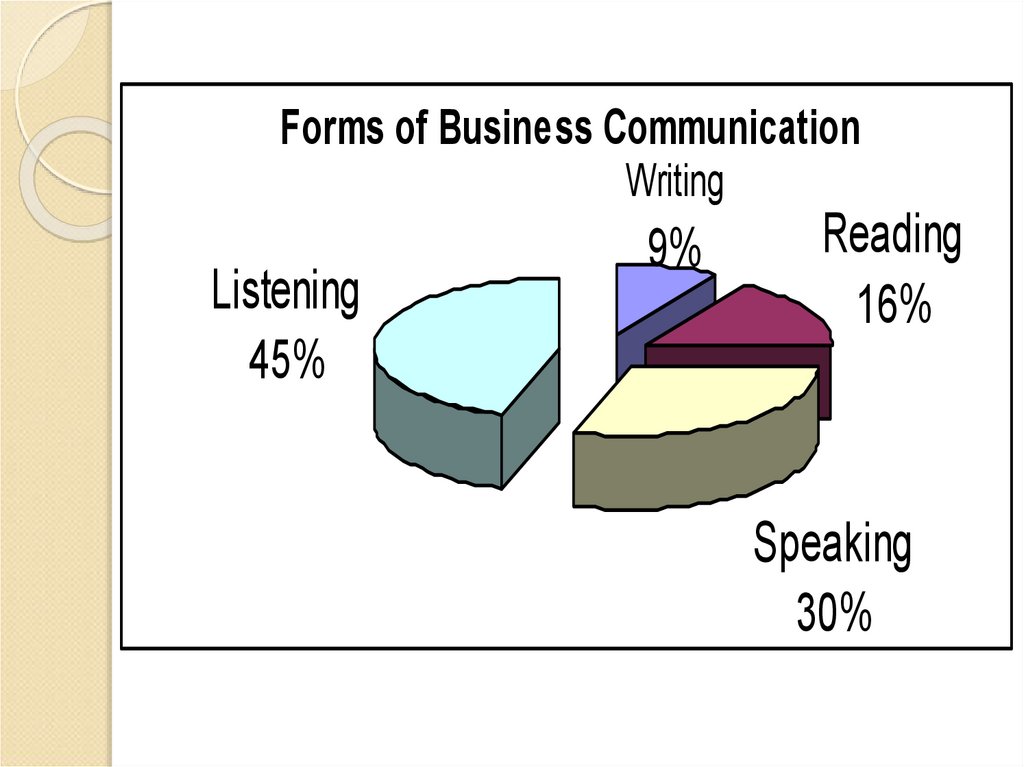
Forms of Business CommunicationWriting
Listening
45%
9%
Reading
16%
Speaking
30%
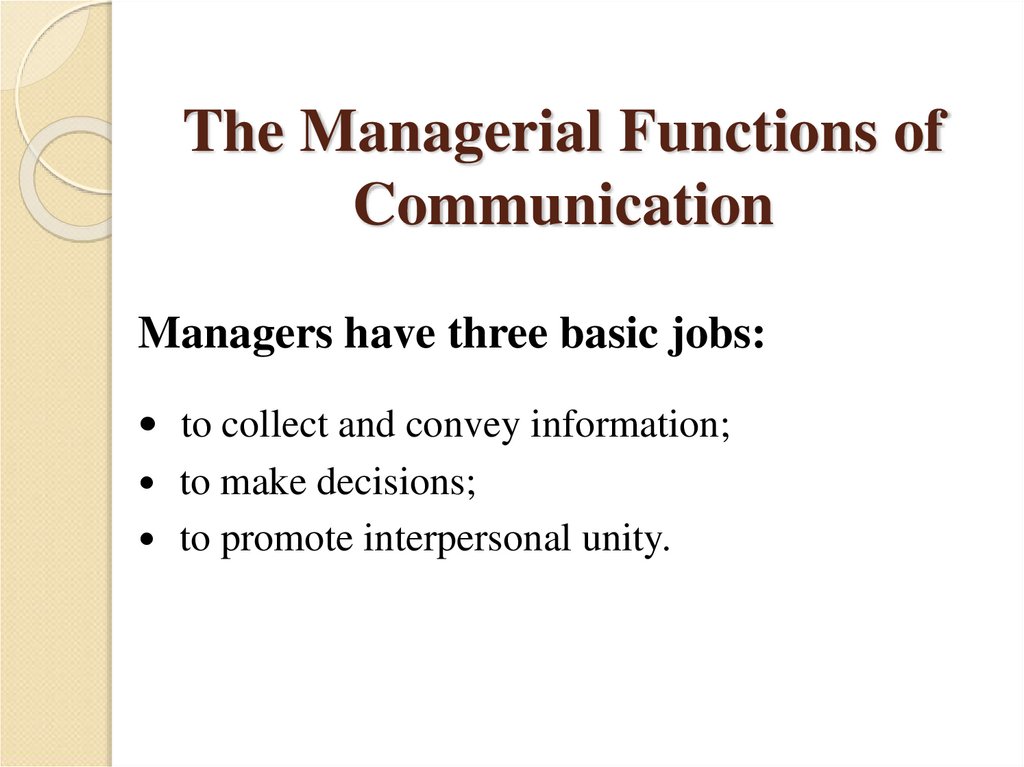
7. The Managerial Functions of Communication
Managers have three basic jobs:to collect and convey information;
to make decisions;
to promote interpersonal unity.
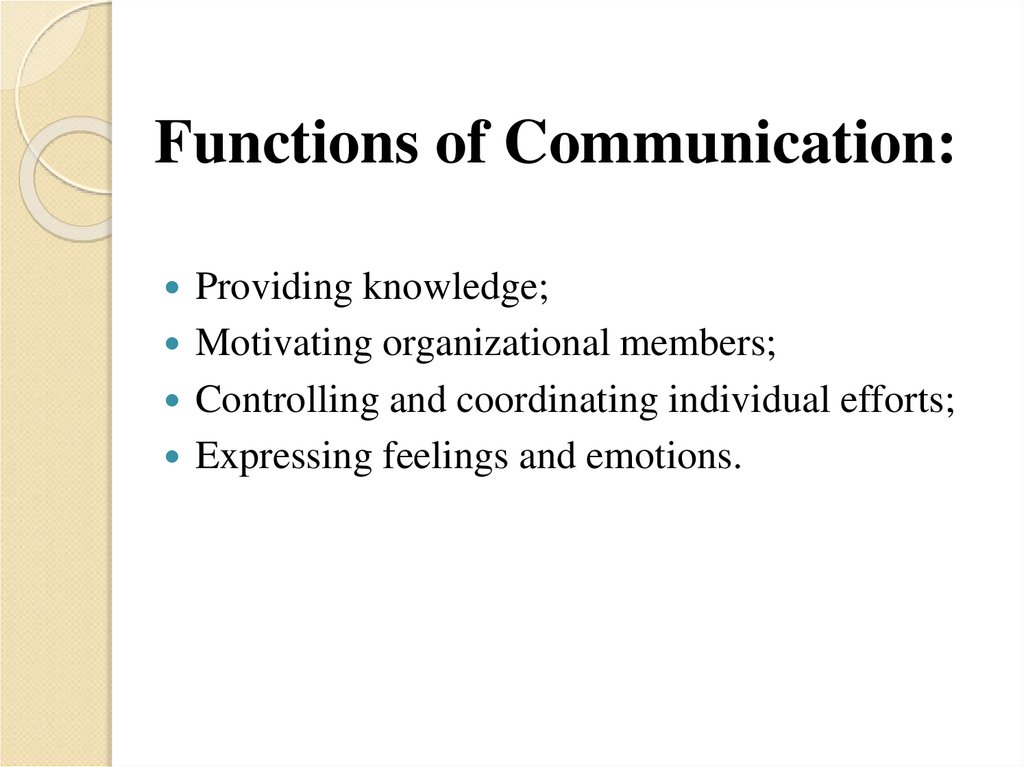
8. Functions of Communication:
Providing knowledge;Motivating organizational members;
Controlling and coordinating individual efforts;
Expressing feelings and emotions.
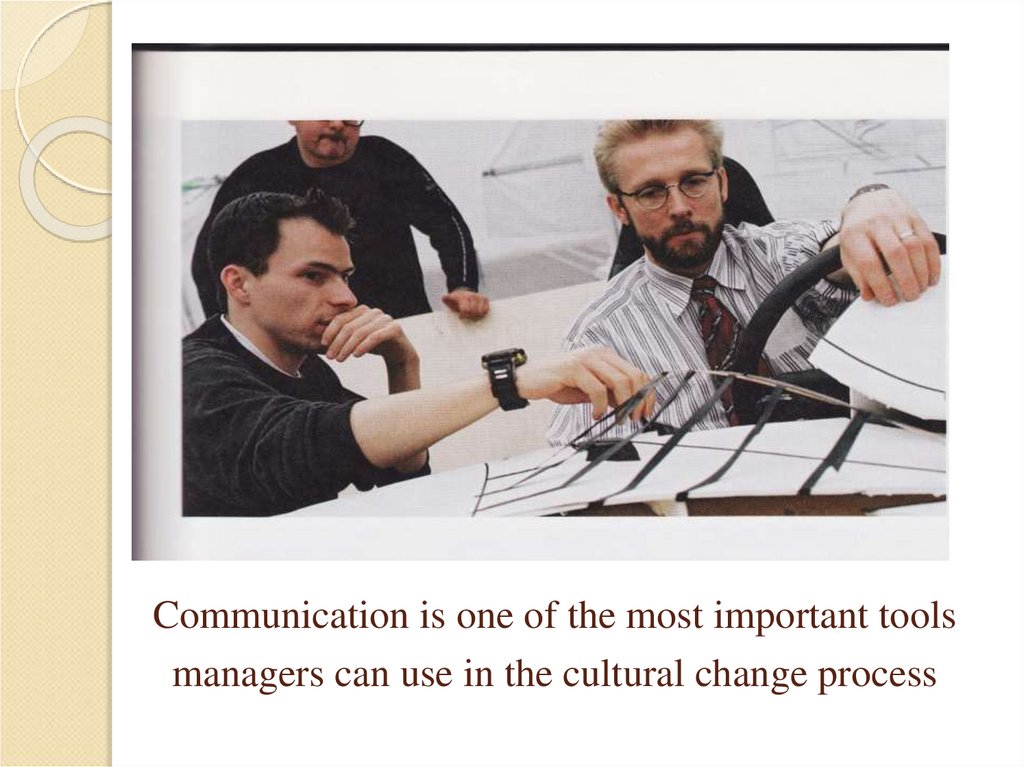
9. Communication is one of the most important tools managers can use in the cultural change process
10.
Culture is the accumulated shared values, beliefs,attitudes, assumptions, interpretations, habits,
customs, practices, knowledge, and behaviors of a
group of people.
Corporate culture is defined as the system of
shared values, beliefs, and habits within an
organization that interacts with the formal structure
to produce behavioral norms.
11.
Culture basic characteristics includefollowing aspects:
Sensitivity to the needs of customers and employees
Interests in having employees generate new ideas
Willingness to take risks
The value placed on people
Openness of available communication options
Friendliness and congeniality of the employees
toward one another
12.
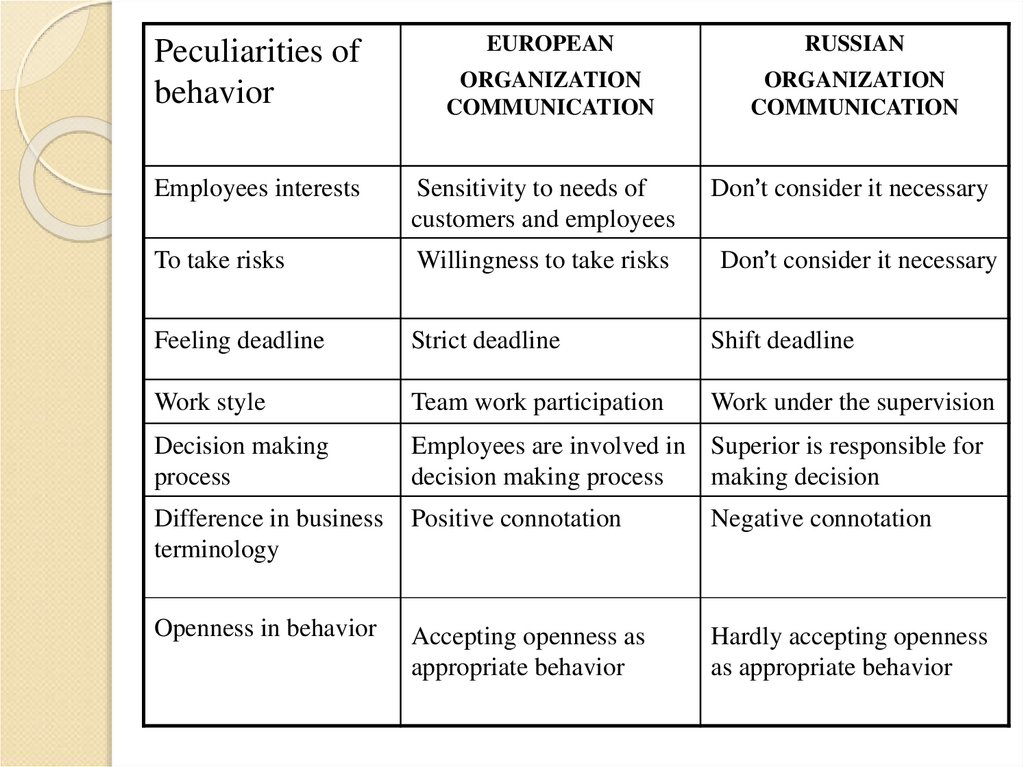
EUROPEANRUSSIAN
ORGANIZATION
COMMUNICATION
ORGANIZATION
COMMUNICATION
Employees interests
Sensitivity to needs of
customers and employees
Don’t consider it necessary
To take risks
Willingness to take risks
Don’t consider it necessary
Feeling deadline
Strict deadline
Shift deadline
Work style
Team work participation
Work under the supervision
Decision making
process
Employees are involved in Superior is responsible for
decision making process
making decision
Difference in business
terminology
Positive connotation
Negative connotation
Openness in behavior
Accepting openness as
appropriate behavior
Hardly accepting openness
as appropriate behavior
Peculiarities of
behavior
13.
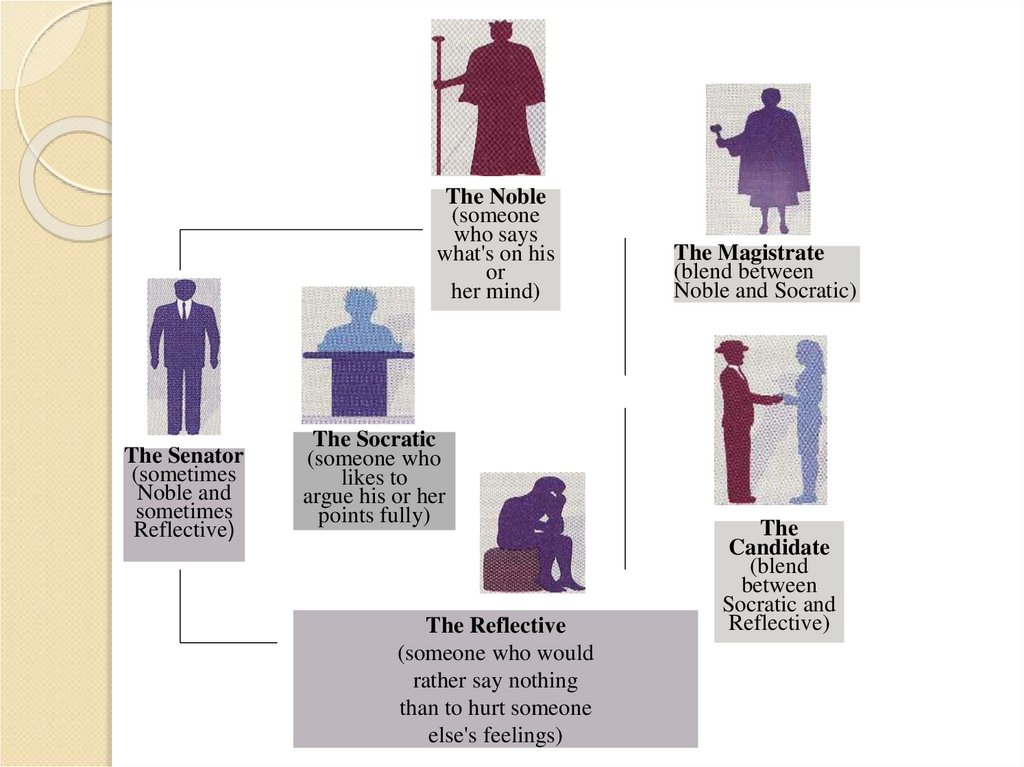
The Noble(someone
who says
what's on his
or
her mind)
The Senator
(sometimes
Noble and
sometimes
Reflective)
The Socratic
(someone who
likes to
argue his or her
points fully)
The Reflective
(someone who would
rather say nothing
than to hurt someone
else's feelings)
The Magistrate
(blend between
Noble and Socratic)
The
Candidate
(blend
between
Socratic and
Reflective)
14.
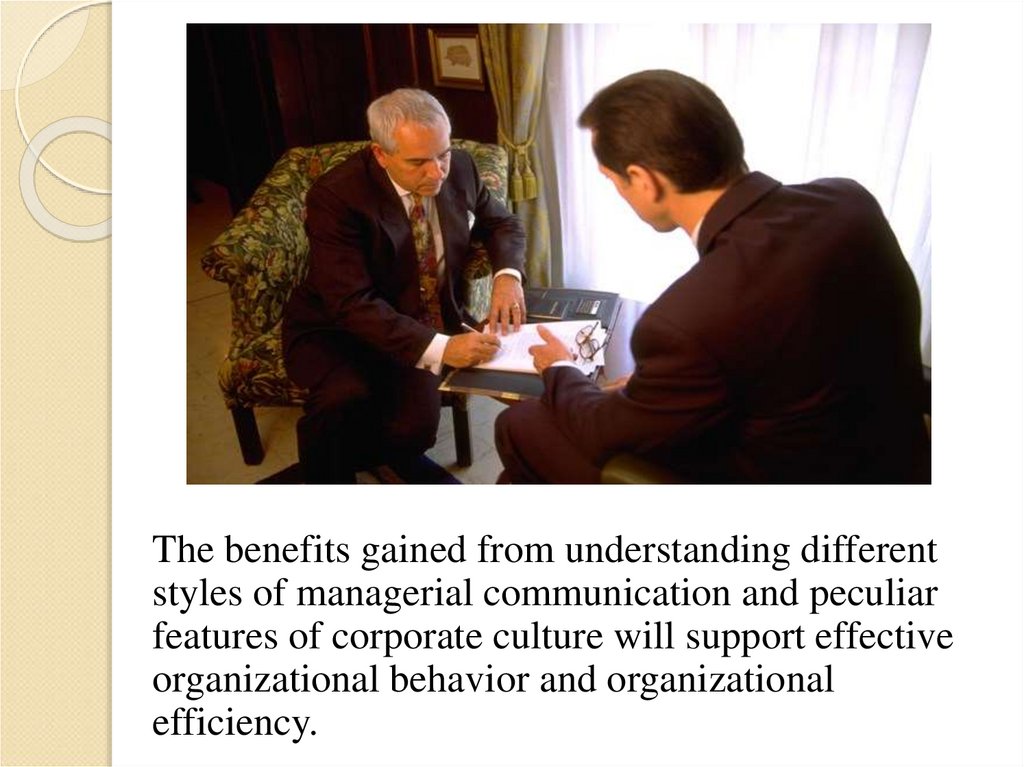
The benefits gained from understanding differentstyles of managerial communication and peculiar
features of corporate culture will support effective
organizational behavior and organizational
efficiency.
15. CROSS-CULTURAL MANAGEMENT TIPS
TAKE RESPONSIBILITY FOR COMMUNICATIONSHOW RESPECT
BE PATIENT AND PERSISTENT
BE FLEXIBLE
RECOGNIZE YOUR OWN CULTURAL BIASES
EMPHASIZE COMMON GROUND
16. Communication Strategy
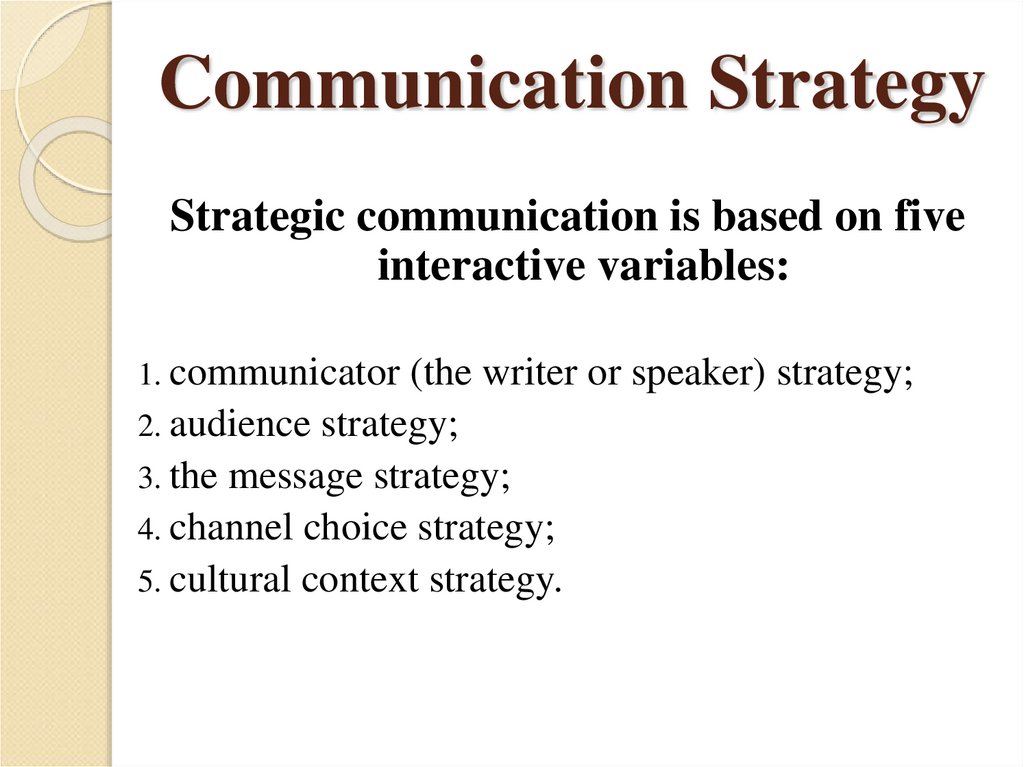
Strategic communication is based on fiveinteractive variables:
1. communicator (the writer or speaker) strategy;
2. audience strategy;
3. the message strategy;
4. channel choice strategy;
5. cultural context strategy.
17. Communication Strategy
Communicator strategyincludes:
objectives;
style;
credibility.
18. Communicator Objectives
Defining objectives provides two importantbenefits:
(1) efficiency, because you will no longer
waste time communicating unless you
have a clear reason for doing so;
(2) effectiveness, because formulating your
objective precisely will help you
communicate more clearly.
19. Communication Strategy
General objectives These are broad goals. They arecomprehensive statements about what a manager hopes to
accomplish.
Action
objectives
To define objectives more
specifically, manager should determine action objectives.
"To accomplish a specific result by a specific time.“
Communication objective It is focused on the result
a manager hopes to achieve from a single communication
effort—such as a report, email, or presentation. To create a
communication objective, start with the phrase: "As a result
of this communication, my audience will . . .“