 География
Похожие презентации:






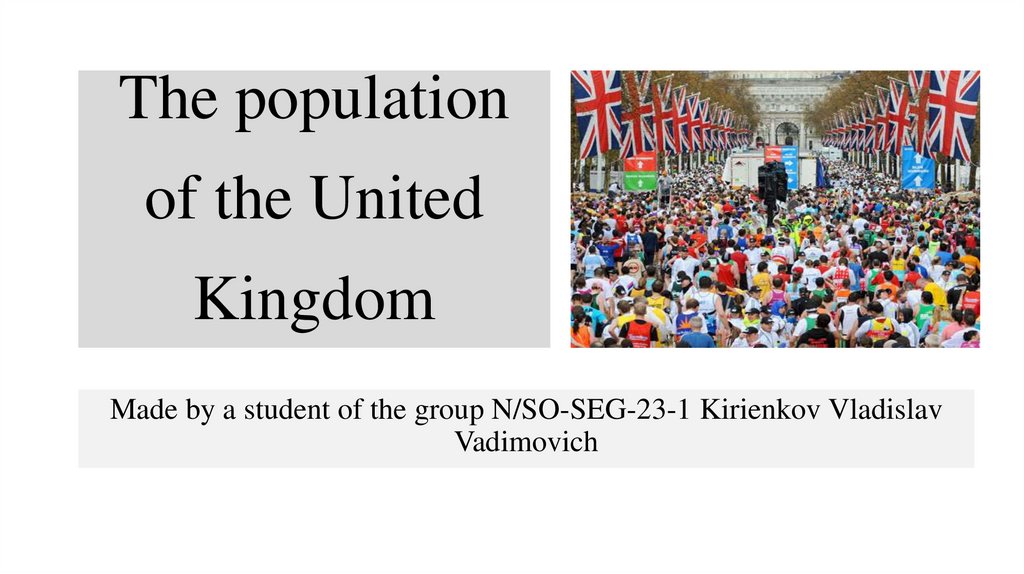
The population of the United Kingdom
1.
The populationof the United
Kingdom
Made by a student of the group N/SO-SEG-23-1 Kirienkov Vladislav
Vadimovich
2.
Introduction - TheUK in a Nutshell
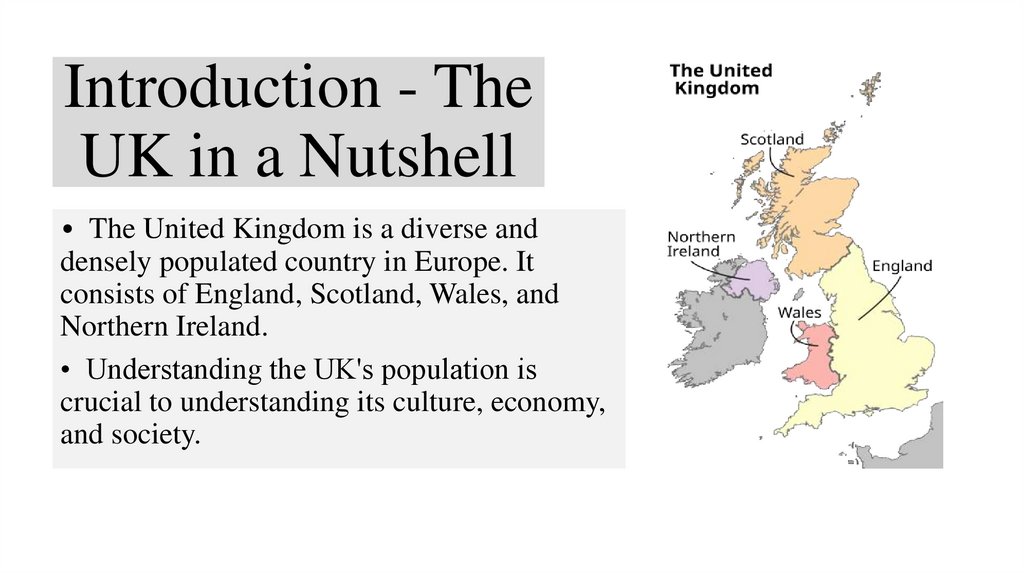
• The United Kingdom is a diverse and
densely populated country in Europe. It
consists of England, Scotland, Wales, and
Northern Ireland.
• Understanding the UK's population is
crucial to understanding its culture, economy,
and society.
3.
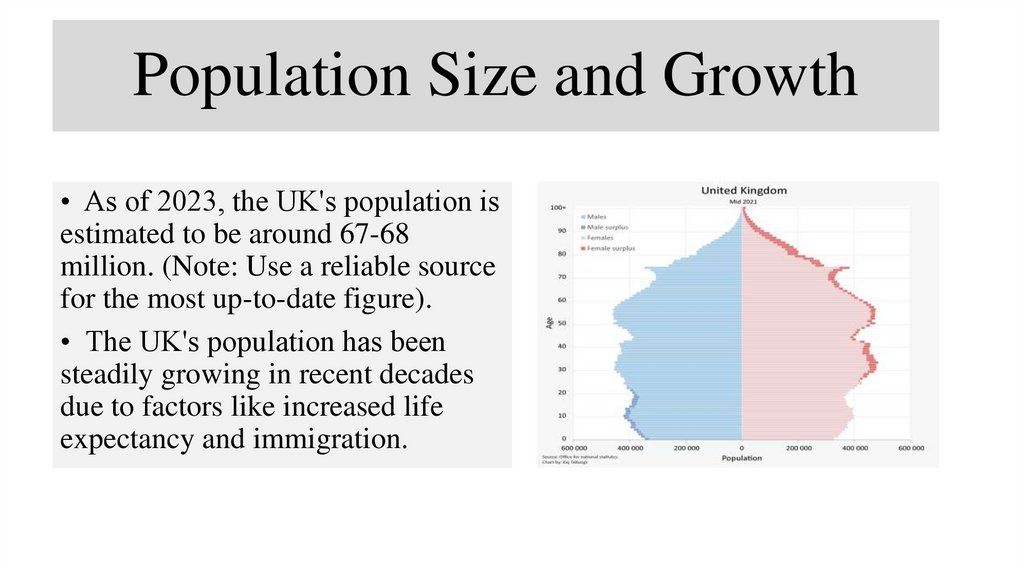
Population Size and Growth• As of 2023, the UK's population is
estimated to be around 67-68
million. (Note: Use a reliable source
for the most up-to-date figure).
• The UK's population has been
steadily growing in recent decades
due to factors like increased life
expectancy and immigration.
4.
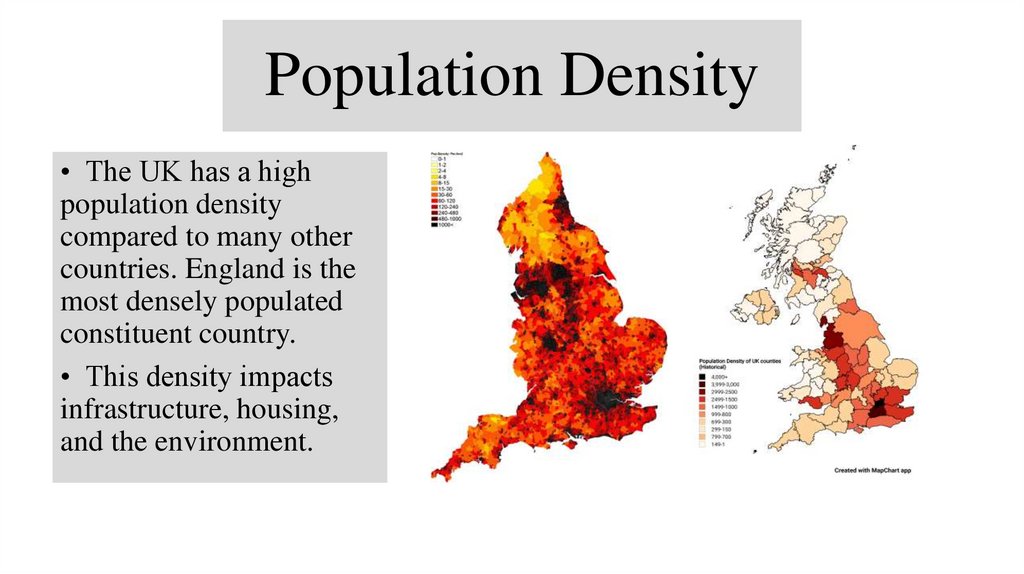
Population Density• The UK has a high
population density
compared to many other
countries. England is the
most densely populated
constituent country.
• This density impacts
infrastructure, housing,
and the environment.
5.
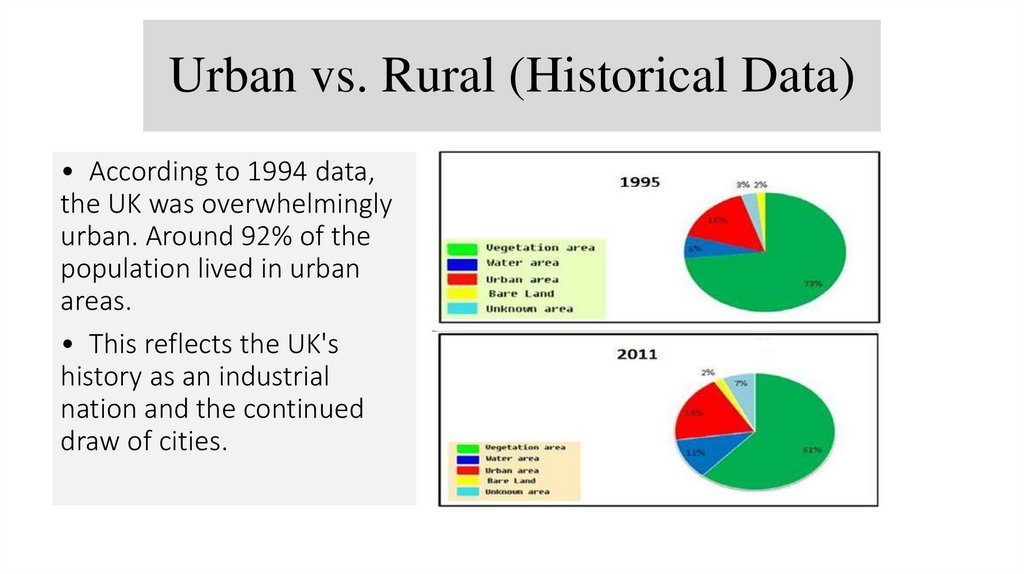
Urban vs. Rural (Historical Data)• According to 1994 data,
the UK was overwhelmingly
urban. Around 92% of the
population lived in urban
areas.
• This reflects the UK's
history as an industrial
nation and the continued
draw of cities.
6.
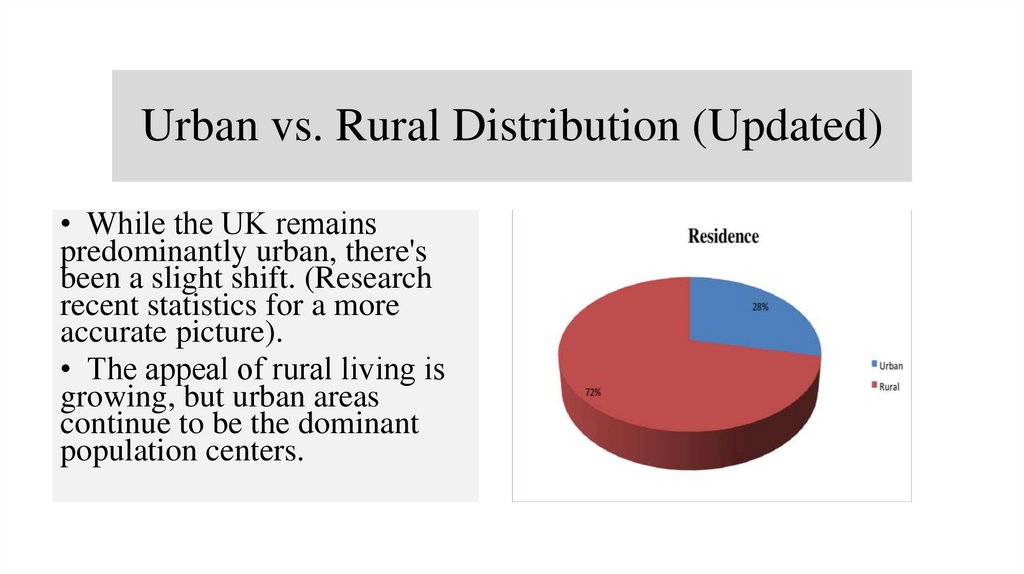
Urban vs. Rural Distribution (Updated)• While the UK remains
predominantly urban, there's
been a slight shift. (Research
recent statistics for a more
accurate picture).
• The appeal of rural living is
growing, but urban areas
continue to be the dominant
population centers.
7.
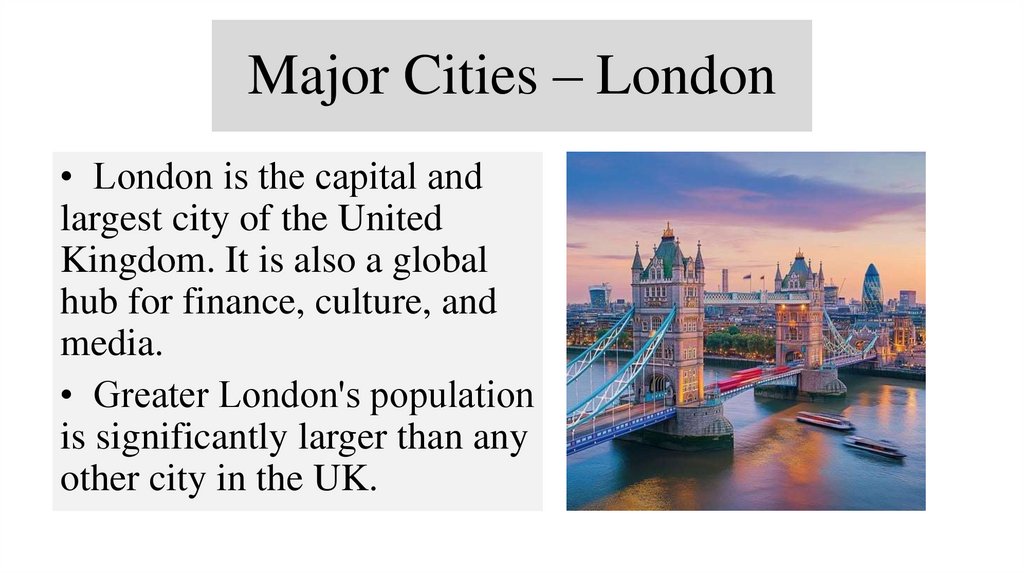
Major Cities – London• London is the capital and
largest city of the United
Kingdom. It is also a global
hub for finance, culture, and
media.
• Greater London's population
is significantly larger than any
other city in the UK.
8.
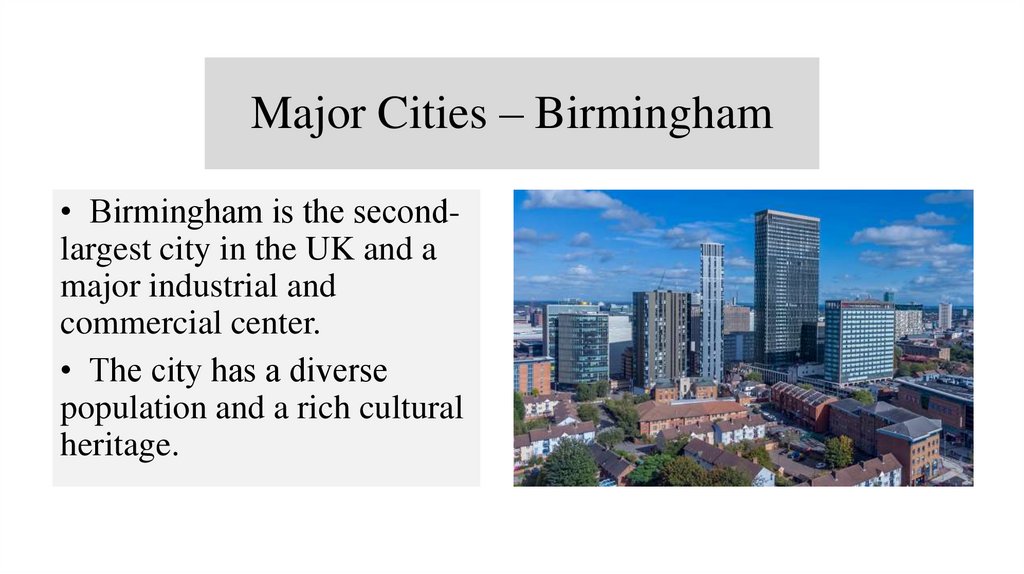
Major Cities – Birmingham• Birmingham is the secondlargest city in the UK and a
major industrial and
commercial center.
• The city has a diverse
population and a rich cultural
heritage.
9.
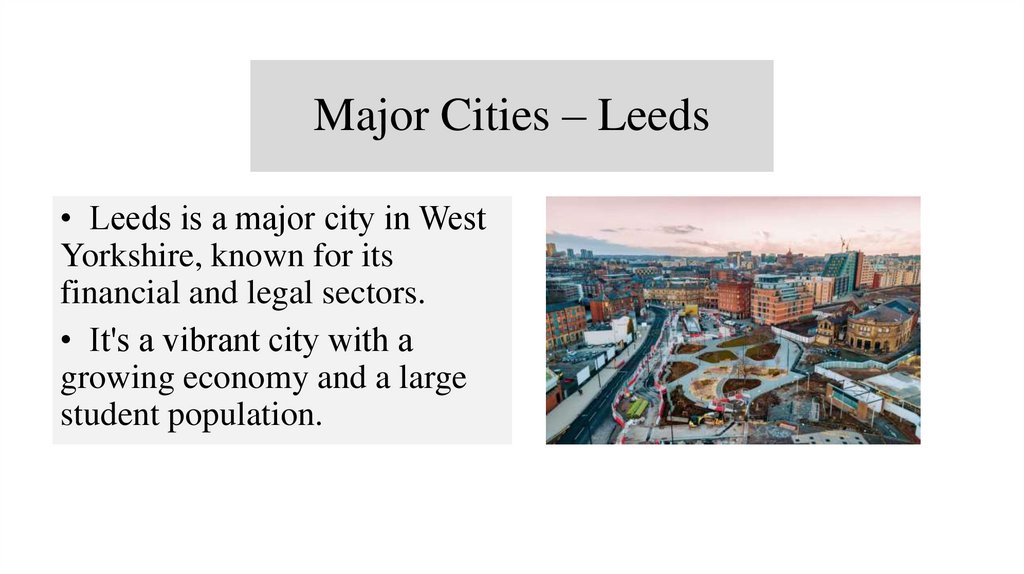
Major Cities – Leeds• Leeds is a major city in West
Yorkshire, known for its
financial and legal sectors.
• It's a vibrant city with a
growing economy and a large
student population.
10.
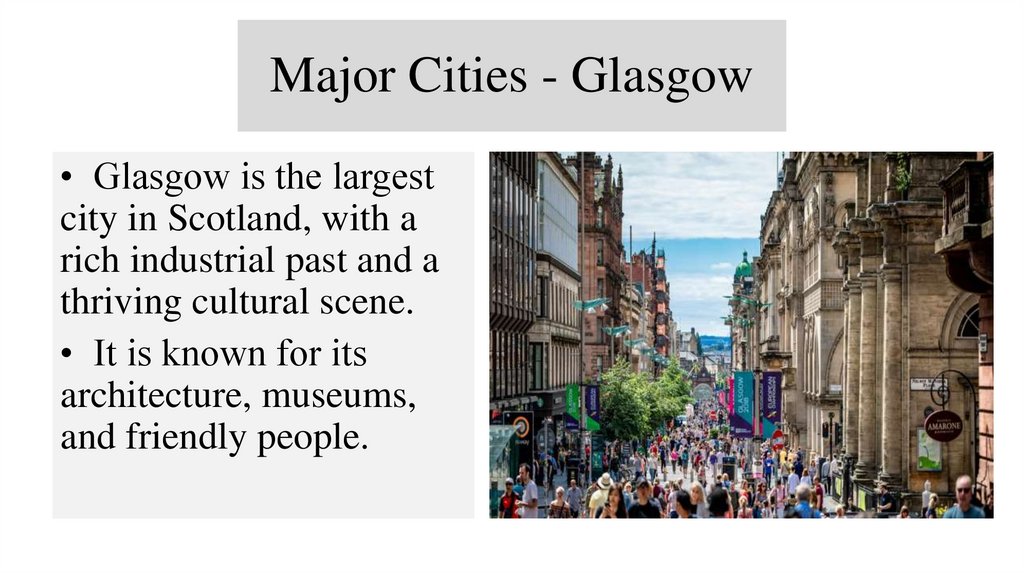
Major Cities - Glasgow• Glasgow is the largest
city in Scotland, with a
rich industrial past and a
thriving cultural scene.
• It is known for its
architecture, museums,
and friendly people.
11.
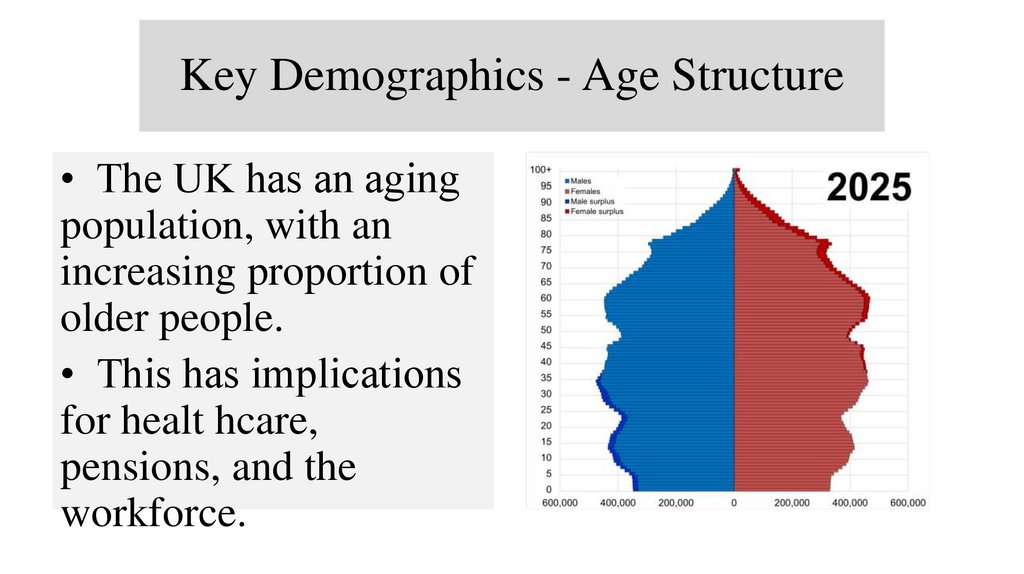
Key Demographics - Age Structure• The UK has an aging
population, with an
increasing proportion of
older people.
• This has implications
for healt hcare,
pensions, and the
workforce.
12.
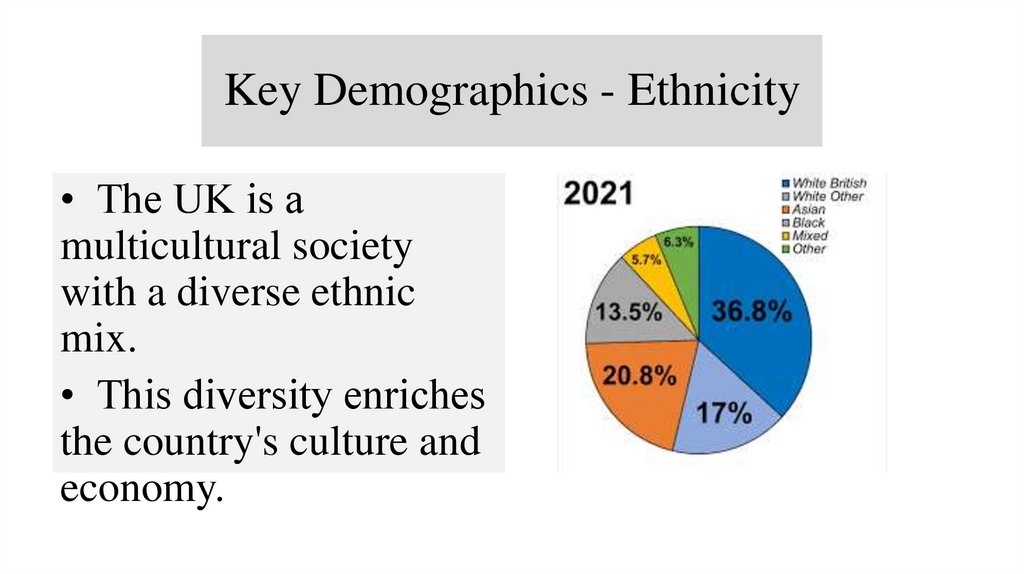
Key Demographics - Ethnicity• The UK is a
multicultural society
with a diverse ethnic
mix.
• This diversity enriches
the country's culture and
economy.
13.
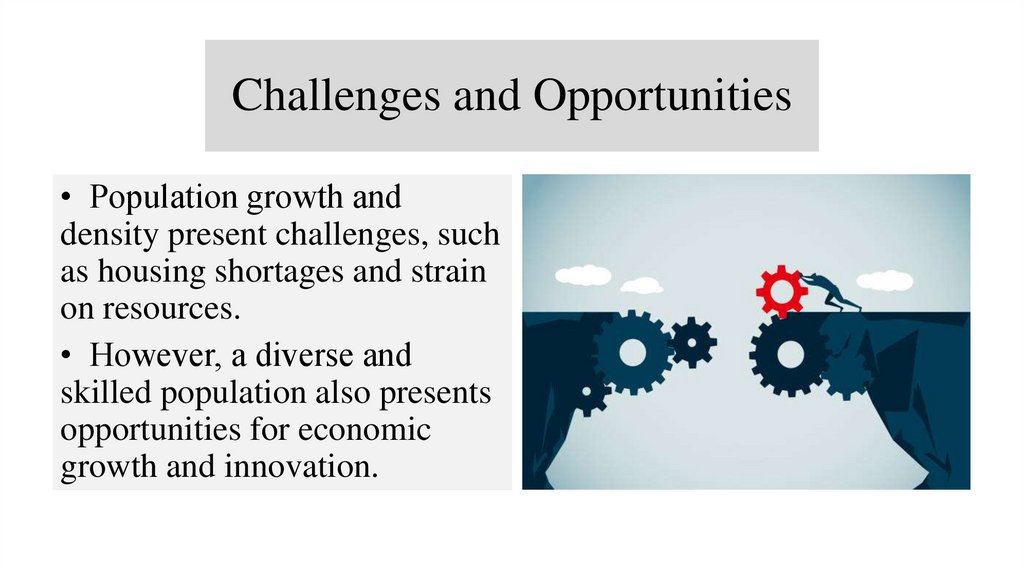
Challenges and Opportunities• Population growth and
density present challenges, such
as housing shortages and strain
on resources.
• However, a diverse and
skilled population also presents
opportunities for economic
growth and innovation.
14.
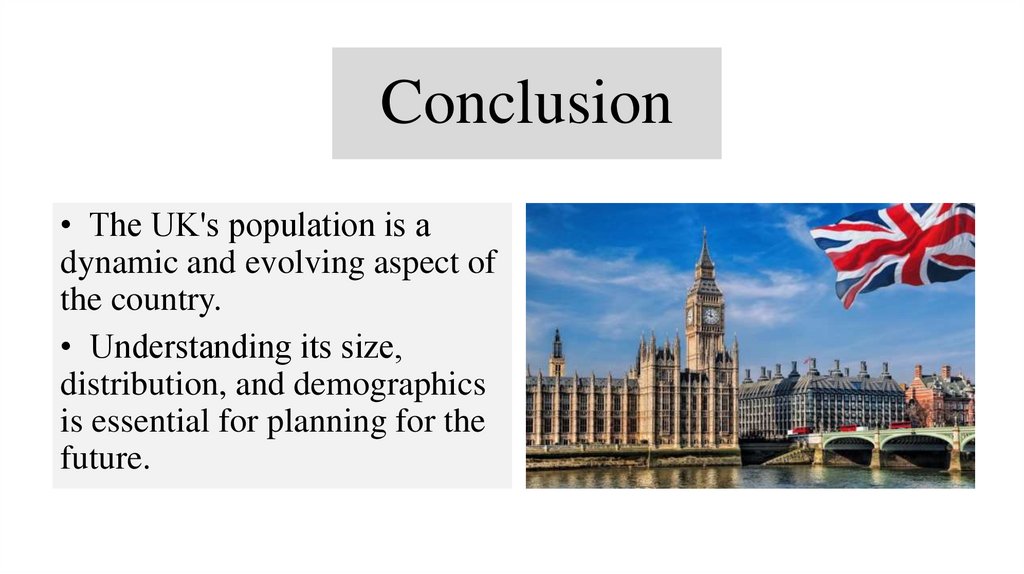
Conclusion• The UK's population is a
dynamic and evolving aspect of
the country.
• Understanding its size,
distribution, and demographics
is essential for planning for the
future.
15.
Sources• Office for National Statistics (ONS)
• National Records of Scotland
• Northern Ireland Statistics and Research Agency (NISRA)
• Welsh Government
• Wikipedia