
 Образование
Похожие презентации:




20 Simple Ways to Self-Educate
1.
20 Simple Ways toSelf-Educate
2.
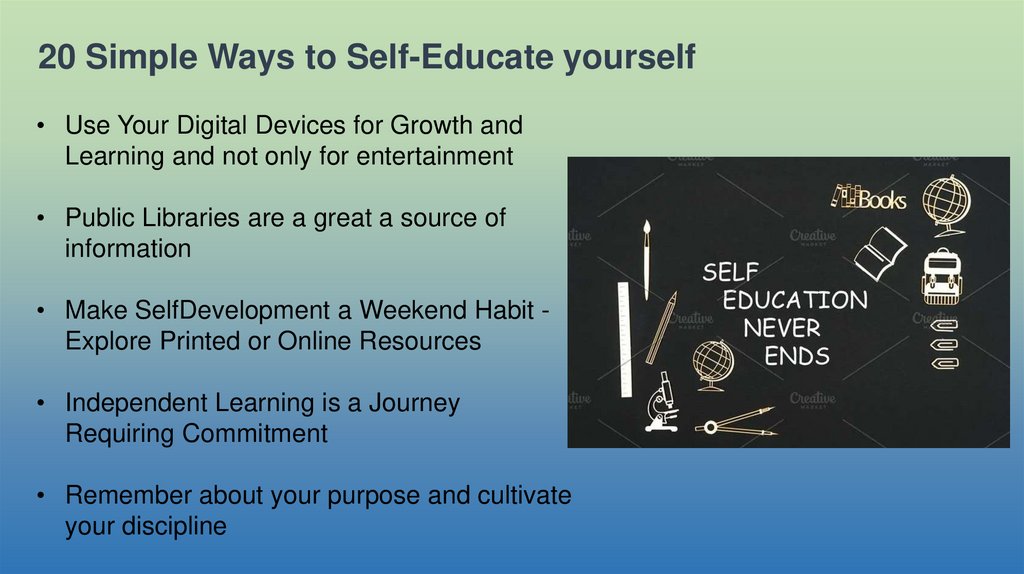
20 Simple Ways to Self-Educate yourself• Use Your Digital Devices for Growth and
Learning and not only for entertainment
• Public Libraries are a great a source of
information
• Make SelfDevelopment a Weekend Habit Explore Printed or Online Resources
• Independent Learning is a Journey
Requiring Commitment
• Remember about your purpose and cultivate
your discipline
3.
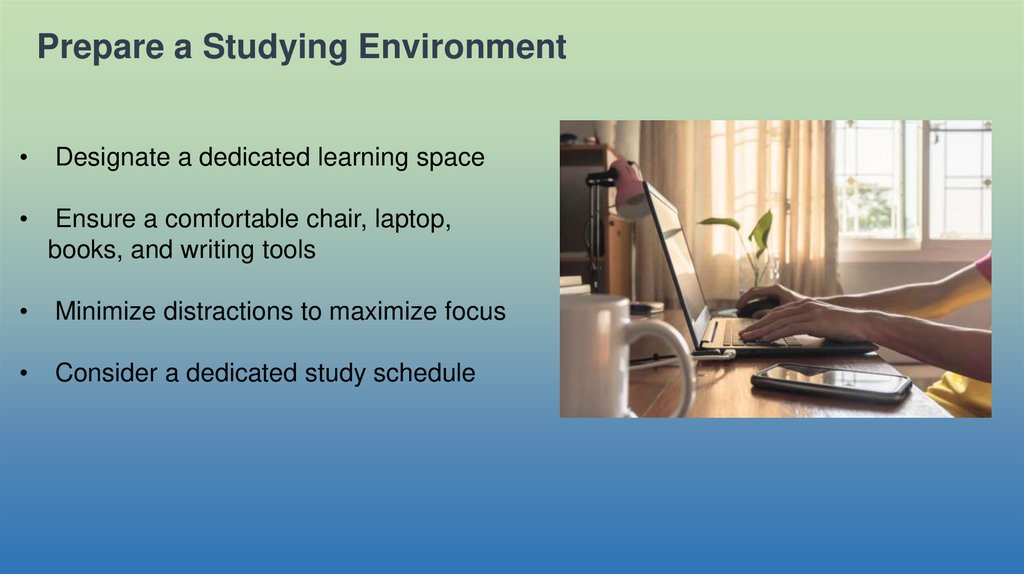
Prepare a Studying EnvironmentDesignate a dedicated learning space
Ensure a comfortable chair, laptop,
books, and writing tools
Minimize distractions to maximize focus
Consider a dedicated study schedule
4.
Get a DictionaryUtilize both physical and online dictionaries
Look up unfamiliar words and challenge
yourself to use them
Embrace a "wordoftheday" challenge to
expand vocabulary
Develop a habit of active vocabulary building
5.
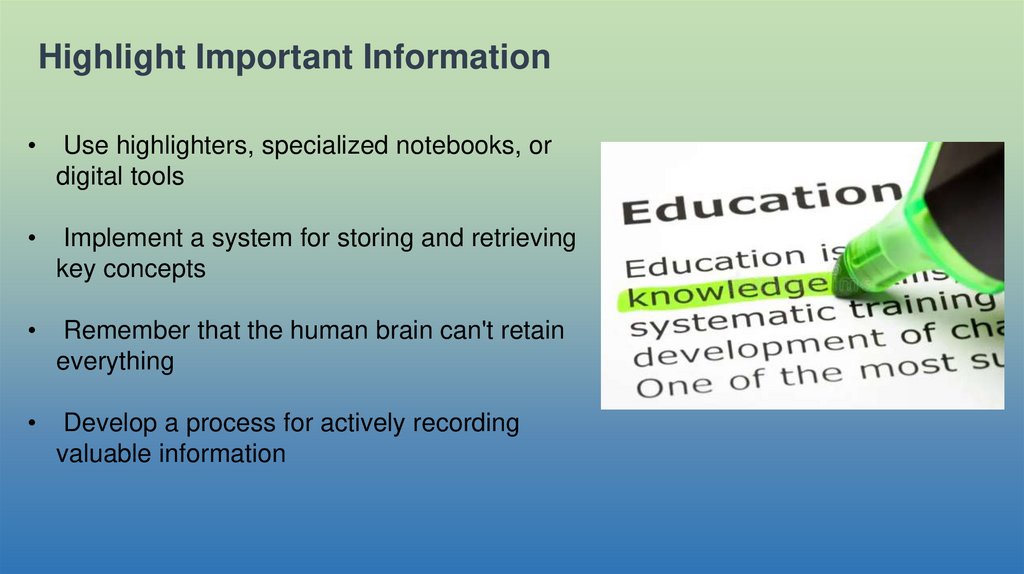
Highlight Important InformationUse highlighters, specialized notebooks, or
digital tools
Implement a system for storing and retrieving
key concepts
Remember that the human brain can't retain
everything
Develop a process for actively recording
valuable information
6.
Learn from Different MediumsExplore articles, journals, books,
seminars, documentaries, and
• textbooks
• Leverage free resources like podcasts
and YouTube videos
Identify your preferred learning style and
tailor your approach
Experiment with various mediums to
discover what works best for you
7.
Follow Up on References• Seek out and explore materials cited by
authors
• Gain a deeper understanding of the topic
by delving into supporting evidence
• Explore multiple perspectives and sources
of information
• Expand your knowledge base through
thorough research
8.
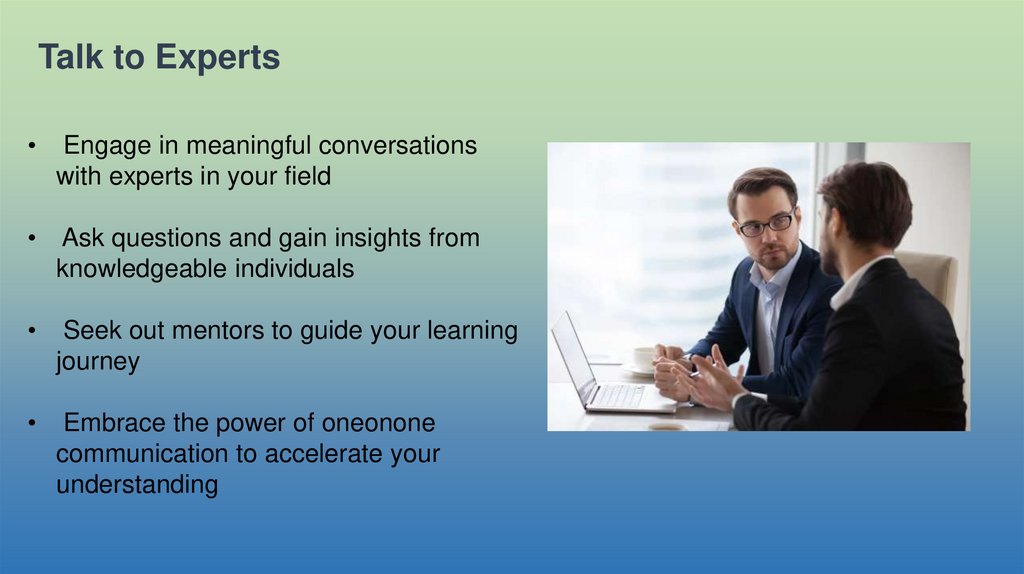
Talk to ExpertsEngage in meaningful conversations
with experts in your field
• Ask questions and gain insights from
knowledgeable individuals
Seek out mentors to guide your learning
journey
Embrace the power of oneonone
communication to accelerate your
understanding
9.
Study Every DayCommit to consistent study sessions,
even if they are short
Prioritize routine and establish a regular
learning schedule
• Avoid binge studying and focus on
regular, focused learning
Break down learning into manageable
chunks to enhance retention
10.
Don’t Assume Everything You Read is TrueMaintain a critical eye when
consuming information
Conduct indepth research to verify
claims and sources
Seek out multiple perspectives and
consider opposing viewpoints
Develop healthy skepticism to
evaluate information critically
11.
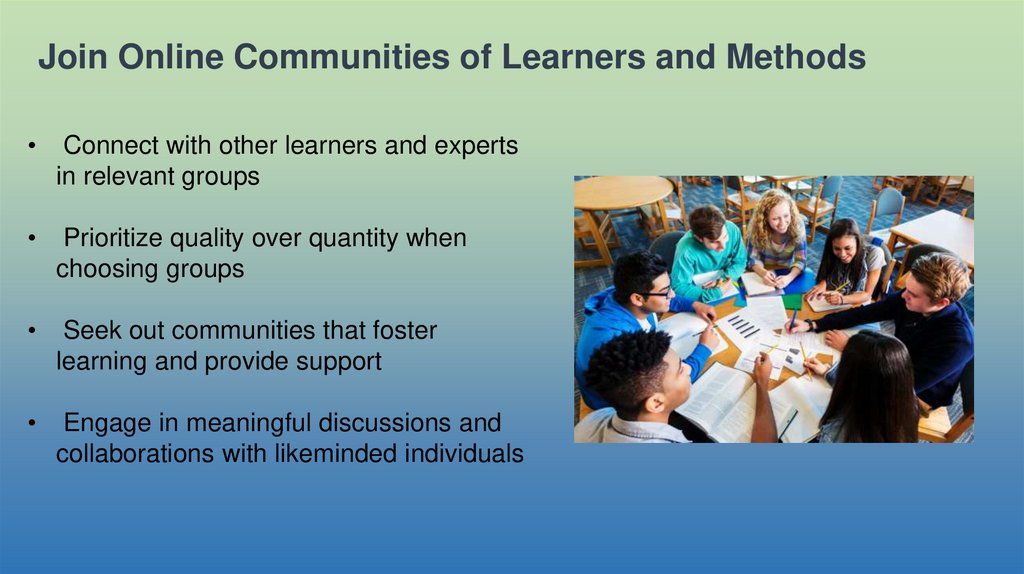
Join Online Communities of Learners and MethodsConnect with other learners and experts
in relevant groups
Prioritize quality over quantity when
choosing groups
Seek out communities that foster
learning and provide support
Engage in meaningful discussions and
collaborations with likeminded individuals
12.
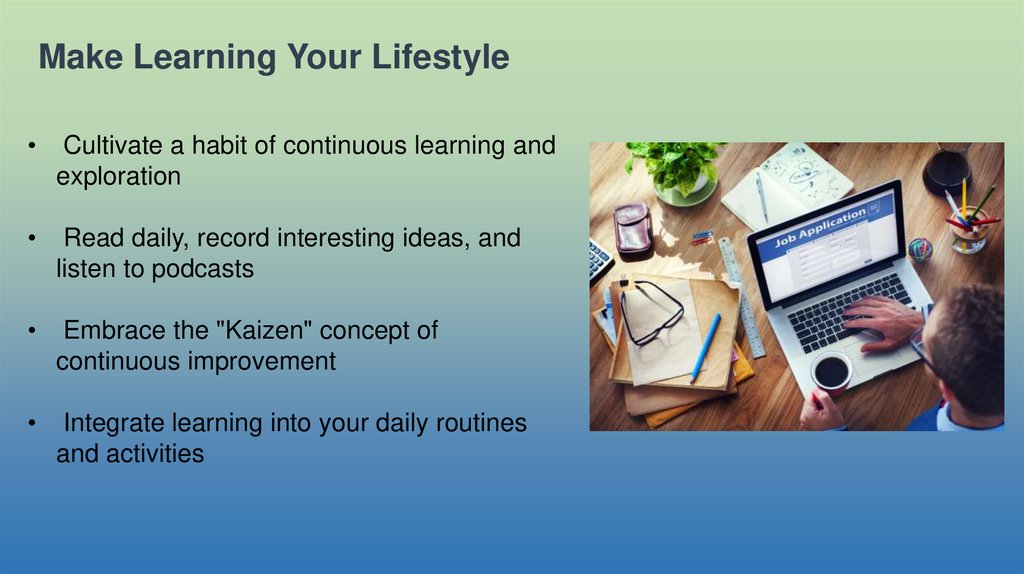
Make Learning Your LifestyleCultivate a habit of continuous learning and
exploration
Read daily, record interesting ideas, and
listen to podcasts
Embrace the "Kaizen" concept of
continuous improvement
Integrate learning into your daily routines
and activities
13.
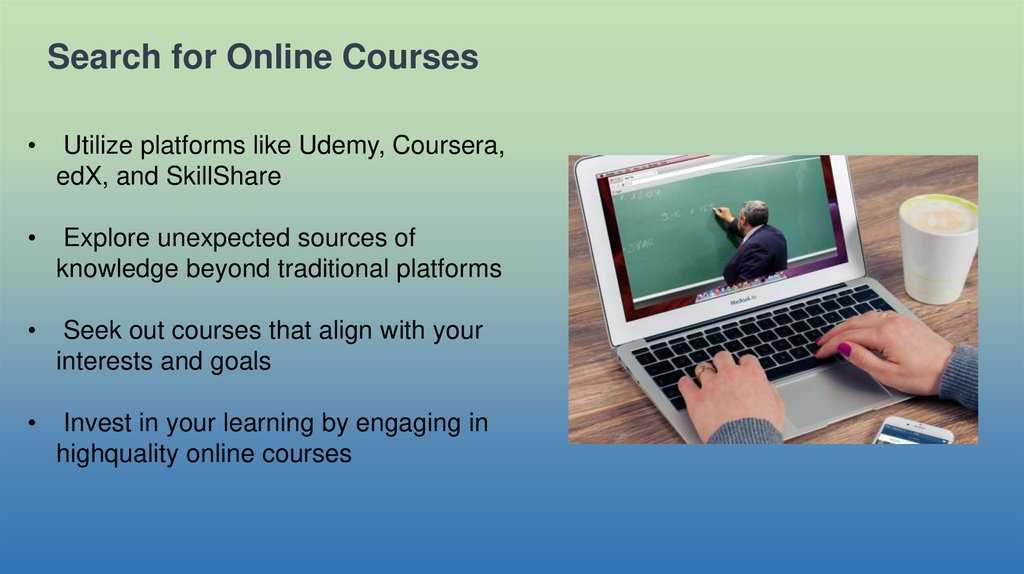
Search for Online CoursesUtilize platforms like Udemy, Coursera,
edX, and SkillShare
Explore unexpected sources of
knowledge beyond traditional platforms
Seek out courses that align with your
interests and goals
Invest in your learning by engaging in
highquality online courses
14.
Get Information from News AggregatorsStay informed about trends through
news aggregators like Fark, Google
News, and Feedly
Maintain a critical approach to
information and evaluate sources
carefully
Be discerning about the information
you consume
Seek out a variety of sources to
broaden your perspective
15.
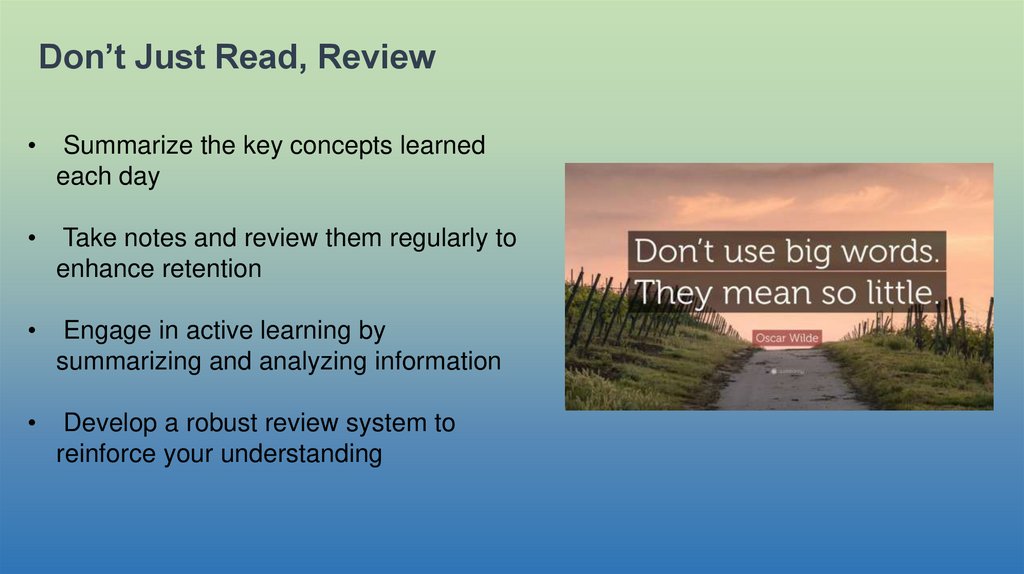
Don’t Just Read, ReviewSummarize the key concepts learned
each day
Take notes and review them regularly to
enhance retention
Engage in active learning by
summarizing and analyzing information
Develop a robust review system to
reinforce your understanding
16.
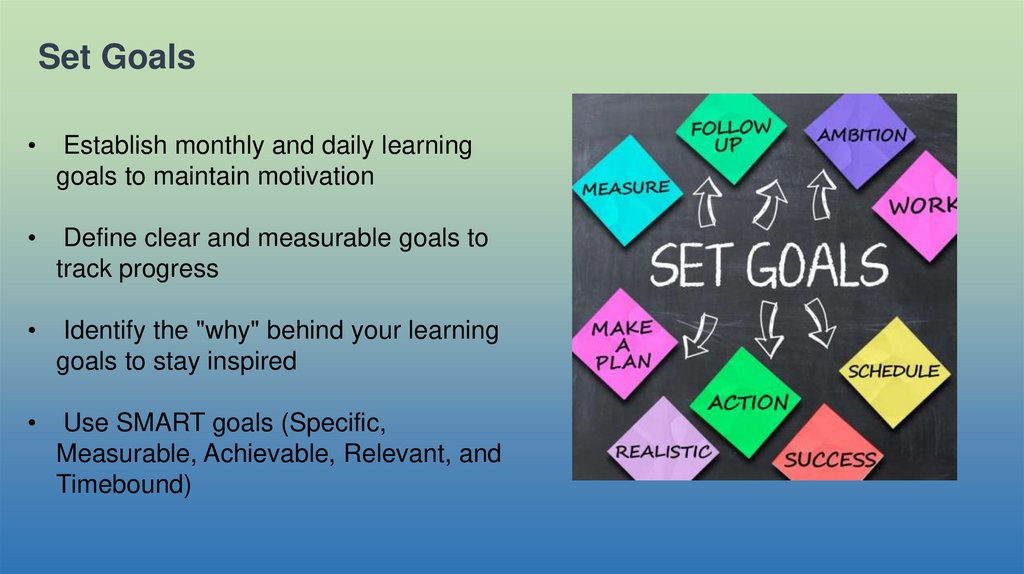
Set GoalsEstablish monthly and daily learning
goals to maintain motivation
Define clear and measurable goals to
track progress
Identify the "why" behind your learning
goals to stay inspired
Use SMART goals (Specific,
Measurable, Achievable, Relevant, and
Timebound)
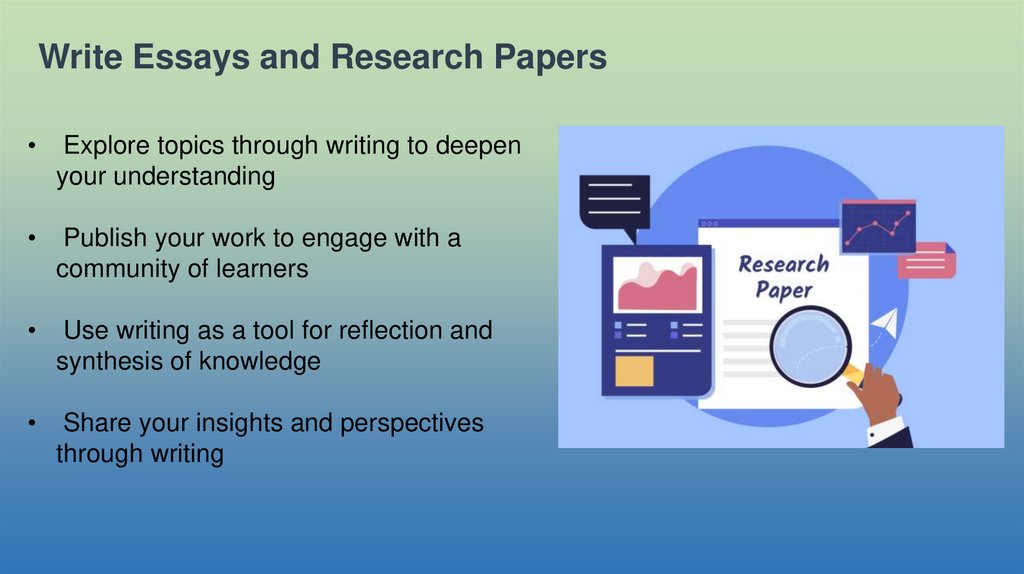
17.
Write Essays and Research PapersExplore topics through writing to deepen
your understanding
Publish your work to engage with a
community of learners
Use writing as a tool for reflection and
synthesis of knowledge
Share your insights and perspectives
through writing
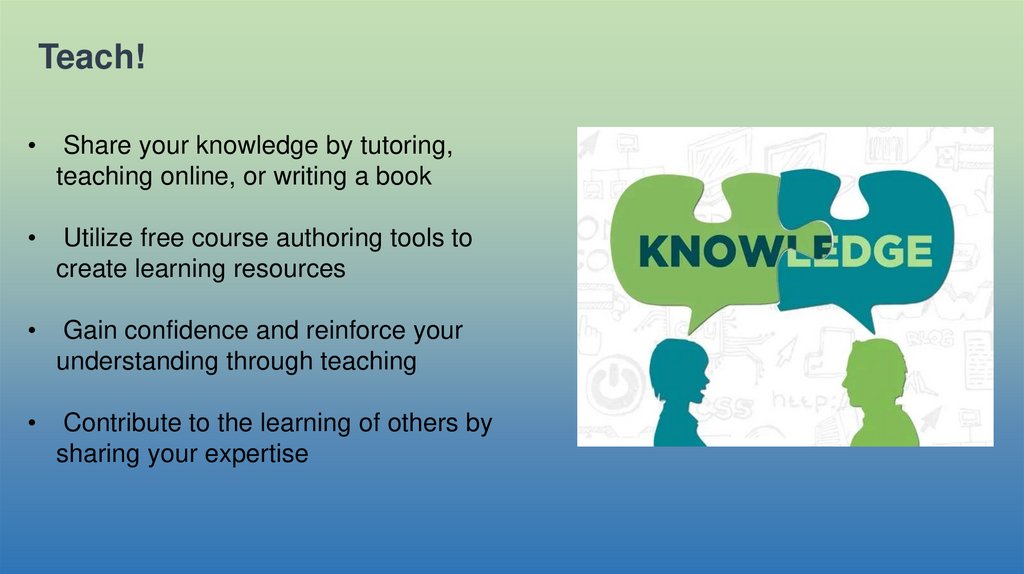
18.
Teach!Share your knowledge by tutoring,
teaching online, or writing a book
Utilize free course authoring tools to
create learning resources
Gain confidence and reinforce your
understanding through teaching
Contribute to the learning of others by
sharing your expertise
19.
Have a ScheduleTreat self-education as a commitment,
not a pastime
Include learning in your daily schedule
with deadlines and responsibilities
Integrate learning into your routine to
make it a habit
Schedule dedicated time for learning and
stick to it
20.
Take NotesMaintain a learning journal to record
insights, reflections, and goals
Experiment with different notetaking
methods to find what works best
Utilize techniques like the Feynman
Technique to enhance understanding
Develop a system for capturing and
organizing your learning journey
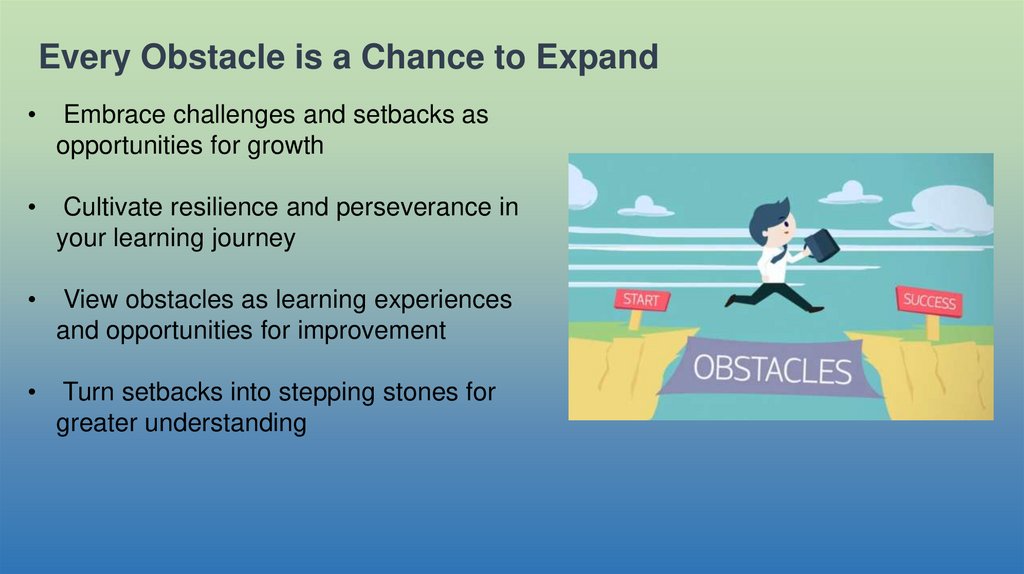
21.
Every Obstacle is a Chance to ExpandEmbrace challenges and setbacks as
opportunities for growth
Cultivate resilience and perseverance in
your learning journey
View obstacles as learning experiences
and opportunities for improvement
Turn setbacks into stepping stones for
greater understanding
22.
Say YES to New ExperiencesIntegrate practical experience into
your learning process
• Apply your knowledge through writing,
teaching, or realworld applications
Embrace opportunities to put your
knowledge into action
Seek out experiences that reinforce
and expand your learning
23.
Final Thoughts on Self-Education• Don't limit yourself to traditional education;
self-directed learning can unlock your full
intellectual capacity
• Start your self-education journey now,
utilizing the abundant resources available
today
• Utilize the 20 habits outlined in this article to
launch your self-learning adventure
• Self-education is a continuous process of
exploration, growth, and achievement