


 Философия
Похожие презентации:







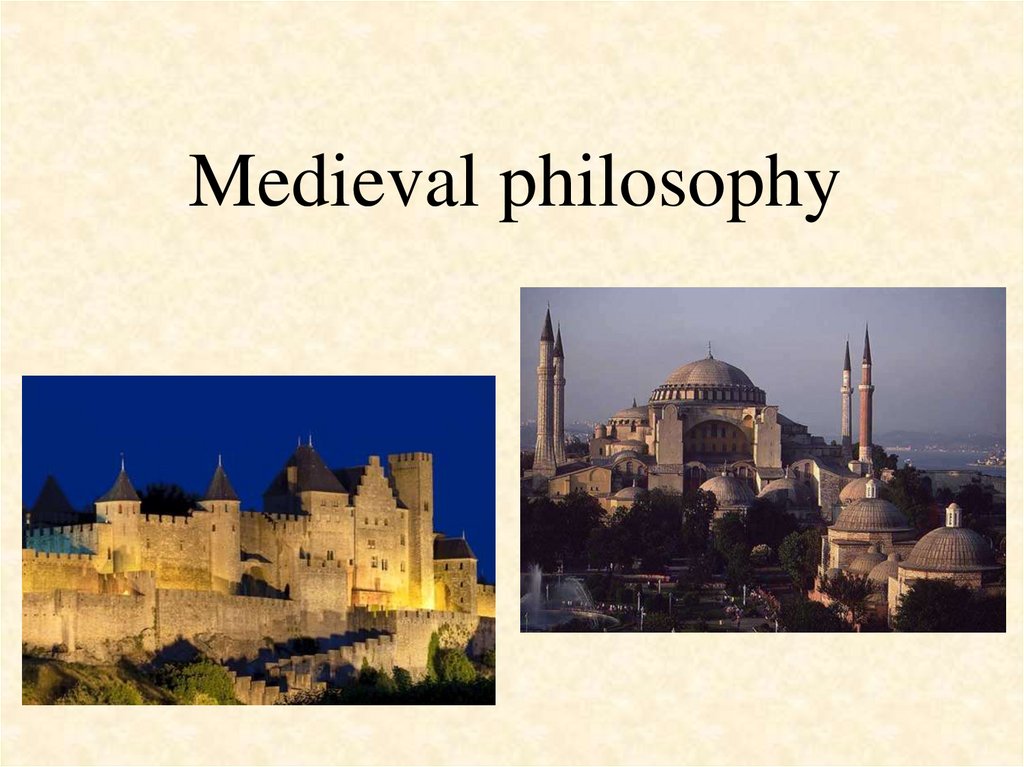
Medieval philosophy
1. Medieval philosophy
2.
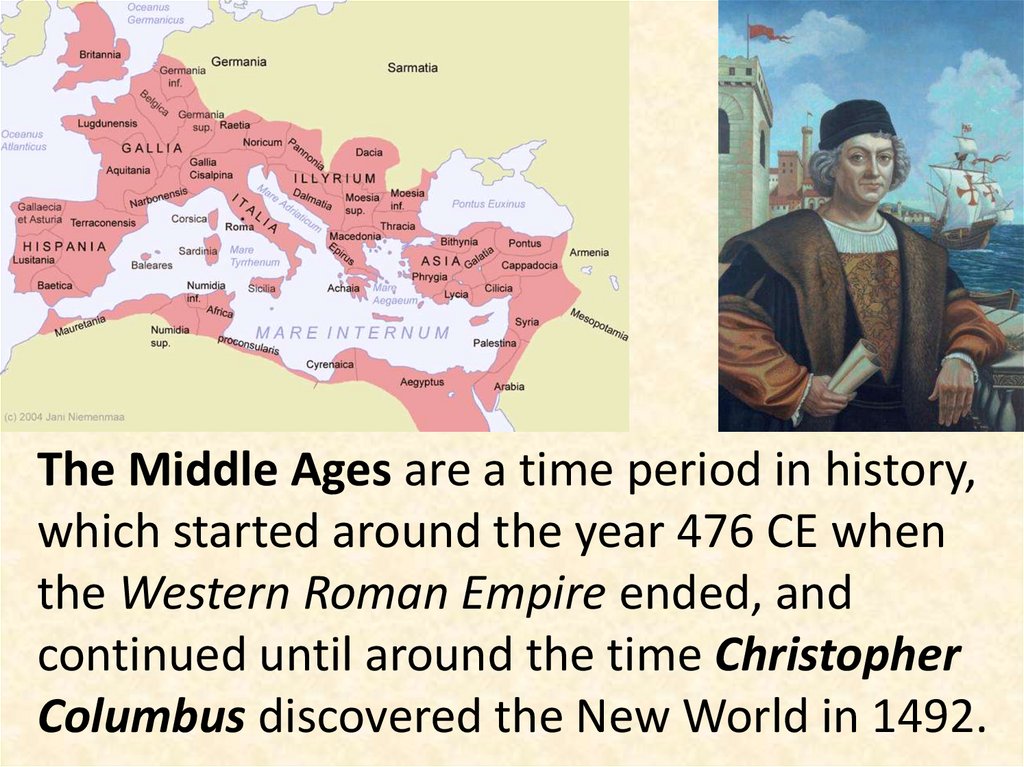
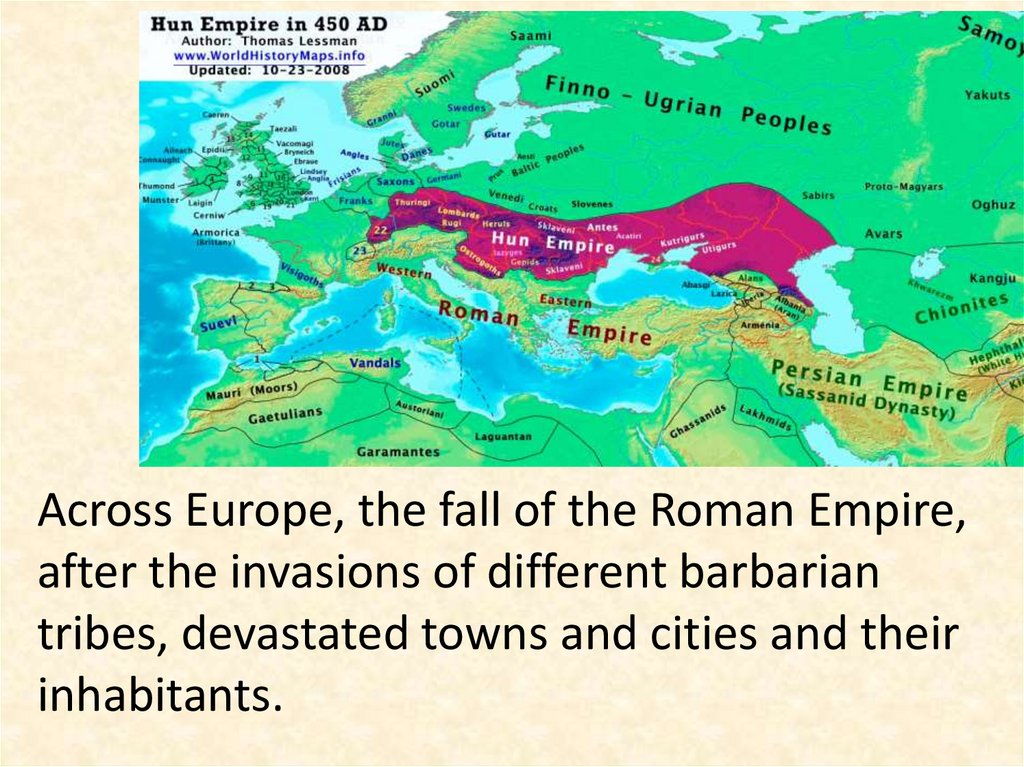
The Middle Ages are a time period in history,which started around the year 476 CE when
the Western Roman Empire ended, and
continued until around the time Christopher
Columbus discovered the New World in 1492.
3.
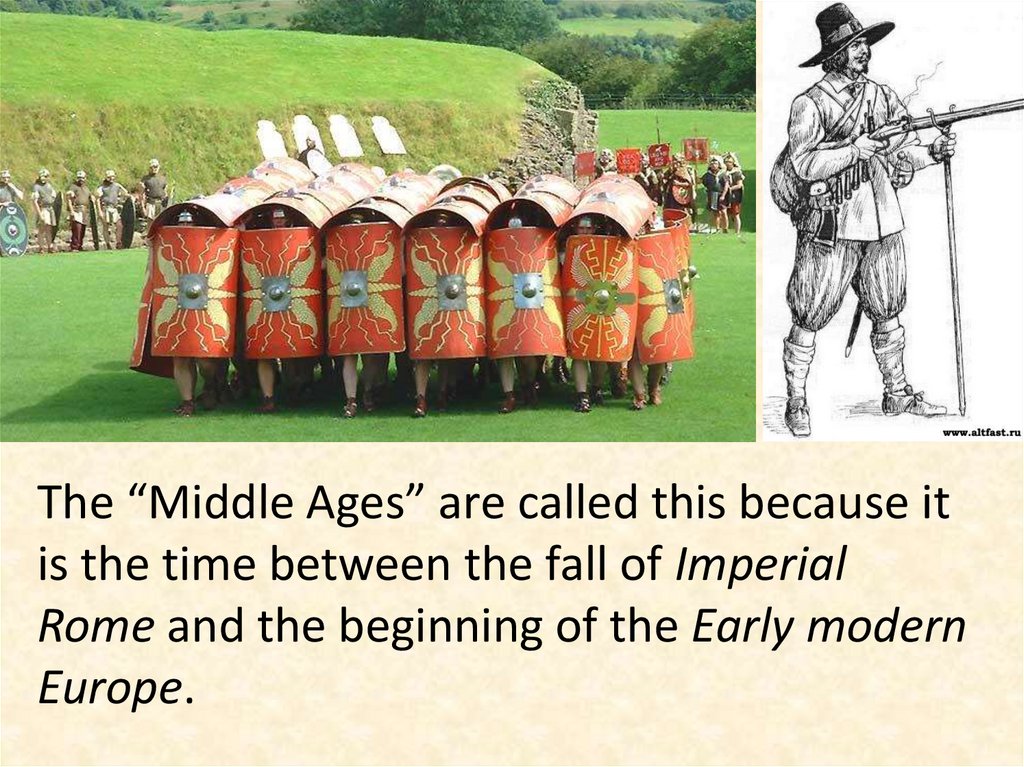
The “Middle Ages” are called this because itis the time between the fall of Imperial
Rome and the beginning of the Early modern
Europe.
4.
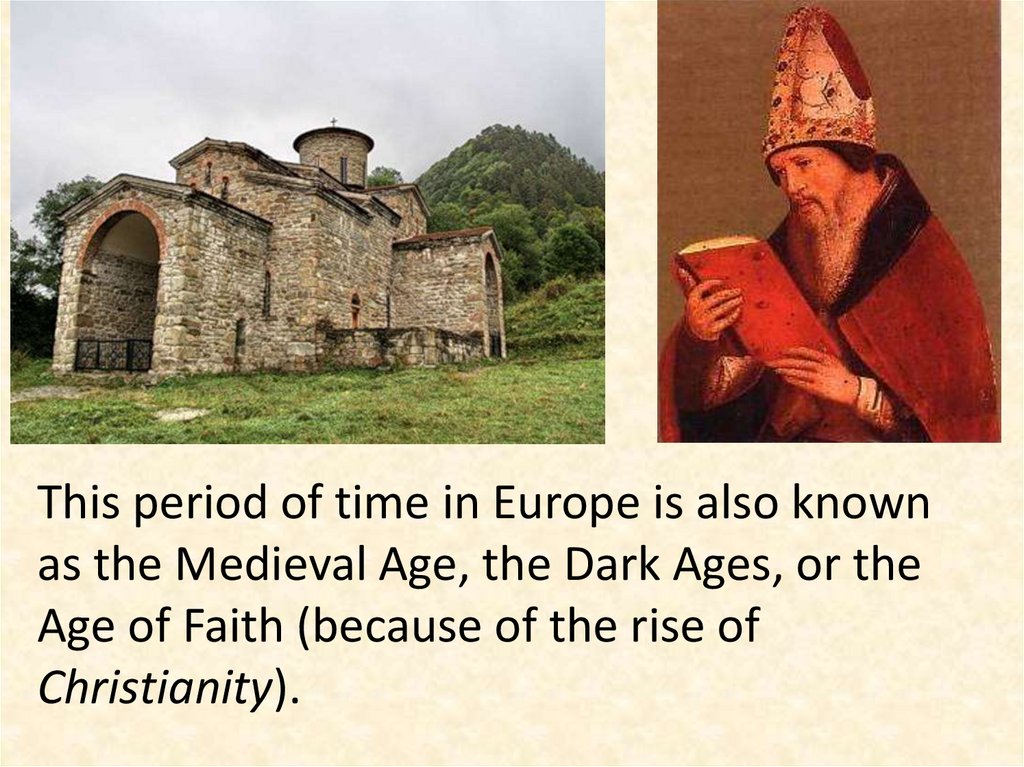
This period of time in Europe is also knownas the Medieval Age, the Dark Ages, or the
Age of Faith (because of the rise of
Christianity).
5.
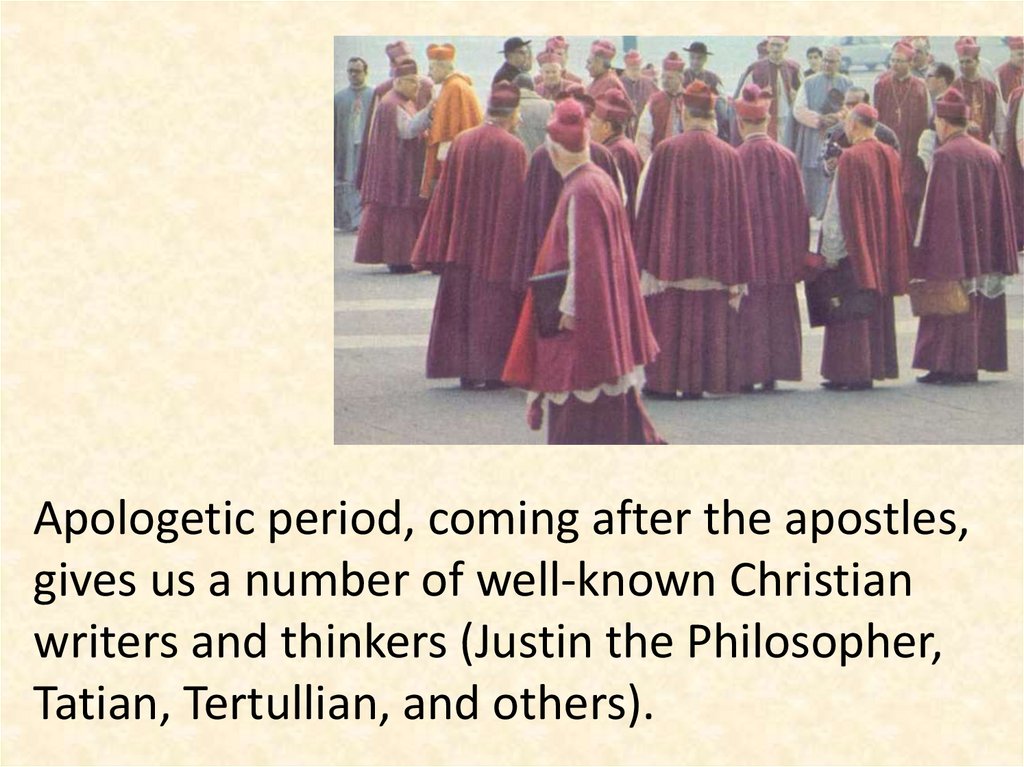
Across Europe, the fall of the Roman Empire,after the invasions of different barbarian
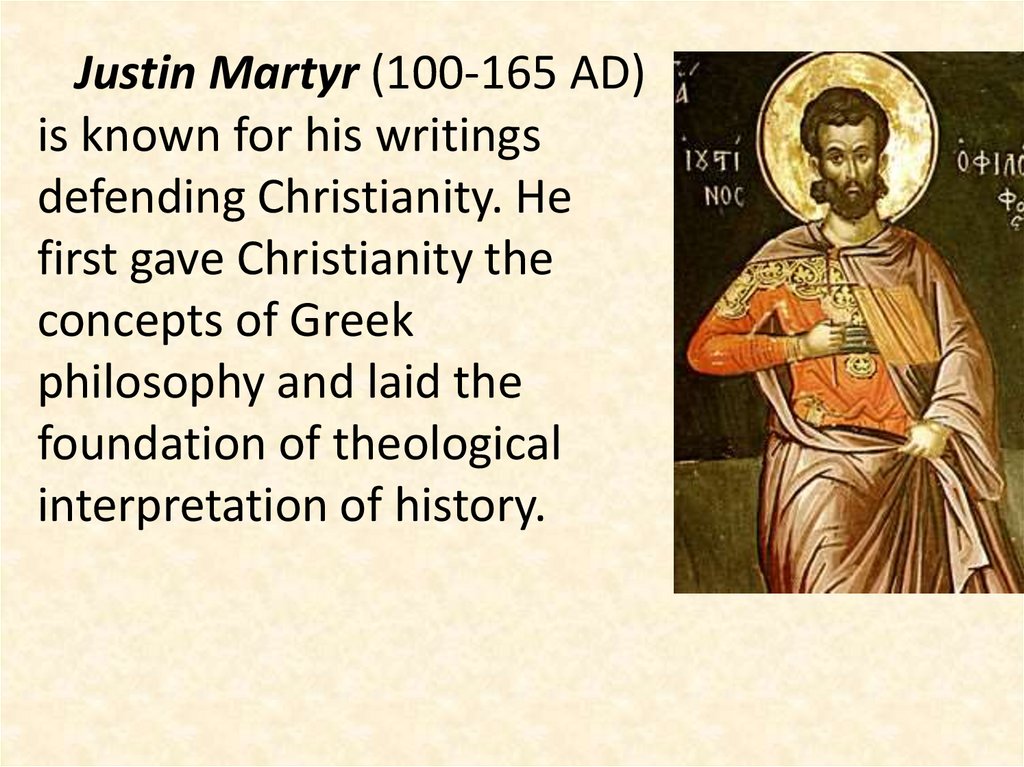
tribes, devastated towns and cities and their
inhabitants.
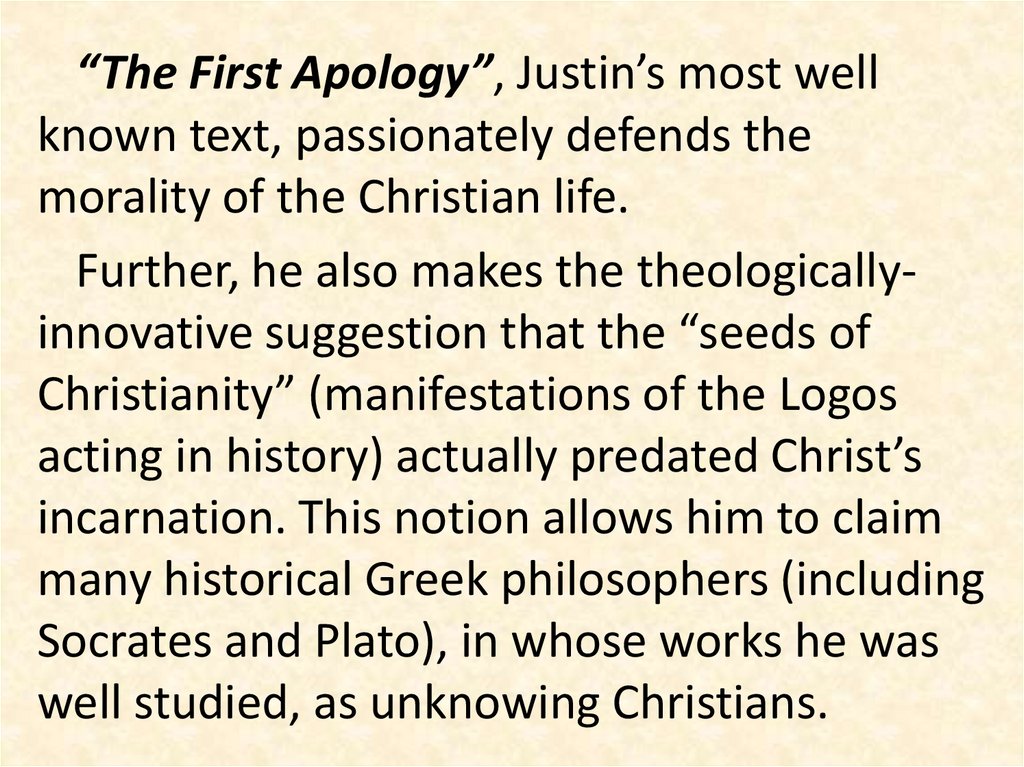
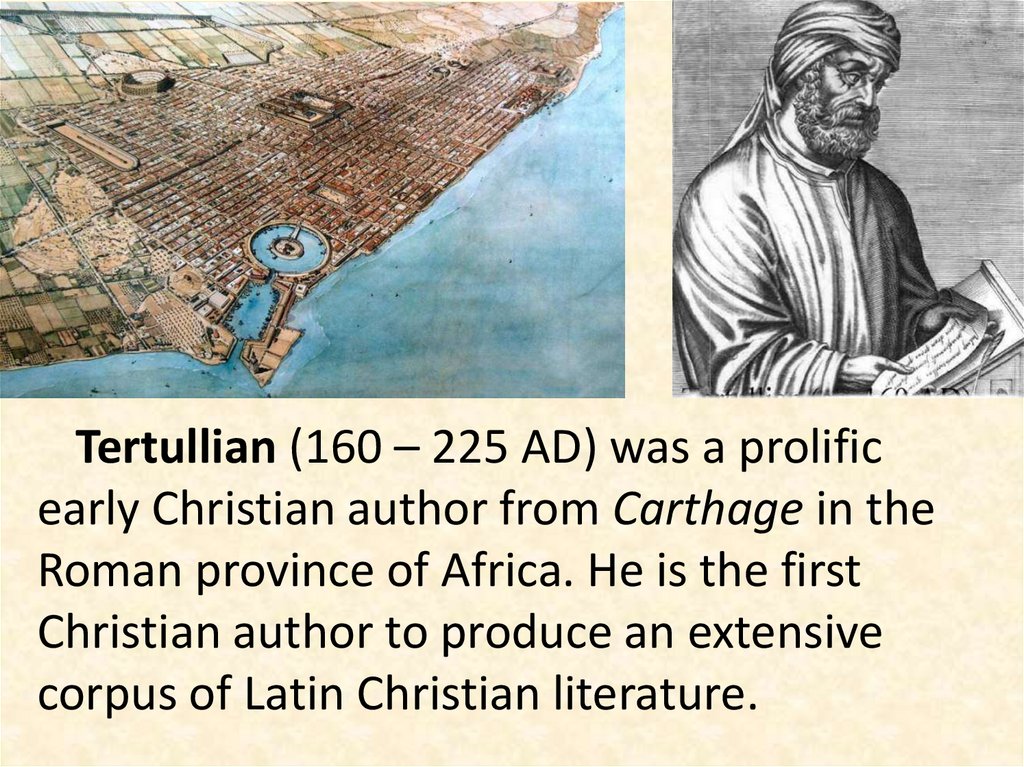
6.
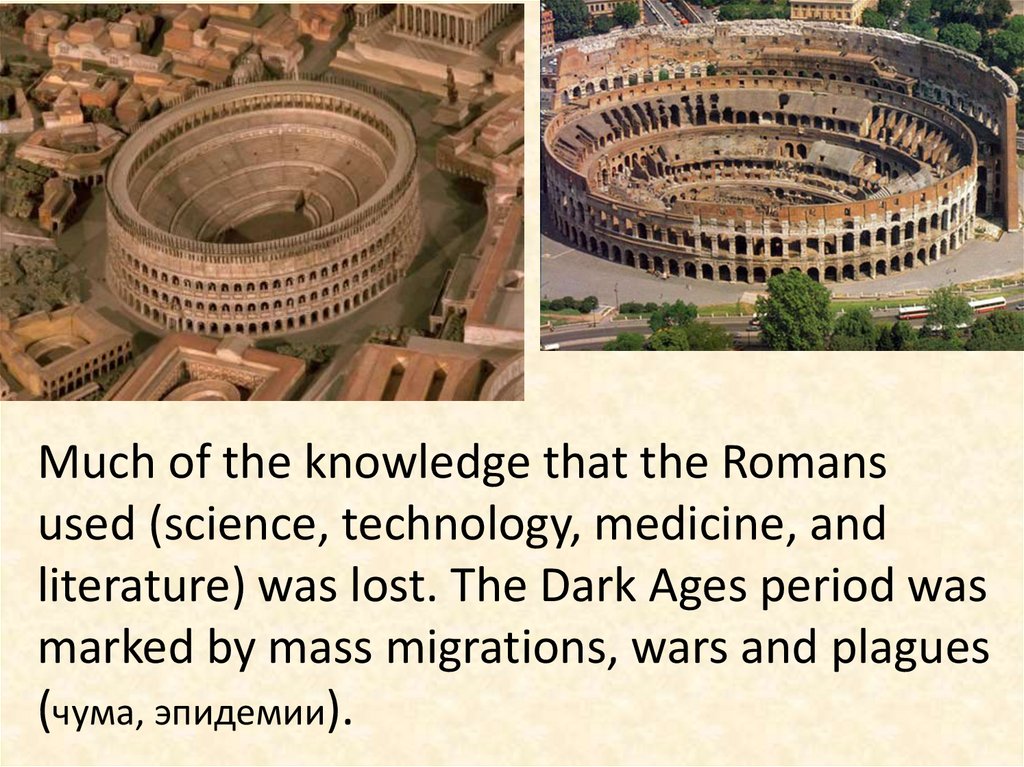
Much of the knowledge that the Romansused (science, technology, medicine, and
literature) was lost. The Dark Ages period was
marked by mass migrations, wars and plagues
(чума, эпидемии).
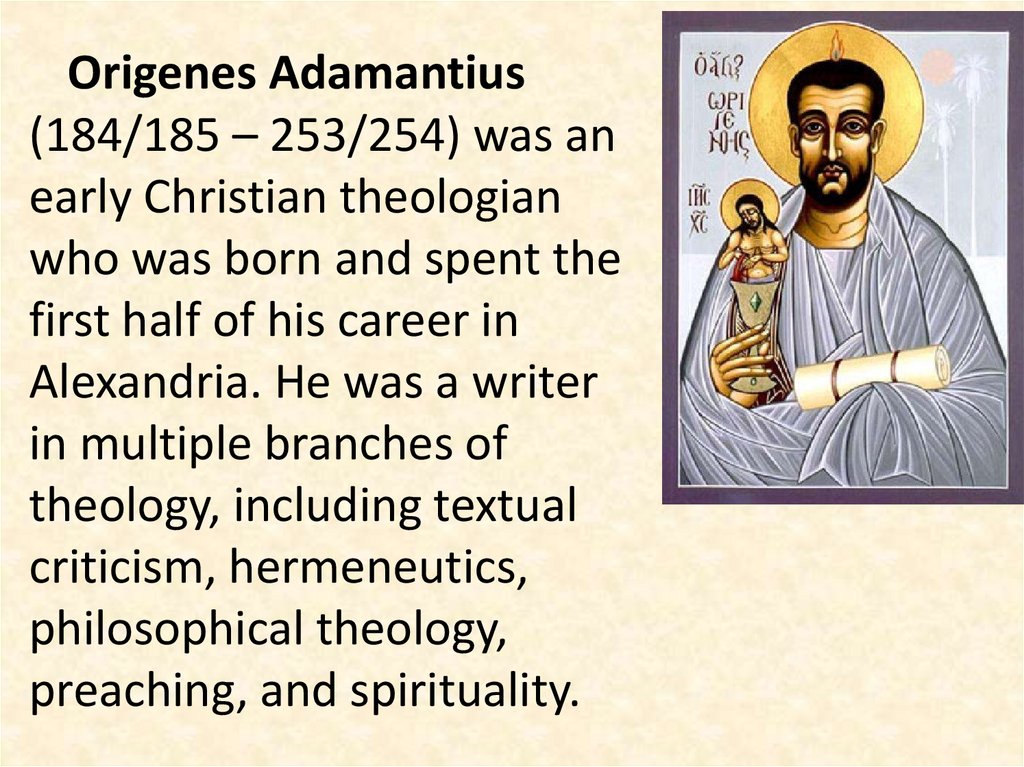
7.
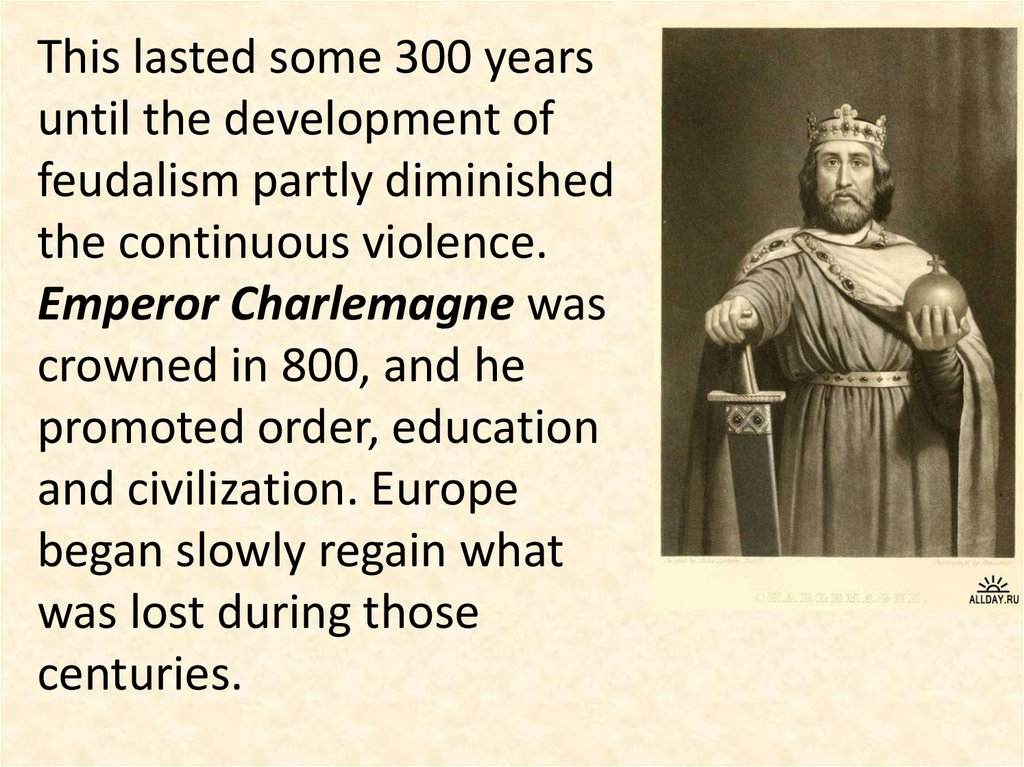
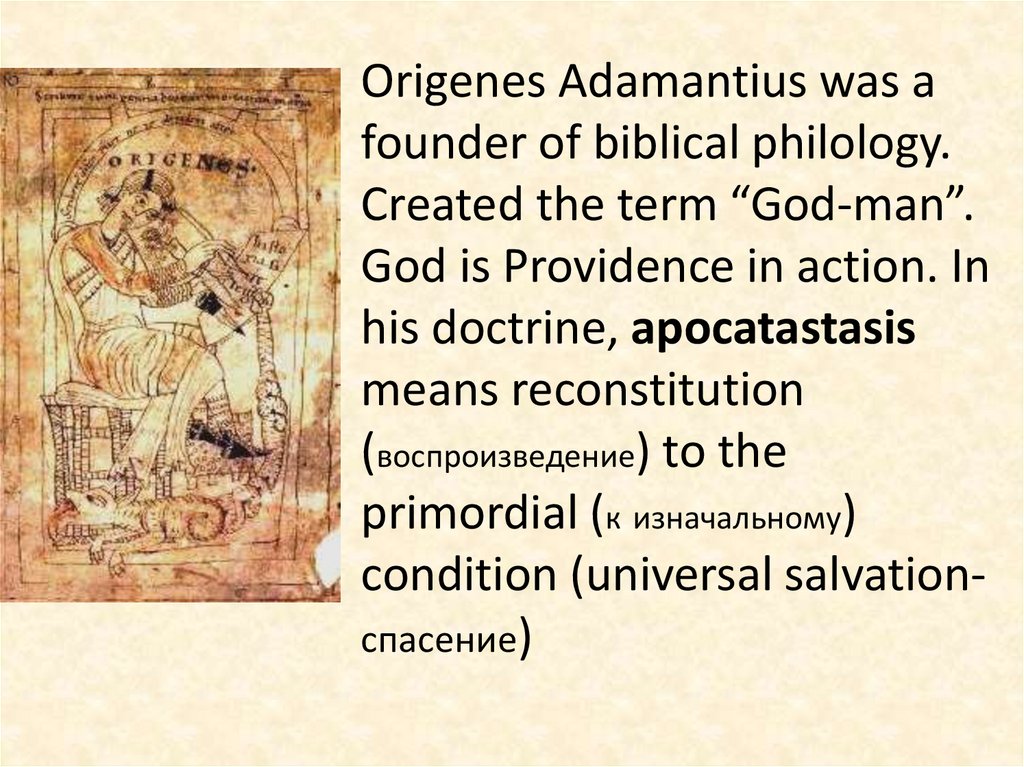
This lasted some 300 yearsuntil the development of
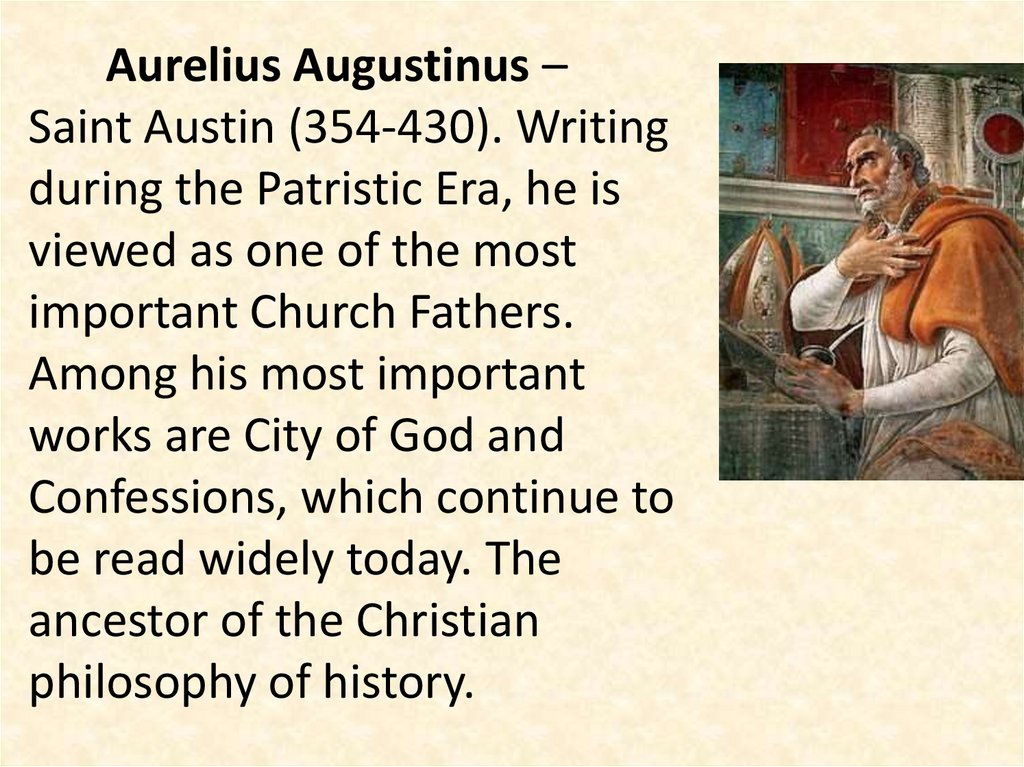
feudalism partly diminished
the continuous violence.
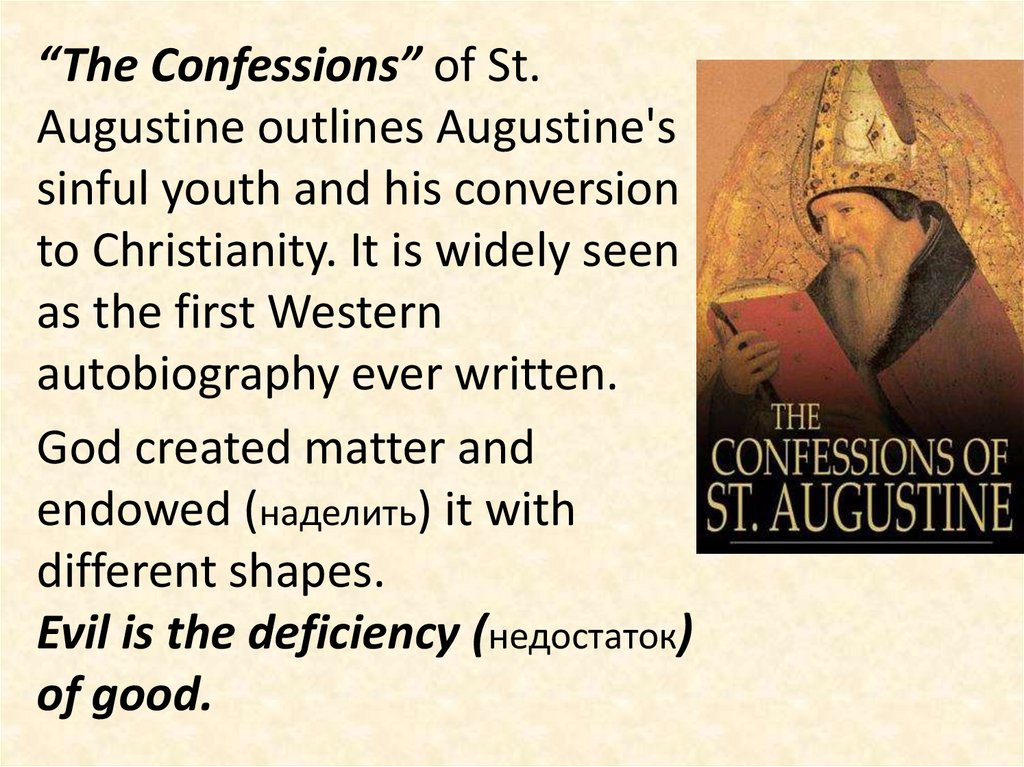
Emperor Charlemagne was
crowned in 800, and he
promoted order, education
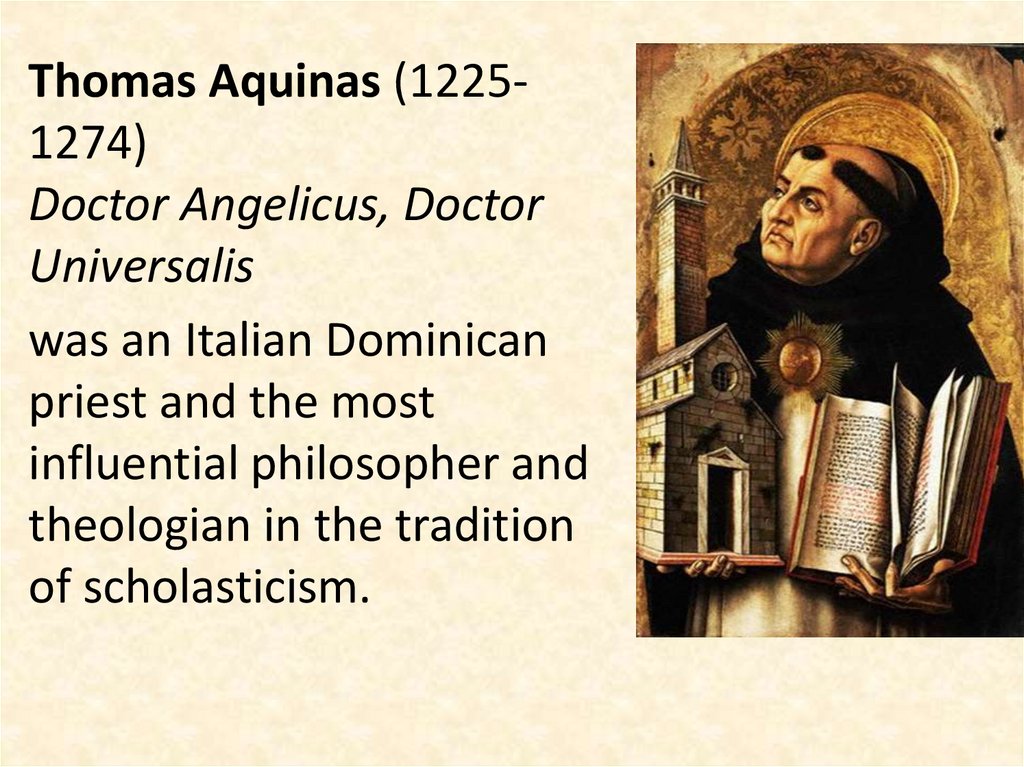
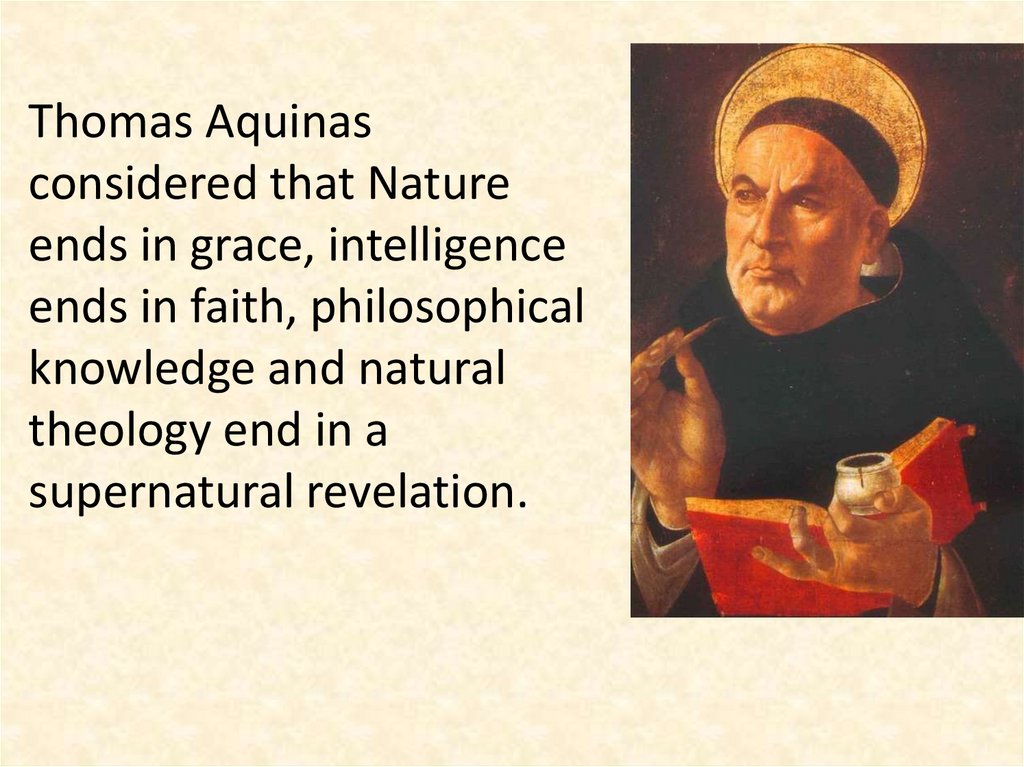
and civilization. Europe
began slowly regain what
was lost during those
centuries.
8. Chronological framework of European medieval philosophy:
1. Beginning of the Middle Ages refer to theI-II centuries AD due to appearance of
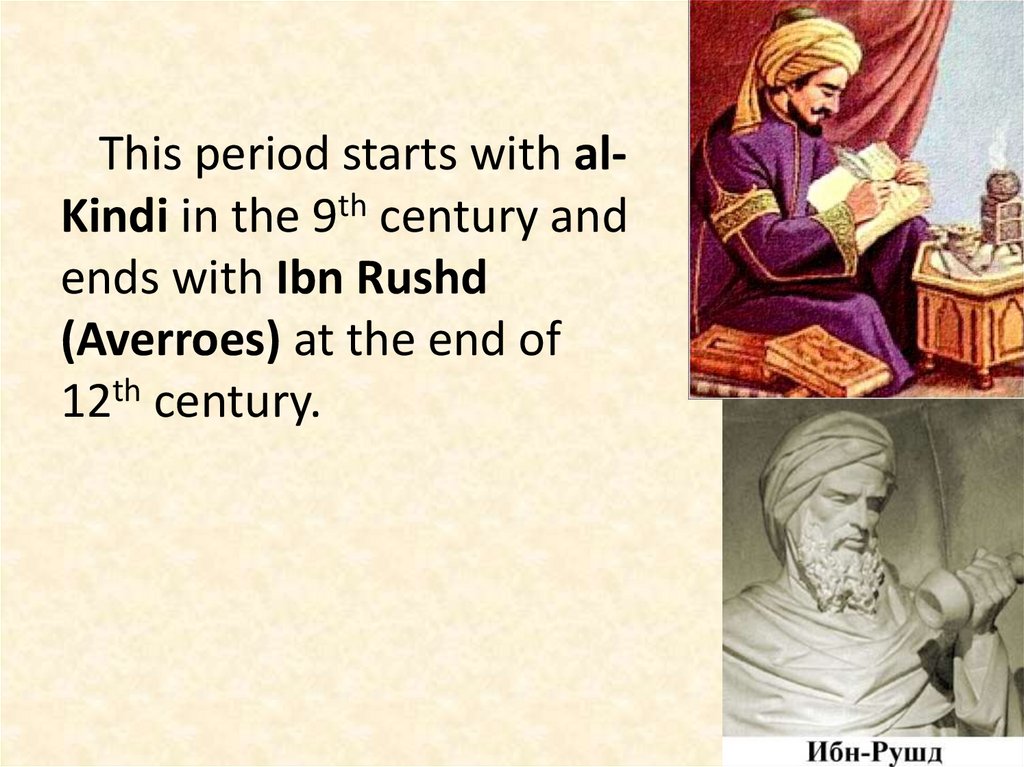
Christianity.
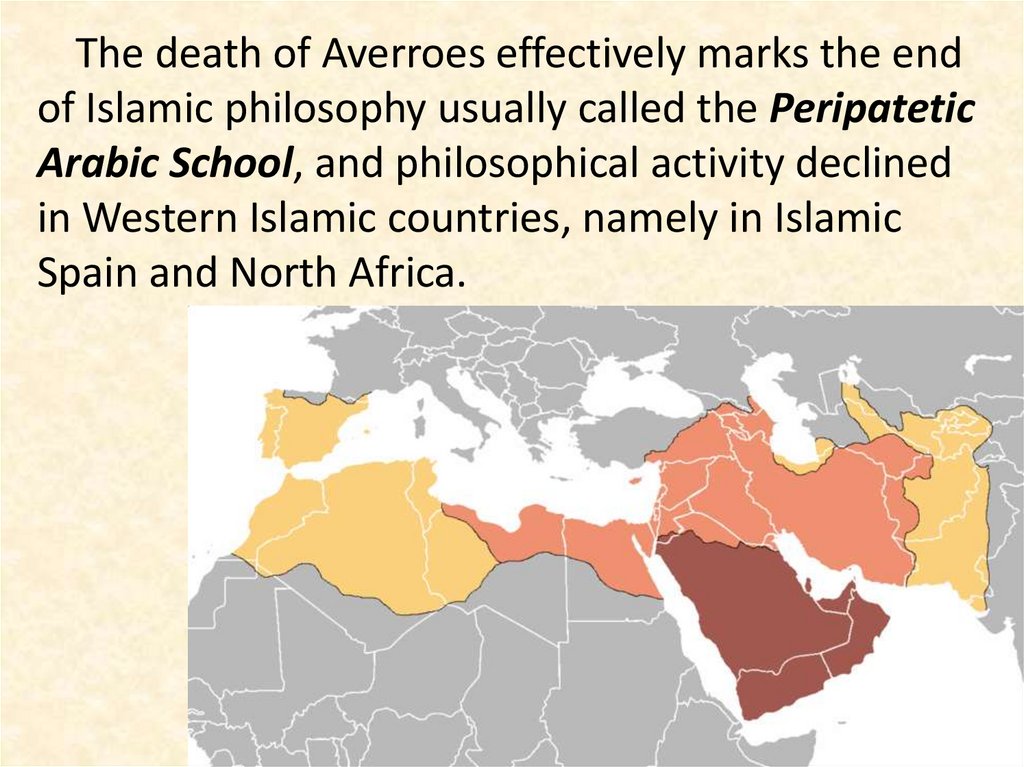
2. Completion of the Middle Ages is to the
XII-XIII centuries AD.
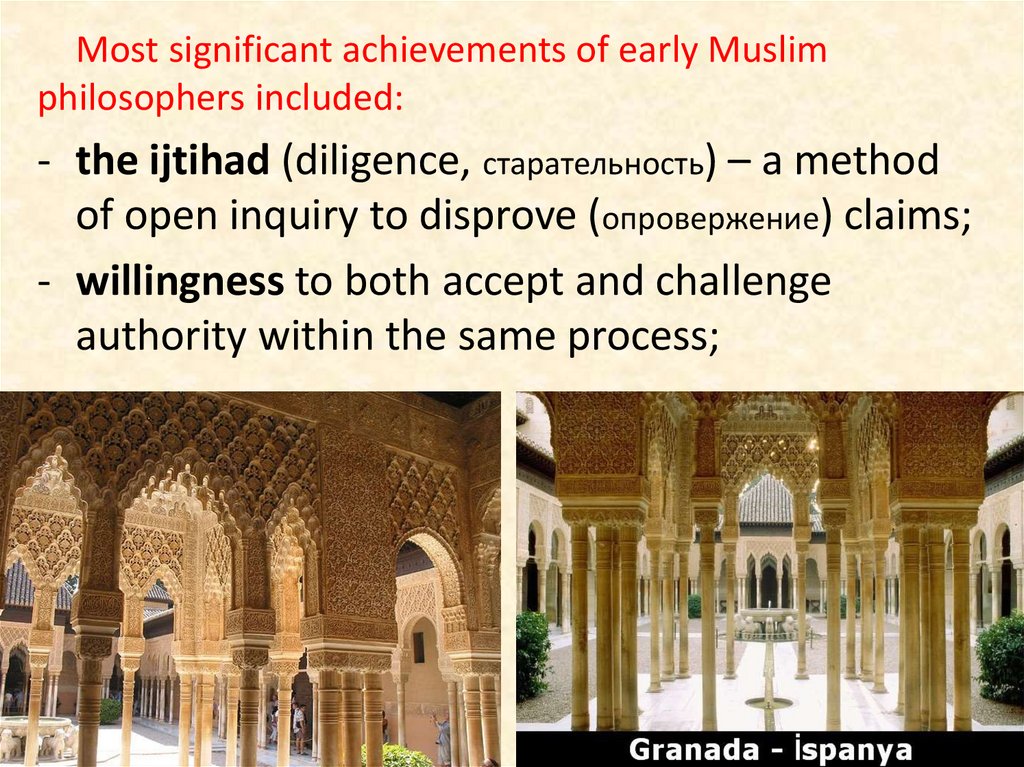
However, beginning of the Middle Ages is still
controversial for historians of philosophy.
9.
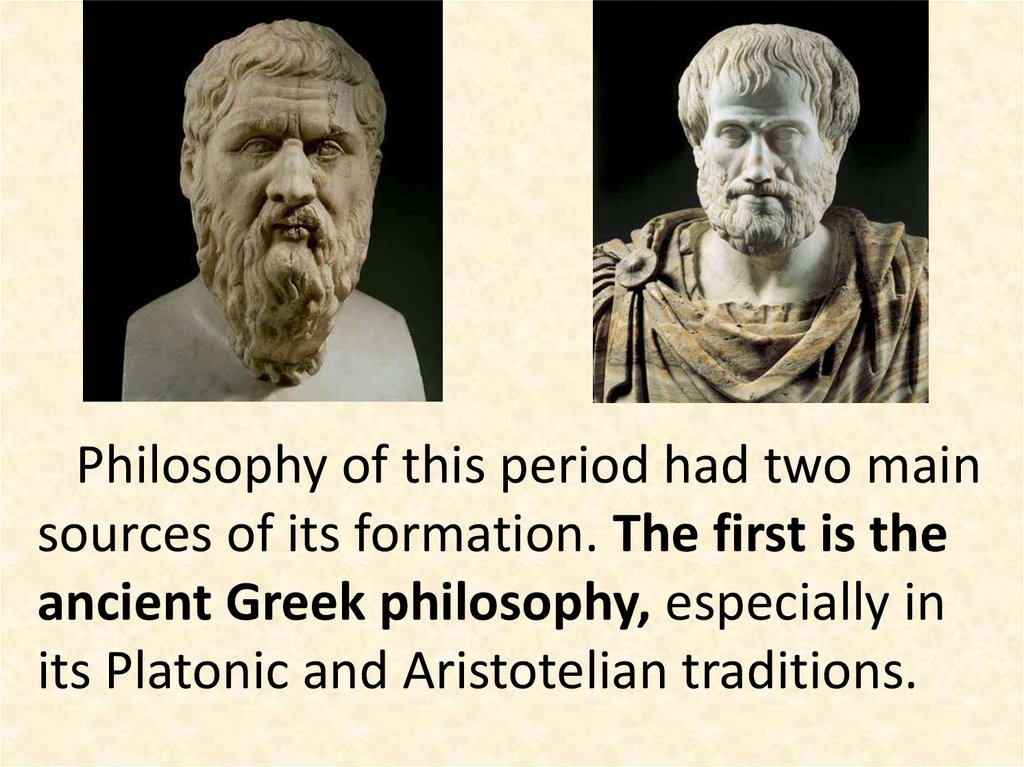
Philosophy of this period had two mainsources of its formation. The first is the
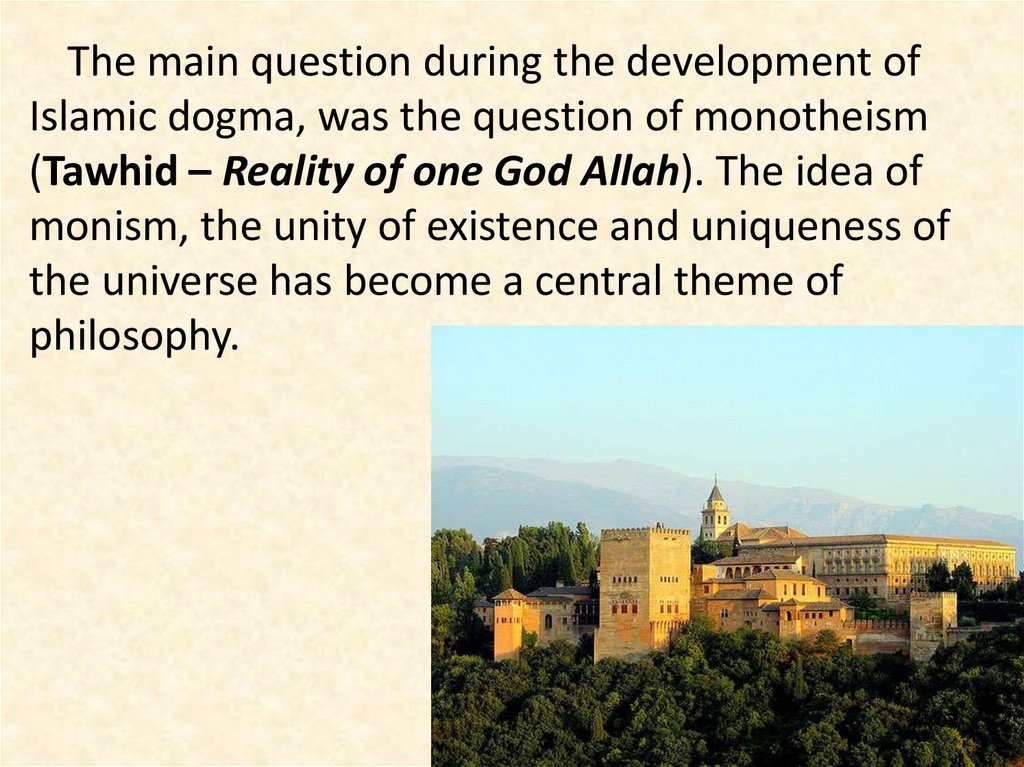
ancient Greek philosophy, especially in
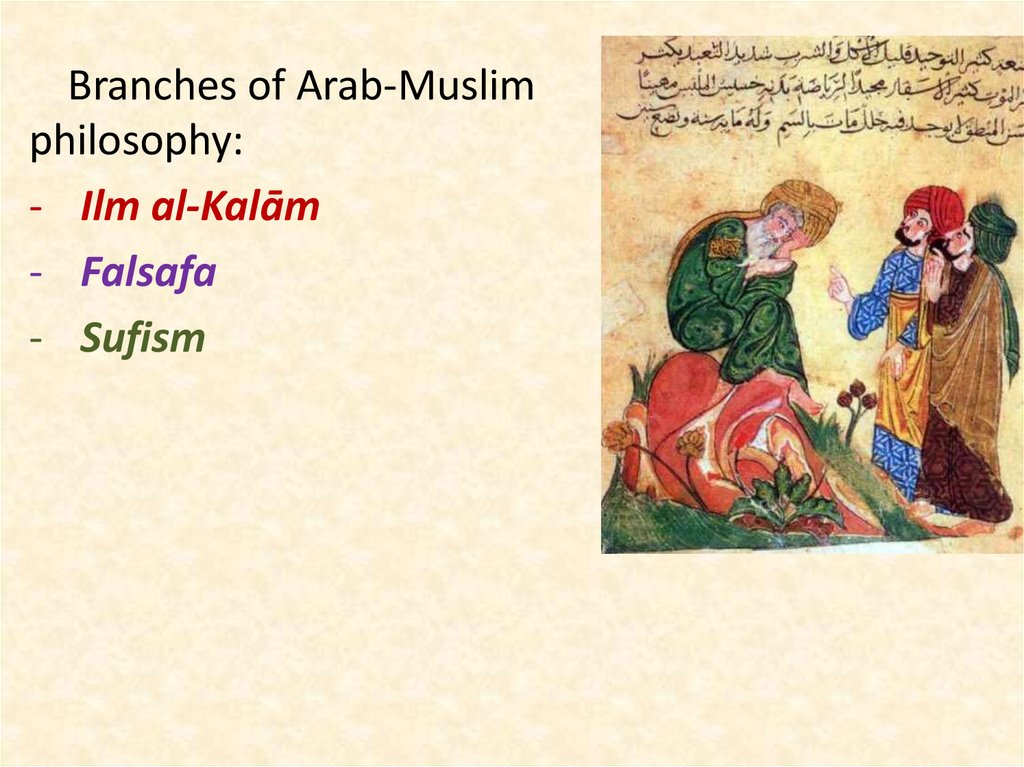
its Platonic and Aristotelian traditions.
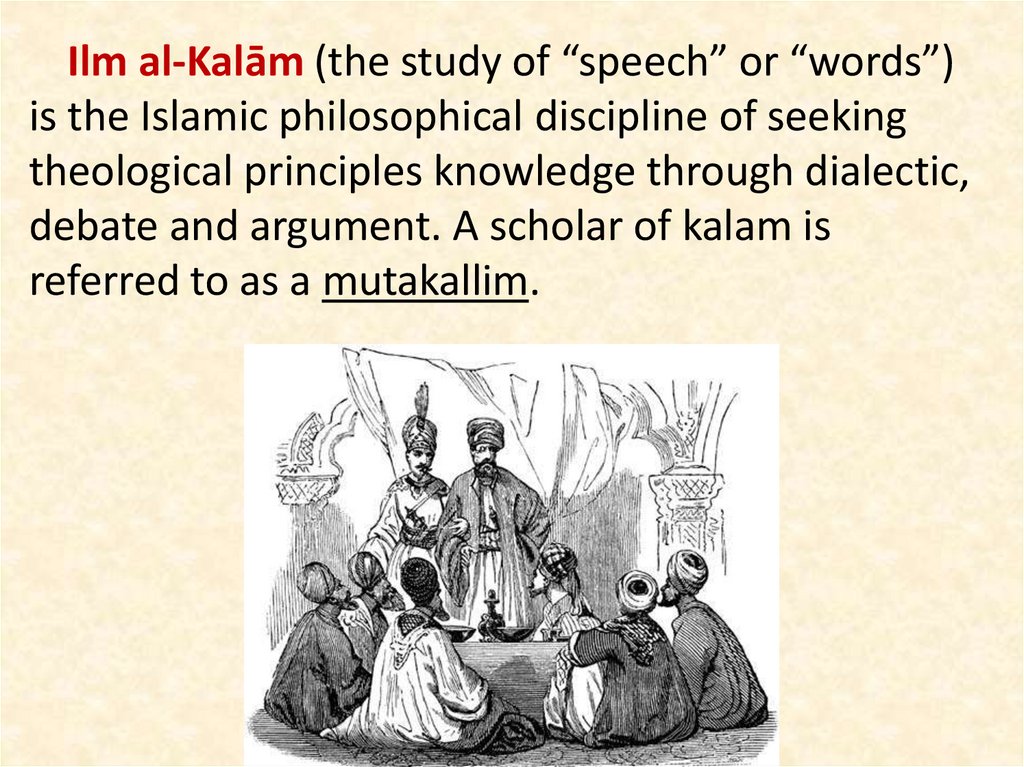
10.
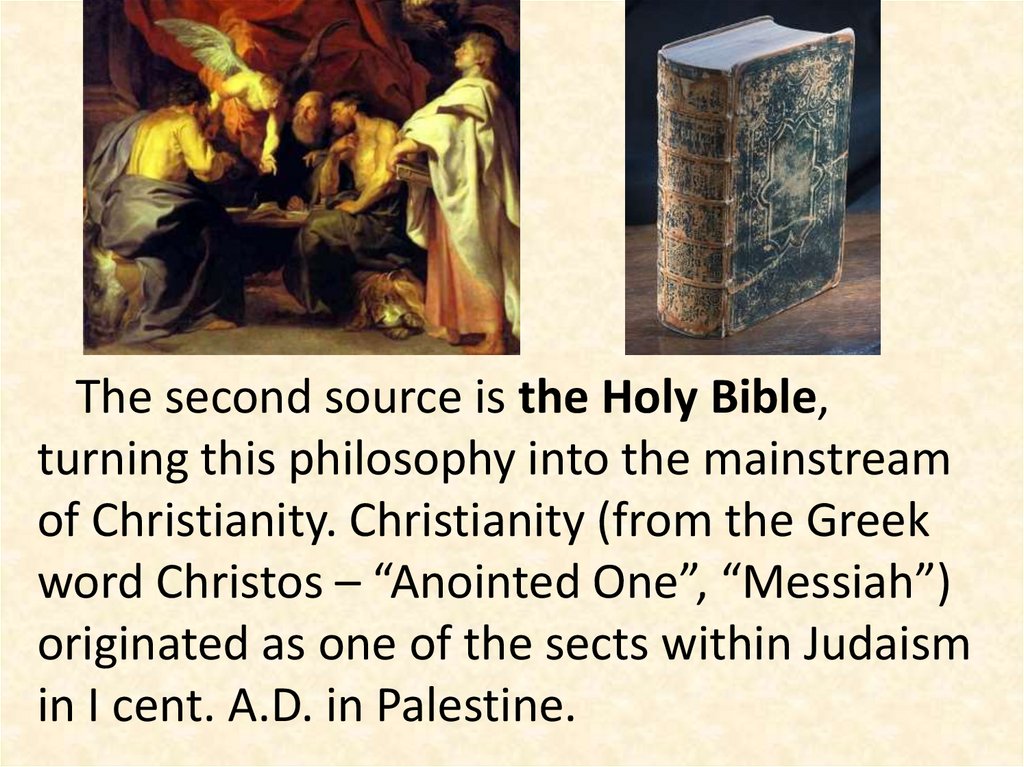
The second source is the Holy Bible,turning this philosophy into the mainstream
of Christianity. Christianity (from the Greek
word Christos – “Anointed One”, “Messiah”)
originated as one of the sects within Judaism
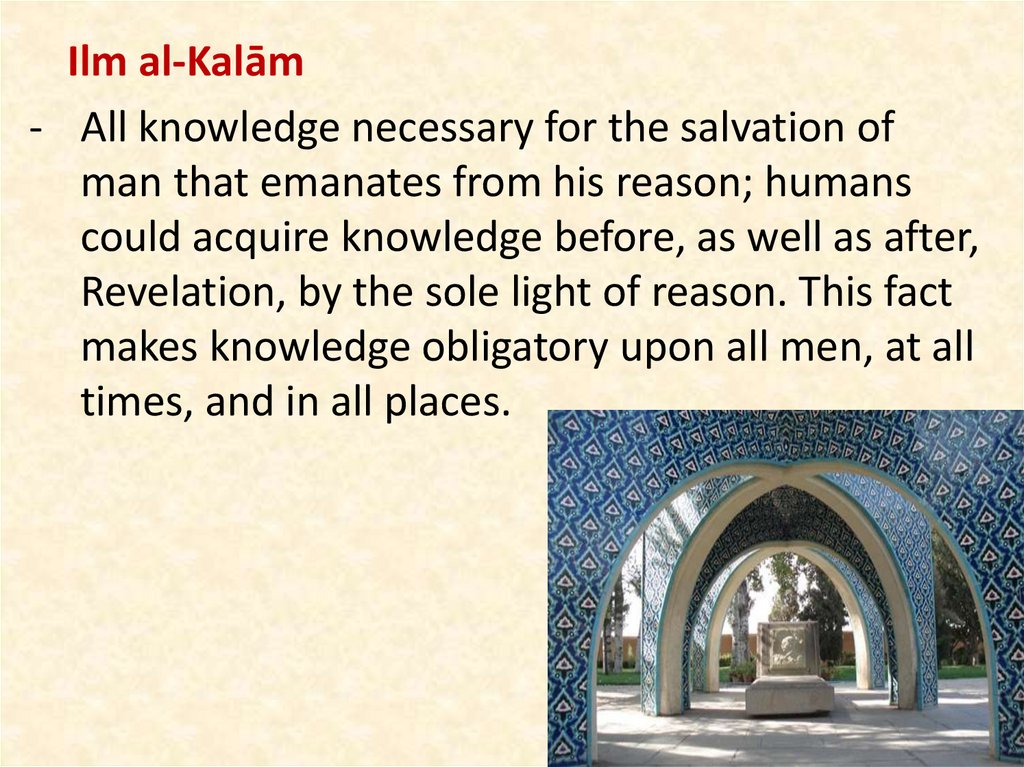
in I cent. A.D. in Palestine.
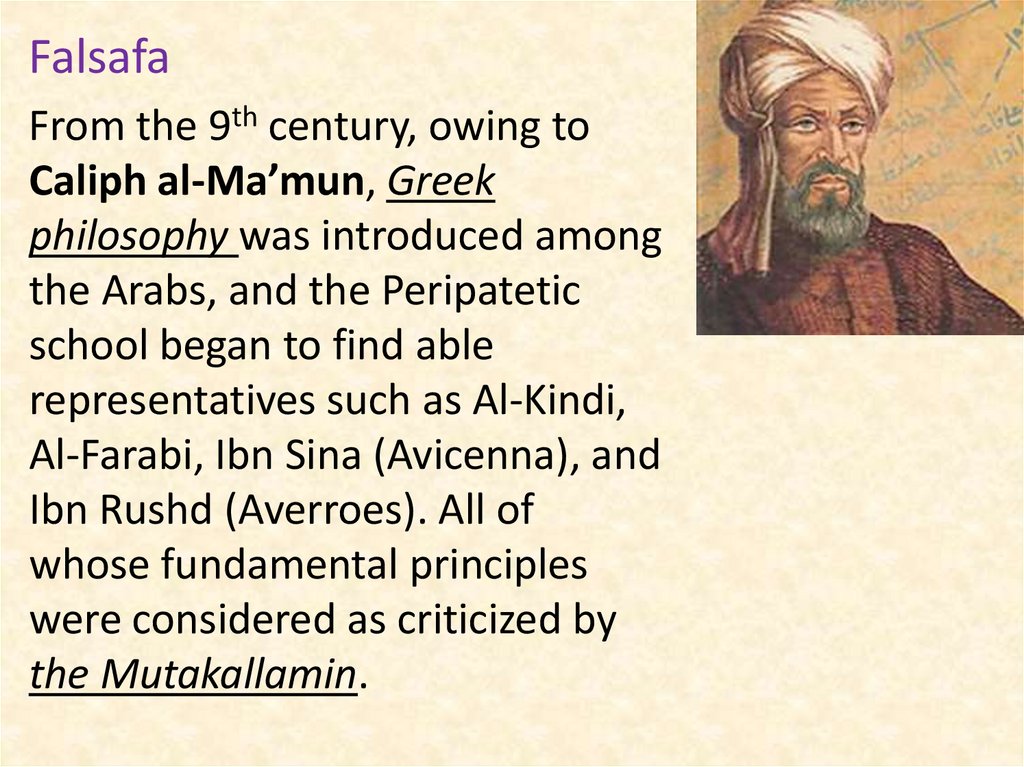
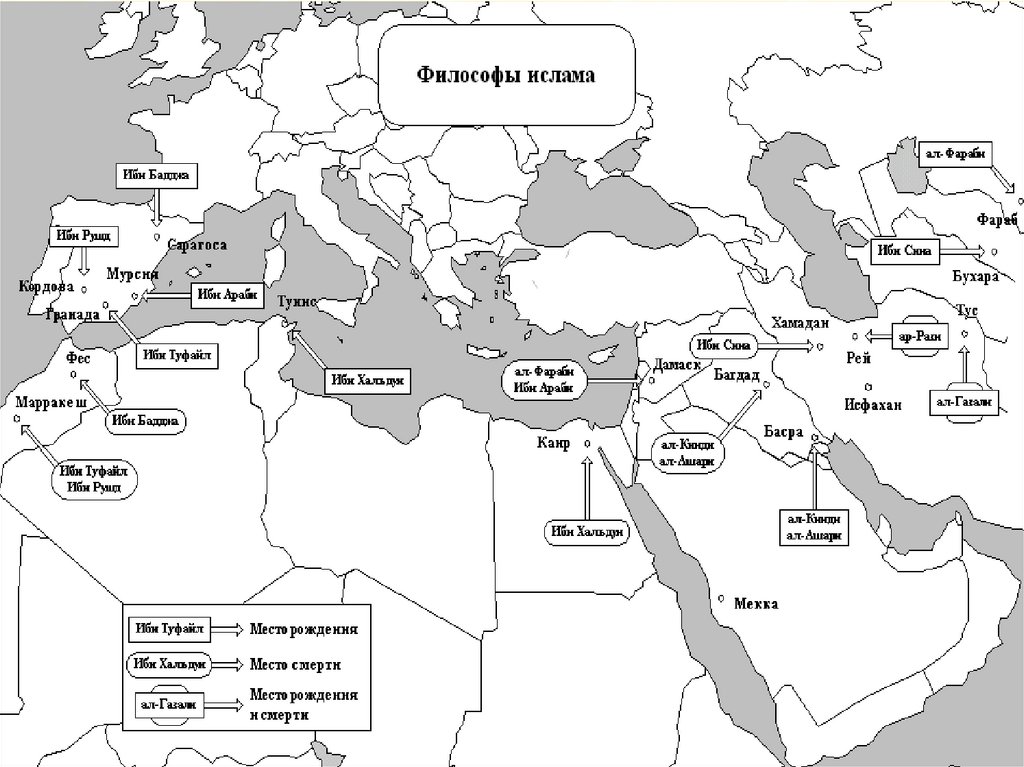
11.
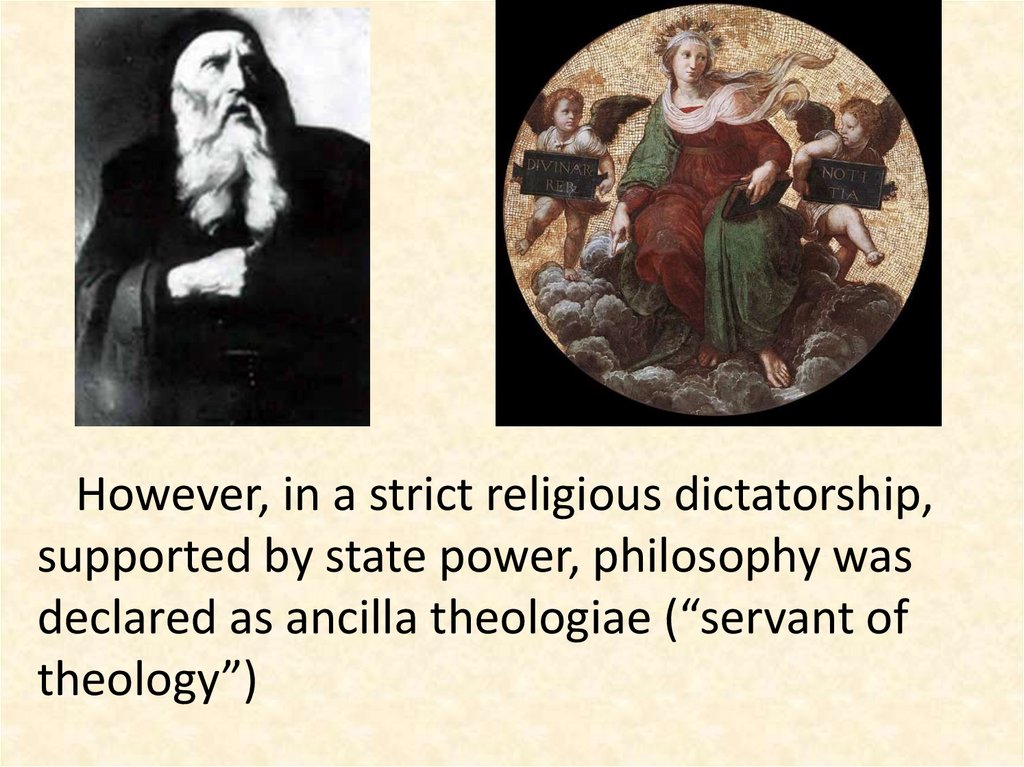
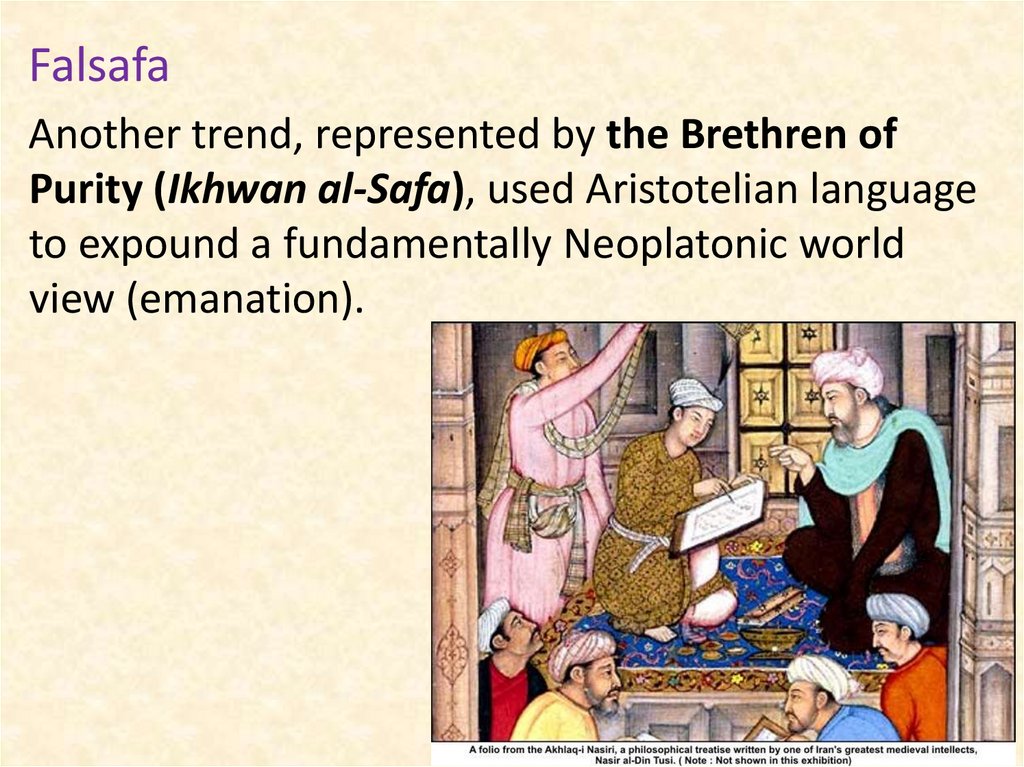
However, in a strict religious dictatorship,supported by state power, philosophy was
declared as ancilla theologiae (“servant of
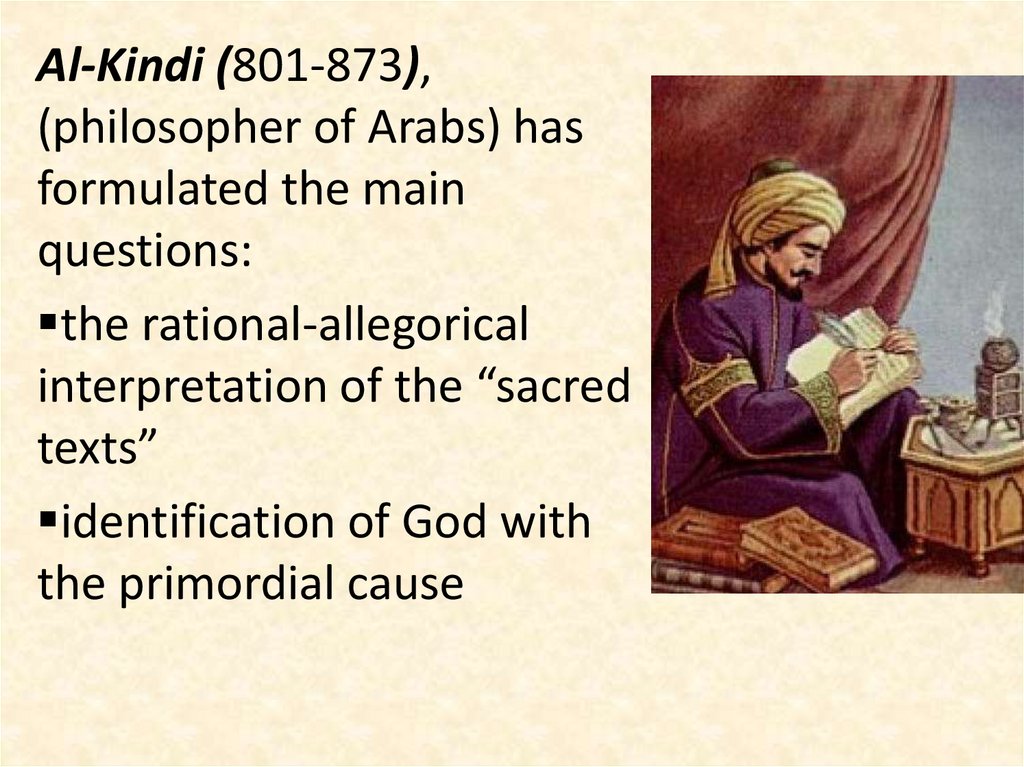
theology”)
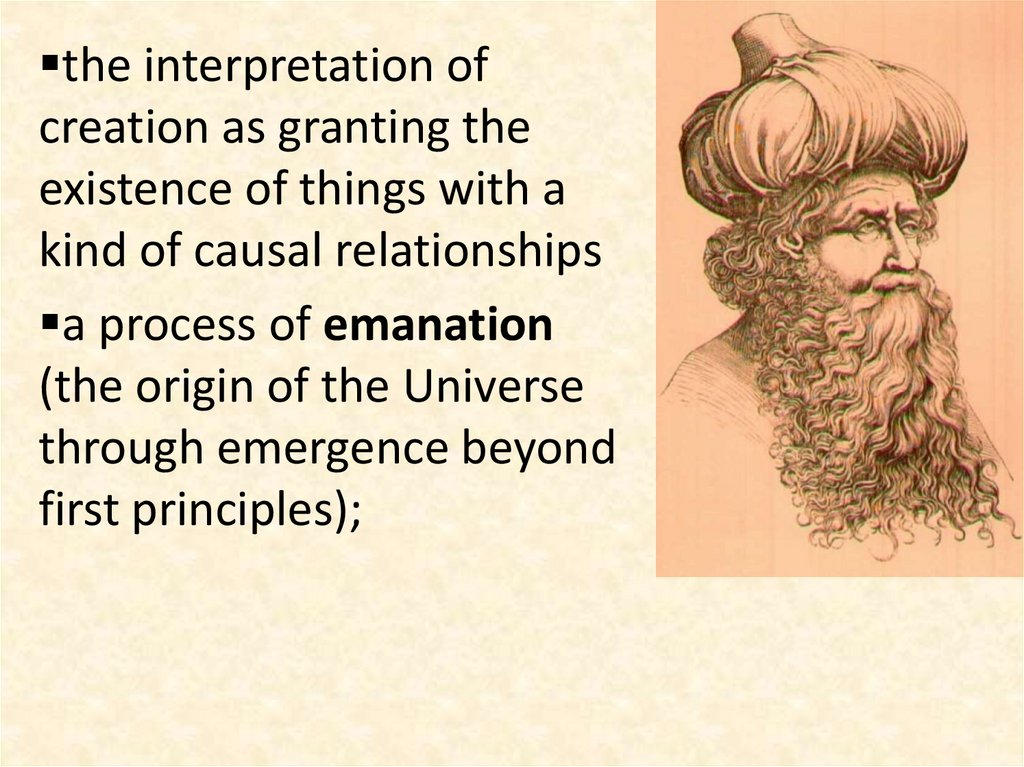
12.
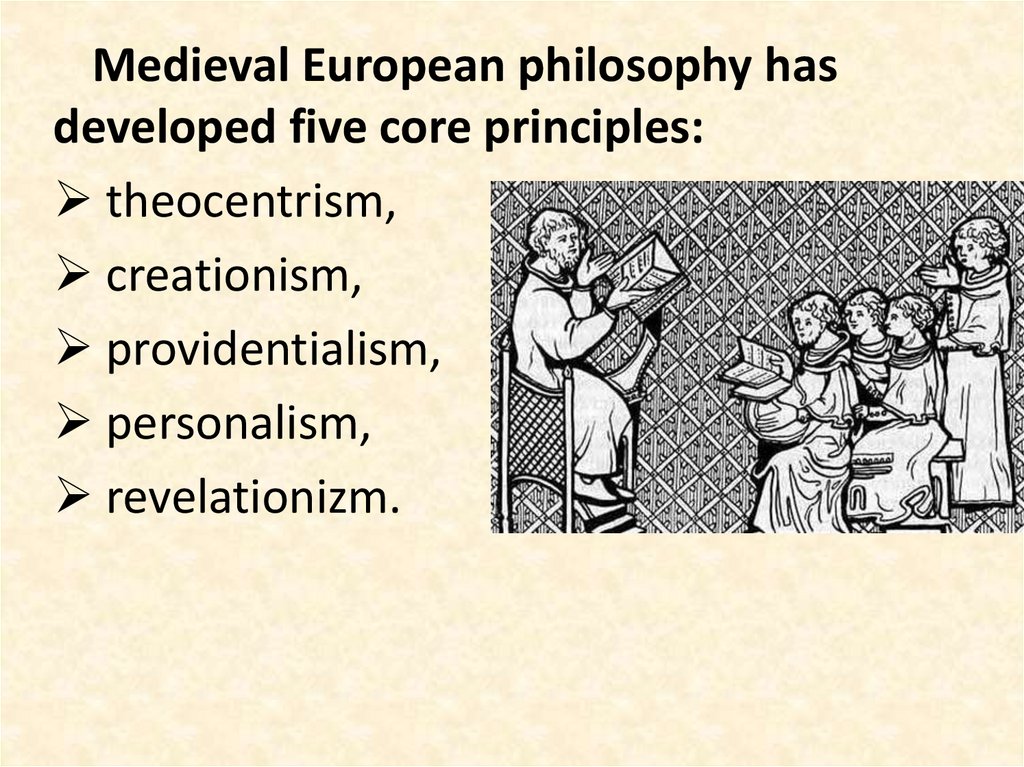
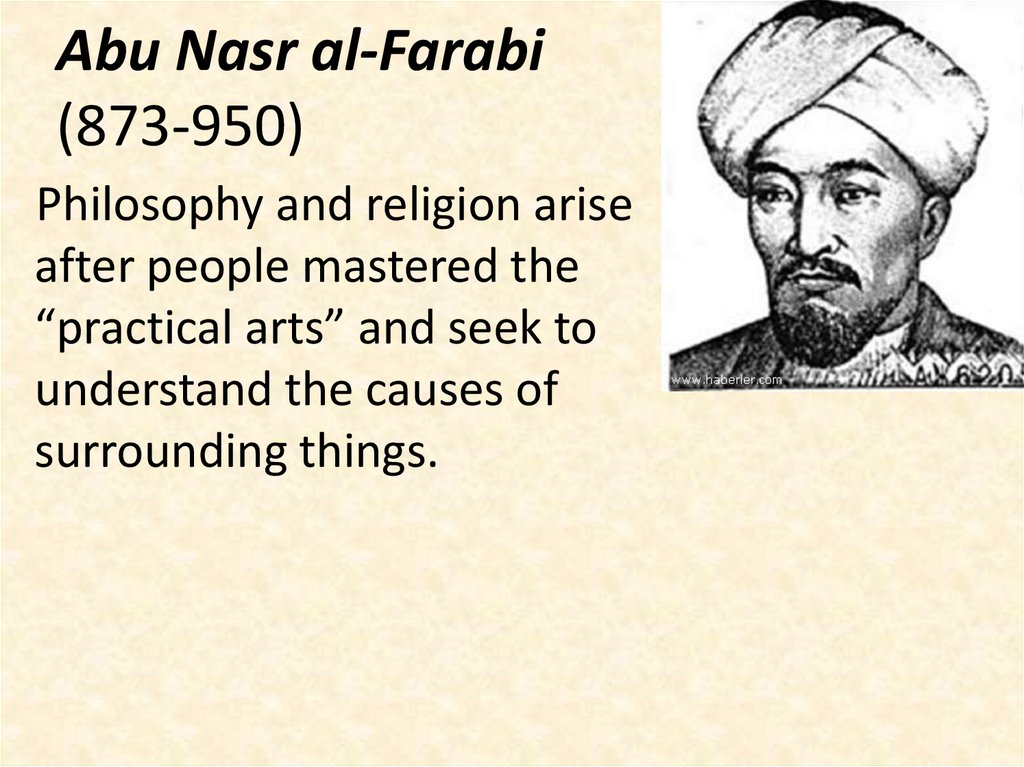
Medieval European philosophy hasdeveloped five core principles:
theocentrism,
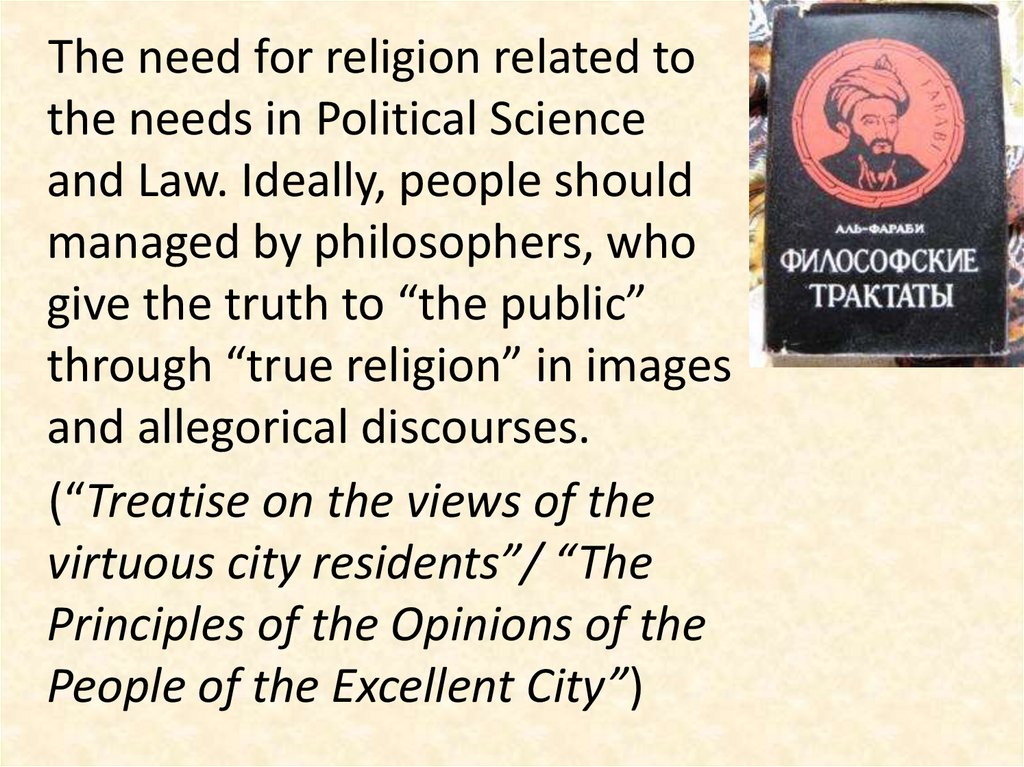
creationism,
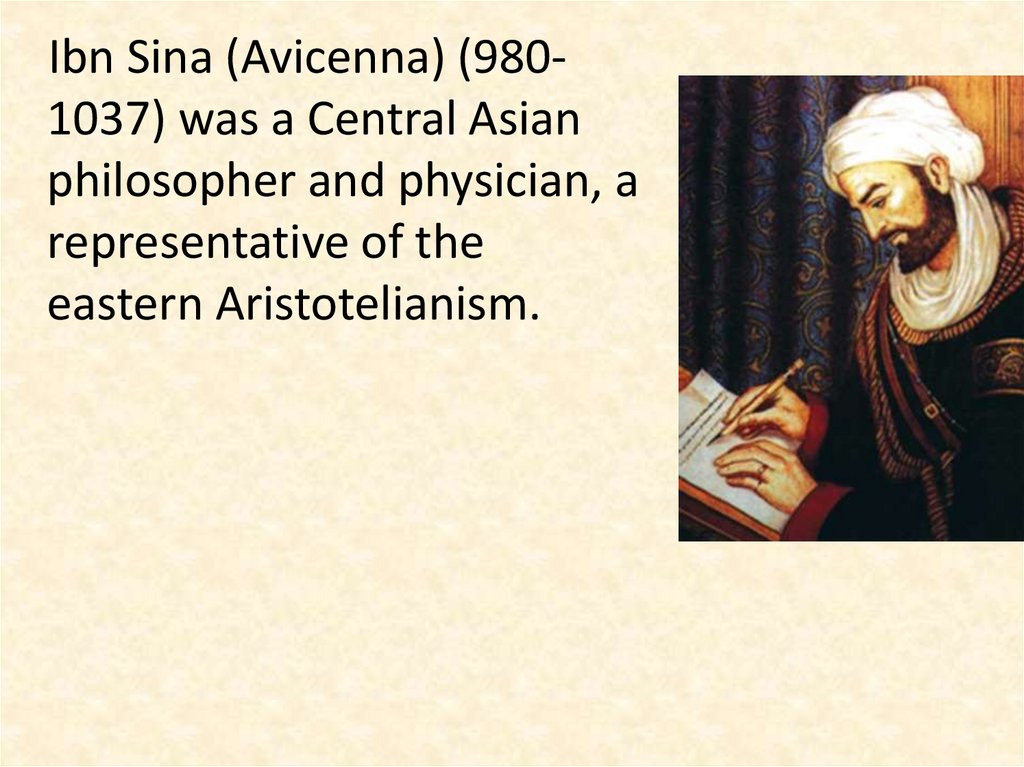
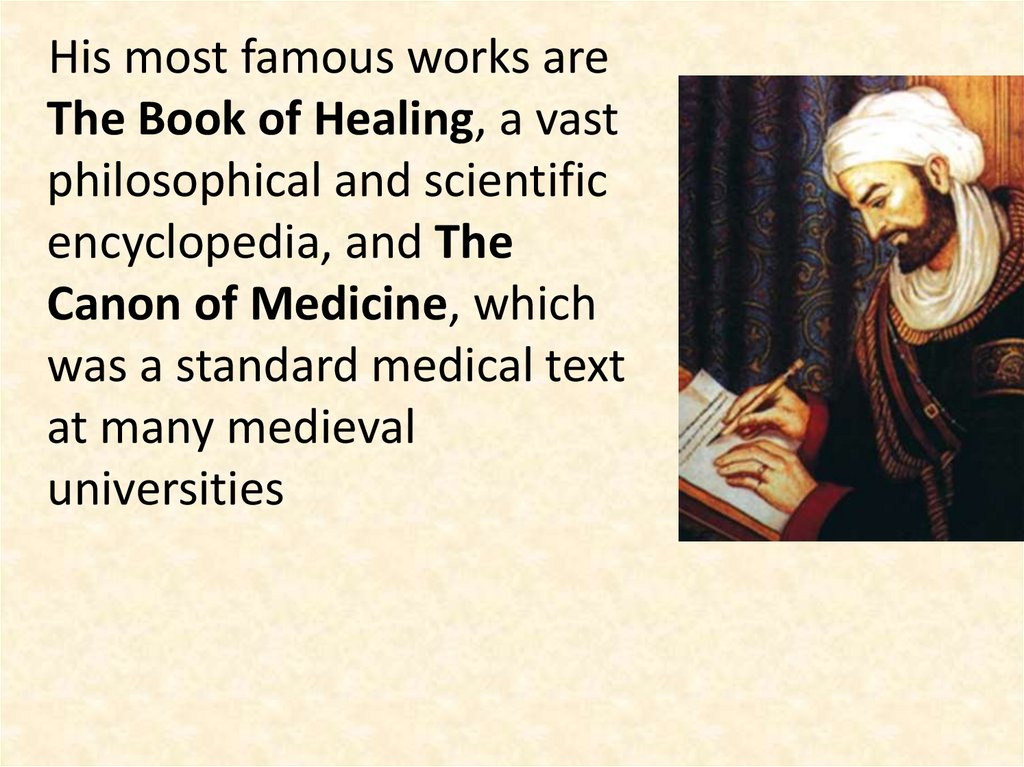
providentialism,
personalism,
revelationizm.
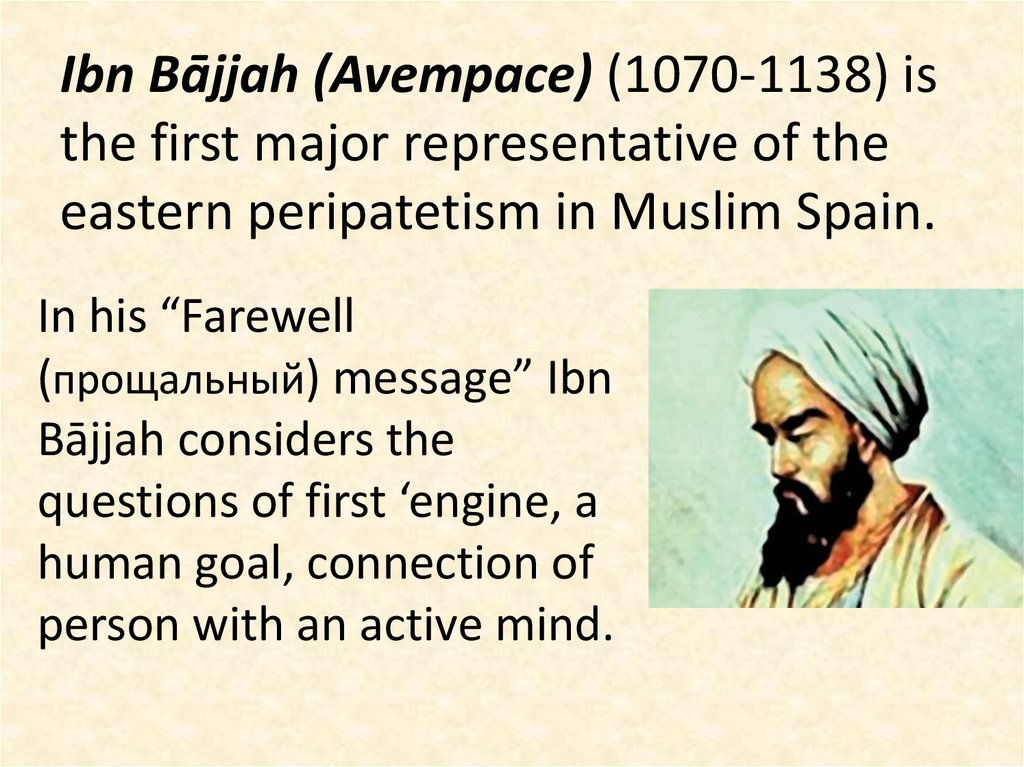
13.
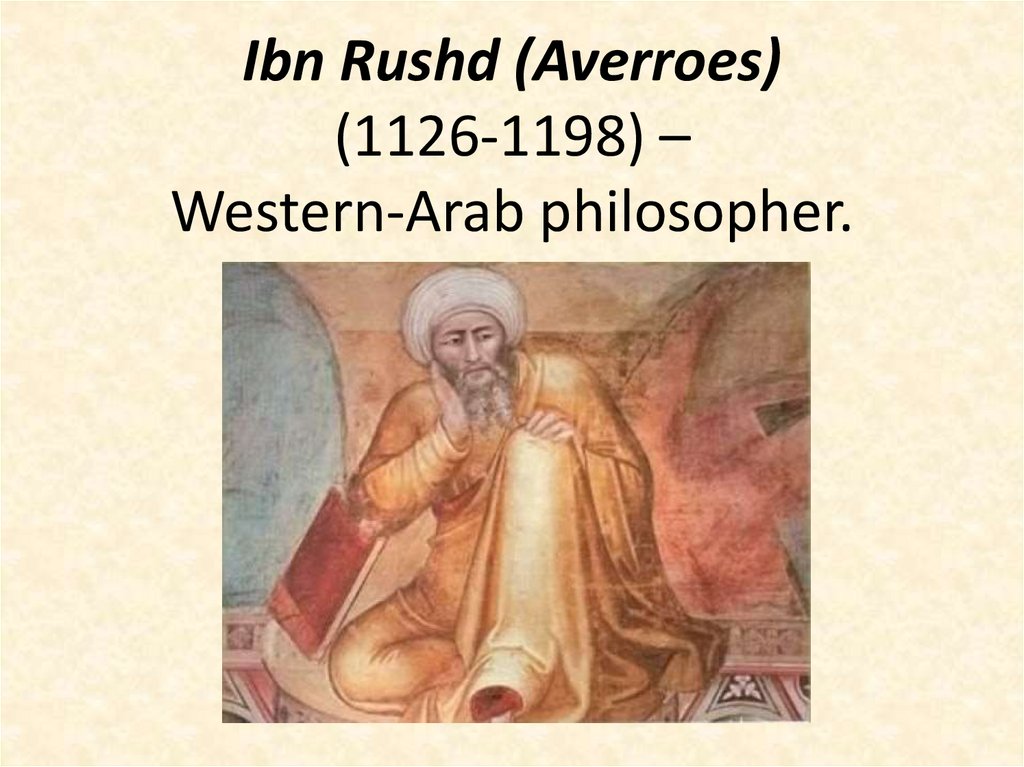
1.Theocentrism (Greektheos - God) – in the
center of the universe is
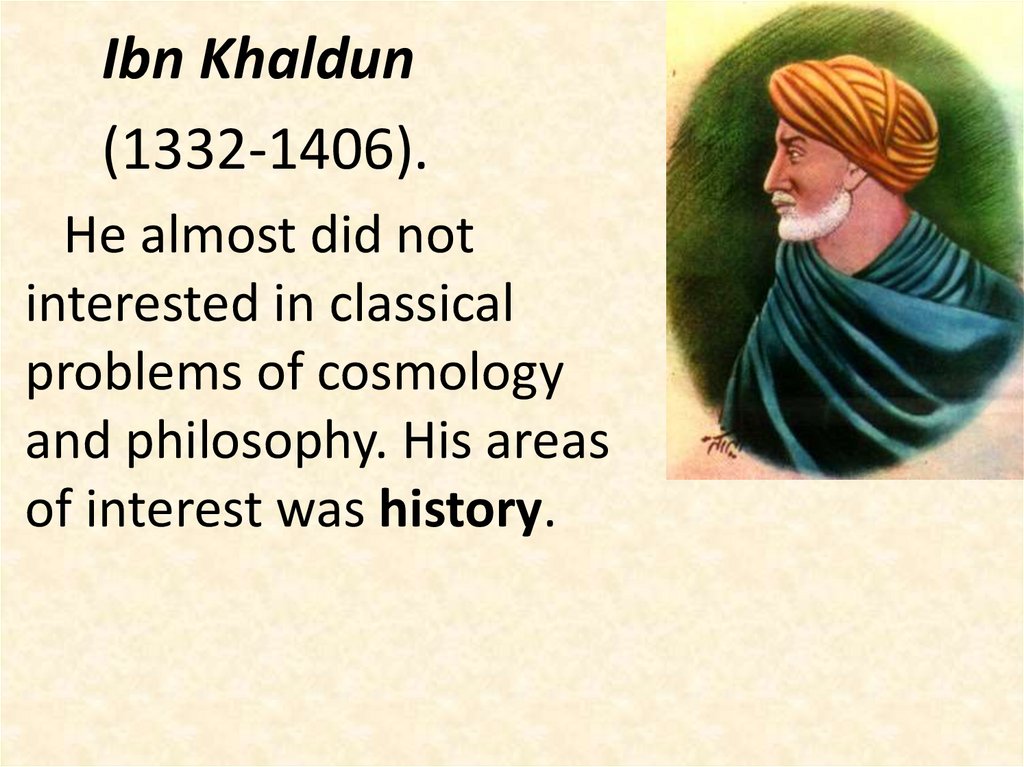
God.
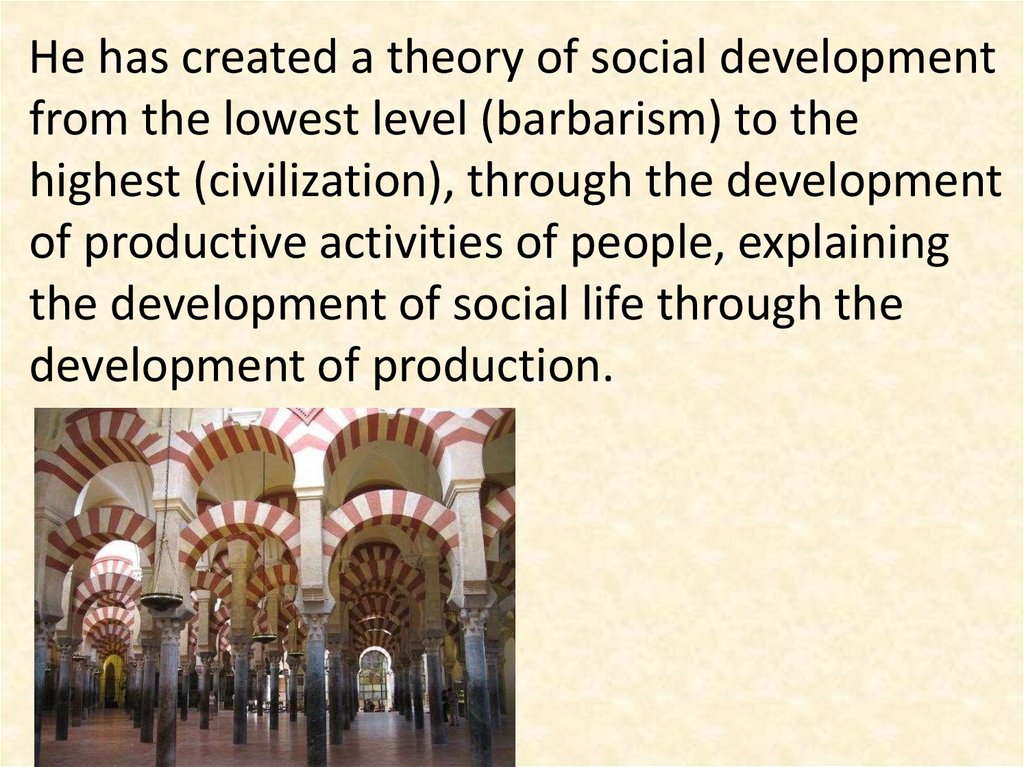
2.Creationism is the idea
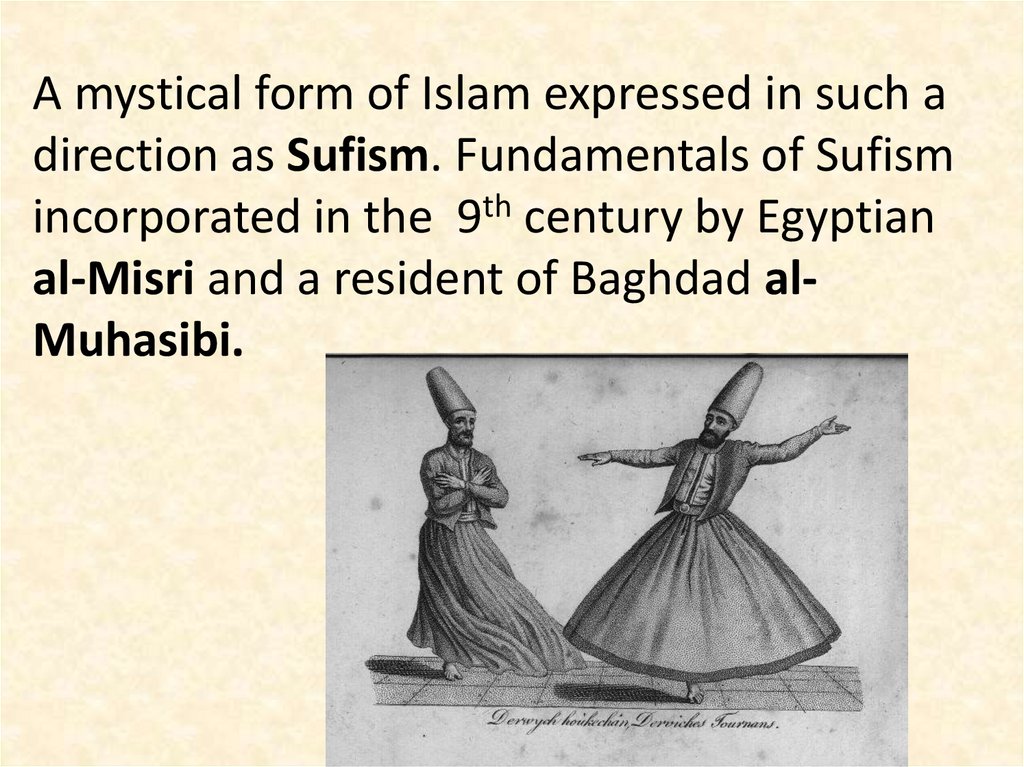
that the world and
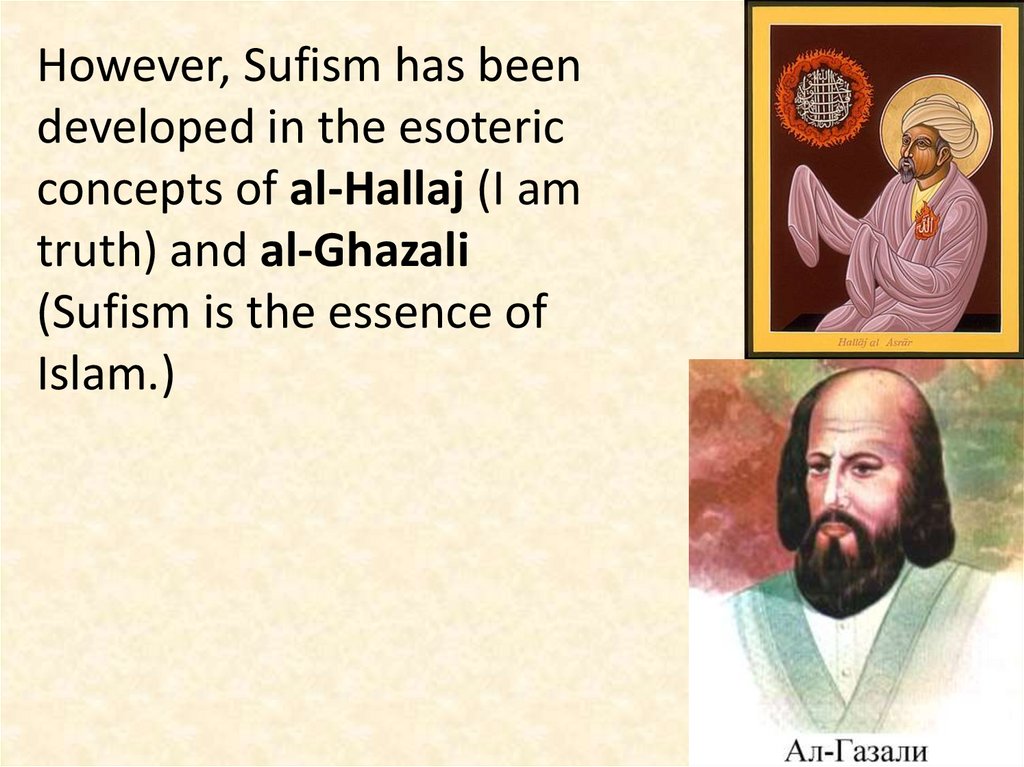
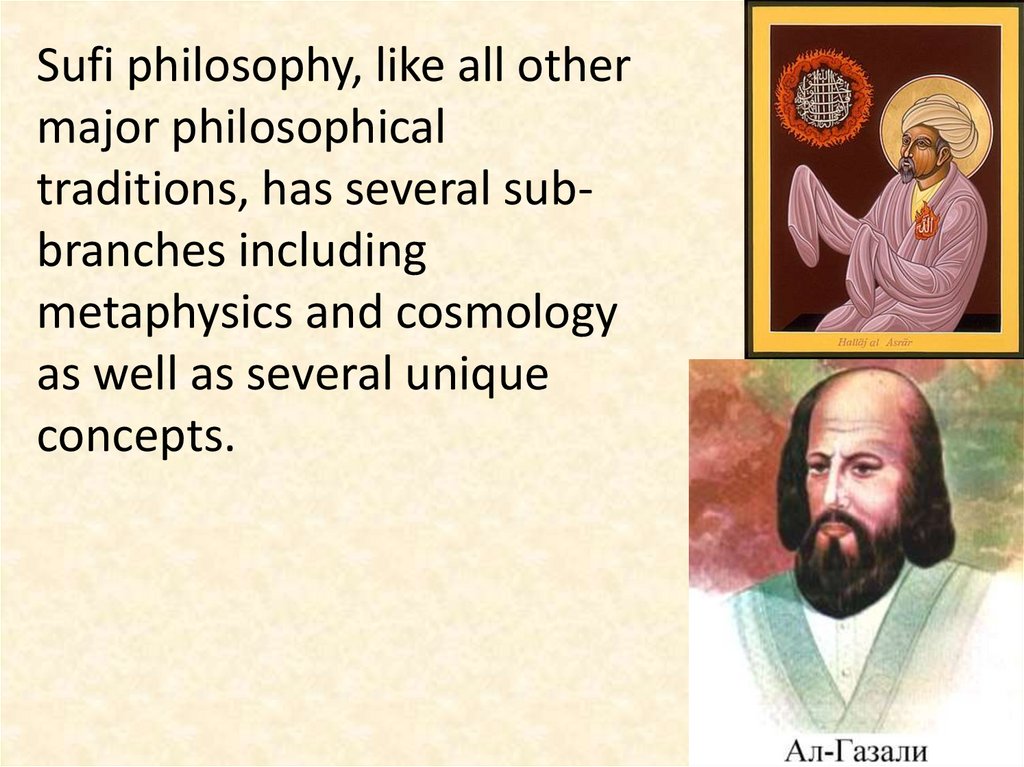
mankind created by God.
14.
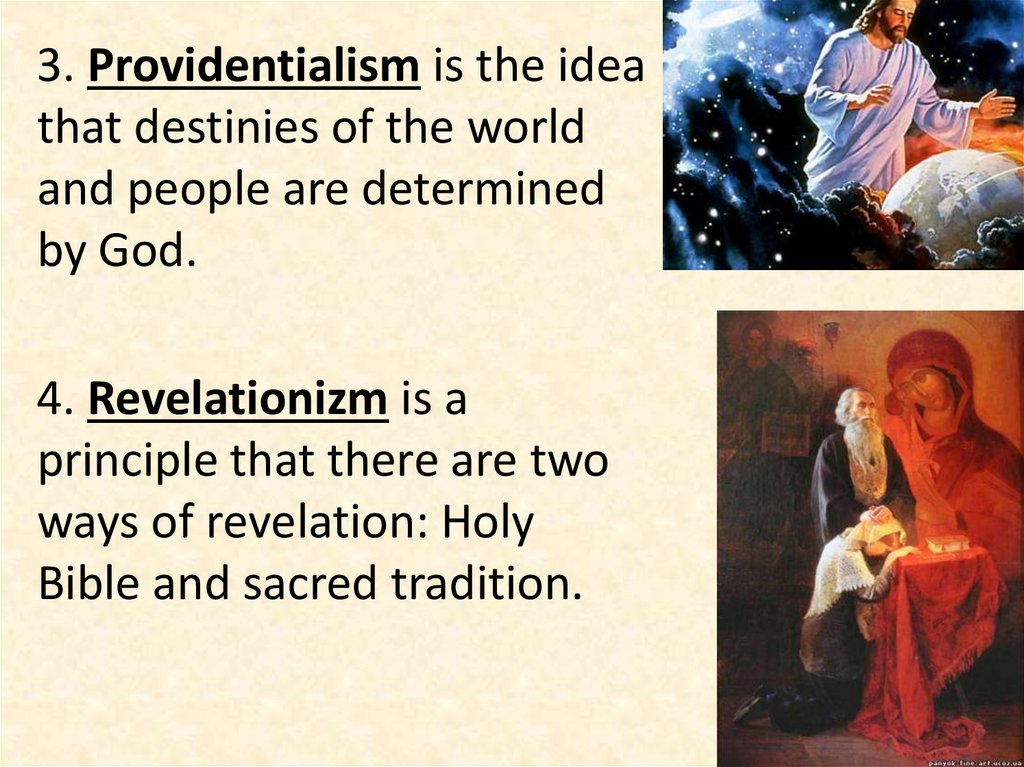
3. Providentialism is the ideathat destinies of the world
and people are determined
by God.
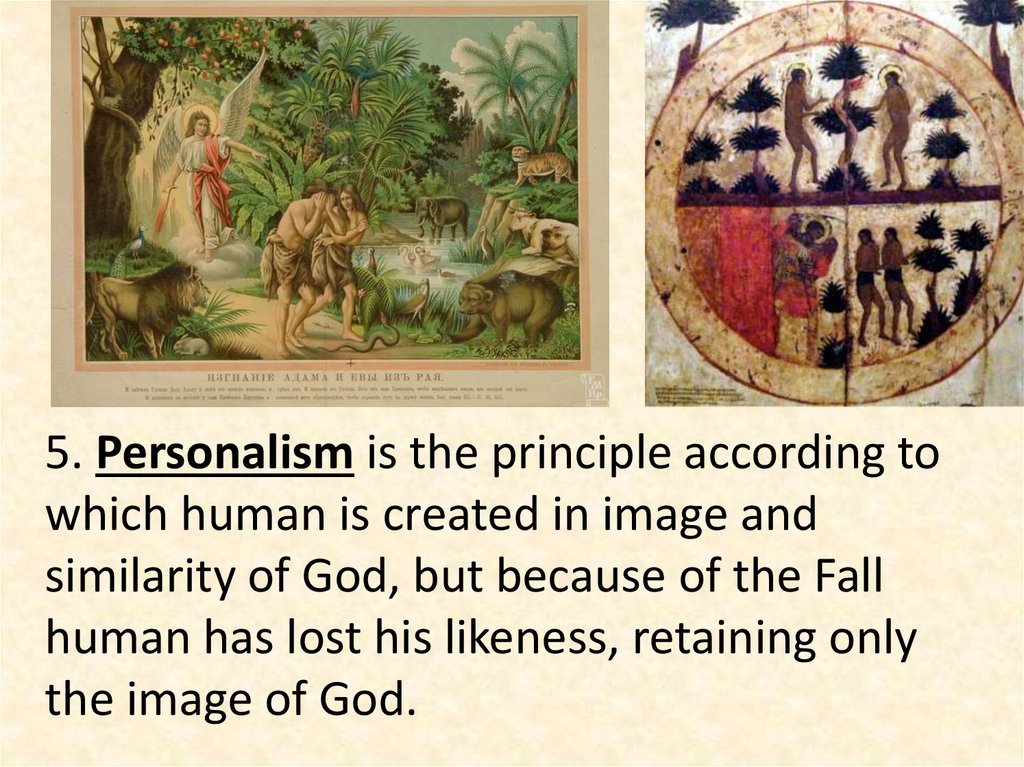
4. Revelationizm is a
principle that there are two
ways of revelation: Holy
Bible and sacred tradition.
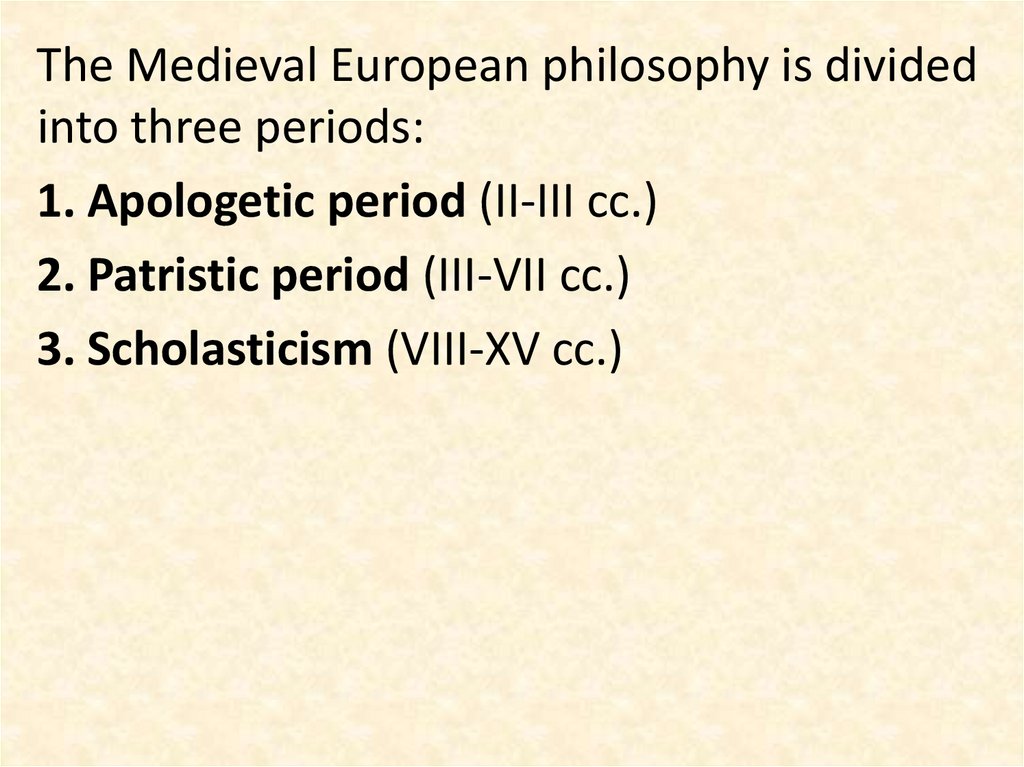
15. 5. Personalism is the principle according to which human is created in image and similarity of God, but because of the Fall
human has lost his likeness, retaining onlythe image of God.
16.
The Medieval European philosophy is dividedinto three periods:
1. Apologetic period (II-III cc.)
2. Patristic period (III-VII cc.)
3. Scholasticism (VIII-XV cc.)
17.
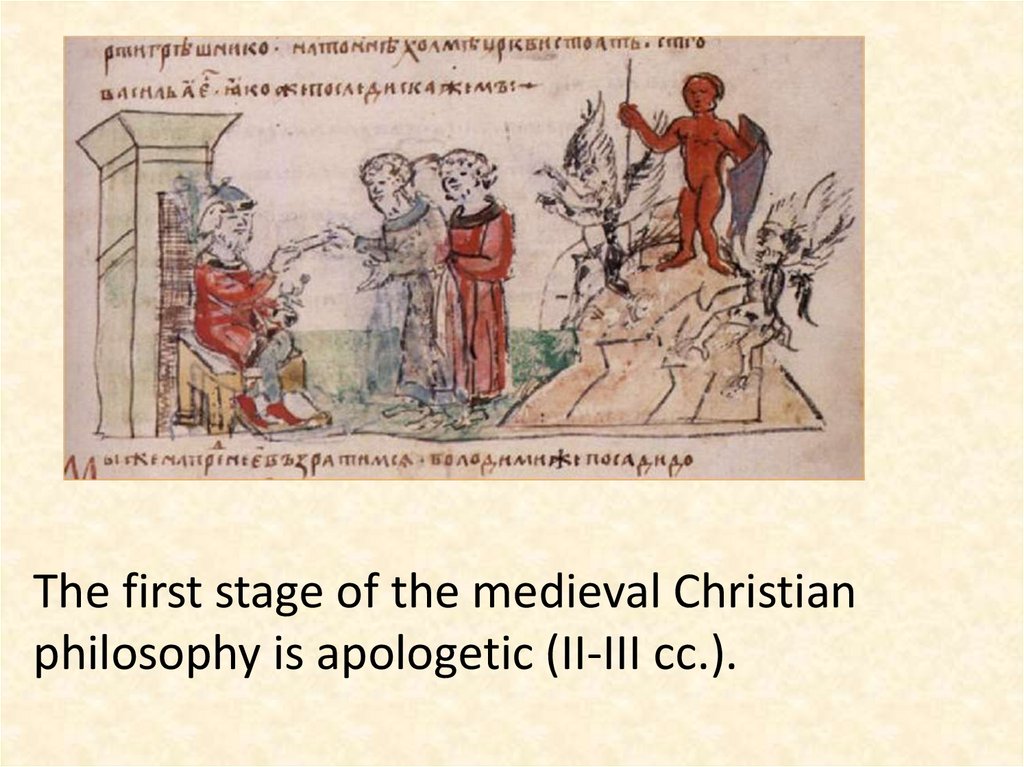
The first stage of the medieval Christianphilosophy is apologetic (II-III cc.).
18.
Apologetic period, coming after the apostles,gives us a number of well-known Christian
writers and thinkers (Justin the Philosopher,
Tatian, Tertullian, and others).
19.
Justin Martyr (100-165 AD)is known for his writings
defending Christianity. He
first gave Christianity the
concepts of Greek
philosophy and laid the
foundation of theological
interpretation of history.
20.
“The First Apology”, Justin’s most wellknown text, passionately defends the
morality of the Christian life.
Further, he also makes the theologicallyinnovative suggestion that the “seeds of
Christianity” (manifestations of the Logos
acting in history) actually predated Christ’s
incarnation. This notion allows him to claim
many historical Greek philosophers (including
Socrates and Plato), in whose works he was
well studied, as unknowing Christians.
21.
Tertullian (160 – 225 AD) was a prolificearly Christian author from Carthage in the
Roman province of Africa. He is the first
Christian author to produce an extensive
corpus of Latin Christian literature.
22.
Tertullian also was a notable earlyChristian apologist and a polemicist against
heresy. Tertullian has been called “the
father of Latin Christianity” and “the
founder of Western theology”.
He first expressed the concept of the
Trinity. “I believe, because it is absurd”
(Credo quia absurdum).
23. Patristics. At the heart of this theology was Alexandrian School (Clement of Alexandria, Origen etc).
24.
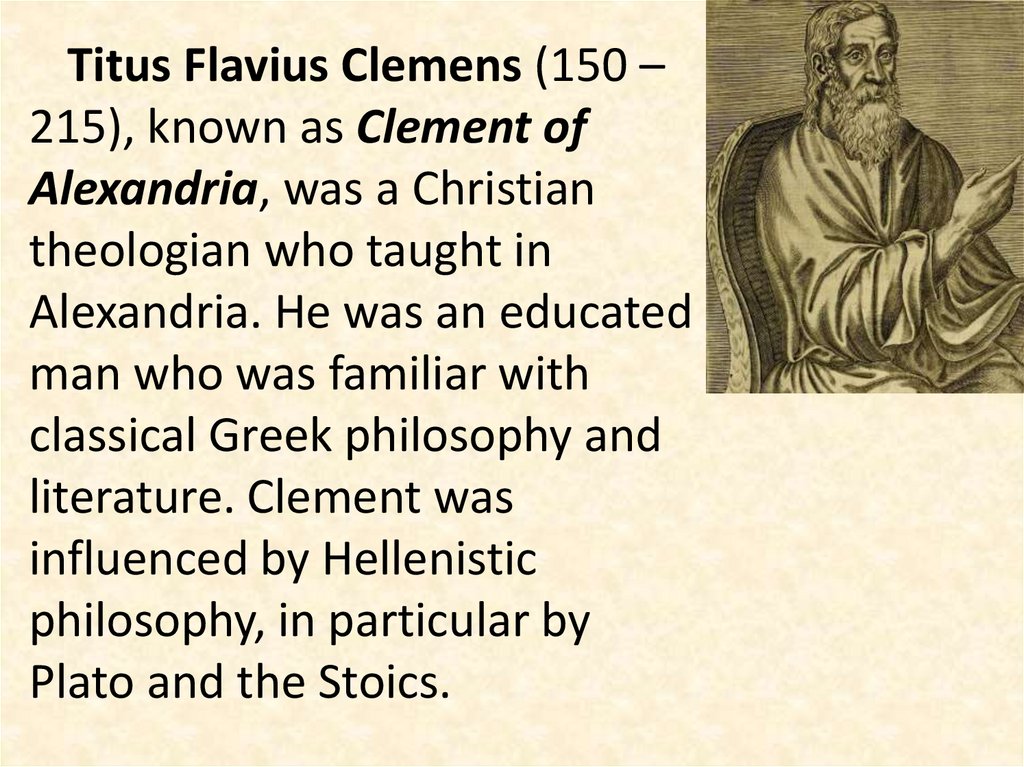
Titus Flavius Clemens (150 –215), known as Clement of
Alexandria, was a Christian
theologian who taught in
Alexandria. He was an educated
man who was familiar with
classical Greek philosophy and
literature. Clement was
influenced by Hellenistic
philosophy, in particular by
Plato and the Stoics.
25.
Three of Clement’s major works havesurvived in full, and they are collectively
referred to as the trilogy:
the Protrepticus (Exhortation) –
проповедь к эллинам
the Paedagogus (Tutor) – учитель
the Stromata (Miscellanies) – сборник
26.
Origenes Adamantius(184/185 – 253/254) was an
early Christian theologian
who was born and spent the
first half of his career in
Alexandria. He was a writer
in multiple branches of
theology, including textual
criticism, hermeneutics,
philosophical theology,
preaching, and spirituality.
27.
Origenes Adamantius was afounder of biblical philology.
Created the term “God-man”.
God is Providence in action. In
his doctrine, apocatastasis
means reconstitution
(воспроизведение) to the
primordial (к изначальному)
condition (universal salvationспасение)
28.
Aurelius Augustinus –Saint Austin (354-430). Writing
during the Patristic Era, he is
viewed as one of the most
important Church Fathers.
Among his most important
works are City of God and
Confessions, which continue to
be read widely today. The
ancestor of the Christian
philosophy of history.
29.
“the City of God” can be divided into twoparts.
Part I (books 1-10) is devoted to a critique of
Roman cultures and of pagan philosophy.
Interpreters often take these first ten books
to correspond with the Earthly City, in
contrast to the City of God.
Part II (books 11-22) is where Augustine shifts
from criticism to positing the relationship
between the City of God and an Earthly City
subordinated to it.
30.
“The Confessions” of St.Augustine outlines Augustine's
sinful youth and his conversion
to Christianity. It is widely seen
as the first Western
autobiography ever written.
God created matter and
endowed (наделить) it with
different shapes.
Evil is the deficiency (недостаток)
of good.
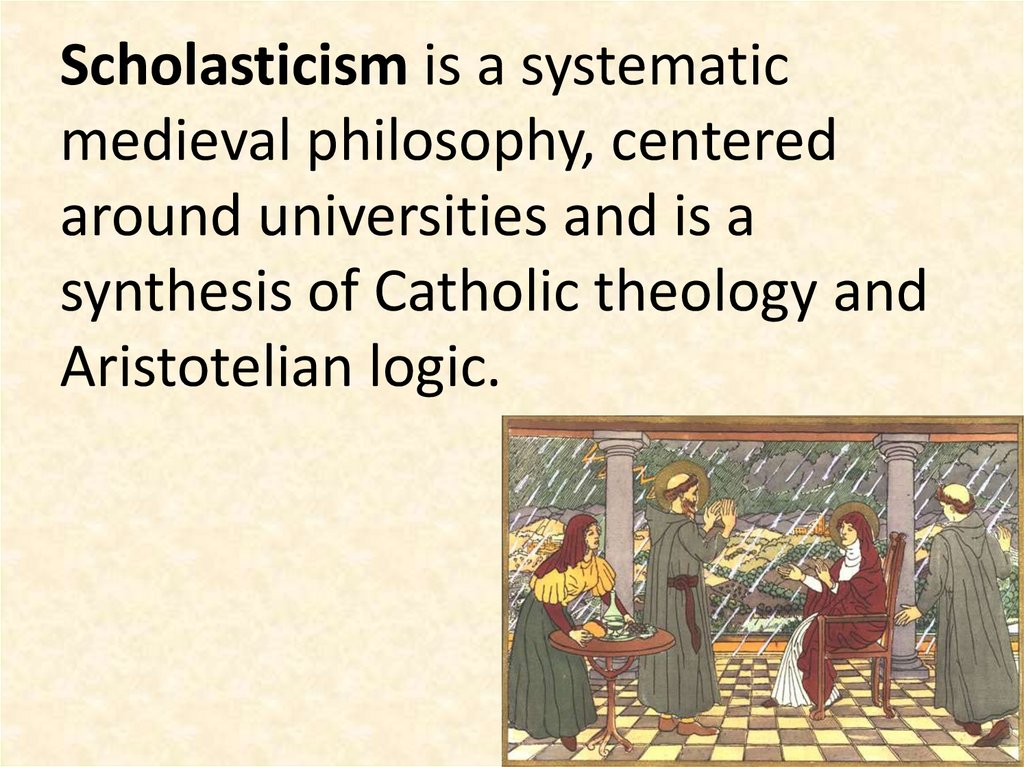
31. Scholasticism is a systematic medieval philosophy, centered around universities and is a synthesis of Catholic theology and
Aristotelian logic.32.
The third period Scholasticism ischaracterized by two trends: the realists
and nominalists.
According to realism only general concepts,
or universals, have true reality (Guillaume
de Champeaux).
According to nominalism, common
concepts are only the names (Johannes
Roscelin, Anselm of Canterbury, William of
Ockham etc.)
33.
Thomas Aquinas (12251274)Doctor Angelicus, Doctor
Universalis
was an Italian Dominican
priest and the most
influential philosopher and
theologian in the tradition
of scholasticism.
34.
Thomas Aquinas linked Christian faith withthe philosophy of Aristotle.
Unlike many currents in the Church of the
time, Thomas attempted to combine
Aristotelian philosophy with the principles of
Christianity.
The works for which he is best known are
the ”Summa Theologica” and the ”Summa
contra Gentiles”. His commentaries on
Aristotle are an important part of his work.
35.
Thomas Aquinasconsidered that Nature
ends in grace, intelligence
ends in faith, philosophical
knowledge and natural
theology end in a
supernatural revelation.
36. Arab-Muslim philosophy
37.
Islam was founded in the early 7th centuryby the prophet Muhammad. Muslims
believe that the Qur’an is God’s ultimate
revelation to mankind.
38.
Early Islamic philosophy or classicalIslamic philosophy is a period of
philosophical development is known as the
Islamic Golden Age, and the achievements
of this period had a crucial influence in the
development of modern philosophy and
science; for Renaissance Europe, the
influence represented “one of the largest
technology transfers in world history.”
39.
This period starts with alKindi in the 9th century andends with Ibn Rushd
(Averroes) at the end of
12th century.
40.
The death of Averroes effectively marks the endof Islamic philosophy usually called the Peripatetic
Arabic School, and philosophical activity declined
in Western Islamic countries, namely in Islamic
Spain and North Africa.
41.
Most significant achievements of early Muslimphilosophers included:
- Hadith studies (the isnad or “backing”) a strict
science of citation. There are 4 form of hadiths:
- Words of Muhammad (ka’ul)
- A word of encouragement, backing from
Muhammad – одобрение (tahrir)
- Image of Muhammad (wasfi)
- Actions of Muhammad (fil’)
Synthesis of these principles gives Sunni Islam.
Sunnah is the way of life on the basis of the teachings and
practices of the prophet Muhammad and interpretations
of the Quran.
42.
Most significant achievements of early Muslimphilosophers included:
- the ijtihad (diligence, старательность) – a method
of open inquiry to disprove (опровержение) claims;
- willingness to both accept and challenge
authority within the same process;
43.
Most significant achievements of early Muslimphilosophers included:
- recognition that science and philosophy are both
subordinate to morality;
- separation of theology (kalam) and law
(shariah);
- distinction between religion and philosophy,
marking the beginning of secular thought;
44.
Most significant achievements of early Muslimphilosophers included:
- peer review process (обзор работы коллегами);
- early ideas on evolution;
- the philosophy of science;
- introduction of modal logic and inductive logic;
45.
Most significant achievements of early Muslimphilosophers included:
- beginning of social philosophy, including the
formulation of theories on social cohesion
(согласие) and social conflict;
- beginning of the philosophy of history;
- philosophical novel and the concepts of
empiricism and tabula rasa;
- distinguishing between essence and existence.
46.
The main question during the development ofIslamic dogma, was the question of monotheism
(Tawhid – Reality of one God Allah). The idea of
monism, the unity of existence and uniqueness of
the universe has become a central theme of
philosophy.
47.
Branches of Arab-Muslimphilosophy:
- Ilm al-Kalām
- Falsafa
- Sufism
48.
Ilm al-Kalām (the study of “speech” or “words”)is the Islamic philosophical discipline of seeking
theological principles knowledge through dialectic,
debate and argument. A scholar of kalam is
referred to as a mutakallim.
49.
Among them there were two basicdirections: Ascharites (followers
Ashari’s theology) and Mu'tazila.
First group developed conceptions
of unity being proposed by
Mutasillits (isolated): religious
rationalists-philosophers.
50.
Ilm al-KalāmWith Kalam, questions about the al-Sira
(biography of Muhammad) and Hadith, as well as
science (Islamic science) and law (shariah), this
period is characterized by emergence of ijtihad
and the first fiqh (Islamic jurisprudence).
51.
Ilm al-KalāmIndependent minds exploiting the methods of
ijtihad sought to investigate the doctrines of the
Qur’an, the authority of divine revelation.
One of first debates was that between:
- the Qadarites (qadara, to have power), who
affirmed free will;
- the Jabarites (jabar, constraint – ограничение
свободы), who maintained the belief in fatalism.
52.
Ilm al-KalāmOne of the Qadarites branches were Mu’tazilites
(Mu’tazila – to separate oneself,). This new
movement arose in Basra, Iraq. The founder was
Wasil ibn Ata (AD 700–748).
Their principal dogmas were three:
- God is an absolute unity, and no attribute can be
ascribed to Him.
- Man is a free agent, “Partisans of Justice and
Unity”.
53.
Ilm al-Kalām- All knowledge necessary for the salvation of
man that emanates from his reason; humans
could acquire knowledge before, as well as after,
Revelation, by the sole light of reason. This fact
makes knowledge obligatory upon all men, at all
times, and in all places.
54.
FalsafaFrom the 9th century, owing to
Caliph al-Ma’mun, Greek
philosophy was introduced among
the Arabs, and the Peripatetic
school began to find able
representatives such as Al-Kindi,
Al-Farabi, Ibn Sina (Avicenna), and
Ibn Rushd (Averroes). All of
whose fundamental principles
were considered as criticized by
the Mutakallamin.
55.
FalsafaAnother trend, represented by the Brethren of
Purity (Ikhwan al-Safa), used Aristotelian language
to expound a fundamentally Neoplatonic world
view (emanation).
56.
57.
Al-Kindi (801-873),(philosopher of Arabs) has
formulated the main
questions:
the rational-allegorical
interpretation of the “sacred
texts”
identification of God with
the primordial cause
58.
the interpretation ofcreation as granting the
existence of things with a
kind of causal relationships
a process of emanation
(the origin of the Universe
through emergence beyond
first principles);
59. Abu Nasr al-Farabi (873-950)
Philosophy and religion ariseafter people mastered the
“practical arts” and seek to
understand the causes of
surrounding things.
60.
People are attached to the truths by twoways: by using apodictic judgments and
through the dialectical, rhetorical or
poetic expressions.
61.
The need for religion related tothe needs in Political Science
and Law. Ideally, people should
managed by philosophers, who
give the truth to “the public”
through “true religion” in images
and allegorical discourses.
(“Treatise on the views of the
virtuous city residents”/ “The
Principles of the Opinions of the
People of the Excellent City”)
62.
Ibn Sina (Avicenna) (9801037) was a Central Asianphilosopher and physician, a
representative of the
eastern Aristotelianism.
63.
His most famous works areThe Book of Healing, a vast
philosophical and scientific
encyclopedia, and The
Canon of Medicine, which
was a standard medical text
at many medieval
universities
64.
Ibn Sina proved co-eternity of the worldwith the Creator. Creation in eternity Ibn Sina
explained by Neoplatonic concept of
emanation, thus justifying the logical
progression from the initial substance to the
plurality of the created world.
According to him, absolute truth can be
comprehended by intuitive vision which
presents the culmination of the thinking
process.
65. Ibn Bājjah (Avempace) (1070-1138) is the first major representative of the eastern peripatetism in Muslim Spain.
In his “Farewell(прощальный) message” Ibn
Bājjah considers the
questions of first ‘engine, a
human goal, connection of
person with an active mind.
66. Ibn Rushd (Averroes) (1126-1198) – Western-Arab philosopher.
67.
• Developed the doctrine ofdual truth.
• The first substance is
identical to world order
• Genesis of things based
on their unity,
relationships.
68.
Ibn Khaldun(1332-1406).
He almost did not
interested in classical
problems of cosmology
and philosophy. His areas
of interest was history.
69.
He has created a theory of social developmentfrom the lowest level (barbarism) to the
highest (civilization), through the development
of productive activities of people, explaining
the development of social life through the
development of production.
70. A mystical form of Islam expressed in such a direction as Sufism. Fundamentals of Sufism incorporated in the 9th century by
Egyptianal-Misri and a resident of Baghdad alMuhasibi.
71.
However, Sufism has beendeveloped in the esoteric
concepts of al-Hallaj (I am
truth) and al-Ghazali
(Sufism is the essence of
Islam.)
72.
Sufi philosophy, like all othermajor philosophical
traditions, has several subbranches including
metaphysics and cosmology
as well as several unique
concepts.
73.
Major idea in Sufi metaphysics is Wahdat or “Unitywith God”.
Two main Sufi philosophies prevail on this
controversial topic:
- Wahdat-ul-Wujood (Unity of Being) – all things
exist within God only;
- Wahdat-ul-Shuhud (Unity of Witness) – there is
no difference between God and human being,
“One Except God”.