 Экономика
Похожие презентации:







Marketing ecotourism product
1. Marketing Ecotourism Product
Marketing VS SellingDeveloping a Marketing Plan
Marketing Budgets
Forecasting sales
Monitoring and Evaluating Marketing Activities
2. Marketing VS Selling
Once you have developed an ecotourismproduct, you are faced with the reality of
selling it. While you may have a ecotour
product with lots of nature encounters and
great customer service, you cannot sit back
and wait for customers to arrive.
A good marketing plan will get your product
in front of customers and convince them to
book a trip.
First, you need to distinguish between
selling and marketing.
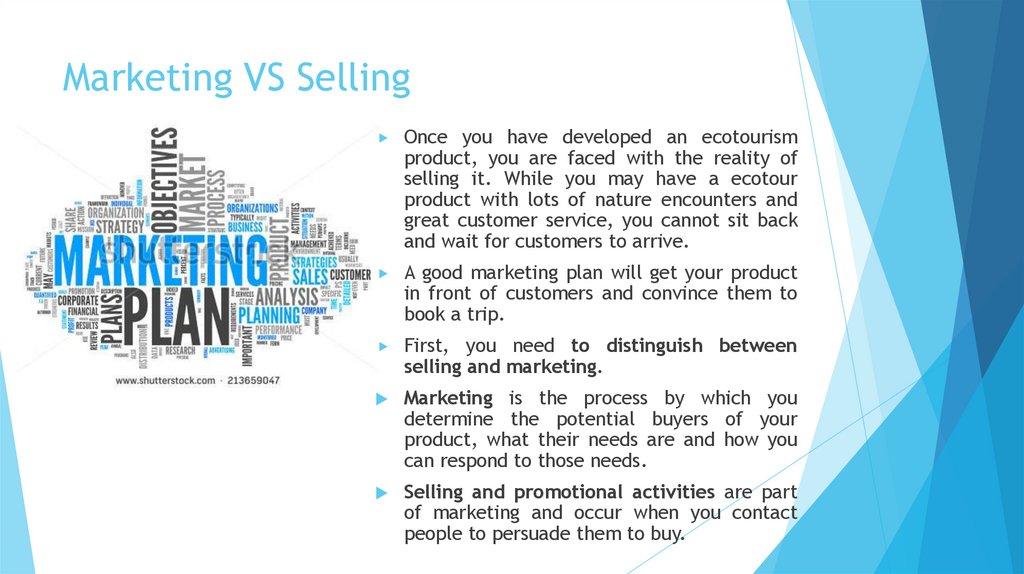
Marketing is the process by which you
determine the potential buyers of your
product, what their needs are and how you
can respond to those needs.
Selling and promotional activities are part
of marketing and occur when you contact
people to persuade them to buy.
3. Developing Marketing Plan
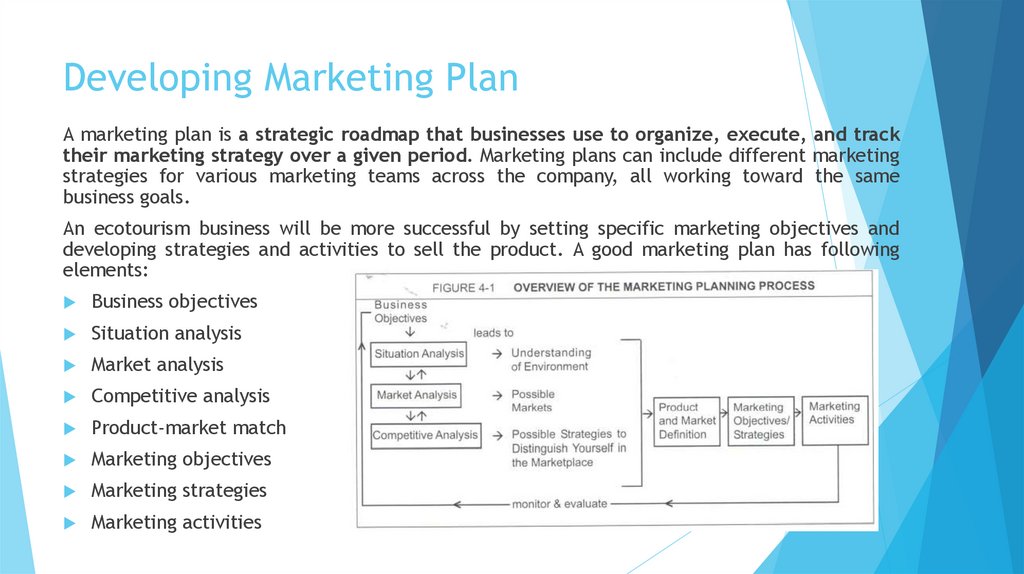
A marketing plan is a strategic roadmap that businesses use to organize, execute, and tracktheir marketing strategy over a given period. Marketing plans can include different marketing
strategies for various marketing teams across the company, all working toward the same
business goals.
An ecotourism business will be more successful by setting specific marketing objectives and
developing strategies and activities to sell the product. A good marketing plan has following
elements:
Business objectives
Situation analysis
Market analysis
Competitive analysis
Product-market match
Marketing objectives
Marketing strategies
Marketing activities
4.
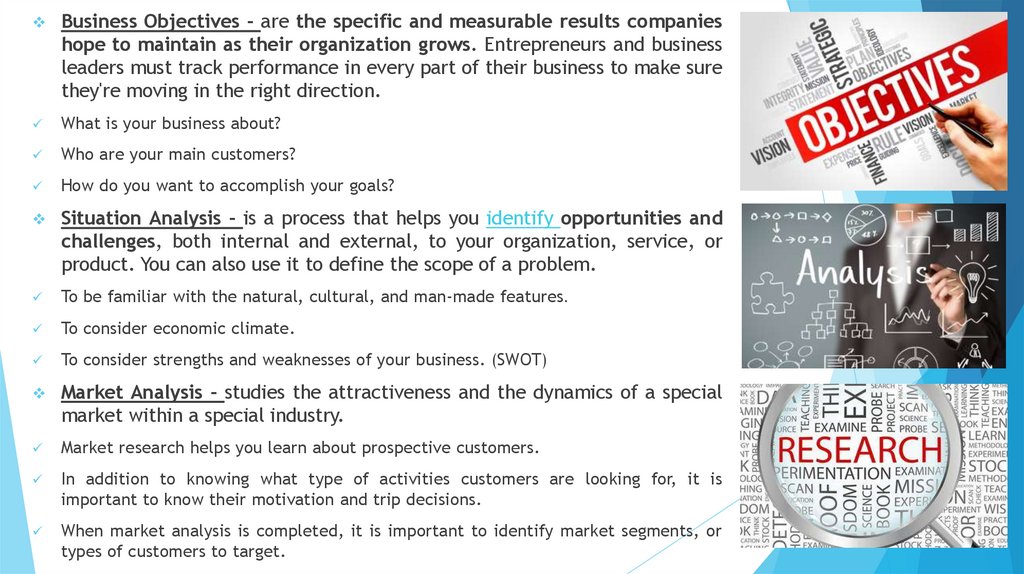
Business Objectives - are the specific and measurable results companieshope to maintain as their organization grows. Entrepreneurs and business
leaders must track performance in every part of their business to make sure
they're moving in the right direction.
What is your business about?
Who are your main customers?
How do you want to accomplish your goals?
Situation Analysis - is a process that helps you identify opportunities and
challenges, both internal and external, to your organization, service, or
product. You can also use it to define the scope of a problem.
To be familiar with the natural, cultural, and man-made features.
To consider economic climate.
To consider strengths and weaknesses of your business. (SWOT)
Market Analysis - studies the attractiveness and the dynamics of a special
market within a special industry.
Market research helps you learn about prospective customers.
In addition to knowing what type of activities customers are looking for, it is
important to know their motivation and trip decisions.
When market analysis is completed, it is important to identify market segments, or
types of customers to target.
5.
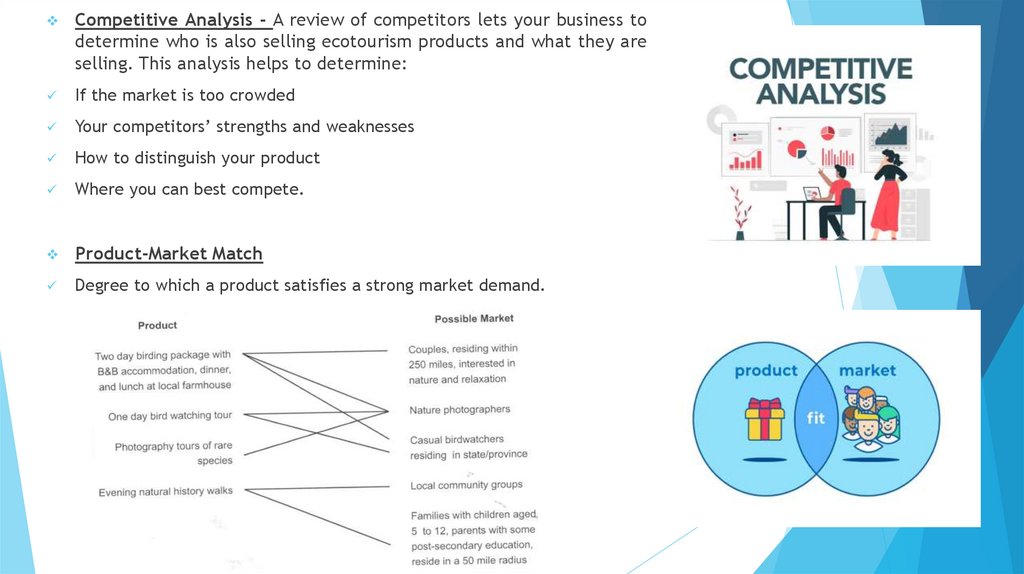
Competitive Analysis - A review of competitors lets your business todetermine who is also selling ecotourism products and what they are
selling. This analysis helps to determine:
If the market is too crowded
Your competitors’ strengths and weaknesses
How to distinguish your product
Where you can best compete.
Product-Market Match
Degree to which a product satisfies a strong market demand.
6.
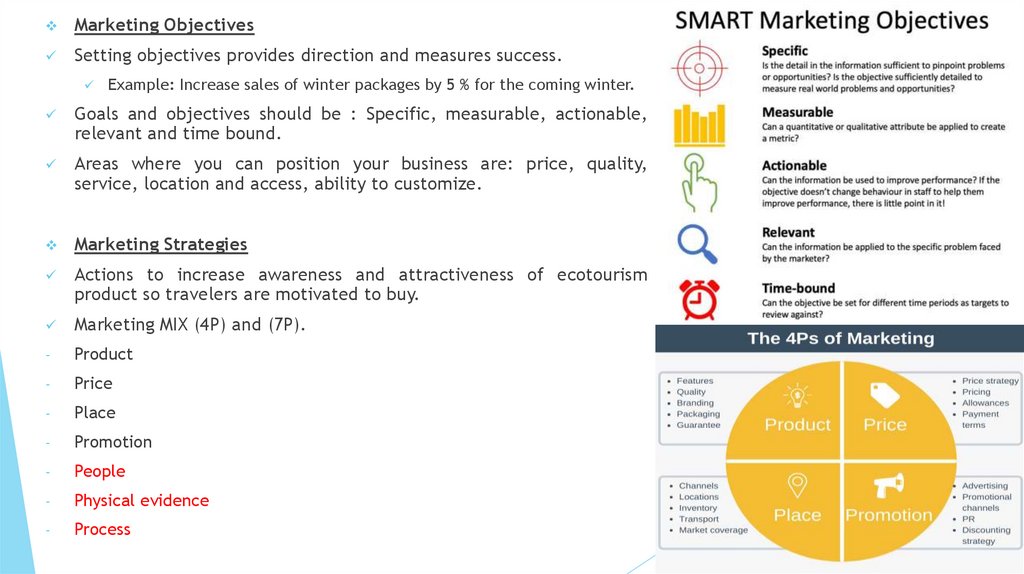
Marketing ObjectivesSetting objectives provides direction and measures success.
Example: Increase sales of winter packages by 5 % for the coming winter.
Goals and objectives should be : Specific, measurable, actionable,
relevant and time bound.
Areas where you can position your business are: price, quality,
service, location and access, ability to customize.
Marketing Strategies
Actions to increase awareness and attractiveness of ecotourism
product so travelers are motivated to buy.
Marketing MIX (4P) and (7P).
-
Product
-
Price
-
Place
-
Promotion
-
People
-
Physical evidence
-
Process
7.
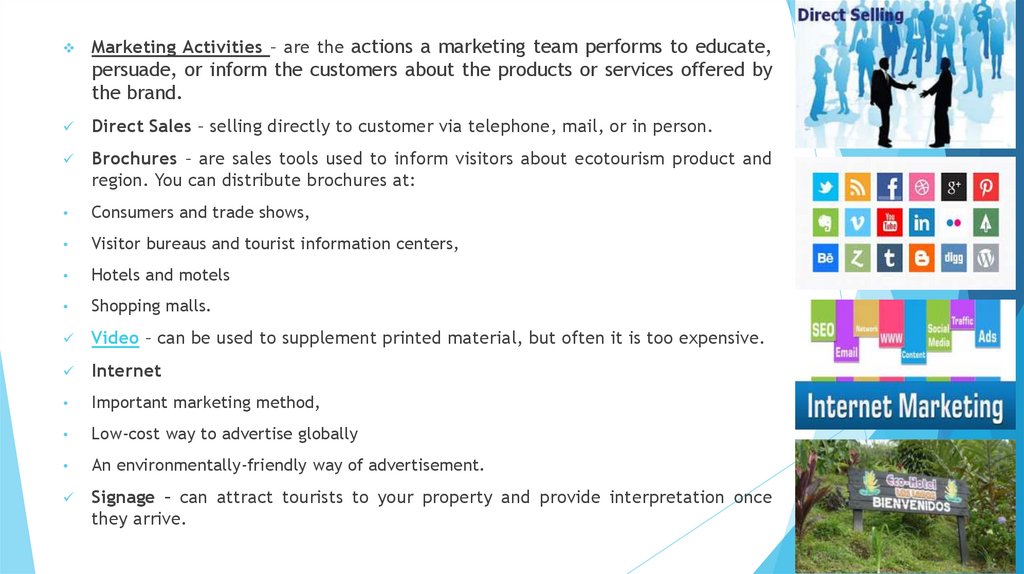
Marketing Activities – are the actions a marketing team performs to educate,persuade, or inform the customers about the products or services offered by
the brand.
Direct Sales – selling directly to customer via telephone, mail, or in person.
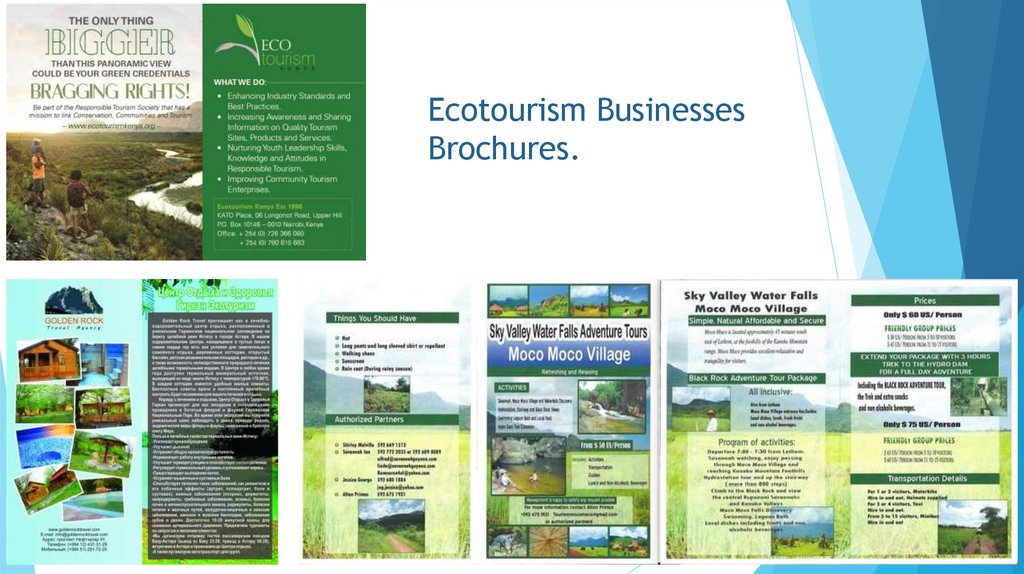
Brochures – are sales tools used to inform visitors about ecotourism product and
region. You can distribute brochures at:
Consumers and trade shows,
Visitor bureaus and tourist information centers,
Hotels and motels
Shopping malls.
Video – can be used to supplement printed material, but often it is too expensive.
Internet
Important marketing method,
Low-cost way to advertise globally
An environmentally-friendly way of advertisement.
Signage – can attract tourists to your property and provide interpretation once
they arrive.
8.
Ecotourism BusinessesBrochures.
9.
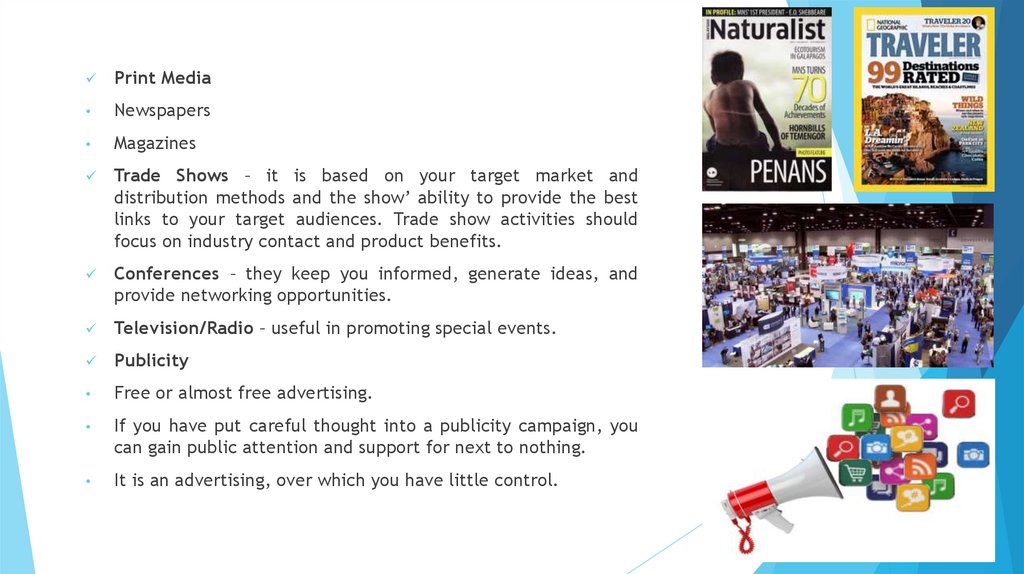
Print MediaNewspapers
Magazines
Trade Shows – it is based on your target market and
distribution methods and the show’ ability to provide the best
links to your target audiences. Trade show activities should
focus on industry contact and product benefits.
Conferences – they keep you informed, generate ideas, and
provide networking opportunities.
Television/Radio – useful in promoting special events.
Publicity
Free or almost free advertising.
If you have put careful thought into a publicity campaign, you
can gain public attention and support for next to nothing.
It is an advertising, over which you have little control.
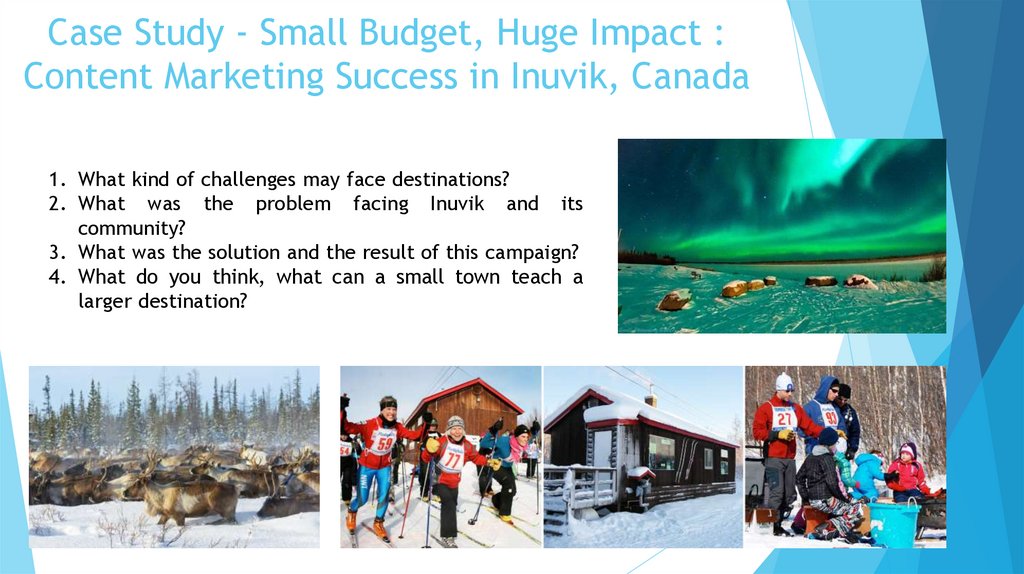
10. Case Study - Small Budget, Huge Impact : Content Marketing Success in Inuvik, Canada
1. What kind of challenges may face destinations?2. What was the problem facing Inuvik and its
community?
3. What was the solution and the result of this campaign?
4. What do you think, what can a small town teach a
larger destination?
11. Marketing Budgets
After you develop marketing plan, you need to account for the cost of these activities in either your startup or operating budget for the upcoming year.
Look at the various market segments identified and the activities selected to each.
Activities for the current year and future years if appropriate, should have costs estimated in some detail.
Consider marketing partnerships where your business join with other businesses to promote your
destination.
Carefully evaluate past marketing efforts and put your money into those activities that generated the
highest yield.
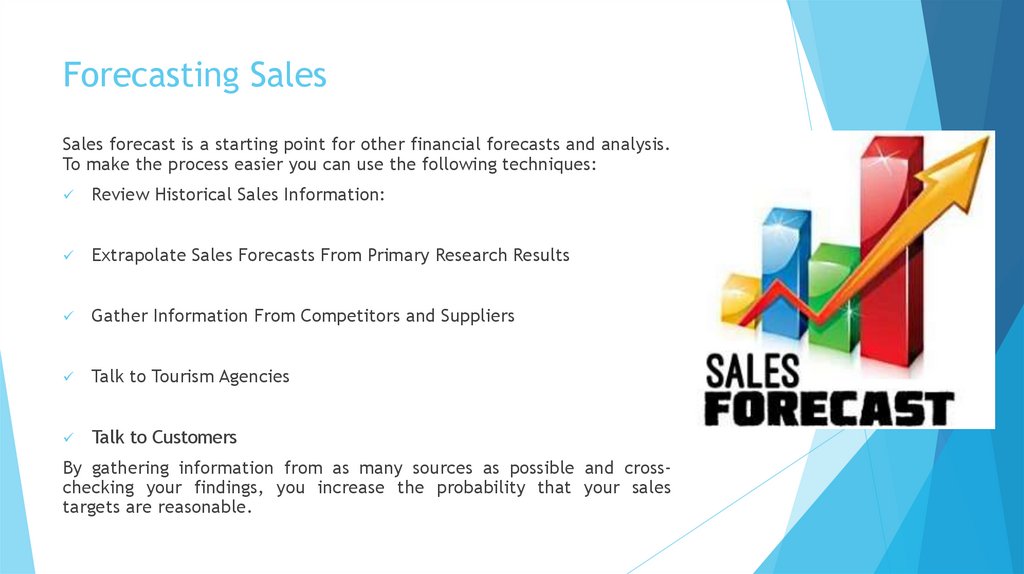
12. Forecasting Sales
Sales forecast is a starting point for other financial forecasts and analysis.To make the process easier you can use the following techniques:
Review Historical Sales Information:
Extrapolate Sales Forecasts From Primary Research Results
Gather Information From Competitors and Suppliers
Talk to Tourism Agencies
Talk to Customers
By gathering information from as many sources as possible and crosschecking your findings, you increase the probability that your sales
targets are reasonable.
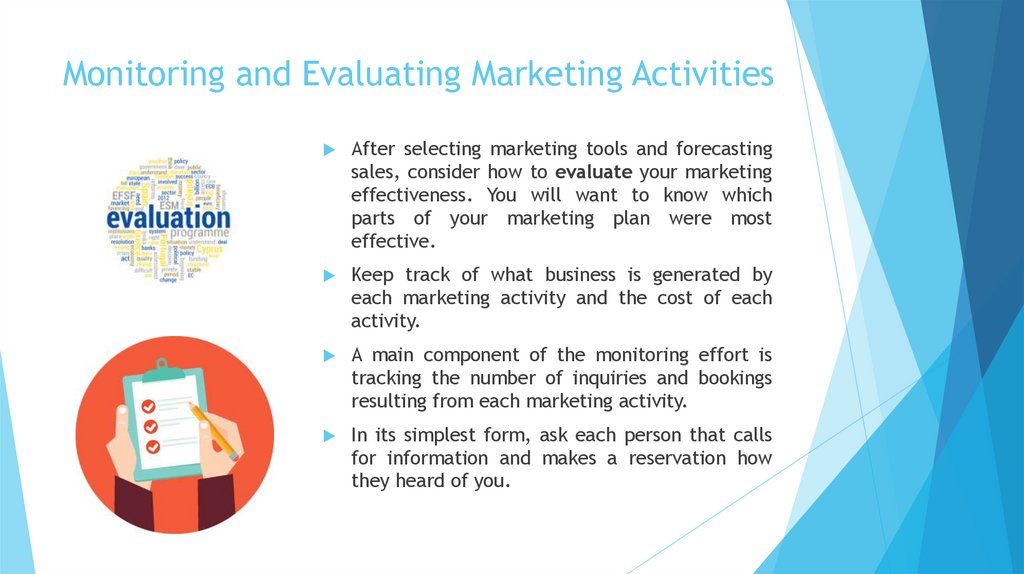
13. Monitoring and Evaluating Marketing Activities
After selecting marketing tools and forecastingsales, consider how to evaluate your marketing
effectiveness. You will want to know which
parts of your marketing plan were most
effective.
Keep track of what business is generated by
each marketing activity and the cost of each
activity.
A main component of the monitoring effort is
tracking the number of inquiries and bookings
resulting from each marketing activity.
In its simplest form, ask each person that calls
for information and makes a reservation how
they heard of you.
14. Key Points
Active marketing is required to sell your ecotourism product.Develop a marketing plan that looks at the product you offer, its pricing, the possible
use of sales intermediaries, and the promotional activities you will use.
Research potential customers. Group those with similar characteristics into market
segments.
Ecotourists generally prefer a variety of activities and access to remote and unique
locations. Incorporating these into your product development and marketing will
increase sales.
Select marketing activities within the context of a well organized marketing plan.
Use a well planned public relations program to get as much free publicity as possible.
Marketing forecasts should be realistic and achievable. Early years often show low
sales numbers as customer interest and loyalty develop.
Evaluate marketing activities regularly to ensure money and efforts are well spent.
15.
10.11.2025 –Presentation (Format PPT) – 5 PointsDeveloping Marketing Plan for the Ecotourism Product
Identify:
Business objectives – (What is your business about? How do you want to accomplish your
goals?)
Situation analysis – (SWOT analysis of your business)
Market analysis – (Who are your customers? What are their needs? Which market segment
do you have?)
Competitive analysis – (Who are your competitors? How you can distinguish your product?)
Product-market match – (Does your product satisfies market’s demand?)
Marketing objectives – (Goals and objectives should be : SMART)
Marketing strategies – (Marketing MIX (4P) or (7P))
Marketing activities – (Which marketing activities will you use to make popular your
product?)