
 Промышленность
Похожие презентации:







Engineering Materials and Their Properties
1. Engineering Materials and Their Properties
Explore key material classes and their essential engineeringproperties shaping design.
2. Background and Context of Engineering Materials
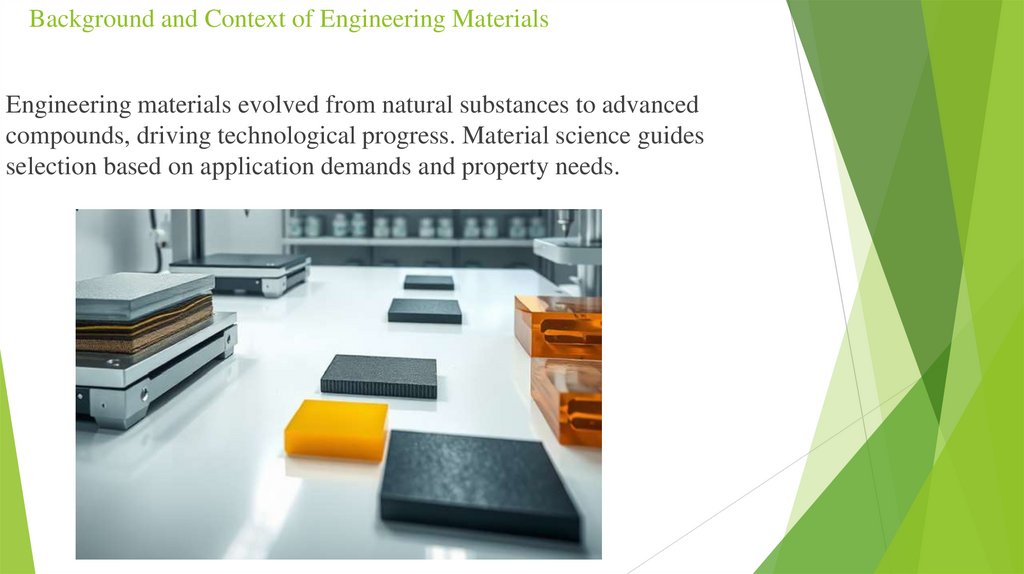
Engineering materials evolved from natural substances to advancedcompounds, driving technological progress. Material science guides
selection based on application demands and property needs.
3. Classification of Engineering Materials
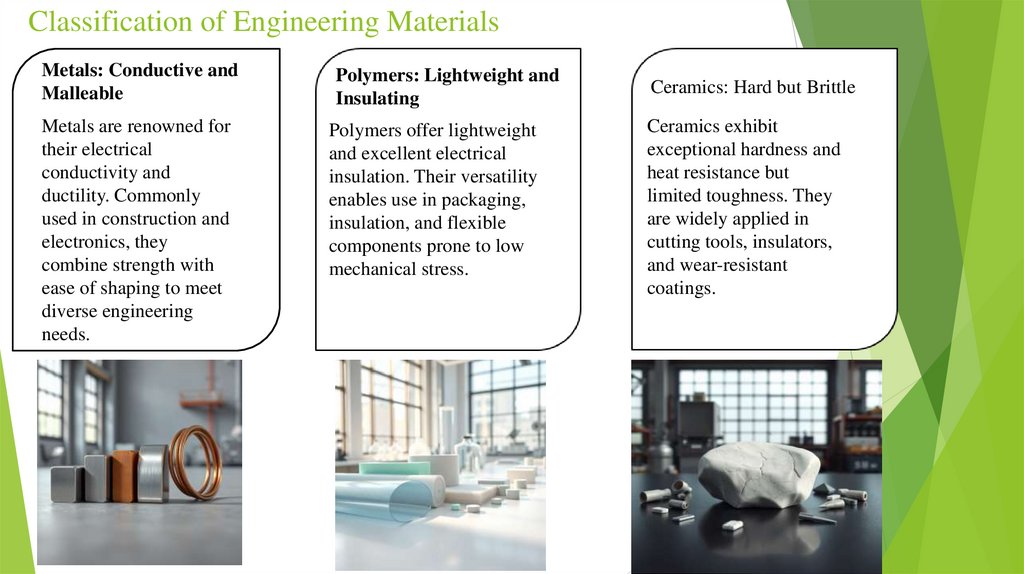
Metals: Conductive andMalleable
Polymers: Lightweight and
Insulating
Ceramics: Hard but Brittle
Metals are renowned for
their electrical
conductivity and
Metals: Conductive
ductility.
Commonly and
Malleable and
used in construction
electronics, they
combine strength with
ease of shaping to meet
diverse engineering
needs.
Polymers offer lightweight
and excellent electrical
insulation. Their versatility
enables use in packaging,
insulation, and flexible
components prone to low
mechanical stress.
Ceramics exhibit
exceptional hardness and
heat resistance but
limited toughness. They
are widely applied in
cutting tools, insulators,
and wear-resistant
coatings.
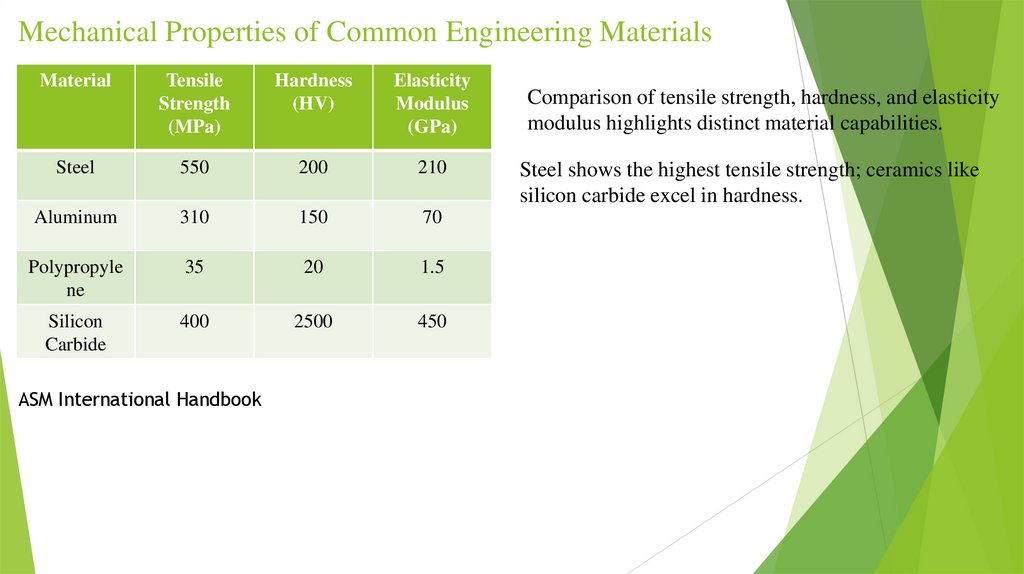
4. Mechanical Properties of Common Engineering Materials
MaterialTensile
Strength
(MPa)
Hardness
(HV)
Elasticity
Modulus
(GPa)
Steel
550
200
210
Aluminum
310
150
70
Polypropyle
ne
35
20
1.5
Silicon
Carbide
400
2500
450
ASM International Handbook
Comparison of tensile strength, hardness, and elasticity
modulus highlights distinct material capabilities.
Steel shows the highest tensile strength; ceramics like
silicon carbide excel in hardness.
5. Thermal Conductivity Comparison
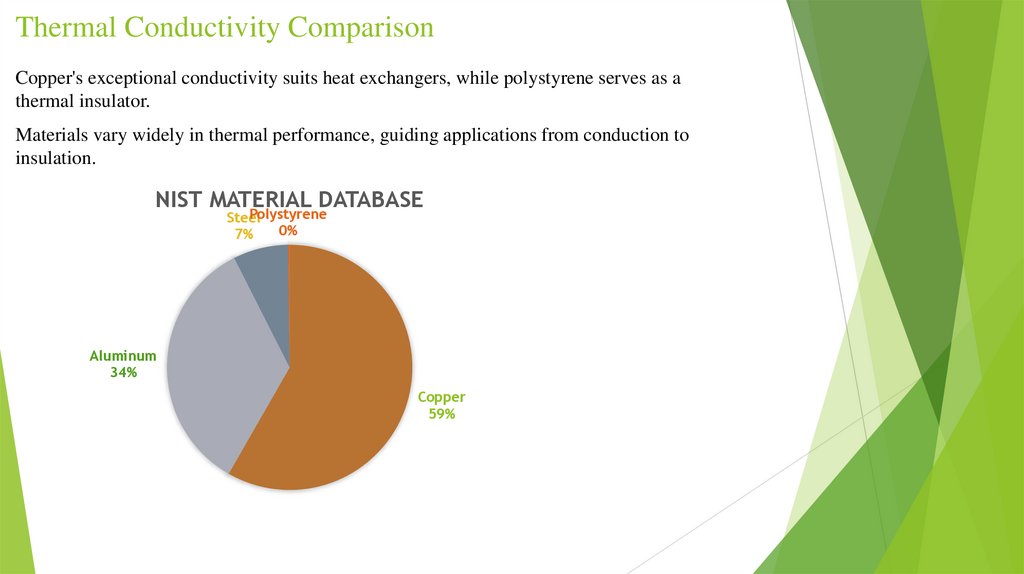
Copper's exceptional conductivity suits heat exchangers, while polystyrene serves as athermal insulator.
Materials vary widely in thermal performance, guiding applications from conduction to
insulation.
NIST MATERIAL
DATABASE
Polystyrene
Steel
7%
0%
Aluminum
34%
Copper
59%
6. Corrosion Resistance and Durability
Corrosion primarily affectsmetals like iron and aluminum
alloys through oxidation,
leading to structural weakening
over time in harsh
environments.
Polymers and ceramics provide
inherent resistance to
environmental degradation,
maintaining integrity without
extensive protective
treatments.
Coatings and surface treatments
enhance metal durability, extending
lifespan in infrastructure by mitigating
corrosion effects effectively.
7. Electrical Properties and Applications
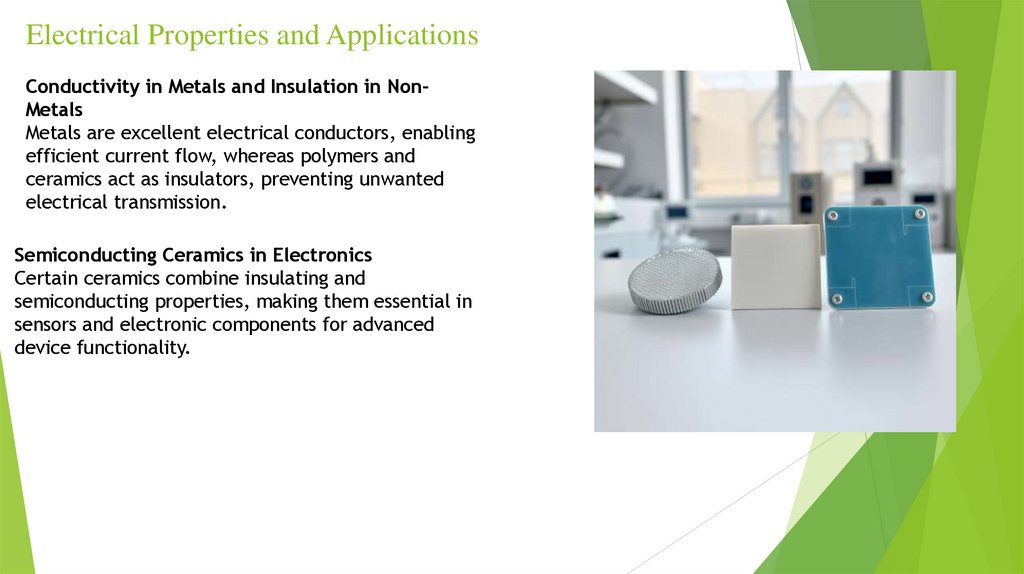
Conductivity in Metals and Insulation in NonMetalsMetals are excellent electrical conductors, enabling
efficient current flow, whereas polymers and
ceramics act as insulators, preventing unwanted
electrical transmission.
Semiconducting Ceramics in Electronics
Certain ceramics combine insulating and
semiconducting properties, making them essential in
sensors and electronic components for advanced
device functionality.
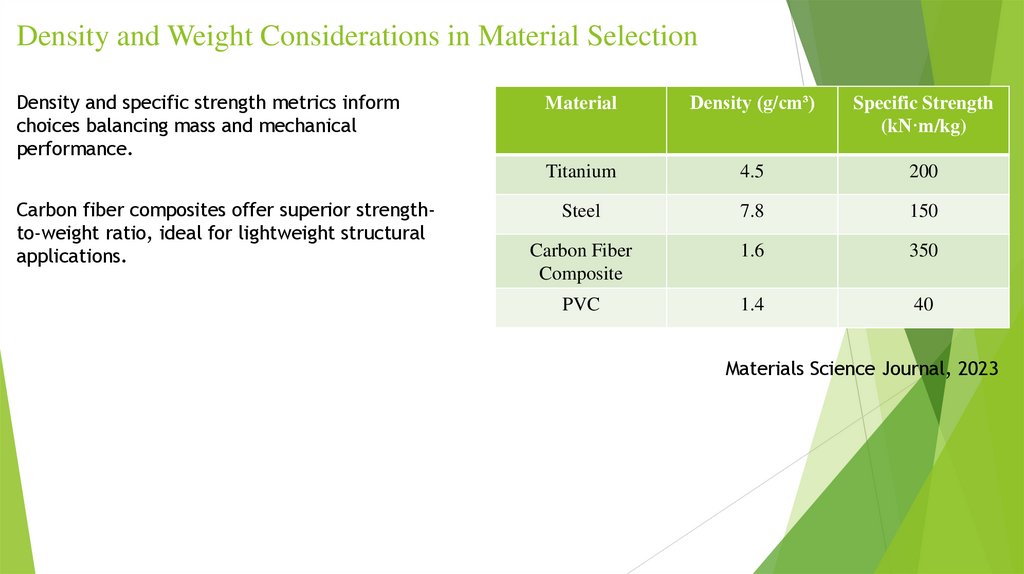
8. Density and Weight Considerations in Material Selection
Density and specific strength metrics informchoices balancing mass and mechanical
performance.
Carbon fiber composites offer superior strengthto-weight ratio, ideal for lightweight structural
applications.
Material
Density (g/cm³)
Specific Strength
(kN·m/kg)
Titanium
4.5
200
Steel
7.8
150
Carbon Fiber
Composite
1.6
350
PVC
1.4
40
Materials Science Journal, 2023
9. Stress-Strain Curves for Representative Materials
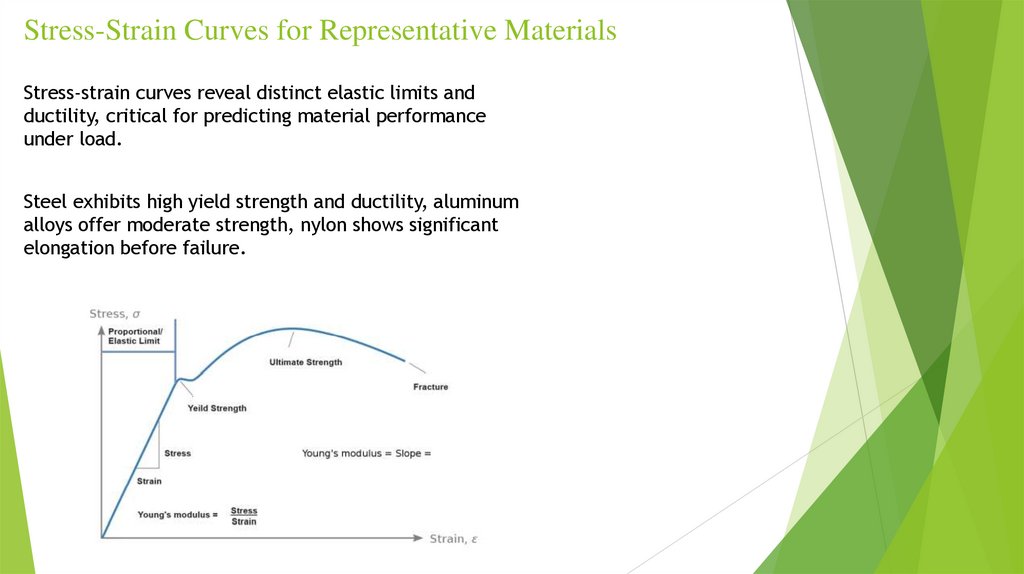
Stress-strain curves reveal distinct elastic limits andductility, critical for predicting material performance
under load.
Steel exhibits high yield strength and ductility, aluminum
alloys offer moderate strength, nylon shows significant
elongation before failure.
10. Material Properties for Optimal Engineering Design
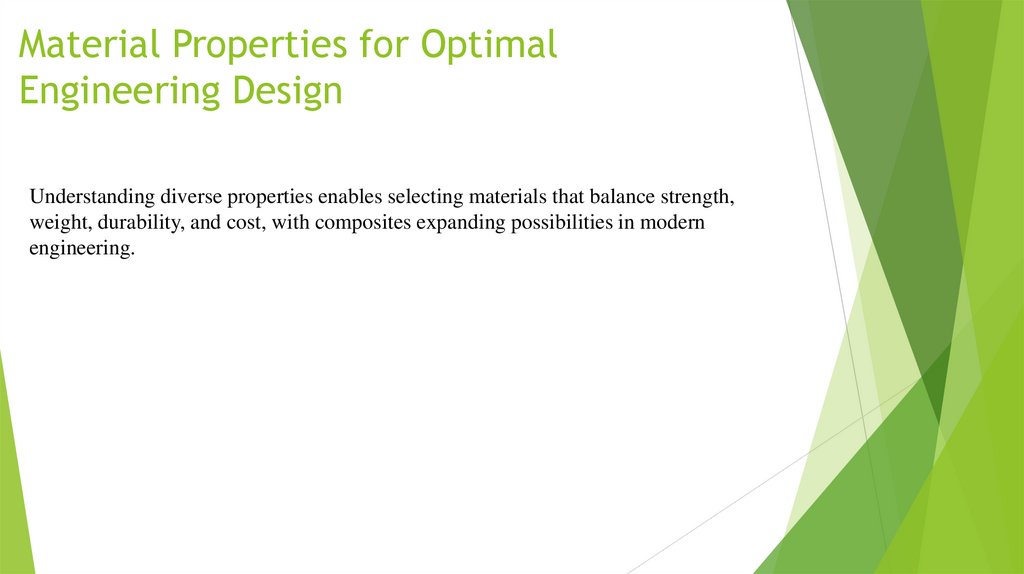
Understanding diverse properties enables selecting materials that balance strength,weight, durability, and cost, with composites expanding possibilities in modern
engineering.