Похожие презентации:


prez
1.
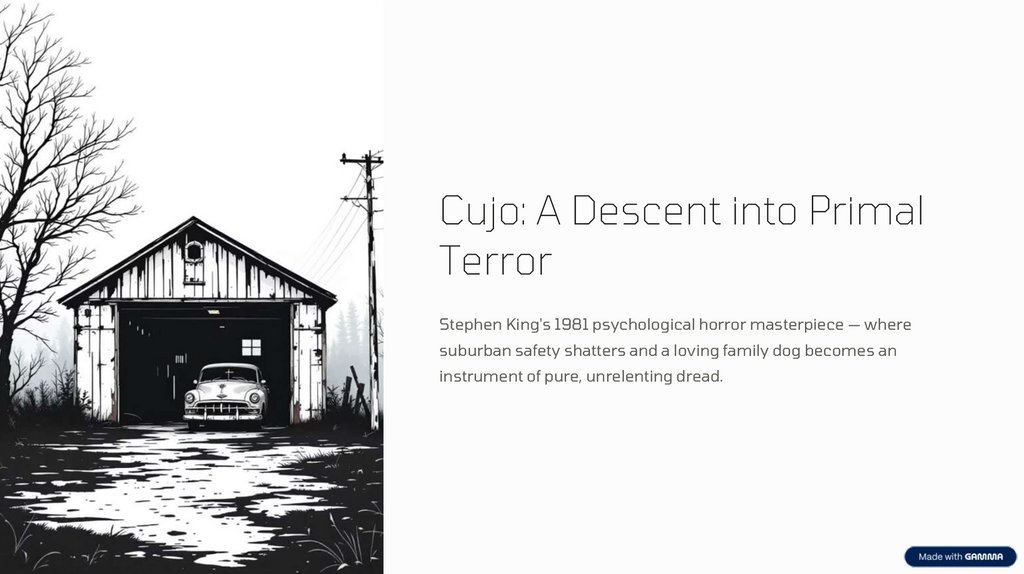
Cujo: A Descent into PrimalTerror
Stephen King's 1981 psychological horror masterpiece — where
suburban safety shatters and a loving family dog becomes an
instrument of pure, unrelenting dread.
2.
The Author Behind the HorrorStephen King
The Name's Dark Origin
American master of horror, supernatural fiction, and psychological
"Cujo" comes from the alias of a real-
thrillers. Published Cujo in 1981 through Viking Press during a turbulent
life criminal linked to Patty Hearst's
period of personal darkness.
kidnapping — an ironic, disturbing
King later revealed he "barely remembers writing" the novel —
foundation for a story about violence
composed during the depths of alcohol addiction. This context adds
haunting weight: was Cujo written by a man losing control, mirroring his
characters' descent?
The novel won the British Fantasy Award in 1982, cementing its place in
horror literature.
erupting from innocence.
3.
From Beloved Pet to Nightmare01
02
Innocence
The Bite
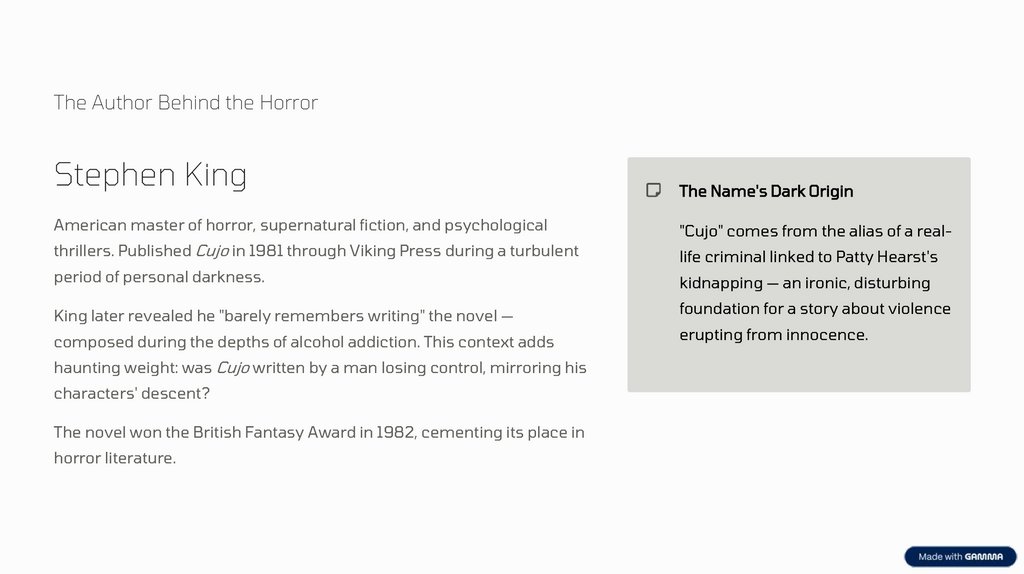
Cujo, a gentle Saint Bernard, lives with the Camber family in Castle Rock,
Chasing a rabbit, Cujo's head becomes stuck in a cave entrance. A bat bites
Maine — beloved, trusted, a symbol of safety and loyalty.
his nose, infecting him with rabies. He was never vaccinated.
03
04
Transformation
Bloodshed
Over days, Cujo deteriorates — lethargic, irritable, paranoid. The disease
Joe Camber and neighbour Gary Pervier fall victim to the rabid dog. What
ravages his mind and body, turning gentleness into savage violence.
was once a protector becomes a relentless killer.
4.
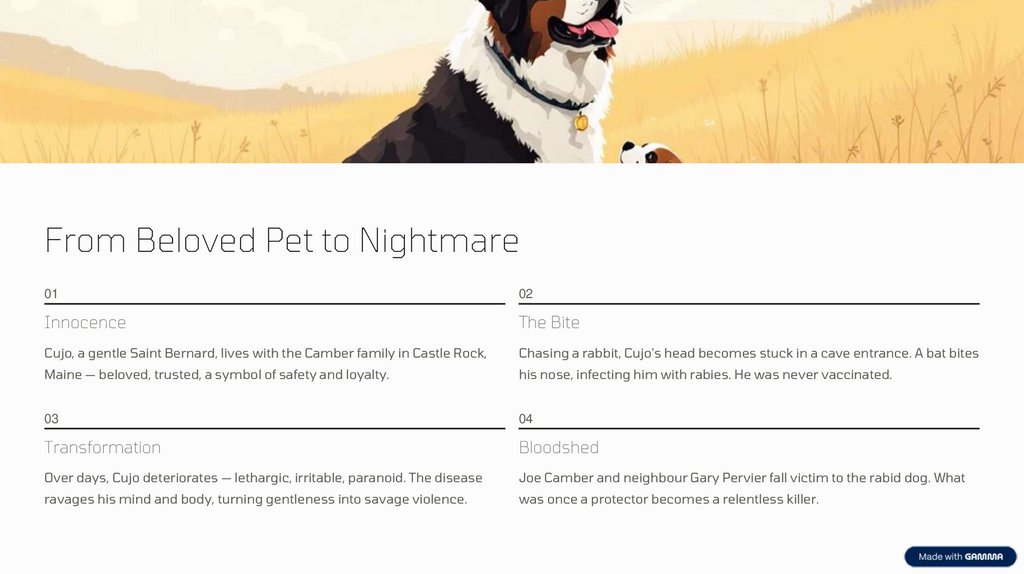
The Trentons: A Family Already FracturingDomestic Troubles
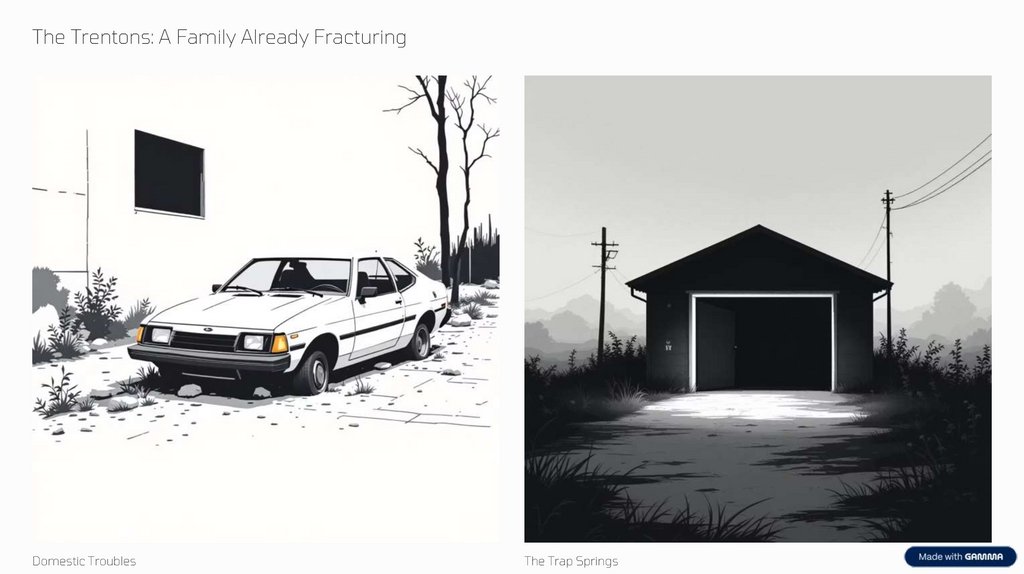
The Trap Springs
5.
Trapped. Hunted.Desperate.
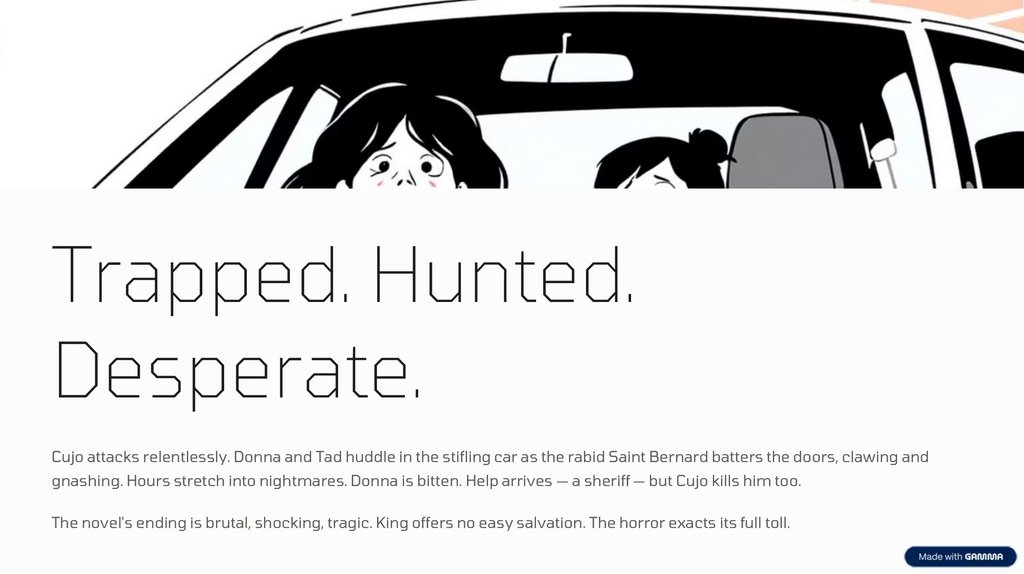
Cujo attacks relentlessly. Donna and Tad huddle in the stifling car as the rabid Saint Bernard batters the doors, clawing and
gnashing. Hours stretch into nightmares. Donna is bitten. Help arrives — a sheriff — but Cujo kills him too.
The novel's ending is brutal, shocking, tragic. King offers no easy salvation. The horror exacts its full toll.
6.
Horror Rooted in Terrifying RealityNo Supernatural Escape
Innocence Corrupted
Domestic Horror
The monster isn't a ghost or
Cujo begins as a loving, protective
Beyond the dog, human
demon — it's rabies. A disease.
family dog. One random bat bite —
dysfunction festers: infidelity,
Something that could actually
one neglected vaccination —
neglect, emotional distance. The
happen. That plausibility makes the
transforms innocence into
horror isn't just external — it's
terror visceral and inescapable.
murderous rage. Goodness offers
woven into fractured relationships
no protection.
and poor choices.
7.
Metaphor for Addiction and Inner DecayMany readers and critics interpret Cujo's rabies as a
"The rabies doesn't just kill Cujo — it replaces him. What
powerful metaphor for addiction — particularly King's own
was good becomes monstrous. The loved one
struggles with alcohol during the novel's creation.
becomes the threat."
Just as the disease hijacks Cujo's body and mind, turning a
gentle creature into something destructive and
unrecognisable, addiction transforms individuals against
their will.
This reading adds profound psychological depth: Cujo isn't
merely about a rabid dog, but about losing oneself to
forces beyond control — and watching helplessly as
everything cherished is destroyed.
8.
Twenty-Five Layers of SymbolismThe Car as Prison
Relentless Structure
Initially representing safety and mobility, the Trentons' Ford
No chapters. The prose flows continuously, mirroring the
Pinto becomes a coffin — false security turned deadly trap.
unstoppable descent into horror. No respite. No escape for
characters or readers.
Dual Perspectives
Summer Heat as Oppression
Shifting between human and Cujo's viewpoint blurs
Stifling temperatures amplify suffocation and dread. The hot
predator/victim lines. We feel the dog's confusion and pain —
car becomes unbearable — physical discomfort merging with
complicating moral judgement.
psychological terror.
Nature's Indifference
Suburbia's Façade
A random bat bite. Chance. Chaos. The natural world doesn't
Behind "normal" life — jobs, cars, families — lies instability and
care about human morality or suffering — horror arises from
chaos. Horror doesn't need darkness; it lurks in mundane
randomness, not justice.
daylight.
9.
Literary Craft: King's MasteryConversational Yet Vivid
Slow-Burn Tension
Blurred Victim/Monster
King's prose feels accessible, almost
Psychological dread builds gradually
Cujo is simultaneously victim (of
casual — then suddenly shatters into
through marital strain, failing
disease) and aggressor. Humans are
visceral horror. Mundane scenes gain
machinery, ominous animal
innocent yet guilty. Moral lines dissolve
significance before exploding into
behaviour. When violence erupts, the
into ambiguity and empathy.
violence.
contrast is devastating.
This structural and stylistic boldness — particularly the lack of chapters and animal perspective — creates relentless,
suffocating rhythm that transforms a "dog attack story" into profound psychological exploration.
10.
What Lurks Beneath?Is the real monster rabies, human neglect,
random chance — or something darker within
ourselves?
What does Cujo reveal about safety, trust, and the
fragility of civilisation's thin veneer?
Could this horror have been avoided — or does
King suggest vulnerability is humanity's
inescapable condition?
Cujo transcends simple horror. It's addiction allegory, domestic critique,
meditation on randomness and decay. King wrote it whilst battling his own
demons — and those demons bleed through every page, making this not just a
story about a rabid dog, but about what happens when control slips away and
darkness consumes what we love most.