 Экология
Похожие презентации:





Global-Challenges-of-Humanity-Issues-and-Solutions (1)
1.
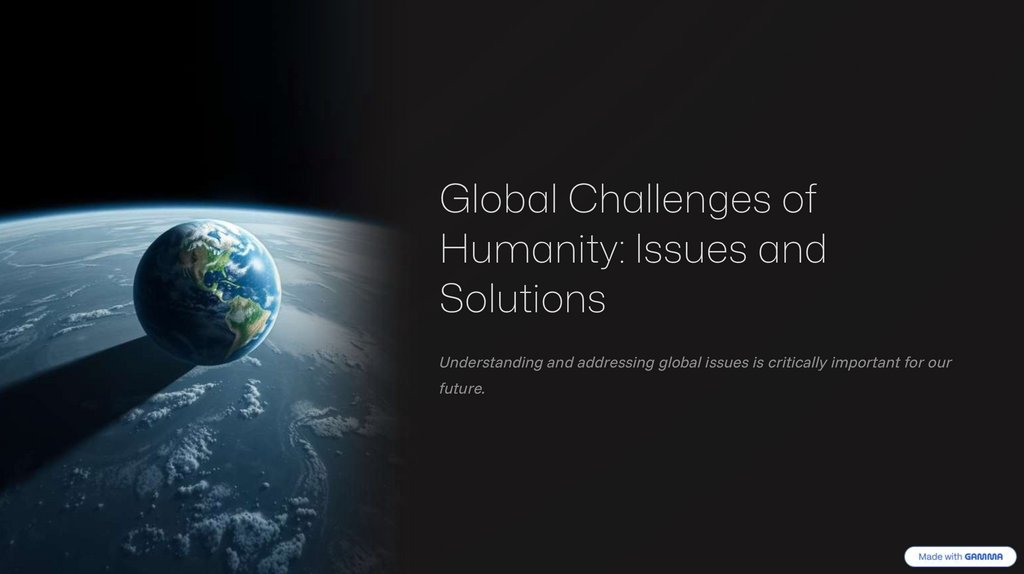
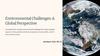
Global Challenges ofHumanity: Issues and
Solutions
Understanding and addressing global issues is critically important for our
future.
2.
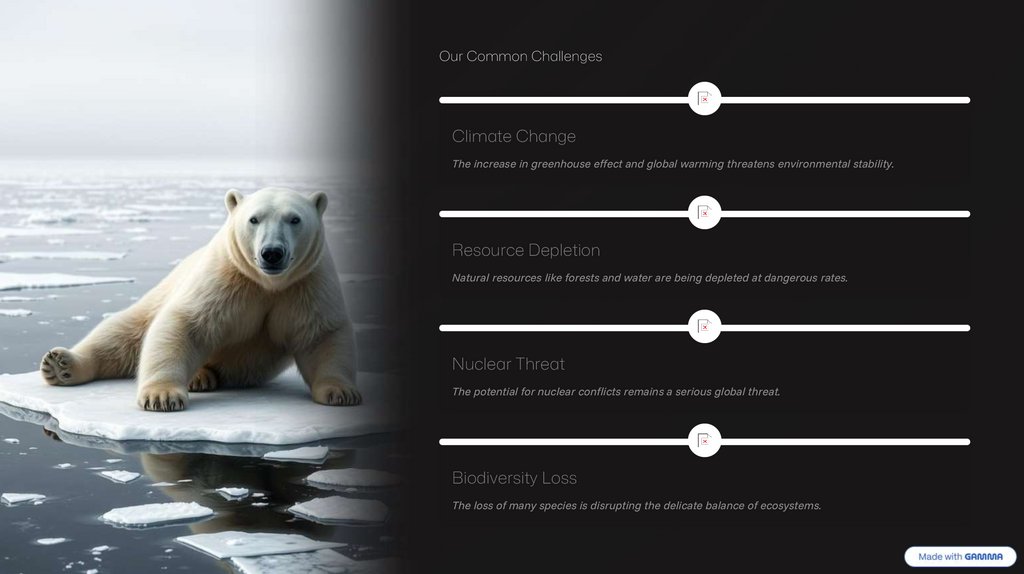
Our Common ChallengesClimate Change
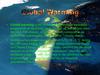
The increase in greenhouse effect and global warming threatens environmental stability.
Resource Depletion
Natural resources like forests and water are being depleted at dangerous rates.
Nuclear Threat
The potential for nuclear conflicts remains a serious global threat.
Biodiversity Loss
The loss of many species is disrupting the delicate balance of ecosystems.
3.
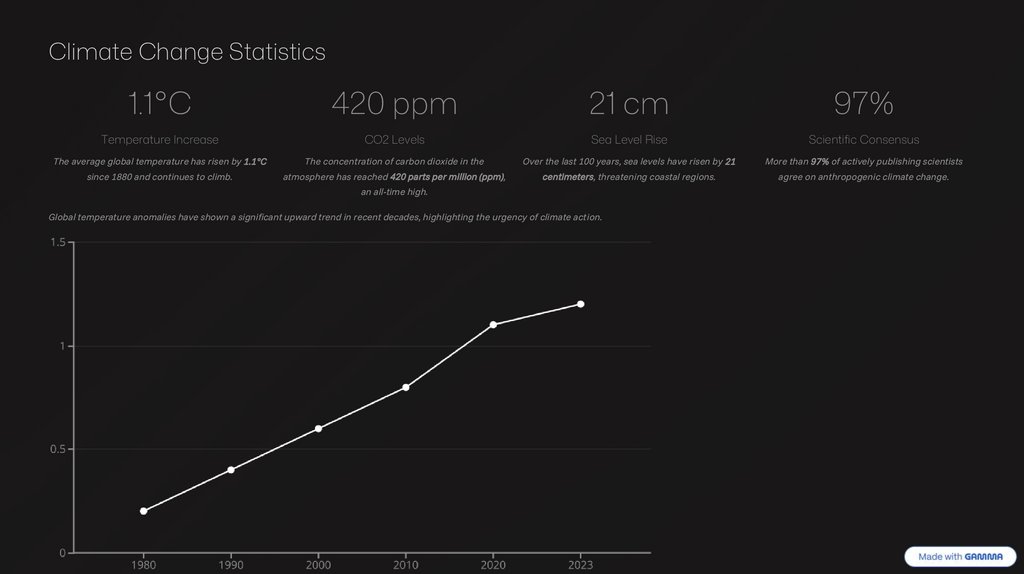
Climate Change Statistics1.1°C
420 ppm
21 cm
97%
Temperature Increase
CO2 Levels
Sea Level Rise
Scientific Consensus
The average global temperature has risen by 1.1°C
The concentration of carbon dioxide in the
Over the last 100 years, sea levels have risen by 21
More than 97% of actively publishing scientists
since 1880 and continues to climb.
atmosphere has reached 420 parts per million (ppm),
centimeters, threatening coastal regions.
agree on anthropogenic climate change.
an all-time high.
Global temperature anomalies have shown a significant upward trend in recent decades, highlighting the urgency of climate action.
4.
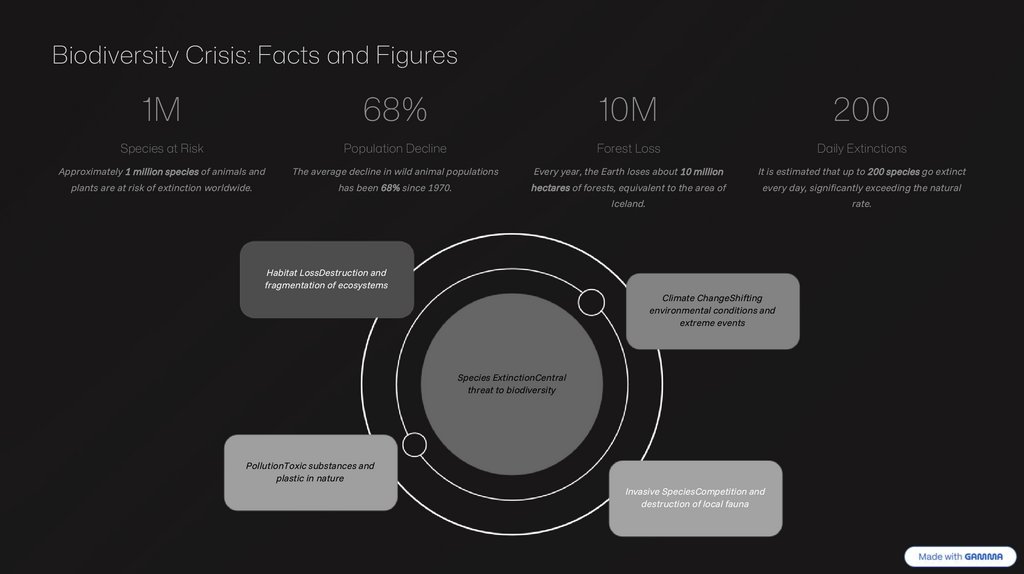
Biodiversity Crisis: Facts and Figures1M
68%
10M
200
Species at Risk
Population Decline
Forest Loss
Daily Extinctions
Approximately 1 million species of animals and
The average decline in wild animal populations
Every year, the Earth loses about 10 million
It is estimated that up to 200 species go extinct
plants are at risk of extinction worldwide.
has been 68% since 1970.
hectares of forests, equivalent to the area of
every day, significantly exceeding the natural
Iceland.
rate.
Habitat LossDestruction and
fragmentation of ecosystems
Climate ChangeShifting
environmental conditions and
extreme events
Species ExtinctionCentral
threat to biodiversity
PollutionToxic substances and
plastic in nature
Invasive SpeciesCompetition and
destruction of local fauna
5.
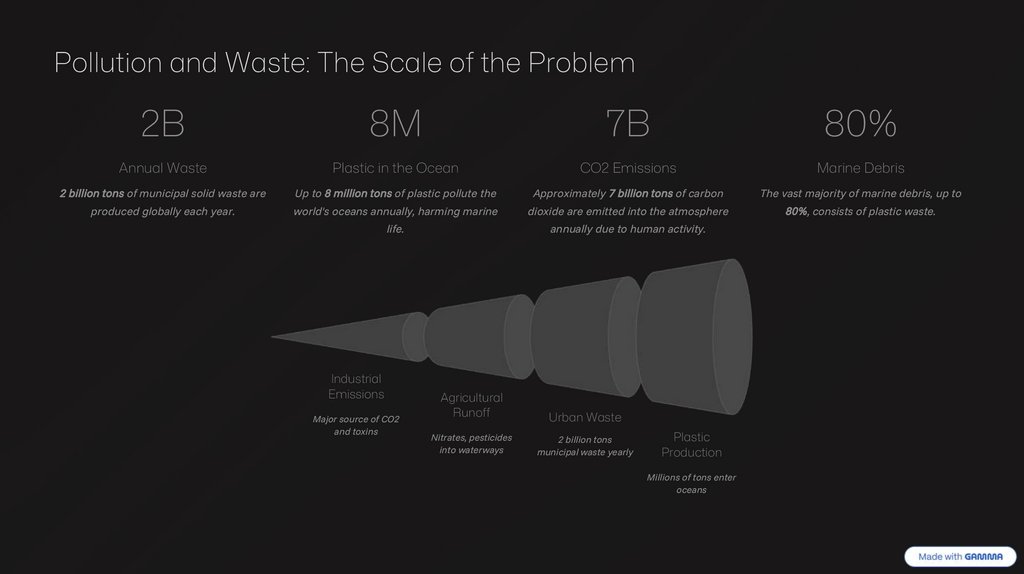
Pollution and Waste: The Scale of the Problem2B
8M
7B
80%
Annual Waste
Plastic in the Ocean
CO2 Emissions
Marine Debris
2 billion tons of municipal solid waste are
Up to 8 million tons of plastic pollute the
Approximately 7 billion tons of carbon
The vast majority of marine debris, up to
produced globally each year.
world's oceans annually, harming marine
dioxide are emitted into the atmosphere
80%, consists of plastic waste.
life.
annually due to human activity.
Industrial
Emissions
Major source of CO2
and toxins
Agricultural
Runoff
Urban Waste
Nitrates, pesticides
into waterways
2 billion tons
municipal waste yearly
Plastic
Production
Millions of tons enter
oceans
6.
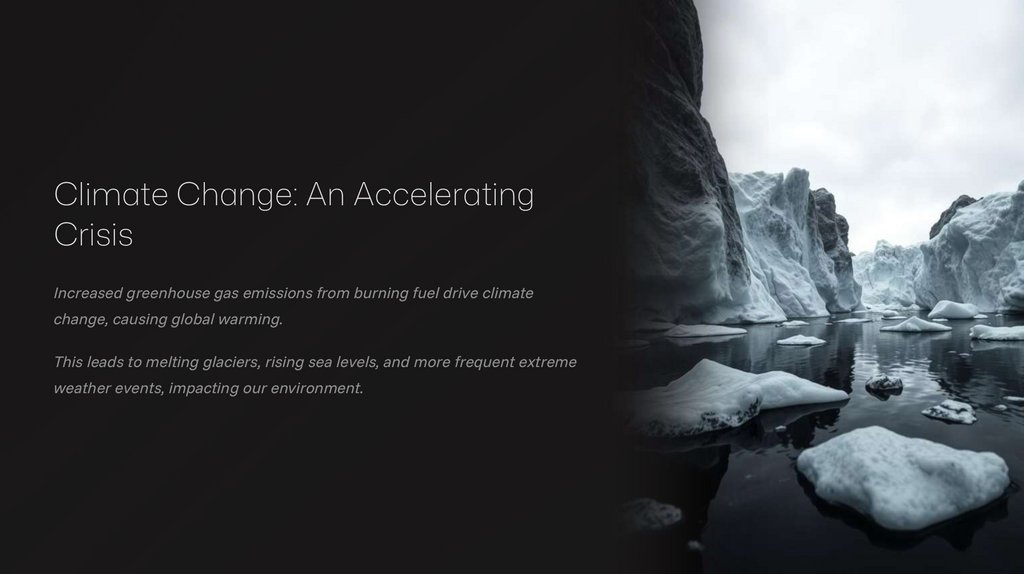
Climate Change: An AcceleratingCrisis
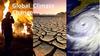
Increased greenhouse gas emissions from burning fuel drive climate
change, causing global warming.
This leads to melting glaciers, rising sea levels, and more frequent extreme
weather events, impacting our environment.
7.
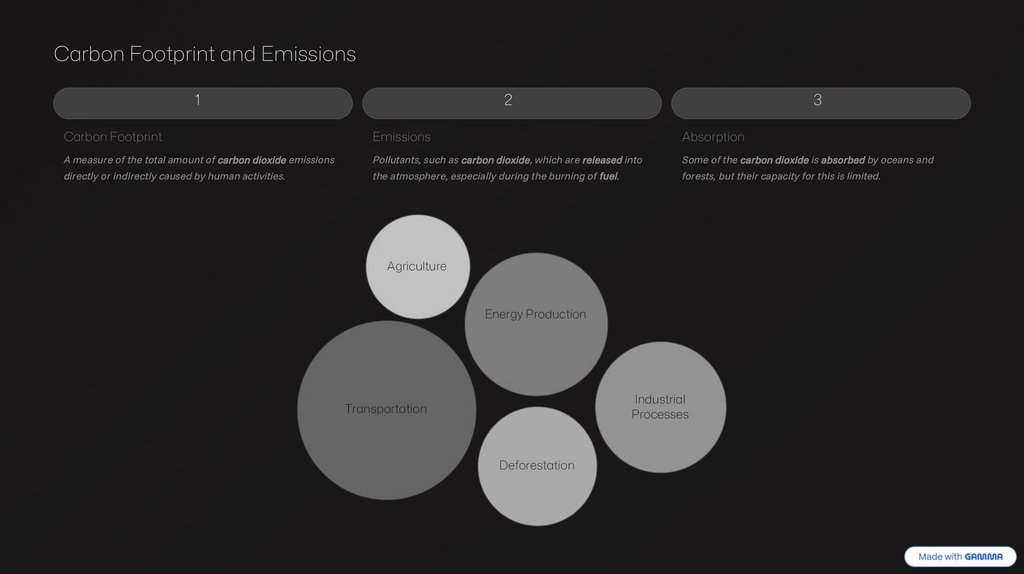
Carbon Footprint and Emissions1
2
3
Carbon Footprint
Emissions
Absorption
A measure of the total amount of carbon dioxide emissions
Pollutants, such as carbon dioxide, which are released into
Some of the carbon dioxide is absorbed by oceans and
directly or indirectly caused by human activities.
the atmosphere, especially during the burning of fuel.
forests, but their capacity for this is limited.
Agriculture
Energy Production
Industrial
Processes
Transportation
Deforestation
8.
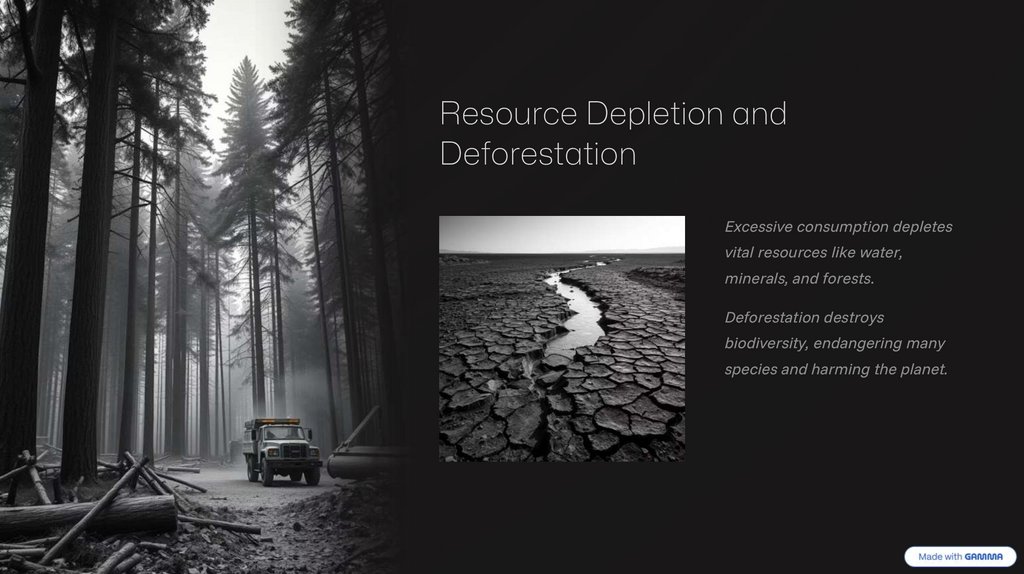
Resource Depletion andDeforestation
Excessive consumption depletes
vital resources like water,
minerals, and forests.
Deforestation destroys
biodiversity, endangering many
species and harming the planet.
9.
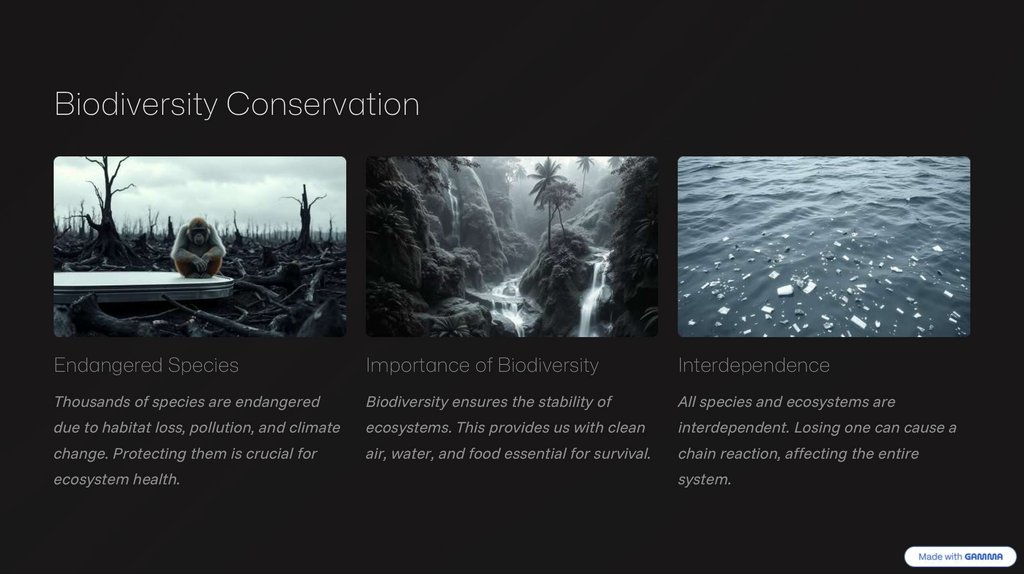
Biodiversity ConservationEndangered Species
Importance of Biodiversity
Interdependence
Thousands of species are endangered
Biodiversity ensures the stability of
All species and ecosystems are
due to habitat loss, pollution, and climate
ecosystems. This provides us with clean
interdependent. Losing one can cause a
change. Protecting them is crucial for
air, water, and food essential for survival.
chain reaction, affecting the entire
ecosystem health.
system.
10.
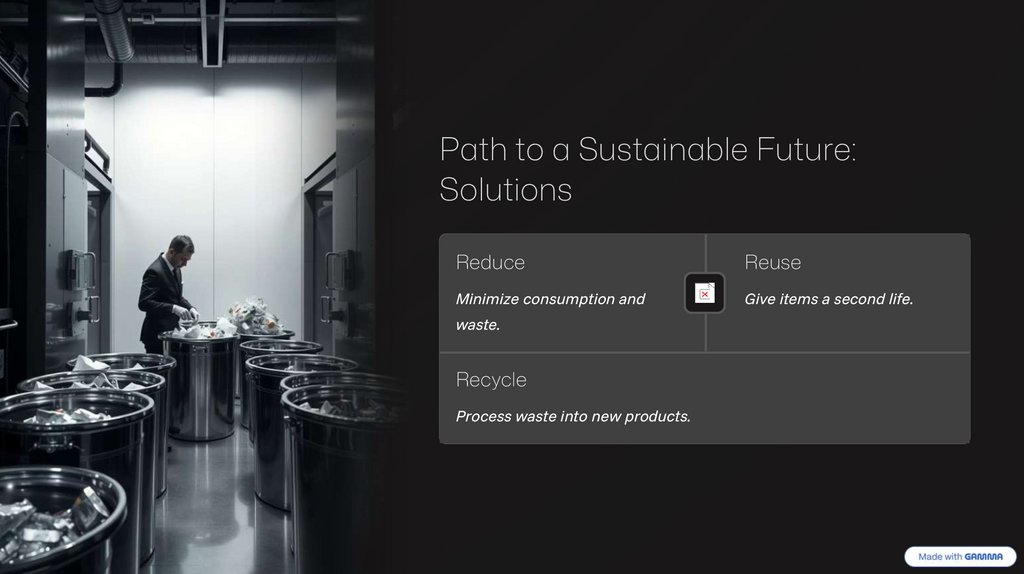
Path to a Sustainable Future:Solutions
Reduce
Reuse
Minimize consumption and
Give items a second life.
waste.
Recycle
Process waste into new products.
11.
Energy of the Future: RenewableSources
Solar Energy
Using the sun's energy to produce electricity, reducing carbon
dioxide emissions.
Wind Energy
A clean and renewable energy source, reducing our dependence
on fossil fuels.
Hydroelectric Power
Utilizing the power of water to generate electricity, without
greenhouse gas emissions.
12.
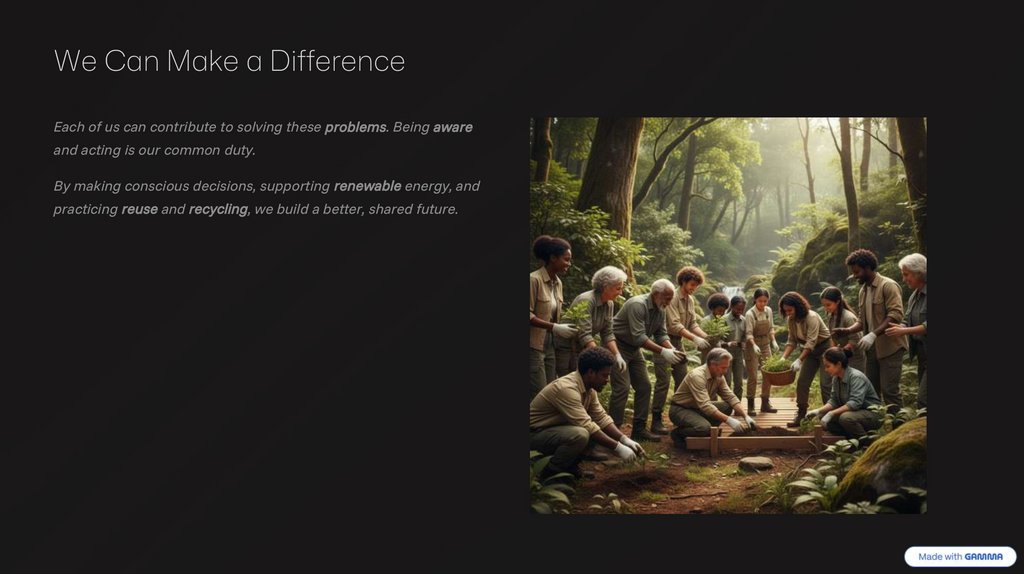
We Can Make a DifferenceEach of us can contribute to solving these problems. Being aware
and acting is our common duty.
By making conscious decisions, supporting renewable energy, and
practicing reuse and recycling, we build a better, shared future.