
 Экология
Похожие презентации:





Ecology Overview
1.
20xx ━ website.comEcology
Overview
Understanding Global Ecology Impact
2.
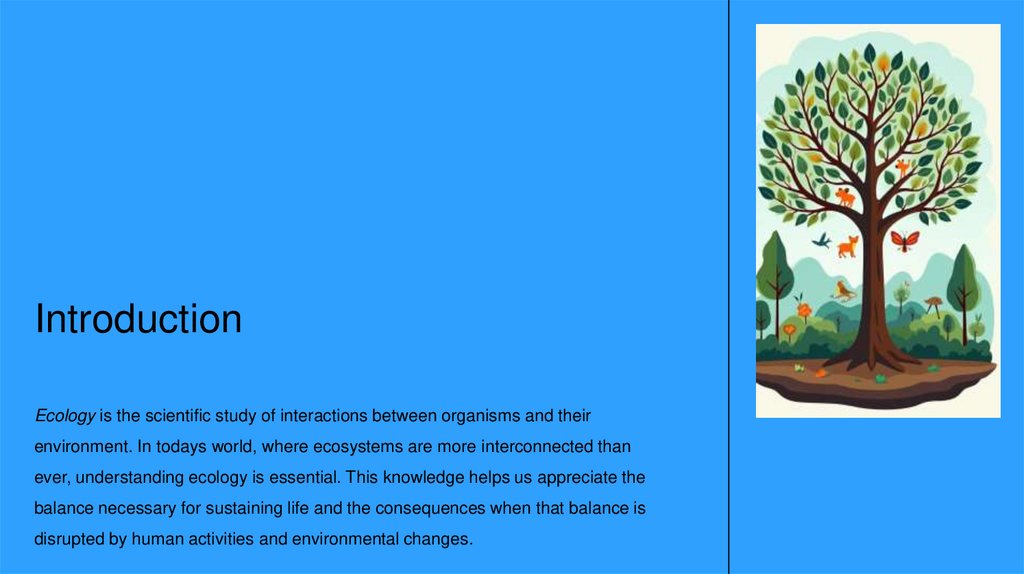
IntroductionEcology is the scientific study of interactions between organisms and their
environment. In todays world, where ecosystems are more interconnected than
ever, understanding ecology is essential. This knowledge helps us appreciate the
balance necessary for sustaining life and the consequences when that balance is
disrupted by human activities and environmental changes.
3.
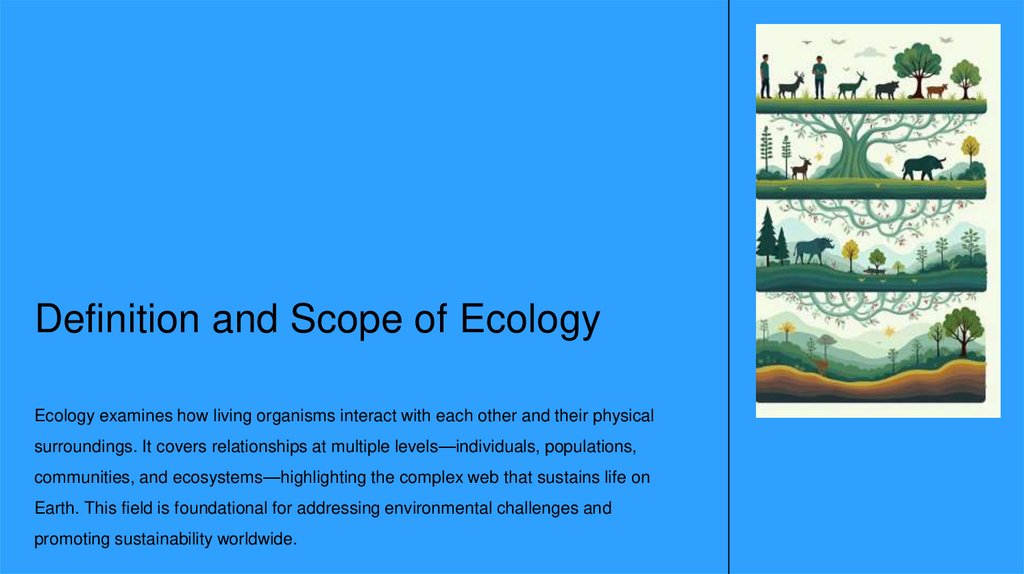
Definition and Scope of EcologyEcology examines how living organisms interact with each other and their physical
surroundings. It covers relationships at multiple levels—individuals, populations,
communities, and ecosystems—highlighting the complex web that sustains life on
Earth. This field is foundational for addressing environmental challenges and
promoting sustainability worldwide.
4.
Ecosystem Services and HumanWell-being
Healthy ecosystems deliver vital services like clean air, fresh water, fertile soil, and climate regulation.
These services support human health, economies, and biodiversity. Disruptions to these natural
processes threaten essential resources, emphasizing the importance of preserving ecological balance
for present and future generations.
5.
Interconnectedness ofOrganisms and Environment
Every organism plays a crucial role within ecosystems, forming networks of interdependence that sustain
balance. Changes affecting one species often ripple throughout the ecosystem, impacting others and
overall environmental health. Understanding these connections is essential for effective ecological
management and conservation strategies that protect biodiversity and ecosystem resilience.
6.
01Ecological Challenges and
Responses
7.
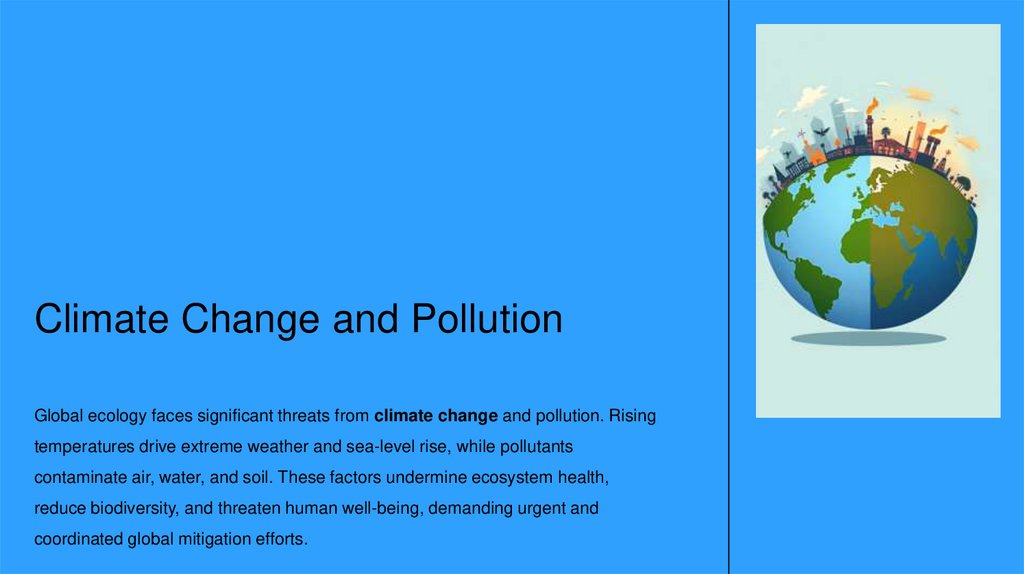
Climate Change and PollutionGlobal ecology faces significant threats from climate change and pollution. Rising
temperatures drive extreme weather and sea-level rise, while pollutants
contaminate air, water, and soil. These factors undermine ecosystem health,
reduce biodiversity, and threaten human well-being, demanding urgent and
coordinated global mitigation efforts.
8.
Regional Ecological Impacts andClimate Justice
Ecological impacts vary regionally—developed nations predominantly contribute to carbon emissions
and waste, while developing regions disproportionately experience effects like droughts, floods, and food
insecurity. This disparity necessitates climate justice principles to ensure equitable responsibility and
support in global environmental policies.
9.
Success Stories and IndividualActions
Despite challenges, progress is evident. Advances in renewable energy, successful treaties like the
Montreal Protocol, and conservation efforts showcase positive outcomes. Individual and collective
actions—such as reducing waste, supporting sustainable policies, and environmental advocacy—play
pivotal roles in driving ongoing ecological improvements.
10.
ConclusionsEcology is a shared global responsibility requiring integrated understanding and action. Protecting our
planet hinges on recognizing ecosystem interconnections and addressing challenges through
cooperation, innovation, and commitment. Together, we can safeguard Earths biodiversity and natural
resources for future generations.
11.
THANKYOU
Do you have any questions?
youremail@freepik.com
+00 000 000 000
yourwebsite.com
CREDITS: This presentation template was created by Slidesgo, and includes icons, infographics & images by Freepik
Please keep this slide for attribution