 История
Похожие презентации:








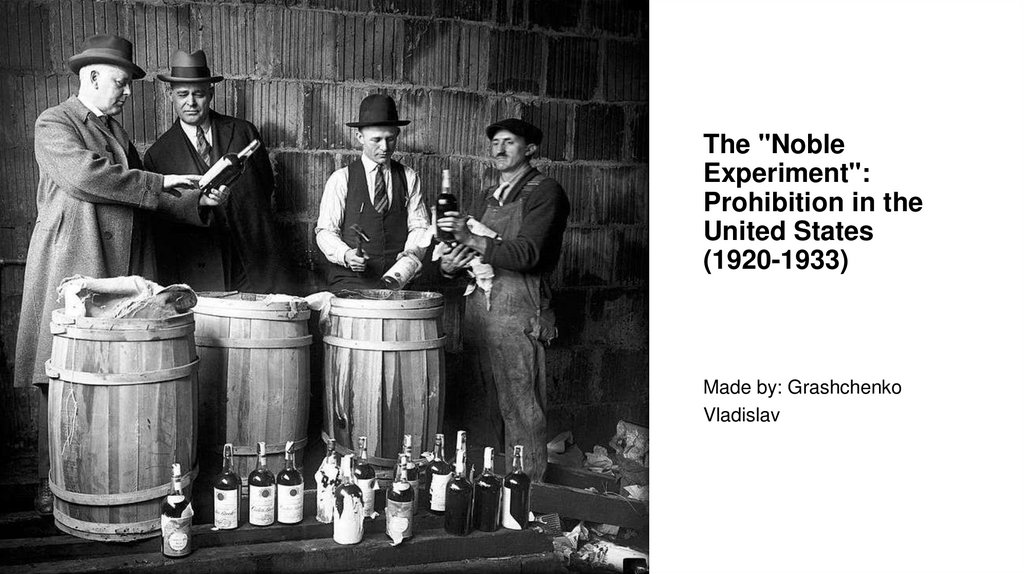
The "Noble Experiment": Prohibition in the United States (1920-1933)
1. The "Noble Experiment": Prohibition in the United States (1920-1933)
The "NobleExperiment":
Prohibition in the
United States
(1920-1933)
Made by: Grashchenko
Vladislav
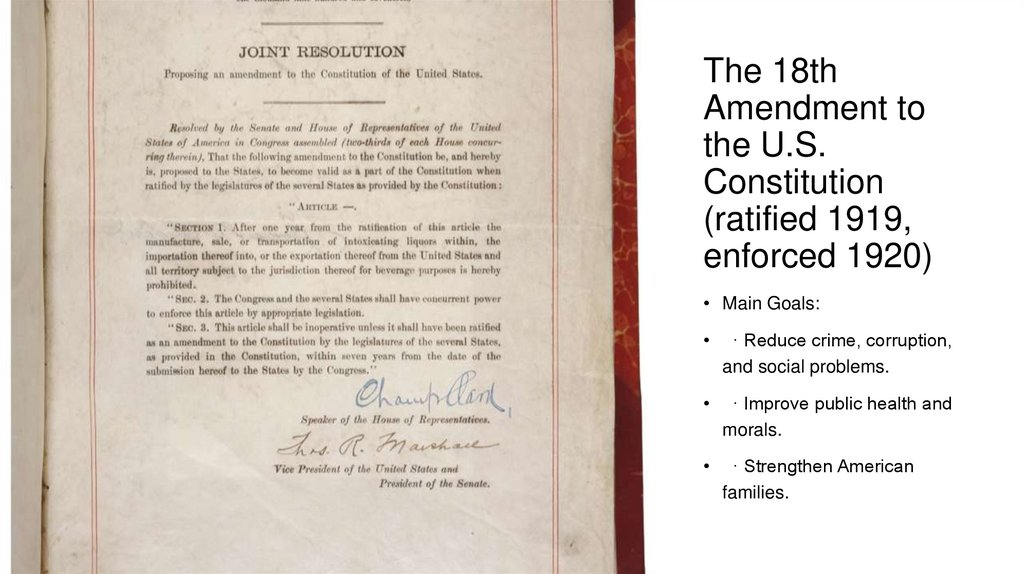
2. The 18th Amendment to the U.S. Constitution (ratified 1919, enforced 1920)
• Main Goals:· Reduce crime, corruption,
and social problems.
· Improve public health and
morals.
· Strengthen American
families.
3. Unintended Consequences
• Key Point: Prohibition failed to achieve itsgoals and created massive new problems.
• · Consequences:
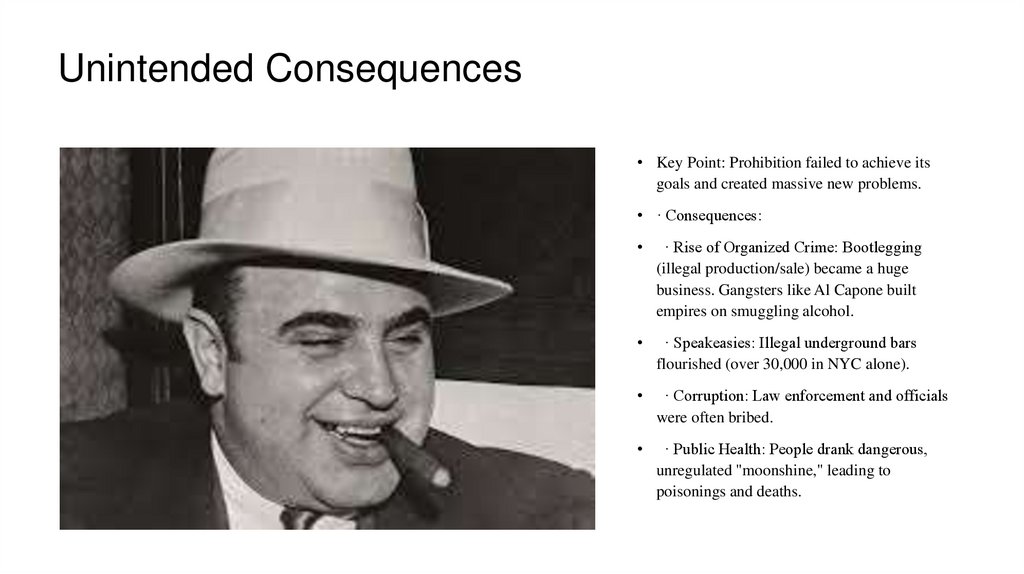
· Rise of Organized Crime: Bootlegging
(illegal production/sale) became a huge
business. Gangsters like Al Capone built
empires on smuggling alcohol.
· Speakeasies: Illegal underground bars
flourished (over 30,000 in NYC alone).
· Corruption: Law enforcement and officials
were often bribed.
· Public Health: People drank dangerous,
unregulated "moonshine," leading to
poisonings and deaths.
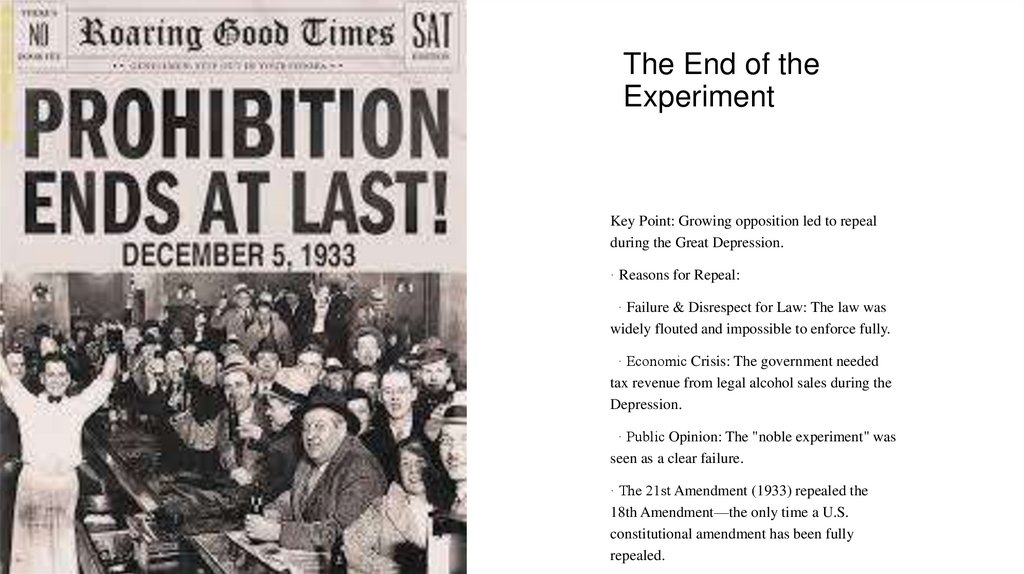
4. The End of the Experiment
Key Point: Growing opposition led to repealduring the Great Depression.
· Reasons for Repeal:
· Failure & Disrespect for Law: The law was
widely flouted and impossible to enforce fully.
· Economic Crisis: The government needed
tax revenue from legal alcohol sales during the
Depression.
· Public Opinion: The "noble experiment" was
seen as a clear failure.
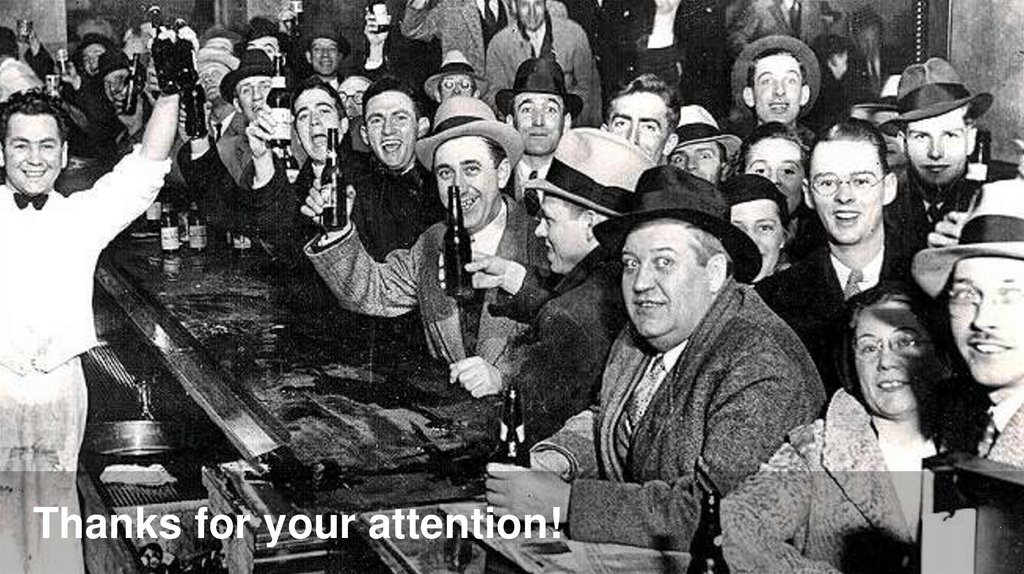
· The 21st Amendment (1933) repealed the
18th Amendment—the only time a U.S.
constitutional amendment has been fully
repealed.