Похожие презентации:





6_ConditionalSentences
1.
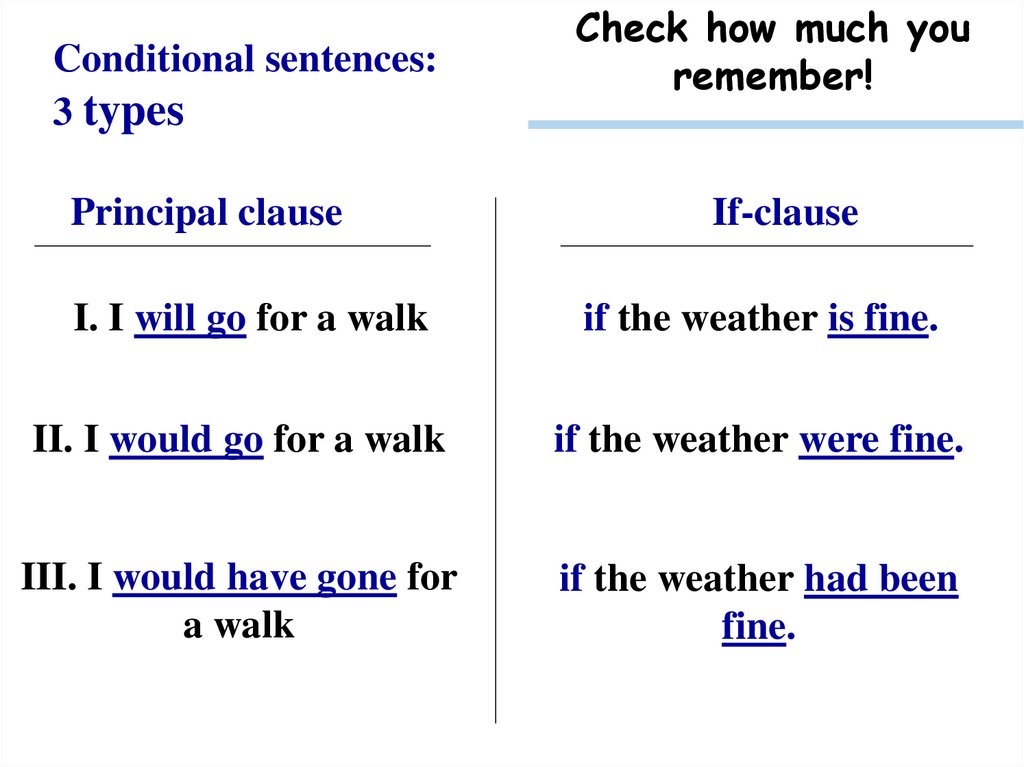
Conditional sentences:3 types
Principal clause
Check how much you
remember!
If-clause
I. I will go for a walk
if the weather is fine.
II. I would go for a walk
if the weather were fine.
III. I would have gone for
a walk
if the weather had been
fine.
2.
The Use of Forms ExpressingUnreality (the Oblique Moods) in
COMPLEX SENTENCES with a
SUBORDINATE CLAUSE of
CONDITION
3.
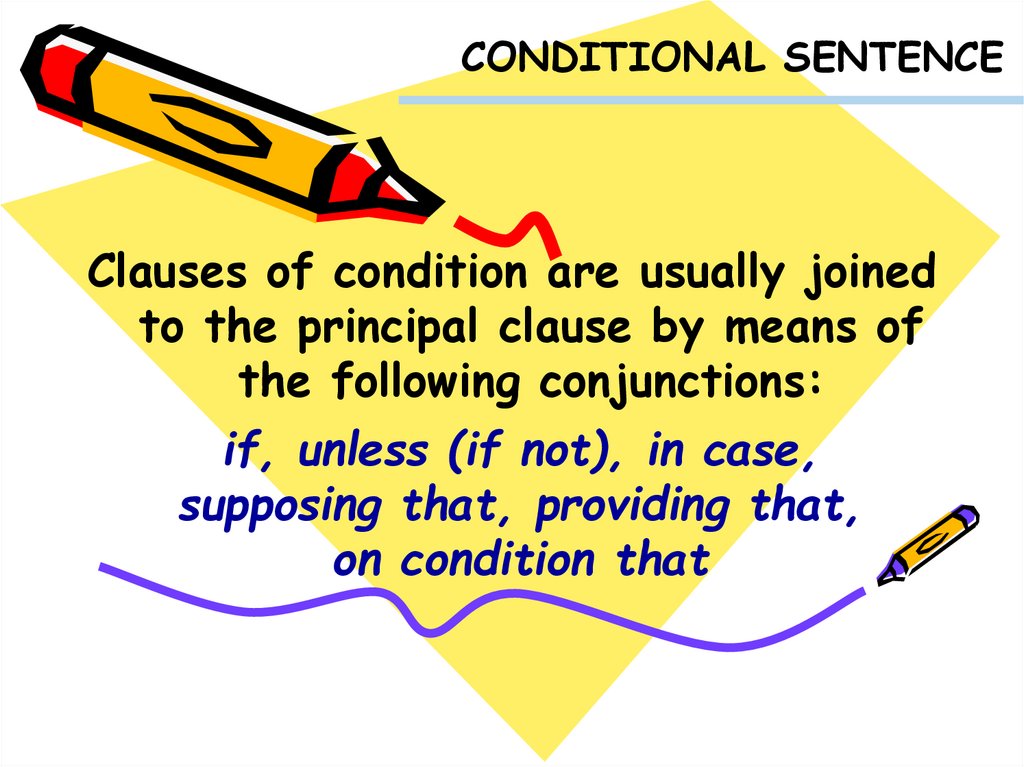
CONDITIONAL SENTENCEClauses of condition are usually joined
to the principal clause by means of
the following conjunctions:
if, unless (if not), in case,
supposing that, providing that,
on condition that
4.
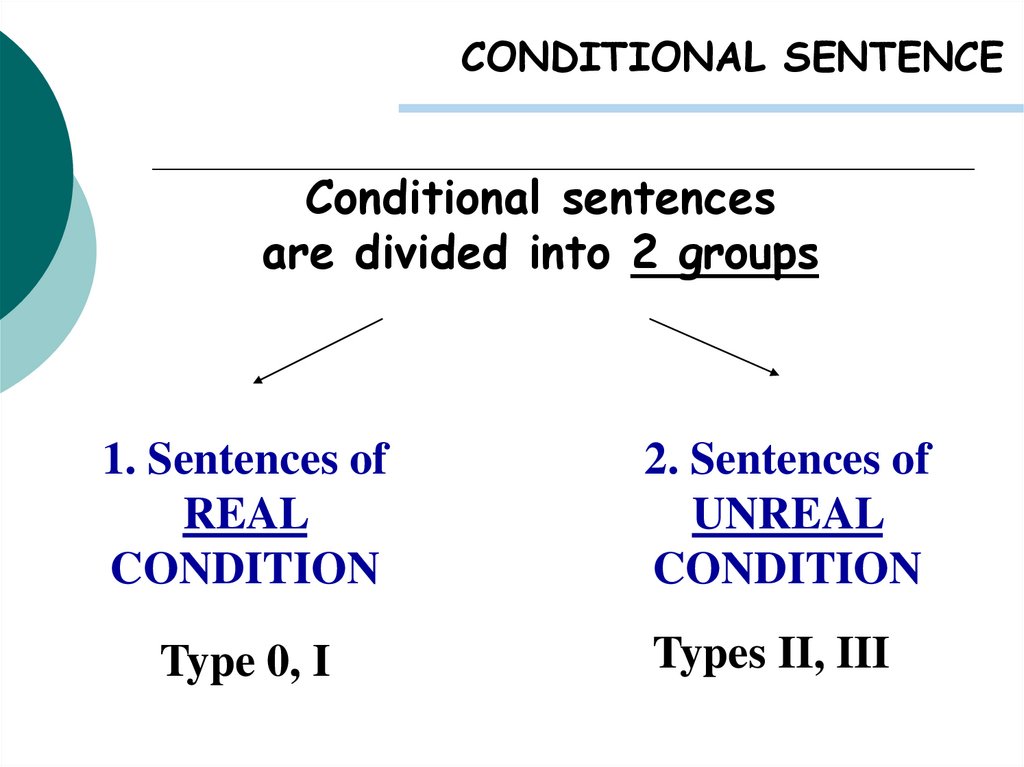
CONDITIONAL SENTENCEConditional sentences
are divided into 2 groups
1. Sentences of
REAL
CONDITION
2. Sentences of
UNREAL
CONDITION
Type 0, I
Types II, III
5.
CONDITIONAL SENTENCEConditional sentences
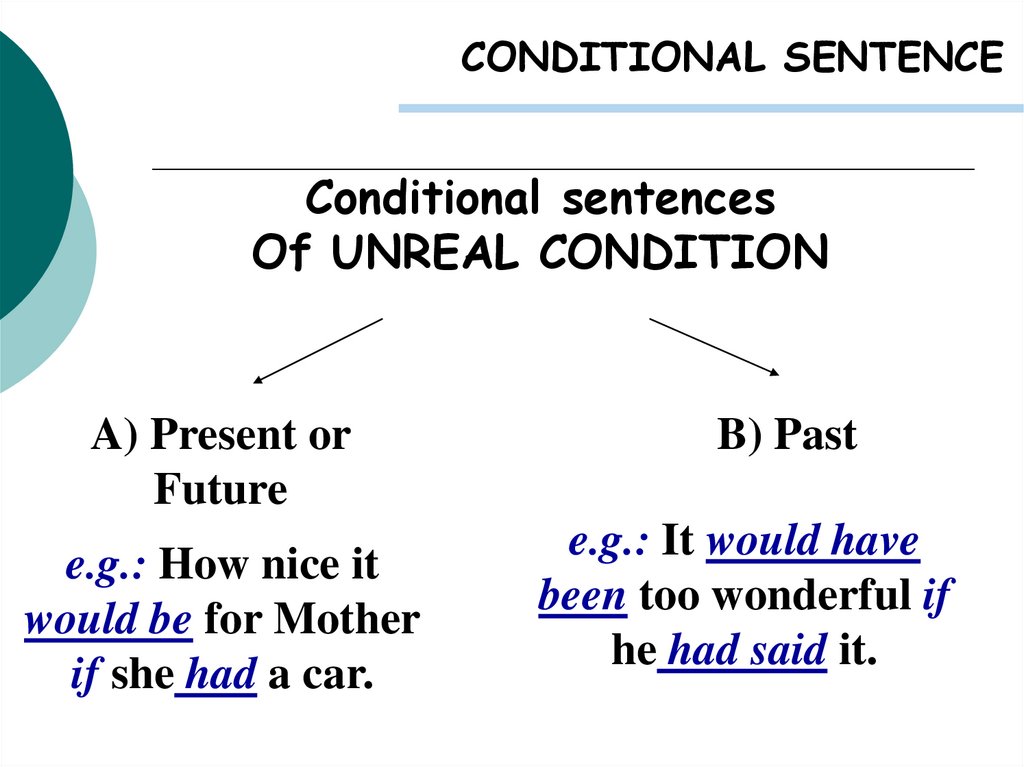
Of UNREAL CONDITION
A) Present or
Future
e.g.: How nice it
would be for Mother
if she had a car.
B) Past
e.g.: It would have
been too wonderful if
he had said it.
6.
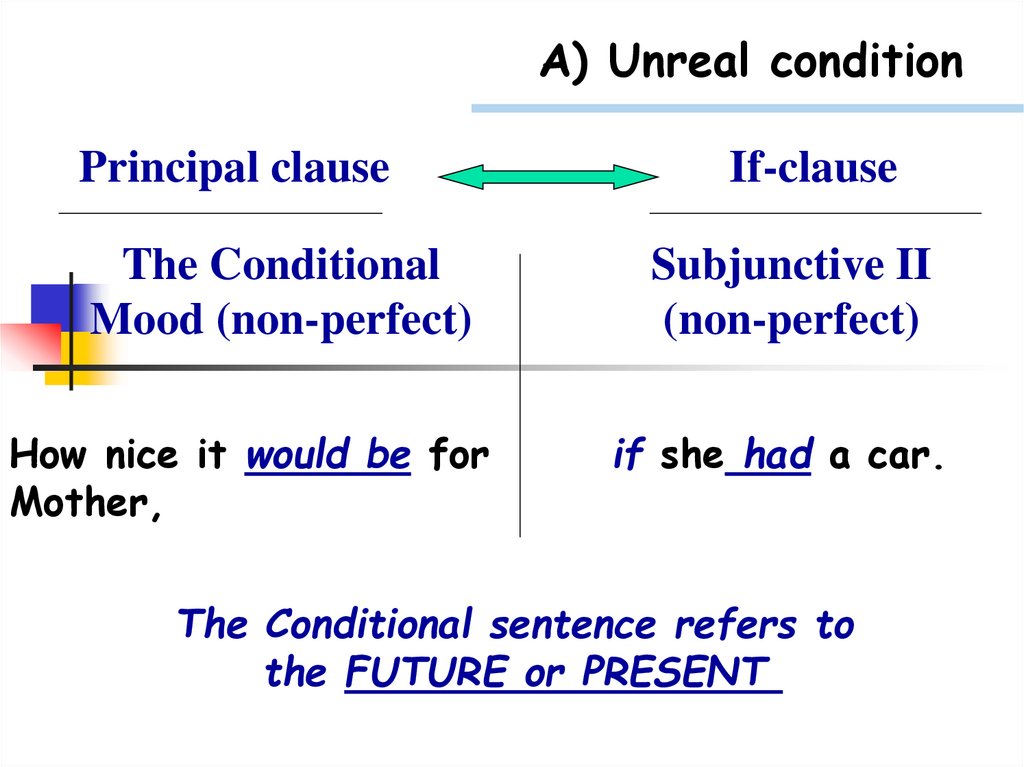
A) Unreal conditionPrincipal clause
If-clause
The Conditional
Mood (non-perfect)
Subjunctive II
(non-perfect)
How nice it would be for
Mother,
if she had a car.
The Conditional sentence refers to
the FUTURE or PRESENT
7.
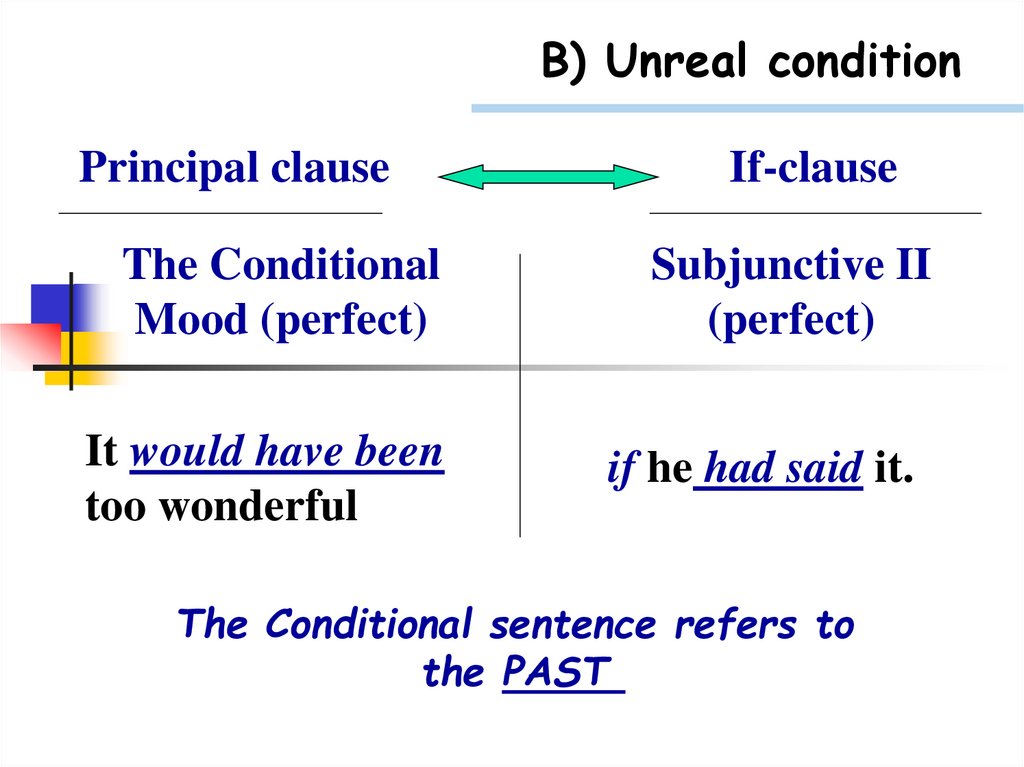
B) Unreal conditionPrincipal clause
If-clause
The Conditional
Mood (perfect)
Subjunctive II
(perfect)
It would have been
too wonderful
if he had said it.
The Conditional sentence refers to
the PAST
8.
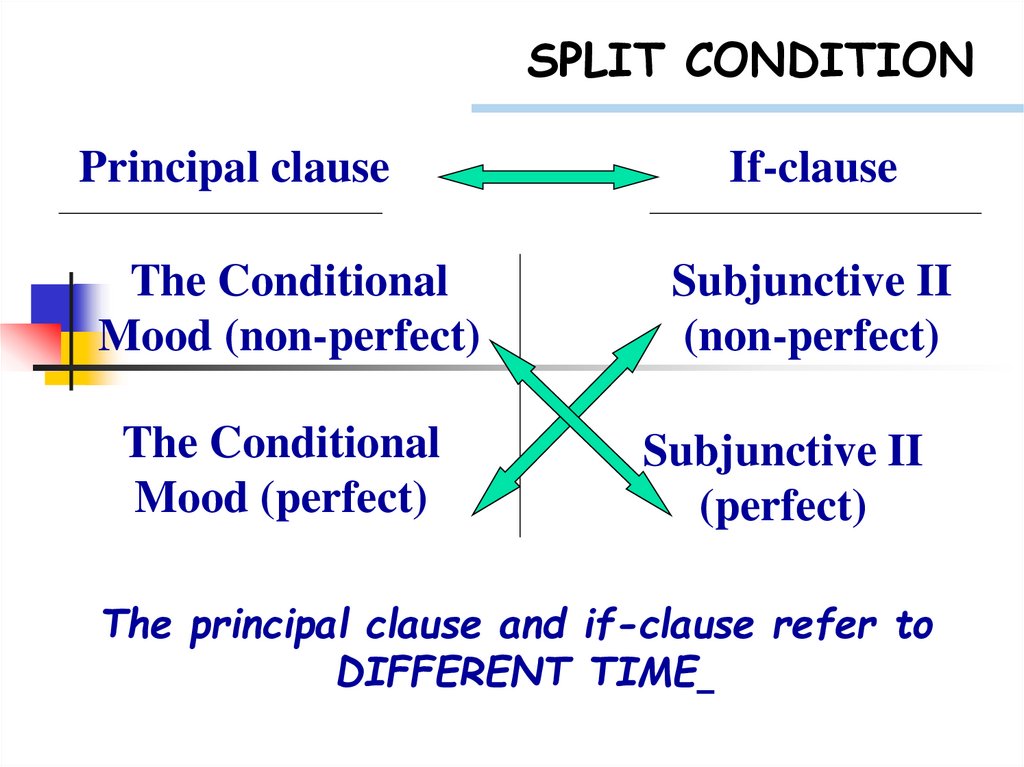
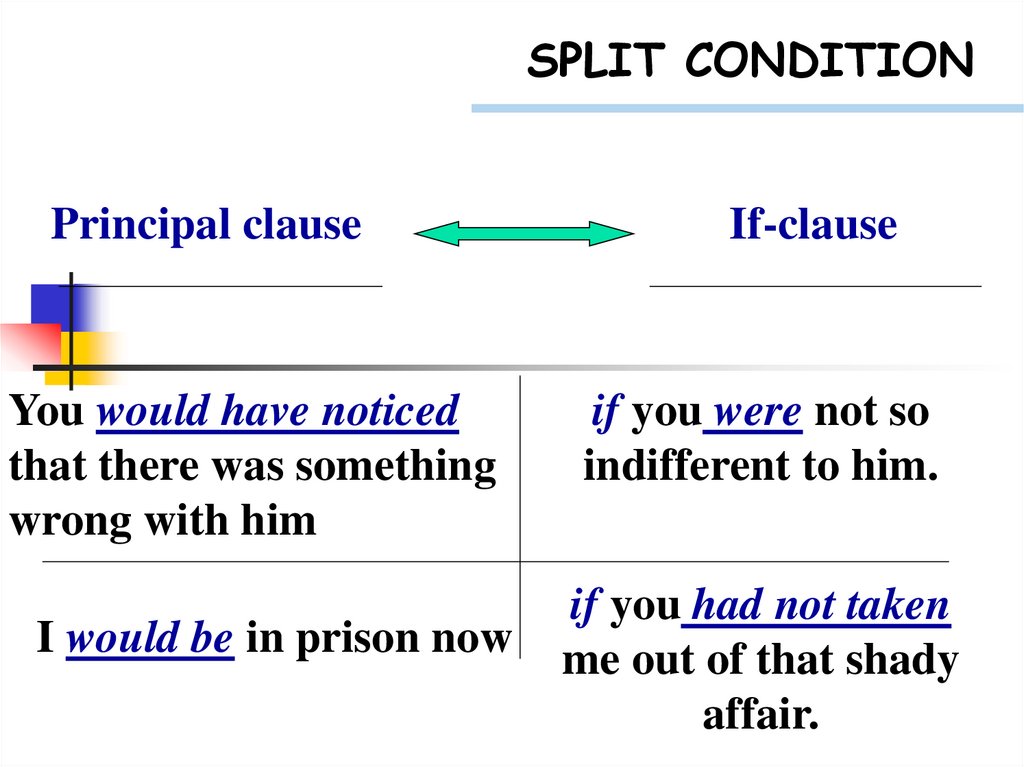
SPLIT CONDITIONPrincipal clause
If-clause
The Conditional
Mood (non-perfect)
Subjunctive II
(non-perfect)
The Conditional
Mood (perfect)
Subjunctive II
(perfect)
The principal clause and if-clause refer to
DIFFERENT TIME
9.
SPLIT CONDITIONPrincipal clause
You would have noticed
that there was something
wrong with him
I would be in prison now
If-clause
if you were not so
indifferent to him.
if you had not taken
me out of that shady
affair.