 География
Похожие презентации:






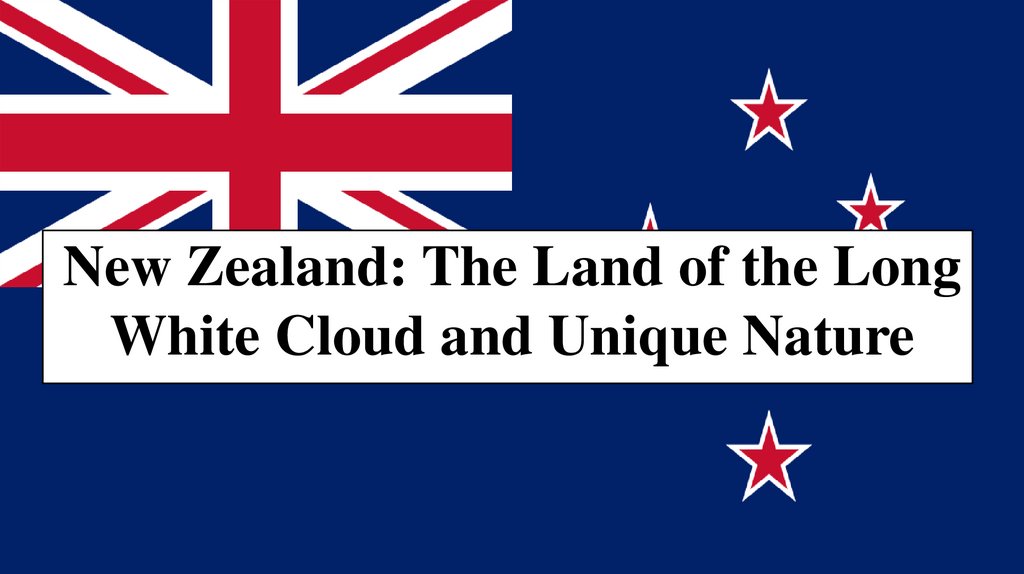
New Zealand: The Land of the Long White Cloud and Unique Nature
1. New Zealand: The Land of the Long White Cloud and Unique Nature
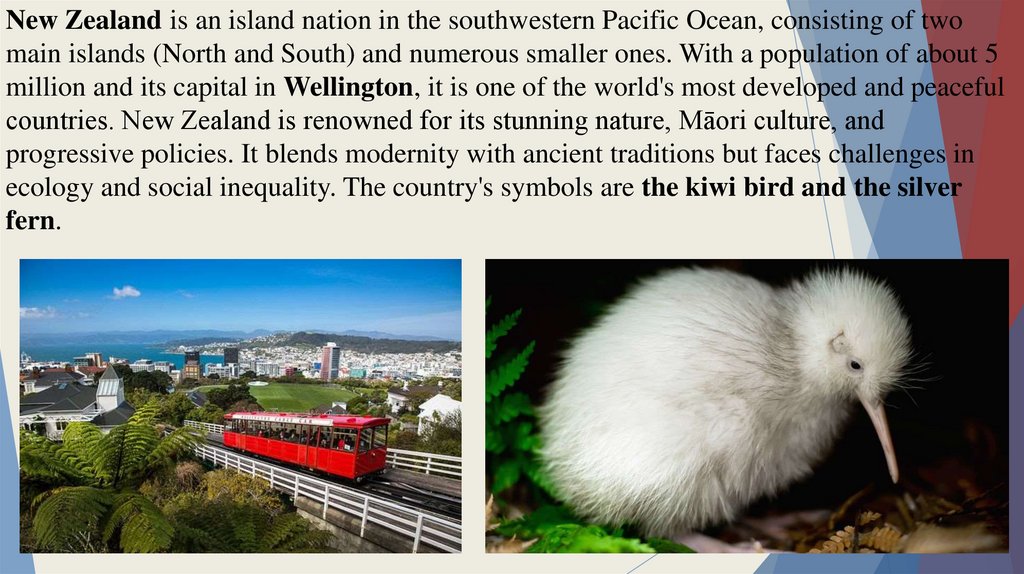
2. New Zealand is an island nation in the southwestern Pacific Ocean, consisting of two main islands (North and South) and
numerous smaller ones. With a population of about 5million and its capital in Wellington, it is one of the world's most developed and peaceful
countries. New Zealand is renowned for its stunning nature, Māori culture, and
progressive policies. It blends modernity with ancient traditions but faces challenges in
ecology and social inequality. The country's symbols are the kiwi bird and the silver
fern.
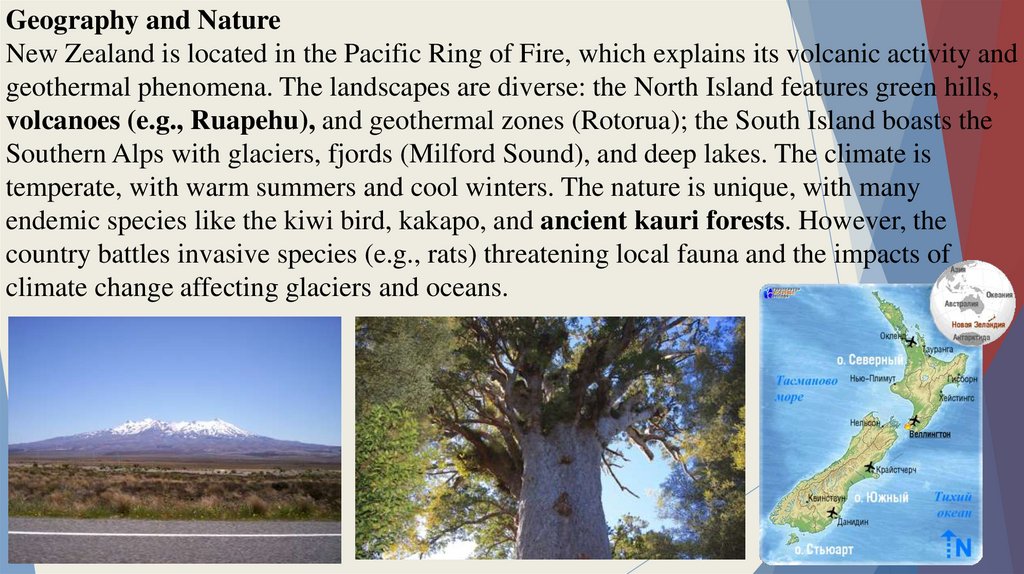
3. Geography and Nature New Zealand is located in the Pacific Ring of Fire, which explains its volcanic activity and geothermal
phenomena. The landscapes are diverse: the North Island features green hills,volcanoes (e.g., Ruapehu), and geothermal zones (Rotorua); the South Island boasts the
Southern Alps with glaciers, fjords (Milford Sound), and deep lakes. The climate is
temperate, with warm summers and cool winters. The nature is unique, with many
endemic species like the kiwi bird, kakapo, and ancient kauri forests. However, the
country battles invasive species (e.g., rats) threatening local fauna and the impacts of
climate change affecting glaciers and oceans.
4. History The indigenous people, the Māori, arrived here from Polynesia around the 13th century. European exploration began in
the 17th century with Abel Tasman, and active colonizationby the British started in the 19th century. The Treaty of Waitangi, signed in 1840, is the
foundation of the modern state but has also been a source of disputes between Māori and
Europeans. New Zealand gained independence from Britain in 1947 and has since
developed as a democratic nation with strong social programs. Its history includes
participation in world wars and movements for Māori rights.
Economy
New Zealand's economy is based on agriculture (meat, dairy, wool), tourism (ecotourism,
extreme sports), and technology. The country exports kiwifruit, wine, and has a strong IT
sector. It is known for its stability and innovation but depends on global commodity
prices. An important challenge is the transition to a green economy and the protection of
its unique nature.
5. Culture and Society New Zealand's culture is a synthesis of Māori traditions and European influence. The Māori language is
Culture and SocietyNew Zealand's culture is a synthesis of Māori traditions and European
influence. The Māori language is official alongside English, and their art
and haka (a ritual dance) are known worldwide. The country is famous
for its multiculturalism, hospitality, and love of sports (rugby, cricket,
sailing). Its film industry gave the world "The Lord of the Rings."
Education and healthcare are highly developed, but challenges include
social inequality and the integration of immigrants.