
 Экономика
Похожие презентации:





Economic Integration and Trade Blocs
1. Contemporary Issues in Global Economy
WIUTDate: October 08, 2025
Module Leader: Dr. Bilol Buzurukov
Economics
1
2.
Topics① Globalization: winners and losers
② Poverty and Global Inequality
③ International Trade Issues
④ Economic Integration
⑤ International Labor Migration
⑥ Climate Change
⑦ Foreign Direct Investment
⑧ Global Value Chains
⑨ Global Financial Crisis
⑩ Artificial Intelligence and the Global Economy
2
3.
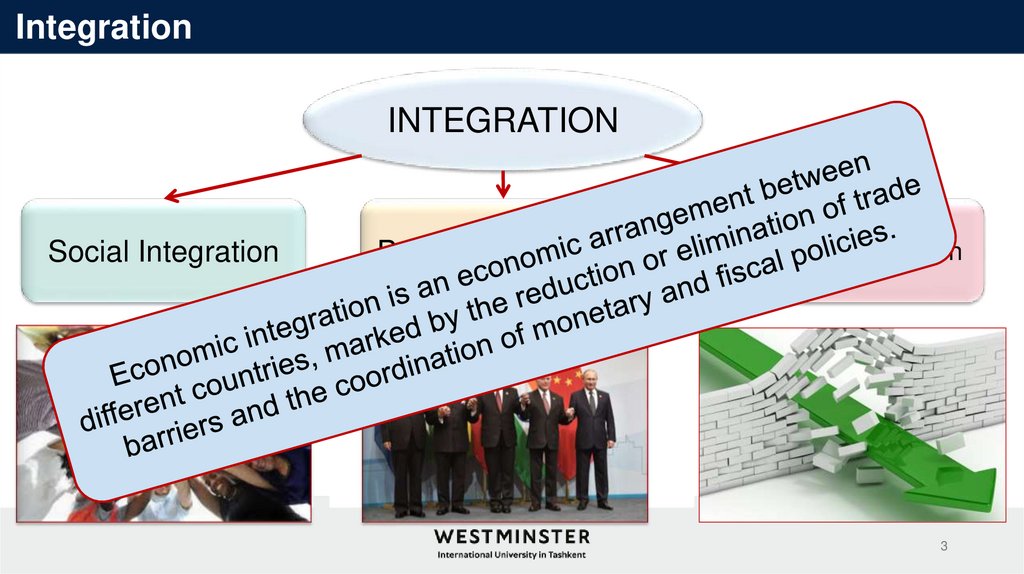
IntegrationINTEGRATION
Social Integration
Political Integration
Economic Integration
3
4.
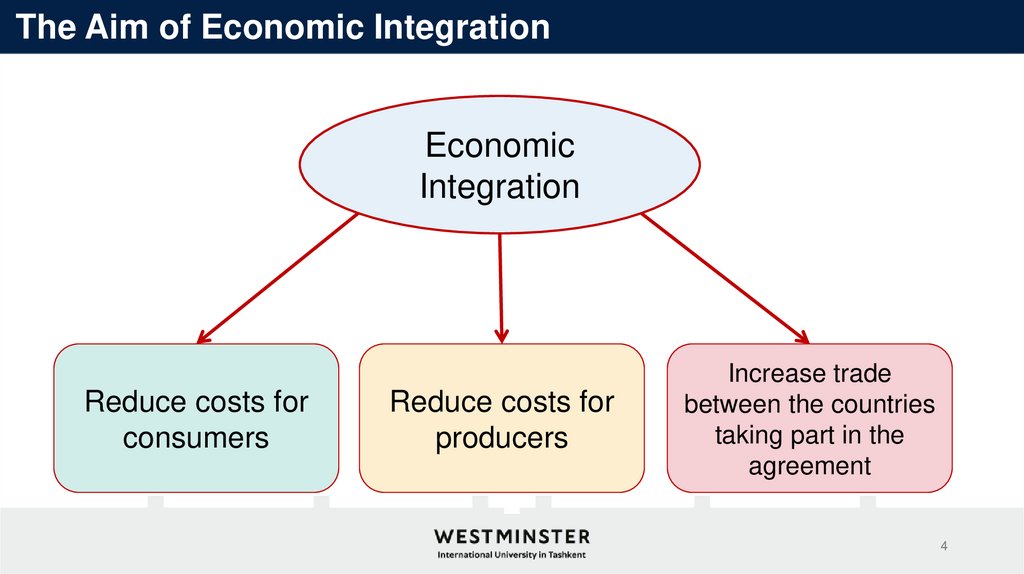
The Aim of Economic IntegrationEconomic
Integration
Reduce costs for
consumers
Reduce costs for
producers
Increase trade
between the countries
taking part in the
agreement
4
5.
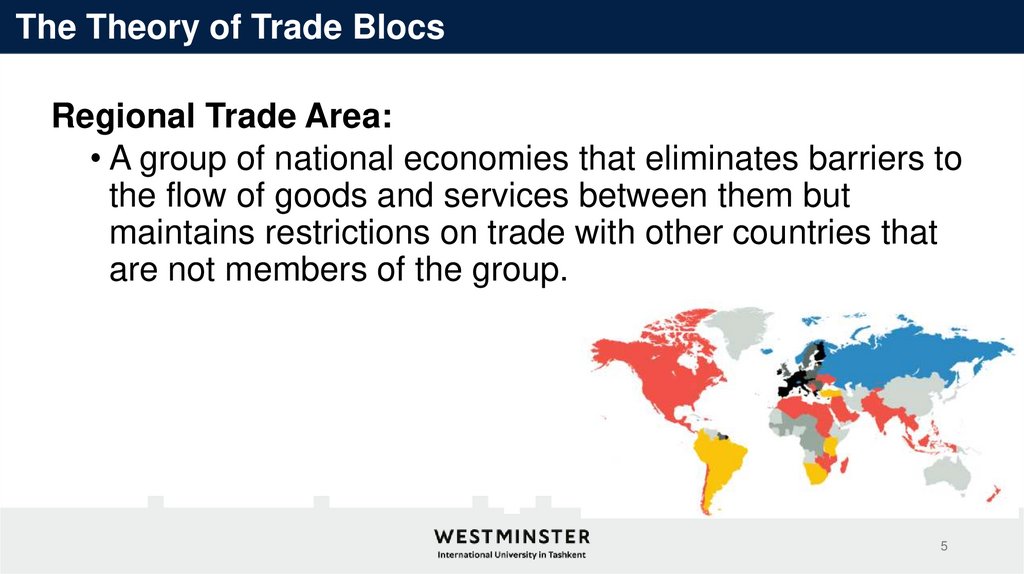
The Theory of Trade BlocsRegional Trade Area:
• A group of national economies that eliminates barriers to
the flow of goods and services between them but
maintains restrictions on trade with other countries that
are not members of the group.
5
6.
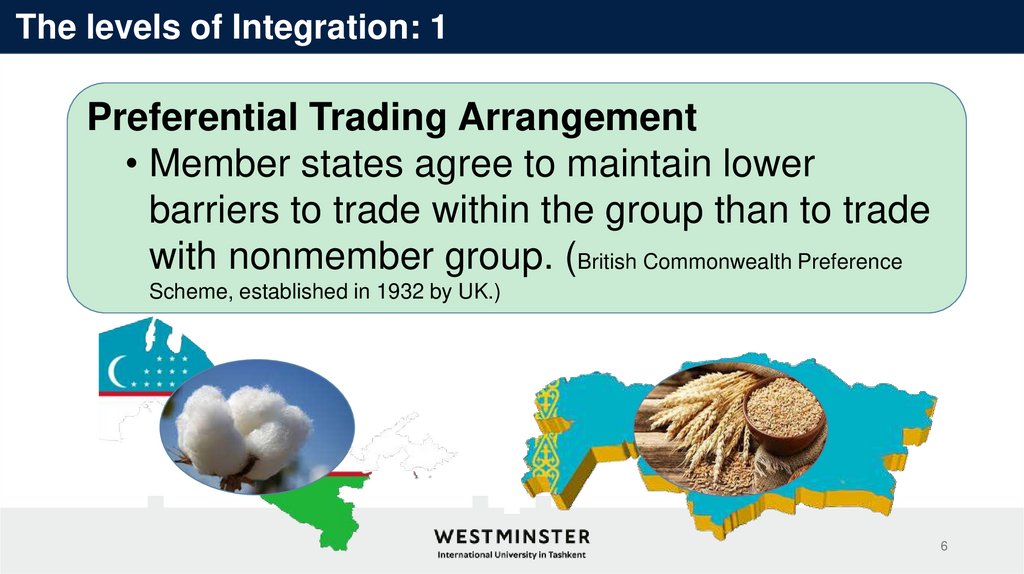
The levels of Integration: 1Preferential Trading Arrangement
• Member states agree to maintain lower
barriers to trade within the group than to trade
with nonmember group. (British Commonwealth Preference
Scheme, established in 1932 by UK.)
6
7.
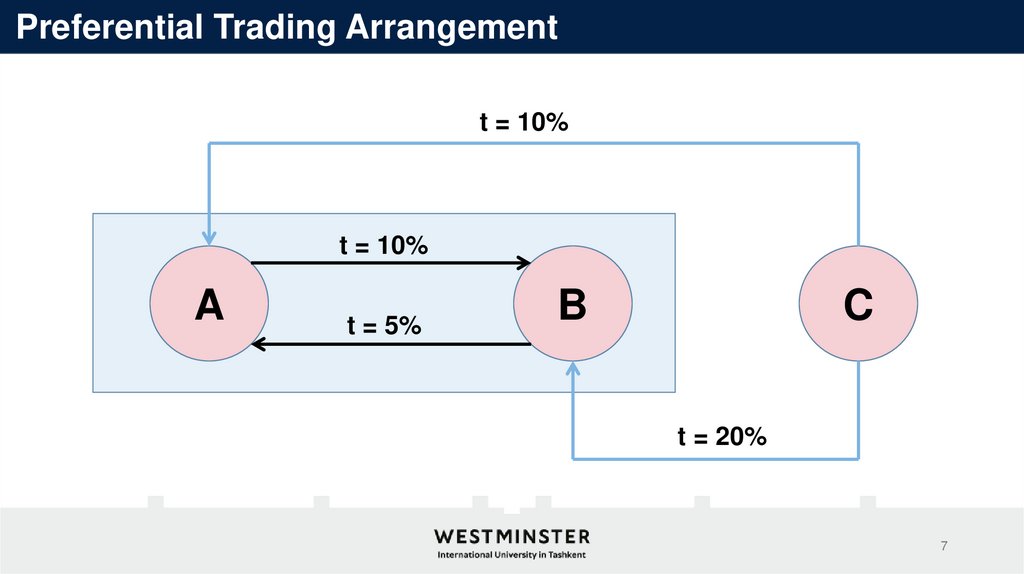
Preferential Trading Arrangementt = 10%
t = 10%
A
t = 5%
B
C
t = 20%
7
8.
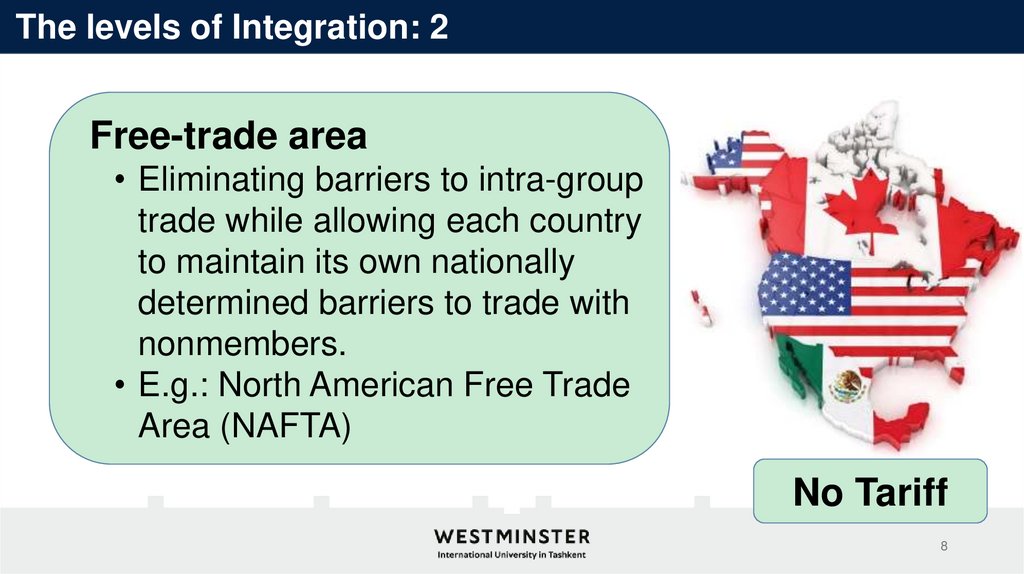
The levels of Integration: 2Free-trade area
• Eliminating barriers to intra-group
trade while allowing each country
to maintain its own nationally
determined barriers to trade with
nonmembers.
• E.g.: North American Free Trade
Area (NAFTA)
No Tariff
8
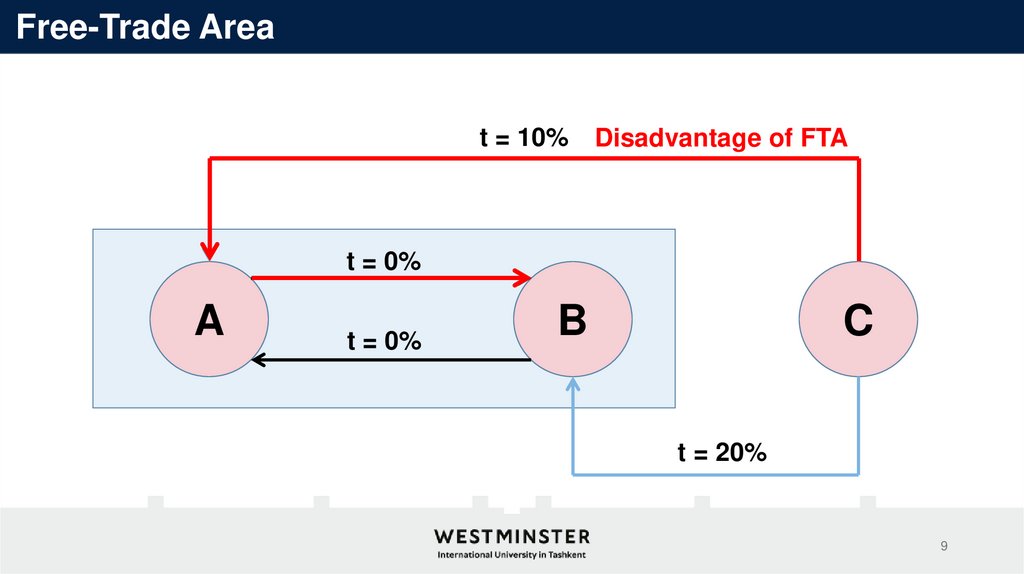
9.
Free-Trade Areat = 10%
Disadvantage of FTA
t = 0%
A
t = 0%
B
C
t = 20%
9
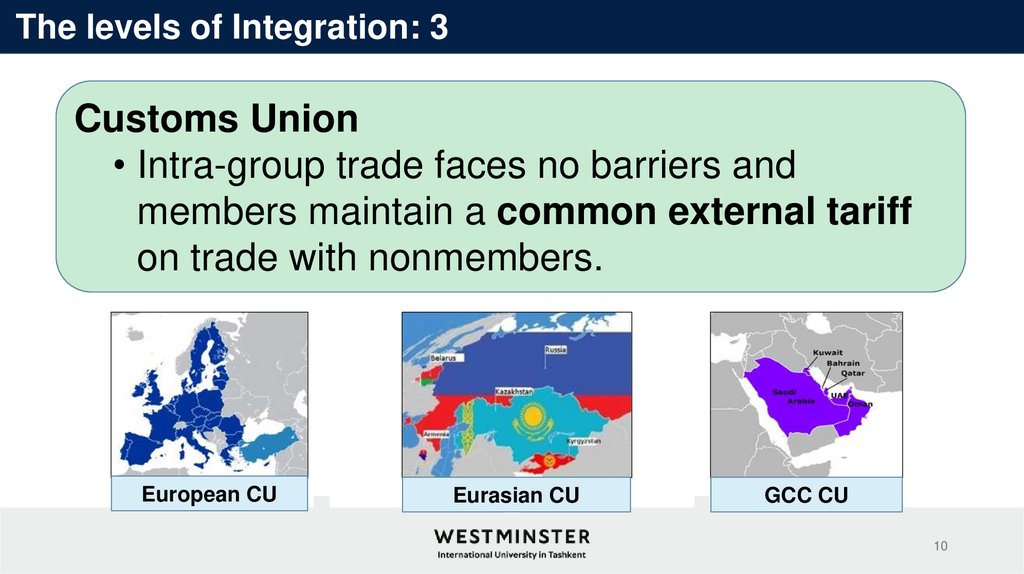
10.
The levels of Integration: 3Customs Union
• Intra-group trade faces no barriers and
members maintain a common external tariff
on trade with nonmembers.
European CU
Eurasian CU
GCC CU
10
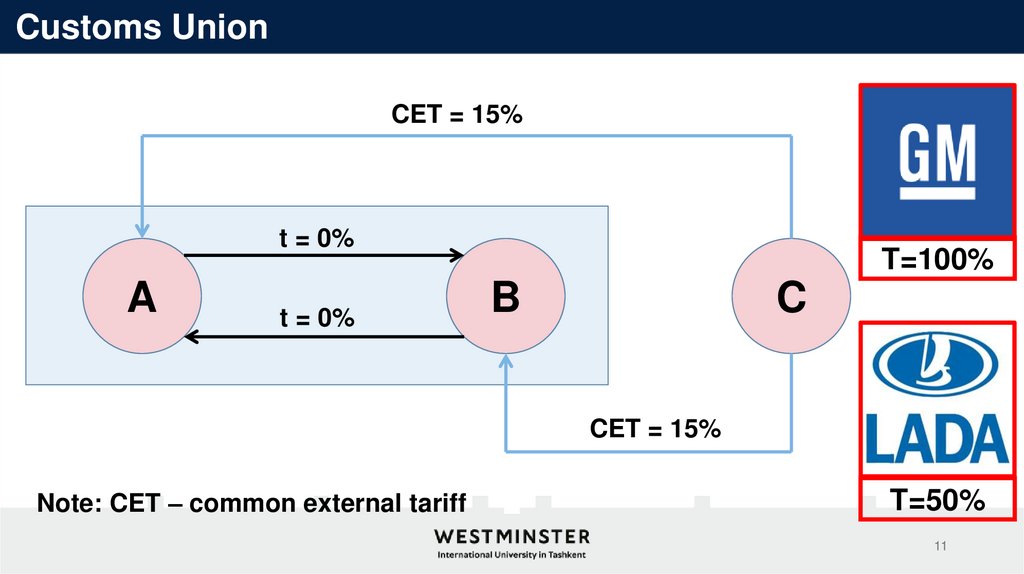
11.
Customs UnionCET = 15%
t = 0%
A
t = 0%
T=100%
B
C
CET = 15%
Note: CET – common external tariff
T=50%
11
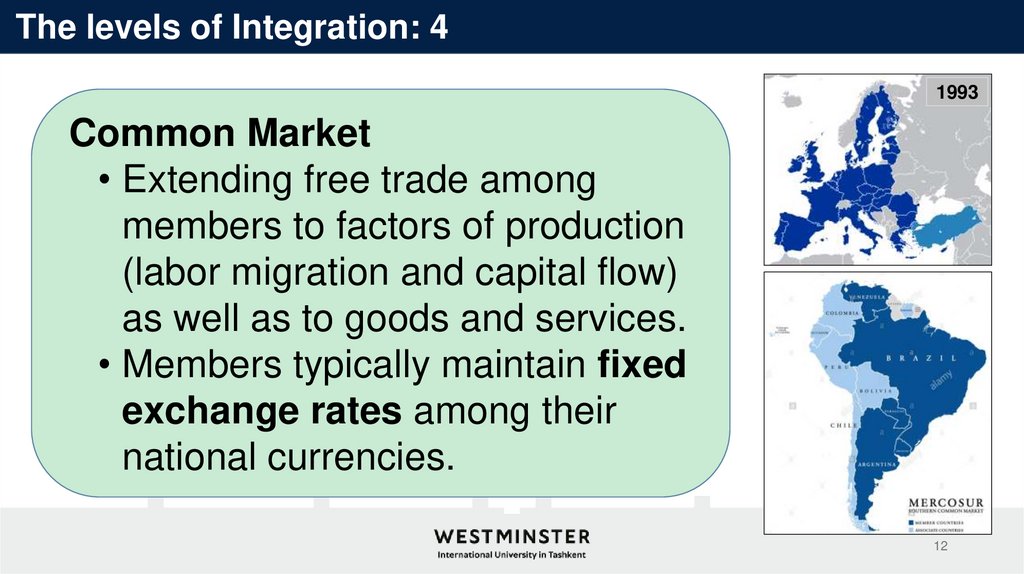
12.
The levels of Integration: 41993
Common Market
• Extending free trade among
members to factors of production
(labor migration and capital flow)
as well as to goods and services.
• Members typically maintain fixed
exchange rates among their
national currencies.
12
13.
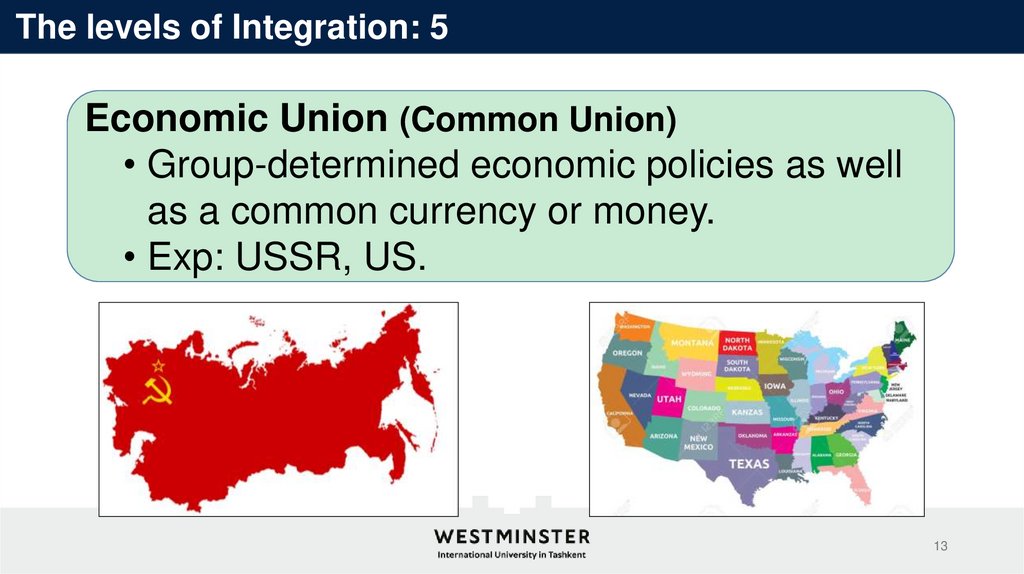
The levels of Integration: 5Economic Union (Common Union)
• Group-determined economic policies as well
as a common currency or money.
• Exp: USSR, US.
13
14.
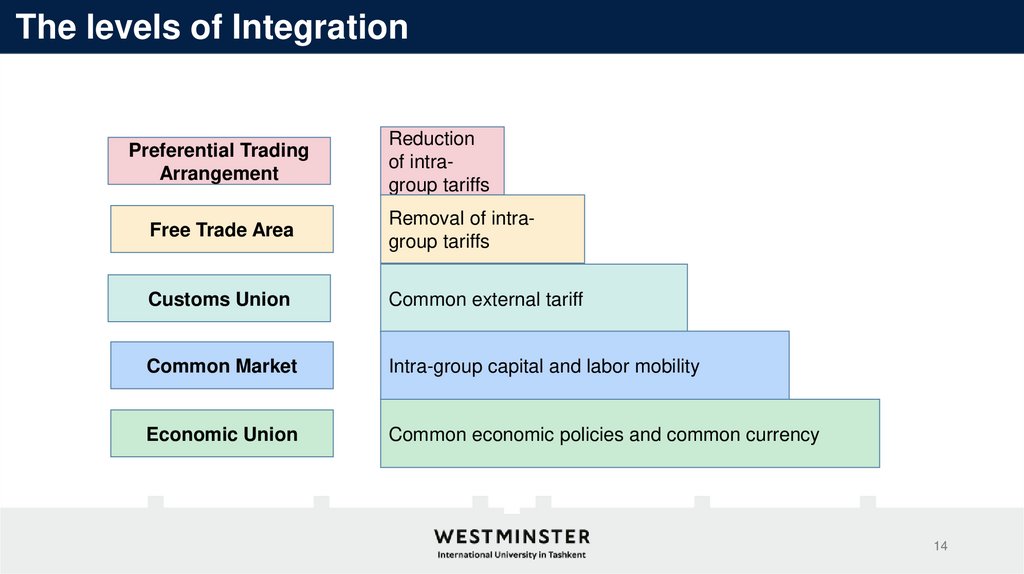
The levels of IntegrationPreferential Trading
Arrangement
Reduction
of intragroup tariffs
Free Trade Area
Removal of intragroup tariffs
Customs Union
Common external tariff
Common Market
Intra-group capital and labor mobility
Economic Union
Common economic policies and common currency
14
15.
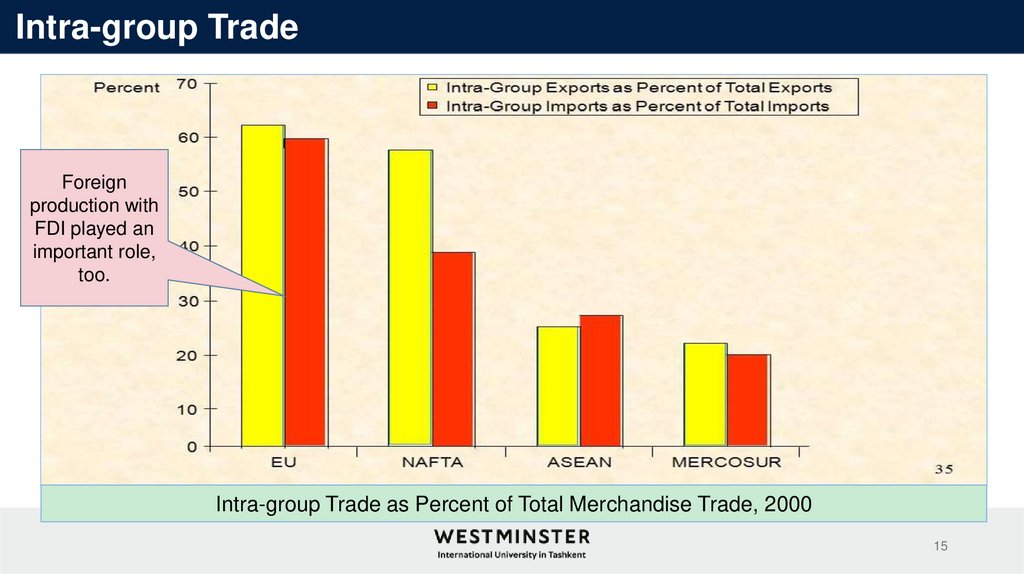
Intra-group TradeForeign
production with
FDI played an
important role,
too.
Intra-group Trade as Percent of Total Merchandise Trade, 2000
15
16.
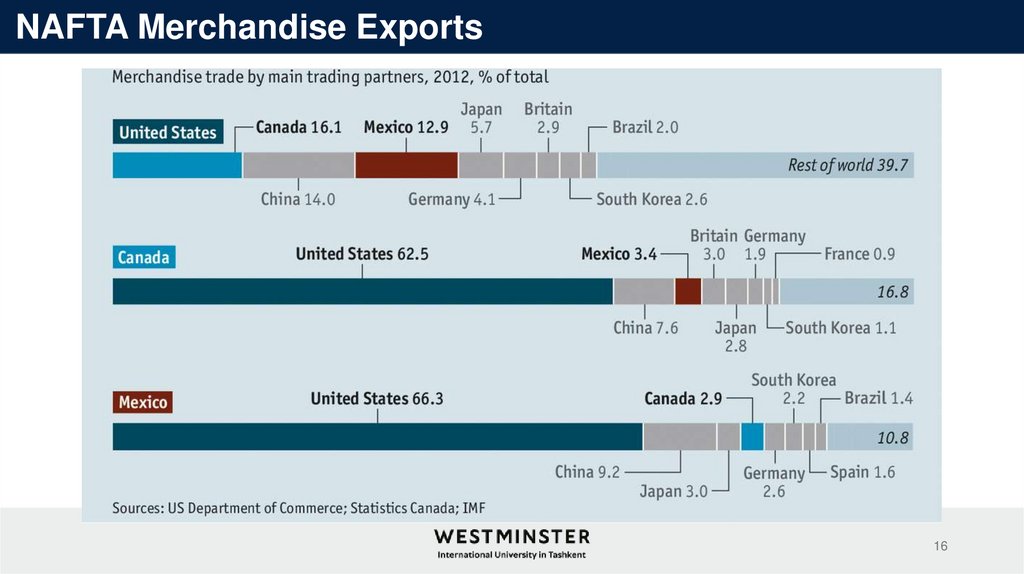
NAFTA Merchandise Exports16
17.
Trade Creationversus
Trade Diversion
17
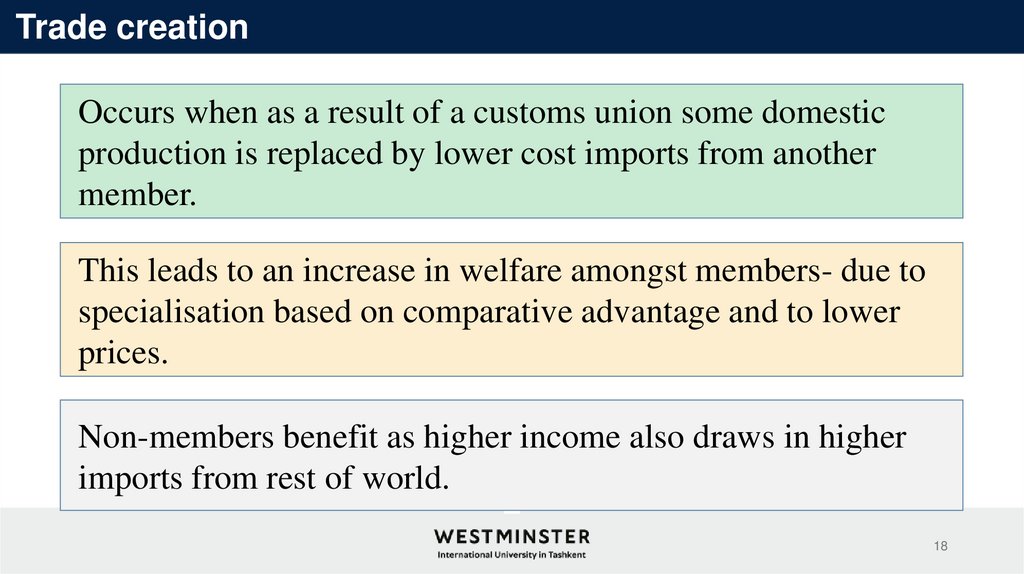
18.
Trade creationOccurs when as a result of a customs union some domestic
production is replaced by lower cost imports from another
member.
This leads to an increase in welfare amongst members- due to
specialisation based on comparative advantage and to lower
prices.
Non-members benefit as higher income also draws in higher
imports from rest of world.
18
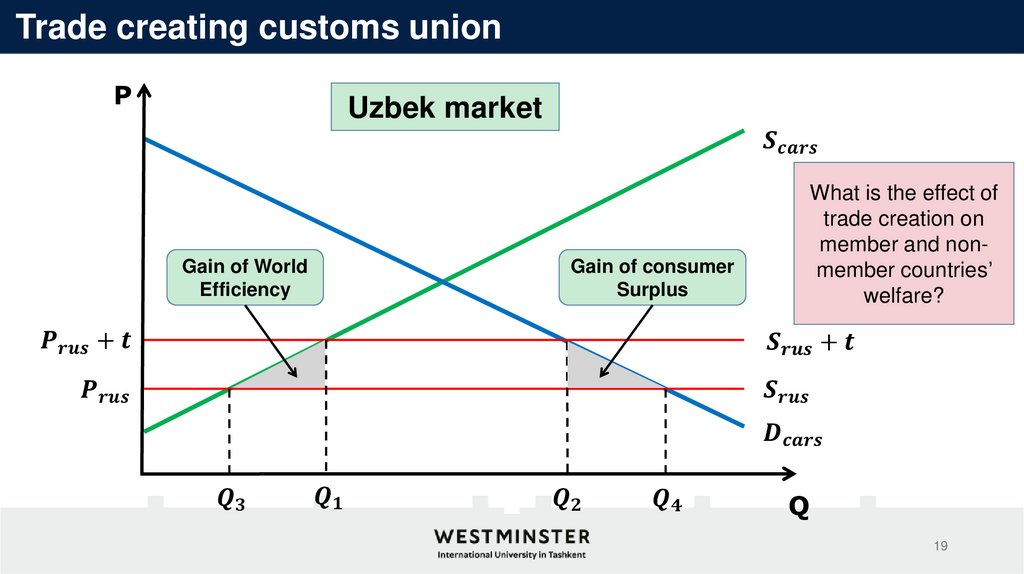
19.
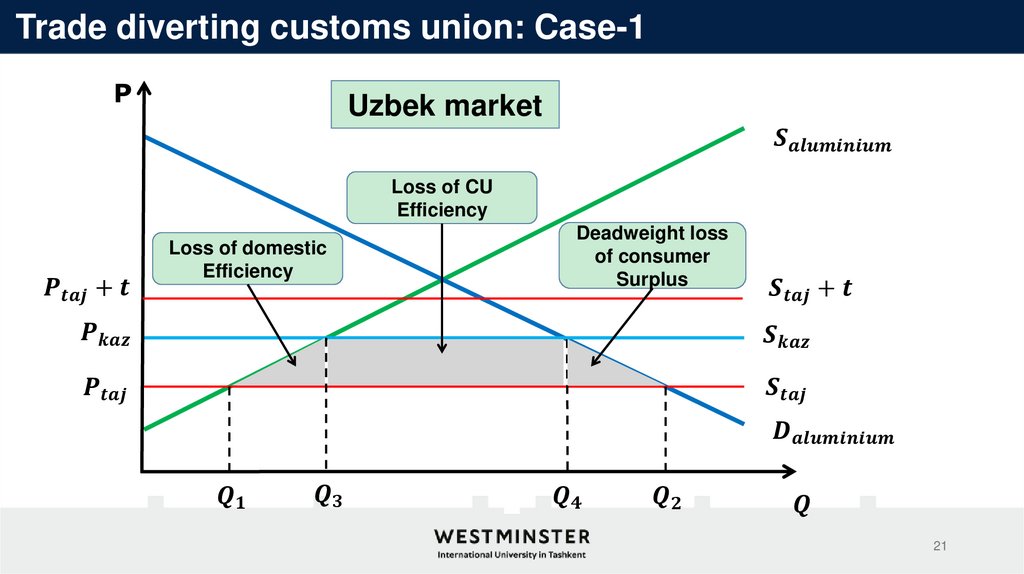
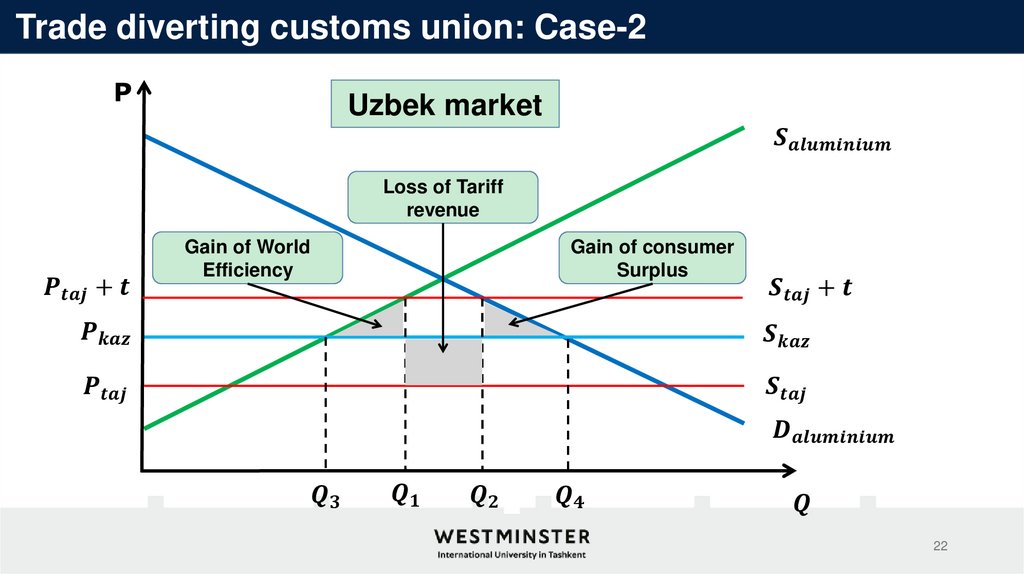
Trade creating customs unionP
Uzbek market