
Похожие презентации:
Bangor-University-and-MDIST-or-ETB3003.pptx (1)
1.
Bangor University & MDIST | ETB3003Smart Tourism: Bridging
Theory and Global Practice
Module Leader : Dr Lee Swee Yee, Eileen
Module Tutor:
Dc Firas Halawani
Assessment: Individual Presentation
Presented by Muqasan Xudoyqulov id: B2405576
An analytical exploration of how Information and Communication Technologies (ICT) are
reshaping the global tourism landscape, moving beyond traditional models toward data-driven
destination management.
2.
Introduction: The Digital ShiftThe tourism industry is currently undergoing a radical transformation
driven by the rapid proliferation of digital technologies. This evolution
has given rise to the Smart Tourism concept—a paradigm shift that
redefines how destinations interact with visitors.
• Rising demand for hyper-personalized travel experiences.
• Increased need for data-driven operational efficiency.
• A focus on the intersection of sustainability and technology.
Presentation Aim: To critically analyze the theoretical underpinnings of Smart Tourism and evaluate its practical application in contemporary global
destinations.
3.
Defining the Smart Tourism EcosystemSmart Tourism is not merely about "going digital." It is the strategic integration of advanced infrastructure to enhance the value of
tourism experiences and improve the efficiency of destination management.
Big Data & AI
IoT Integration
ICT Framework
Utilizing massive datasets to
Connecting physical objects—
The foundational Information and
predict traveler behavior,
from streetlights to hotel rooms—
Communication Technology that
optimize pricing, and automate
to a digital network for real-time
enables seamless connectivity
customer service through AI.
monitoring.
for the tourist.
4.
Theoretical FoundationsUnderstanding smart tourism requires a multi-disciplinary approach, drawing from
urban planning, behavioral economics, and technology adoption models.
Smart Cities Theory
1
The evolution of urban spaces into intelligent hubs where technology
serves the citizen—and by extension, the visitor.
Experience Economy
2
Pine & Gilmore’s theory suggests that "experience" is a distinct
economic offering, now amplified by digital immersion.
Technology Acceptance Model
3
The TAM framework evaluates how perceived usefulness and ease of
use determine a tourist's adoption of new tools.
5.
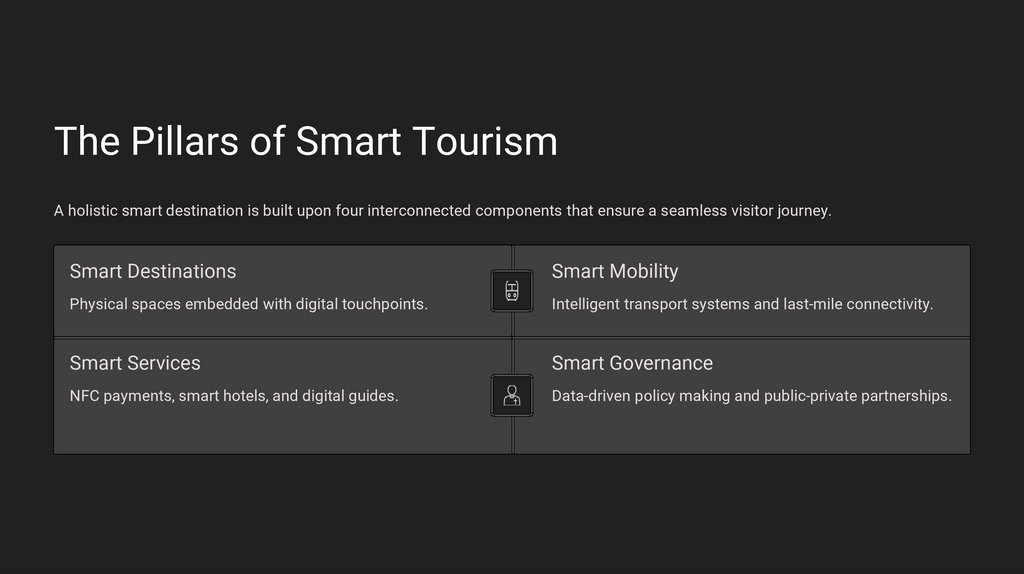
The Pillars of Smart TourismA holistic smart destination is built upon four interconnected components that ensure a seamless visitor journey.
Smart Destinations
Smart Mobility
Physical spaces embedded with digital touchpoints.
Intelligent transport systems and last-mile connectivity.
Smart Services
Smart Governance
NFC payments, smart hotels, and digital guides.
Data-driven policy making and public-private partnerships.
6.
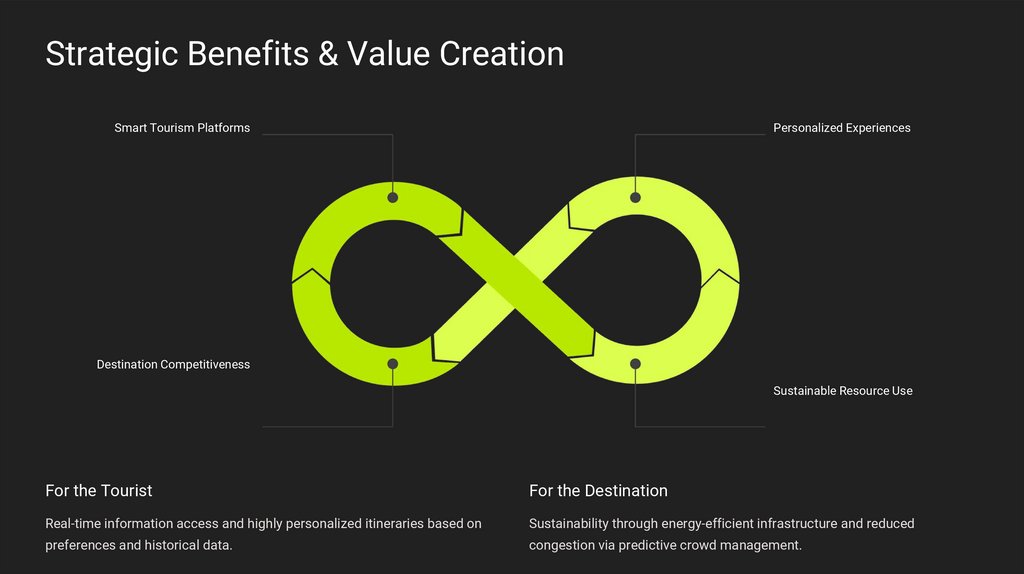
Strategic Benefits & Value CreationSmart Tourism Platforms
Personalized Experiences
Destination Competitiveness
Sustainable Resource Use
For the Tourist
For the Destination
Real-time information access and highly personalized itineraries based on
Sustainability through energy-efficient infrastructure and reduced
preferences and historical data.
congestion via predictive crowd management.
7.
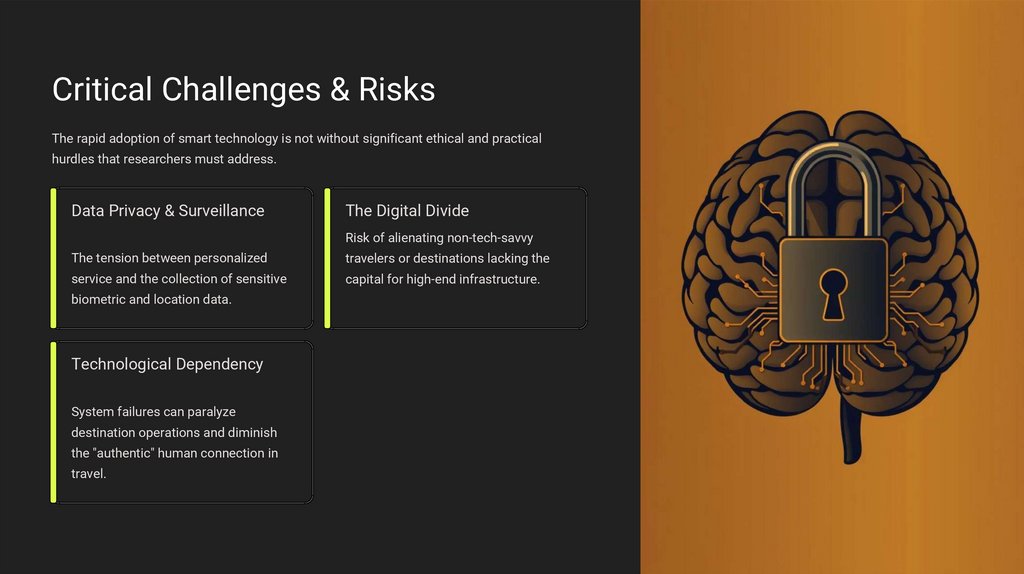
Critical Challenges & RisksThe rapid adoption of smart technology is not without significant ethical and practical
hurdles that researchers must address.
Data Privacy & Surveillance
The Digital Divide
Risk of alienating non-tech-savvy
The tension between personalized
travelers or destinations lacking the
service and the collection of sensitive
capital for high-end infrastructure.
biometric and location data.
Technological Dependency
System failures can paralyze
destination operations and diminish
the "authentic" human connection in
travel.
8.
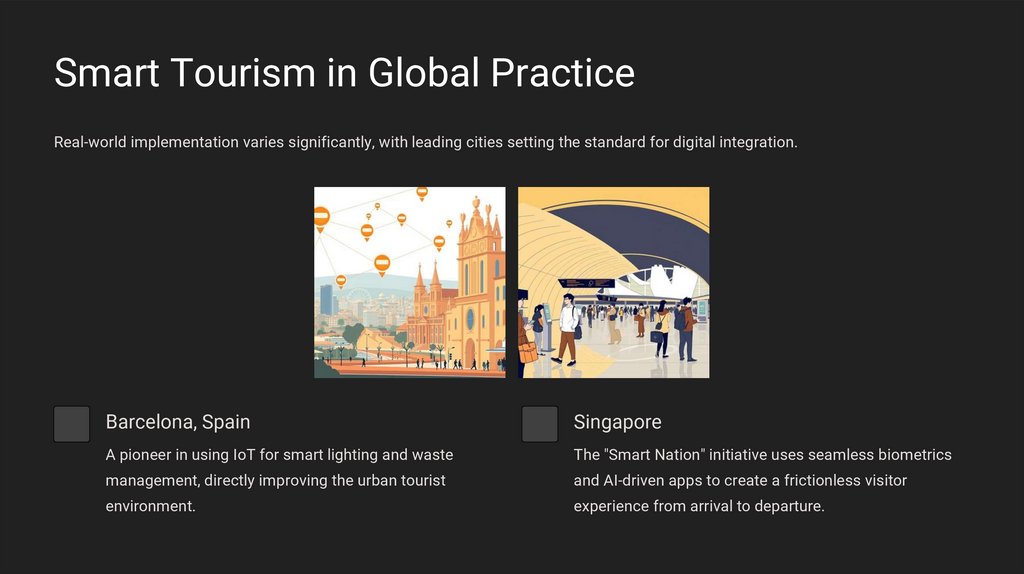
Smart Tourism in Global PracticeReal-world implementation varies significantly, with leading cities setting the standard for digital integration.
Barcelona, Spain
Singapore
A pioneer in using IoT for smart lighting and waste
The "Smart Nation" initiative uses seamless biometrics
management, directly improving the urban tourist
and AI-driven apps to create a frictionless visitor
environment.
experience from arrival to departure.
9.
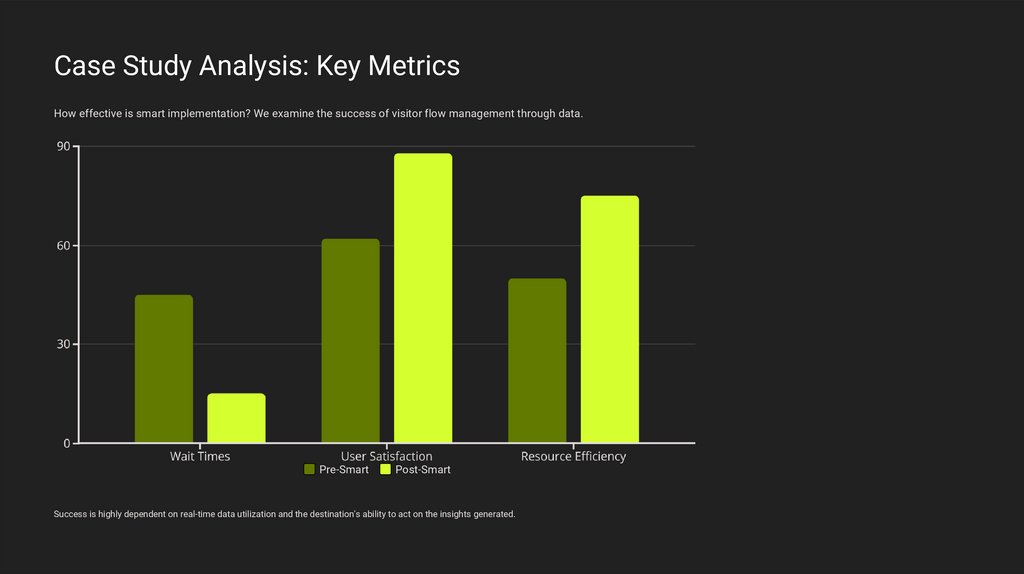
Case Study Analysis: Key MetricsHow effective is smart implementation? We examine the success of visitor flow management through data.
Pre-Smart
Post-Smart
Success is highly dependent on real-time data utilization and the destination's ability to act on the insights generated.
10.
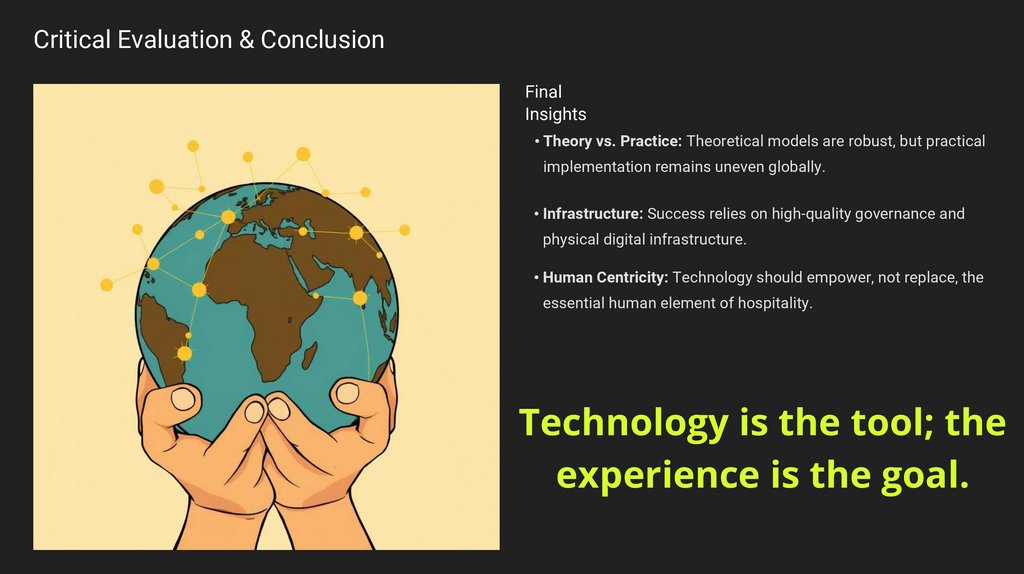
Critical Evaluation & ConclusionFinal
Insights
• Theory vs. Practice: Theoretical models are robust, but practical
implementation remains uneven globally.
• Infrastructure: Success relies on high-quality governance and
physical digital infrastructure.
• Human Centricity: Technology should empower, not replace, the
essential human element of hospitality.
Technology is the tool; the
experience is the goal.
11.
Thanks for attention12.
References• Buhalis, D. (2019) Technology in tourism: From information communication technologies to eTourism
and smart tourism. Tourism Review, 74(3), pp. 518–526.
• Gretzel, U., Sigala, M., Xiang, Z. and Koo, C. (2015) Smart tourism: foundations and developments.
Electronic Markets, 25(3), pp. 179–188.
• Pine, B.J. and Gilmore, J.H. (1999) The Experience Economy: Work Is Theatre & Every Business a Stage.
Boston: Harvard Business School Press.
• UNWTO (2023) Smart tourism destinations. Madrid: World Tourism Organization.
• Buhalis, D. and Amaranggana, A. (2014) Smart tourism destinations. In: Xiang, Z. and Tussyadiah, I.
(eds.) Information and Communication Technologies in Tourism 2014. Cham: Springer, pp. 553–564.
• Xiang, Z., Tussyadiah, I. and Buhalis, D. (2015) Smart destinations: Foundations, analytics, and
applications. Journal of Destination Marketing & Management, 4(3), pp. 143–144.
• Davis, F.D. (1989) Perceived usefulness, perceived ease of use, and user acceptance of information
technology. MIS Quarterly, 13(3), pp. 319–340.
• Sigala, M. (2018) Social media and customer engagement in the tourism industry. International
Journal of Contemporary Hospitality Management, 30(1), pp. 179–209.