
 Право
ПравоПохожие презентации:








Conflict of interest in the engineering profession
1.
FGBOU VO SibADIInstitute of Road and Industrial and Civil Engineering
Department of Industrial and Civil Engineering
Subject: Conflict of interest in the engineering profession
The presentation was prepared by a student from the PGSb-25CZ1
study group Teterin S.D
Omsk 2025
2.
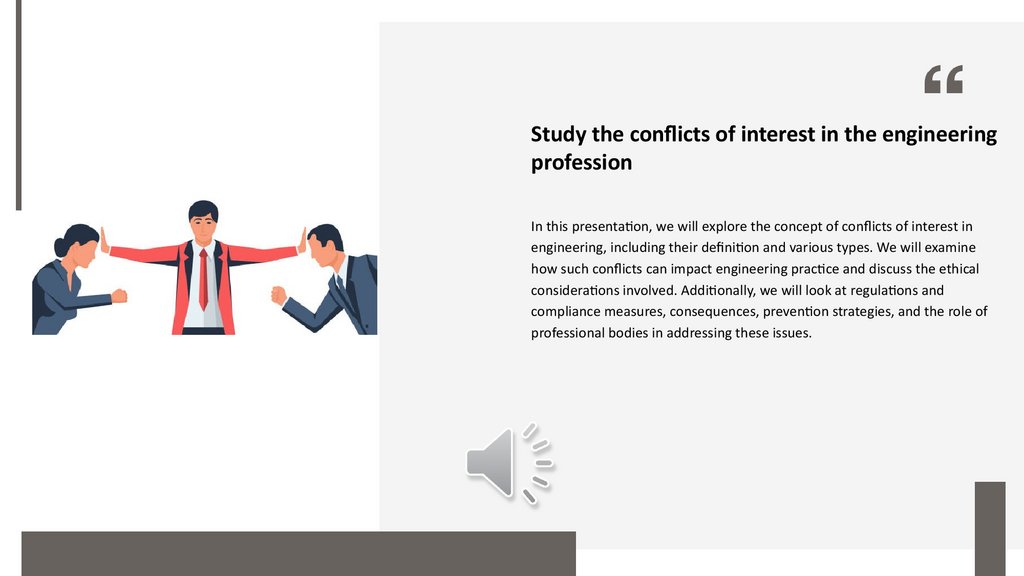
Study the conflicts of interest in the engineeringprofession
In this presentation, we will explore the concept of conflicts of interest in
engineering, including their definition and various types. We will examine
how such conflicts can impact engineering practice and discuss the ethical
considerations involved. Additionally, we will look at regulations and
compliance measures, consequences, prevention strategies, and the role of
professional bodies in addressing these issues.
3.
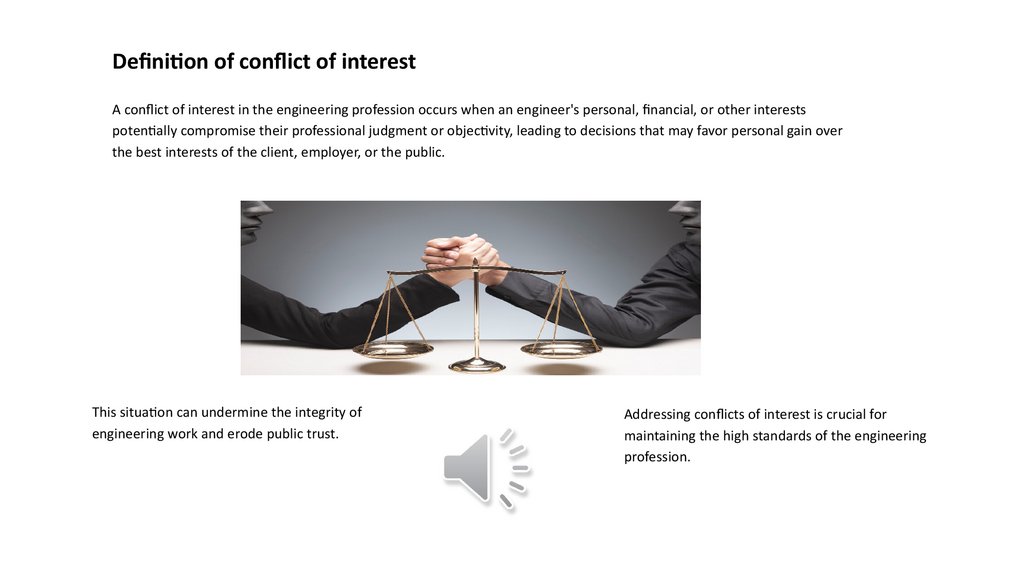
Definition of conflict of interestA conflict of interest in the engineering profession occurs when an engineer's personal, financial, or other interests
potentially compromise their professional judgment or objectivity, leading to decisions that may favor personal gain over
the best interests of the client, employer, or the public.
This situation can undermine the integrity of
engineering work and erode public trust.
Addressing conflicts of interest is crucial for
maintaining the high standards of the engineering
profession.
4.
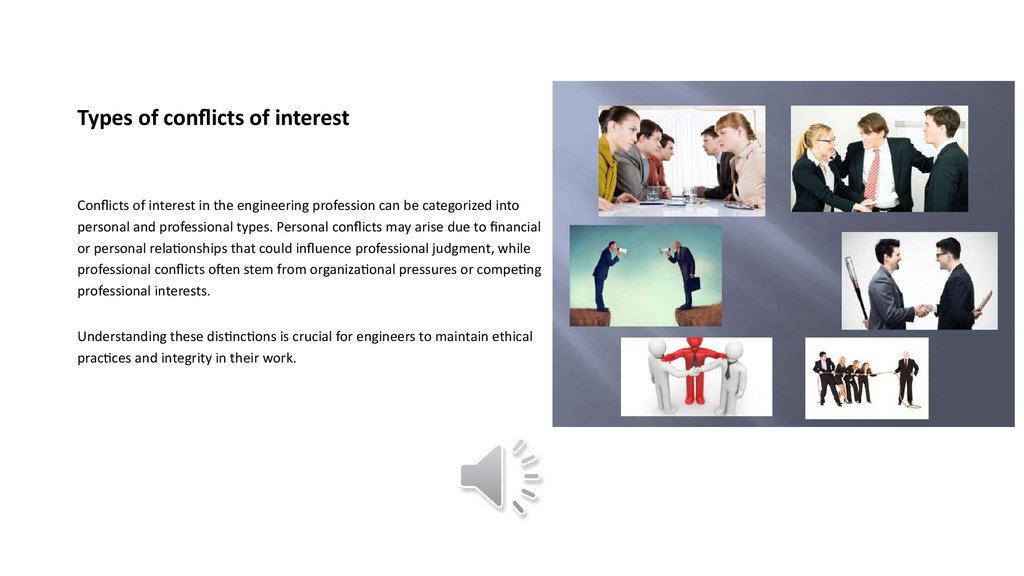
Types of conflicts of interestConflicts of interest in the engineering profession can be categorized into
personal and professional types. Personal conflicts may arise due to financial
or personal relationships that could influence professional judgment, while
professional conflicts often stem from organizational pressures or competing
professional interests.
Understanding these distinctions is crucial for engineers to maintain ethical
practices and integrity in their work.
5.
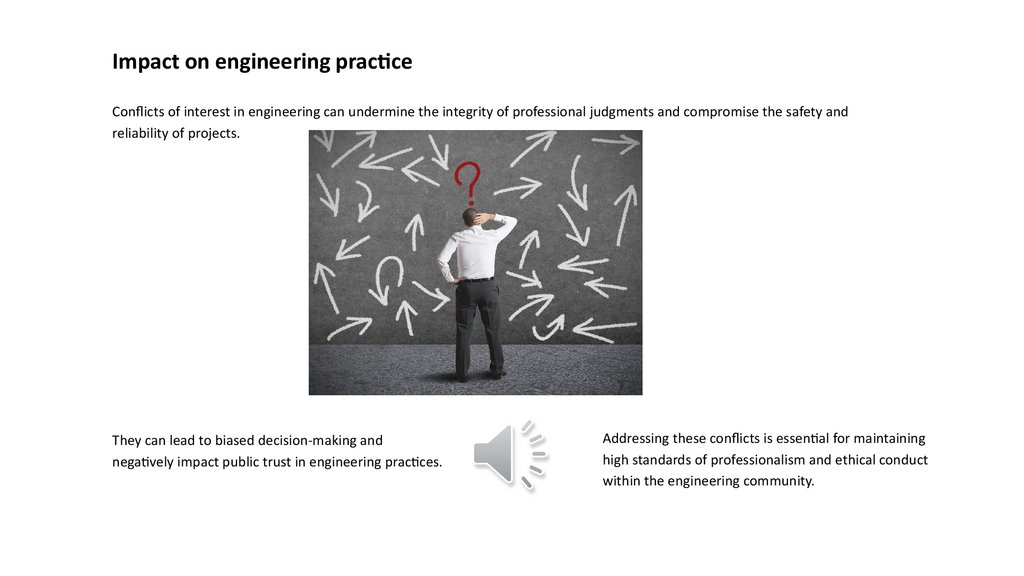
Impact on engineering practiceConflicts of interest in engineering can undermine the integrity of professional judgments and compromise the safety and
reliability of projects.
They can lead to biased decision-making and
negatively impact public trust in engineering practices.
Addressing these conflicts is essential for maintaining
high standards of professionalism and ethical conduct
within the engineering community.
6.
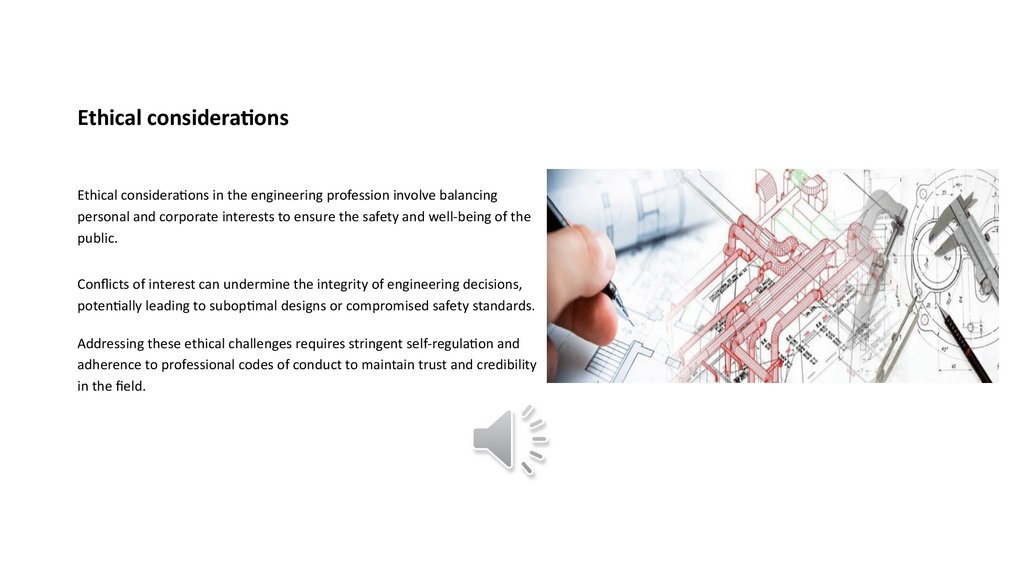
Ethical considerationsEthical considerations in the engineering profession involve balancing
personal and corporate interests to ensure the safety and well-being of the
public.
Conflicts of interest can undermine the integrity of engineering decisions,
potentially leading to suboptimal designs or compromised safety standards.
Addressing these ethical challenges requires stringent self-regulation and
adherence to professional codes of conduct to maintain trust and credibility
in the field.
7.
Regulation and complianceEngineering professionals must adhere to strict regulatory standards and ethical
guidelines to ensure compliance with industry regulations.
Conflicts of interest can lead to non-compliance and reputational damage, undermining
public trust and professional integrity.
Regulatory bodies oversee adherence to these standards and can impose penalties for
violations, highlighting the importance of ethical conduct in engineering practice.
8.
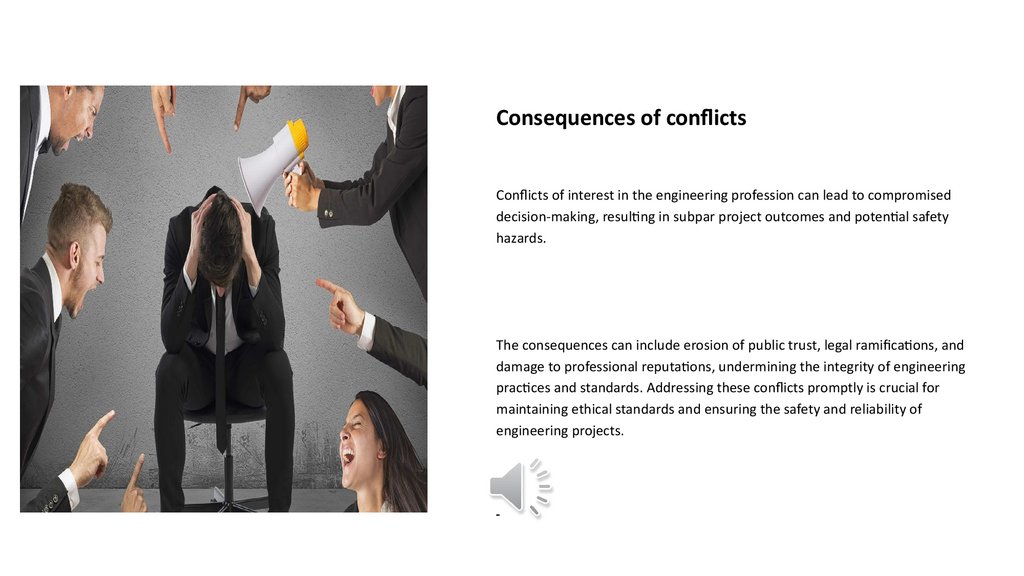
Consequences of conflictsConflicts of interest in the engineering profession can lead to compromised
decision-making, resulting in subpar project outcomes and potential safety
hazards.
The consequences can include erosion of public trust, legal ramifications, and
damage to professional reputations, undermining the integrity of engineering
practices and standards. Addressing these conflicts promptly is crucial for
maintaining ethical standards and ensuring the safety and reliability of
engineering projects.
9.
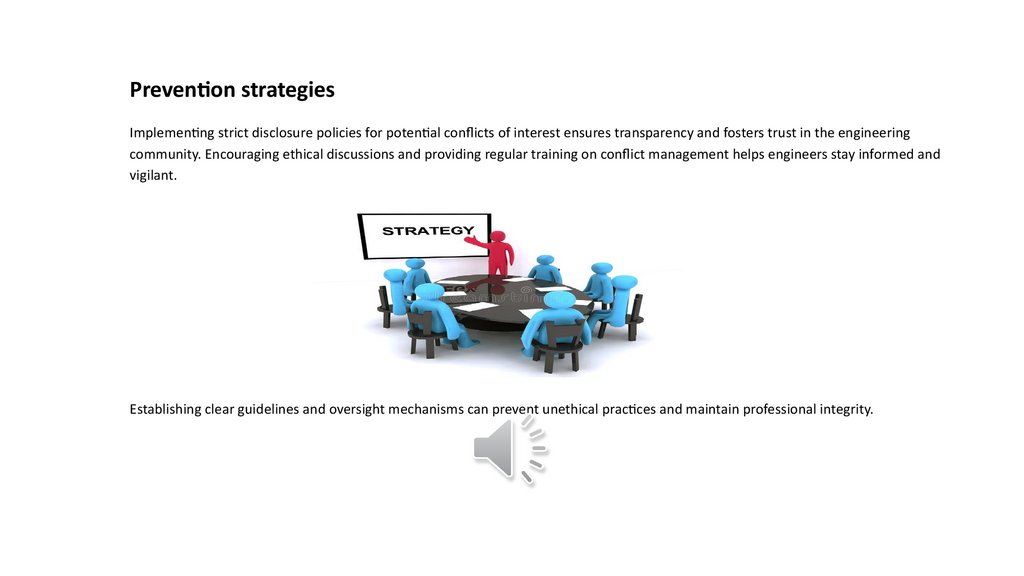
Prevention strategiesImplementing strict disclosure policies for potential conflicts of interest ensures transparency and fosters trust in the engineering
community. Encouraging ethical discussions and providing regular training on conflict management helps engineers stay informed and
vigilant.
Establishing clear guidelines and oversight mechanisms can prevent unethical practices and maintain professional integrity.
10.
Role of professional bodiesProfessional bodies play a crucial role in maintaining ethical standards and
integrity within the engineering profession.
They provide guidelines and regulations to prevent conflicts of interest,
ensuring that engineers adhere to high moral and professional principles.
Additionally, these organizations offer support and resources for resolving
ethical dilemmas, fostering a culture of accountability and transparency.
11.
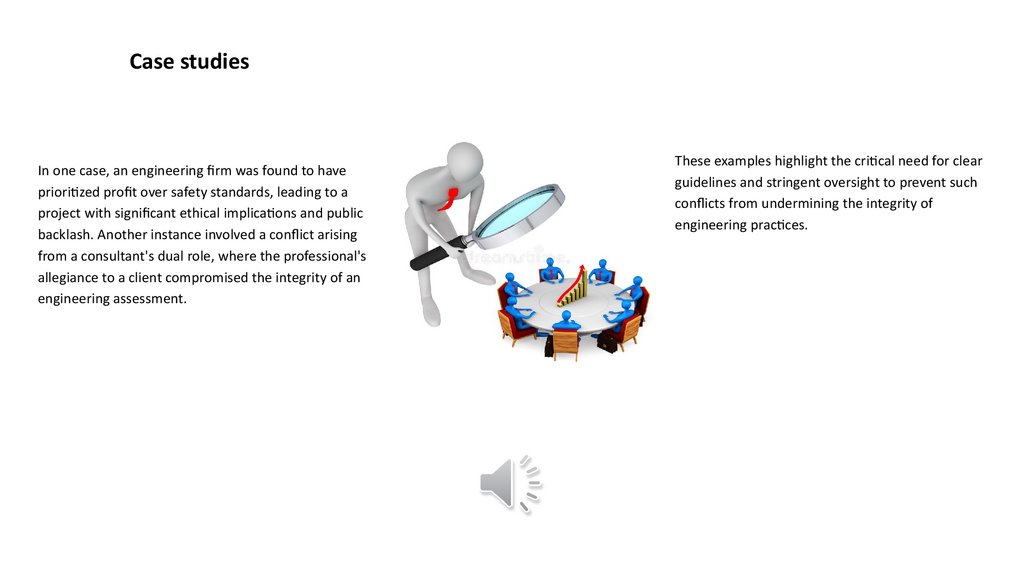
Case studiesIn one case, an engineering firm was found to have
prioritized profit over safety standards, leading to a
project with significant ethical implications and public
backlash. Another instance involved a conflict arising
from a consultant's dual role, where the professional's
allegiance to a client compromised the integrity of an
engineering assessment.
These examples highlight the critical need for clear
guidelines and stringent oversight to prevent such
conflicts from undermining the integrity of
engineering practices.
12.
Спасибо за внимание!Спасибо за внимание! В этой презентации мы рассмотрели понятие конфликта интересов в инженерной профессии, изучили
его виды и влияние на практику, а также обсудили стратегии предотвращения и роль профессиональных организаций в
регулировании.