
 Лингвистика
Похожие презентации:






Theory of Conceptual Metaphor
1. LECTURE 5
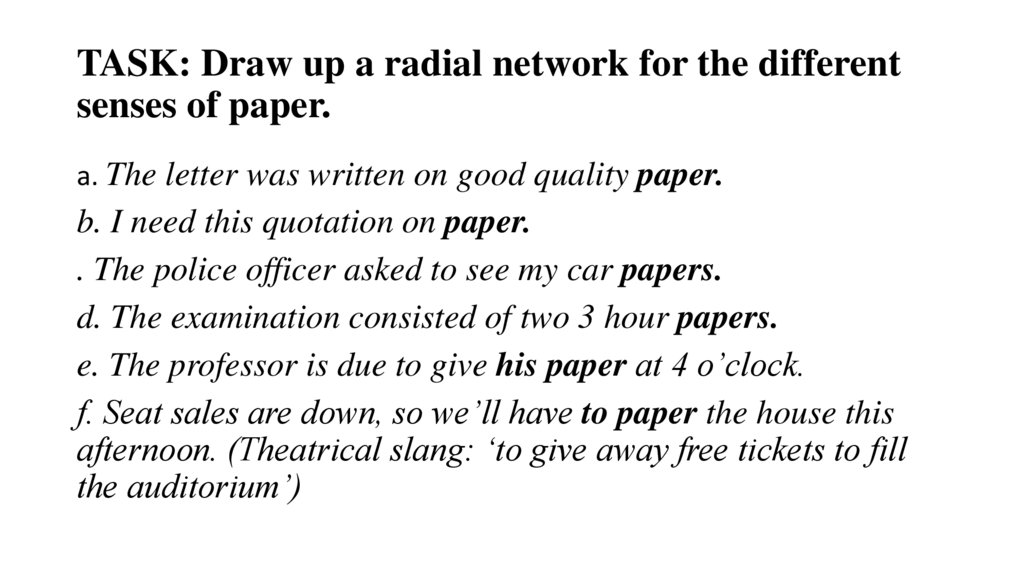
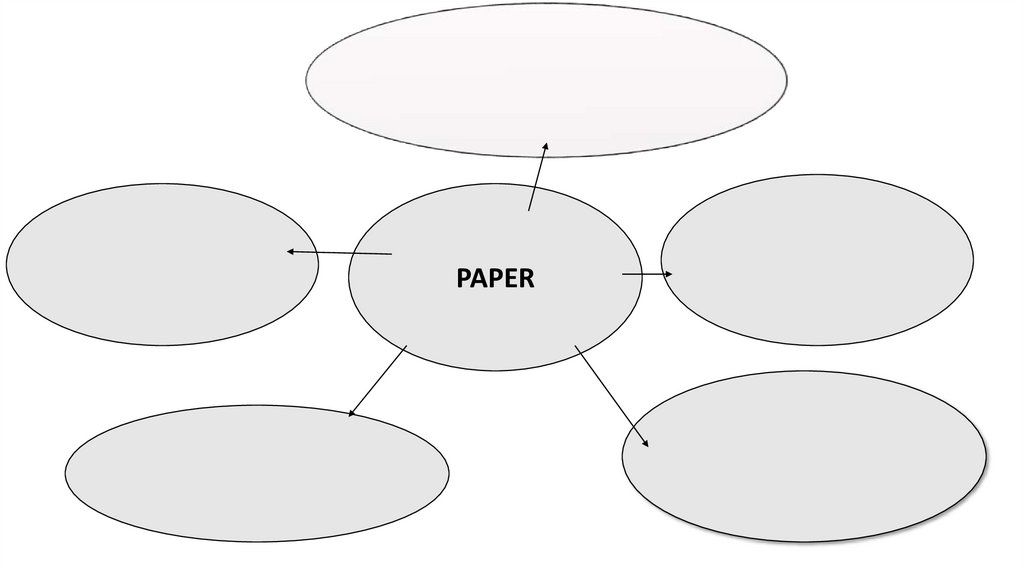
Theory of Conceptual Metaphor2. TASK: Draw up a radial network for the different senses of paper.
a. The letter was written on good quality paper.b. I need this quotation on paper.
. The police officer asked to see my car papers.
d. The examination consisted of two 3 hour papers.
e. The professor is due to give his paper at 4 o’clock.
f. Seat sales are down, so we’ll have to paper the house this
afternoon. (Theatrical slang: ‘to give away free tickets to fill
the auditorium’)
3.
PAPER4. Plan:
• Theory of conceptual metaphor• Orientational, onthological, structural metaphors
• Cognitive functions of metaphor.
5. Metaphor
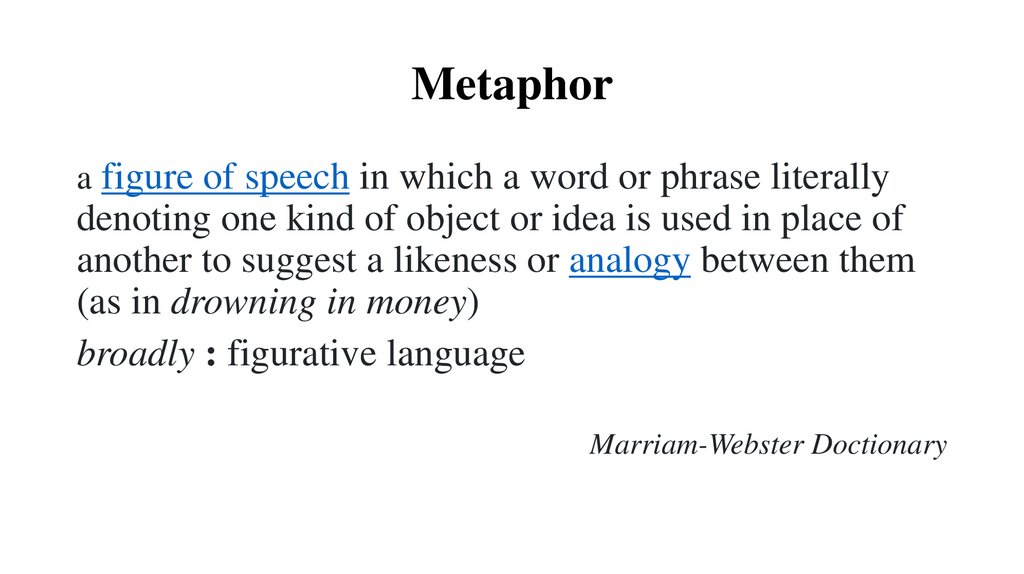
a figure of speech in which a word or phrase literallydenoting one kind of object or idea is used in place of
another to suggest a likeness or analogy between them
(as in drowning in money)
broadly : figurative language
Marriam-Webster Doctionary
6. Metaphorical examples
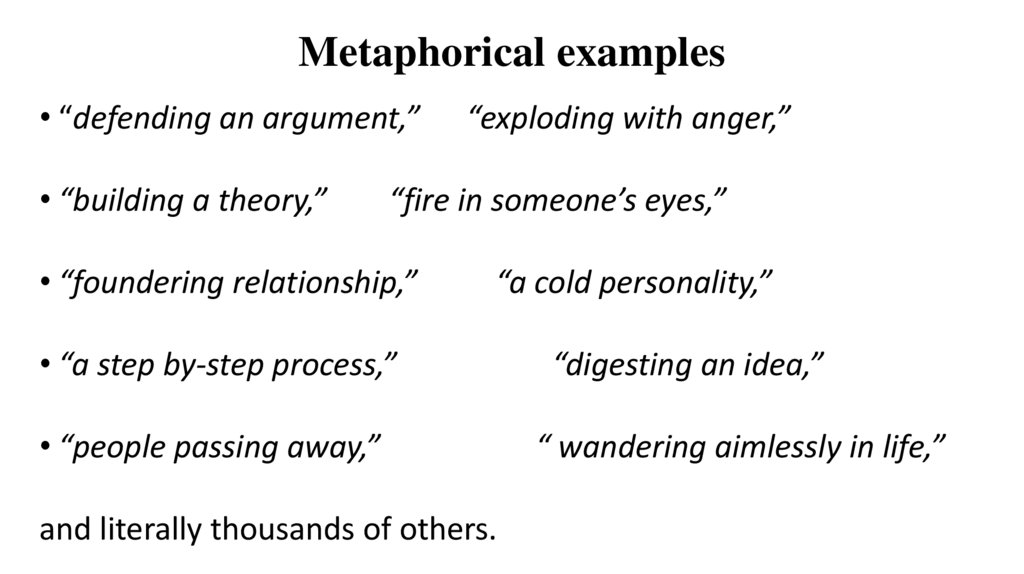
• “defending an argument,”• “building a theory,”
“exploding with anger,”
“fire in someone’s eyes,”
• “foundering relationship,”
“a cold personality,”
• “a step by-step process,”
“digesting an idea,”
• “people passing away,”
“ wandering aimlessly in life,”
and literally thousands of others.
7. Metaphor in cognitive aspect
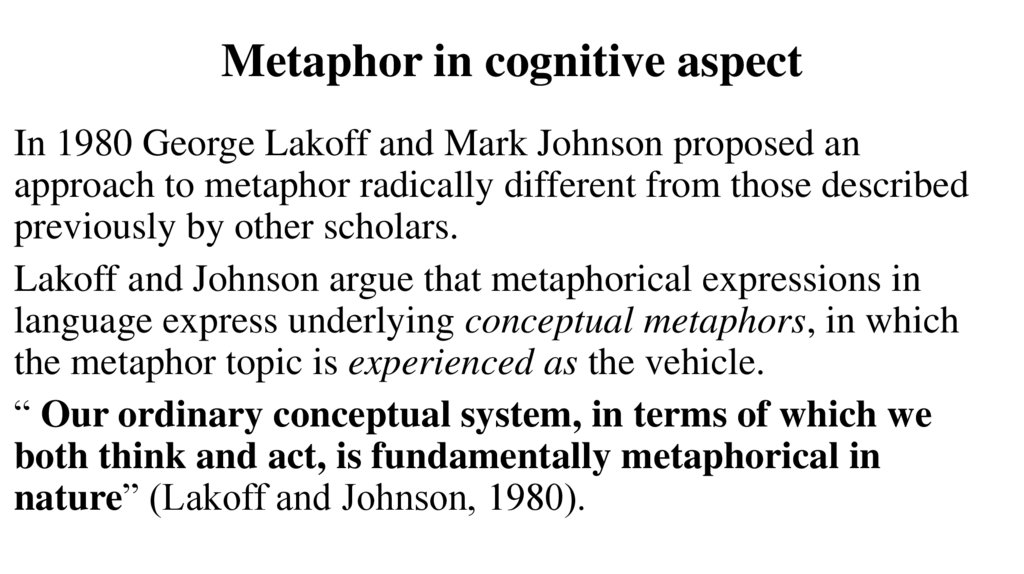
In 1980 George Lakoff and Mark Johnson proposed anapproach to metaphor radically different from those described
previously by other scholars.
Lakoff and Johnson argue that metaphorical expressions in
language express underlying conceptual metaphors, in which
the metaphor topic is experienced as the vehicle.
“ Our ordinary conceptual system, in terms of which we
both think and act, is fundamentally metaphorical in
nature” (Lakoff and Johnson, 1980).
8. Conceptual metaphor
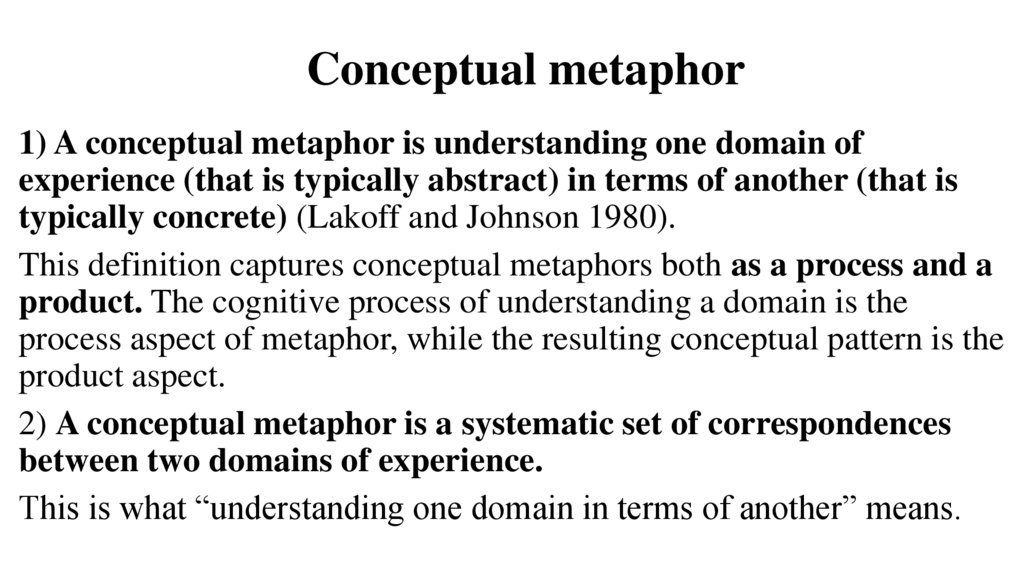
1) A conceptual metaphor is understanding one domain ofexperience (that is typically abstract) in terms of another (that is
typically concrete) (Lakoff and Johnson 1980).
This definition captures conceptual metaphors both as a process and a
product. The cognitive process of understanding a domain is the
process aspect of metaphor, while the resulting conceptual pattern is the
product aspect.
2) A conceptual metaphor is a systematic set of correspondences
between two domains of experience.
This is what “understanding one domain in terms of another” means.
9.
• In their Metaphors We Live By, Lakoff and Johnson (1980)suggested that metaphors are pervasive not only in certain
genres striving to create some artistic effect (such as
literature) but also in the most neutral, i.e., most
nondeliberately used forms of language.
• CMT researchers, especially in the early stages of work on
conceptual metaphors, collected linguistic metaphors from a
variety of sources: TV and radio broadcasts, dictionaries,
newspapers and magazines, conversations, their own
linguistic repertoires, and several others.
10. MODEL: ANGER IS FIRE
• Therefore the wrath of the Lord was kindled against His people, Sothat He abhorred His own inheritance. (Psalms 106:40) (CharterisBlack 2017: 80)
• McInturff backed McCain’s decision to ignore the minister’s
inflammatory anti-America comments because it would have been seen
as race-baiting and sparked racial anger and protests. (CharterisBlack 2017: 44)
• Her ears were burning with rage. It was a commingling of pride,
anger, pain and frustration that determined what she was able to do in
the next few moments. (Charteris-Black 2017: 49)
11. ANGER IS FIRE
• I see him now – his eyes blazing forth with indignation andhis rusty tousled head of hair standing on end – leading forth
on the miseries of the Gorbals district and the East End of
Glasgow
• I was quite moved: I thought everybody appreciated to the
full the enthusiastic and fiery speech: The whole passion of
the man called out for justice to be handed out to the working
classes in the various parts of the city. (Nicholson, 18th June
1947) (Charteris-Black 2017: 164)
12. Fell in love
Fell in love• 3)According to Lakoff and Johnson, ‘fell in love’ expresses the
conceptual metaphors LOVE IS A CONTAINER and CONTROL IS UP /
LOSS OF CONTROL IS DOWN.
• When we use these metaphors we experience love as a
container that encloses the lover. We experience the onset of love, in
which lovers are no longer in control of their emotions, as falling
through physical space.
13. A RELATIONSHIP THAT ‘DIDN’T GO ANYWHERE’ AND WAS ‘A DEAD-END,
• When we speak or hear of a relationship that ‘didn’t go anywhere’and was ‘a dead-end,’ we understand the relationship in terms of the
conceptual metaphor LOVE IS A JOURNEY, and experience the failure
as a cessation of motion through physical space that is caused by
being ‘on a street that is blocked.’
14. A TARGET DOMAIN ↔THE SOURCE DOMAIN
•Usually conceptual metaphor is a way ofunderstanding something abstract (a target
domain) in terms of something concrete (the
source domain).
•Target Domain is Source Domain.
15. Model: Personality is Temperature.
• “Personality” is a complex idea made up of emotions,thoughts, behaviors and more. Temperature is a direct
felt experience — we know what it’s like to be hot or
cold. In order to “get a hold of” that complex idea of
“Personality”, we use the idea of heat and cold.
• We say “he’s a bit of a cold person” to understand a
person’s emotions, behavior, and temperament.
16. Conceptual metaphor linguistic metaphor
• A linguistic metaphor is a surface manifestation (in the form of aword, phrase or sentence) of interspatial projection in the conceptual
system.
• A conceptual metaphor is a conceptual basis, idea, or image common
to a number of linguistic expressions. The focus of metaphor is not in
language, but in the way one mental domain is conceptualized in
terms of another.
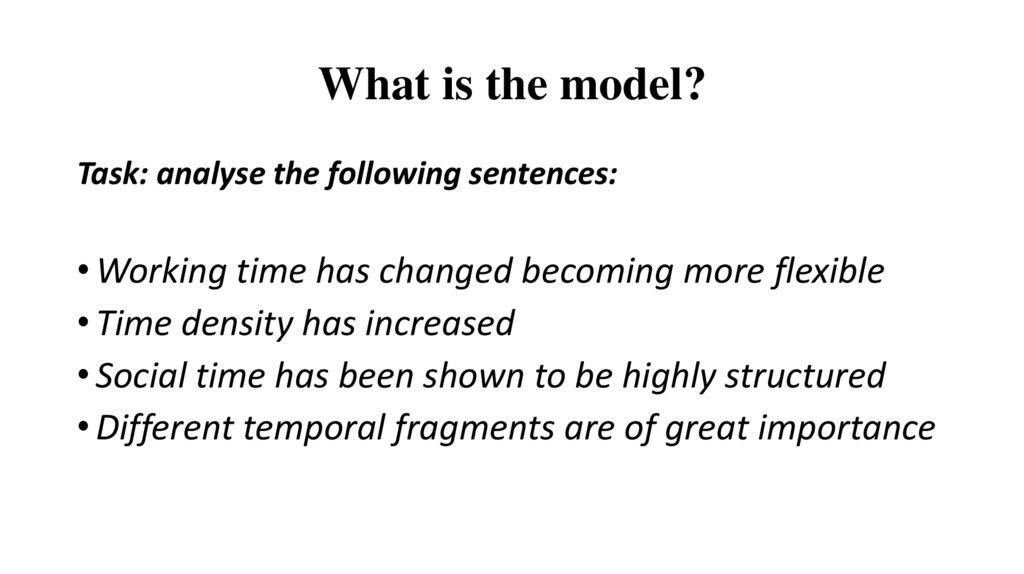
17. What is the model?
Task: analyse the following sentences:• Working time has changed becoming more flexible
• Time density has increased
• Social time has been shown to be highly structured
• Different temporal fragments are of great importance
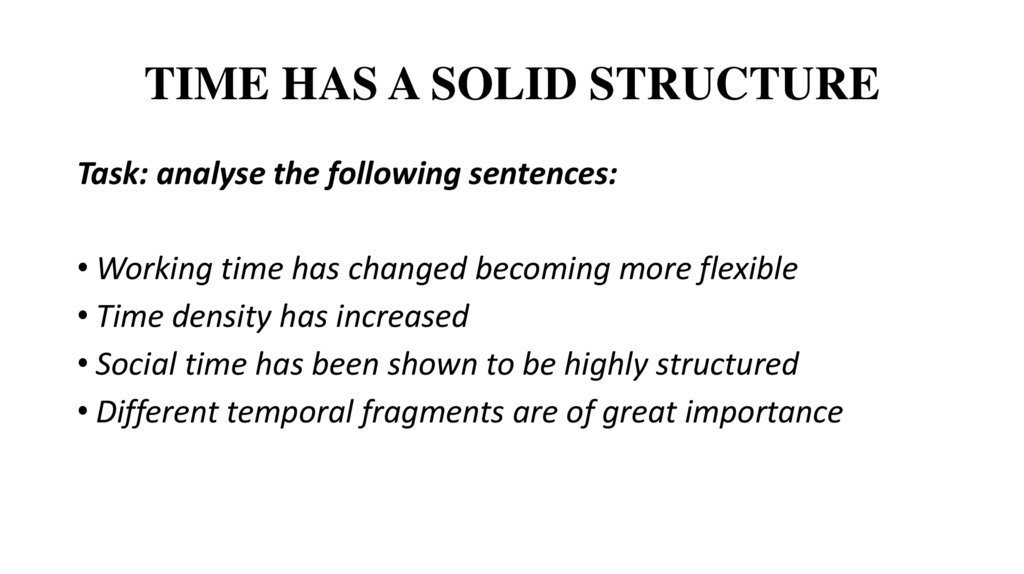
18. TIME HAS A SOLID STRUCTURE
Task: analyse the following sentences:• Working time has changed becoming more flexible
• Time density has increased
• Social time has been shown to be highly structured
• Different temporal fragments are of great importance
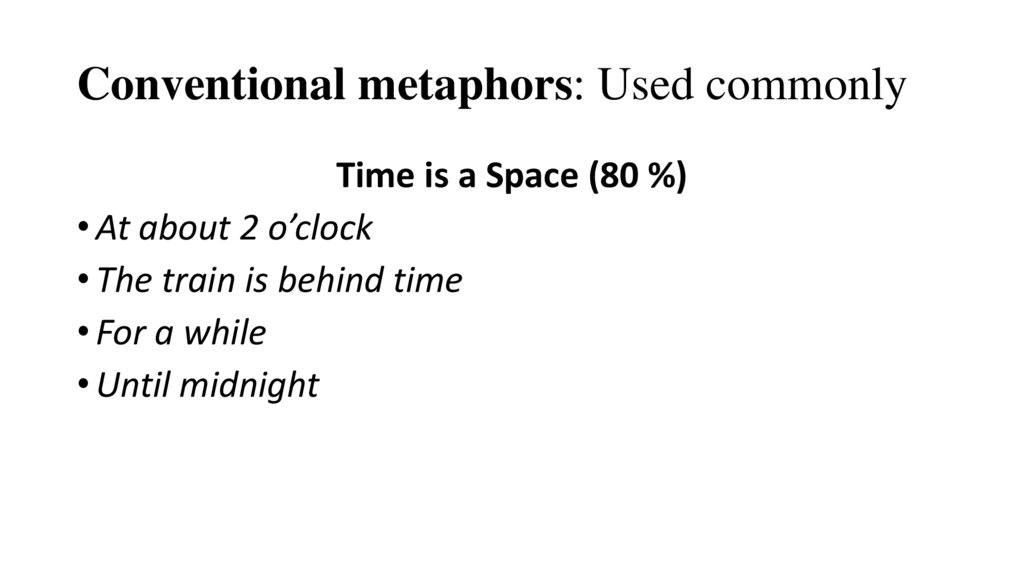
19. Conventional metaphors: Used commonly
Time is a Space (80 %)• At about 2 o’clock
• The train is behind time
• For a while
• Until midnight
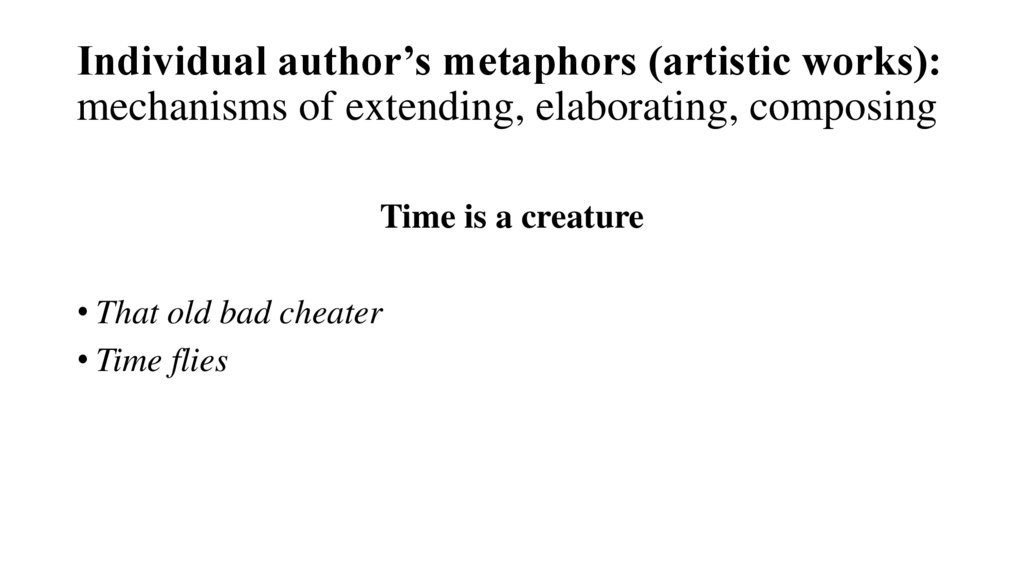
20. Individual author’s metaphors (artistic works): mechanisms of extending, elaborating, composing
Time is a creature• That old bad cheater
• Time flies
21. Watching the video
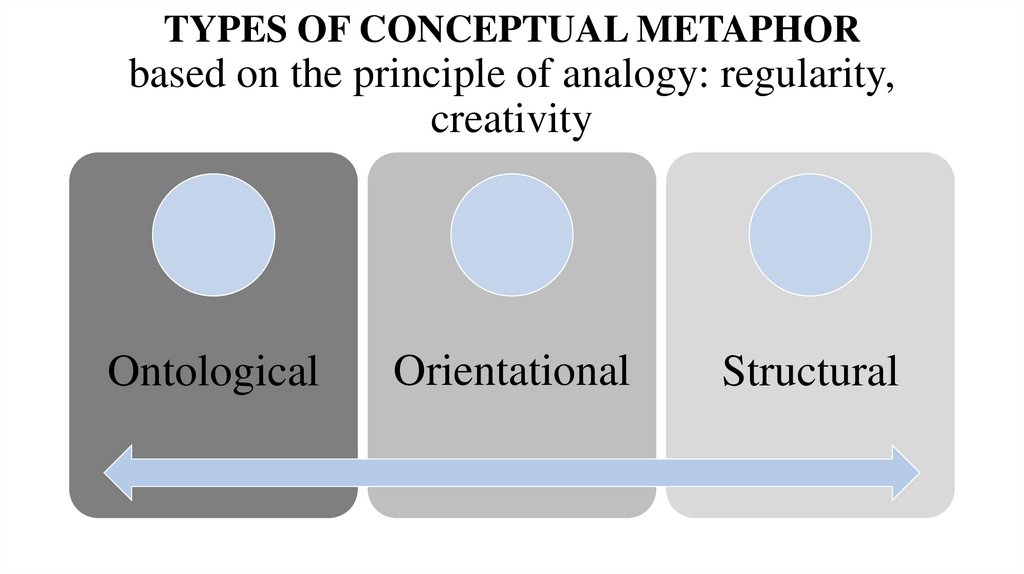
• https://www.youtube.com/watch?v=65UAKrDHusQ22. TYPES OF CONCEPTUAL METAPHOR based on the principle of analogy: regularity, creativity
OntologicalOrientational
Structural
23. Ontological metaphor
a metaphor in which an abstraction, such as an activity, emotion, or idea, isrepresented as something concrete, such as an object, substance, container,
or person.
Examples:
The following sentences express the activity-as-container metaphor:
• How did Jerry get out of washing the windows?
• Outside of washing the windows, what else did you do?
• How did you get into window-washing as a profession?
• I put a lot of energy into washing the windows.
• I get a lot of satisfaction out of washing windows.
24. Orientational metaphor
a metaphor in which concepts are spatially related to each other, as inthe following ways:
• Up or down
• In or out
• Front or back
• On or off
• Deep or shallow
• Central or peripheral
Examples:
The following sentences express the happy-as-up and the sad-as-down metaphors:
• I'm feeling up.
• That boosted my spirits.
• Thinking about her always gives me a lift.
• I'm feeling down.
• I fell into a depression.
25. Structural metaphor
A structural metaphor is a conventional metaphor in which oneconcept is understood and expressed in terms of another structured,
sharply defined concept
Examples:
Here are some examples of the argument-as-war structural metaphor:
• Your claims are indefensible.
• He attacked every weak point in my argument.
• His criticisms were right on target.
• I demolished his argument.
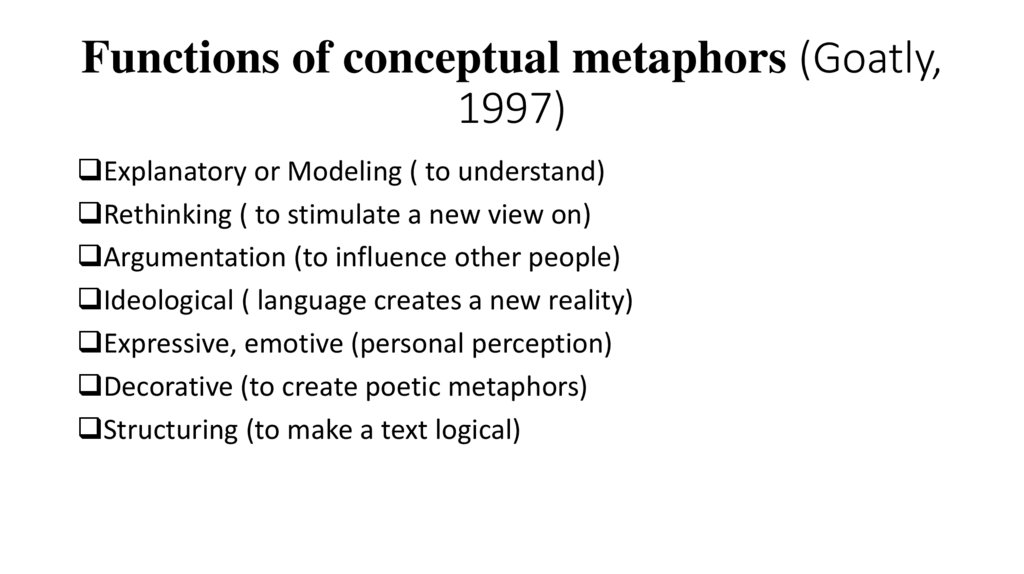
26. Functions of conceptual metaphors (Goatly, 1997)
Explanatory or Modeling ( to understand)Rethinking ( to stimulate a new view on)
Argumentation (to influence other people)
Ideological ( language creates a new reality)
Expressive, emotive (personal perception)
Decorative (to create poetic metaphors)
Structuring (to make a text logical)
27.
The list of recommended literature• Болдырев Н.Н. Когнитивная семантика. Изд.4-е испр. и доп. – Тамбов: Издательский дом ТГУ им. Г.Р. Державина, 2014. –
236 с.
• Болдырев Н.Н. Язык и система знаний: Когнитивная теория языка. – М.: Издательский Дом ЯСК, 2019. – 480 с.
• Корнилов О.А. Языковые картины мира как производные национальных менталитетов.- М.: ЧеРо, 2003, 349 с.
• Маслова В.А. Введение в когнитивную лингвистику. –М.: Флинта: Наука, 2004. – 294 с.
Additional literature:
• Croft William, Cruse Alan D. Cognitive Linguistics/ New York : Cambridge University Press, 2004. Cognitive Linguistics: Basic
Readings Edited by Dirk Geeraerts Mouton de Gruyter Berlin, New York – 2006 . – 496 с
• Cognitive Linguistics: Current Applications and Future Perspectives. Edited by Dirk Geeraerts.- Mouton de Gruyter Berlin · New
York – 2006 . – 513 p.
• Скребцова Т. Г. Когнитивная лингвистика: Курс лекций. — СПб.:Филологический факультет СПбГУ, 2011. — 256 с.
• Коннова М. Н. Введение в когнитивную лингвистику : учебное пособие. Изд. 2-е, перераб. — Калининград : Изд-во БФУим.
И. Канта, 2012. — 313 с.
• Дзюба Е. В. Когнитивная лингвистика. – Екатеринбург, 2018. – 280 с.
• https://cyberleninka.ru/article/n/kontsept-bogatstvo-v-nemetskih-i-angliyskih-paremiyah