










 История
Похожие презентации:










Lecture 1: The History of the USA
1. Олег Владимирович Спиридовский
История и культура СШАлекции
2. Lecture 1 THE HISTORY OF THE USA
3. The range of the Questions
• 1. The prehistory of the United States ofAmerica (the 15th, the 16th, the 17th and the
18th centuries).
2. The years that shaped the New Nation (the
end of the 18th century).
3. The first half of the 19th century – the time
of economic development and national growth.
4. The Civil War and its consequences.
4. How and When Was America Discovered?
There’s some evidence that leads manyhistorians to believe that ancient peoples
of Egypt, China, Phoenicia had visited the
American continent centuries before the
Europeans. However, those travellers from
Asia and Africa never made any official
documentary record of their voyages.
5. Leif Eriksson
Around the year 1000 AD – a tribe ofVikings led by Leif Eriksson arrived in
America and founded their settlement on
the territory of Newfoundland.
6. Zheng He (1371 – 1433)
Zheng He – a traveler from China who isthought to have gone to America in 1421
and probably even several times before
that year.
7. Christopher Columbus (1451-1506)
This navigator mistakenly thought he hadfound Asia when he landed on the
territory of America. It could also be true
that he died not knowing that he had
actually discovered the New World.
8. John Cabot, or Giovanni Caboto (1450- 1499)
John Cabot – an Italian sailor andmerchant who served the English King
Henry VII. In 1497 he reached and
explored the mainland of North America.
9. Amerigo Vespucci (1454-1512)
This Italian explorer, navigator andcartographer made a number of successful
voyages to America from 1499 to 1504
(after Columbus) and, more importantly,
he did realize that he discovered a new
continent.
In 1507 a German mapmaker Martin
Waldsemüller gave this continent the
name AMERICA (after Amerigo
Vespucci).
10. 1. The prehistory of the United States of America (the 15th, the 16th, the 17th and the 18th centuries).
• (Re)discovery of America by ChristopherColumbus in 1492 (October, the 12th).
• 1607 – the first colony of Britain in Virginia
appeared.
• 1620 – the Pilgrim Fathers (the
Pilgrims) arrived on board of their ship
“Mayflower” at Plymouth,
Massachusetts.
11. How European colonization influenced the USA:
1) the ideological influence of theEuropean Enlightenment, namely the
natural rights philosophy
2) the economic influence of mercantilist
doctrine (money is the only form of our
wealth).
12. 2. The years that shaped the New Nation (the end of the 18th century).
• The War of Independence (also known asthe American Revolution) started in
1775 as the clash between the New World
(America) and the Old World (Europe).
• On July 4 in 1776 the Declaration of
Independence was adopted.
• “All men are created equal”.
13. The first 13 American states:
New Hampshire Massachusetts BayRhode Island
Connecticut
Georgia
Pennsylvania
Delaware
Maryland
Virginia
New York
North Carolina South Carolina
New Jersey
14. The Founding Fathers of the New Nation:
• Thomas Jefferson (the 3rd President of the USA,from 1801 till 1809)
• Tom Paine
• Alexander Hamilton
• James Madison (the 4th President of the USA,
from 1809 till 1817)
• John Jay
• George Washington (the 1st President of the
USA, from 1789 till 1797).
15.
• Adoption of the American Constitution(1787)
• Adoption of the amendments to the
Constitution (“the Bill of Rights”) –
1791.
• The new capital city – Washington D.C.
(1800).
16. 3. The first half of the 19th century – the time of economic development and national growth.
• Kentucky, Tennessee, Ohio are becomingnew states.
• Expansion into Canada, Florida, through
the Mississippi River and into the lands
beyond at the beginning of the 19th
century.
17.
• 1823 – the Monroe Doctrine• 1820s and 1830s – “The Era of Good
Feelings” (President Andrew Jackson)
18. 4. The Civil War and its consequences.
• Slavery had appeared in 1619, existed for 240years.
• The Civil War (also known as the War
between the States) lasted from 1861 till
1865.
• Abraham Lincoln: “A house divided against itself
cannot stand”.
• The Emancipation Proclamation (1863).
19. What caused the Civil War in America?
1) taxes paid on goods brought into thecountry from foreign countries. This tax
was called a tariff ;
2) Sectionalism and State’s Rights;
3) slavery.
20. 1859 – “Bleeding Kansas”
John Brown – a radical abolitionist fromKansas – supplied weapons to an army of
slaves hoping they would revolt against
their masters. This raid failed but it fueled
the passions of many abolitionists in the
North who made J. Brown a martyr.
21. 1860 – secession of several states in the South
7 states in the South joined together inthe attempt to form a new nation – the
Confederate States of America.
Jefferson Davis, a Democratic senator
from Mississippi, was elected as the first
president of the Confederacy.
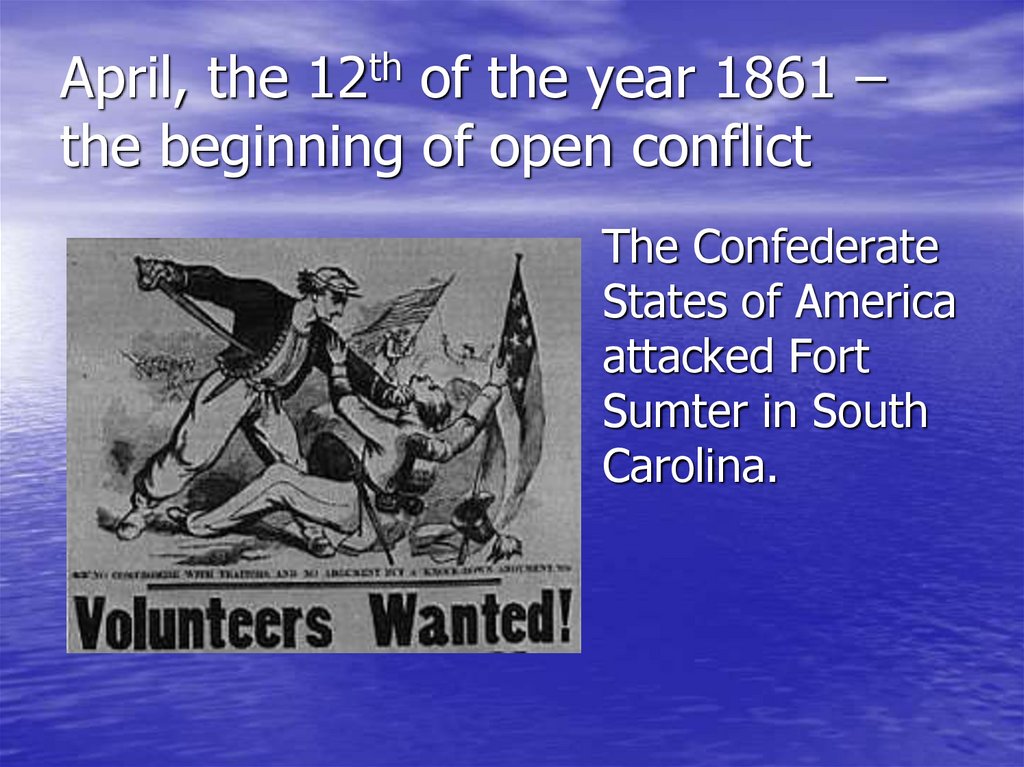
22. April, the 12th of the year 1861 – the beginning of open conflict
The ConfederateStates of America
attacked Fort
Sumter in South
Carolina.
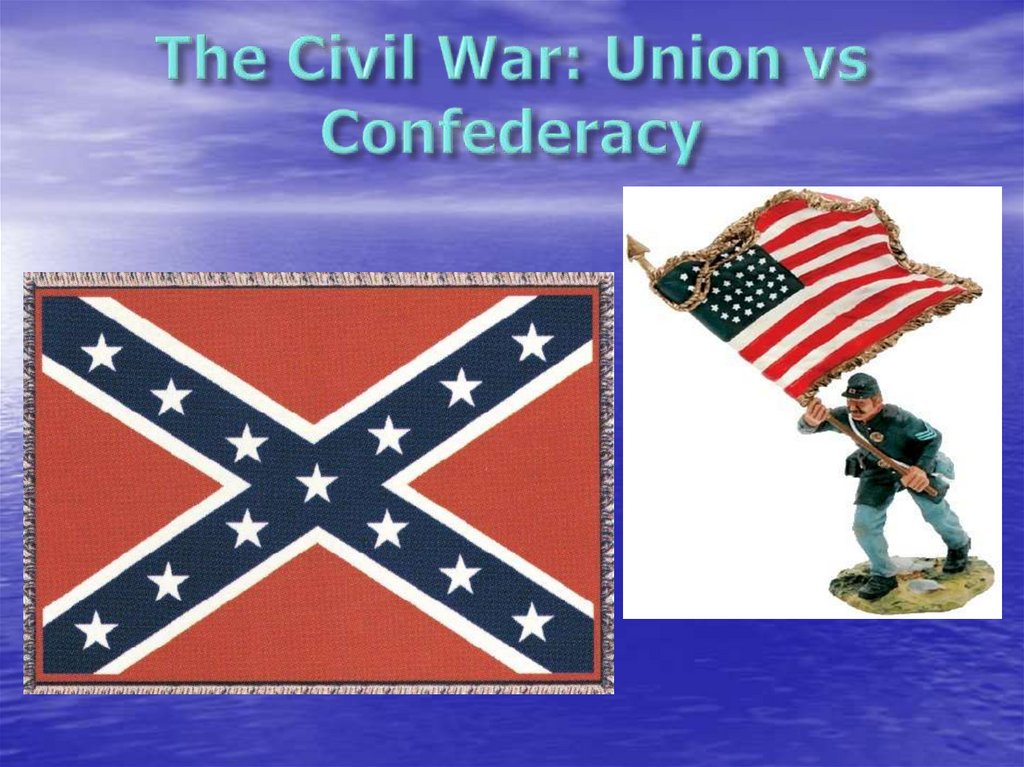
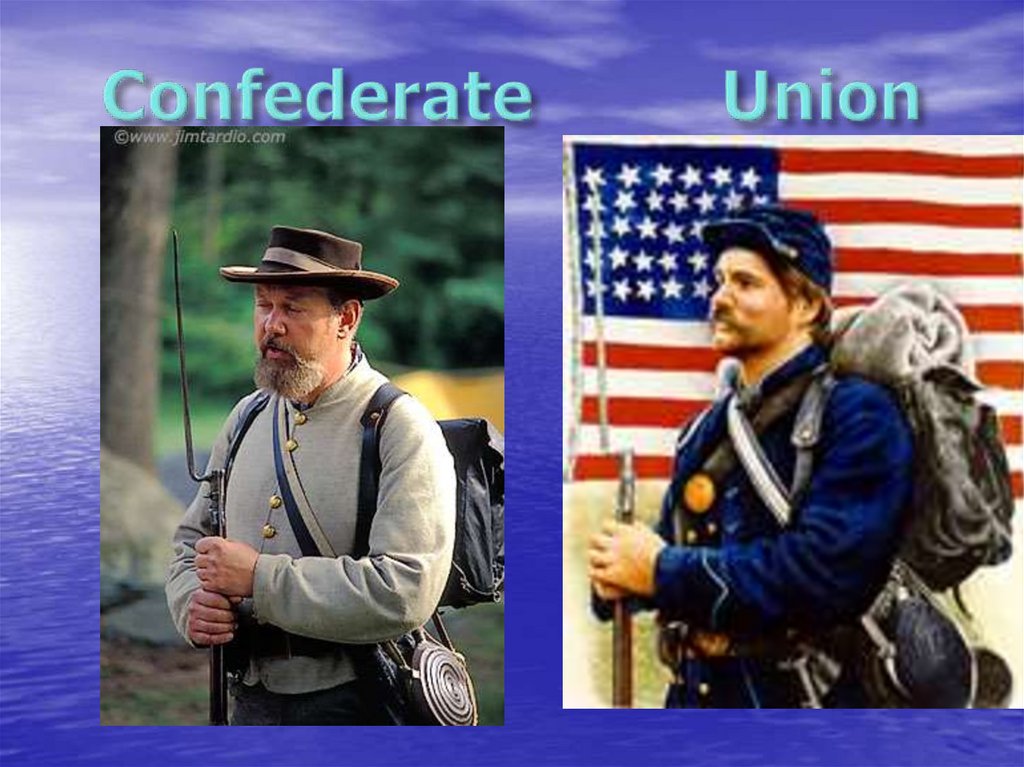
23. The Civil War: Union vs Confederacy
24. Confederate Union
25. Advantages of the Union (North)?
- population - 22 million- 90% of industrial goods, esp. munitions
- efficient railroad system
- controlled the navy, which could be
used to blockade southern ports
- but would have to fight an offensive war
(unfamiliar territory)
- capable mil. leaders, inc. Ulysses S.
Grant
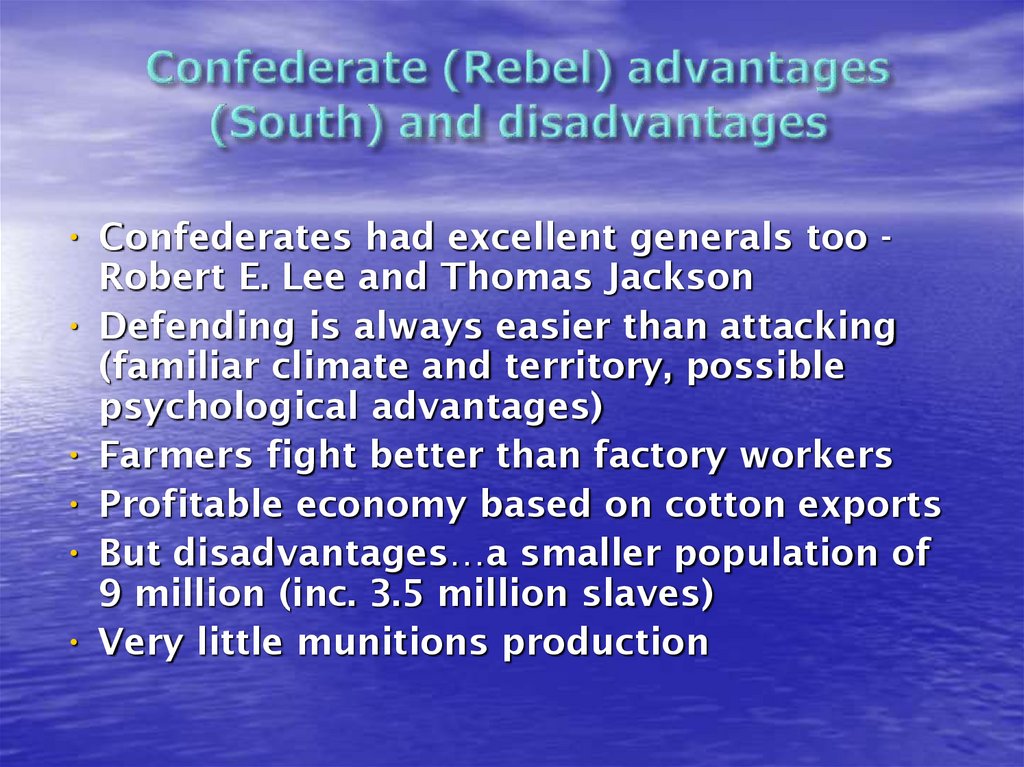
26. Confederate (Rebel) advantages (South) and disadvantages
• Confederates had excellent generals too -Robert E. Lee and Thomas Jackson
• Defending is always easier than attacking
(familiar climate and territory, possible
psychological advantages)
• Farmers fight better than factory workers
• Profitable economy based on cotton exports
• But disadvantages…a smaller population of
9 million (inc. 3.5 million slaves)
• Very little munitions production
27. Ulysses Grant – the leading general of the North. Robert Lee – the main leader of the Southern army.
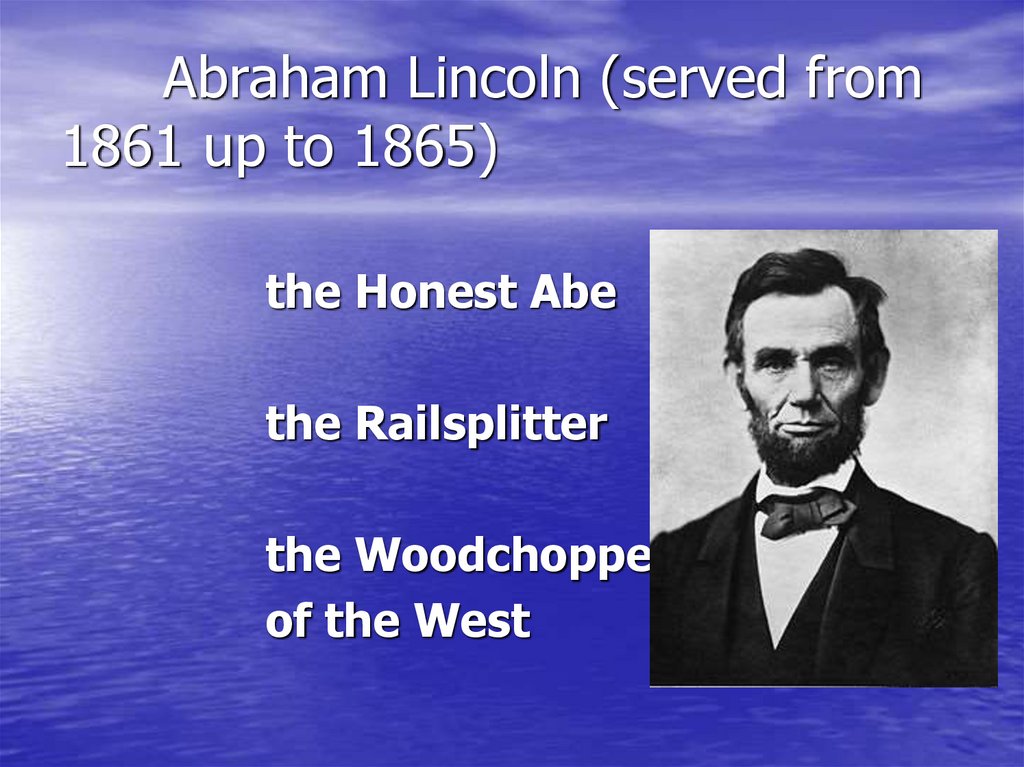
28. Abraham Lincoln (served from 1861 up to 1865)
the Honest Abethe Railsplitter
the Woodchopper
of the West
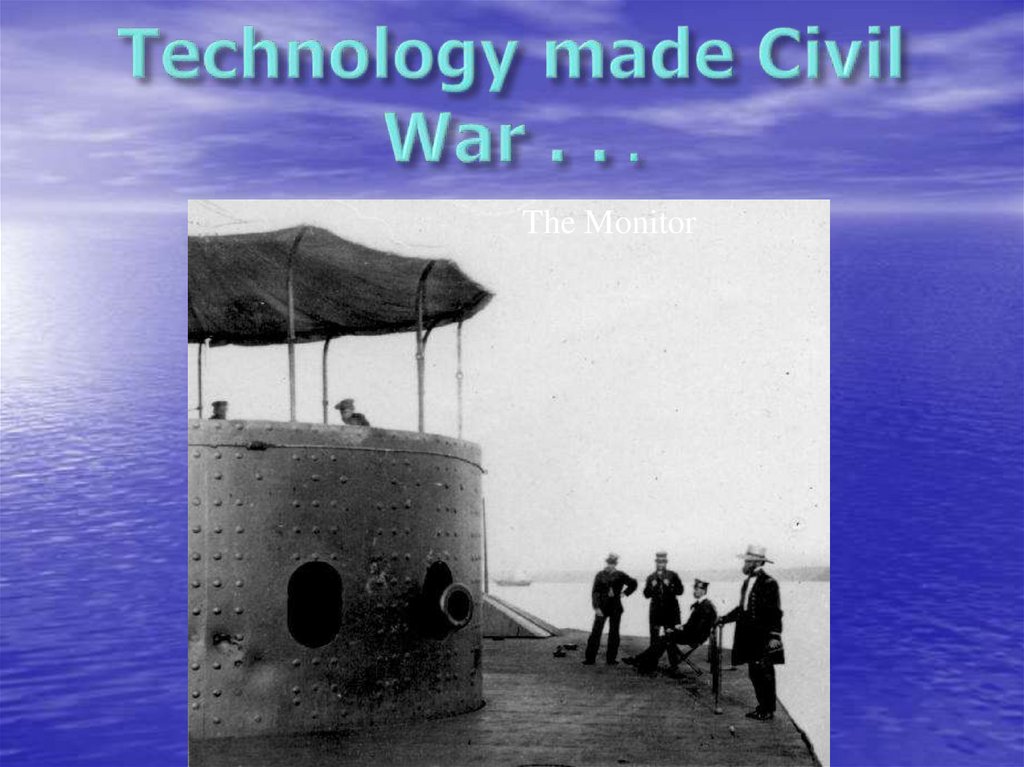
29. Technology made Civil War . . .
The Monitor30. More efficient and deadly
31. First metal ships in world!
32. The Civil War in the USA was 1) one of the earliest truly industrial wars in human history 2) the deadliest war in American
history (620 000 soldiers and anundetermined number of civilian
casualties).
33. The consequences of the American Civil War
1) it sped the abolition of slavery;2) it restored the Union;
3) it strengthened the role of the federal
government;
4) in a far-reaching perspective, it brought
about changes that helped America to
become a united superpower.
34.
The 2nd half of the 19th century –“the Gilded Age”, or “the Age of
Enterprise”.
35. Rags-to-riches stories
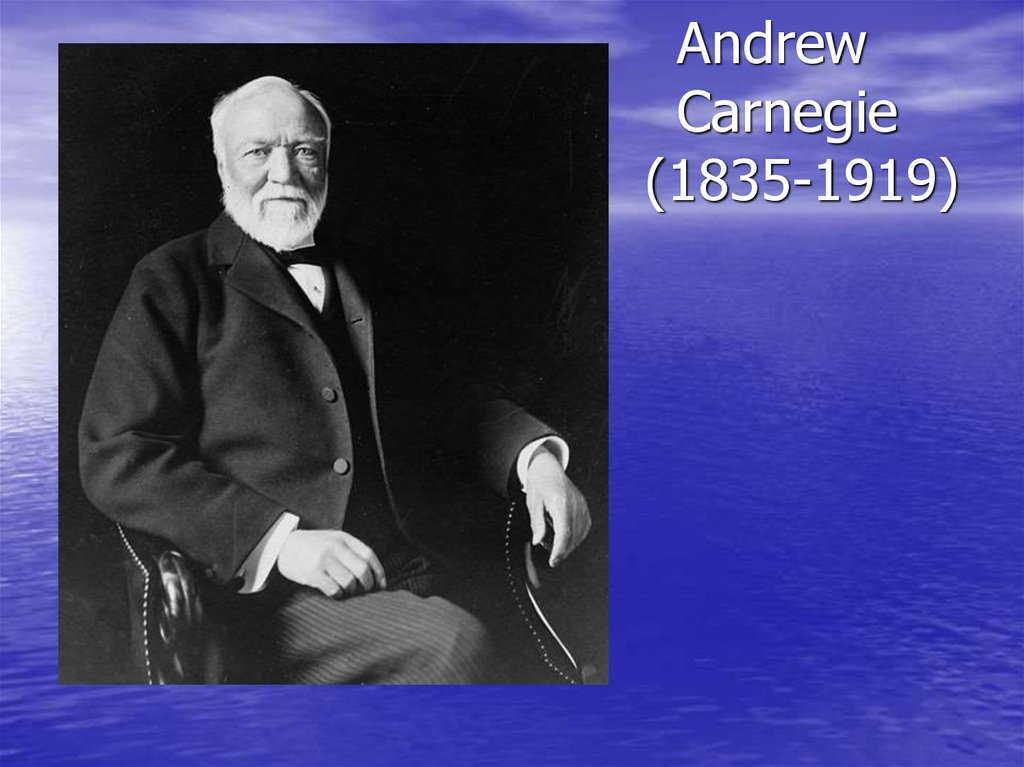
The business leaders are:• Andrew Carnegie
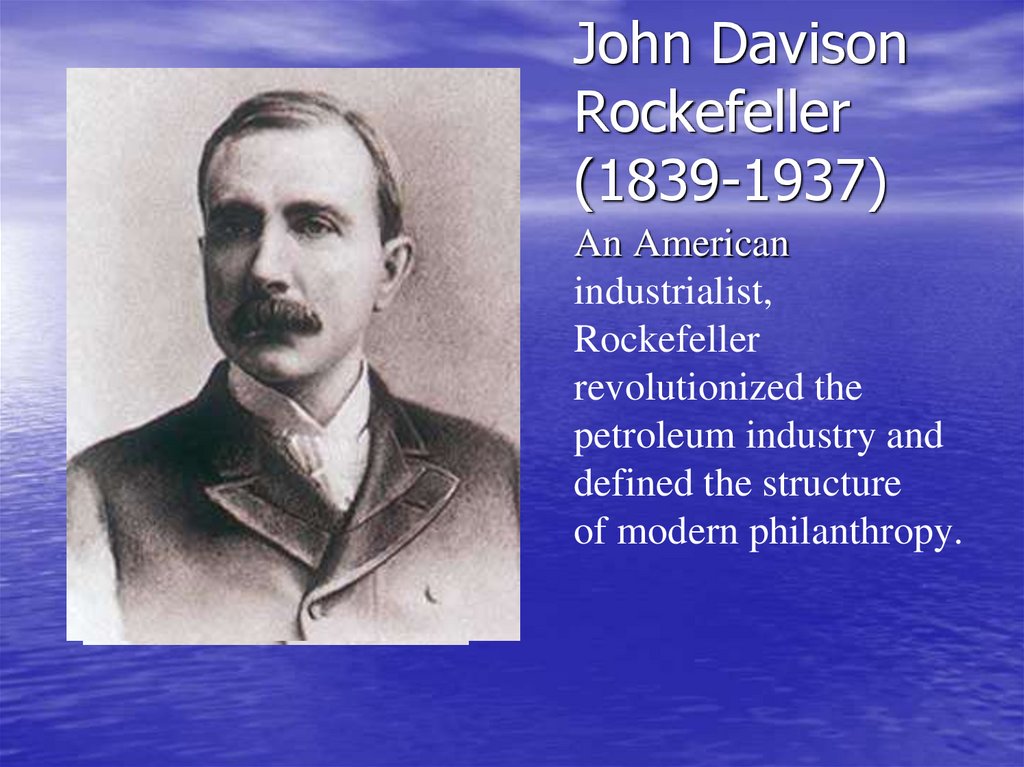
• John Davison Rockefeller
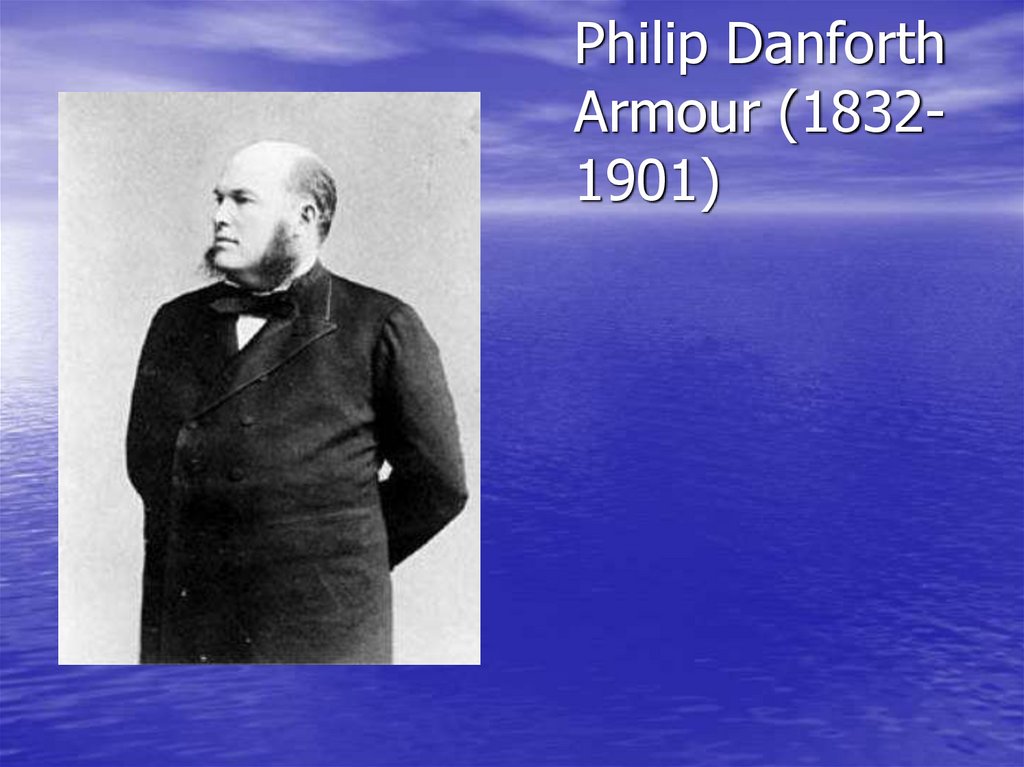
• Philip Danforth Armour
• John Pierpont Morgan
• James Jerome Hill
• Edward Henry Harriman.
36. Andrew Carnegie (1835-1919)
37. John Davison Rockefeller (1839-1937)
An Americanindustrialist,
Rockefeller
revolutionized the
petroleum industry and
defined the structure
of modern philanthropy.
38. Philip Danforth Armour (1832- 1901)
Philip DanforthArmour (18321901)
the
39. John Pierpont Morgan (1837 – 1913)
An American financier, banker and art collector whodominated corporate finance and industrial
consolidation during his time. In 1892 Morgan
arranged the merger of Edison General Electric and
Thompson-Houston Electric Company to form General
Electric. After financing the creation of the Federal
Steel Company he merged the Carnegie Steel
Company and several other steel and iron businesses
to form the US Steel Corporation in 1901.
40. The Era of Reconstruction
• The southern states had to bereintegrated into the “One America”
concept.
• The Homestead Act
• The Morrill Act
• The Pacific Railway Act.
Many Democrats spoke against abolition of
slavery.
41. References:
• 1. American life and institutions.• 2. Spotlight on the USA.
• 3. A documentary history of the United
States.
• 4. An Outline of American government.
• 5. The American way.
• 6. An illustrated history of the USA.