 Лингвистика
Похожие презентации:

HSK标准教程1-第4课
1.
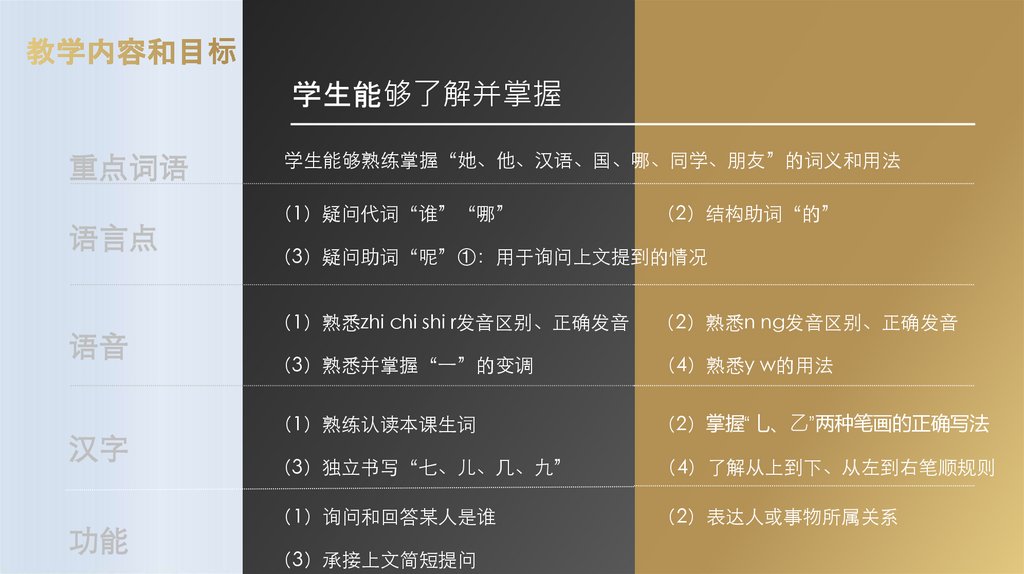
学生能够了解并掌握重点词语
语言点
语音
汉字
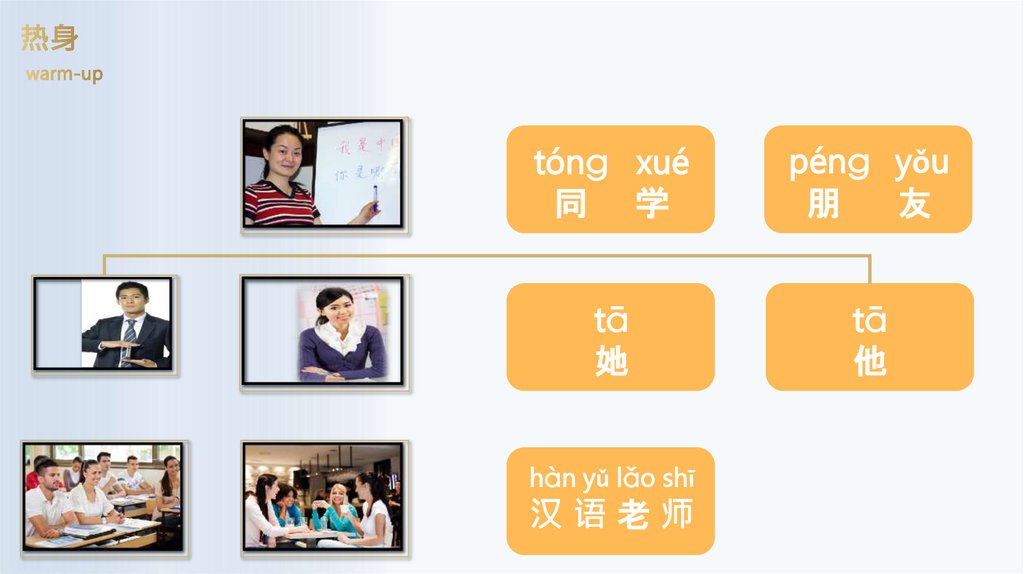
功能
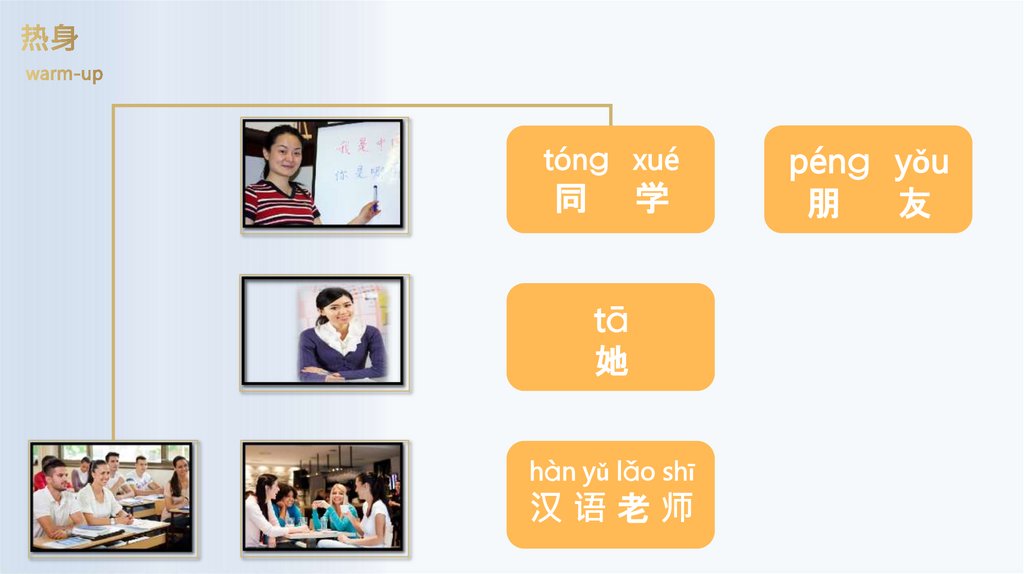
学生能够熟练掌握“她、他、汉语、国、哪、同学、朋友”的词义和用法
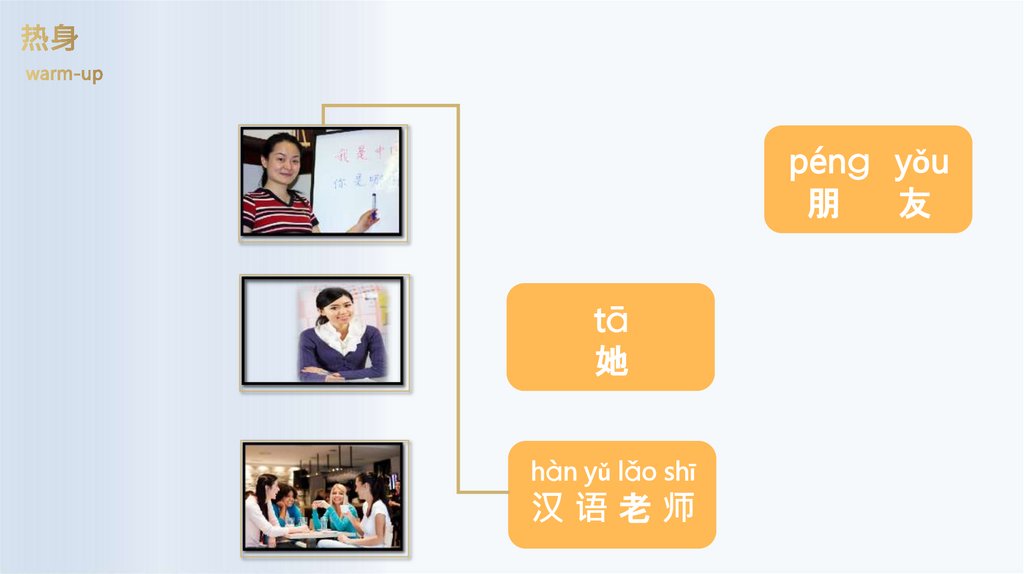
1 疑问代词“谁”“哪”
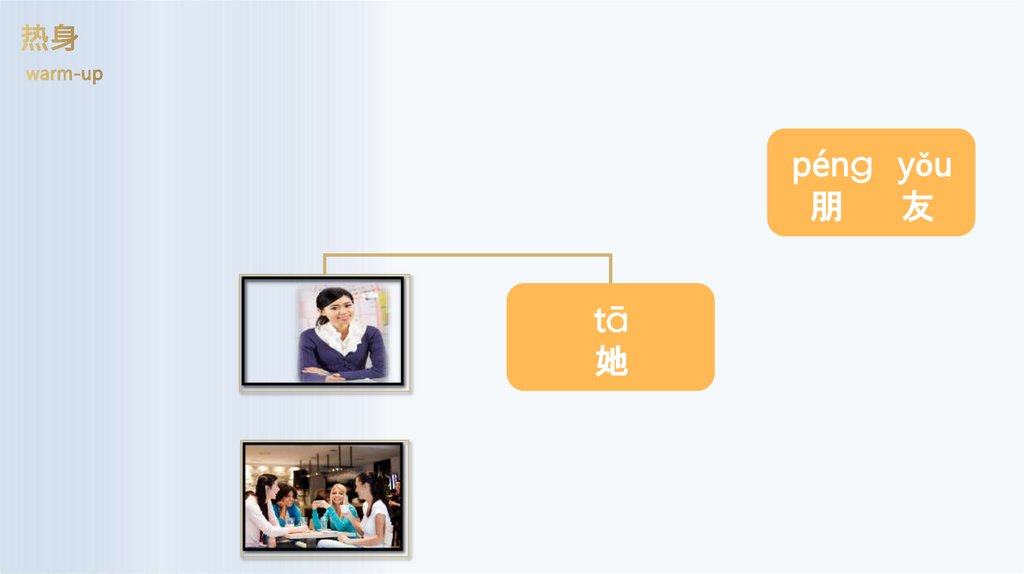
2 结构助词“的”
3 疑问助词“呢”① 用于询问上文提到的情况
1 熟悉zhi chi shi r发音区别、正确发音
2 熟悉n ng发音区别、正确发音
3 熟悉并掌握“一”的变调
4 熟悉y w的用法
1 熟练认读本课生词
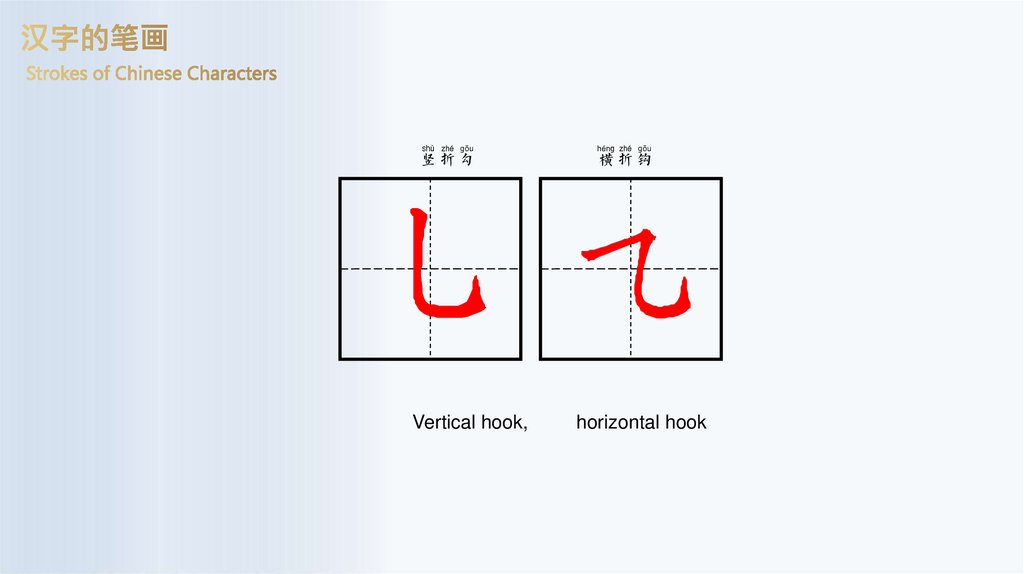
2 掌握“乚、⼄”两种笔画的正确写法
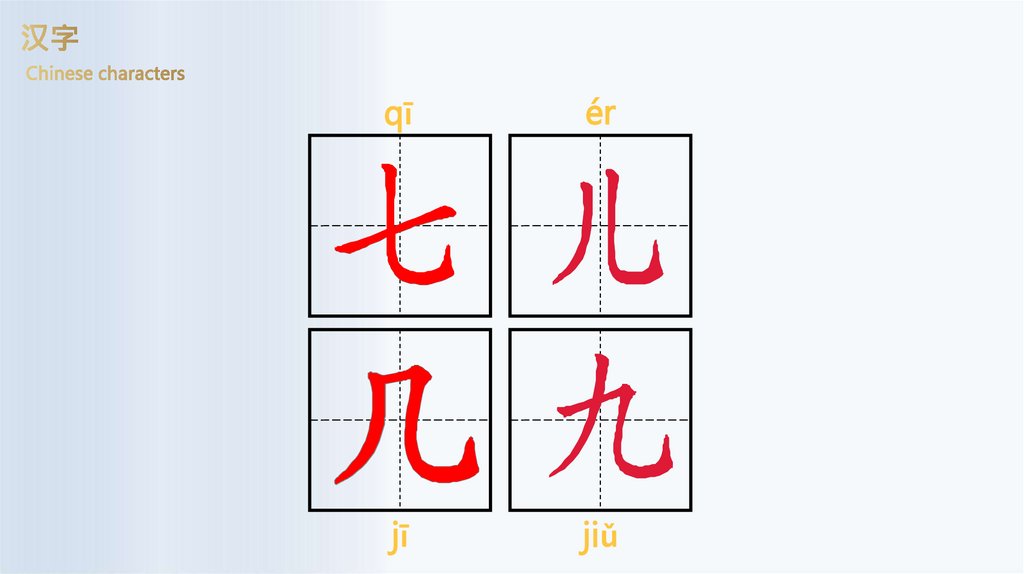
3 独立书写“七、儿、几、九”
4 了解从上到下、从左到右笔顺规则
1 询问和回答某人是谁
2 表达人或事物所属关系
3 承接上文简短提问
2.
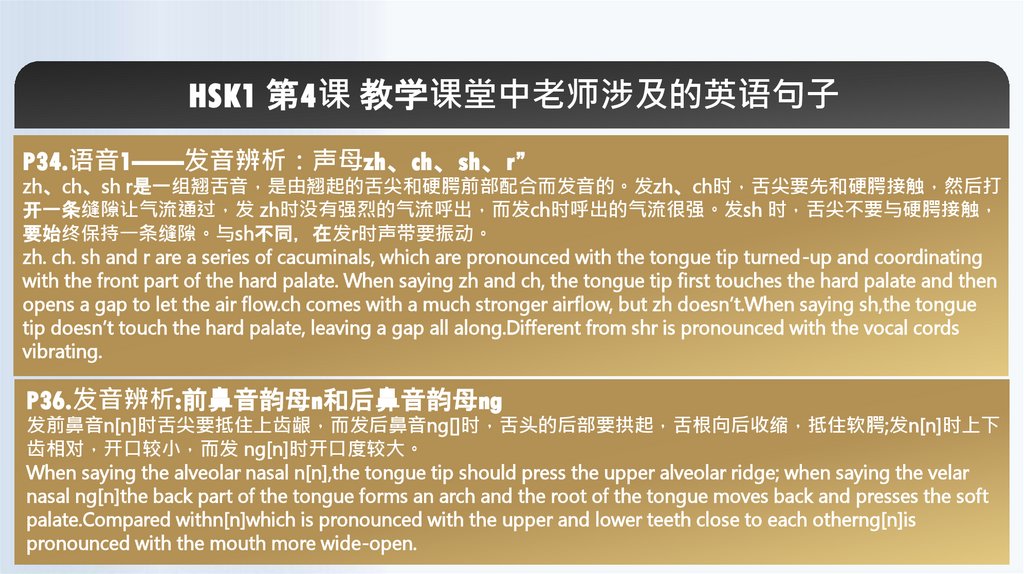
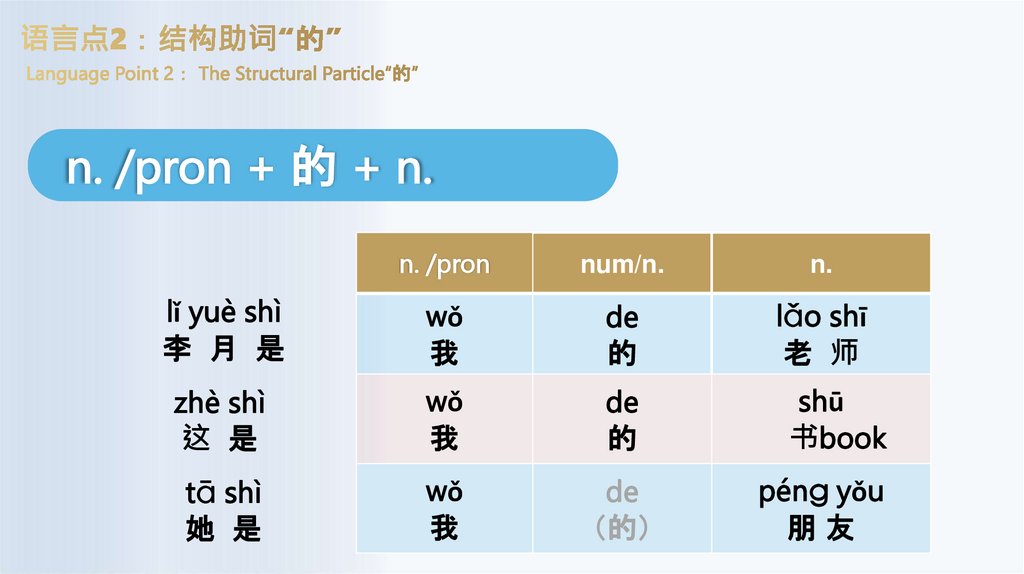
HSK1 第4课 教学课堂中老师涉及的英语句子P34.语音1——发音辨析 声母zh、ch、sh、r”
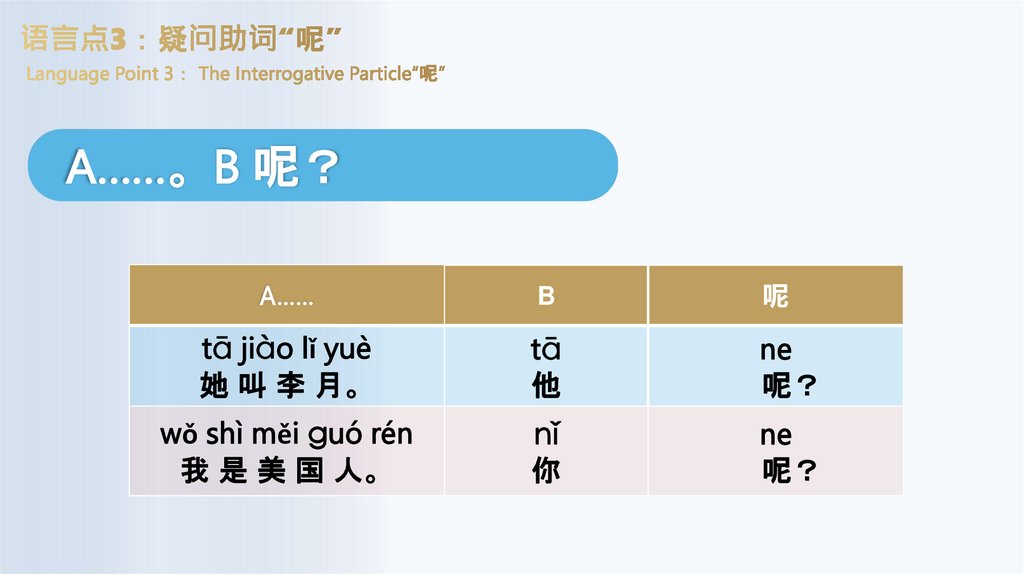
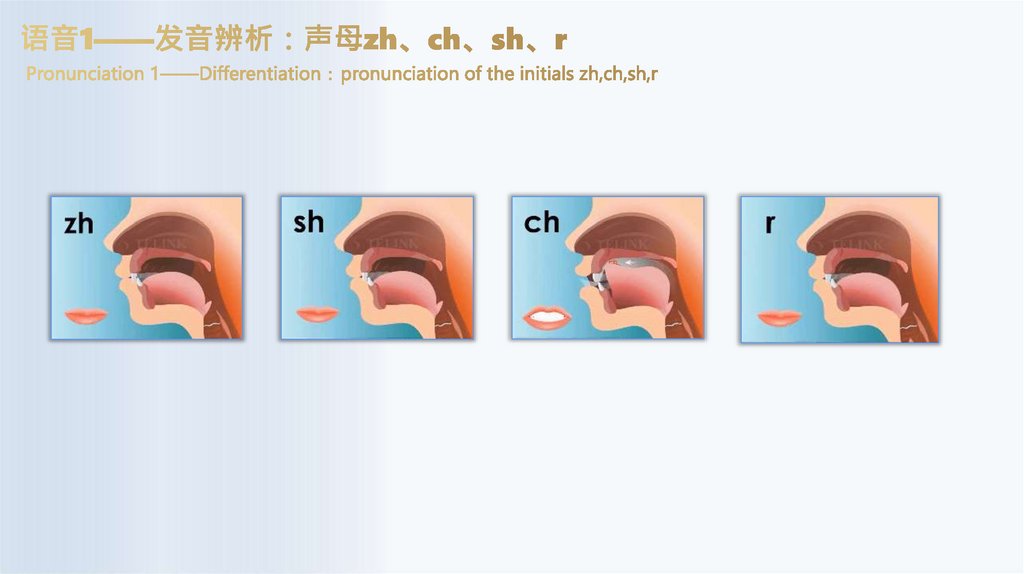
zh、ch、sh r是一组翘舌音 是由翘起的舌尖和硬腭前部配合而发音的。发zh、ch时 舌尖要先和硬腭接触 然后打
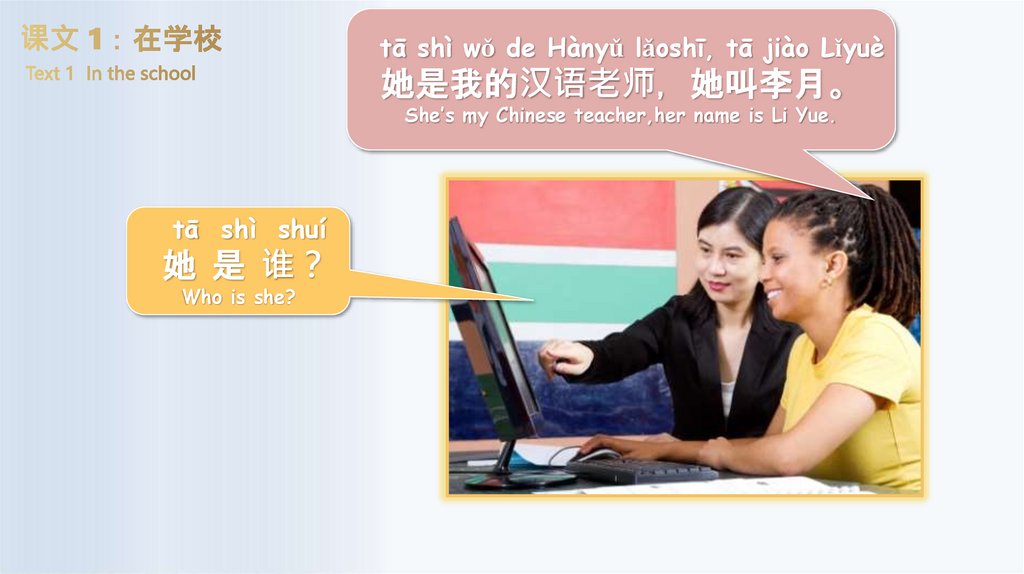
开一条缝隙让气流通过 发 zh时没有强烈的气流呼出 而发ch时呼出的气流很强。发sh 时 舌尖不要与硬腭接触
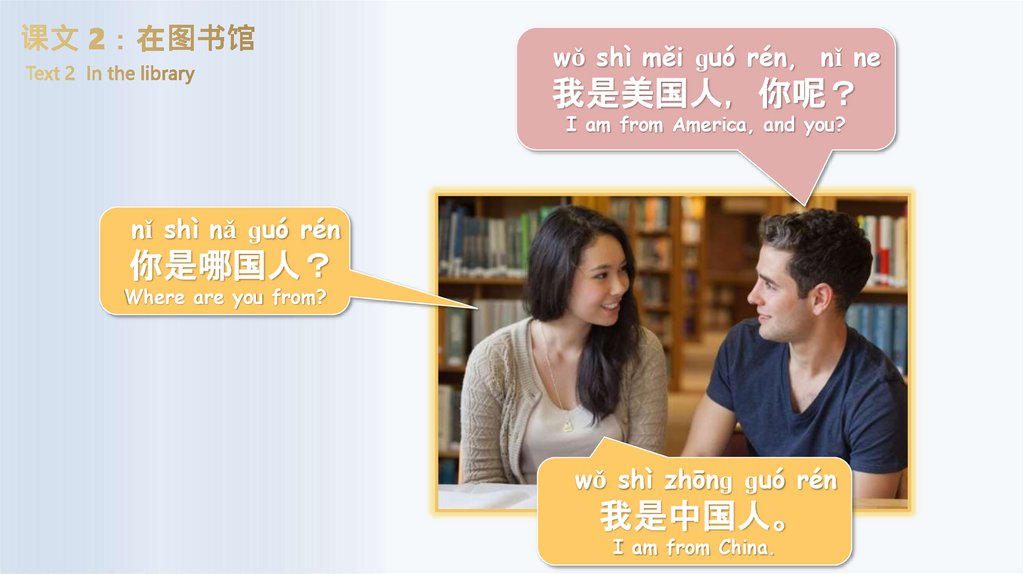
要始终保持一条缝隙。与sh不同 在发r时声带要振动。
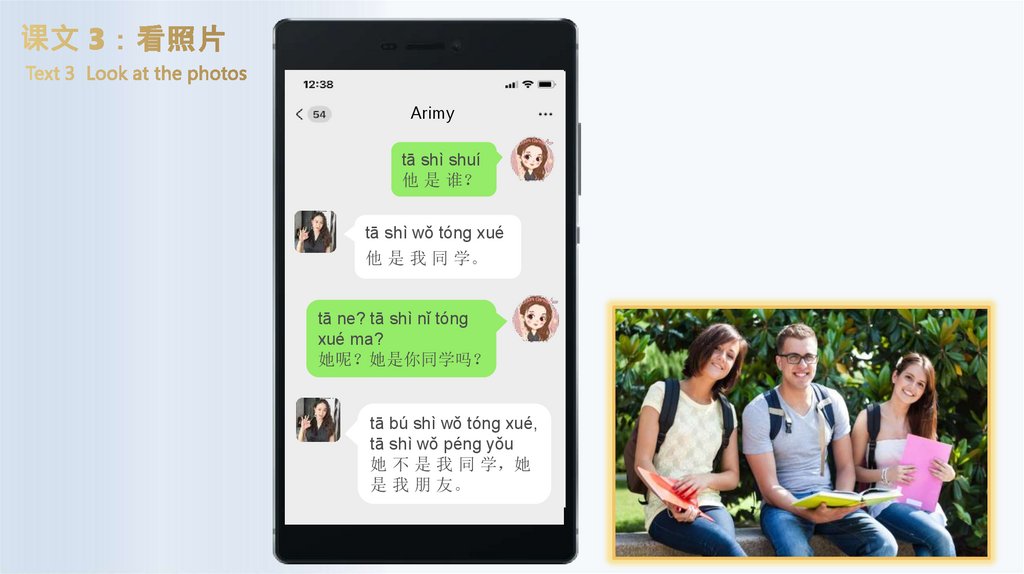
zh. ch. sh and r are a series of cacuminals, which are pronounced with the tongue tip turned-up and coordinating
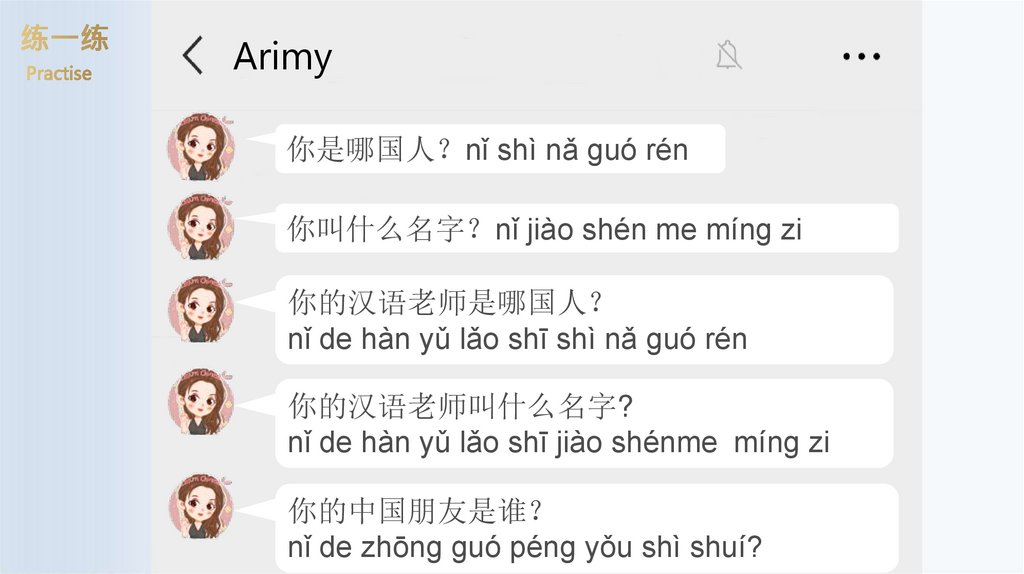
with the front part of the hard palate. When saying zh and ch, the tongue tip first touches the hard palate and then
opens a gap to let the air flow.ch comes with a much stronger airflow, but zh doesn’t.When saying sh,the tongue
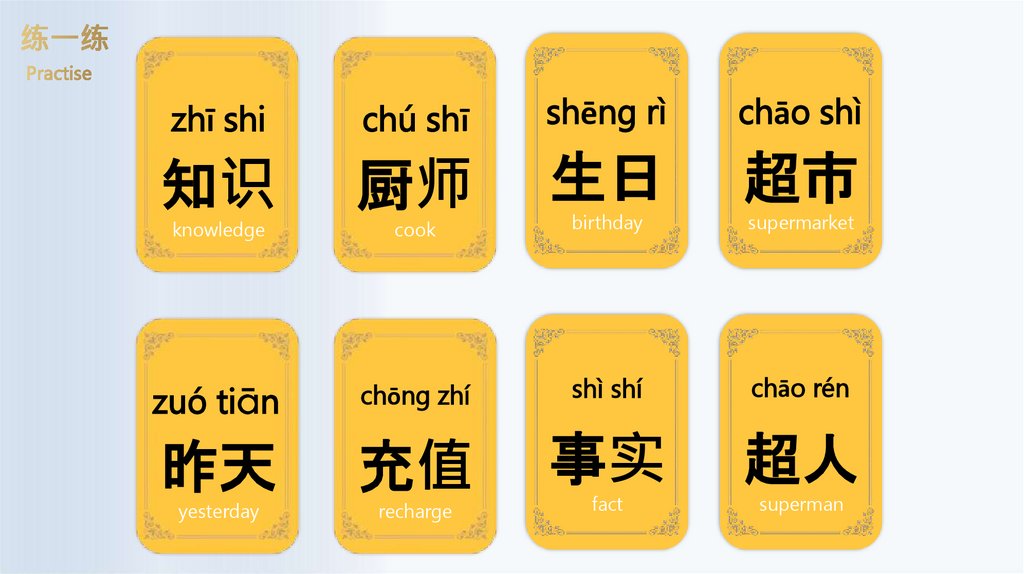
tip doesn’t touch the hard palate, leaving a gap all along.Different from shr is pronounced with the vocal cords
vibrating.
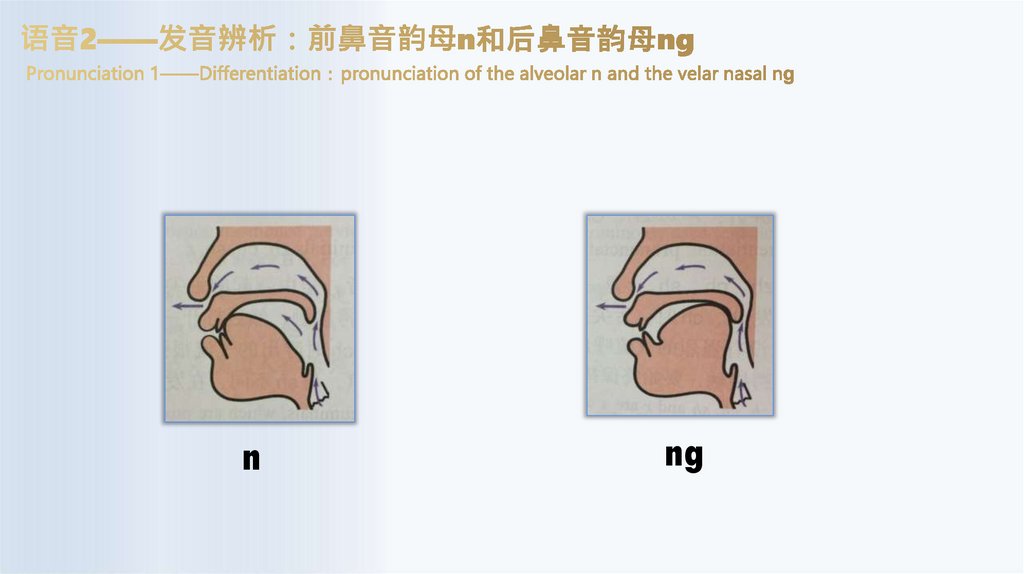
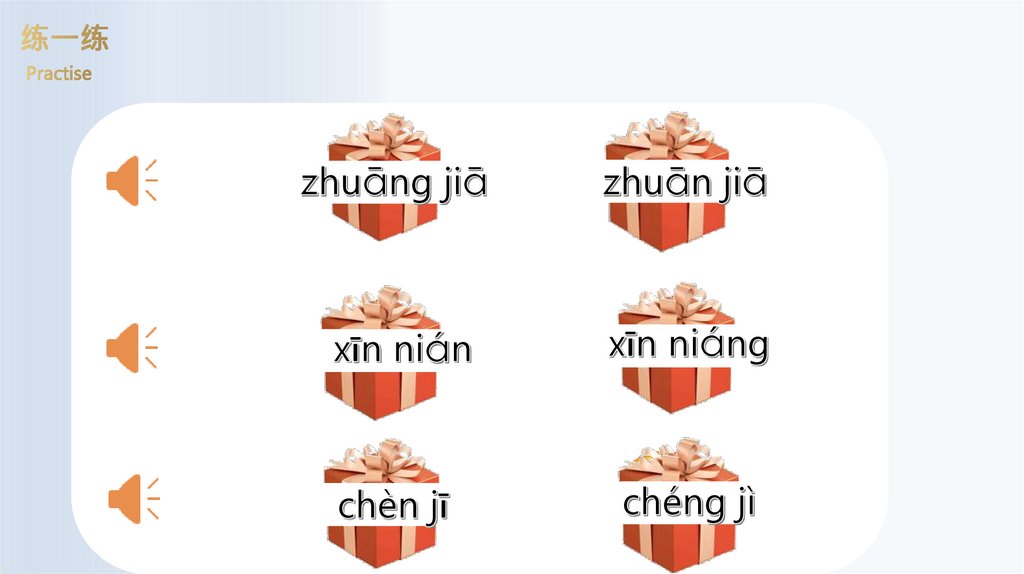
P36.发音辨析:前鼻音韵母n和后鼻音韵母ng
发前鼻音n[n]时舌尖要抵住上齿龈 而发后鼻音ng[]时 舌头的后部要拱起 舌根向后收缩 抵住软腭;发n[n]时上下
齿相对 开口较小 而发 ng[n]时开口度较大。
When saying the alveolar nasal n[n],the tongue tip should press the upper alveolar ridge; when saying the velar
nasal ng[n]the back part of the tongue forms an arch and the root of the tongue moves back and presses the soft
palate.Compared withn[n]which is pronounced with the upper and lower teeth close to each otherng[n]is
pronounced with the mouth more wide-open.
3.
Standard CourseHSK 1
Lesson 4
4.
5.
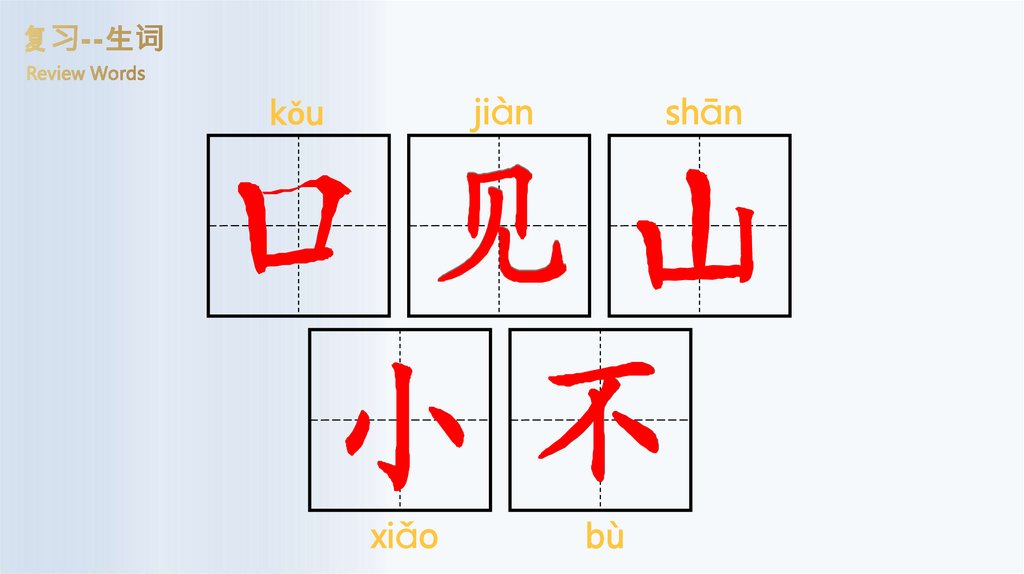
jiànkǒu
xiǎo
shān
bù
6.
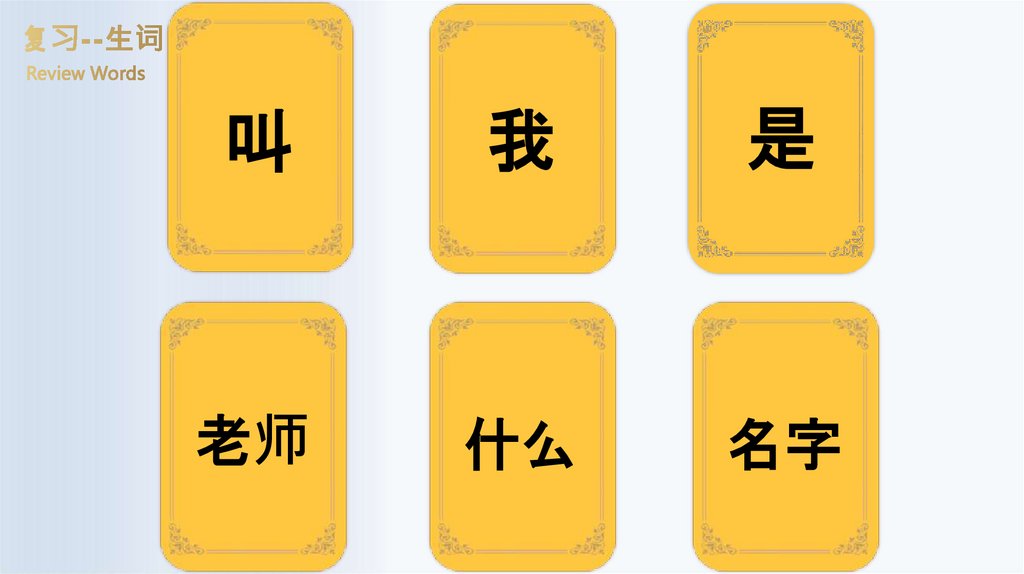
叫我
是
老师
什么
名字
7.
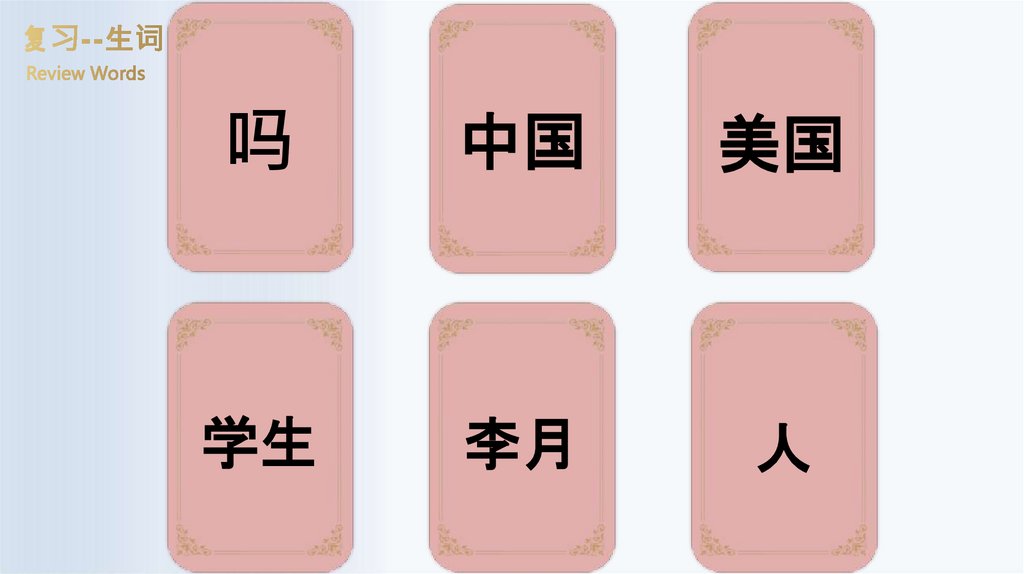
吗中国
美国
学生
李月
人
8.
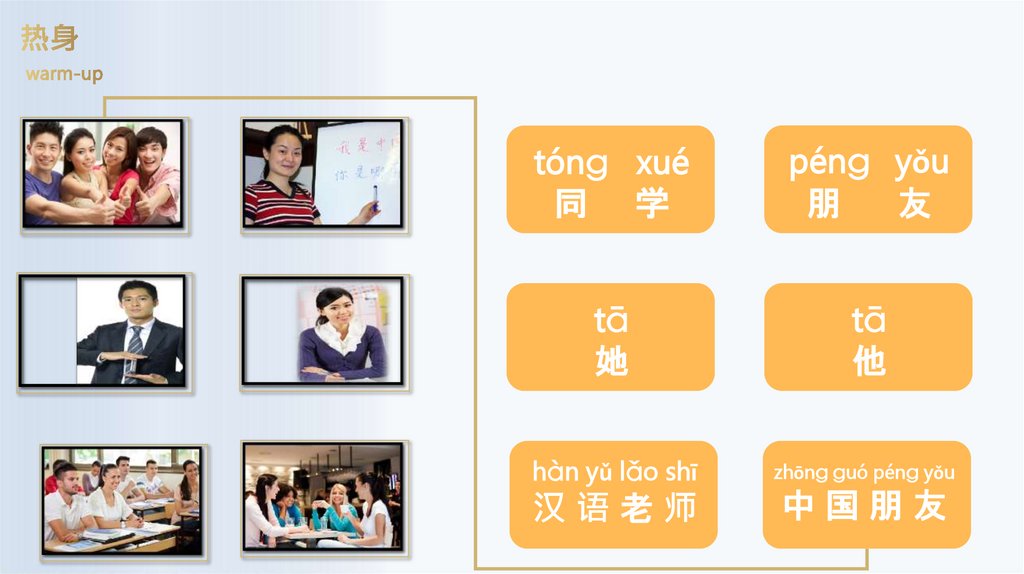
tóng xué同 学
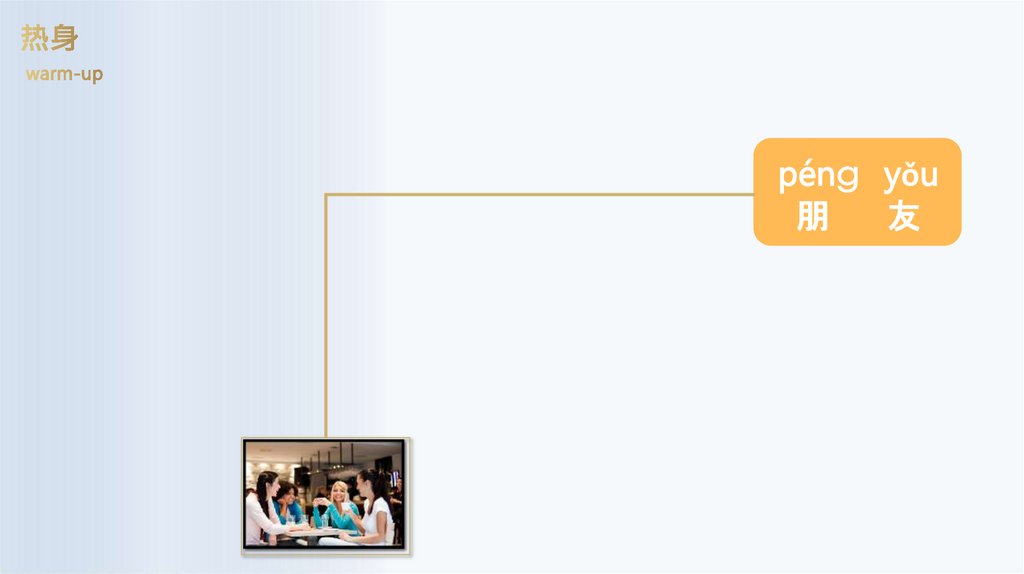
péng yǒu
朋
友
tā
她
tā
他
hàn yǔ lǎo shī
zhōng guó péng yǒu
汉语老师
中国朋友
9.
tóng xué同 学
péng yǒu
朋
友
tā
她
tā
他
hàn yǔ lǎo shī
汉语老师
10.
tóng xué同
学
tā
她
hàn yǔ lǎo shī
汉语老师
péng yǒu
朋
友
11.
péng yǒu朋
友
tā
她
hàn yǔ lǎo shī
汉语老师
12.
péng yǒu朋
友
tā
她
13.
péng yǒu朋
友
14.
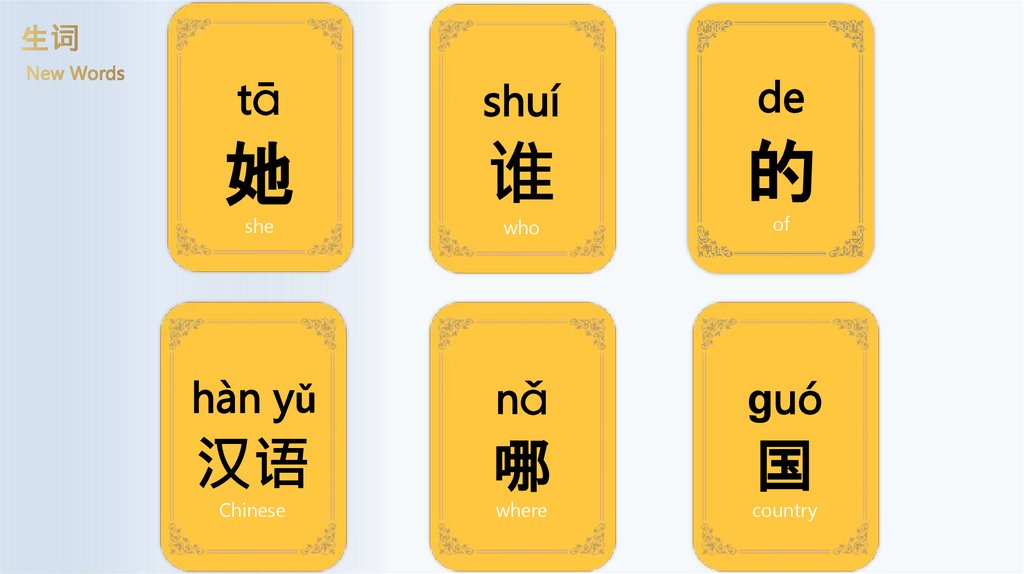
tāshuí
de
她
谁
的
she
who
of
hàn yǔ
nǎ
ɡuó
汉语
哪
国
Chinese
where
country
15.
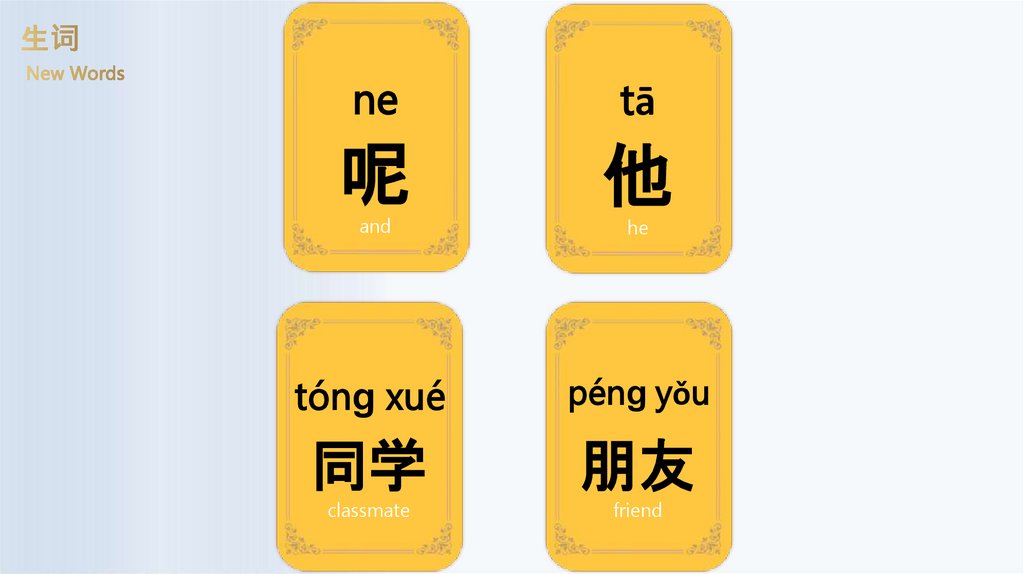
netā
呢
他
and
he
tónɡ xué
pénɡ yǒu
同学
朋友
classmate
friend
16.
nepénɡ yǒu
tónɡ xué
呢
朋友
同学
hàn yǔ
tā
tā
他
她
汉语
17.
shuínǎ
谁
哪
ɡuó
de
国
的
18.
19.
20.
21.
22.
23.
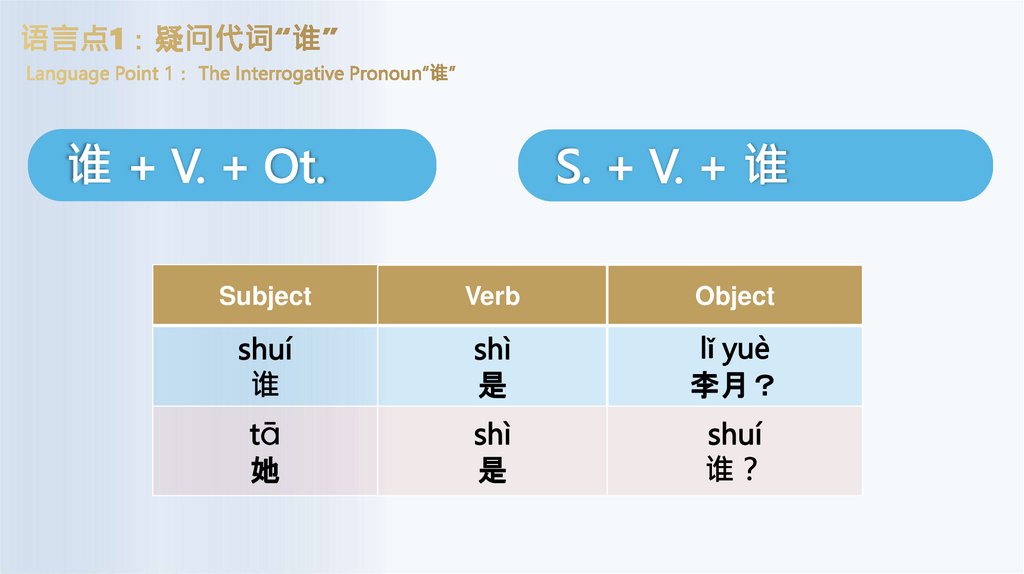
谁 + V. + Ot.S. + V. + 谁
Subject
Verb
Object
shuí
谁
shì
是
lǐ yuè
李月
tā
她
shì
是
shuí
谁
24.
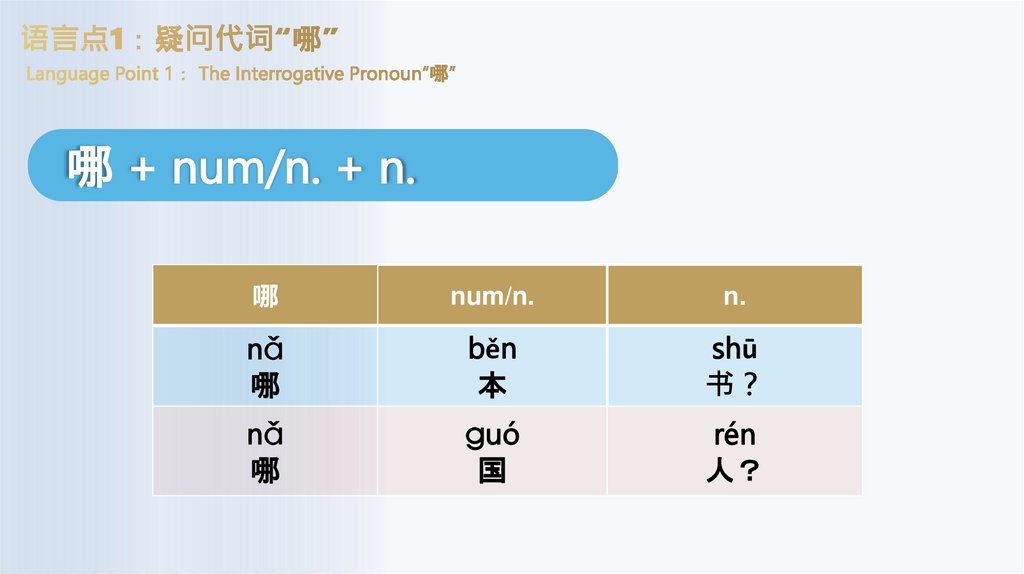
哪 + num/n. + n.哪
num/n.
n.
nǎ
哪
běn
本
shū
书
nǎ
哪
guó
国
rén
人
25.
n. /pron + 的 + n.n. /pron
num/n.
n.
lǐ yuè shì
李 月 是
wǒ
我
de
的
lǎo shī
老 师
zhè shì
这 是
wǒ
我
de
的
shū
书book
tā shì
她 是
wǒ
我
de
的
péng yǒu
朋友
26.
A……。B 呢A……
B
呢
tā jiào lǐ yuè
她 叫 李 月。
tā
他
ne
呢
wǒ shì měi guó rén
我 是 美 国 人。
nǐ
你
ne
呢
27.
tā shì wǒ de Hànyǔ lǎoshī, tā jiào Lǐyuè她是我的汉语老师 她叫李月。
She’s my Chinese teacher,her name is Li Yue.
tā shì shuí
她 是 谁
Who is she?
28.
wǒ shì měi ɡuó rén, nǐ ne我是美国人 你呢
I am from America, and you?
nǐ shì nǎ ɡuó rén
你是哪国人
Where are you from?
wǒ shì zhōnɡ ɡuó rén
我是中国人。
I am from China.
29.
Arimytā shì shuí
他 是 谁
tā shì wǒ tónɡ xué
他 是 我 同 学。
tā ne? tā shì nǐ tónɡ
xué ma?
她呢 她是你同学吗
tā bú shì wǒ tónɡ xué,
tā shì wǒ pénɡ yǒu
她 不 是 我 同 学 她
是 我 朋 友。
30.
Arimy你是哪国人 nǐ shì nǎ ɡuó rén
你叫什么名字 nǐ jiào shén me mínɡ zi
你的汉语老师是哪国人
nǐ de hàn yǔ lǎo shī shì nǎ ɡuó rén
你的汉语老师叫什么名字?
nǐ de hàn yǔ lǎo shī jiào shénme mínɡ zi
你的中国朋友是谁
nǐ de zhōnɡ ɡuó pénɡ yǒu shì shuí?
31.
32.
zhī shichú shī
shēng rì
chāo shì
知识
厨师
生日
超市
knowledge
cook
birthday
supermarket
zuó tiān
chōng zhí
shì shí
chāo rén
昨天
充值
事实
超人
yesterday
recharge
fact
superman
33.
nng
34.
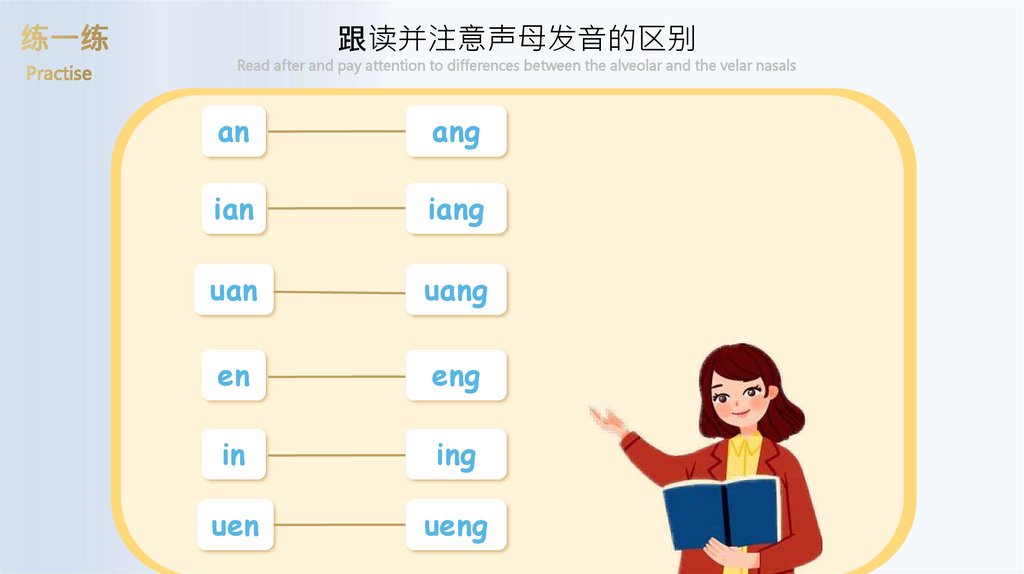
跟读并注意声母发音的区别Read after and pay attention to differences between the alveolar and the velar nasals
an
ang
ian
iang
uan
uang
en
eng
in
ing
uen
ueng
35.
36.
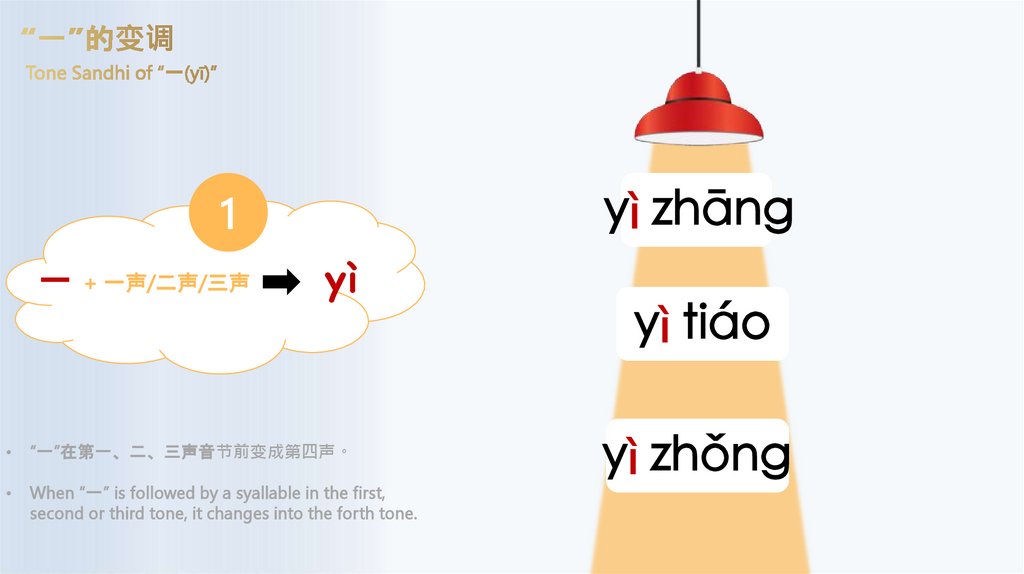
yì zhāng1
一 + 一声/二声/三声
yì
“一”在第一、二、三声音节前变成第四声。
When “一” is followed by a syallable in the first,
second or third tone, it changes into the forth tone.
yì tiáo
yì zhǒng
37.
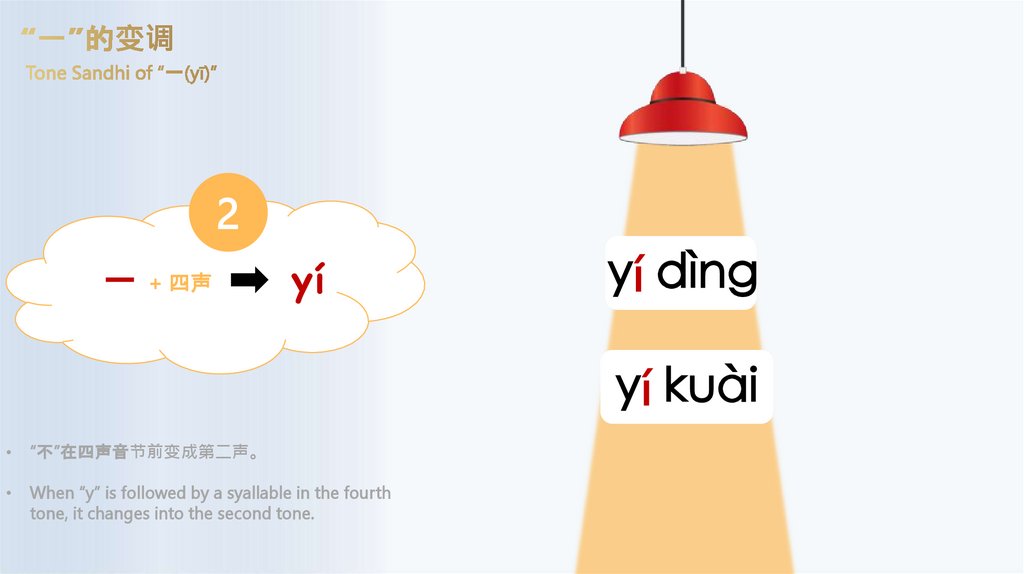
2一 + 四声
yí
yí dìng
yí kuài
“不”在四声音节前变成第二声。
When “y” is followed by a syallable in the fourth
tone, it changes into the second tone.
38.
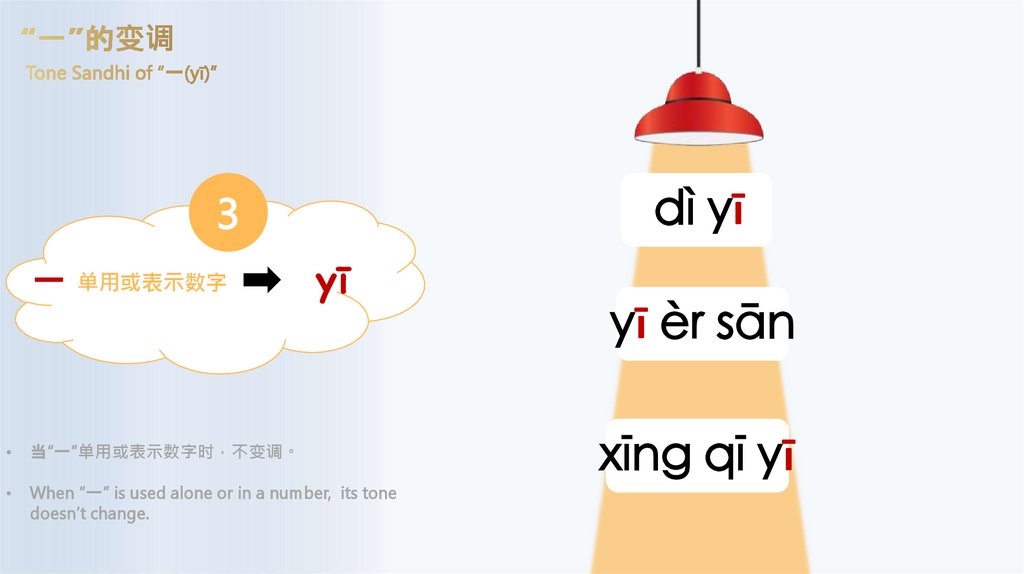
dì yī3
一 单用或表示数字
yī
当“一”单用或表示数字时 不变调。
When “一” is used alone or in a number, its tone
doesn’t change.
yī èr sān
xīng qī yī
39.
40.
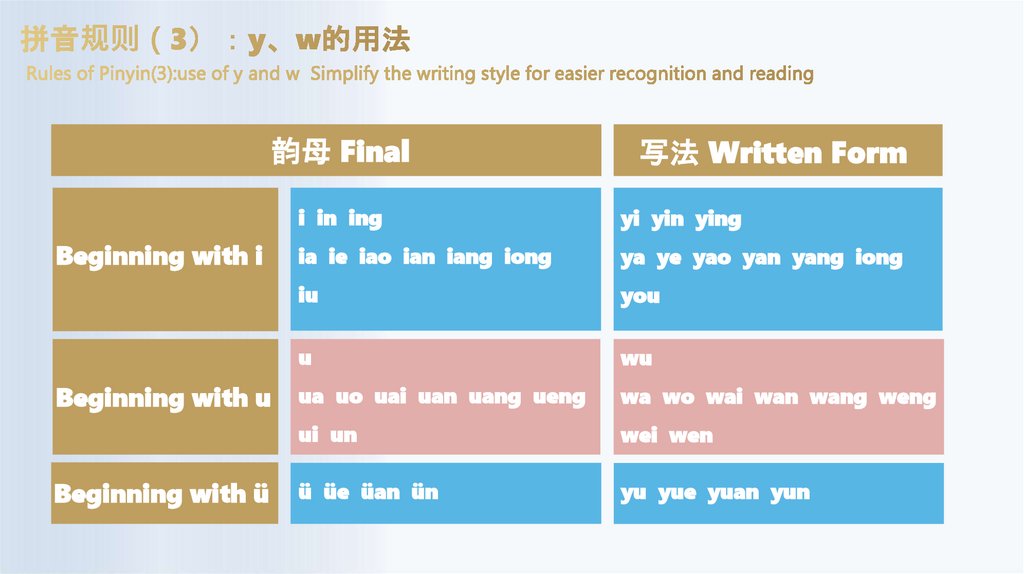
韵母 FinalBeginning with i
Beginning with u
Beginning with ü
写法 Written Form
i in ing
yi yin ying
ia ie iao ian iang iong
ya ye yao yan yang iong
iu
you
u
wu
ua uo uai uan uang ueng
wa wo wai wan wang weng
ui un
wei wen
ü üe üan ün
yu yue yuan yun
41.
竖折勾Vertical hook,
横折钩
horizontal hook
42.
qīér
jī
jiǔ