 Бизнес
Похожие презентации:






Modern entrepreneurial tendencies
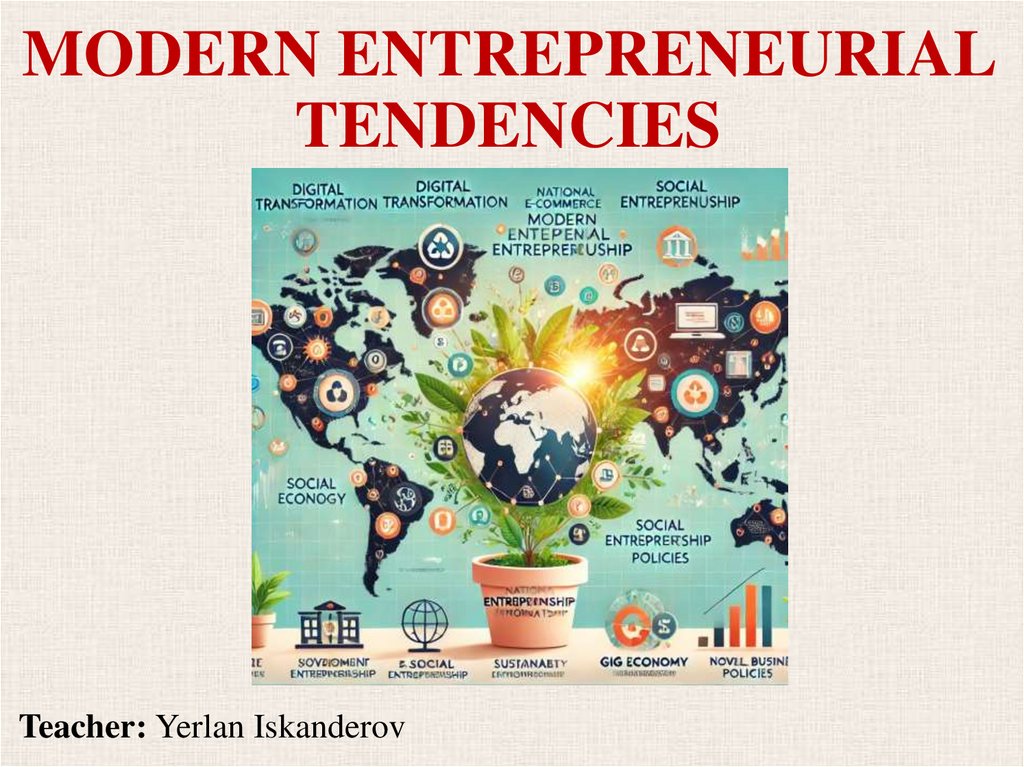
1. MODERN ENTREPRENEURIAL TENDENCIES
Teacher: Yerlan Iskanderov2. LESSON OBJECTIVES
• Identify and explain current trends inentrepreneurship.
• Understand how government policies and
economic
systems
influence
entrepreneurship.
• Explore how entrepreneurs in different
countries adapt to modern trends while
contributing to the national economy.
3. BRAINSTORM
• What do you think are the biggest trendsshaping businesses today? Why?
• What entrepreneurial trends are most relevant
in our country? How much they differ from
the worldwide ones?
• What is the difference between modern and
old entrepreneurship?
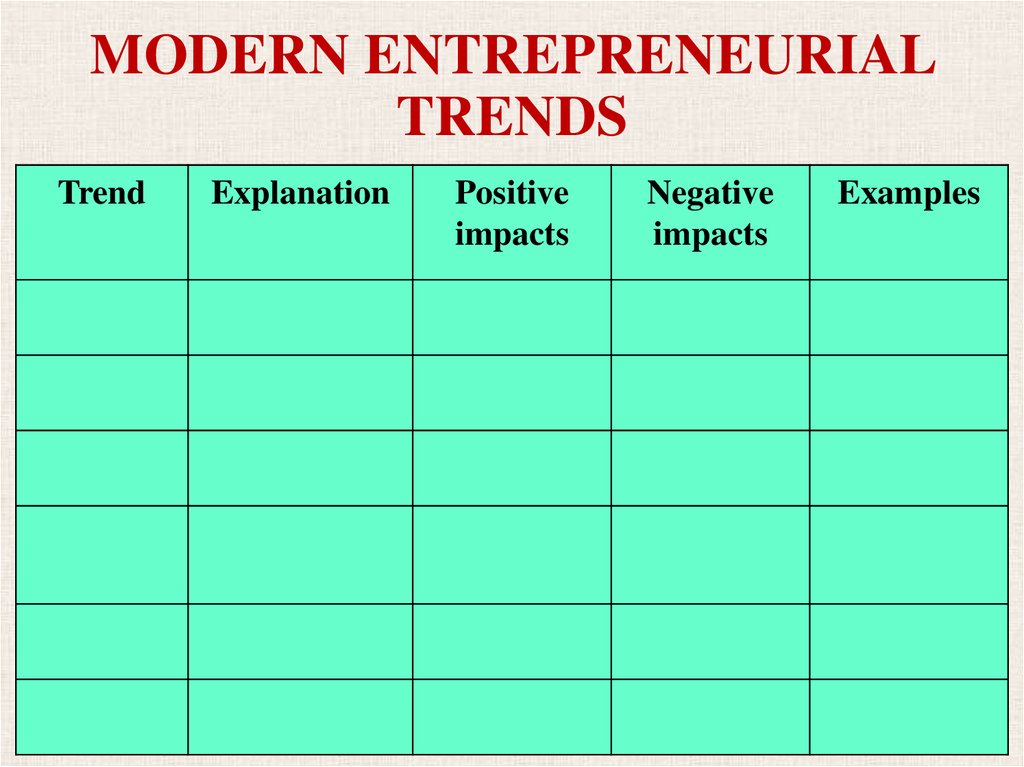
4. MODERN ENTREPRENEURIAL TRENDS
TrendExplanation
Positive
impacts
Negative
impacts
Examples
5. MODERN ENTREPRENEURIAL TRENDS
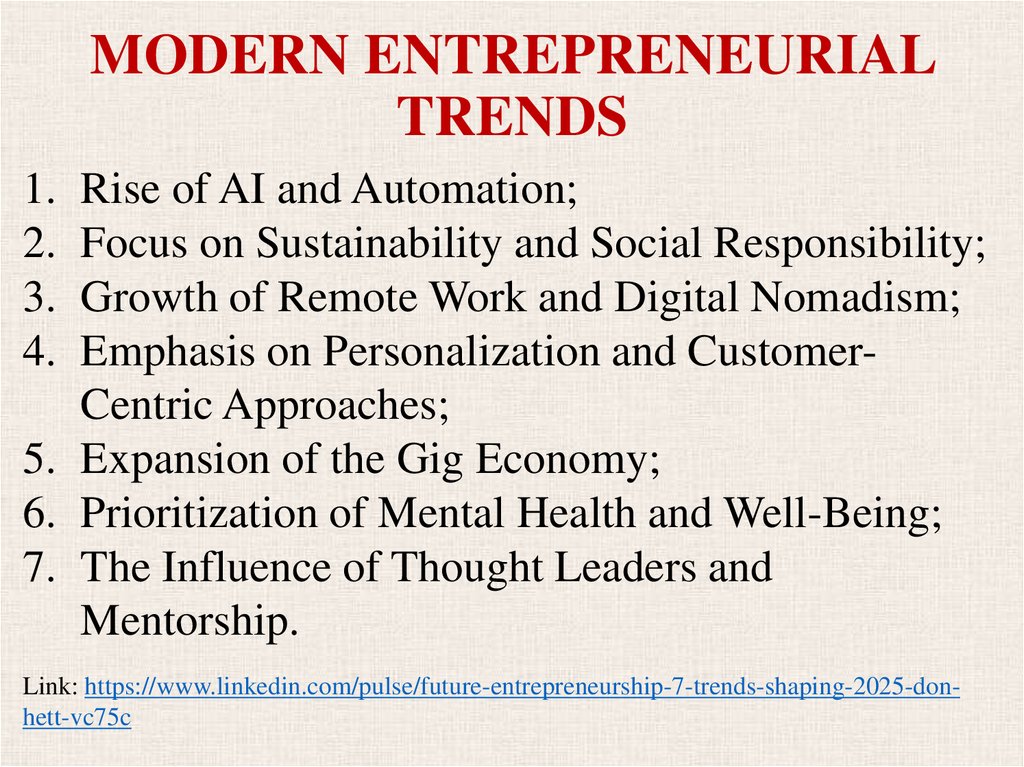
1. Rise of AI and Automation;2. Focus on Sustainability and Social Responsibility;
3. Growth of Remote Work and Digital Nomadism;
4. Emphasis on Personalization and CustomerCentric Approaches;
5. Expansion of the Gig Economy;
6. Prioritization of Mental Health and Well-Being;
7. The Influence of Thought Leaders and
Mentorship.
Link: https://www.linkedin.com/pulse/future-entrepreneurship-7-trends-shaping-2025-donhett-vc75c
6. GROUP ACTIVITY: ENTREPRENEURSHIP ACROSS
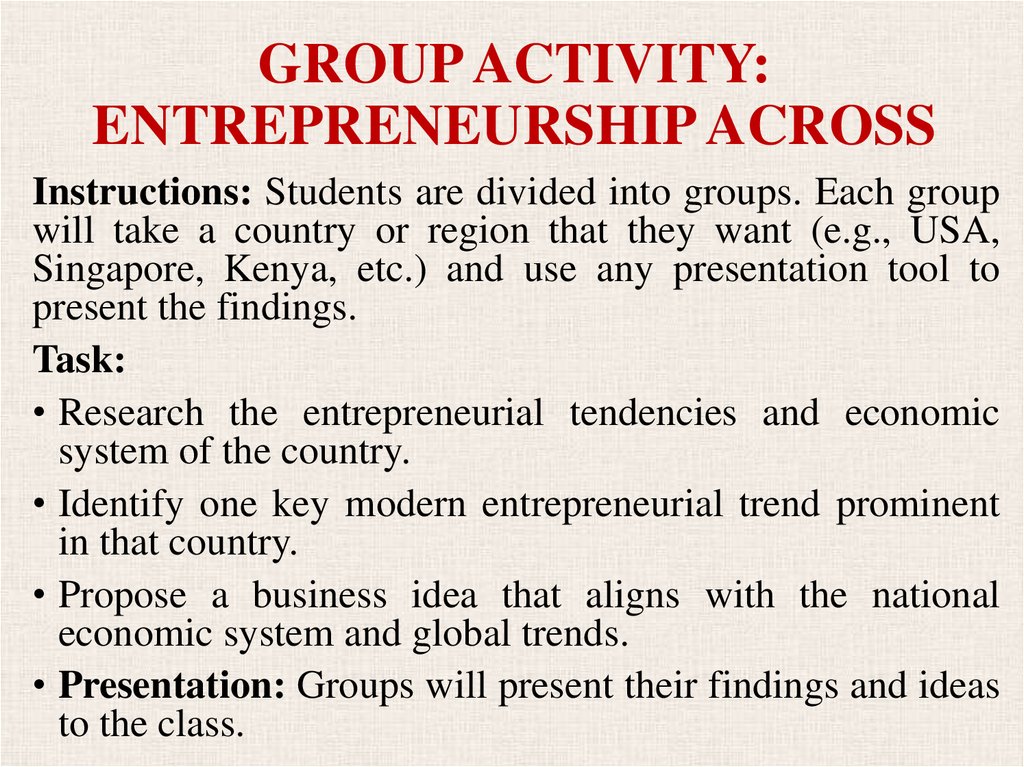
Instructions: Students are divided into groups. Each groupwill take a country or region that they want (e.g., USA,
Singapore, Kenya, etc.) and use any presentation tool to
present the findings.
Task:
• Research the entrepreneurial tendencies and economic
system of the country.
• Identify one key modern entrepreneurial trend prominent
in that country.
• Propose a business idea that aligns with the national
economic system and global trends.
• Presentation: Groups will present their findings and ideas
to the class.
7. CASE STUDIES
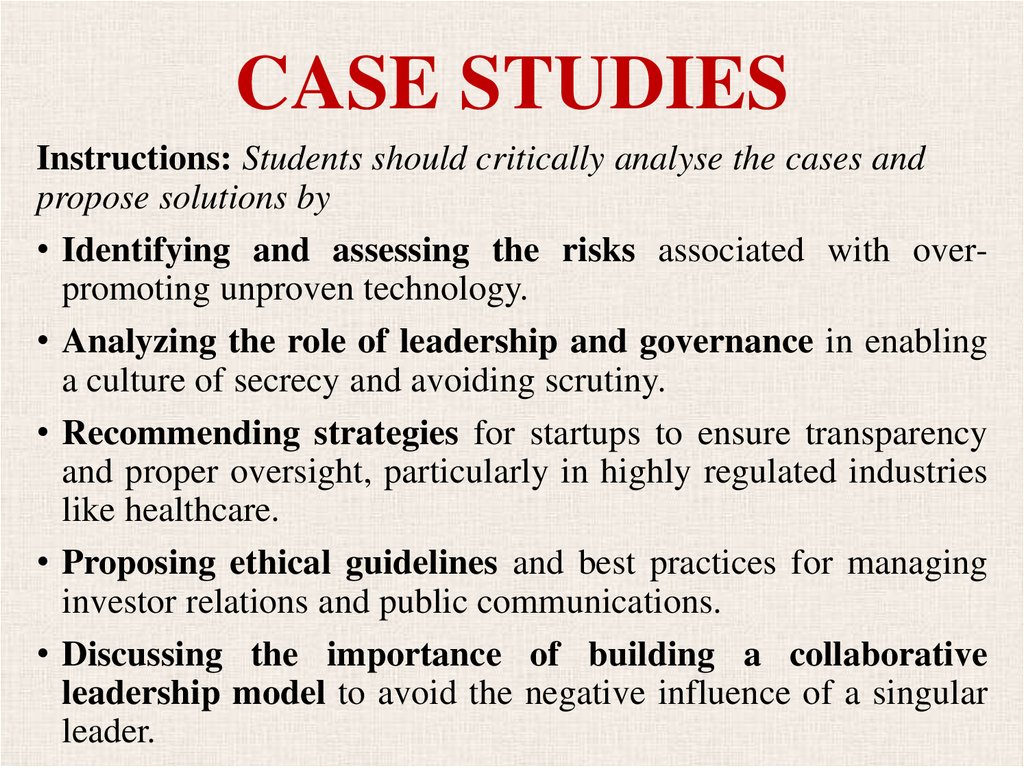
Instructions: Students should critically analyse the cases andpropose solutions by
• Identifying and assessing the risks associated with overpromoting unproven technology.
• Analyzing the role of leadership and governance in enabling
a culture of secrecy and avoiding scrutiny.
• Recommending strategies for startups to ensure transparency
and proper oversight, particularly in highly regulated industries
like healthcare.
• Proposing ethical guidelines and best practices for managing
investor relations and public communications.
• Discussing the importance of building a collaborative
leadership model to avoid the negative influence of a singular
leader.
8. Kazakhstan’s Atameken Entrepreneurial Program
Instructions. Suggest a business by taking intoaccount current trends by using Canvas business
model or other models. Present your business to
your classmates.
9. REFLECTION
• What are the most significant modernentrepreneurial tendencies? Why?
• How does national entrepreneurship impact
the local economy?
• What entrepreneurial opportunities do you
see in your country?