


 Астрономия
Похожие презентации:


The Solar System
1.
ASTRONOMY PRIMERThe Solar
System
A compact tour of the Sun,
planets, moons, and small
worlds
NASA-informed overview
2.
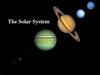
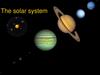
One star,eight planets
The Sun holds the system together. Around it
orbit rocky planets, giant planets, dwarf
planets, moons, asteroids, and comets.
2
3.
Inner planetsThe four inner planets are relatively small, dense, and rocky.
They orbit closest to the Sun and include Earth's home
neighborhood.
Mercury
Venus
Earth
Mars
Smallest planet
Thick atmosphere
Liquid water
Thin air
closest to the Sun
hottest surface
life-bearing world
ancient river clues
3
4.
Outer planetsBeyond the asteroid belt, the giant planets dominate: Jupiter
and Saturn are gas giants; Uranus and Neptune are ice
giants.
Jupiter
Saturn
Uranus
Neptune
Largest planet
Bright rings
Ice giant
Farthest planet
powerful storms
many icy moons
rotates sideways
supersonic winds
4
5.
Small bodies carry old cluesAsteroids, comets, dwarf planets, and icy objects are
not leftovers in the boring sense. They are preserved
records of how the solar system formed and changed.
They also reveal where water and organic material
may have traveled across the young system.
Dwarf planets
Asteroids and comets
Worlds like Pluto share
neighborhoods with
other objects.
Rocky and icy bodies
preserve early solarsystem material.
5
6.
Why it mattersOrigins
The solar system is a natural archive of planet
formation.
Habitability
Comparing worlds helps explain why Earth can support
life.
Exploration
Robotic missions turn distant worlds into testable
science.
6