


Похожие презентации:





Исторические личности России на английском_ подгот
1.
Russian Historical Figures2.
Practice Exercisestsar, revolution, reforms, plans, tsar
Complete each sentence with the appropriate vocabulary term from above:
1. Ivan IV was the first Russian ruler to be crowned as a ________ in 1547.
2. Peter the Great introduced numerous ________ to modernize Russia and bring it closer to Western Europe.
3. The October ________ of 1917 led to the establishment of the Soviet government.
4. Nicholas II was the last Russian ________ before the fall of the Romanov dynasty.
5. Stalin's economic ________ focused on rapid industrialization of the Soviet Union.
Match each term on the left with its correct definition on the right:
1. Scientist
2. Composer
3. Playwright
4. Philosopher
5. Discovery
Definitions:
A. A person who creates dramatic works for theatrical performance
B. Something found or observed for the first time
C. A person who creates and writes musical compositions
D. A person who conducts systematic studies to understand natural phenomena
E. A thinker who examines fundamental questions about existence and knowledge
Exercise: Complete the Sentences
strategy, army, general, victory, battle
1. The Russian ________ successfully defended Moscow against Napoleon's forces in 1812.
2. Field Marshal Kutuzov was a brilliant ________ who led Russian forces against Napoleon.
3. The ________ of Borodino was one of the bloodiest engagements of the Napoleonic Wars.
4. Russia's ________ in World War II came at an enormous cost of over 20 million lives.
5. Alexander Suvorov's ________ involved attacking quickly and decisively, never losing a single battle in his career.
3.
Peter the GreatTrue/False
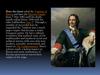
Peter the Great ( UFD 5?< ><=, 167231725) was
one of Russia's most transformative leaders,
whose vision and determination fundamentally
reshaped the Russian Empire. Standing at an
impressive height of 6'8" (203 cm), Peter was as
physically commanding as he was politically
influential. Born into the Romanov dynasty, he
became sole ruler of Russia in 1696.
Peter's most significant contribution was his
ambitious programme of reforms designed to
modernise Russia and reduce the gap between
Russia and the advanced nations of Western
1. Peter the Great was the first ruler of the
Romanov dynasty.
2. St. Petersburg was built to serve as a new
capital city.
3. Peter banned traditional Russian clothing at
his court.
4. Russia's navy existed before Peter came to
power.
5. Peter the Great was known for his short
stature.
Europe. He established Russia's first navy,
Discussion Questions
reorganised the army along European lines,
simplified the alphabet, introduced the Julian
calendar, and enforced Western dress at court.
His development policies were particularly
focused on acquiring warm-water ports that
would give Russia greater access to maritime
trade routes.
How did Peter the Great shape modern
Russia?
Were Peter's westernisation efforts beneficial
or harmful to Russian culture? Explain your
thinking.
Why might some Russians have resisted
Perhaps his most visible legacy is the founding of
Peter's reforms?
St. Petersburg, a city built on swampland that
How might Russian history have been different
became Russia's new capital and its "window to
Europe." This city embodied Peter's determination
to forge stronger connections with European
powers and culture, representing his embrace of
European influence in Russian development.
without Peter's influence?
4.
Catherine the GreatCatherine the Great ( >4B5@<=4 5?<>4O, 17293
1796) was born Sophie Friederike Auguste von
Anhalt-Zerbst in Prussia before marrying into the
Choose the right answer
1. Catherine the Great was originally from:
Russian royal family. Following a coup against her
A. Russia
husband Peter III, she became Empress of Russia
B. Prussia
and ruled for 34 years, making her the country's
longest-ruling female leader. Her reign is often
considered the Golden Age of the Russian Empire.
Catherine embraced the ideas of the
Enlightenment ( @>A65M5=<5), corresponding
with Voltaire and other philosophers. She
C. France
D. England
2. Catherine came to power through:
A. Inheritance from her father
B. Democratic election
implemented numerous reforms to modernise
C. A coup against her husband
Russia's administration, legal system, and
D. Appointment by the church
education. Under her rule, Russia significantly
expanded its territory through successful military
campaigns and diplomatic negotiations, adding
over 200,000 square miles to the empire,
including Crimea and parts of Poland.
Known for her patronage (?>>@>6<B5?LAB6>) of
the arts, Catherine transformed St. Petersburg
into a cultural capital. She established the
Hermitage Museum, beginning with her personal
collection of 225 paintings and ultimately
amassing thousands of artworks. Despite her
3. Which of these was NOT acquired during
Catherine's reign?
A. Parts of Poland
B. Crimea
C. Finland
D. Territory along the Black Sea
Discussion Questions
What challenges might Catherine the Great
have faced as a foreign-born female ruler in
progressive ideas, Catherine ultimately
18th-century Russia?
strengthened the institution of serfdom and the
How do you think Catherine's interest in
power of the nobility to maintain political stability.
Enlightenment philosophy influenced her
governance?
Why might a ruler support arts and culture
during their reign? What political advantages
might this bring?
5.
Ivan the TerribleIvan IV Vasilyevich (153031584), commonly known as Ivan the Terrible ( 64A DB7AO9), was the Grand Prince of
Moscow from 1533 to 1547 and the first ruler to be crowned as Tsar of All Russia. The epithet "Grozny" in Russian
actually suggests "formidable" or "fearsome" rather than "terrible," reflecting the complex nature of his historical
assessment.
Ivan's reign marked the beginning of Russia as a multiethnic and multicultural state. Early in his rule, he implemented
progressive reforms, creating the first Russian parliament (Zemsky Sobor), reforming the law code, establishing the
first printing press in Russia, and initiating administrative reforms that centralised government. He significantly
expanded Russian territory, conquering the Khanates of Kazan, Astrakhan, and Siberia.
However, Ivan's rule is equally remembered for its brutality. His establishment of the Oprichnina (BCD8GA8A4) 3 a
state within a state with its own army loyal only to the Tsar 3 led to a reign of terror. The Oprichniki, dressed in black
and riding black horses, conducted mass executions and confiscations of land from boyars (nobles). Ivan's
enforcement of autocracy (E4@B45D64685) was absolute, consolidating all power in his hands.
Ivan's legacy (A4E?5485) remains deeply ambiguous. While he laid foundations for Russian imperial expansion and
modernisation, his paranoia and cruelty set precedents for authoritarian rule. His mental stability has been
questioned by historians, particularly after the death of his beloved first wife, Anastasia, whom he suspected was
poisoned by boyars. In a fit of rage, he killed his son and heir, Ivan Ivanovich, complicating the succession and
contributing to the Time of Troubles that followed his death.
Place these events in chronological order:
Ivan conquers the Khanate of Kazan, expanding Russian territory eastward
Establishment of the Oprichnina, Ivan's personal domain and police force
Coronation as the first Tsar of All Russia
Ivan strikes his son and heir in a rage, causing his death
Why is Ivan remembered as both a reformer and a tyrant? How might these contrasting aspects of his character have
influenced Russia's development?
6.
Pushkin's ContributionsAlexander Sergeyevich Pushkin
(1799-1837) is widely regarded as
Russia's greatest poet (?>MF) and the
founder of modern Russian
literature. Born into Russian nobility
Comprehension Questions
1. Which ancestor gave Pushkin his
African heritage?
2. What literary achievement is
with African ancestry through his
"Eugene Onegin" considered to
great-grandfather, Pushkin created a
be?
literary language that harmoniously
combined the colloquial speech of
everyday Russians with Church
Slavonic elements, establishing the
foundations for modern Russian
literature.
Pushkin's genius manifested across
multiple genres. His narrative poem
"Ruslan and Ludmila" (1820)
introduced elements of Russian
folklore into literature. His verse
(EF<E<) novel "Eugene Onegin"
(1825-1832) is considered a
masterpiece that reflects Russian
society of his time. Pushkin also
excelled in prose, producing works
like "The Queen of Spades" and "The
Captain's Daughter," and in drama
with plays such as "Boris Godunov."
Political themes run through much
of Pushkin's work. His liberal political
views and support for democratic
reforms led to his exile (EEO?>4) to
southern Russia and later to his
family estate of Mikhailovskoye.
During these periods of isolation, he
produced some of his finest works.
Pushkin's life ended tragically at age
37 when he was mortally wounded
in a duel defending his wife's
honour. His early death is
considered one of the greatest
losses to Russian culture.
3. Why was Pushkin sent into exile?
4. How did Pushkin revolutionise
the Russian literary language?
5. When and how did Pushkin die?
Discussion Questions
Why is Pushkin considered the
father of Russian literature? What
makes his contributions so
significant?
How might Russia's literary
development have been different
without Pushkin's influence?
Why do you think political
themes were so important in
Pushkin's writing? How does this
reflect the time period in which
he lived?
How do you think Pushkin's
mixed heritage might have
influenced his perspective on
Russian society?
7.
Match each historical figure to their field and specific contributions.Historical Figure
Field
Notable Contributions
Vladimir Lenin (1870-1924)
Literature
Authored "War and Peace" and
"Anna Karenina"; known for
realistic fiction and moral
philosophy; developed a nonviolent anarcho-pacifist Christian
philosophy
Fyodor Dostoevsky (1821-1881)
Music
Composed "Swan Lake," "The
Nutcracker," and "1812
Overture"; combined Western
techniques with Russian folk
influences; first Russian
composer to achieve
international fame
Leo Tolstoy (1828-1910)
Science/Chemistry
Created the periodic table of
elements; predicted properties
of elements not yet discovered;
contributed to fields of
hydrodynamics, meteorology,
and petroleum industry
Pyotr Tchaikovsky (1840-1893)
Politics/Revolution
Wrote psychological novels
including "Crime and
Punishment," "The Brothers
Karamazov," and "The Idiot";
explored themes of morality,
free will, and human suffering
Dmitri Mendeleev (1834-1907)
Literature
Led the Bolshevik Revolution,
founded the Soviet Union,
implemented communist
policies including the New
Economic Policy
After completing the matching exercise, discuss with your group:
1. Which of these figures do you think had the most significant impact on global history and why?
2. How do these different figures represent various aspects of Russian culture and achievement?
3. Can you identify any common themes or characteristics among these influential Russians?
4. How do you think these historical figures influenced each other's work or thinking?
8.
Creative Writing ExerciseNow it's time to apply what you've learned about
Russian historical figures and the vocabulary
we've covered in this lesson. Choose one historical
figure we've discussed (or another Russian
historical figure you're interested in) and write a
short paragraph explaining their significance and
why they are remembered in history.
Your paragraph should:
Be approximately 100-150 words
Include at least five vocabulary words
introduced earlier in this lesson
Explain why this figure is historically significant
Include at least one specific example of their
contribution or achievement
Express your personal view on their legacy
Here are some suggestions for historical figures
you might choose to write about:
Peter the Great
Catherine the Great
Alexander Pushkin
Ivan the Terrible
Dmitri Mendeleev
Fyodor Dostoevsky
Pyotr Tchaikovsky
Vladimir Lenin
Example Paragraph Structure
To help you get started, here's a structure you
might follow:
Introduction: Identify the historical figure and their
time period
Main point 1: Describe their major contribution or
achievement
Main point 2: Explain the impact of their work on
Russian and/or world history
Conclusion: Share your perspective on their
significance or legacy
9.
Vocabulary GamesWord Scramble
Below are scrambled versions of vocabulary
words we've learned. Work with a partner to
unscramble them and then use each word in a
sentence about a Russian historical figure:
1. RATS (Political leader)
2. FORMRE (Change made to improve a system)
3. LEIEX (Forced absence from one's home
country)
4. TSAGETRY (Plan of action in war)
5. TCUAAORCY (Absolute rule by one person)
6. GAELEY (What someone leaves behind)
7. SRECDIOVY (Something found for the first
time)
8. LOSSIPHOERPH (Person who studies
fundamental questions)
9. LUTIONOVER (Forcible overthrow of a
government)
10. NOPTERAAG (Support or protection given by a
patron)
Taboo-Style Game: "Describe but Don't
Say"
In this game, students take turns describing a
Russian historical figure or concept without using
certain forbidden words. Form small groups and
follow these rules:
1. One student picks a card with a historical
figure or concept to describe
2. The card also lists 3-5 "forbidden words" that
cannot be used in the description
3. The student must describe the figure/concept
without using any forbidden words
4. Other students in the group try to guess what
is being described
5. The first student to guess correctly gets to pick
the next card
For example, a card might read:
Describe: Peter the Great
Forbidden words: Tsar, Navy, Petersburg,
Reform, Europe
10.
Answer KeyPolitical Leaders - Fill in the Gaps
Military Terms - Complete the Sentences
1. Tsar (F4DP)
1. army (4D@<O)
2. reforms (D9DBD@O)
2. general (79A9D4?)
3. revolution (D96B?NF<O)
3. battle (5<F64)
4. Emperor (<@C9D4FBD)
4. victory (CB5984)
5. policy (CB?<F<>4)
5. strategy (EFD4F97<O)
Scientific and Cultural Contributors - Matching
Ivan the Terrible - Ordering Events
1. Scientist - D. A person who conducts systematic
1. Coronation as the first Tsar of All Russia (1547)
studies
2. Composer - C. A person who creates and writes
musical compositions
3. Playwright - A. A person who creates dramatic works
for theatrical performance
4. Philosopher - E. A thinker who examines
fundamental questions
5. Discovery - B. Something found or observed for the
first time
Peter the Great - True/False
1. False (Peter was the grandson of the first Romanov
tsar)
2. True
3. True
4. False (Peter created Russia's first navy)
5. False (He was exceptionally tall at 6'8")
Catherine the Great - Multiple Choice
2. Ivan conquers the Khanate of Kazan (1552)
3. Establishment of the Oprichnina (1565)
4. Ivan strikes his son and heir in a rage, causing his
death (1581)
Pushkin's Contributions
1. His great-grandfather (Abram Petrovich Gannibal)
2. A masterpiece that reflects Russian society of his
time
3. For his liberal political views and support for
democratic reforms
4. By combining colloquial speech with Church Slavonic
elements
5. In 1837 at age 37, after being mortally wounded in a
duel
Word Scramble Answers
1. TSAR
2. REFORM
1. B. Prussia
3. EXILE
2. C. A coup against her husband
4. STRATEGY
3. C. Finland
5. AUTOCRACY
6. LEGACY
7. DISCOVERY
8. PHILOSOPHER
9. REVOLUTION
10. PATRONAGE