


Похожие презентации:








Lviv_Polytechnic_Rosa_Danylo_KB-108_NO_FRANKO
1.
LVIV POLYTECHNICNATIONAL
UNIVERSITY
History, famous people and facts worth
remembering
Presented by Rosa Danylo
Group KB-108
2.
A university with a 210-year historyLviv Polytechnic traces its history to 1816, when Emperor Francis I approved the creation of a Real
School in Lviv. The school focused on mathematics, technical drawing and practical sciences.
In 1844, it became a Technical Academy. In 1877, it received the status of a higher technical school.
The familiar name “Lviv Polytechnic” officially appeared in 1921.
The institution changed its official name fourteen times because Lviv belonged to different states
and lived through wars and political changes. In 2000, it received national university status.
02
3.
The main building is a work of artArchitect Julian Zachariewicz designed the main building, which
was constructed from 1874 to 1877. He later served as rector of
the Polytechnic.
Above the entrance, three sculptures represent Engineering,
Architecture and Mechanics. The Latin motto “Litteris et Artibus”
means “To Sciences and Arts.”
The Assembly Hall contains eleven allegorical paintings based
on sketches by the famous artist Jan Matejko. The building
shows that technical education can exist together with art and
culture.
Julian Zachariewicz
03
4.
Stepan Bandera studied agronomy hereStepan Bandera studied at the agronomy department of the
Higher Polytechnic School from 1929 to 1933. At that time,
Western Ukraine was part of Poland.
Bandera combined his studies with underground political
activity in the Organization of Ukrainian Nationalists. He left
the Polytechnic without receiving an agronomy diploma.
Today, the university’s main building stands at 12 Stepan
Bandera Street. His connection with the Polytechnic
remains one of the most discussed facts in its history.
04
5.
Stanisław Ulam went from Lviv to Los AlamosStanisław Ulam studied mathematics at Lviv
Polytechnic and earned his doctorate in 1933. He
belonged to the famous Lviv School of Mathematics.
After moving to the United States, he joined the
Manhattan Project at Los Alamos. He later helped
develop the Monte Carlo method, which uses random
sampling to solve difficult mathematical problems.
Today, scientists use this method in physics,
engineering, finance, medicine and computer graphics.
Ulam’s story connects Lviv Polytechnic with world
science.
05
6.
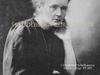
Marie Skłodowska-Curie received the first honorary doctorateIn 1912, Lviv Polytechnic awarded its first Doctor Honoris Causa title to Marie Skłodowska-Curie. She had
already won the Nobel Prize in Physics in 1903 and the Nobel Prize in Chemistry in 1911.
She also delivered a lecture in the university’s chemistry building. This event connected the Polytechnic
with one of the most important scientists in history.
06
7.
The university survived war and repressionDuring the First World War, the main building served
as a military hospital. When classes returned in
1921, many students were still serving at the front.
In July 1941, Nazi forces murdered a group of Lviv
professors and members of their families on the
Vuletsky Hills. The victims included the rector and
several professors of Lviv Polytechnic.
The university remembers these scholars as part of
its academic history. Their story shows how war can
destroy not only lives, but also science and
education.
07
8.
CONCLUSIONWhy Lviv Polytechnic matters
Lviv Polytechnic is more than an old technical
university. Its history includes architecture, political
struggle, world-famous mathematics and dramatic
events of two world wars.
People such as Stepan Bandera and Stanisław
Ulam studied here, while Marie Skłodowska-Curie
received the university’s first honorary doctorate.
For me, Lviv Polytechnic represents the connection
between Ukrainian history and modern education.
Thank you for your attention.
Rosa Danylo · KB-108