


Похожие презентации:




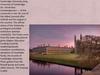

Cambridge
1.
2.
IntroductionLocation: Cambridge, United Kingdom.
1)It is the second-oldest university in the
UK and the English-speaking world, and the
seventh-oldest globally.
2)In post-nominals its name is abbreviated
as Cantab (from Cantabrigiensis).
3.
History ofFoundation
•Cambridge grew out of an association of
scholars formed in 1209 by scholars leaving
Oxford after a dispute with townsfolk.
•A charter of Henry III (1231) and a bull of Pope
Gregory IX (1233) strengthened its status and
gave graduates the right to teach everywhere in
Christendom.
•The first college, Peterhouse, was founded in
1284; college founding continued for centuries
(the newest full college is Robinson, late
1970s).
4.
The academic year isdivided into 3 terms
Organisation
The university has over 150
departments, faculties and
schools
Cambridge is a
collegiate university:
self-governing and
independent colleges,
each with its own
property and income
5.
•Arts and Humanities•Biological Sciences
•Clinical Medicine
•Humanities and Social Sciences
•Physical Sciences
•Technology
6.
Colleges providehousing, welfare,
social life and
supervisions, and
decide whom to admit.
Cambridge has 31
colleges; three (Murray
Edwards, Newnham,
Lucy Cavendish) admit
women only.
Churchill, Clare and
King's were the first
previously all-male
colleges to admit
women in 1972;
Magdalene was the
last to become mixed
in 1988.
7.
Teaching combines lectures (organised bydepartments) and supervisions (organised by
colleges) Supervisions are weekly hourlong sessions in small groups of one to
three students with a supervisor
Supervisions are weekly hourlong sessions in small groups of
one to three students with a
supervisor
This system is considered unique to
Cambridge and Oxford (where
supervisions are called "tutorials")
8.
Finances1) Cambridge is the wealthiest university in the UK
and Europe: its endowment was around £4.1 billion
in 2011.
2) The operating budget exceeds £1 billion per year.
9.
Each college is anindependent charitable
institution with its own
endowment.
Libraries and
Museums
The university has more than
100 libraries; the Cambridge
University Library holds over
It is a legal deposit
8 million volumes.
library, receiving
about 80,000 books
every year; the total
book stock is around 13
million.
10.
Conclusion1) Cambridge is one of the oldest
universities in the world (founded in
1209) and one of the leading scientific
centres of today.
2) Its collegiate system of 31
independent colleges combines
academic freedom with high standards.
3) 61 Nobel Prizes and world-famous
alumni (Newton, Darwin, Maxwell,
Rutherford) confirm its status as a
global intellectual centre.