


Похожие презентации:




Structure of the railway track
1.
Structure of the railway trackRails. Sleepers (ties). Intermediate rail fastenings. Ballast. Sand cushion
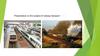
1. What do you see in the picture?
2.
1.
3.
4.
5.
2. Which parts of the track do you know in English?
3. Why is the railway track strong and stable?
2.
New vocabulary with brief explanations:Rails — рельсы.
Sleepers / ties — шпалы.
Intermediate rail fastenings — крепёжные элементы, промежуточные рельсовые скрепления.
Ballast — балласт.
Sand cushion — песчаная подушка.
EXERCISE 1. MATCH THE PATH ELEMENT WITH ITS FUNCTION
FUNCTION.
ELEMENT
FUNCTION
RAILS
SLEEPERS (TIES)
INTERMEDIATE RAIL FASTENINGS
BALLAST
SAND CUSHION
A. Distributes load, drains water, stabilizes track
B. Carries the weight of the train, guides the wheels
C. Levels the ground, reduces vibrations, protects from frost
D. Keeps rails at correct gauge, transfers load to ballast
E. Holds rail firmly to the sleeper, prevents movement
3.
READINGStructure of the Railway Track
A railway track is not just rails on the ground. It is a carefully designed structure with several layers, each with a specific
function.
At the top are the rails. They are made of strong steel and carry the weight of trains. The wheels of the train run directly
on the rails.
Below the rails are the sleepers (or ties). They keep the rails at the correct distance from each other (the track gauge) and
transfer the load downwards to the ballast.
To fix the rails to the sleepers, engineers use intermediate rail fastenings. These include clips, bolts, and other fasteners
that hold the rail tightly and prevent any movement.
Under the sleepers is the ballast — a thick layer of crushed stone. Ballast has several important jobs: it distributes the
heavy load from the sleepers over a wider area, it keeps the track stable, and it allows water to drain away so the track
does not get damaged.
The bottom layer is the sand cushion. It is placed under the ballast to level the subgrade (the ground below). The sand
cushion also reduces vibrations and protects the track from frost damage.
Together, these elements make the railway track strong, durable, and safe for trains.
EXERCISE 2. ANSWER THE QUESTIONS BASED ON THE TEXT
1.
2.
3.
4.
5.
What material are the rails made of?
List two functions of the sleepers?
What do intermediate rail fastenings include?
List three functions of the ballast.
Why is the sand cushion important?
4.
EXERCISE 3. TRUE / FALSERead the statements and indicate whether they are true or false. Then, write a onesentence explanation in English as a statement is false (if it is false).
1. The rails are placed directly on the sand cushion.
2. Sleepers keep the correct distance between the rails (track gauge).
3. Ballast is used only to make the track look neat.
4. Intermediate rail fastenings connect the rails to the sleepers.
5. The sand cushion is the top layer of the track structure.
EXERCISE 4. FILL IN THE BLANKS WITH WORDS FROM THE LIST
Insert the words into the sentences: rails, sleepers, fastenings, ballast, sand cushion.
1. ________ are the steel beams that the train wheels run on.
2. ________ transfer the load from the rails to the ballast and keep the gauge.
3. ________ hold the rail to the sleeper so it does not move.
4. ________ is a layer of stones that stabilizes the track and drains water.
5. ________ is placed at the bottom to level the ground and reduce vibrations.
5.
GRAMMAR: PRESENT SIMPLEПо теме Structure of the Railway Track Present Simple нужен, чтобы описывать постоянные
функции и устройство элементов пути — то, что верно всегда, а не только «прямо сейчас».
AFFIRMATIVE SENTENCES
•I / you / we / they + глагол в начальной форме
Engineers check the track regularly.
•He / she / it + глагол + -s/-es (третье лицо, единственное число)
The rail carries the load. (it → carries)
В профессиональном тексте подлежащим часто бывает не человек,
а предмет (the rail, ballast, a sleeper), и к нему всё равно добавляем -s.
NEGATIVE SENTENCES
Используем do not (don’t) / does not (doesn’t) + глагол без -s.
•Fastenings don’t allow the rail to move freely.
•The sand cushion doesn’t support the rails directly.
•This type of ballast doesn’t work well in heavy rain.
После don’t/doesn’t глагол остаётся в начальной форме.
Ошибкой будет doesn’t protects — правильно doesn’t protect.
INTERROGATIVE SENTENCES
Строим с Do / Does + подлежащее + глагол (без -s).
•Do the rails guide the wheels? — Yes, they do.
•Does the ballast drain water? — Yes, it does.
•Do sleepers lie directly on the ground? — No, they don’t.
Специальные вопросы (с what, why, where):
•What does the sand cushion do? — It levels the ground and reduces vibrations.
•Why do we need intermediate fastenings? — They hold the rail firmly to the sleeper.
SHORT ANSWERS
•Does this track meet the standards? — Yes, it does.
•Do fastenings need replacement? — No, they don’t.
Это экономит время и звучит естественно на инструктажах и осмотрах.
SPECIAL CASES AND -S / -ES ENDINGS
•Обычные глаголы: play → plays, protect → protects, transfer → transfers.
•Если глагол оканчивается на -s, -ss, -sh, -ch, -x, -o: добавляем -es
fix → fixes — The clip fixes the rail to the sleeper.
watch → watches.
•Если глагол оканчивается на согласную + y: меняем y → i и добавляем -es
study → studies.
apply → applies.
ГЛАГОЛ TO BE В PRESENT SIMPLE (AM / IS / ARE)
Он нужен, когда мы описываем, а не говорим о действии.
•The track is strong.
•These sleepers are wooden.
•The gauge is standard.
ПОЧЕМУ ИМЕННО PRESENT SIMPLE В ПРОФЕССИОНАЛЬНЫХ
ТЕКСТАХ ПРО ПУТЬ
•Это факты и постоянные свойства: The rail is made of steel. Ballast drains water.
•Это инструкции и правила: You check the gauge. You inspect fastenings.
•Это назначение и функции: This layer reduces vibrations. This component keeps the
alignment.
Поэтому почти все описания в учебниках, инструкциях и на схемах — в Present Simple.
6.
EXERCISE 5. OPEN THE BRACKETS: USE THE PRESENT SIMPLE.1. The rails ________ (carry) the weight of the train and ________ (guide) the wheels.
2. Sleepers ________ (keep) the correct distance between the rails and ________ (transfer) the load to the
ballast.
3. Intermediate rail fastenings ________ (hold) the rail firmly to the sleeper.
4. The ballast ________ (distribute) the pressure and ________ (allow) water to drain away.
5. The sand cushion ________ (level) the ground and ________ (reduce) vibrations.
EXERCISE 6. FORM THE NEGATIVE.
1. The rails support the whole structure.
2. Fastenings let the rail move freely.
3. The ballast keeps the track wet.
4. Sleepers protect the ground from vibrations.
5. The sand cushion makes the track unstable.
EXERCISE 7. FORM QUESTIONS IN THE PRESENT SIMPLE TENSE FOLLOWING THE EXAMPLE, THEN
PROVIDE A SHORT ANSWER. (YES, THEY DO / NO, IT DOESN’T….)
Sample: Do the rails carry the train’s weight? — Yes, they do.
1. __________________________________? — Yes, it does. (ballast / drain water)
2. __________________________________? — No, they don’t. (sleepers / lie directly on the ground)
3. __________________________________? — Yes, they do. (fastenings / hold the rail to the sleeper)
4. __________________________________? — No, it doesn’t. (sand cushion / lie on top of the ballast)
5. __________________________________? — Yes, they do. (rails / guide the wheels)
7.
REFLECTION AND CONSOLIDATIONWhich part of the track is the most important in your opinion? Why?
What would happen if we removed the ballast or the sand cushion?
HOMEWORK
Fill in the table. Then, come up with and write down 3 questions about the functions of the path elements (using the
Present Simple tense) and provide short answers to them.
TERM
Rails
Sleepers
Fastenings
Ballast
Sand cushion
FUNCTION (PRESENT SIMPLE)