
 Биология
Похожие презентации:

Blicence canopy proficiency
1.
BASTEDBAY AREA SPORTIES TRAINING
AND EDUCATION DEPARTMENT
B LICENCE
CANOPY
PROFICIENCY
SICK SENSE
2.
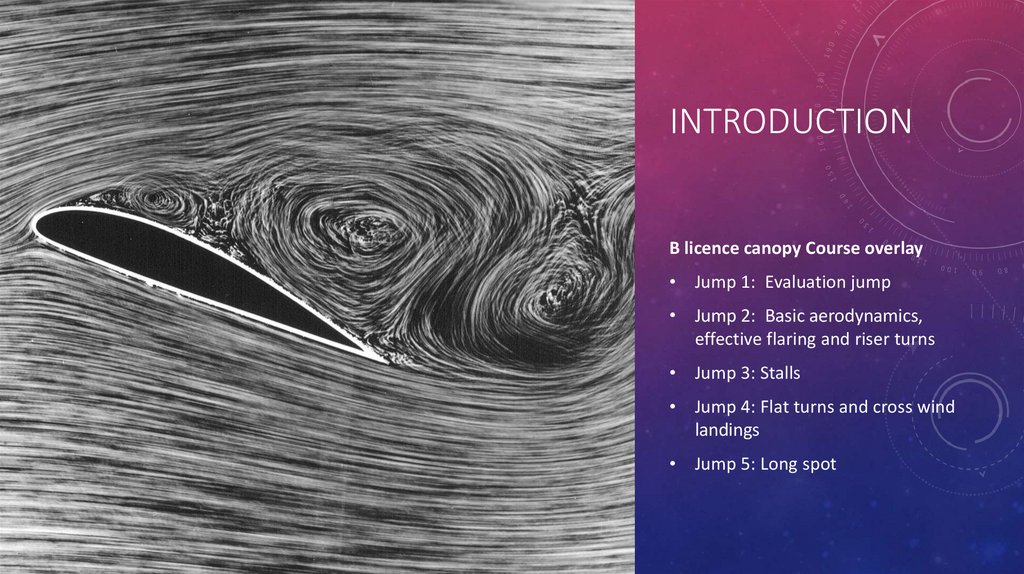
INTRODUCTIONB licence canopy Course overlay
• Jump 1: Evaluation jump
• Jump 2: Basic aerodynamics,
effective flaring and riser turns
• Jump 3: Stalls
• Jump 4: Flat turns and cross wind
landings
• Jump 5: Long spot
3.
#1 EVALUATION JUMPCOLLAPSE SLIDER • LOOSEN CHEST STRAP • CHECK BRAKE LINE LENGTH • PRACTICE FLARES UP HIGH
PLAN AND EXECUTE A DISTINCT DOWNWIND, BASE AND FINAL APPROACH
• Clear Predictable pattern
• Airmanship
• Straight in approach - Full flare
4.
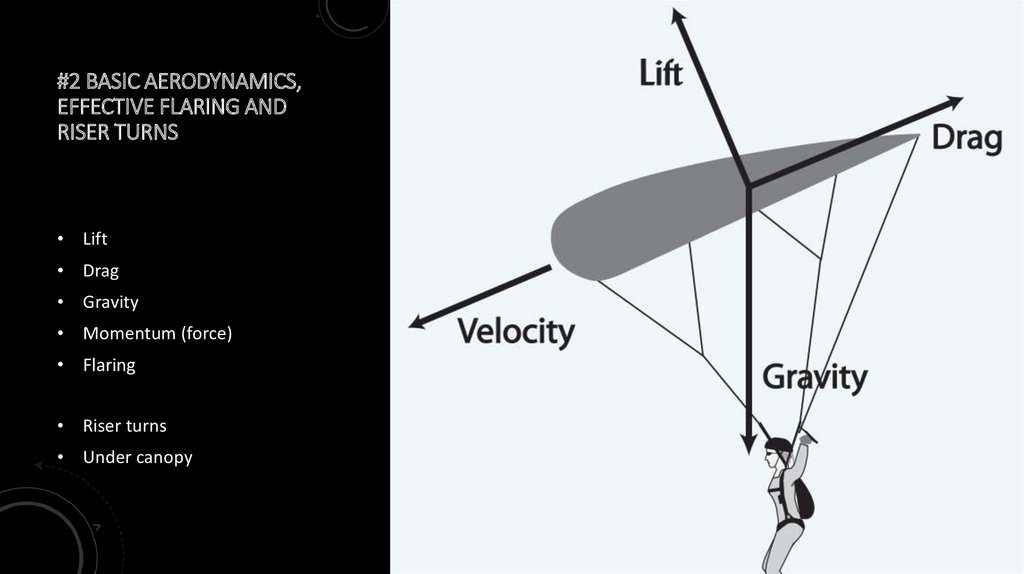
#2 BASIC AERODYNAMICS,EFFECTIVE FLARING AND
RISER TURNS
• Lift
• Drag
• Gravity
• Momentum (force)
• Flaring
• Riser turns
• Under canopy
5.
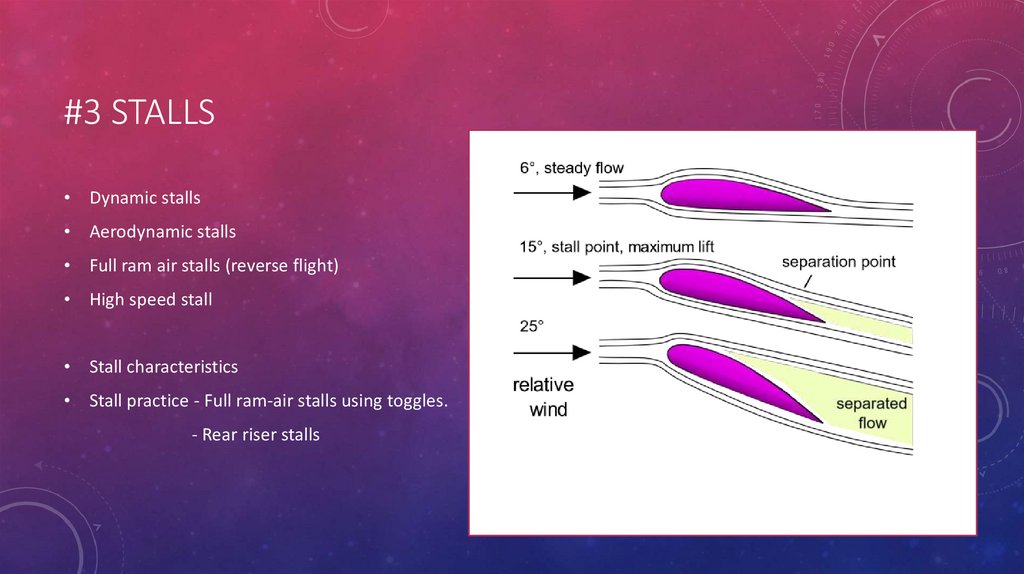
#3 STALLS• Dynamic stalls
• Aerodynamic stalls
• Full ram air stalls (reverse flight)
• High speed stall
• Stall characteristics
• Stall practice - Full ram-air stalls using toggles.
- Rear riser stalls
6.
#4 FLAT TURNS & CROSS-WIND LANDINGSEffect of brakes on glide
Reasons for flying in brakes
Vertical separation from canopy traffic
Slow forward speed and descent rate
Returning from a long spot
Flat turns as a defence tool at low altitudes
Techniques for initiating a braked turn
Bring both toggles to mid-stall position to start.
Raise one toggle slightly to turn in the opposite direction.
Pull one toggle down slightly to initiate a turn in the same
direction.
Most effective method for flat turns: Raise one toggle slightly
and pull the opposite toggle down slightly to initiate a turn in
the direction which the toggle is pulled down
Avoid stalling the canopy.
Slower forward speed
Lower descent rate
Change in glide:
The pilot needs to experiment to determine the change in glide
path at different degrees of flying in brakes.
Most modern nine-cell canopies fly flatter when a slight amount of
brakes are applied.
Some lower-aspect canopies are designed to sink for a classic
accuracy approach, which is less effective when performed under
a higher-aspect ratio canopy in low-wind conditions.
Flaring from a braked position
Expect a different glide on a braked final approach.
Expect a shorter and quicker stroke needed to flare.
Prepare for a harder landing.
7.
# 5 LONG SPOTProjected landing point
Discovery of how to locate the point on the ground the
parachute will reach while flying at natural speed
Altering the glide using brakes and rear risers
Minimize the drag.
Collapse the slider.
Pull legs up, arms in, and arch to reduce air resistance
Loosen the chest strap to improve glide.
If holding brakes, reducing fatigue by hooking your thumbs in
the harness. (Be careful not to hook onto your cutaway or
reserve ripcord handles.)
Decide by 1,500 feet about a new landing area.
Allow enough altitude for the final turn.
Expect the winds to weaken as you get lower.
Choose an alternate landing area if necessary, and follow offfield landing recommendations.