Похожие презентации:




The land of fathers
1.
The land of fathers2.
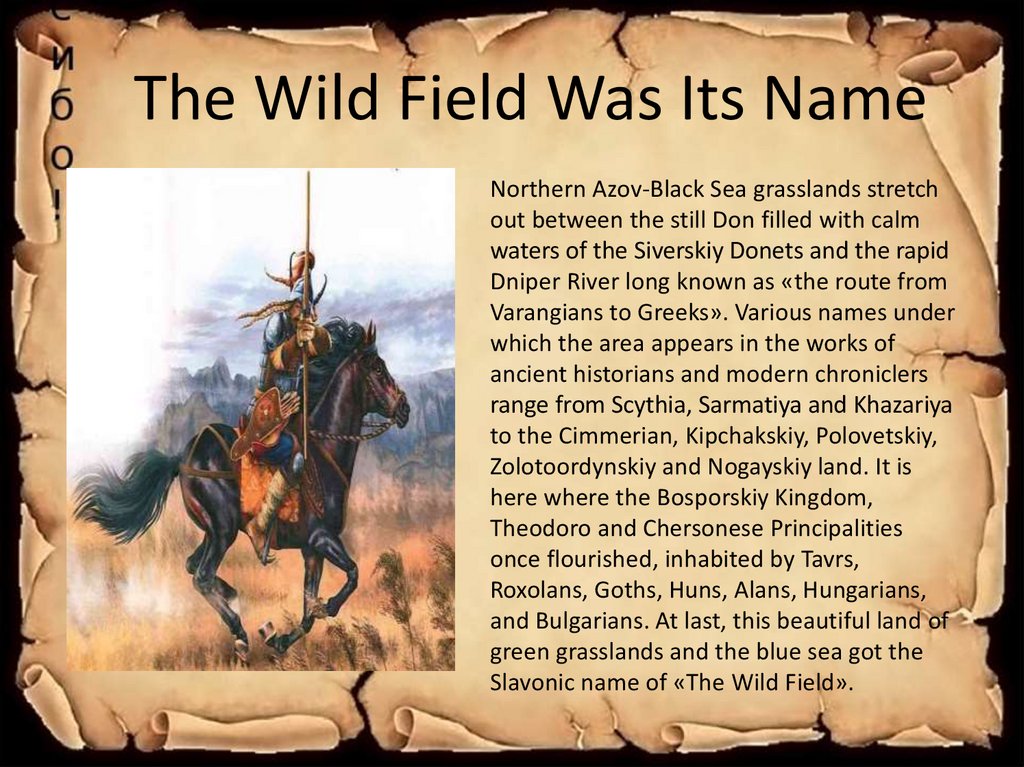
The Wild Field Was Its NameNorthern Azov-Black Sea grasslands stretch
out between the still Don filled with calm
waters of the Siverskiy Donets and the rapid
Dniper River long known as «the route from
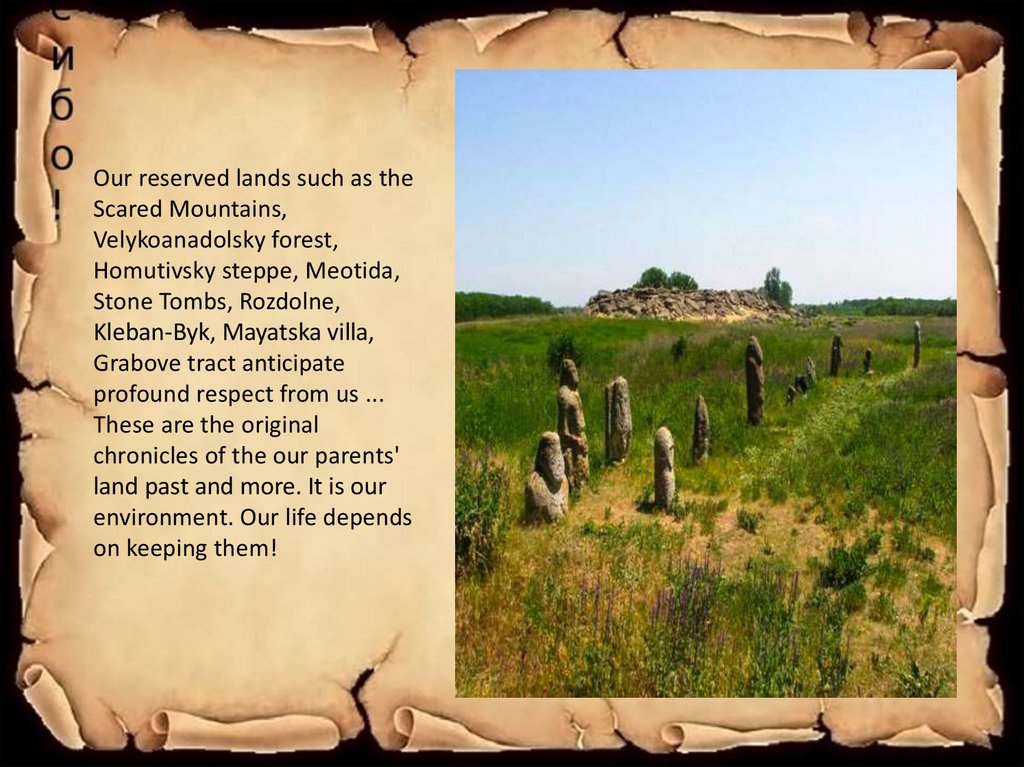
Varangians to Greeks». Various names under
which the area appears in the works of
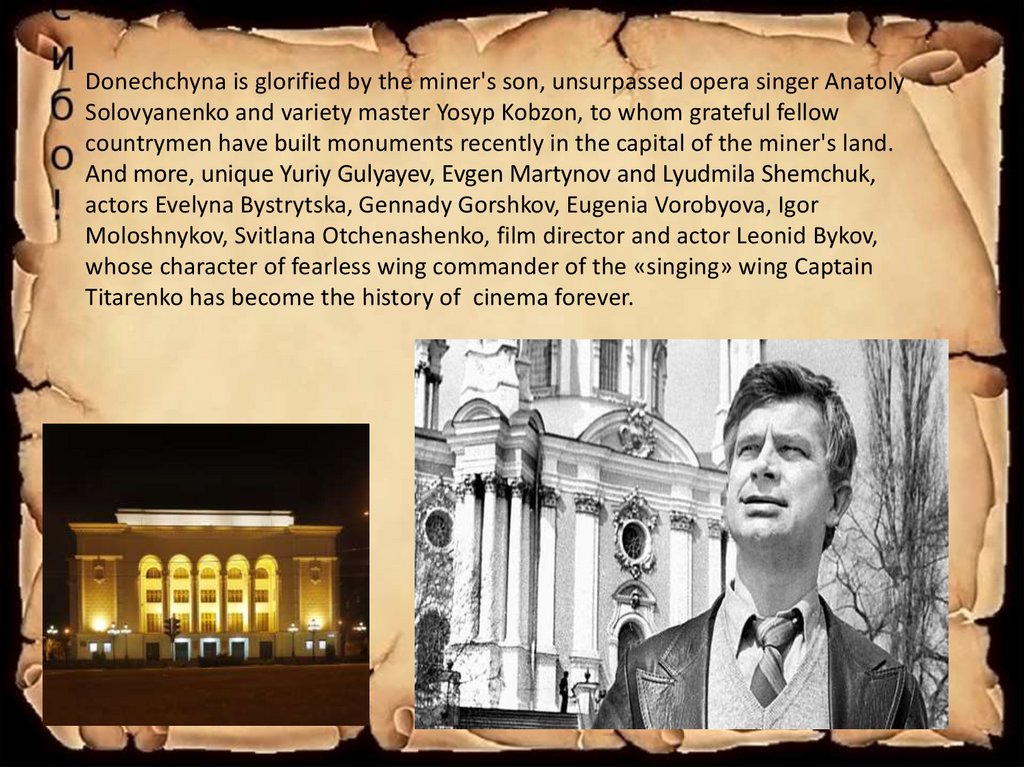
ancient historians and modern chroniclers
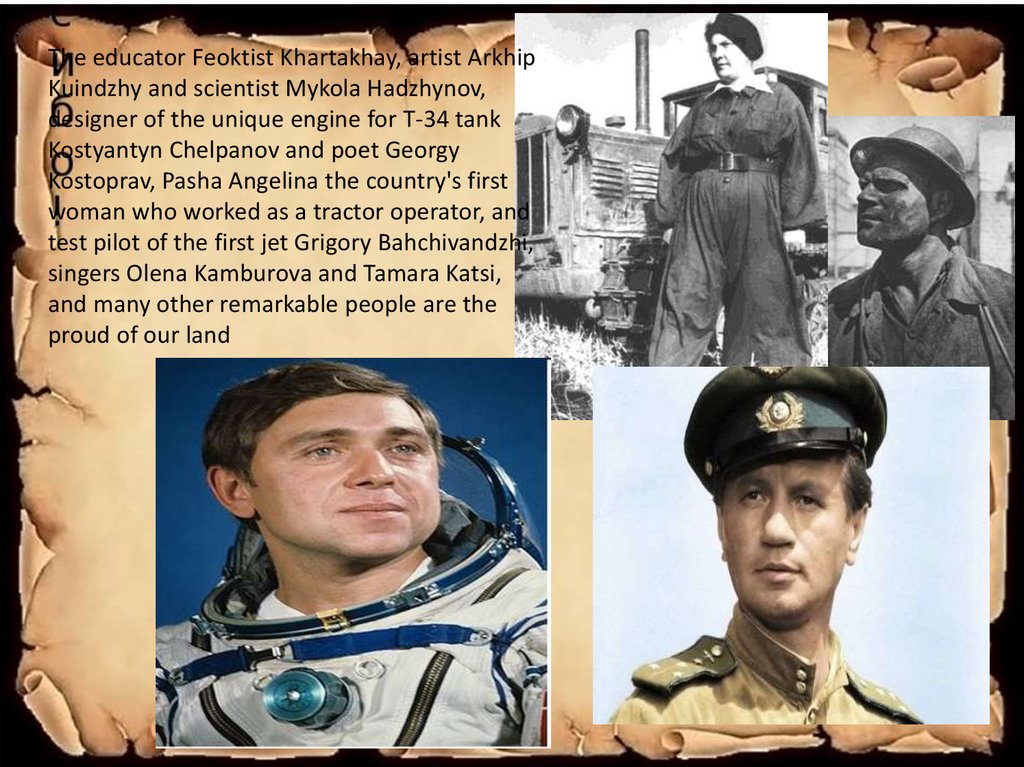
range from Scythia, Sarmatiya and Khazariya
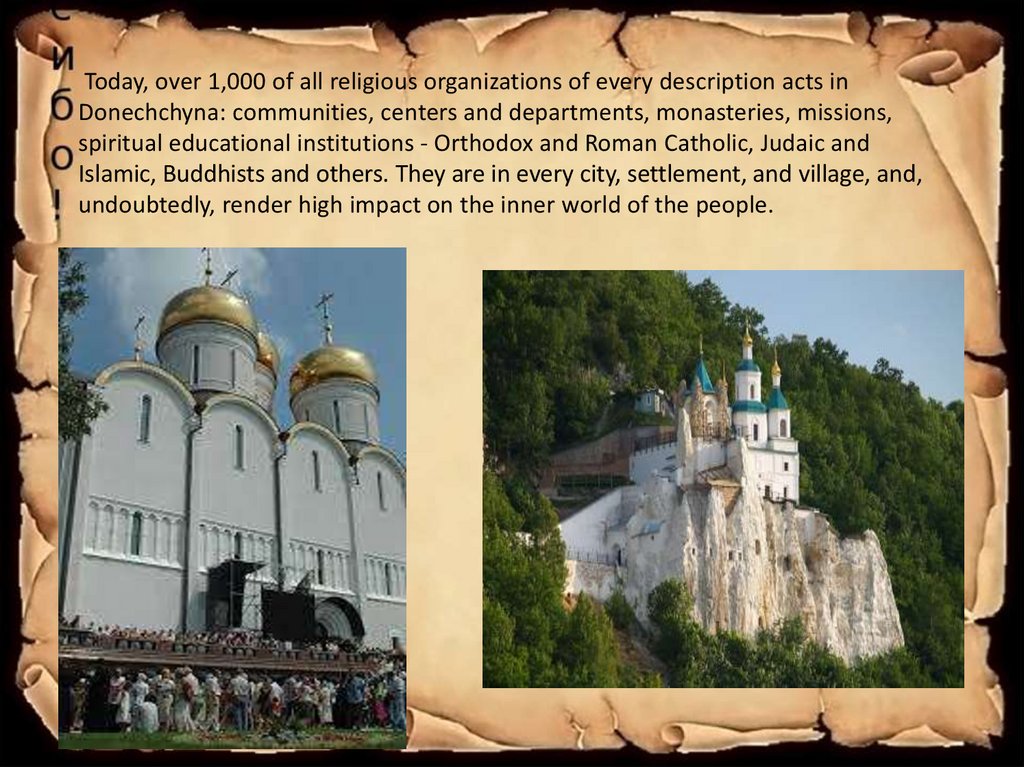
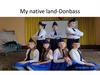
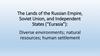
to the Cimmerian, Kipchakskiy, Polovetskiy,
Zolotoordynskiy and Nogayskiy land. It is
here where the Bosporskiy Kingdom,
Theodoro and Chersonese Principalities
once flourished, inhabited by Tavrs,
Roxolans, Goths, Huns, Alans, Hungarians,
and Bulgarians. At last, this beautiful land of
green grasslands and the blue sea got the
Slavonic name of «The Wild Field».
3.
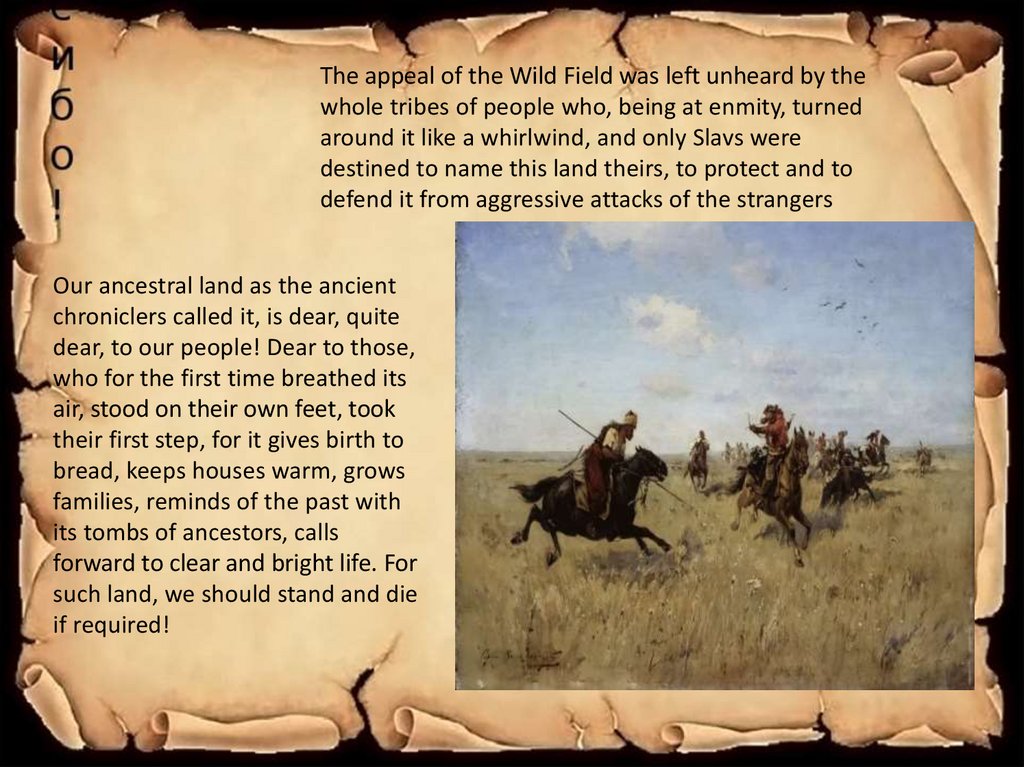
The appeal of the Wild Field was left unheard by thewhole tribes of people who, being at enmity, turned
around it like a whirlwind, and only Slavs were
destined to name this land theirs, to protect and to
defend it from aggressive attacks of the strangers
Our ancestral land as the ancient
chroniclers called it, is dear, quite
dear, to our people! Dear to those,
who for the first time breathed its
air, stood on their own feet, took
their first step, for it gives birth to
bread, keeps houses warm, grows
families, reminds of the past with
its tombs of ancestors, calls
forward to clear and bright life. For
such land, we should stand and die
if required!
4.
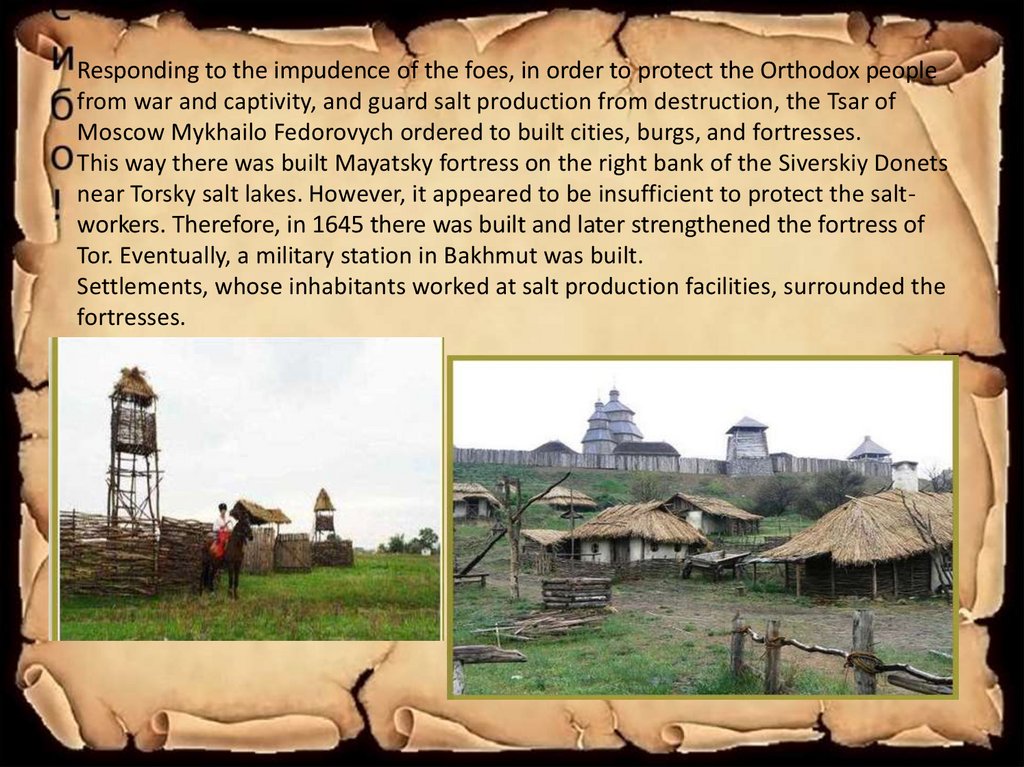
Responding to the impudence of the foes, in order to protect the Orthodox peoplefrom war and captivity, and guard salt production from destruction, the Tsar of
Moscow Mykhailo Fedorovych ordered to built cities, burgs, and fortresses.
This way there was built Mayatsky fortress on the right bank of the Siverskiy Donets
near Torsky salt lakes. However, it appeared to be insufficient to protect the saltworkers. Therefore, in 1645 there was built and later strengthened the fortress of
Tor. Eventually, a military station in Bakhmut was built.
Settlements, whose inhabitants worked at salt production facilities, surrounded the
fortresses.
5.
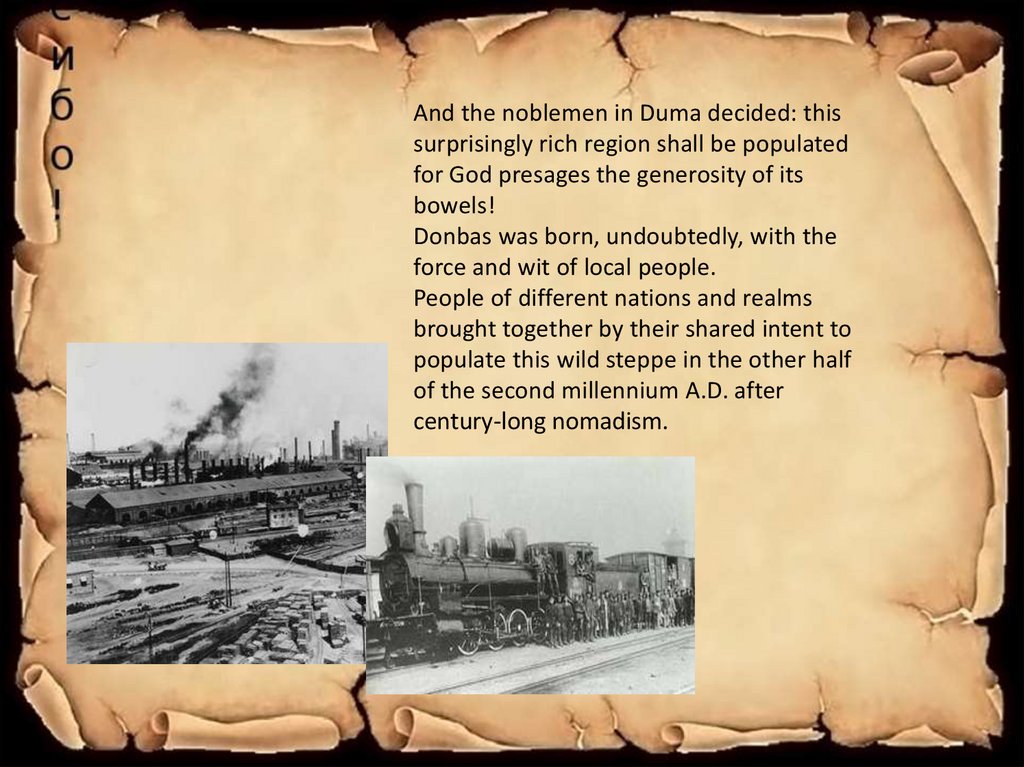
And the noblemen in Duma decided: thissurprisingly rich region shall be populated
for God presages the generosity of its
bowels!
Donbas was born, undoubtedly, with the
force and wit of local people.
People of different nations and realms
brought together by their shared intent to
populate this wild steppe in the other half
of the second millennium A.D. after
century-long nomadism.
6.
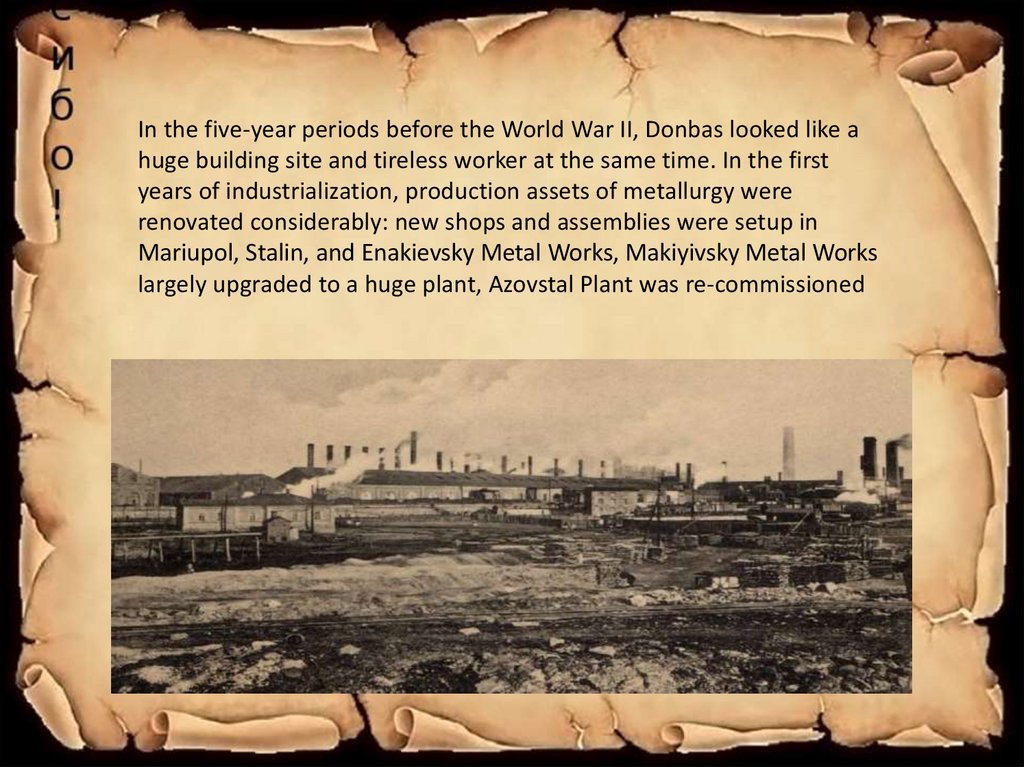
In the five-year periods before the World War II, Donbas looked like ahuge building site and tireless worker at the same time. In the first
years of industrialization, production assets of metallurgy were
renovated considerably: new shops and assemblies were setup in
Mariupol, Stalin, and Enakievsky Metal Works, Makiyivsky Metal Works
largely upgraded to a huge plant, Azovstal Plant was re-commissioned
7.
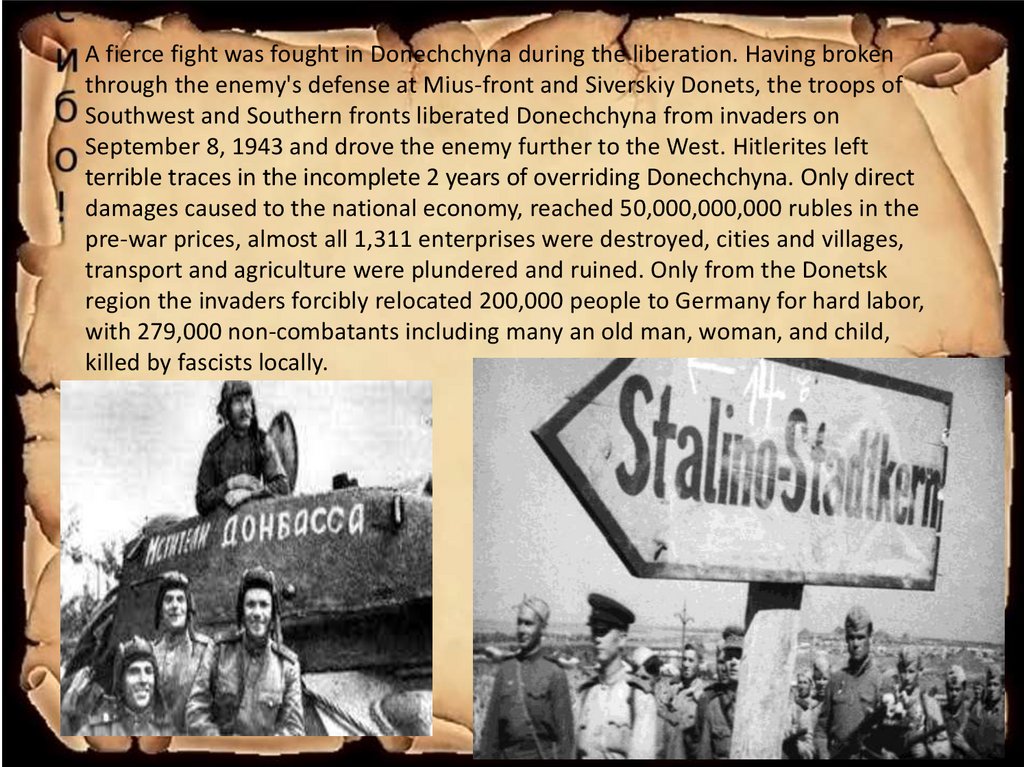
A fierce fight was fought in Donechchyna during the liberation. Having brokenthrough the enemy's defense at Mius-front and Siverskiy Donets, the troops of
Southwest and Southern fronts liberated Donechchyna from invaders on
September 8, 1943 and drove the enemy further to the West. Hitlerites left
terrible traces in the incomplete 2 years of overriding Donechchyna. Only direct
damages caused to the national economy, reached 50,000,000,000 rubles in the
pre-war prices, almost all 1,311 enterprises were destroyed, cities and villages,
transport and agriculture were plundered and ruined. Only from the Donetsk
region the invaders forcibly relocated 200,000 people to Germany for hard labor,
with 279,000 non-combatants including many an old man, woman, and child,
killed by fascists locally.
8.
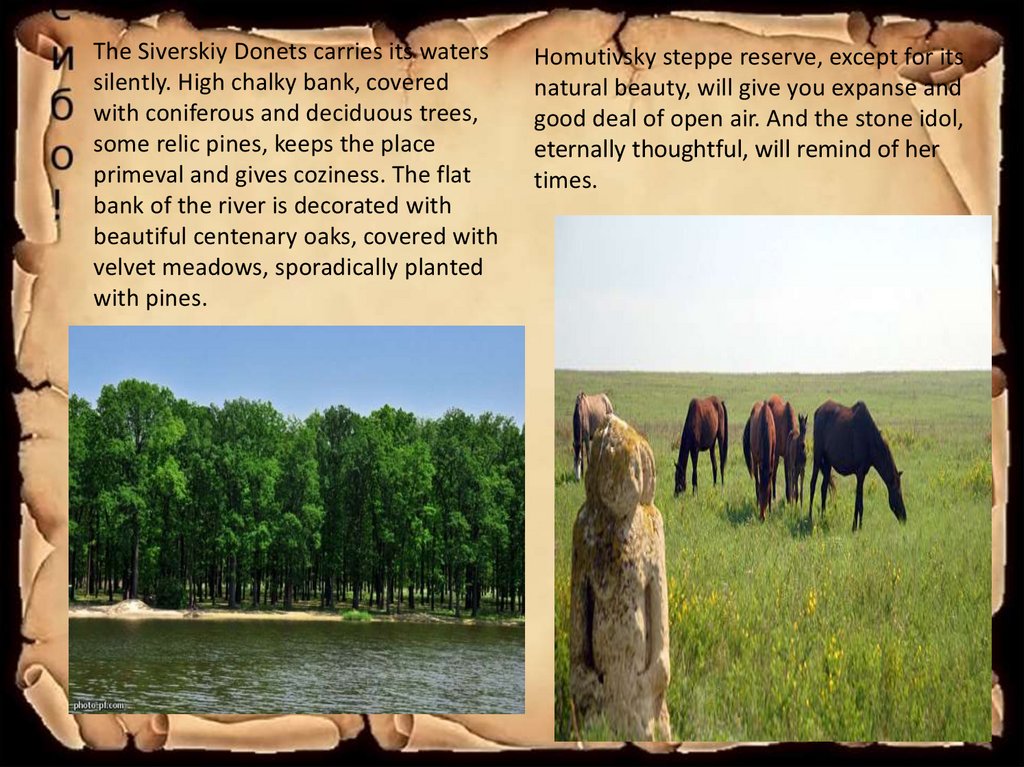
The Siverskiy Donets carries its waterssilently. High chalky bank, covered
with coniferous and deciduous trees,
some relic pines, keeps the place
primeval and gives coziness. The flat
bank of the river is decorated with
beautiful centenary oaks, covered with
velvet meadows, sporadically planted
with pines.
Homutivsky steppe reserve, except for its
natural beauty, will give you expanse and
good deal of open air. And the stone idol,
eternally thoughtful, will remind of her
times.
9.
Оur reserved lands such as theScared Mountains,
Velykoanadolsky forest,
Homutivsky steppe, Meotida,
Stone Tombs, Rozdolne,
Kleban-Byk, Mayatska villa,
Grabove tract anticipate
profound respect from us ...
These are the original
chronicles of the our parents'
land past and more. It is our
environment. Our life depends
on keeping them!
10.
Donechchyna is glorified by the miner's son, unsurpassed opera singer AnatolySolovyanenko and variety master Yosyp Kobzon, to whom grateful fellow
countrymen have built monuments recently in the capital of the miner's land.
And more, unique Yuriy Gulyayev, Evgen Martynov and Lyudmila Shemchuk,
actors Evelyna Bystrytska, Gennady Gorshkov, Eugenia Vorobyova, Igor
Moloshnykov, Svitlana Otchenashenko, film director and actor Leonid Bykov,
whose character of fearless wing commander of the «singing» wing Captain
Titarenko has become the history of cinema forever.
11.
The educator Feoktist Khartakhay, artist ArkhipKuindzhy and scientist Mykola Hadzhynov,
designer of the unique engine for T-34 tank
Kostyantyn Chelpanov and poet Georgy
Kostoprav, Pasha Angelina the country's first
woman who worked as a tractor operator, and
test pilot of the first jet Grigory Bahchivandzhi,
singers Olena Kamburova and Tamara Katsi,
and many other remarkable people are the
proud of our land
12.
Today, over 1,000 of all religious organizations of every description acts inDonechchyna: communities, centers and departments, monasteries, missions,
spiritual educational institutions - Orthodox and Roman Catholic, Judaic and
Islamic, Buddhists and others. They are in every city, settlement, and village, and,
undoubtedly, render high impact on the inner world of the people.
13.
The Orthodox Church, Christianity from time eternal have beenthe carriers of high spirituality, helped people rise above the daily
vain, open their best moral qualities and talents. Even in the
tough times of the Great Patriotic War, the majority of believers
opposed serving the enemy, and the remained temples have
become the spiritual centers of Orthodoxy and the unsubdued,
belief in our victory.
14.
Donechchyna, my dear... Our parents' land, ourfatherland, your surface and bowels keep the
traces of the past- majestic and mournful
barrows erected by entire nations for us to
remember, petrified wood, witness of your
luxury and grief, stone idols as if trying to tell
something in their thoughtful silence. Your
legends and stories bring us comfort, sermons,
and reproach. You, our Land, is like a book of
wisdom, so open yourself up to the people...