

Похожие презентации:








«Лексика и грамматика» в формате ЕГЭ
1.
Подготовка учащихся к выполнениюзаданий раздела «Лексика и грамматика» в
формате ЕГЭ
ВАЛИЕВА Зинера Леонидовна, учитель
английского языка, МБОУ СОШ №7 г. Бирска,Республики
Башкортостан
2. Полезные ссылки
"На все 100" - онлайн-консультация поподготовке к ЕГЭ по иностранным языкам
(М.В.Вербицкая, руководитель по разработке
КИМов по иностранным языкам, доктор
филологических наук)
https://www.youtube.com/watch?v=e0UJTTE9ygo&t=25
96s
МЕТОДИЧЕСКИЕ РЕКОМЕНДАЦИИ обучающимся по
организации индивидуальной подготовки к ЕГЭ 2020
года АНГЛИЙСКИЙ ЯЗЫК (Авторы-составители: М.В.
Вербицкая, К.С. Махмурян)
http://doc.fipi.ru/o-nas/novosti/metod-rekomendatsiidlya-vypusknikov-po-sam-podgotovke-k-ekzamenam2020/angliyskiy-yazyk-ege.pdf
3.
4.
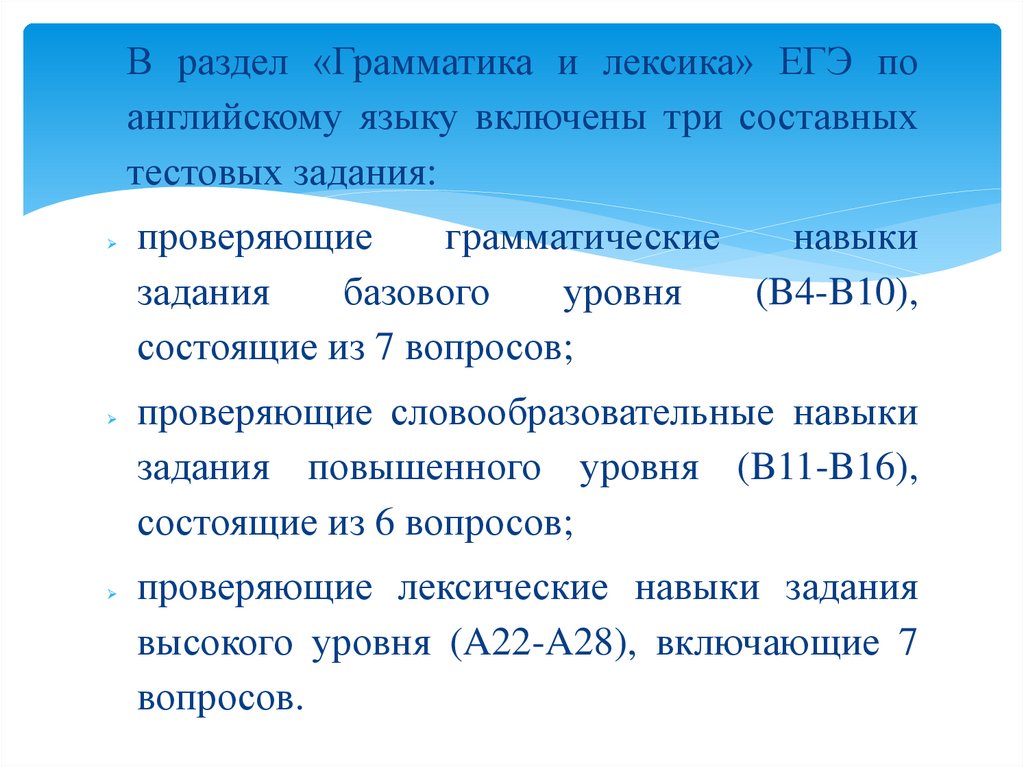
В раздел «Грамматика и лексика» ЕГЭ поанглийскому языку включены три составных
тестовых задания:
проверяющие
грамматические
навыки
задания
базового
уровня
(B4-B10),
состоящие из 7 вопросов;
проверяющие словообразовательные навыки
задания повышенного уровня (B11-B16),
состоящие из 6 вопросов;
проверяющие лексические навыки задания
высокого уровня (A22-A28), включающие 7
вопросов.
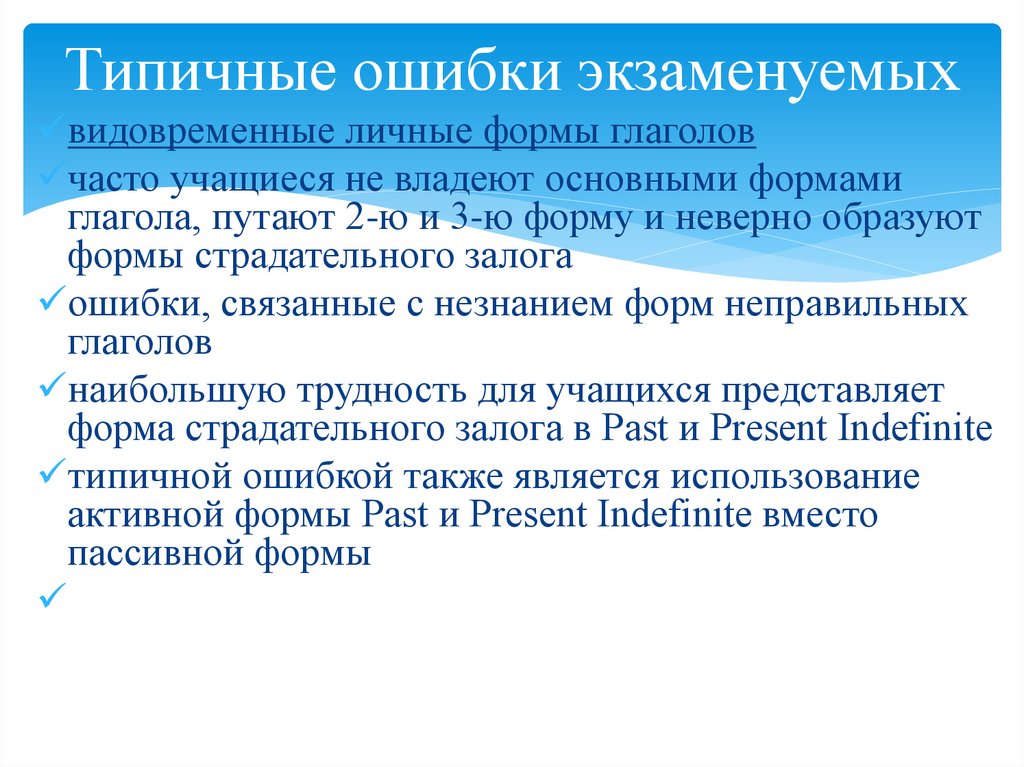
5. Типичные ошибки экзаменуемых
видовременные личные формы глаголовчасто учащиеся не владеют основными формами
глагола, путают 2-ю и 3-ю форму и неверно образуют
формы страдательного залога
ошибки, связанные с незнанием форм неправильных
глаголов
наибольшую трудность для учащихся представляет
форма страдательного залога в Past и Present Indefinite
типичной ошибкой также является использование
активной формы Past и Present Indefinite вместо
пассивной формы
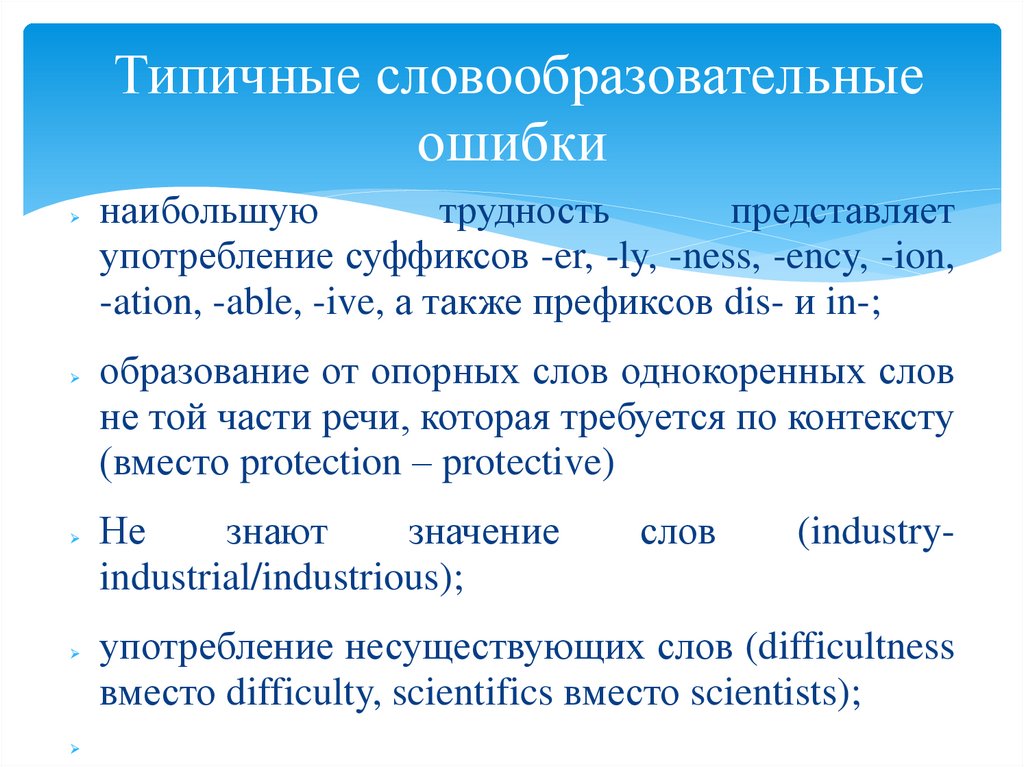
6. Типичные словообразовательные ошибки
наибольшуютрудность
представляет
употребление суффиксов -er, -ly, -ness, -ency, -ion,
-ation, -able, -ive, а также префиксов dis- и in-;
образование от опорных слов однокоренных слов
не той части речи, которая требуется по контексту
(вместо protection – protective)
Не
знают
значение
industrial/industrious);
слов
(industry-
употребление несуществующих слов (difficultness
вместо difficulty, scientifics вместо scientists);
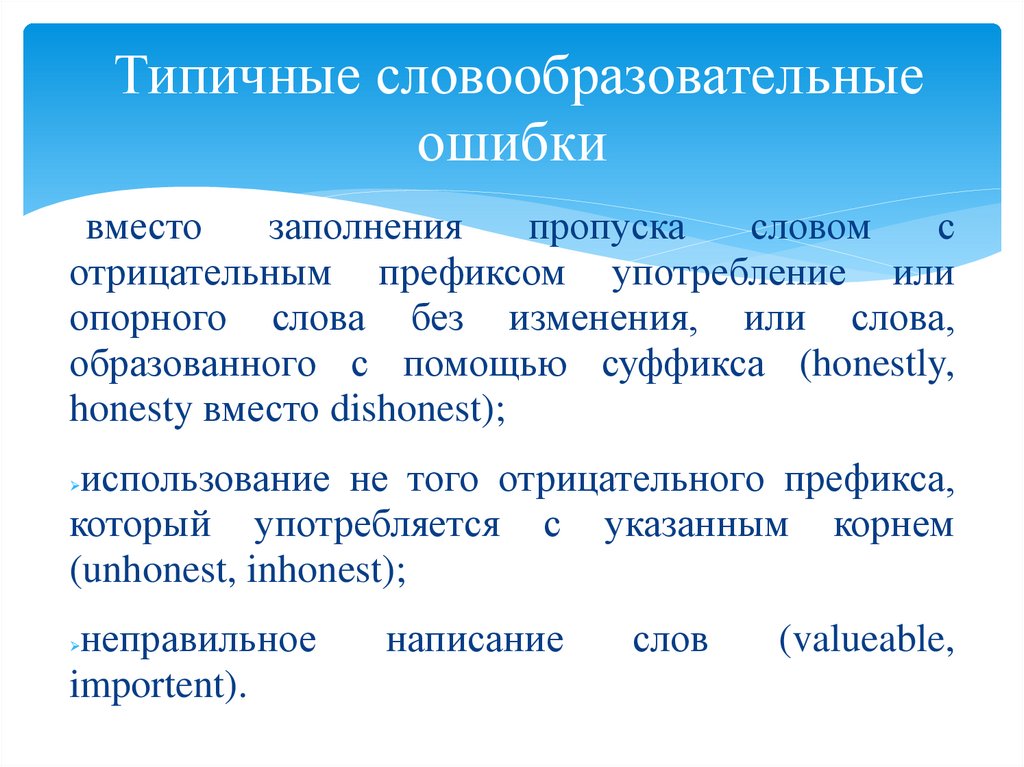
7. Типичные словообразовательные ошибки
вместозаполнения
пропуска
словом
с
отрицательным префиксом употребление или
опорного слова без изменения, или слова,
образованного с помощью суффикса (honestly,
honesty вместо dishonest);
использование не того отрицательного префикса,
который употребляется с указанным корнем
(unhonest, inhonest);
неправильное
importent).
написание
слов
(valueable,
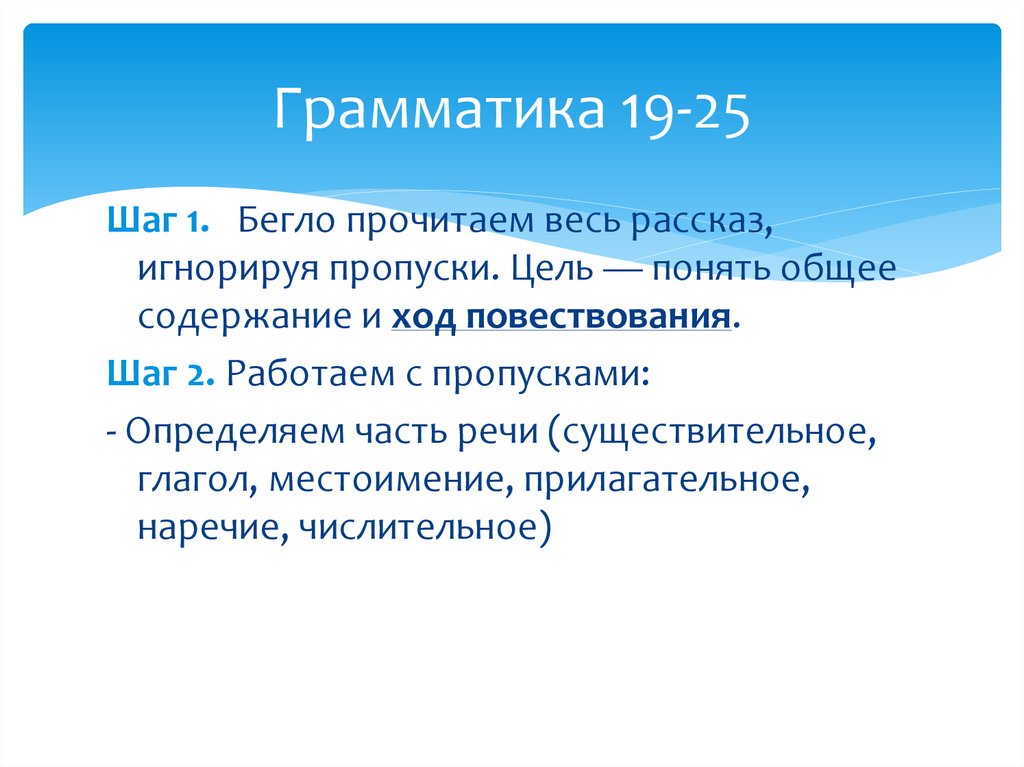
8. Грамматика 19-25
Шаг 1. Бегло прочитаем весь рассказ,игнорируя пропуски. Цель — понять общее
содержание и ход повествования.
Шаг 2. Работаем с пропусками:
- Определяем часть речи (существительное,
глагол, местоимение, прилагательное,
наречие, числительное)
9. Форма глагола
Личные (видовременные)Неличные (герундий, инфинитив, причастие)
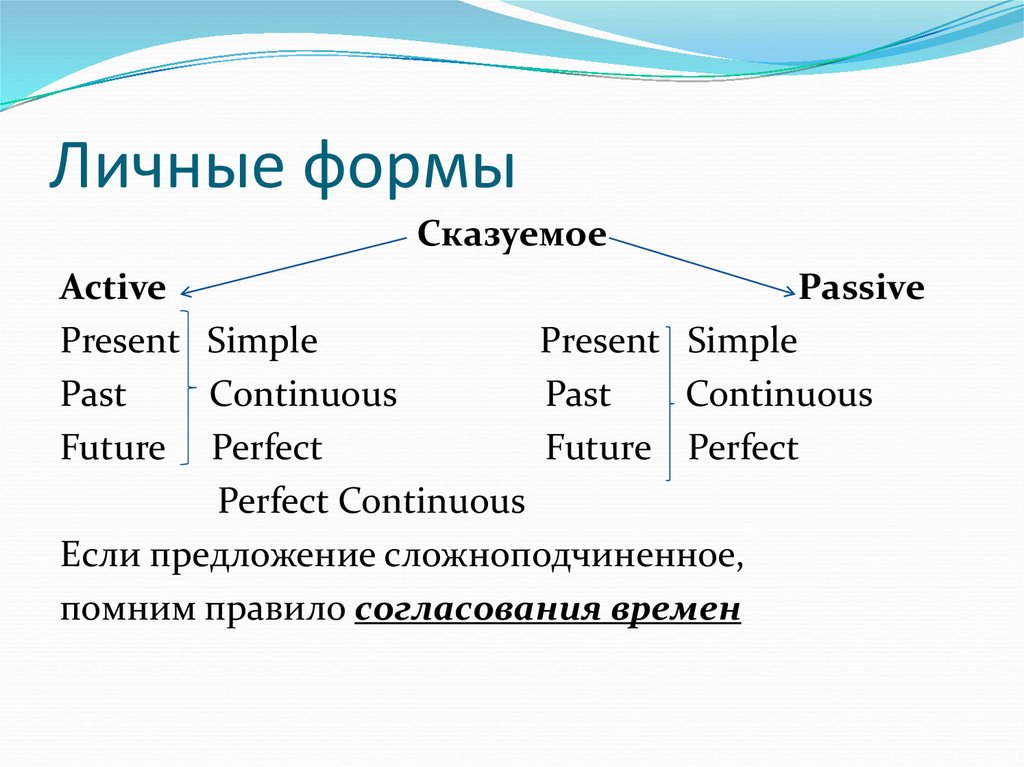
10. Личные формы
СказуемоеActive
Passive
Present Simple
Present Simple
Past
Continuous
Past
Continuous
Future Perfect
Future Perfect
Perfect Continuous
Если предложение сложноподчиненное,
помним правило согласования времен
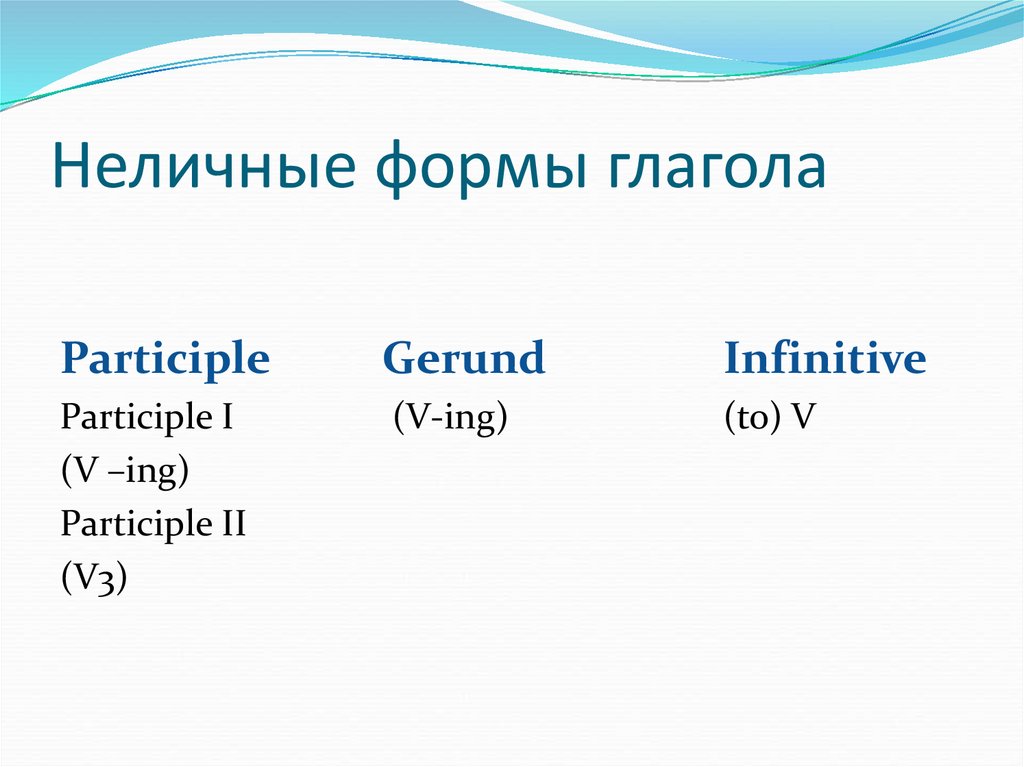
11. Неличные формы глагола
ParticipleGerund
Infinitive
Participle I
(V –ing)
Participle II
(V3)
(V-ing)
(to) V
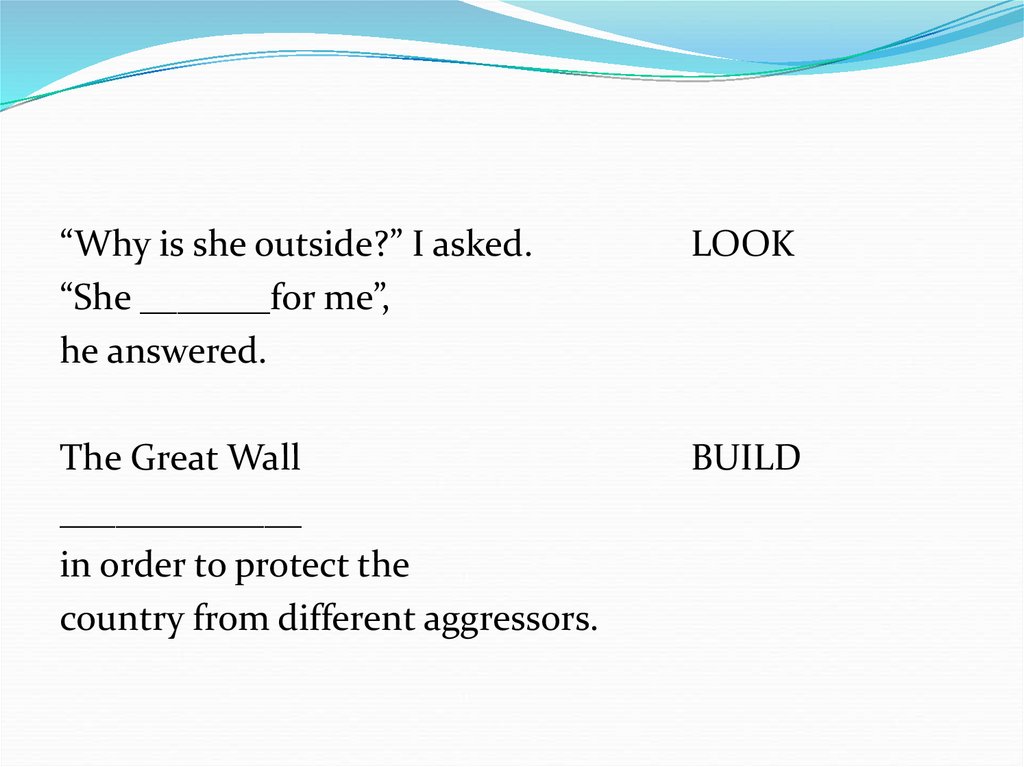
12.
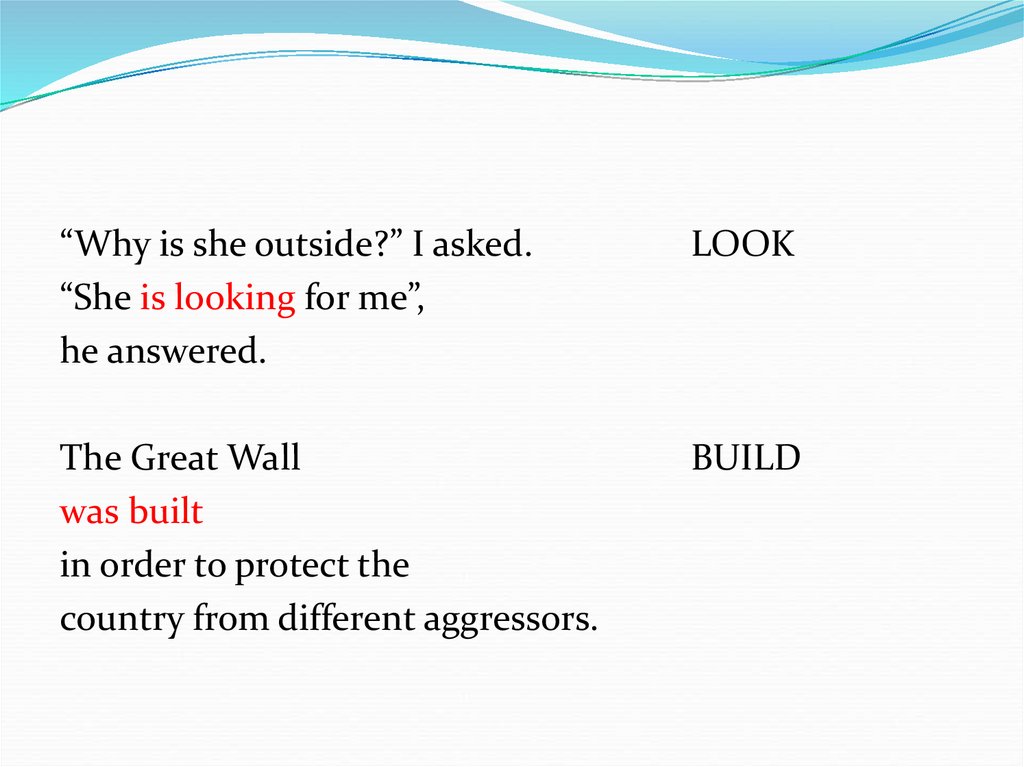
“Why is she outside?” I asked.“She _______for me”,
he answered.
LOOK
The Great Wall
_____________
in order to protect the
country from different aggressors.
BUILD
13.
“Why is she outside?” I asked.“She is looking for me”,
he answered.
LOOK
The Great Wall
was built
in order to protect the
country from different aggressors.
BUILD
14. (Ir)regular verbs
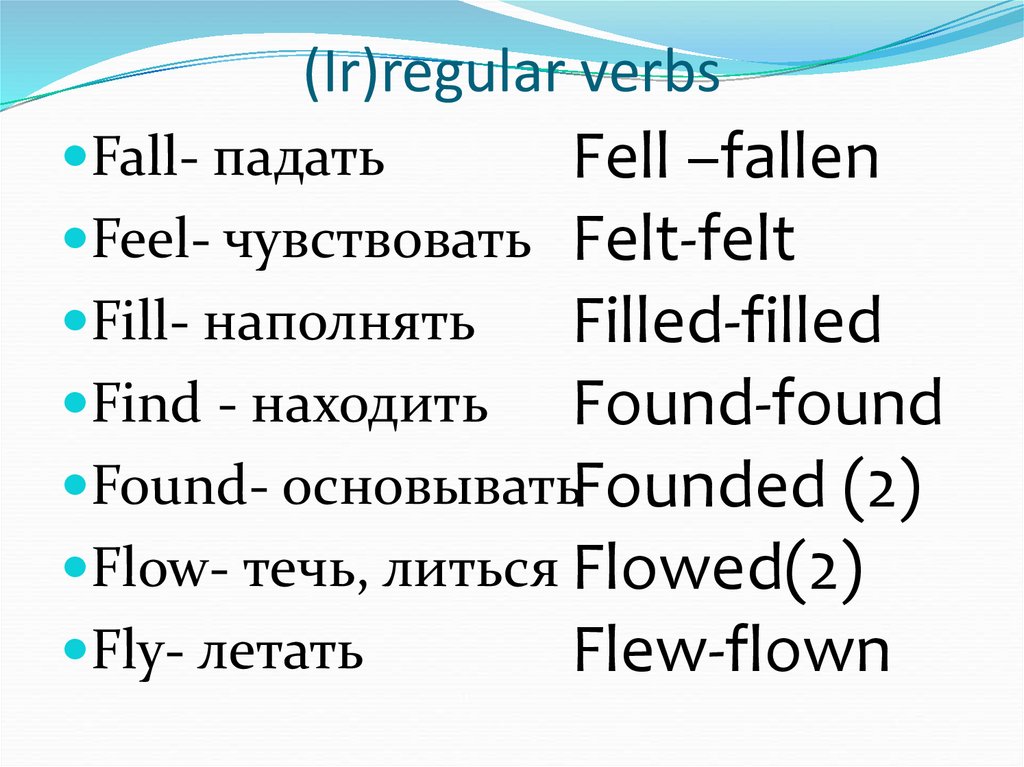
15. (Ir)regular verbs
Fell –fallenFeel- чувствовать Felt-felt
Fill- наполнять
Filled-filled
Find - находить
Found-found
Found- основыватьFounded (2)
Flow- течь, литься Flowed(2)
Fly- летать
Flew-flown
Fall- падать
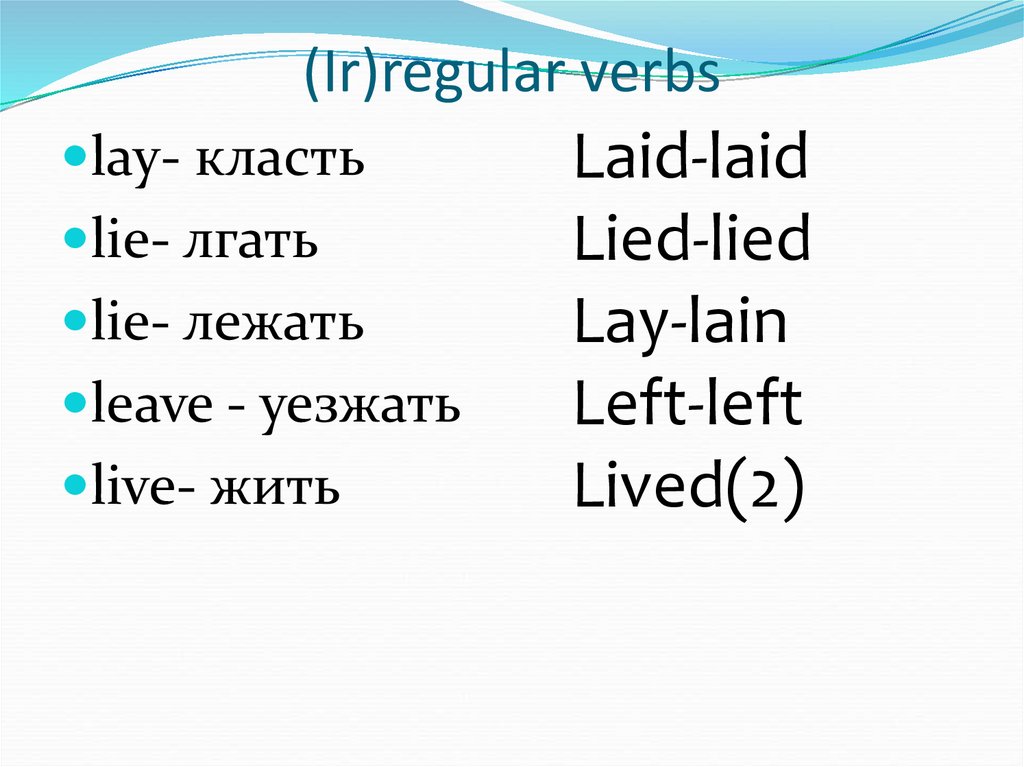
16. (Ir)regular verbs
lay- кластьlie- лгать
lie- лежать
leave - уезжать
live- жить
Laid-laid
Lied-lied
Lay-lain
Left-left
Lived(2)
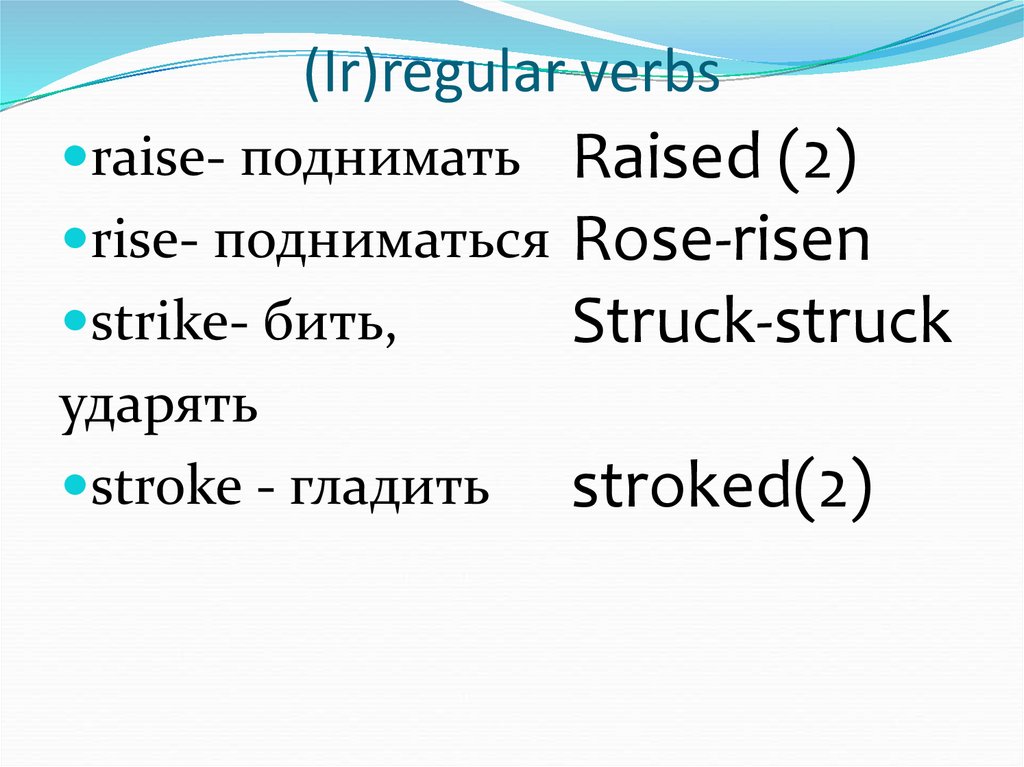
17. (Ir)regular verbs
Raised (2)rise- подниматься Rose-risen
strike- бить,
Struck-struck
raise- поднимать
ударять
stroke - гладить
stroked(2)
18.
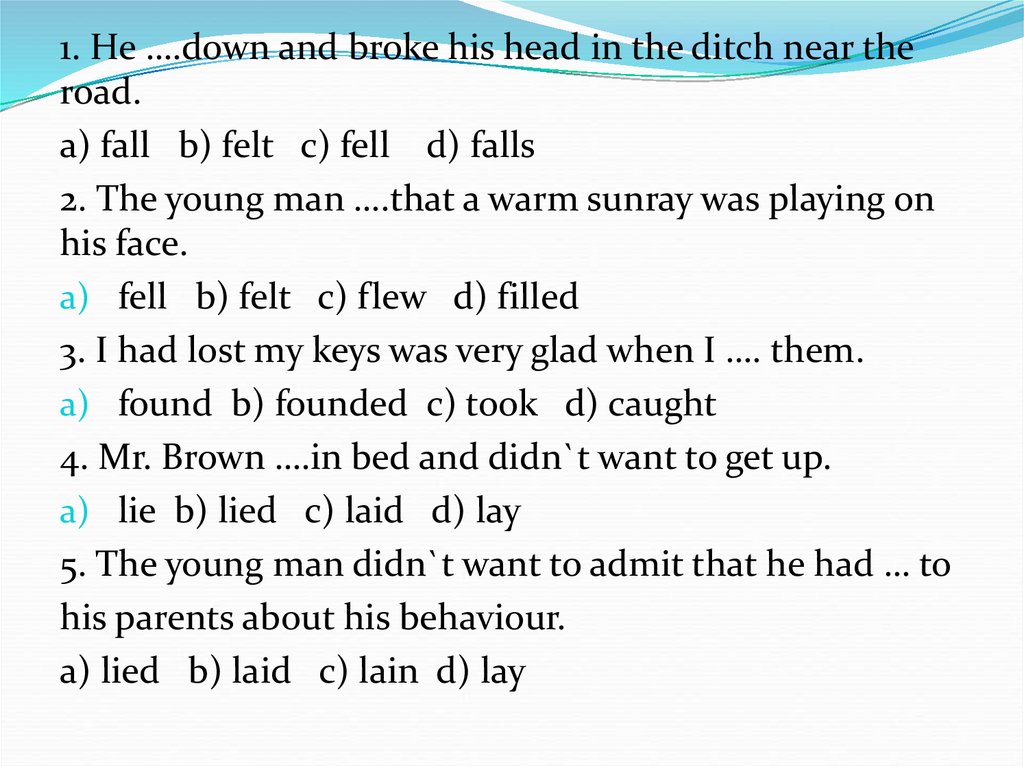
1. He ….down and broke his head in the ditch near theroad.
a) fall b) felt c) fell d) falls
2. The young man ….that a warm sunray was playing on
his face.
a) fell b) felt c) flew d) filled
3. I had lost my keys was very glad when I …. them.
a) found b) founded c) took d) caught
4. Mr. Brown ….in bed and didn`t want to get up.
a) lie b) lied c) laid d) lay
5. The young man didn`t want to admit that he had … to
his parents about his behaviour.
a) lied b) laid c) lain d) lay
19.
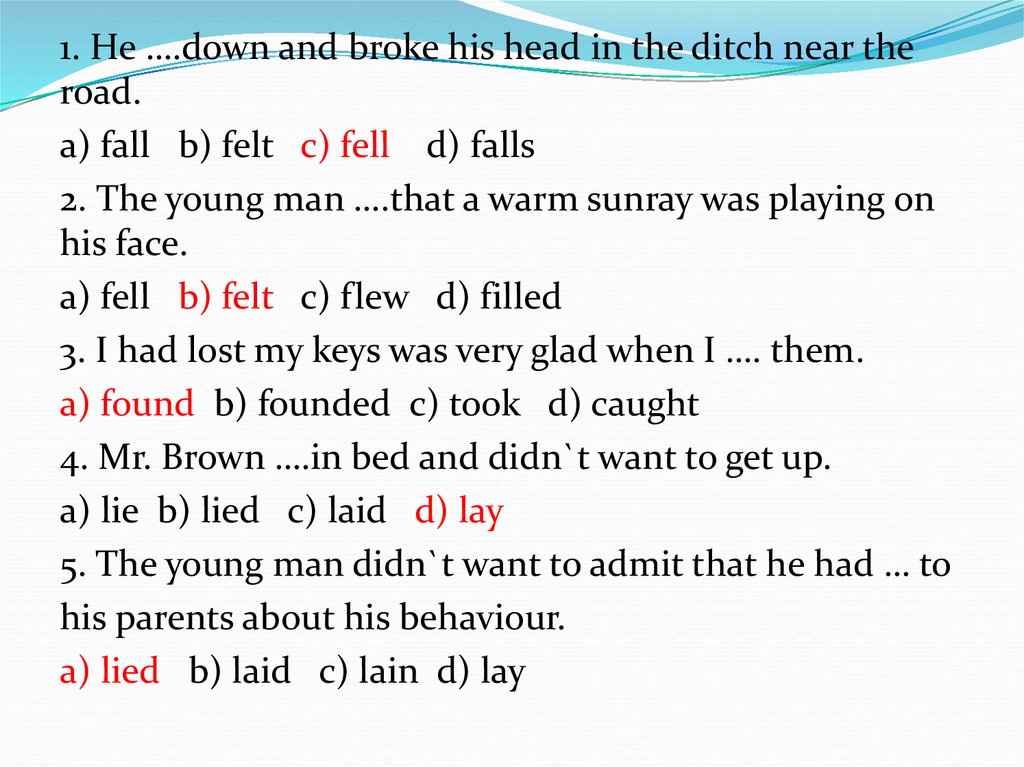
1. He ….down and broke his head in the ditch near theroad.
a) fall b) felt c) fell d) falls
2. The young man ….that a warm sunray was playing on
his face.
a) fell b) felt c) flew d) filled
3. I had lost my keys was very glad when I …. them.
a) found b) founded c) took d) caught
4. Mr. Brown ….in bed and didn`t want to get up.
a) lie b) lied c) laid d) lay
5. The young man didn`t want to admit that he had … to
his parents about his behaviour.
a) lied b) laid c) lain d) lay
20.
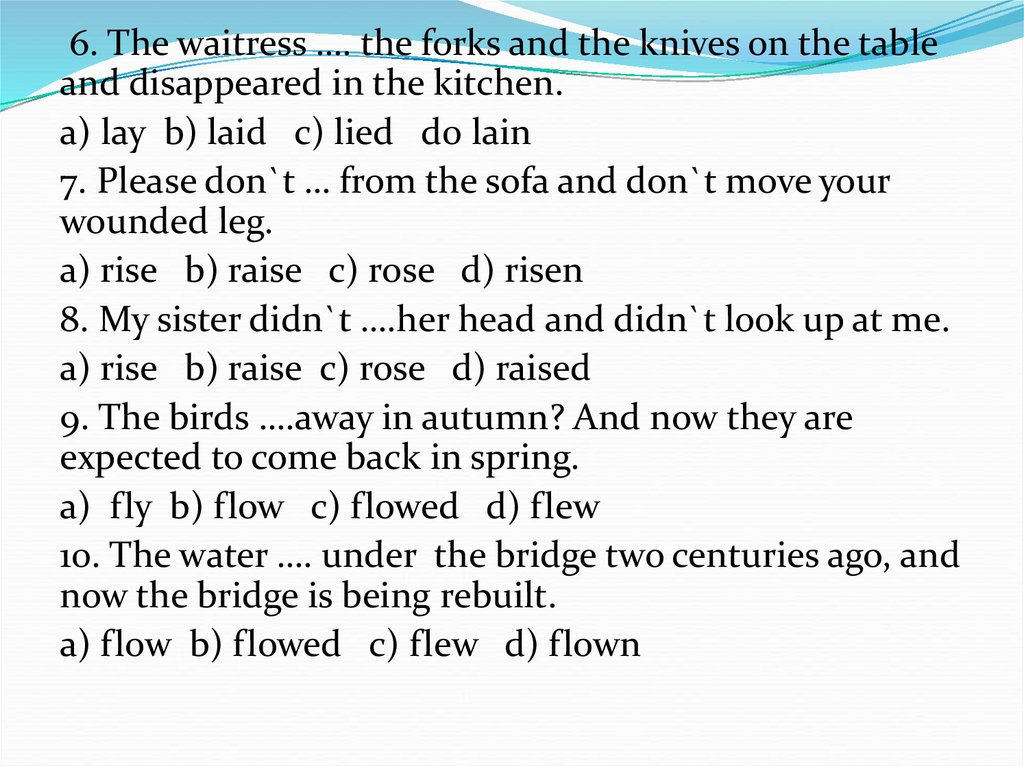
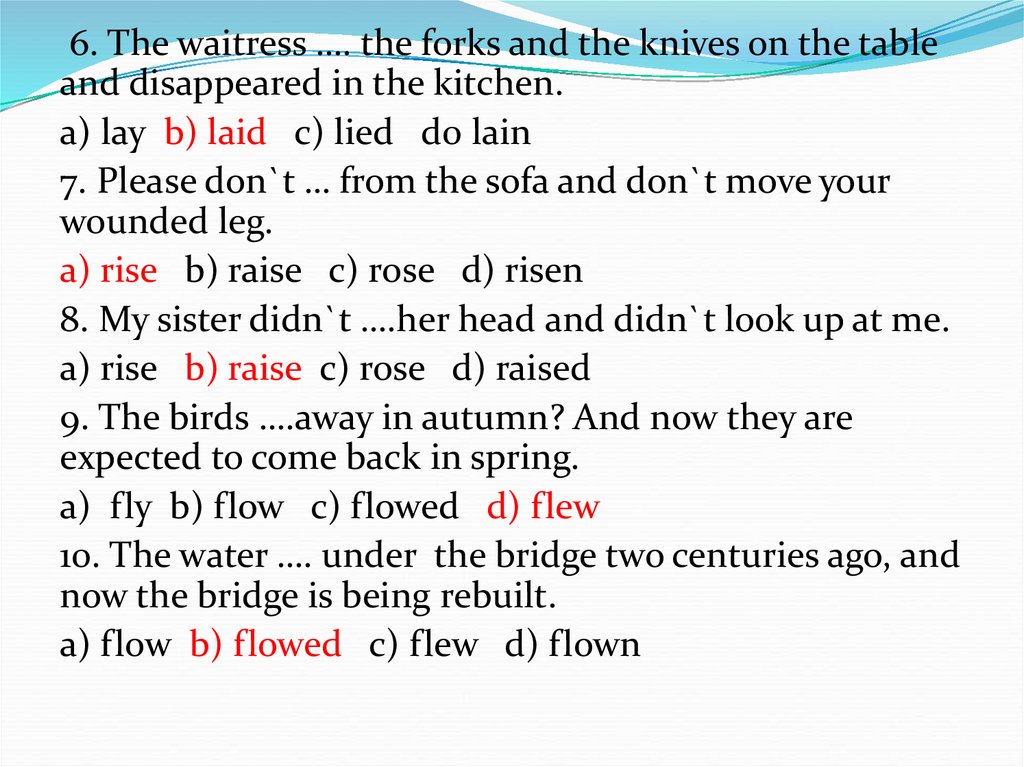
6. The waitress …. the forks and the knives on the tableand disappeared in the kitchen.
a) lay b) laid c) lied d0 lain
7. Please don`t … from the sofa and don`t move your
wounded leg.
a) rise b) raise c) rose d) risen
8. My sister didn`t ….her head and didn`t look up at me.
a) rise b) raise c) rose d) raised
9. The birds ….away in autumn? And now they are
expected to come back in spring.
a) fly b) flow c) flowed d) flew
10. The water …. under the bridge two centuries ago, and
now the bridge is being rebuilt.
a) flow b) flowed c) flew d) flown
21.
6. The waitress …. the forks and the knives on the tableand disappeared in the kitchen.
a) lay b) laid c) lied d0 lain
7. Please don`t … from the sofa and don`t move your
wounded leg.
a) rise b) raise c) rose d) risen
8. My sister didn`t ….her head and didn`t look up at me.
a) rise b) raise c) rose d) raised
9. The birds ….away in autumn? And now they are
expected to come back in spring.
a) fly b) flow c) flowed d) flew
10. The water …. under the bridge two centuries ago, and
now the bridge is being rebuilt.
a) flow b) flowed c) flew d) flown
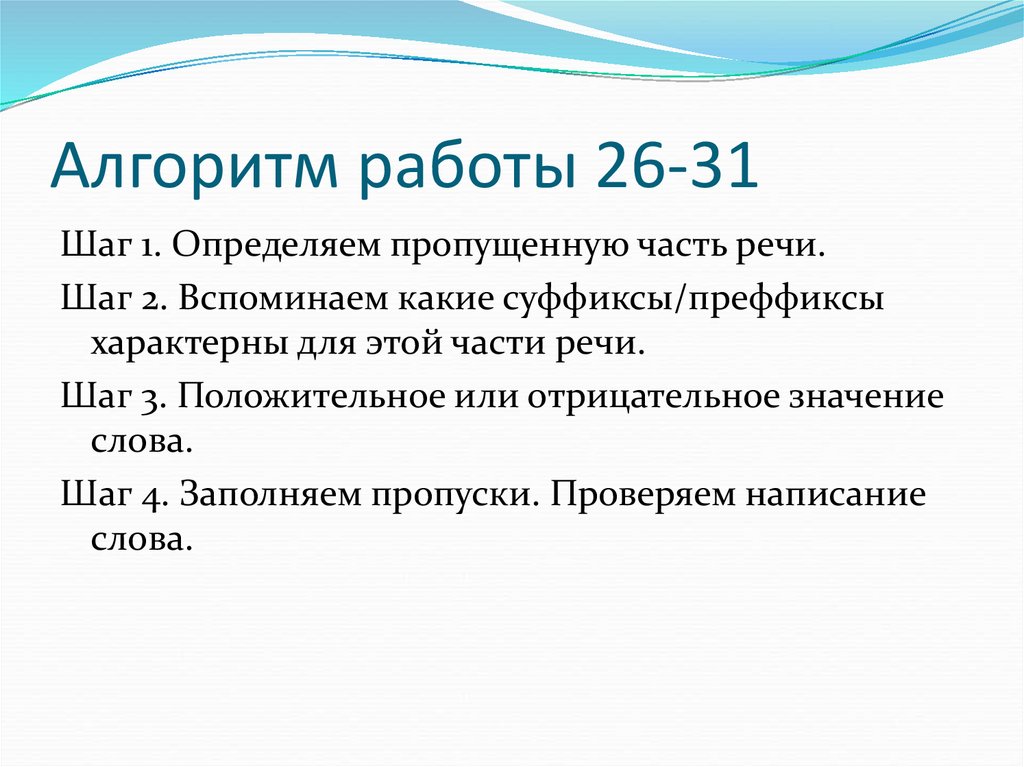
22. Алгоритм работы 26-31
Шаг 1. Определяем пропущенную часть речи.Шаг 2. Вспоминаем какие суффиксы/преффиксы
характерны для этой части речи.
Шаг 3. Положительное или отрицательное значение
слова.
Шаг 4. Заполняем пропуски. Проверяем написание
слова.
23.
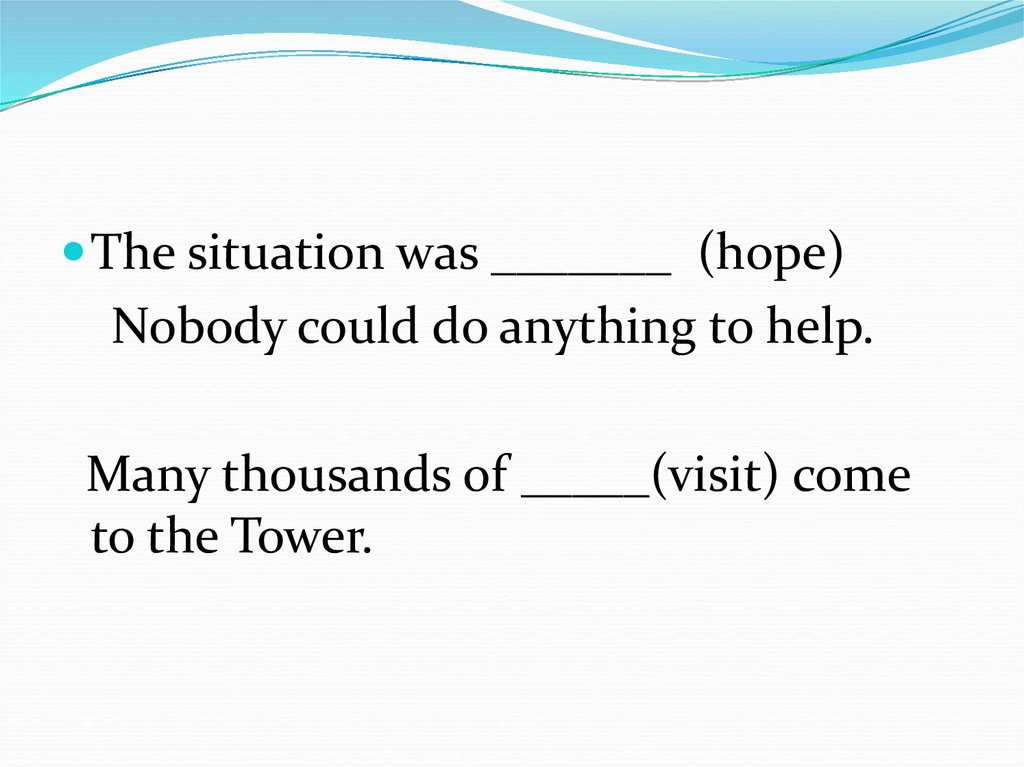
The situation was _______ (hope)Nobody could do anything to help.
Many thousands of _____(visit) come
to the Tower.
24.
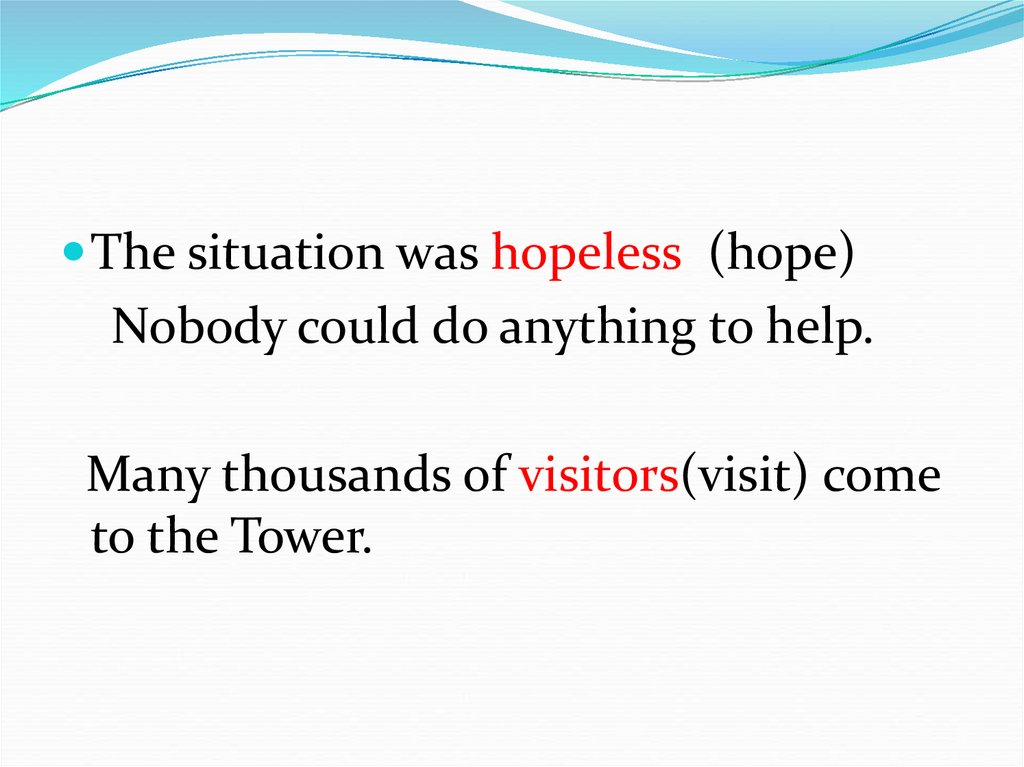
The situation was hopeless (hope)Nobody could do anything to help.
Many thousands of visitors(visit) come
to the Tower.
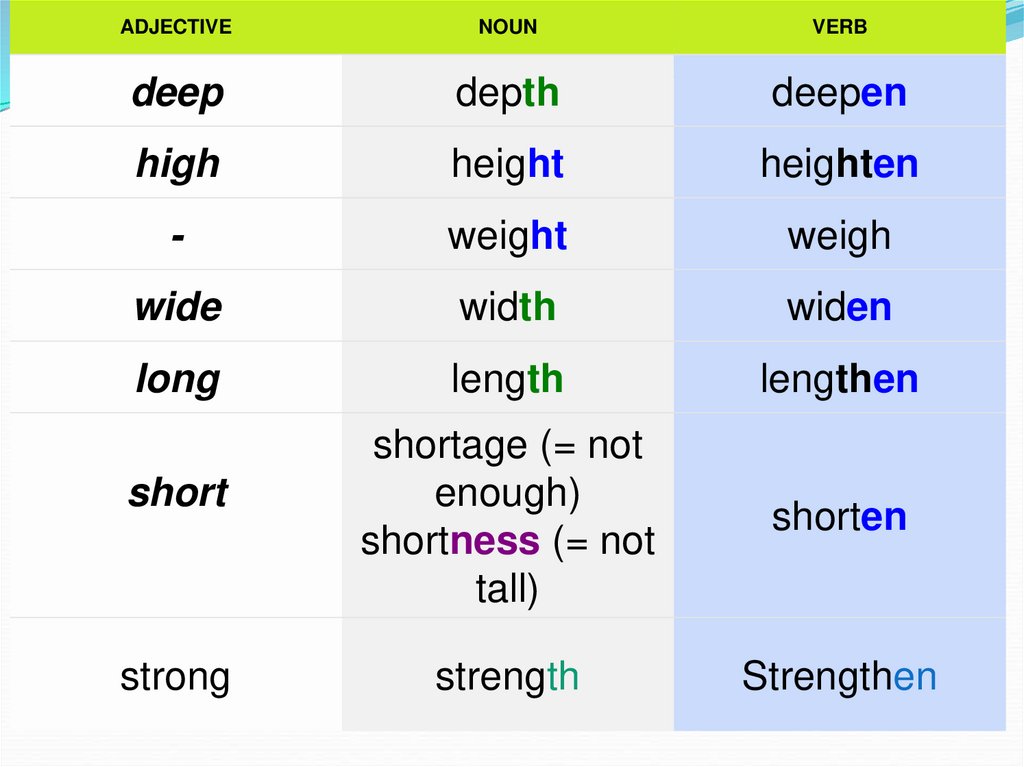
25.
ADJECTIVENOUN
VERB
deep
depth
deepen
high
height
heighten
-
weight
weigh
wide
width
widen
long
length
lengthen
shortage (= not
enough)
shortness (= not
tall)
shorten
strength
Strengthen
short
strong
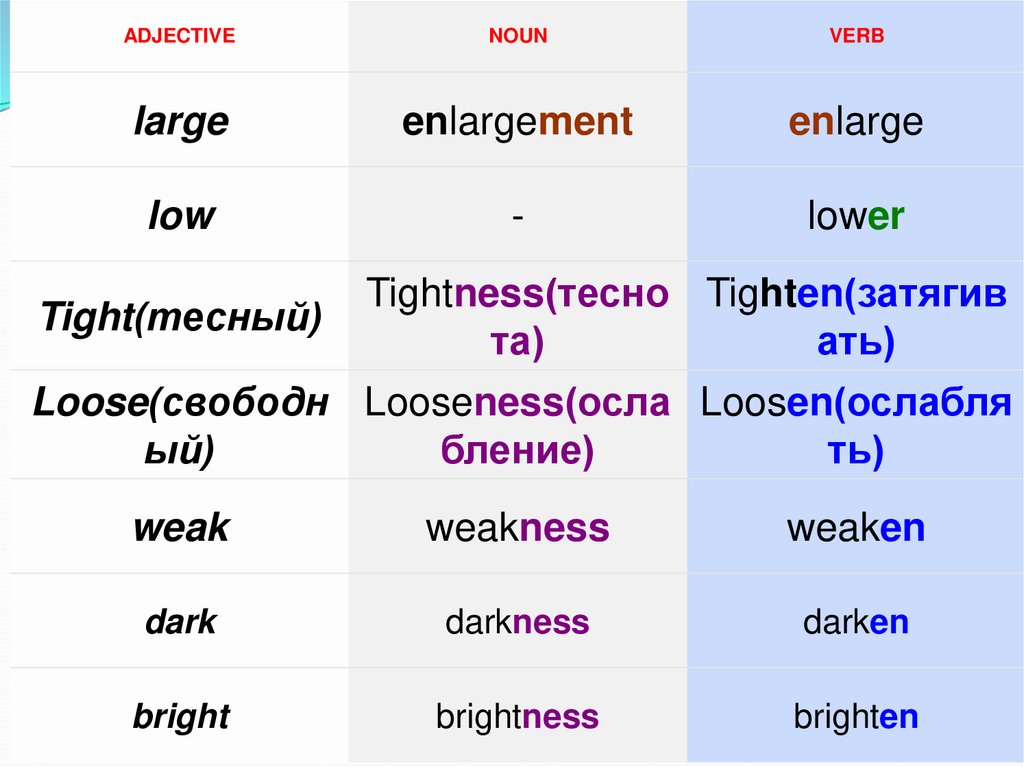
26.
ADJECTIVENOUN
VERB
large
enlargement
enlarge
low
-
lower
Tight(тесный)
Tightness(тесно Tighten(затягив
та)
ать)
Loose(свободн Looseness(осла Loosen(ослабля
ый)
бление)
ть)
weak
weakness
weaken
dark
darkness
darken
bright
brightness
brighten
27.
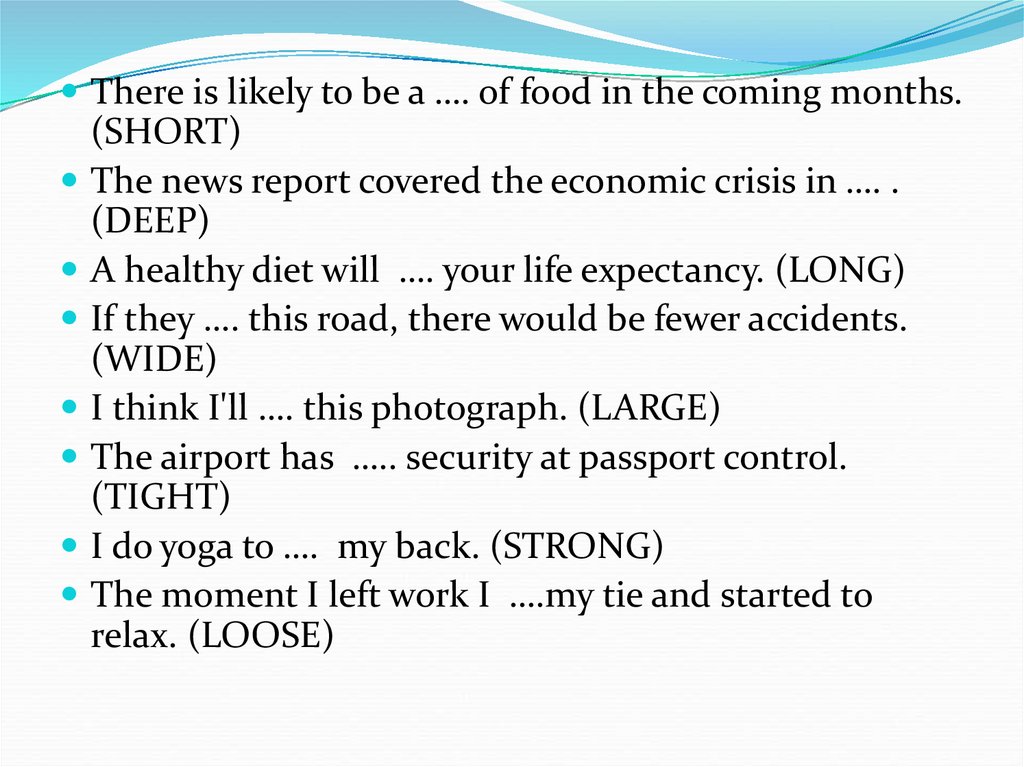
There is likely to be a …. of food in the coming months.(SHORT)
The news report covered the economic crisis in …. .
(DEEP)
A healthy diet will …. your life expectancy. (LONG)
If they …. this road, there would be fewer accidents.
(WIDE)
I think I'll …. this photograph. (LARGE)
The airport has ….. security at passport control.
(TIGHT)
I do yoga to …. my back. (STRONG)
The moment I left work I ….my tie and started to
relax. (LOOSE)
28.
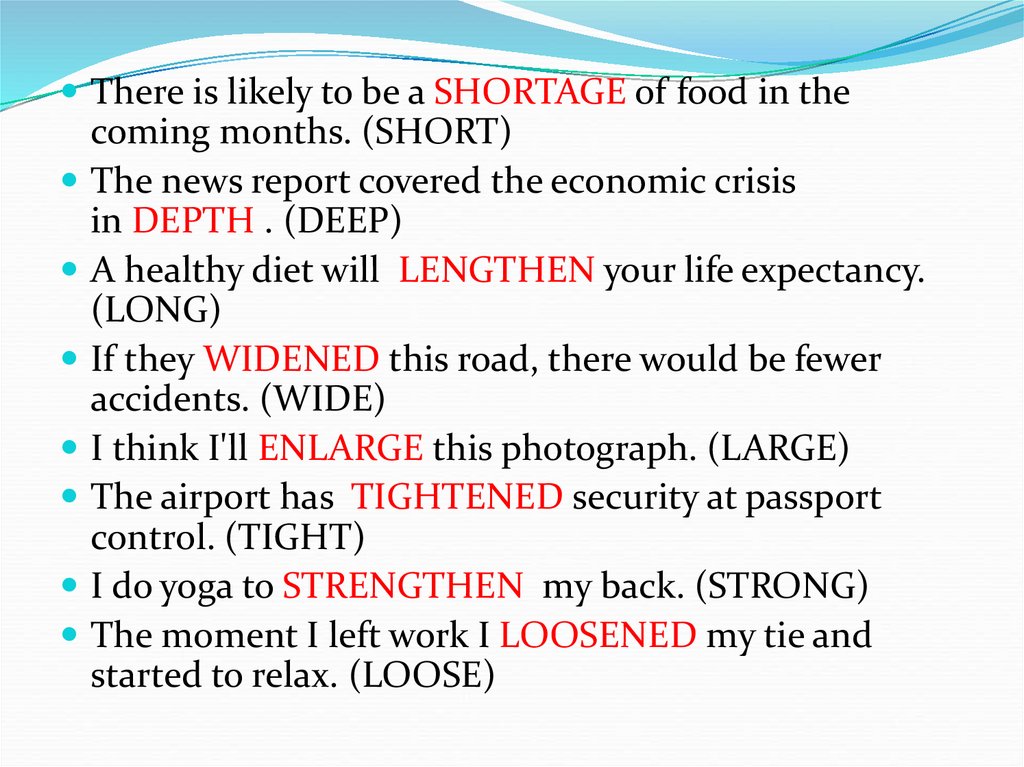
There is likely to be a SHORTAGE of food in thecoming months. (SHORT)
The news report covered the economic crisis
in DEPTH . (DEEP)
A healthy diet will LENGTHEN your life expectancy.
(LONG)
If they WIDENED this road, there would be fewer
accidents. (WIDE)
I think I'll ENLARGE this photograph. (LARGE)
The airport has TIGHTENED security at passport
control. (TIGHT)
I do yoga to STRENGTHEN my back. (STRONG)
The moment I left work I LOOSENED my tie and
started to relax. (LOOSE)
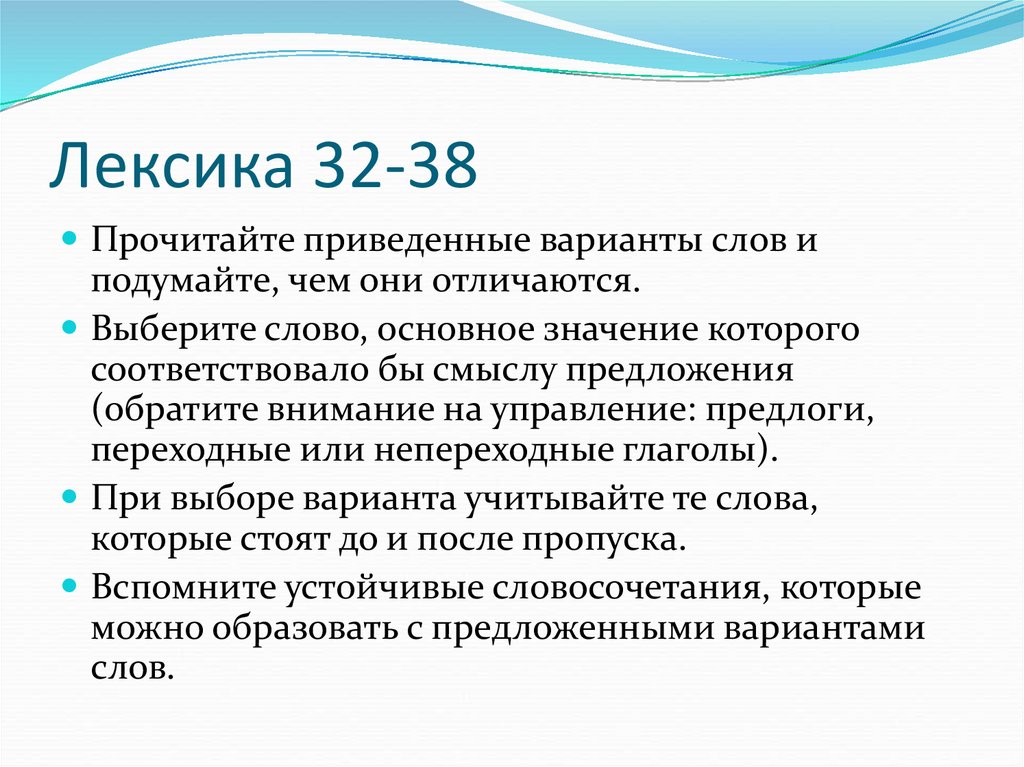
29. Лексика 32-38
Прочитайте приведенные варианты слов иподумайте, чем они отличаются.
Выберите слово, основное значение которого
соответствовало бы смыслу предложения
(обратите внимание на управление: предлоги,
переходные или непереходные глаголы).
При выборе варианта учитывайте те слова,
которые стоят до и после пропуска.
Вспомните устойчивые словосочетания, которые
можно образовать с предложенными вариантами
слов.
30.
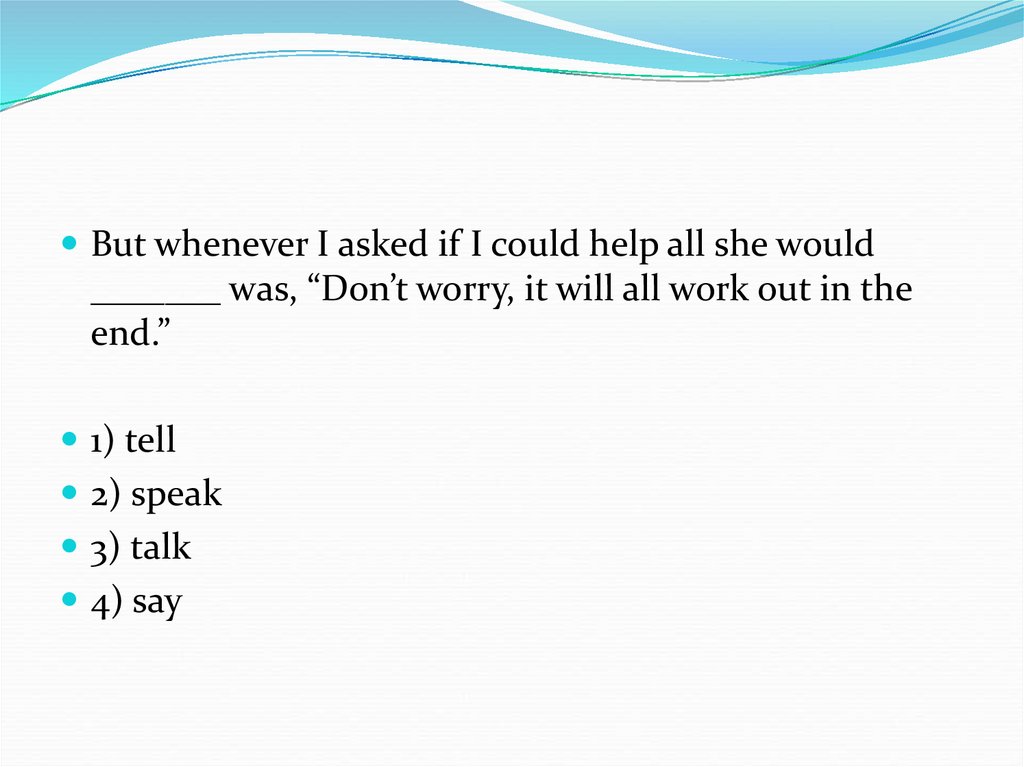
But whenever I asked if I could help all she would_______ was, “Don’t worry, it will all work out in the
end.”
1) tell
2) speak
3) talk
4) say
31.
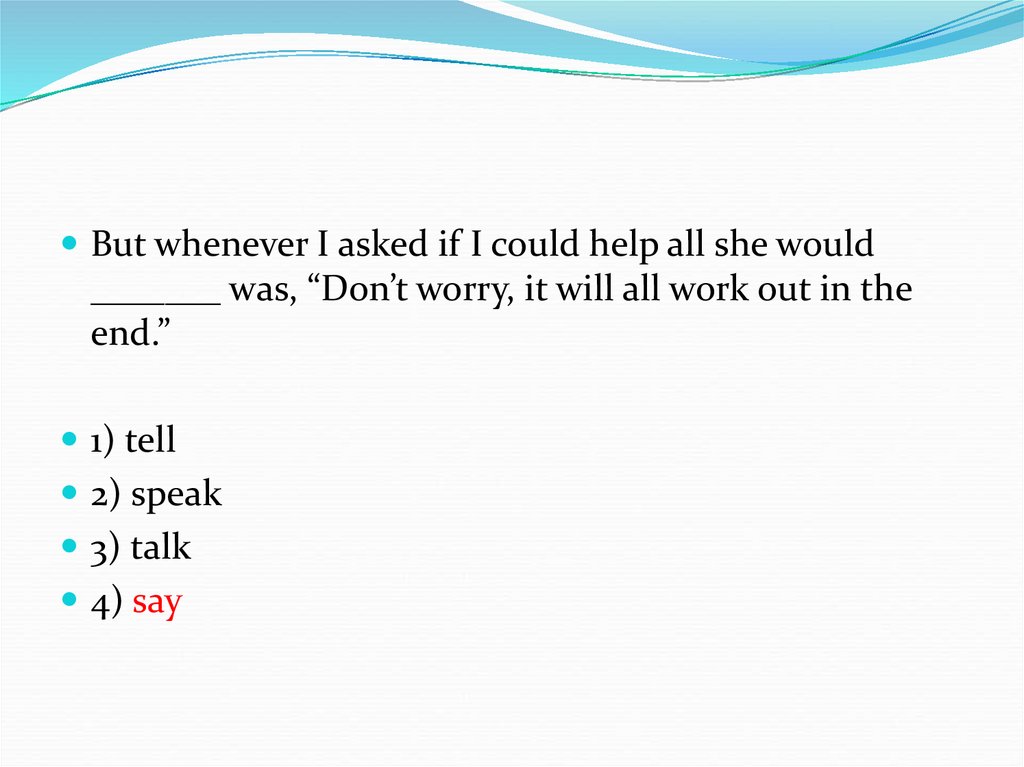
But whenever I asked if I could help all she would_______ was, “Don’t worry, it will all work out in the
end.”
1) tell
2) speak
3) talk
4) say
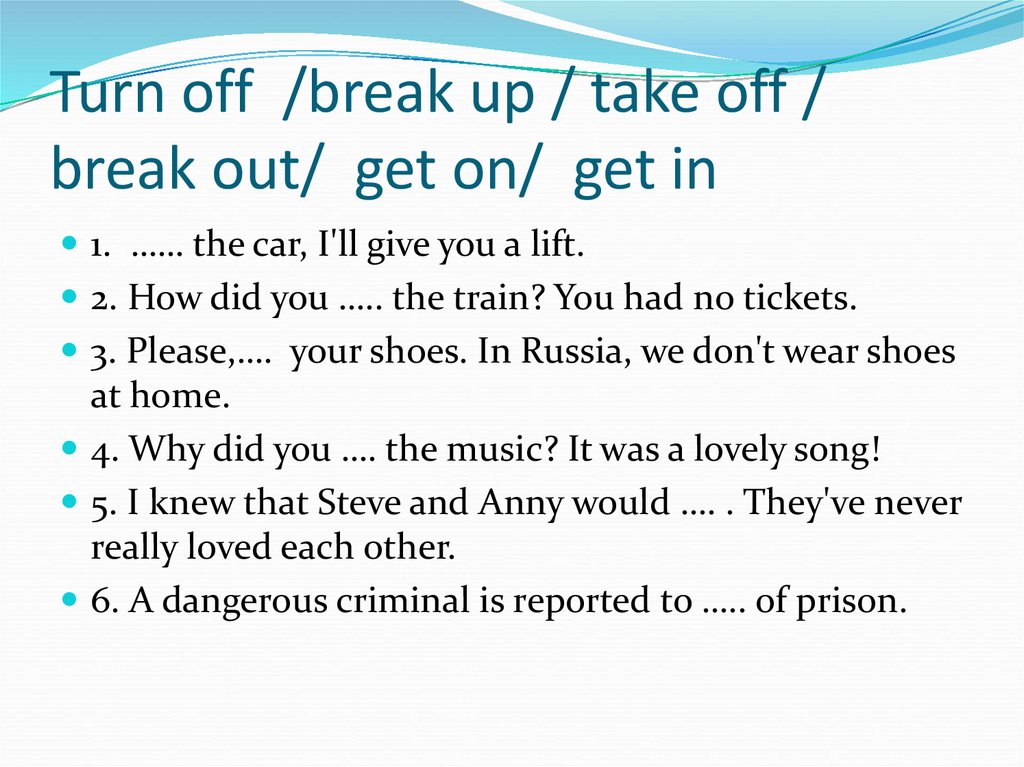
32. Turn off /break up / take off / break out/ get on/ get in
1. …… the car, I'll give you a lift.2. How did you ….. the train? You had no tickets.
3. Please,…. your shoes. In Russia, we don't wear shoes
at home.
4. Why did you …. the music? It was a lovely song!
5. I knew that Steve and Anny would …. . They've never
really loved each other.
6. A dangerous criminal is reported to ….. of prison.
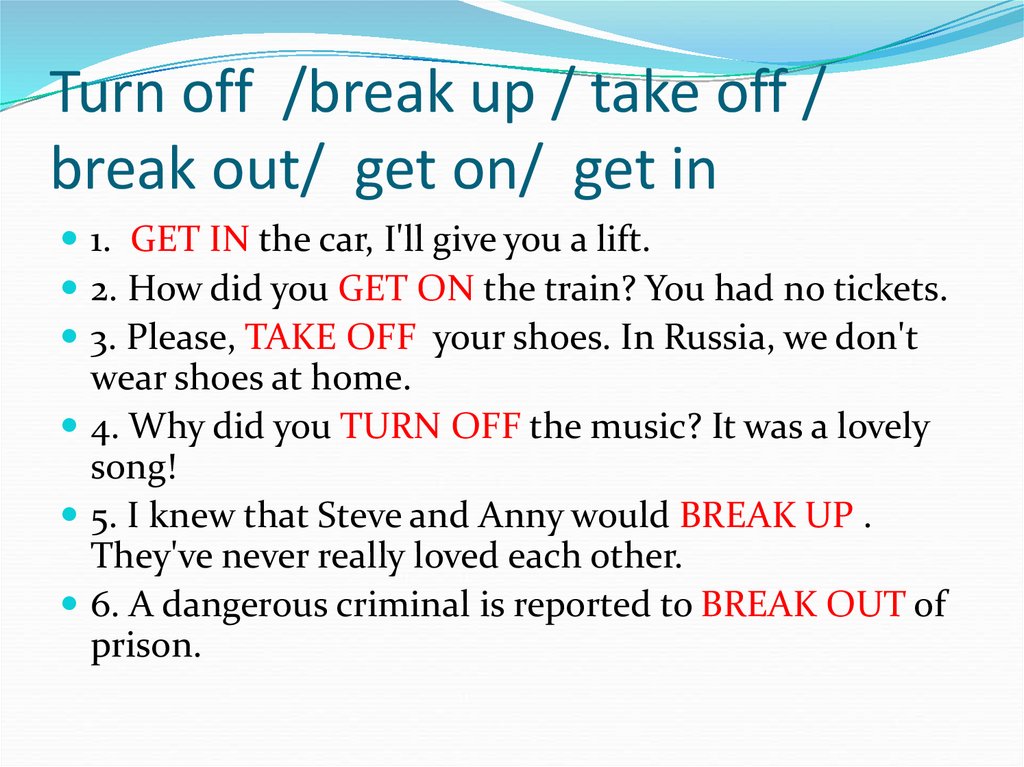
33. Turn off /break up / take off / break out/ get on/ get in
1. GET IN the car, I'll give you a lift.2. How did you GET ON the train? You had no tickets.
3. Please, TAKE OFF your shoes. In Russia, we don't
wear shoes at home.
4. Why did you TURN OFF the music? It was a lovely
song!
5. I knew that Steve and Anny would BREAK UP .
They've never really loved each other.
6. A dangerous criminal is reported to BREAK OUT of
prison.
34.
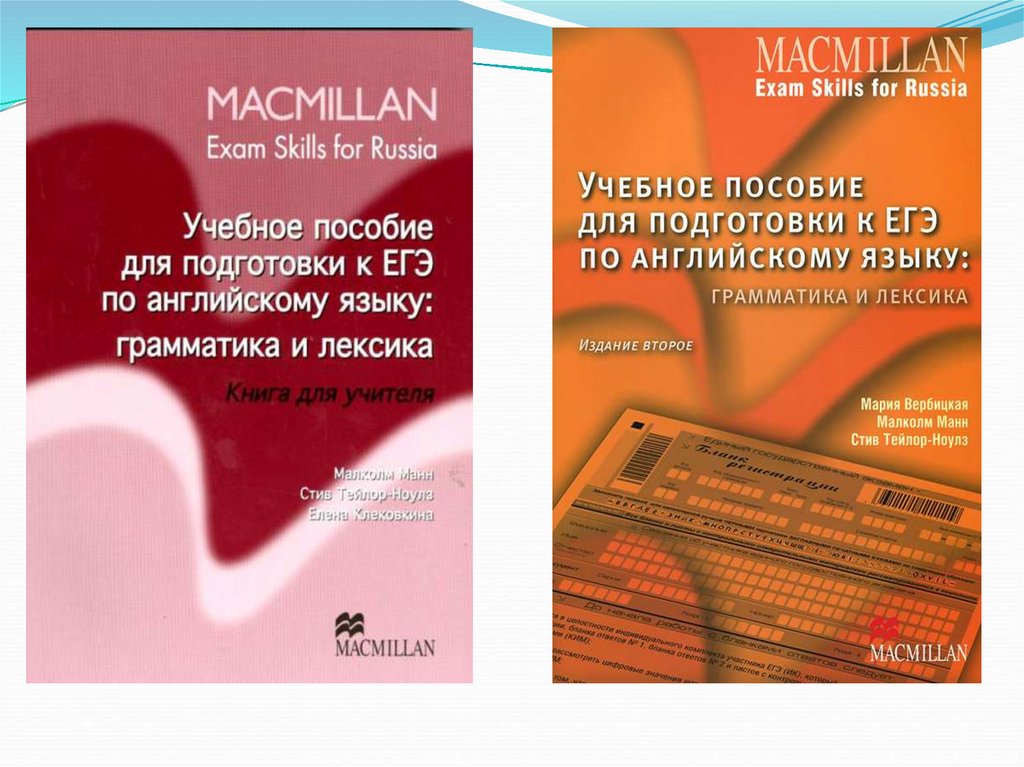
35. Ресурсы
36.
Thank you foryour attention!
Good luck!