








 Менеджмент
Похожие презентации:










Управление процессом разработки и продвижения нового товара/New product development and promotion strategies
1.
Управление процессомразработки и продвижения
нового товара/New product
development and promotion
strategies
September – October 2024
2.
Five classes – 18 hoursDates : 9 September - 7 October 2024
Exam : January 2025
Course
Structure &
Content
Course Contents:
Lecture 1. New Product Development. Foundations.
Lecture 2. Risks in Innovation. Portfolio Management
Lecture 3. Invisible Success Factors. Risk Management
Lecture 4. Product Market Intro & Marketing Decisions
Lecture 5. Students’ Presentation of Cases
3.
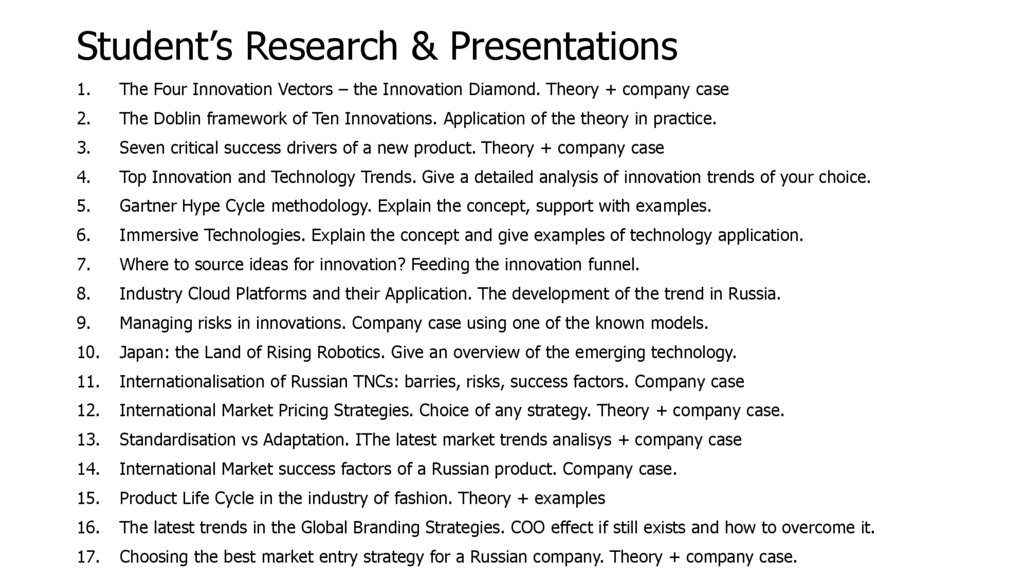
Student’s Research & Presentations1.
The Four Innovation Vectors – the Innovation Diamond. Theory + company case
2.
The Doblin framework of Ten Innovations. Application of the theory in practice.
3.
Seven critical success drivers of a new product. Theory + company case
4.
Top Innovation and Technology Trends. Give a detailed analysis of innovation trends of your choice.
5.
Gartner Hype Cycle methodology. Explain the concept, support with examples.
6.
Immersive Technologies. Explain the concept and give examples of technology application.
7.
Where to source ideas for innovation? Feeding the innovation funnel.
8.
Industry Cloud Platforms and their Application. The development of the trend in Russia.
9.
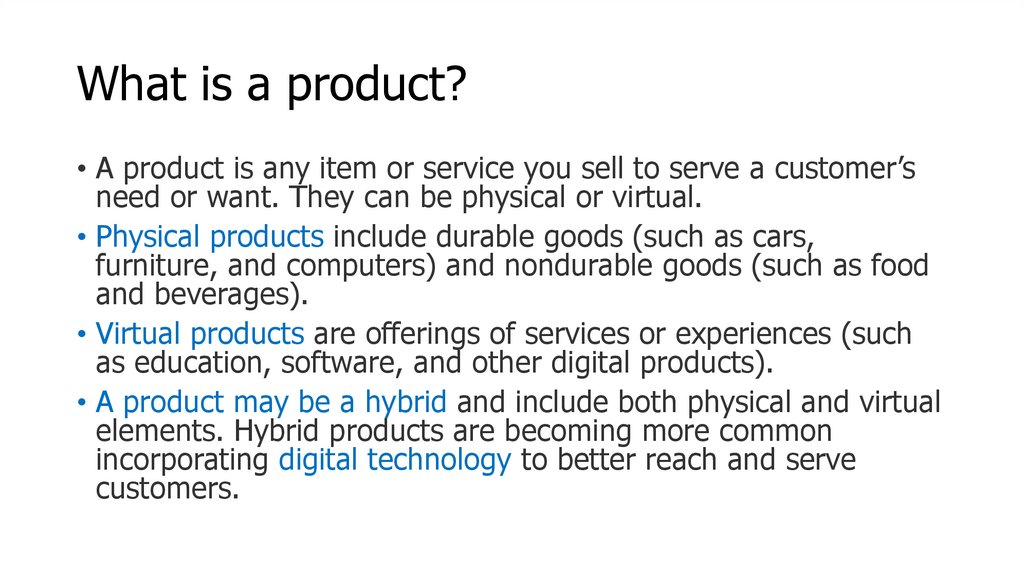
Managing risks in innovations. Company case using one of the known models.
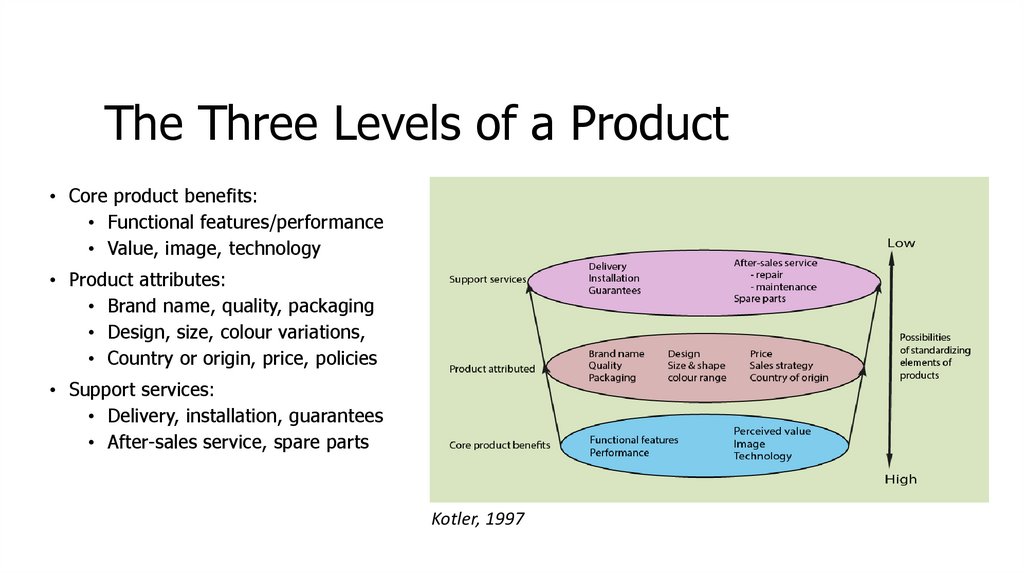
10.
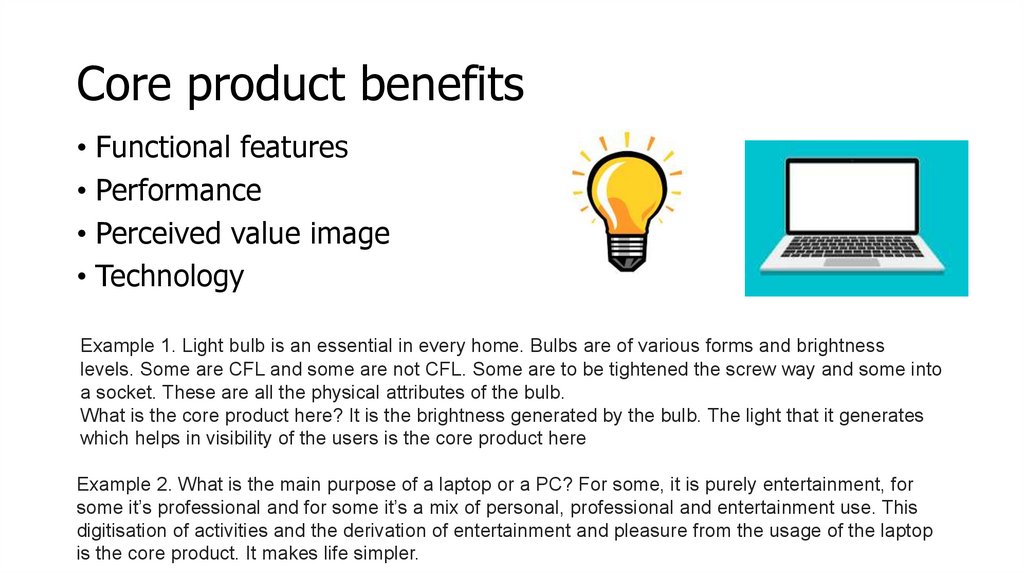
Japan: the Land of Rising Robotics. Give an overview of the emerging technology.
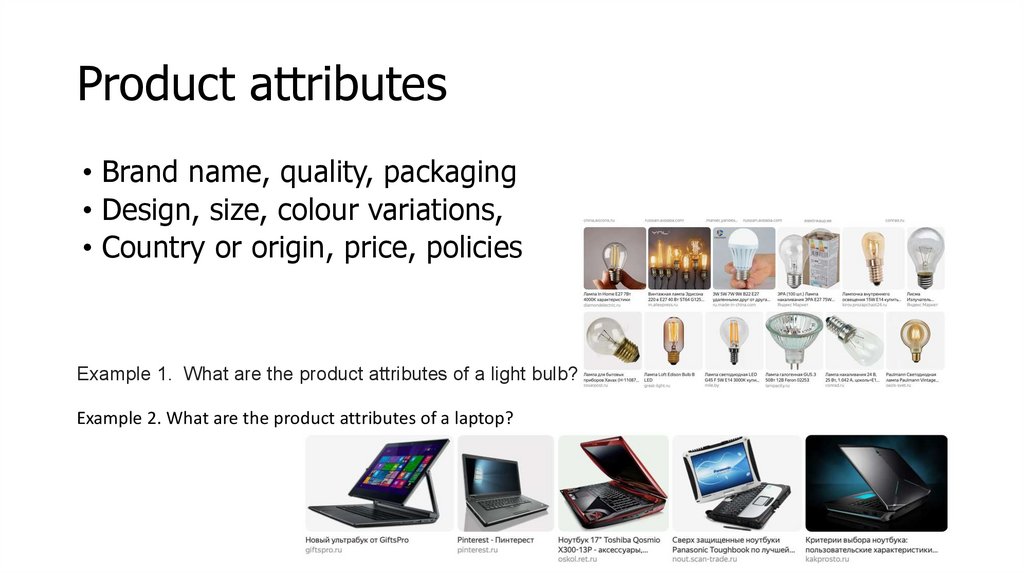
11.
Internationalisation of Russian TNCs: barries, risks, success factors. Company case
12.
International Market Pricing Strategies. Choice of any strategy. Theory + company case.
13.
Standardisation vs Adaptation. IThe latest market trends analisys + company case
14.
International Market success factors of a Russian product. Company case.
15.
Product Life Cycle in the industry of fashion. Theory + examples
16.
The latest trends in the Global Branding Strategies. COO effect if still exists and how to overcome it.
17.
Choosing the best market entry strategy for a Russian company. Theory + company case.
4.
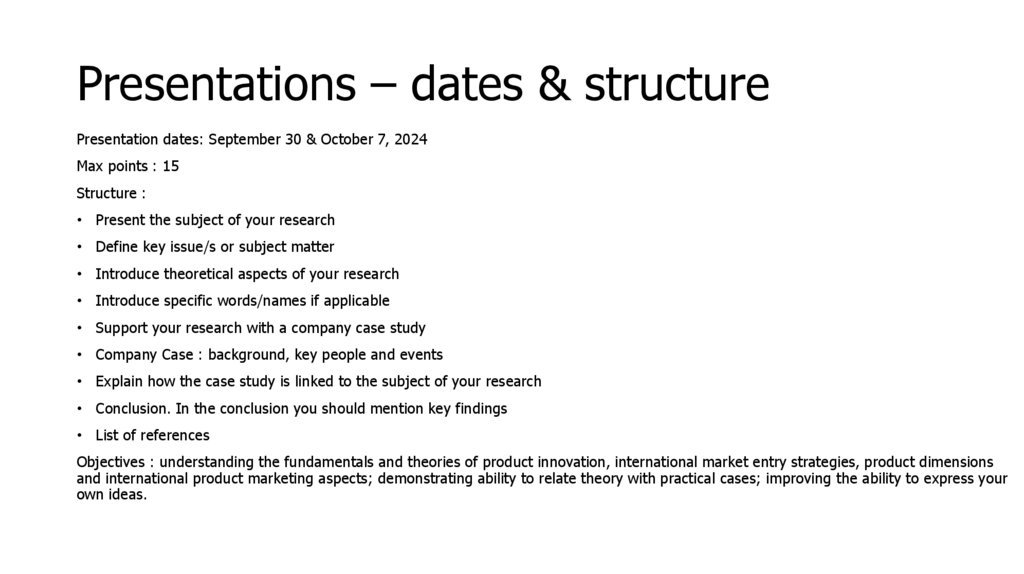
Presentations – dates & structurePresentation dates: September 30 & October 7, 2024
Max points : 15
Structure :
• Present the subject of your research
• Define key issue/s or subject matter
• Introduce theoretical aspects of your research
• Introduce specific words/names if applicable
• Support your research with a company case study
• Company Case : background, key people and events
• Explain how the case study is linked to the subject of your research
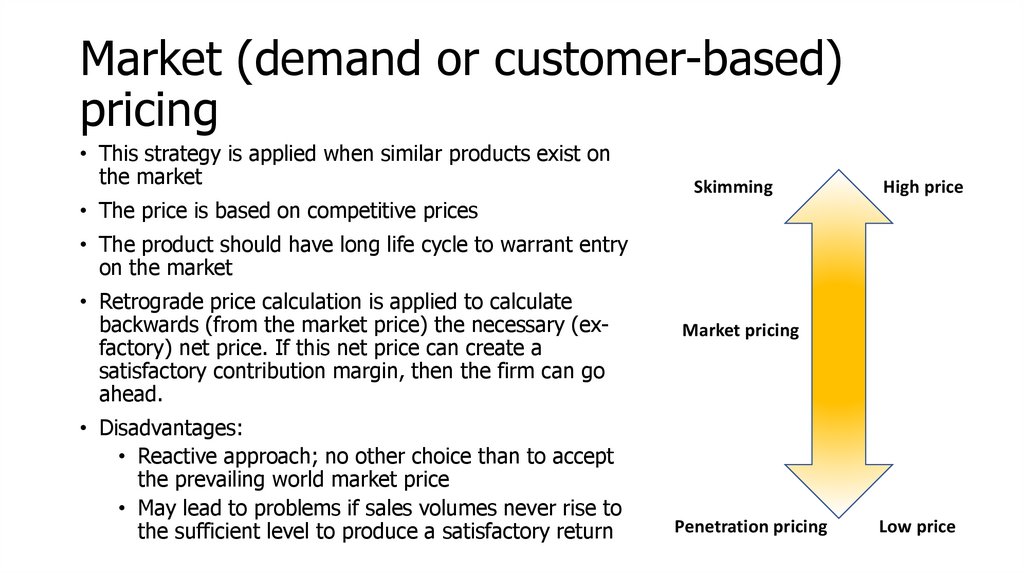
• Conclusion. In the conclusion you should mention key findings
• List of references
Objectives : understanding the fundamentals and theories of product innovation, international market entry strategies, product dimensions
and international product marketing aspects; demonstrating ability to relate theory with practical cases; improving the ability to express your
own ideas.
5.
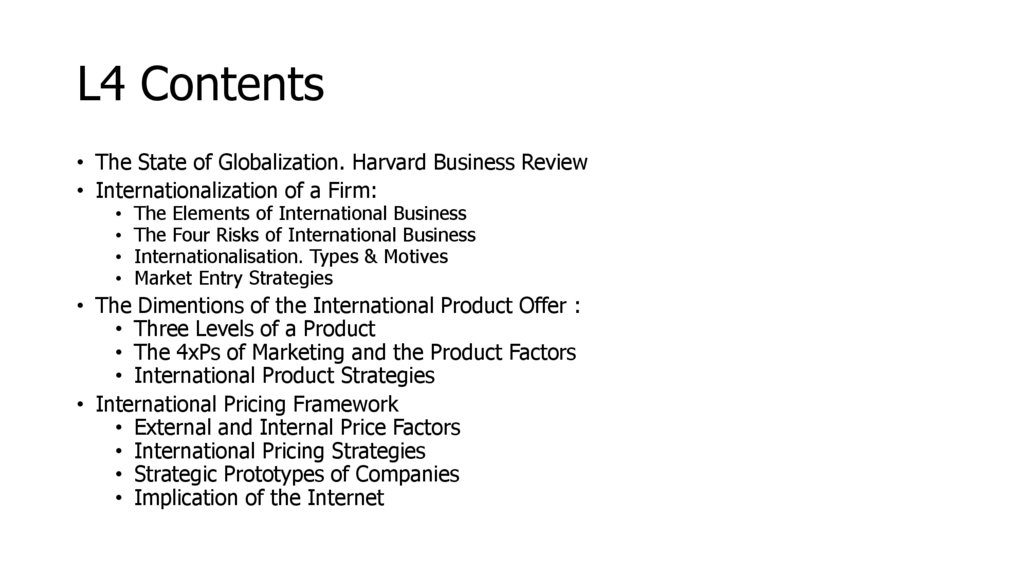
L4 Contents• The State of Globalization. Harvard Business Review
• Internationalization of a Firm:
• The Elements of International Business
• The Four Risks of International Business
• Internationalisation. Types & Motives
• Market Entry Strategies
• The Dimentions of the International Product Offer :
• Three Levels of a Product
• The 4xPs of Marketing and the Product Factors
• International Product Strategies
• International Pricing Framework
• External and Internal Price Factors
• International Pricing Strategies
• Strategic Prototypes of Companies
• Implication of the Internet
6.
Three Key Questions1. Каково влияние глобальных кризисов и
эскалации геополитической
напряженности на процесс глобализации?
Имеет ли место обратный процесс
глобализации?
2. Обратили ли вспять геополитические
трения рост трансграничной торговли,
потоков капитала, обмен информацией,
миграцию населения?
3. Приводит ли геополитическая
напряженность к расколу мировой
экономики на конкурирующие блоки? И
уступает ли глобализация
регионализации?
7.
The State of Globalization in 2023. Harvard BusinessReview (hbr.com)
• The DHL Global Connectedness Index, разработанный в NYU Stern Center for the Future
of Management - Глобальный индекс взаимосвязанности DHL (GCI/Global
Connectedness Index) — это исследование, которое измеряет глобализацию на
основе международных потоков в четырёх областях: торговля, капитал,
информация и люди.
• Исследование показало, что «к 2021 году глобализация торговли, потоков капитала
и информации превысила уровни, существовавшие до пандемии, и что
восстановление международных потоков людей ускорилось в 2022 году».
8.
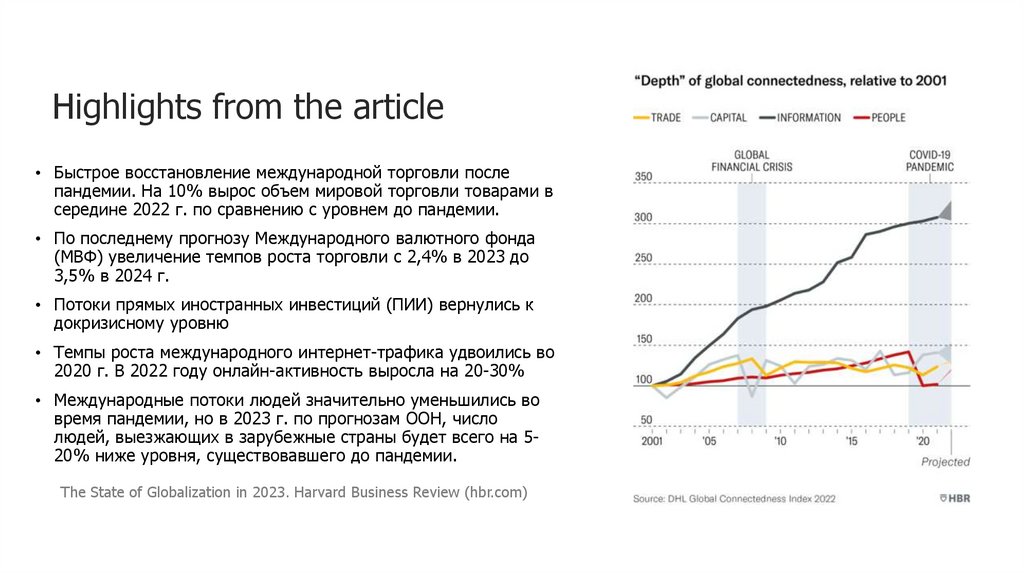
Highlights from the article• Быстрое восстановление международной торговли после
пандемии. На 10% вырос объем мировой торговли товарами в
середине 2022 г. по сравнению с уровнем до пандемии.
• По последнему прогнозу Международного валютного фонда
(МВФ) увеличение темпов роста торговли с 2,4% в 2023 до
3,5% в 2024 г.
• Потоки прямых иностранных инвестиций (ПИИ) вернулись к
докризисному уровню
• Темпы роста международного интернет-трафика удвоились во
2020 г. В 2022 году онлайн-активность выросла на 20-30%
• Международные потоки людей значительно уменьшились во
время пандемии, но в 2023 г. по прогнозам ООН, число
людей, выезжающих в зарубежные страны будет всего на 520% ниже уровня, существовавшего до пандемии.
The State of Globalization in 2023. Harvard Business Review (hbr.com)
9.
Are Geopolitical Tensions Fracturing the World Economyinto Rival Blocs?
• Разделение между США и Китаем не указывает на более широкий
раскол между конкурирующими блоками, который, как предупредил
МВФ «сделает всех беднее и менее защищенными».
• Доля торговых потоков (торговля, финансы, информация, люди)
между США и Китаем снизилась в среднем с 17,8% до 14,3%
На глобальном уровне потоки стран, которые геополитически связаны с США и с Китаем,
указывают на отсутствие значимой фрагментации мировой экономики на конкурирующие
блоки. Близкие союзники США и Китая (по классификации Capital Economics) не сократили
доли своих потоков с конкурирующим блоком. В некоторых областях, таких как импорт и
сотрудничество в области научных исследований, союзники США даже увеличили долю
потоков с Китаем и его союзниками, в то время как США отказались от этих обменов.
10.
Произошел ли «сдвиг» в сторонурегионализации?
• Согласно прогнозам растущая доля международных потоков должна осуществляться
внутри регионов, а не между ними. Однако данные о фактических схемах движения
не свидетельствуют о том, что такой сдвиг произошел.
• В 2020 и 2021 годах торговые потоки наоборот растянулись на большие расстояния,
вопреки прогнозам о том, что сбои, связанные с пандемией, приведут к большей
зависимости от близлежащих поставщиков. Ключевым фактором такой динамики
стала устойчивость азиатского производства, что привело к увеличению объема
торговли между Азией и отдаленными регионами. Данные также показывают
увеличение среднего расстояния, на которое страны осуществляют торговлю из-за
последствий войны на Украине.
• Многие компании сосредоточены на тесном сотрудничестве, чтобы производить
товары ближе к своим клиентам, а внесение значительных изменений в цепочки
поставок может занять несколько лет.
• Хотя правительства многих стран поддерживают усилия по регионализации,
серьезный сдвиг в сторону регионализации пока не произошел.
11.
Выводы по ключевым вопросам1.
Каково влияние глобальных кризисов и эскалации геополитической напряженности
на процесс глобализации? Имеет ли место обратный процесс глобализации?
2.
Обратили ли вспять геополитические трения рост трансграничной торговли, потоков
капитала, обмен информацией, трудовую миграцию и перемещение потоков
населения?
3.
Приводит ли геополитическая напряженность к расколу мировой экономики на
конкурирующие блоки? И уступает ли глобализация регионализации?
Ответ на все эти вопросы : НЕТ
Нет свидетельств того, что глобализация уступает место регионализации. Хотя компаниям
действительно необходимо приспосабливаться к возросшей геополитической напряженности,
пока нет признаков того, что компании отказываются от глобальных стратегий.
Корпоративная де-глобализация, по сути, может быть более рискованным путем, чем
целенаправленные корректировки для снижения геополитических рисков.
12.
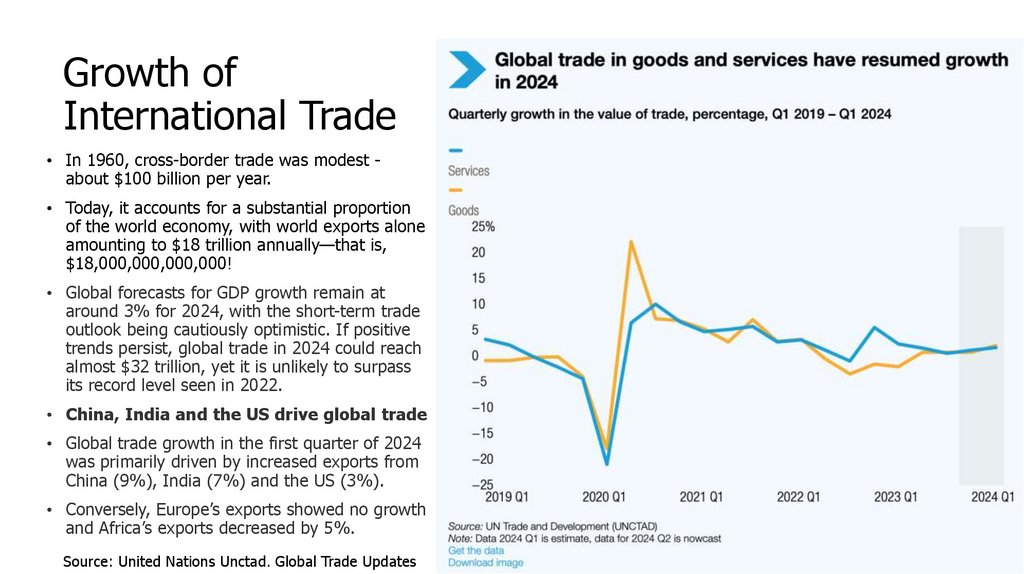
Growth ofInternational Trade
• In 1960, cross-border trade was modest about $100 billion per year.
• Today, it accounts for a substantial proportion
of the world economy, with world exports alone
amounting to $18 trillion annually—that is,
$18,000,000,000,000!
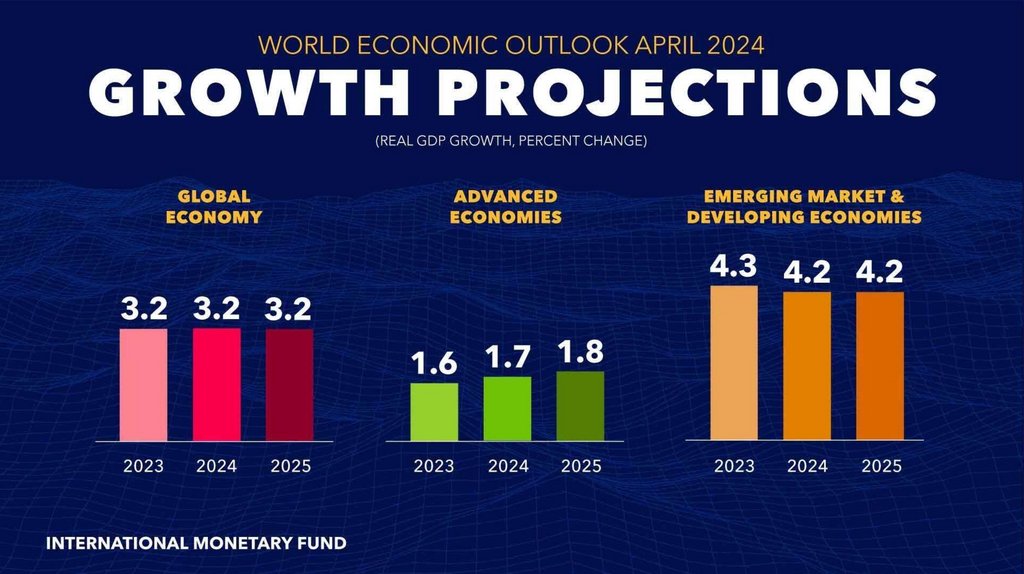
• Global forecasts for GDP growth remain at
around 3% for 2024, with the short-term trade
outlook being cautiously optimistic. If positive
trends persist, global trade in 2024 could reach
almost $32 trillion, yet it is unlikely to surpass
its record level seen in 2022.
• China, India and the US drive global trade
• Global trade growth in the first quarter of 2024
was primarily driven by increased exports from
China (9%), India (7%) and the US (3%).
• Conversely, Europe’s exports showed no growth
and Africa’s exports decreased by 5%.
Source: United Nations Unctad. Global Trade Updates
13.
14.
International BusinessThe Internationalization of a Firm
15.
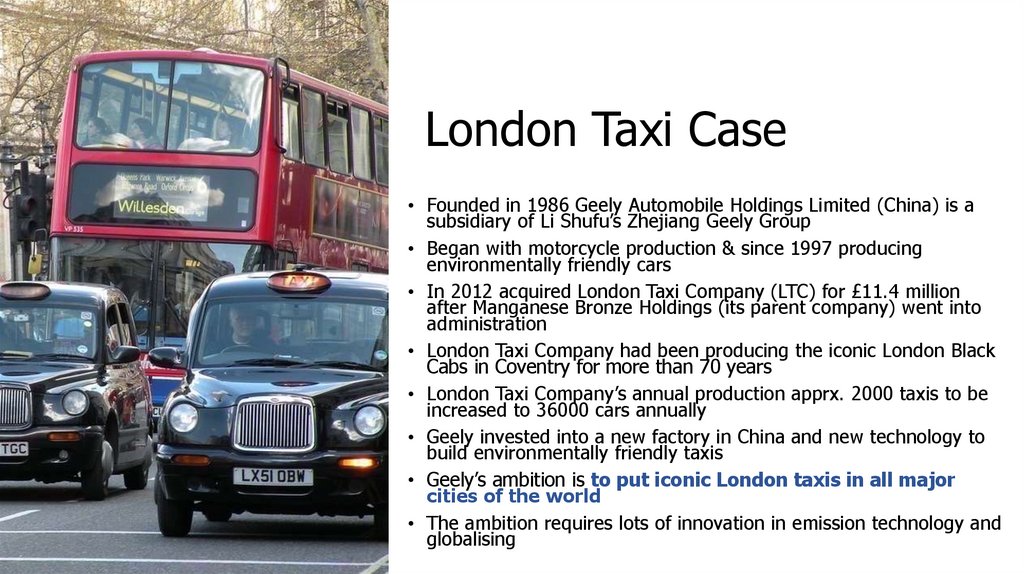
London Taxi Case• Founded in 1986 Geely Automobile Holdings Limited (China) is a
subsidiary of Li Shufu’s Zhejiang Geely Group
• Began with motorcycle production & since 1997 producing
environmentally friendly cars
• In 2012 acquired London Taxi Company (LTC) for £11.4 million
after Manganese Bronze Holdings (its parent company) went into
administration
• London Taxi Company had been producing the iconic London Black
Cabs in Coventry for more than 70 years
• London Taxi Company’s annual production apprx. 2000 taxis to be
increased to 36000 cars annually
• Geely invested into a new factory in China and new technology to
build environmentally friendly taxis
• Geely’s ambition is to put iconic London taxis in all major
cities of the world
• The ambition requires lots of innovation in emission technology and
globalising
16.
What are the features internationalbusiness?
1. International business refers to companies’ trade and investment
activities across national borders.
2. As international business imply crossing national boundaries, we also
refer to international business as cross-border business
3. Firms organise, source, manufacture, market, and conduct value-added
activities on an international scale. They seek foreign customers and
engage in collaborative relationships with foreign business partners.
4. Although international business is performed mainly by individual
firms/companies, governments and international agencies also conduct
international business activities helping them.
5. International business involves exchange of many physical and
intellectual assets, including products, services, capital, technology,
know-how, and labour.
17.
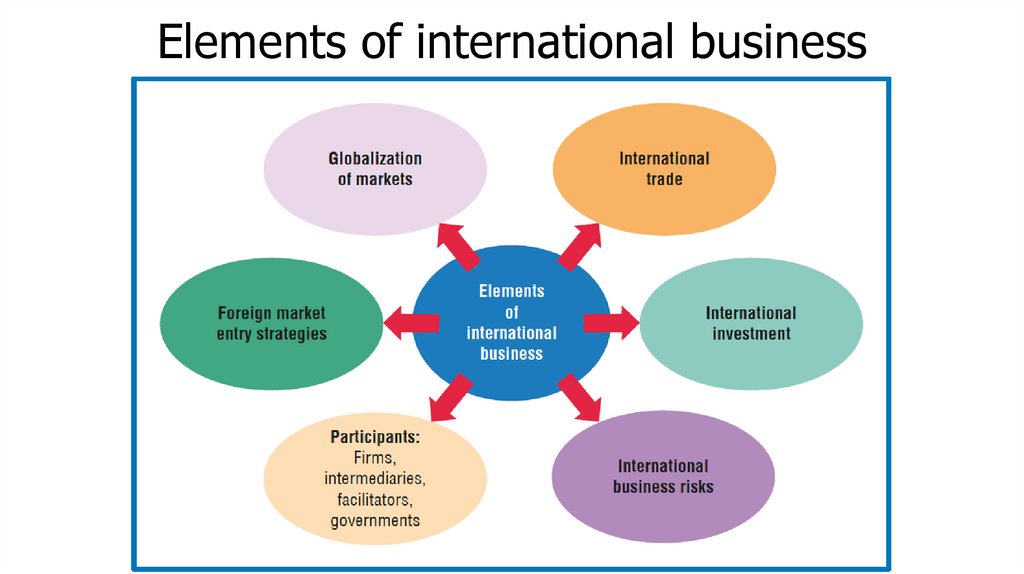
Elements of international business18.
How does international business differfrom domestic business?
• Firms operate in countries with different economic, cultural, and
political features.
• Countries and regions are characterised by a high level of
diversity. For example, the economic environment of Colombia
differs sharply from that of Canada, the legal environment of
Saudi Arabia does not resemble that of Japan, and the cultural
environment of China is very different from that of Kenya.
• Working abroad not only does the firm find itself in unfamiliar
surroundings, it encounters many uncontrollable variables—
factors over which management has little control. These factors
refer to business risks.
19.
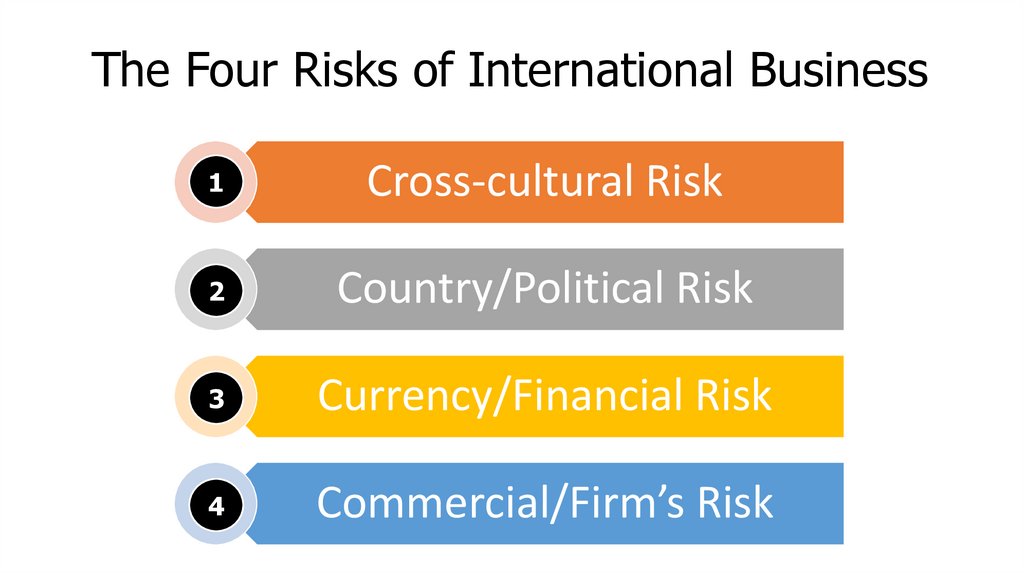
The Four Risks of International Business1
Cross-cultural Risk
2
Country/Political Risk
3
Currency/Financial Risk
4
Commercial/Firm’s Risk
20.
Cross-cultural Risk• Cultural differences
• Negotiation patterns
• Decision-making styles
• Ethical practices
• Language
• Cultural values
21.
Country/Political Risk• Harmful or unstable political system
• Laws and regulation unfavorable to foreign firms
• Inadequate or underdeveloped legal system
• Bureaucracy and red tape
• Corruption and other ethical blunders
• Government intervention, protectionism, and barriers to trade
and investment
• Mismanagement or failure of the national economy
• PESTLE
22.
Currency/Financial Risk• Currency exposure
• Asset valuation
• Foreign taxation
• Inflationary and transfer* pricing
*Transfer pricing is an accounting practice that represents the price that one division in a company charges
another division for goods and services provided. (Investipedia).
Transfer pricing allows for the establishment of prices for the goods and services exchanged between subsidiaries,
affiliates, or commonly controlled companies that are part of the same larger enterprise.
Transfer pricing can lead to tax savings for corporations, though tax authorities may contest their claims.
23.
Commercial/Company Risk• Weak partner
• Operational problems
• Timing of entry
• Competitive intensity
• Poor execution of strategy
24.
Participants of the International BusinessFour major categories of participants :
1. Focal* Firm – the initiator of an international business transaction, which
conceives, designs intended priduces offerings for consumption by
customers worldwide. Primarily these are multi-national enterprises
(MNEs) and small-to-medium enterprises (SMEs)
2. Distribution Channel/Intermediary – a specialist firm that provides
various logistics and marketing services focal firms as part of
international supply chain, both in the home country and abroad
3. Facilitator – a firm or an individual with special expertise in banking,
legal advice, customs clearance, or related support services that assists
focal firms in the performance of international business transactions
4. Governments, or the public sector, are also active in international
business as suppliers, buyers, and regulators. State-owned enterprises
account for a substantial portion of economic value added in many
countries, even rapidly liberalising emerging markets such as Brazil,
Russia, India, China & South Africa (BRICS)
*focal : foreign + local
25.
International Customers• The demand side is represented by customers :
• Individual consumers and households
• Retailers – businesses that purchase finished goods for the
purpose of resale
• Organisational buyers – businesses, institutions, and
governments*
*Governments – non-profit organisations such as CARE (www.care.org) and UNICEF
(www.unicef.org) often constitute important customers around the world
26.
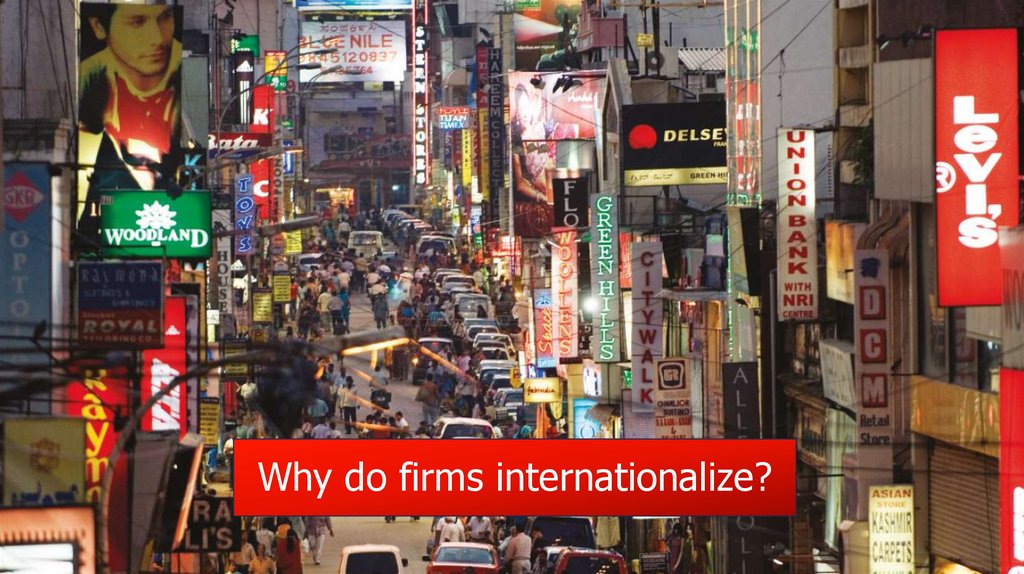
Why do firms internationalize?27.
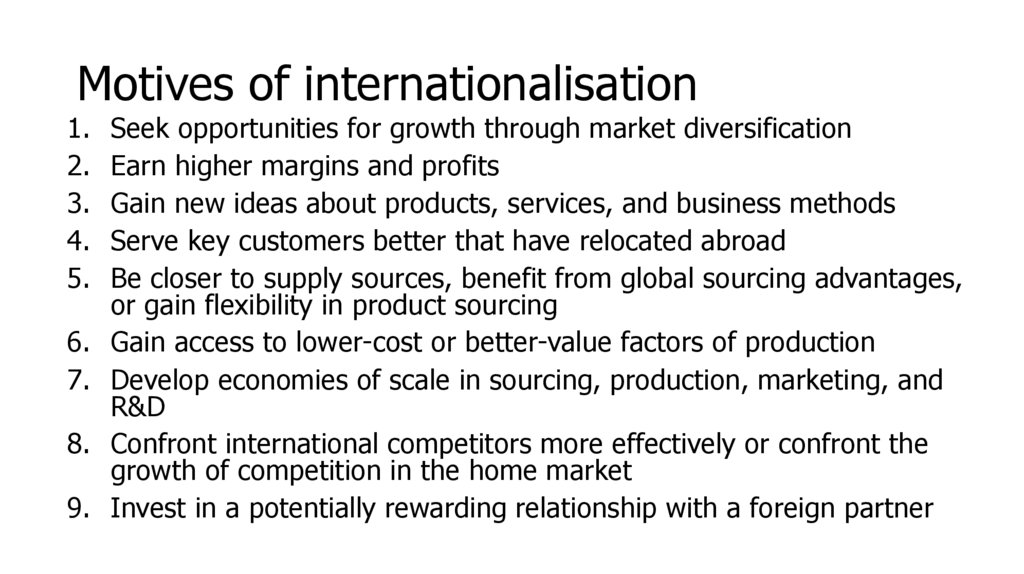
Motives of internationalisation1.
2.
3.
4.
5.
6.
7.
8.
9.
Seek opportunities for growth through market diversification
Earn higher margins and profits
Gain new ideas about products, services, and business methods
Serve key customers better that have relocated abroad
Be closer to supply sources, benefit from global sourcing advantages,
or gain flexibility in product sourcing
Gain access to lower-cost or better-value factors of production
Develop economies of scale in sourcing, production, marketing, and
R&D
Confront international competitors more effectively or confront the
growth of competition in the home market
Invest in a potentially rewarding relationship with a foreign partner
28.
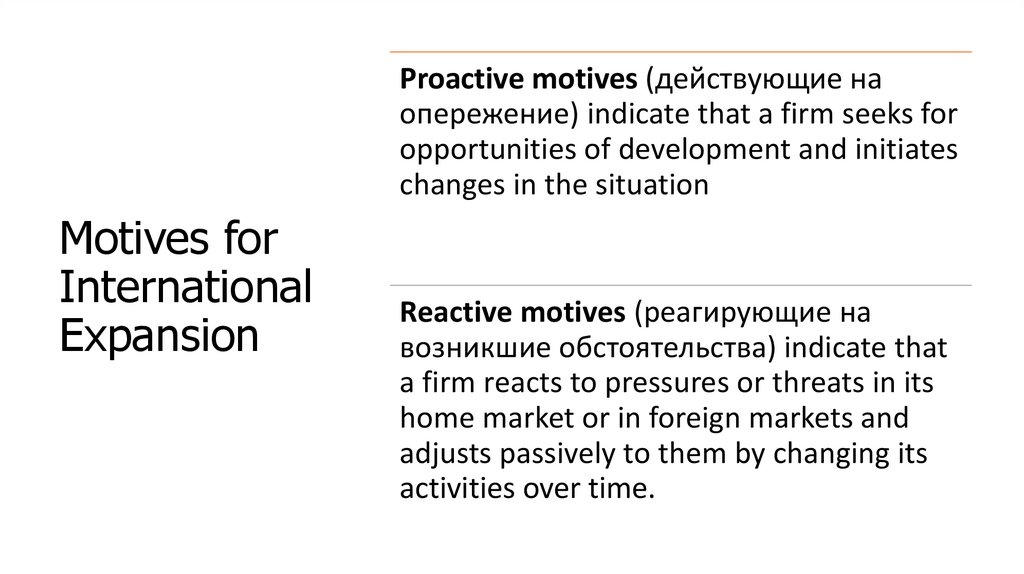
Proactive motives (действующие наопережение) indicate that a firm seeks for
opportunities of development and initiates
changes in the situation
Motives for
International
Expansion
Reactive motives (реагирующие на
возникшие обстоятельства) indicate that
a firm reacts to pressures or threats in its
home market or in foreign markets and
adjusts passively to them by changing its
activities over time.
29.
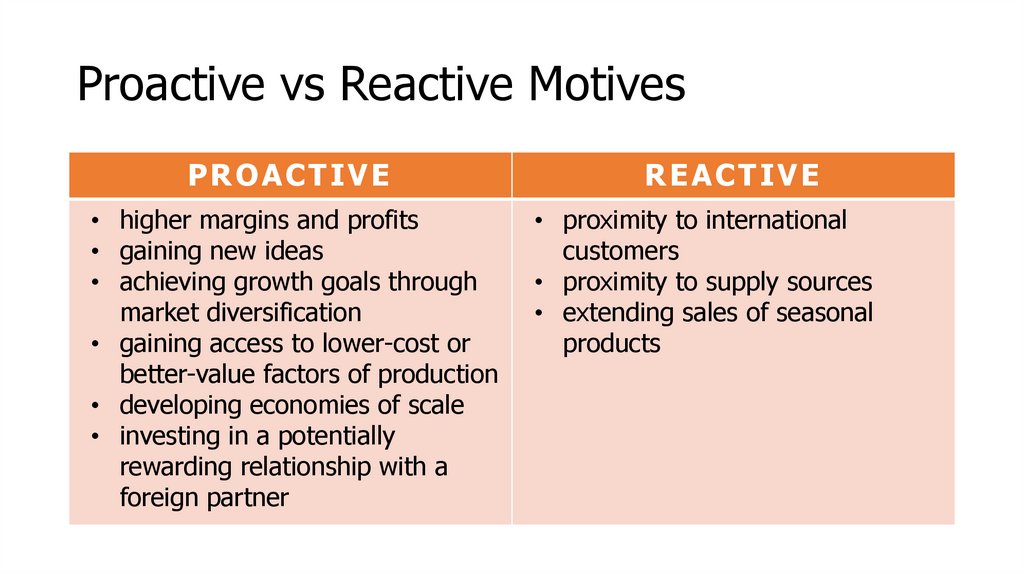
Proactive vs Reactive MotivesPROACTIVE
• higher margins and profits
• gaining new ideas
• achieving growth goals through
market diversification
• gaining access to lower-cost or
better-value factors of production
• developing economies of scale
• investing in a potentially
rewarding relationship with a
foreign partner
REACTIVE
• proximity to international
customers
• proximity to supply sources
• extending sales of seasonal
products
30.
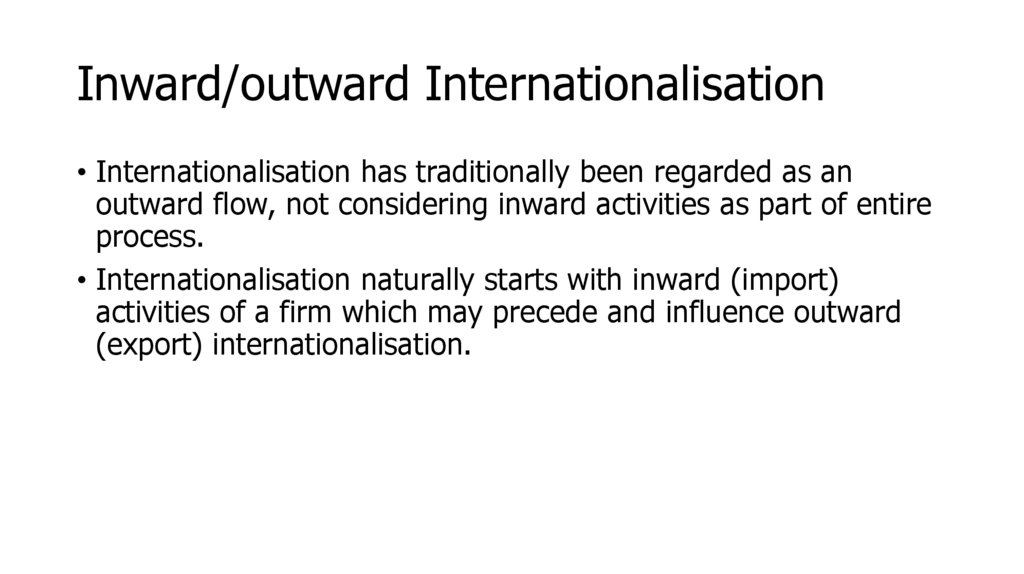
Inward/outward Internationalisation• Internationalisation has traditionally been regarded as an
outward flow, not considering inward activities as part of entire
process.
• Internationalisation naturally starts with inward (import)
activities of a firm which may precede and influence outward
(export) internationalisation.
31.
Inward Internationalisation• The process of importing goods and services as a preceding activity
for the later market entries in foreign markets
• May be initiated by :
• The buyer who does active international search of different foreign sources
(reverse marketing)
• The seller who gets initiated by the foreign supplier (traditional seller
perspective)
• Examples of inward internationalisation : importing products needed
to production, such as raw materials and machinery
• Can also include finances and technology through different
operational forms, such as franchising (and in some cases licensing),
direct investment and alliances
32.
Outward Internationalisation• Outward internationalisation – international market entry and
marketing activities of a firm.
• A direct relationship exists between inward and outward
internationalisation in the way that effective inward activities
can determin the success of outward activities, especially in the
early stages of internationalisation.
33.
It’s All AboutStrategy
“Strategy without tactics is
the slowest route to victory.
Tactics without strategy is
the noise before defeat.”
Sun Tzu. The Art of War, 5th century BC
34.
Market Entry Strategies• 0% or low investment
• Indirect export
• Direct export
• Cooperative export
Export
Low Risk
Intermediary
• 50/50% Investment
• Contract manufacturing
• Licensing
• Franchising
• Joint ventures
• Strategic alliances
• 100% investment
• Subsidiaries/production
• Regional centers
• Acquisition
• Greenfield investment
Hierarchical
High Risk
35.
Export strategies (modes)1. Indirect export. This is when the manufacturing firm does not take
direct care of exporting activities. Instead another domestic
company, such as an export house or trading company, performs
these activities, often without the manufacturing firm’s
involvement in the foreign sales of its products
2. Direct export. When the producing firm takes care of exporting
activities and is in direct contact with the firm intermediary in the
foreign target market. The firm is typically involved in handling
documentation, physical delivery, and pricing policies, while the
product can be sold through agencies and distributors
3. Cooperative export. This involves collaborative agreements with
other firms (export marketing groups) concerning the performance
of exporting functions.
36.
Intermediate strategies (modes)1. Contract manufacturing. When manufacturing is outsourced to an external partner,
specialised in production and technology. Examples : IKEA, Benetton, Electrolux,
etc. heavily rely on a contractual network of small overseas manufacturers.
2. Licensing. When the licensor gives a right to the licensee for a payment to produce
a certain product based on a patent involving the payment of an agreed royalty to
the licensor. Example : fashion business, clothing brands, etc.
3. Franchising. The franchisor gives right to the franchisee for a payment to use a
total business concept/system, including the use of trade marks, against some
royalty paid to the franchisor. Example : MacDonald’s & many other restaurant
chains.
4. Joint ventures/strategic alliances.
• Joint venture (JV) is an entity between two partners. It involves two ‘parents’ creating the
‘child’ acting on the market as a new entity. Normally, the companies joint with 50%/50%
capital investment.
• Strategic alliances. The companies joint together without any capital investment to pursue
certain strategic goals while remaining independent organisations. Typical for airline
companies
37.
Hierarchical strategies (modes)• 100% owned with a high level of influence and control over the local market in a
country of presence.
• Domestic-based sales representative. Works from the home country and travels abroad to
perform the sales function
• Resident sales representatives/foreign sales branch/foreign sales subsidiary
• Sales and production subsidiary. A local company owned and operated by a foreign
company under the laws and taxation of the host country (country of presence)
• Regional centres (regional headquaters). Usually play the role of coordinating and
stimulating sales in the whole region
• Transnational organizations. Typical for multi-national companies. Integration and
coordination of operations, such as R&D, production, marketing, sales & services,
across national boundaries in order to achieve synergies on a global scale.
• Acquisitions or greenfield investments.
• Acquisition is the process of merging or acquiring a business to enter new markets
• Greenfield investment is when a firm decides to establish operations from the ground up,
building a new plant, purchasing technology & equipment, setting up operations, logistics,
sales and marketing on a new territory abroad.
38.
THE DIMENSIONSOF THE
INTERNATIONAL
PRODUCT OFFER
39.
What is a product?• A product is any item or service you sell to serve a customer’s
need or want. They can be physical or virtual.
• Physical products include durable goods (such as cars,
furniture, and computers) and nondurable goods (such as food
and beverages).
• Virtual products are offerings of services or experiences (such
as education, software, and other digital products).
• A product may be a hybrid and include both physical and virtual
elements. Hybrid products are becoming more common
incorporating digital technology to better reach and serve
customers.
40.
The Three Levels of a Product• Core product benefits:
• Functional features/performance
• Value, image, technology
• Product attributes:
• Brand name, quality, packaging
• Design, size, colour variations,
• Country or origin, price, policies
• Support services:
• Delivery, installation, guarantees
• After-sales service, spare parts
Kotler, 1997
41.
Core product benefits• Functional features
• Performance
• Perceived value image
• Technology
Example 1. Light bulb is an essential in every home. Bulbs are of various forms and brightness
levels. Some are CFL and some are not CFL. Some are to be tightened the screw way and some into
a socket. These are all the physical attributes of the bulb.
What is the core product here? It is the brightness generated by the bulb. The light that it generates
which helps in visibility of the users is the core product here
Example 2. What is the main purpose of a laptop or a PC? For some, it is purely entertainment, for
some it’s professional and for some it’s a mix of personal, professional and entertainment use. This
digitisation of activities and the derivation of entertainment and pleasure from the usage of the laptop
is the core product. It makes life simpler.
42.
Product attributes• Brand name, quality, packaging
• Design, size, colour variations,
• Country or origin, price, policies
Example 1. What are the product attributes of a light bulb?
Example 2. What are the product attributes of a laptop?
43.
Support services• Delivery, installation,
guarantees
• After-sales service,
spare parts
44.
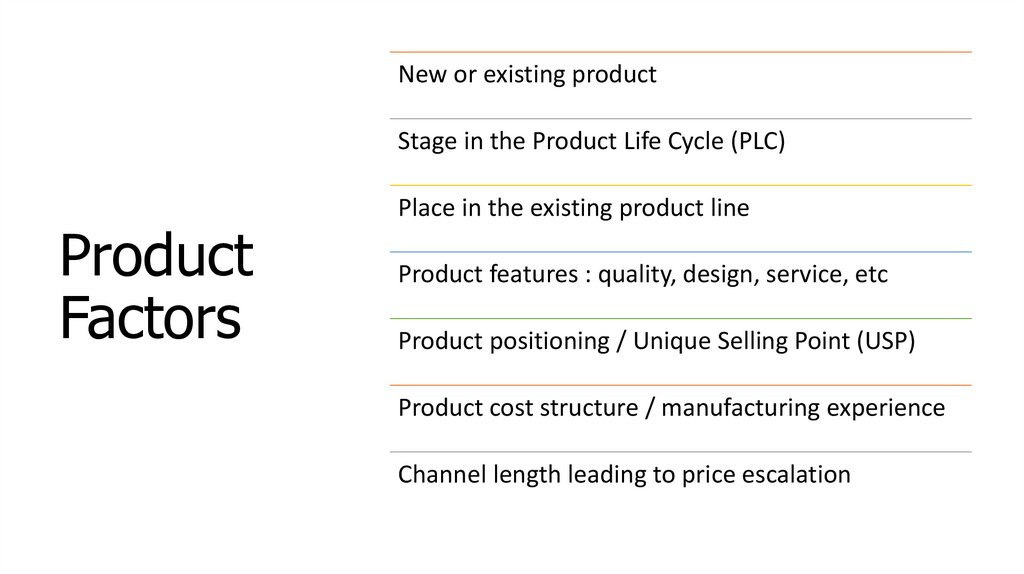
New or existing productStage in the Product Life Cycle (PLC)
Product
Factors
Place in the existing product line
Product features : quality, design, service, etc
Product positioning / Unique Selling Point (USP)
Product cost structure / manufacturing experience
Channel length leading to price escalation
45.
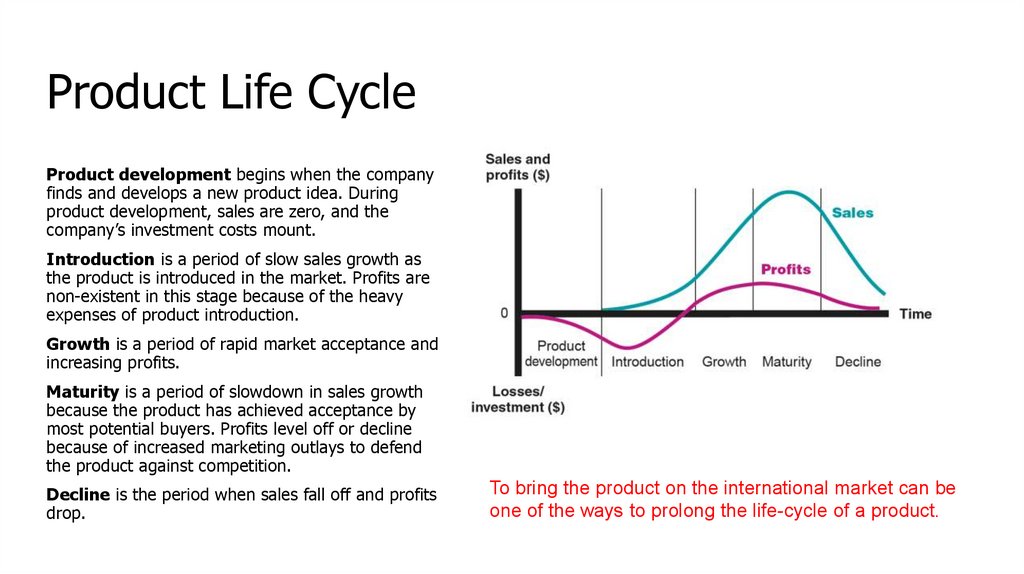
Product Life CycleProduct development begins when the company
finds and develops a new product idea. During
product development, sales are zero, and the
company’s investment costs mount.
Introduction is a period of slow sales growth as
the product is introduced in the market. Profits are
non-existent in this stage because of the heavy
expenses of product introduction.
Growth is a period of rapid market acceptance and
increasing profits.
Maturity is a period of slowdown in sales growth
because the product has achieved acceptance by
most potential buyers. Profits level off or decline
because of increased marketing outlays to defend
the product against competition.
Decline is the period when sales fall off and profits
drop.
To bring the product on the international market can be
one of the ways to prolong the life-cycle of a product.
46.
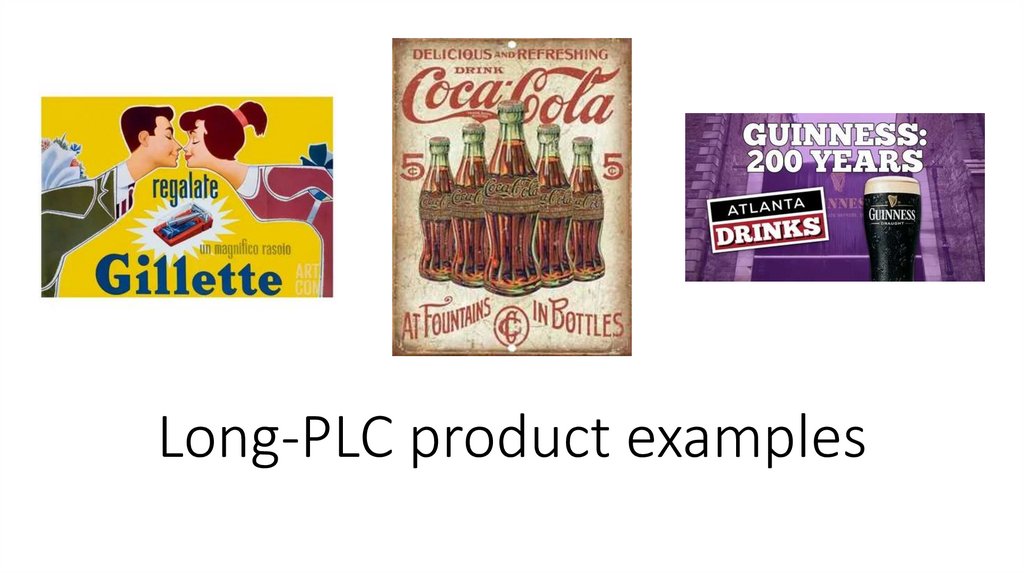
Long-PLC product examples47.
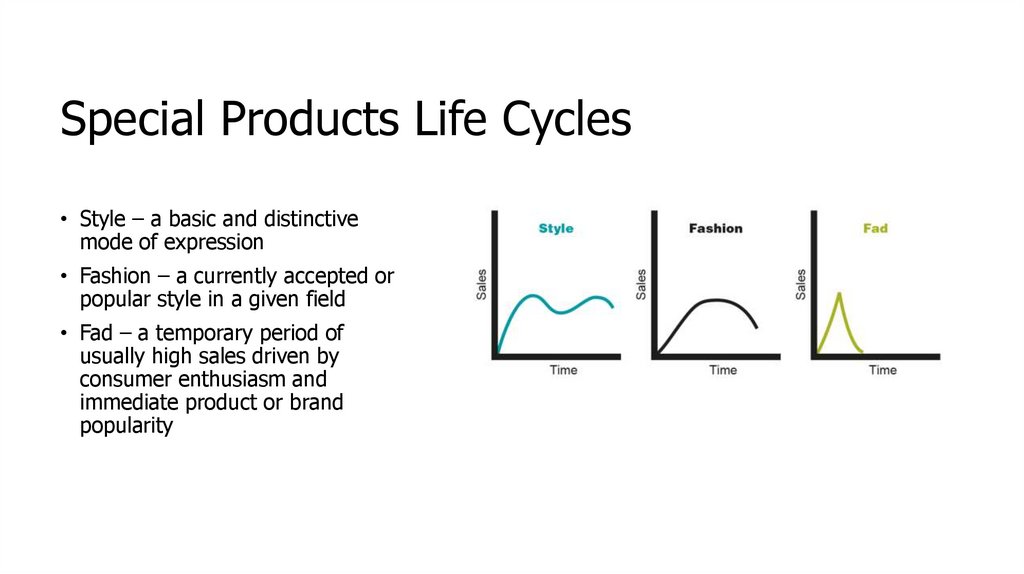
Special Products Life Cycles• Style – a basic and distinctive
mode of expression
• Fashion – a currently accepted or
popular style in a given field
• Fad – a temporary period of
usually high sales driven by
consumer enthusiasm and
immediate product or brand
popularity
48.
Interior Design StylesColonial
Ranch
Transitional
49.
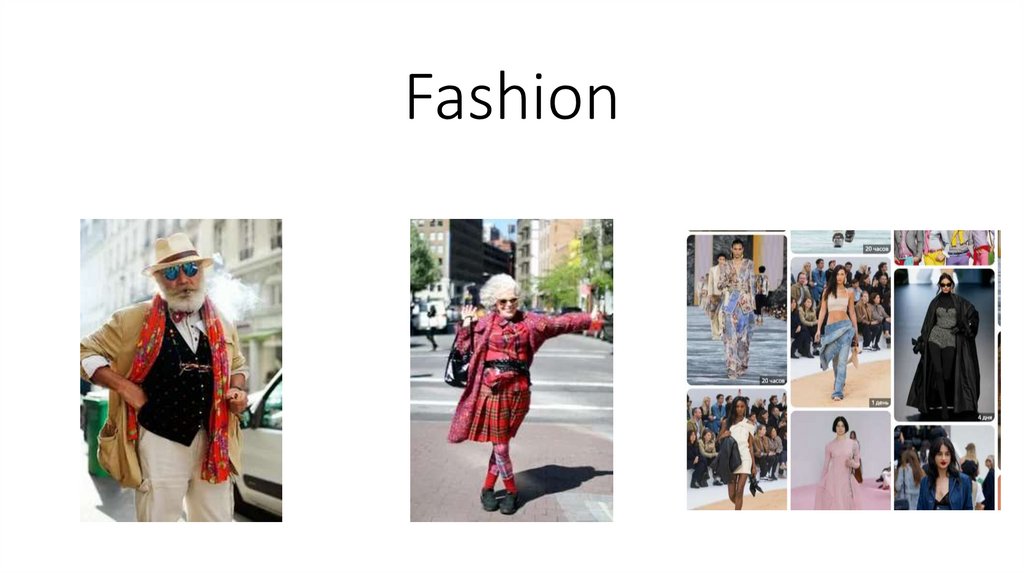
Fashion50.
Fads51.
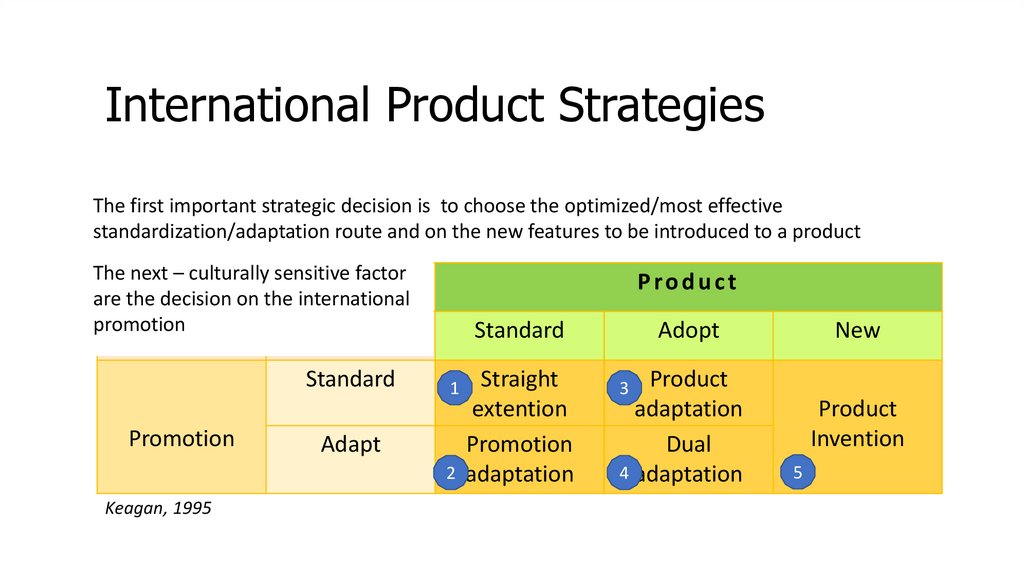
International Product StrategiesThe first important strategic decision is to choose the optimized/most effective
standardization/adaptation route and on the new features to be introduced to a product
The next – culturally sensitive factor
are the decision on the international
promotion
Standard
Promotion
Keagan, 1995
Adapt
Product
Standard
Straight
extention
Promotion
2 adaptation
1
Adopt
New
Product
adaptation
Dual
4 adaptation
Product
Invention
3
5
52.
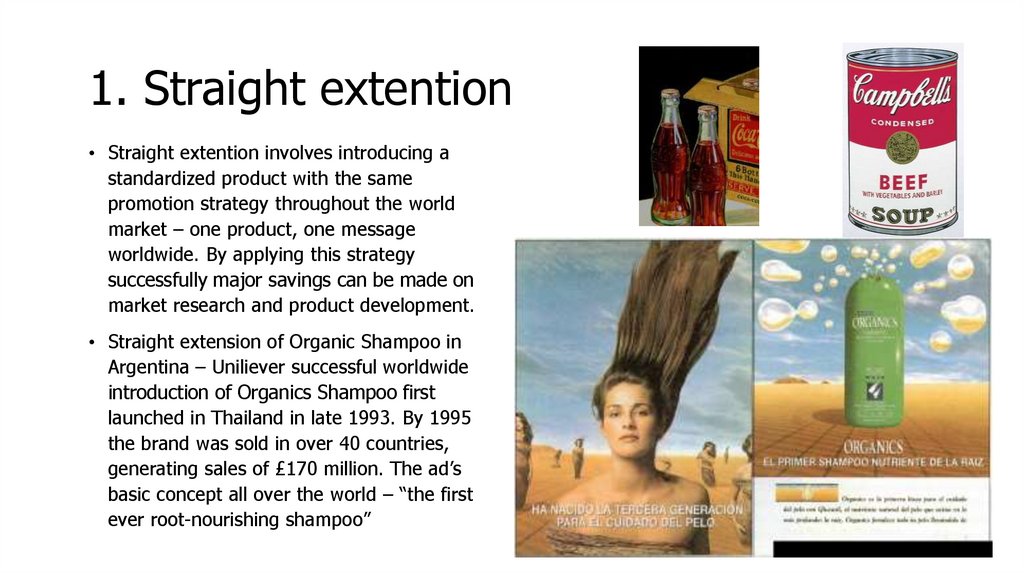
1. Straight extention• Straight extention involves introducing a
standardized product with the same
promotion strategy throughout the world
market – one product, one message
worldwide. By applying this strategy
successfully major savings can be made on
market research and product development.
• Straight extension of Organic Shampoo in
Argentina – Uniliever successful worldwide
introduction of Organics Shampoo first
launched in Thailand in late 1993. By 1995
the brand was sold in over 40 countries,
generating sales of £170 million. The ad’s
basic concept all over the world – “the first
ever root-nourishing shampoo”
53.
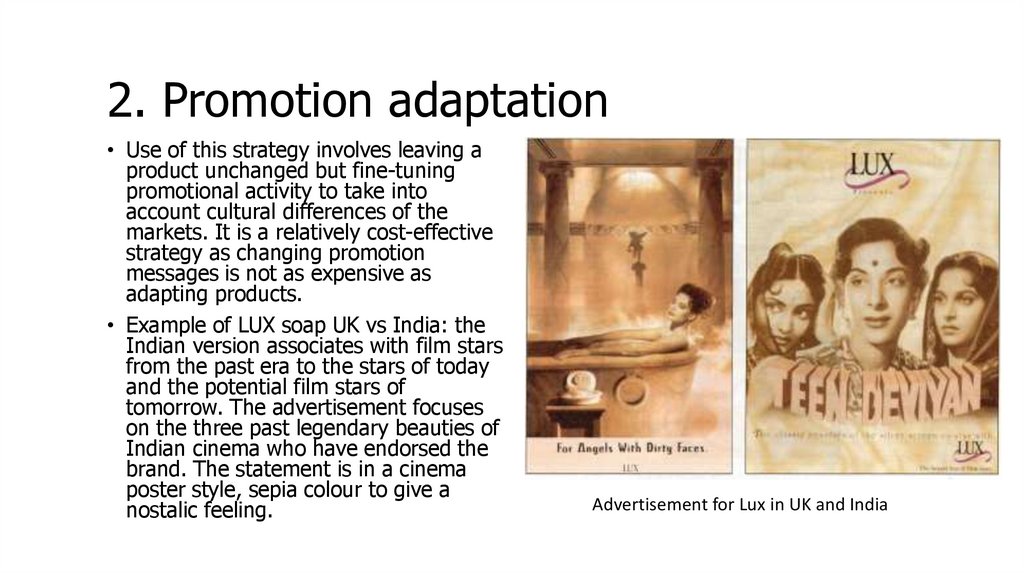
2. Promotion adaptation• Use of this strategy involves leaving a
product unchanged but fine-tuning
promotional activity to take into
account cultural differences of the
markets. It is a relatively cost-effective
strategy as changing promotion
messages is not as expensive as
adapting products.
• Example of LUX soap UK vs India: the
Indian version associates with film stars
from the past era to the stars of today
and the potential film stars of
tomorrow. The advertisement focuses
on the three past legendary beauties of
Indian cinema who have endorsed the
brand. The statement is in a cinema
poster style, sepia colour to give a
nostalic feeling.
Advertisement for Lux in UK and India
54.
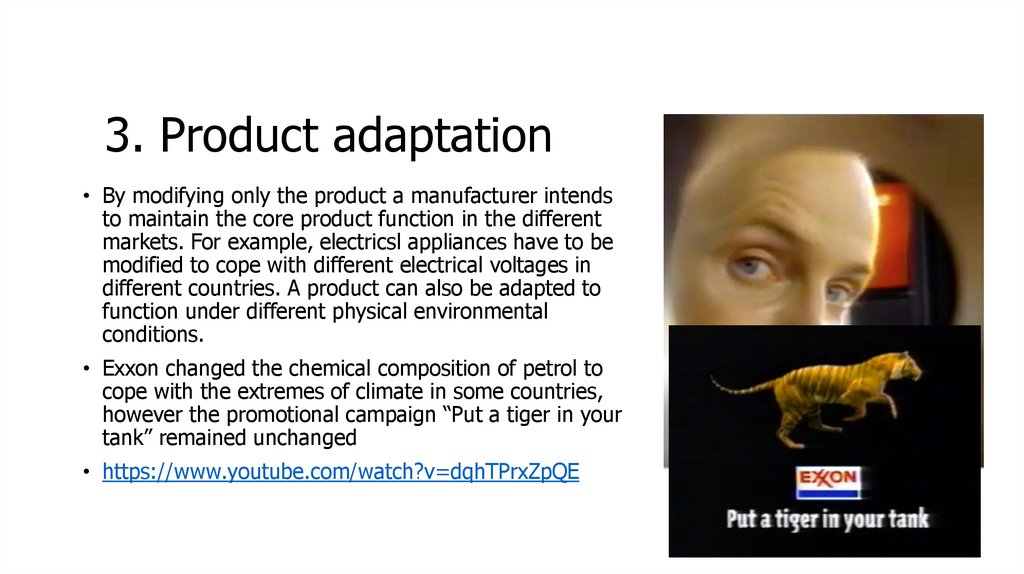
3. Product adaptation• By modifying only the product a manufacturer intends
to maintain the core product function in the different
markets. For example, electricsl appliances have to be
modified to cope with different electrical voltages in
different countries. A product can also be adapted to
function under different physical environmental
conditions.
• Exxon changed the chemical composition of petrol to
cope with the extremes of climate in some countries,
however the promotional campaign “Put a tiger in your
tank” remained unchanged
• https://www.youtube.com/watch?v=dqhTPrxZpQE
55.
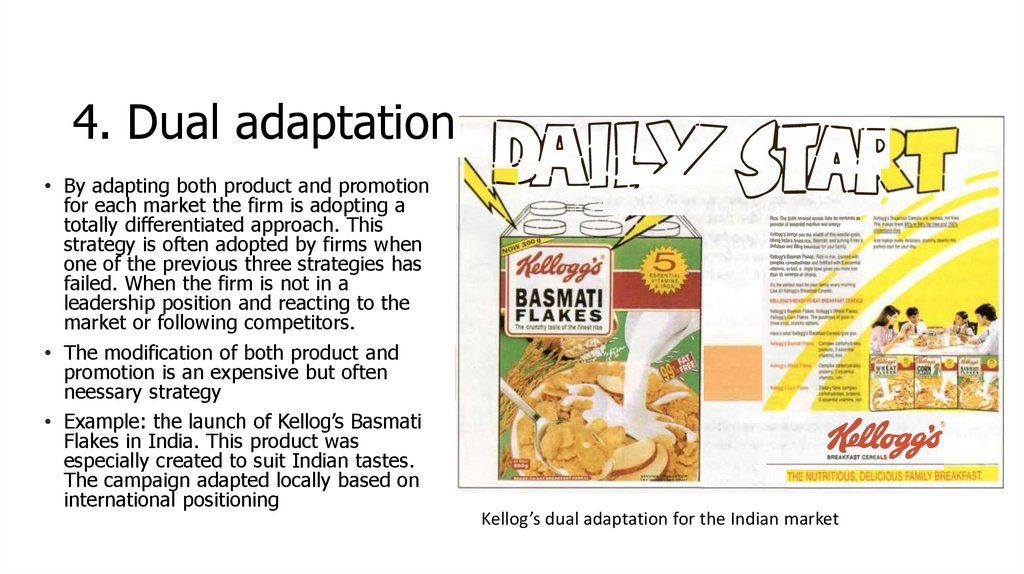
4. Dual adaptation• By adapting both product and promotion
for each market the firm is adopting a
totally differentiated approach. This
strategy is often adopted by firms when
one of the previous three strategies has
failed. When the firm is not in a
leadership position and reacting to the
market or following competitors.
• The modification of both product and
promotion is an expensive but often
neessary strategy
• Example: the launch of Kellog’s Basmati
Flakes in India. This product was
especially created to suit Indian tastes.
The campaign adapted locally based on
international positioning
Kellog’s dual adaptation for the Indian market
56.
5. Product Invention• Product invention is adopted by firms usually from advanced nations that are supplying
products to less developed countries. Products are specially developed to meet the
needs of the individual markets. Existing products may be too technologically
sophisticated to operate in less developed countries, where power supplies may be
intermitten and local skills limited. Alternatively, products may require additional
features for operating in particular countries
• Examples:
• Smart phones with dual SIM cards
• Hand-powered washing machines
• Machines operating on diesel fuel
• Clothing for countries with adverse weather conditions:
https://www.vodkatrain.com/inspiration/articles/how-to-dress-for-winter-in-russia
57.
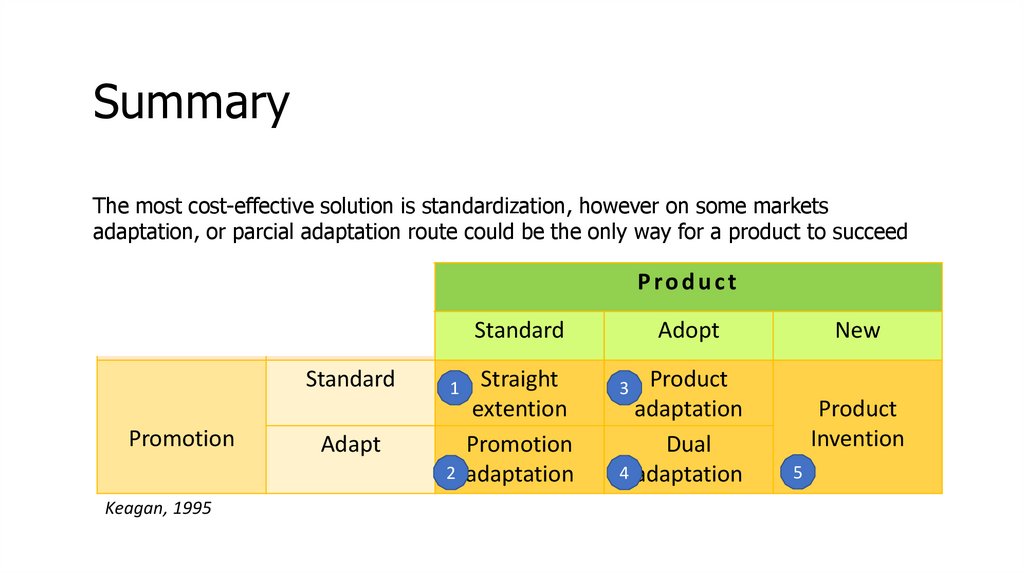
SummaryThe most cost-effective solution is standardization, however on some markets
adaptation, or parcial adaptation route could be the only way for a product to succeed
Product
Standard
Standard
Promotion
Keagan, 1995
Adapt
Straight
extention
Promotion
2 adaptation
1
Adopt
New
Product
adaptation
Dual
4 adaptation
Product
Invention
3
5
58.
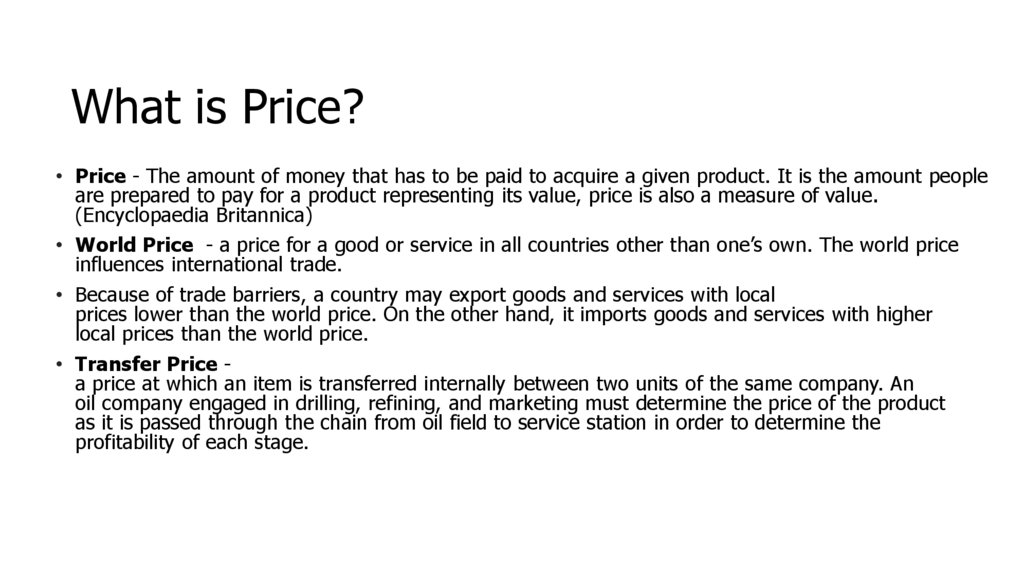
What is Price?• Price - The amount of money that has to be paid to acquire a given product. It is the amount people
are prepared to pay for a product representing its value, price is also a measure of value.
(Encyclopaedia Britannica)
• World Price - a price for a good or service in all countries other than one’s own. The world price
influences international trade.
• Because of trade barriers, a country may export goods and services with local
prices lower than the world price. On the other hand, it imports goods and services with higher
local prices than the world price.
• Transfer Price a price at which an item is transferred internally between two units of the same company. An
oil company engaged in drilling, refining, and marketing must determine the price of the product
as it is passed through the chain from oil field to service station in order to determine the
profitability of each stage.
59.
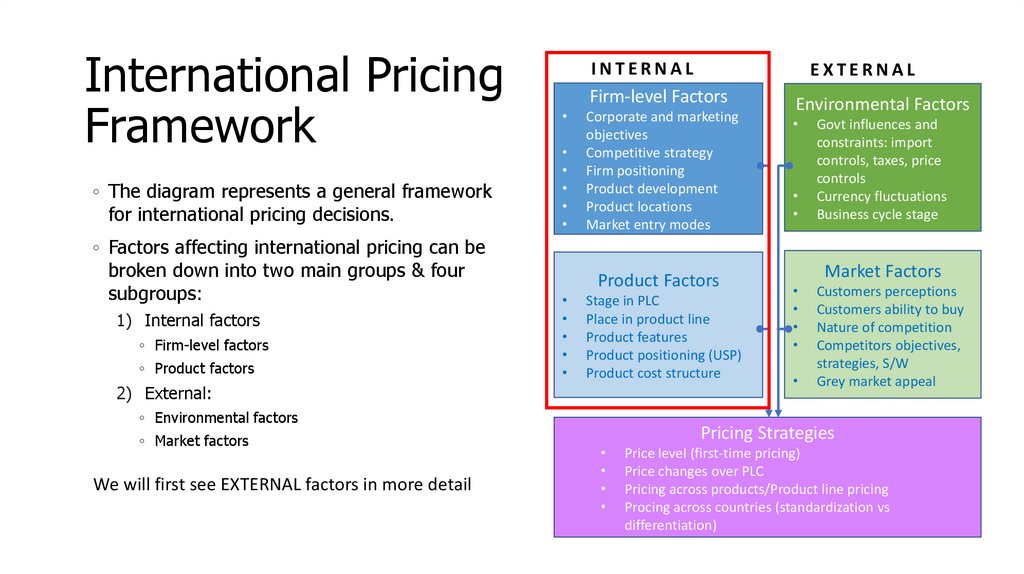
International PricingFramework
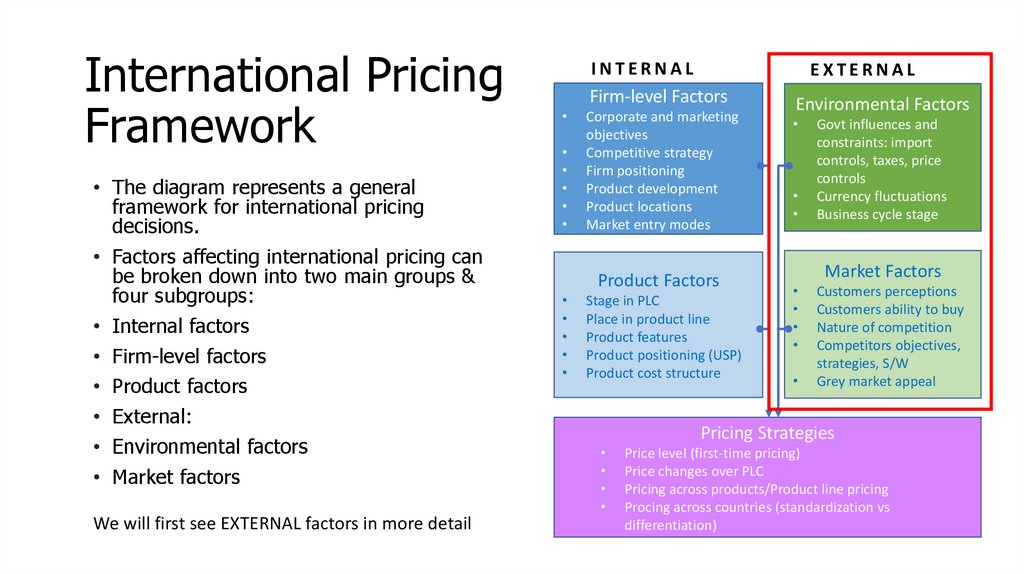
• The diagram represents a general
framework for international pricing
decisions.
• Factors affecting international pricing can
be broken down into two main groups &
four subgroups:
• Internal factors
• Firm-level factors
• Product factors
• External:
• Environmental factors
• Market factors
We will first see EXTERNAL factors in more detail
INTERNAL
Firm-level Factors
Corporate and marketing
objectives
Competitive strategy
Firm positioning
Product development
Product locations
Market entry modes
Product Factors
Stage in PLC
Place in product line
Product features
Product positioning (USP)
Product cost structure
EXTERNAL
Environmental Factors
Govt influences and
constraints: import
controls, taxes, price
controls
Currency fluctuations
Business cycle stage
Market Factors
Customers perceptions
Customers ability to buy
Nature of competition
Competitors objectives,
strategies, S/W
Grey market appeal
Pricing Strategies
Price level (first-time pricing)
Price changes over PLC
Pricing across products/Product line pricing
Procing across countries (standardization vs
differentiation)
60.
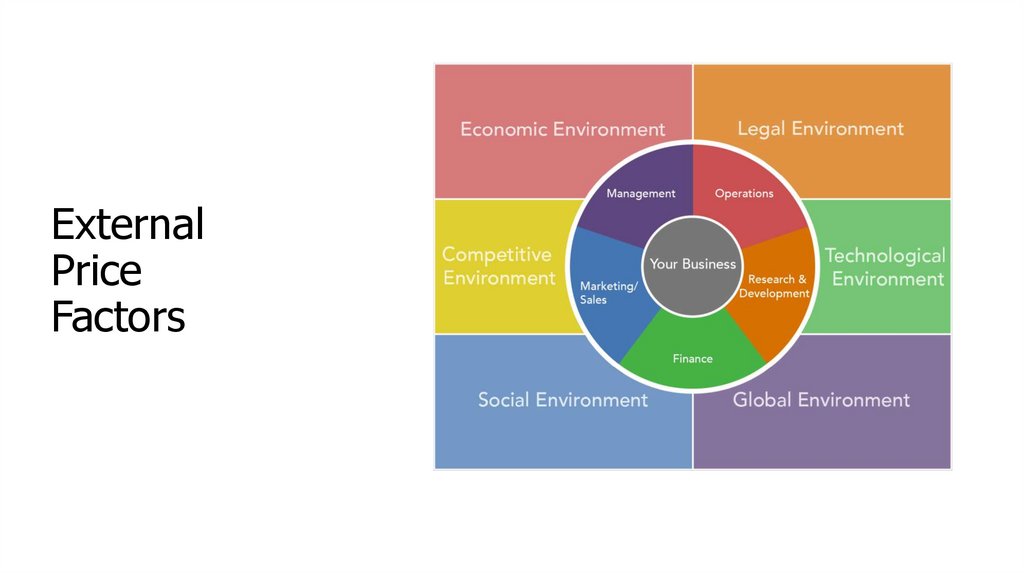
ExternalPrice
Factors
61.
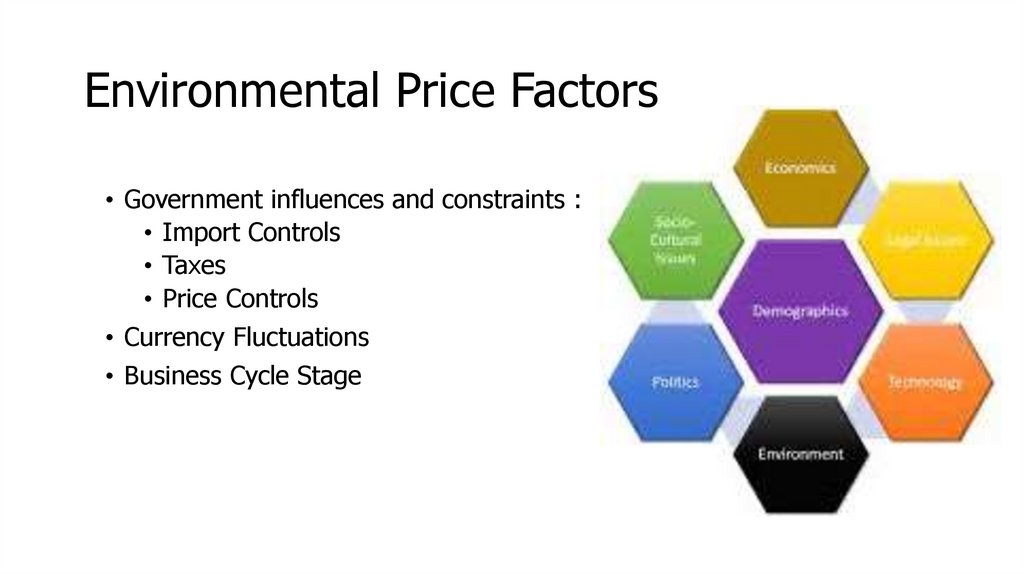
Environmental Price Factors• Government influences and constraints :
• Import Controls
• Taxes
• Price Controls
• Currency Fluctuations
• Business Cycle Stage
62.
Market Price Factors• Customers’ Perceptions (needs,
tastes)
• Customers’ Ability to Pay
• Nature of Competition
• Competitors’ Objectives, Strategies
and Relative Strengths/Weaknesses
• Grey Market Appeal
63.
International PricingFramework
◦ The diagram represents a general framework
for international pricing decisions.
◦ Factors affecting international pricing can be
broken down into two main groups & four
subgroups:
1) Internal factors
◦ Firm-level factors
◦ Product factors
INTERNAL
Firm-level Factors
Corporate and marketing
objectives
Competitive strategy
Firm positioning
Product development
Product locations
Market entry modes
Product Factors
Stage in PLC
Place in product line
Product features
Product positioning (USP)
Product cost structure
2) External:
◦ Environmental factors
◦ Market factors
We will first see EXTERNAL factors in more detail
EXTERNAL
Environmental Factors
Govt influences and
constraints: import
controls, taxes, price
controls
Currency fluctuations
Business cycle stage
Market Factors
Customers perceptions
Customers ability to buy
Nature of competition
Competitors objectives,
strategies, S/W
Grey market appeal
Pricing Strategies
Price level (first-time pricing)
Price changes over PLC
Pricing across products/Product line pricing
Procing across countries (standardization vs
differentiation)
64.
Firm-level factors• Corporate philosophy & managerial policies
• Marketign objectives
• Competitive strategy
• Company & product positioning
• Product development
• Production locations / cost of production inputs
• Market entry model (strategies)
65.
InternationalPricing Strategies
• Skimming – high price to ‘skim the cream’
• Market pricing, or demand/customer-based
pricing
• Market penetration (low) pricing
• Price changes in line with market
conditions
• Experience curve pricing (linked to costs &
Product Life-cycle (PLC)
• Pricing across products (product line
pricing)
• Product-service bundle pricing
• Pricing across countries/geographic
(standardization versus differentiation)
66.
Price skimming• In this strategy a high price is charged to ‘skim the cream’ from the top end of the
market
• The product has to be unique, and some segments of the market must be willing
to pay the high price
• Should appeal to affluent and demanding customers
• Should offer extra features, greater comfort
• Should have variability & ease of operation
• Success depends on the ability and speed of competitive reaction
• Disadvantages:
• Small market share makes the firm vulnerable to competition
• Requires a lot of resources: promotion, aftersales service, visible local presence (show room)
• If sold on other markets there is a possibility of grey market (parallel importing)
67.
Market (demand or customer-based)pricing
• This strategy is applied when similar products exist on
the market
• The price is based on competitive prices
Skimming
High price
• The product should have long life cycle to warrant entry
on the market
• Retrograde price calculation is applied to calculate
backwards (from the market price) the necessary (exfactory) net price. If this net price can create a
satisfactory contribution margin, then the firm can go
ahead.
• Disadvantages:
• Reactive approach; no other choice than to accept
the prevailing world market price
• May lead to problems if sales volumes never rise to
the sufficient level to produce a satisfactory return
Market pricing
Penetration pricing
Low price
68.
Penetration pricing• This procing policy is used to stimulate market growth and capture market shares by
deliverately offering products at low prices
• The approach requires mass markets, price-sensitive customers and reduction in unit
costs through economies of scale and experience curve effects
• Motives for pricing at low levels:
• Intensive local competition from rival companies
• Lower income levels of local consumers
• R&D and other overhead costs covered by home sales & export to other markets, i.e. company
can afford low pricing level – example, Japanese producers of cars & electronics
• Dangers:
• Lowing prices increases competition that start offering their products at low prices as well
• Prices set to low make raise impression among consumers that the products are not credible (low
quality). Consumers may lose faith in the product quality
69.
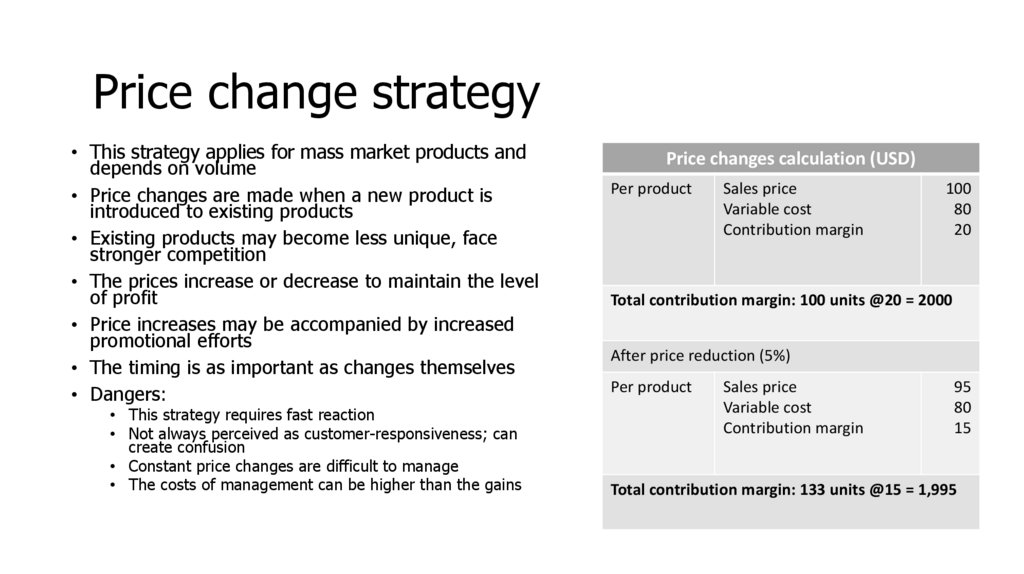
Price change strategy• This strategy applies for mass market products and
depends on volume
• Price changes are made when a new product is
introduced to existing products
• Existing products may become less unique, face
stronger competition
• The prices increase or decrease to maintain the level
of profit
• Price increases may be accompanied by increased
promotional efforts
• The timing is as important as changes themselves
• Dangers:
• This strategy requires fast reaction
• Not always perceived as customer-responsiveness; can
create confusion
• Constant price changes are difficult to manage
• The costs of management can be higher than the gains
Price changes calculation (USD)
Per product
Sales price
Variable cost
Contribution margin
100
80
20
Total contribution margin: 100 units @20 = 2000
After price reduction (5%)
Per product
Sales price
Variable cost
Contribution margin
95
80
15
Total contribution margin: 133 units @15 = 1,995
70.
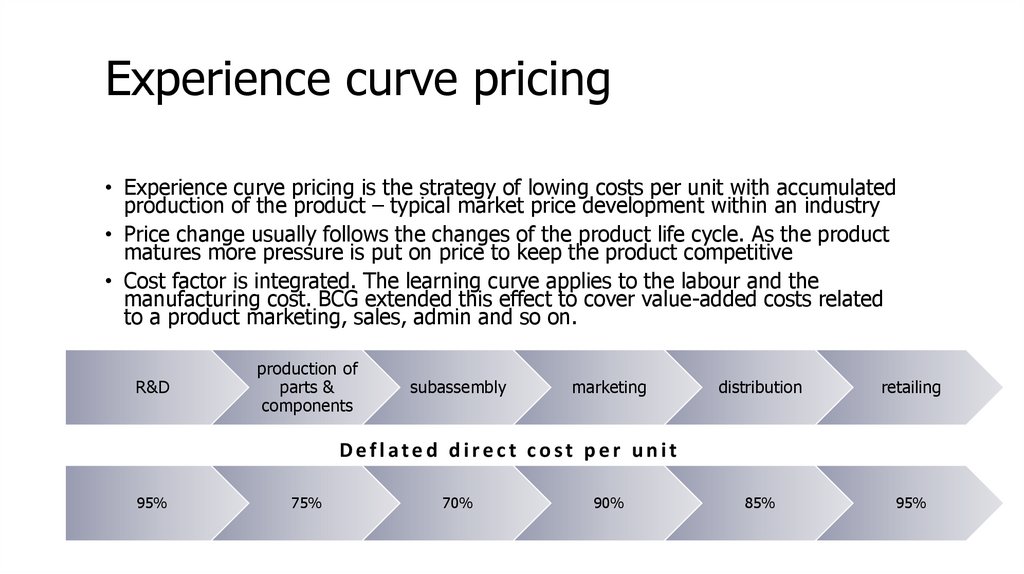
Experience curve pricing• Experience curve pricing is the strategy of lowing costs per unit with accumulated
production of the product – typical market price development within an industry
• Price change usually follows the changes of the product life cycle. As the product
matures more pressure is put on price to keep the product competitive
• Cost factor is integrated. The learning curve applies to the labour and the
manufacturing cost. BCG extended this effect to cover value-added costs related
to a product marketing, sales, admin and so on.
R&D
production of
parts &
components
subassembly
marketing
distribution
retailing
85%
95%
Deflated direct cost per unit
95%
75%
70%
90%
71.
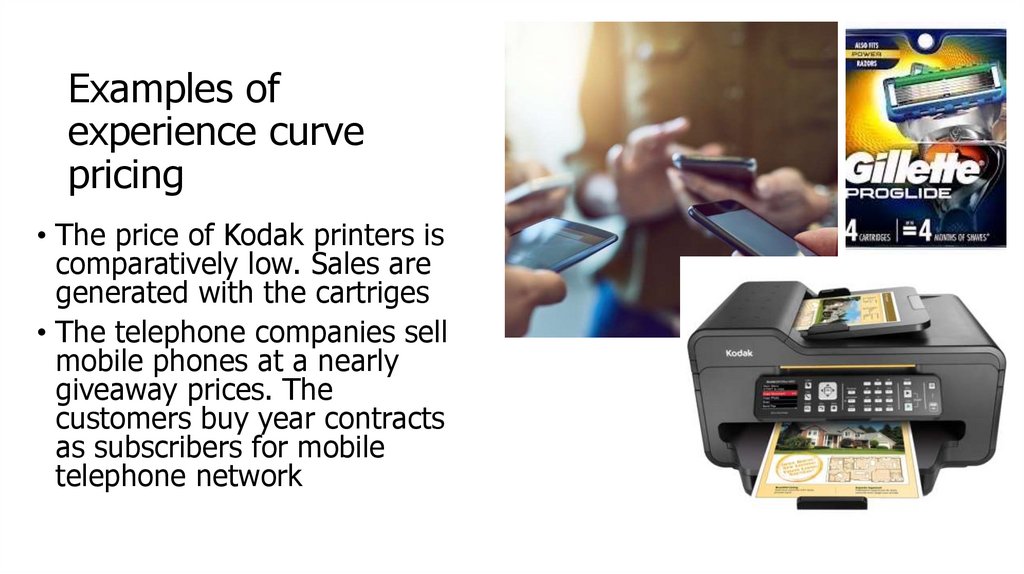
Examples ofexperience curve
pricing
• The price of Kodak printers is
comparatively low. Sales are
generated with the cartriges
• The telephone companies sell
mobile phones at a nearly
giveaway prices. The
customers buy year contracts
as subscribers for mobile
telephone network
72.
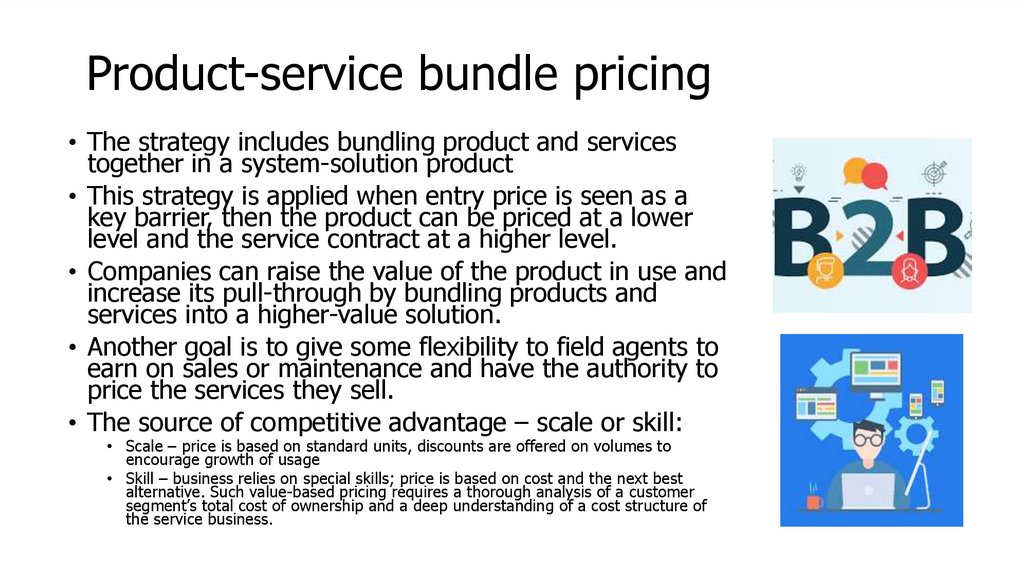
Product-service bundle pricing• The strategy includes bundling product and services
together in a system-solution product
• This strategy is applied when entry price is seen as a
key barrier, then the product can be priced at a lower
level and the service contract at a higher level.
• Companies can raise the value of the product in use and
increase its pull-through by bundling products and
services into a higher-value solution.
• Another goal is to give some flexibility to field agents to
earn on sales or maintenance and have the authority to
price the services they sell.
• The source of competitive advantage – scale or skill:
• Scale – price is based on standard units, discounts are offered on volumes to
encourage growth of usage
• Skill – business relies on special skills; price is based on cost and the next best
alternative. Such value-based pricing requires a thorough analysis of a customer
segment’s total cost of ownership and a deep understanding of a cost structure of
the service business.
73.
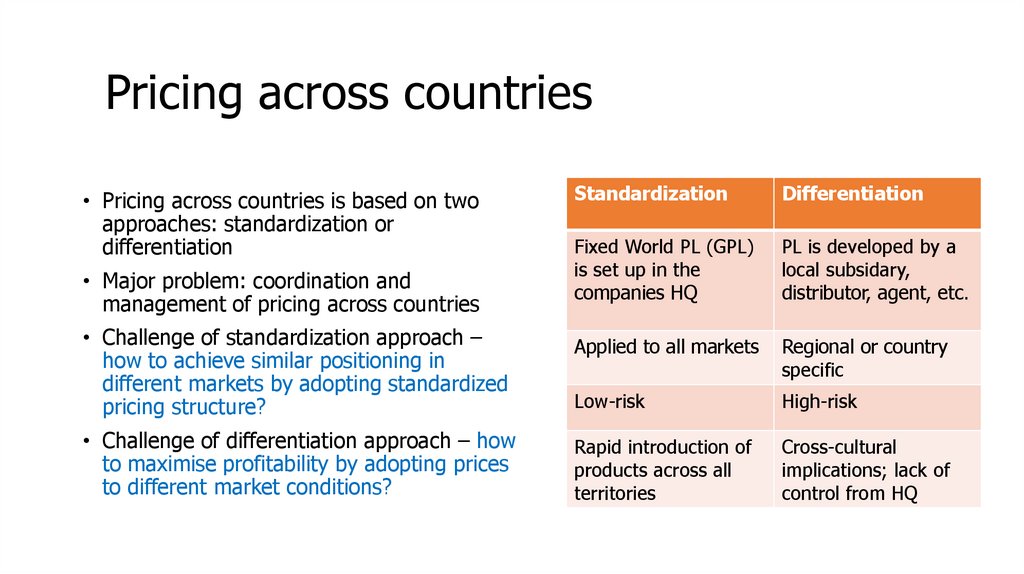
Pricing across countries• Pricing across countries is based on two
approaches: standardization or
differentiation
• Major problem: coordination and
management of pricing across countries
• Challenge of standardization approach –
how to achieve similar positioning in
different markets by adopting standardized
pricing structure?
• Challenge of differentiation approach – how
to maximise profitability by adopting prices
to different market conditions?
Standardization
Differentiation
Fixed World PL (GPL)
is set up in the
companies HQ
PL is developed by a
local subsidary,
distributor, agent, etc.
Applied to all markets
Regional or country
specific
Low-risk
High-risk
Rapid introduction of
products across all
territories
Cross-cultural
implications; lack of
control from HQ
74.
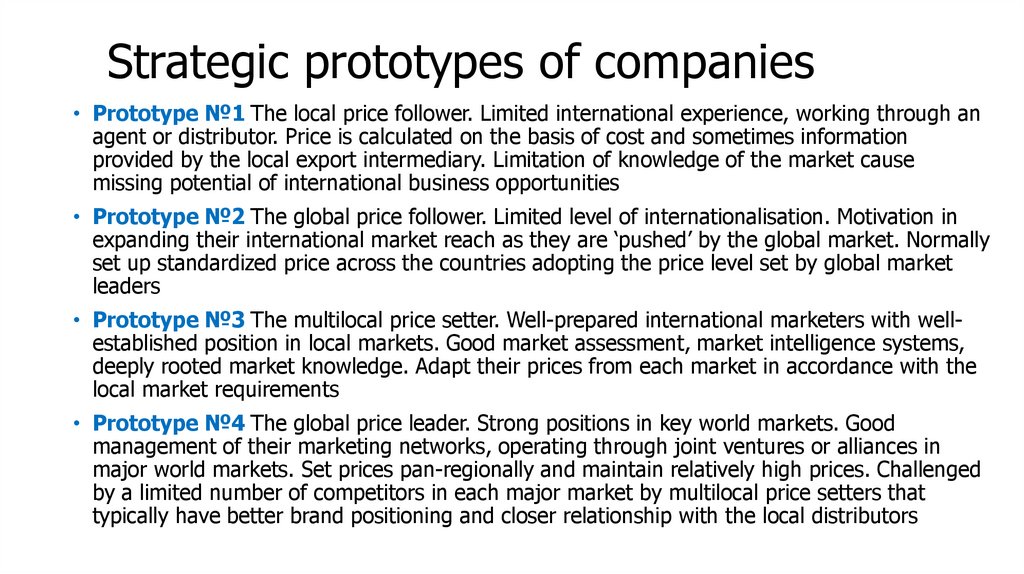
Strategic prototypes of companies• Prototype №1 The local price follower. Limited international experience, working through an
agent or distributor. Price is calculated on the basis of cost and sometimes information
provided by the local export intermediary. Limitation of knowledge of the market cause
missing potential of international business opportunities
• Prototype №2 The global price follower. Limited level of internationalisation. Motivation in
expanding their international market reach as they are ‘pushed’ by the global market. Normally
set up standardized price across the countries adopting the price level set by global market
leaders
• Prototype №3 The multilocal price setter. Well-prepared international marketers with wellestablished position in local markets. Good market assessment, market intelligence systems,
deeply rooted market knowledge. Adapt their prices from each market in accordance with the
local market requirements
• Prototype №4 The global price leader. Strong positions in key world markets. Good
management of their marketing networks, operating through joint ventures or alliances in
major world markets. Set prices pan-regionally and maintain relatively high prices. Challenged
by a limited number of competitors in each major market by multilocal price setters that
typically have better brand positioning and closer relationship with the local distributors
75.
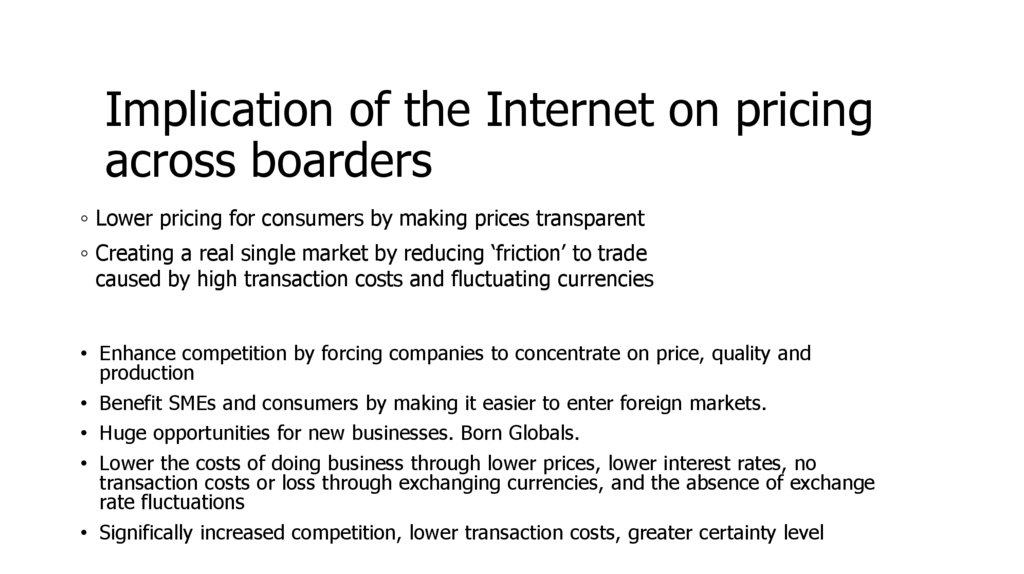
Implication of the Internet on pricingacross boarders
◦ Lower pricing for consumers by making prices transparent
◦ Creating a real single market by reducing ‘friction’ to trade
caused by high transaction costs and fluctuating currencies
• Enhance competition by forcing companies to concentrate on price, quality and
production
• Benefit SMEs and consumers by making it easier to enter foreign markets.
• Huge opportunities for new businesses. Born Globals.
• Lower the costs of doing business through lower prices, lower interest rates, no
transaction costs or loss through exchanging currencies, and the absence of exchange
rate fluctuations
• Significally increased competition, lower transaction costs, greater certainty level