



 Английский язык
Похожие презентации:










Reported Speech
1. The 13th of May Class work Reported Speech Косвенная речь
2. Reported Speech
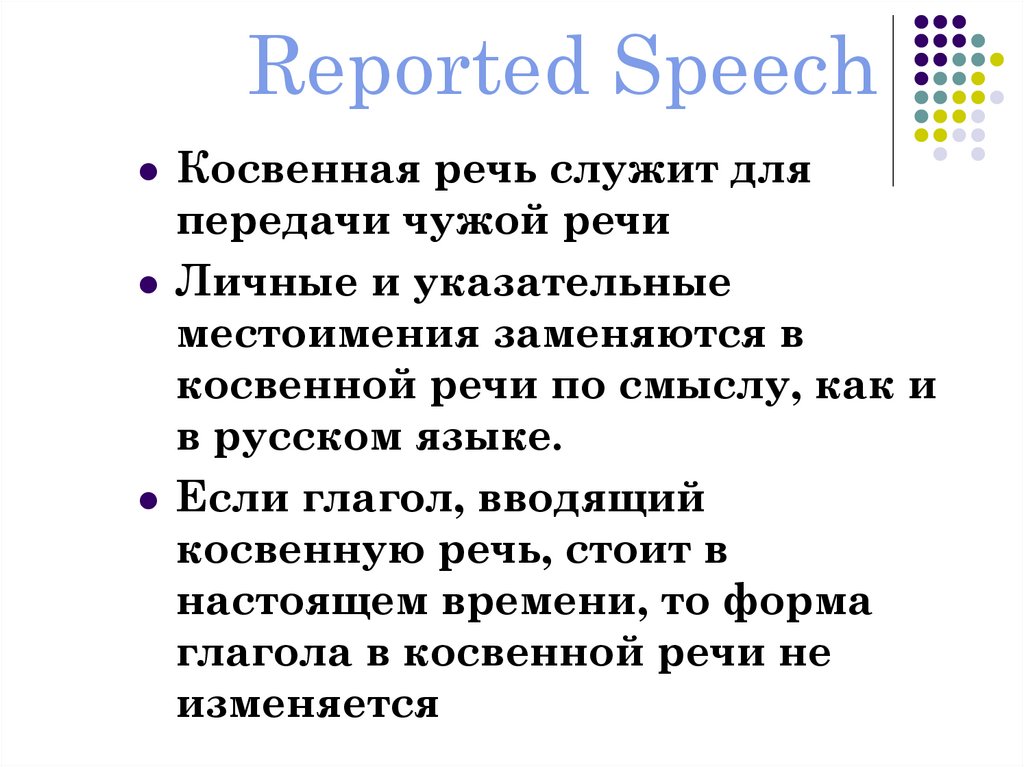
Косвенная речь служит дляпередачи чужой речи
Личные и указательные
местоимения заменяются в
косвенной речи по смыслу, как и
в русском языке.
Если глагол, вводящий
косвенную речь, стоит в
настоящем времени, то форма
глагола в косвенной речи не
изменяется
3. Examples
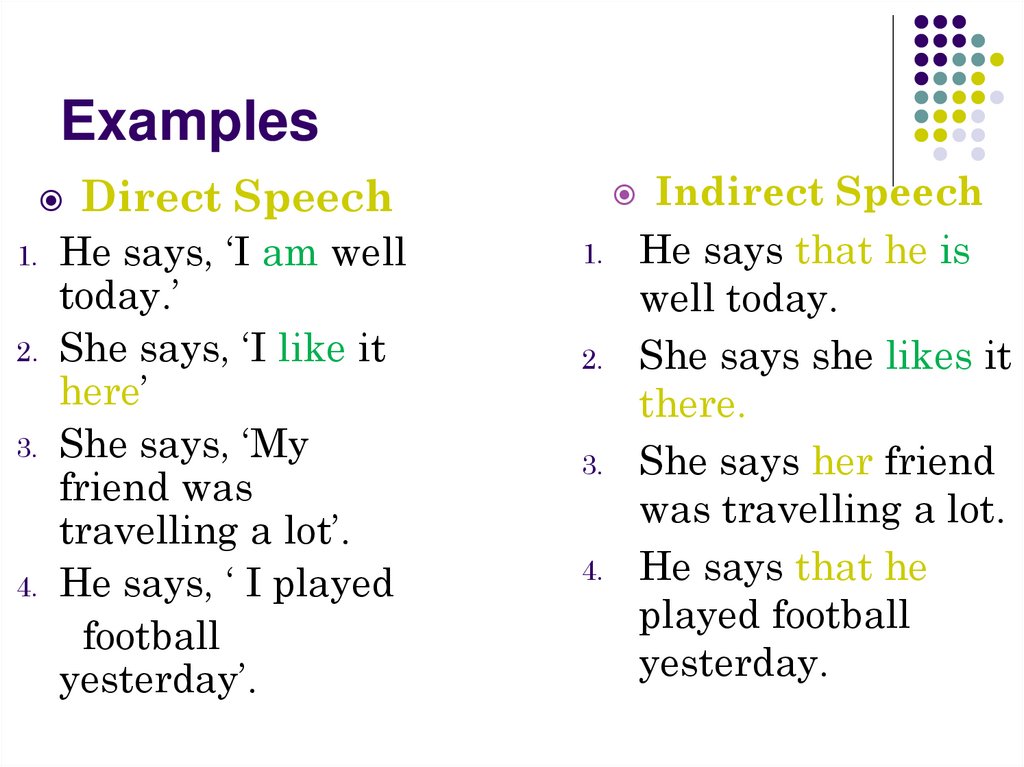
Indirect SpeechDirect Speech
He says, ‘I am well
today.’
2. She says, ‘I like it
here’
3. She says, ‘My
friend was
travelling a lot’.
4. He says, ‘ I played
football
yesterday’.
1.
1.
2.
3.
4.
He says that he is
well today.
She says she likes it
there.
She says her friend
was travelling a lot.
He says that he
played football
yesterday.
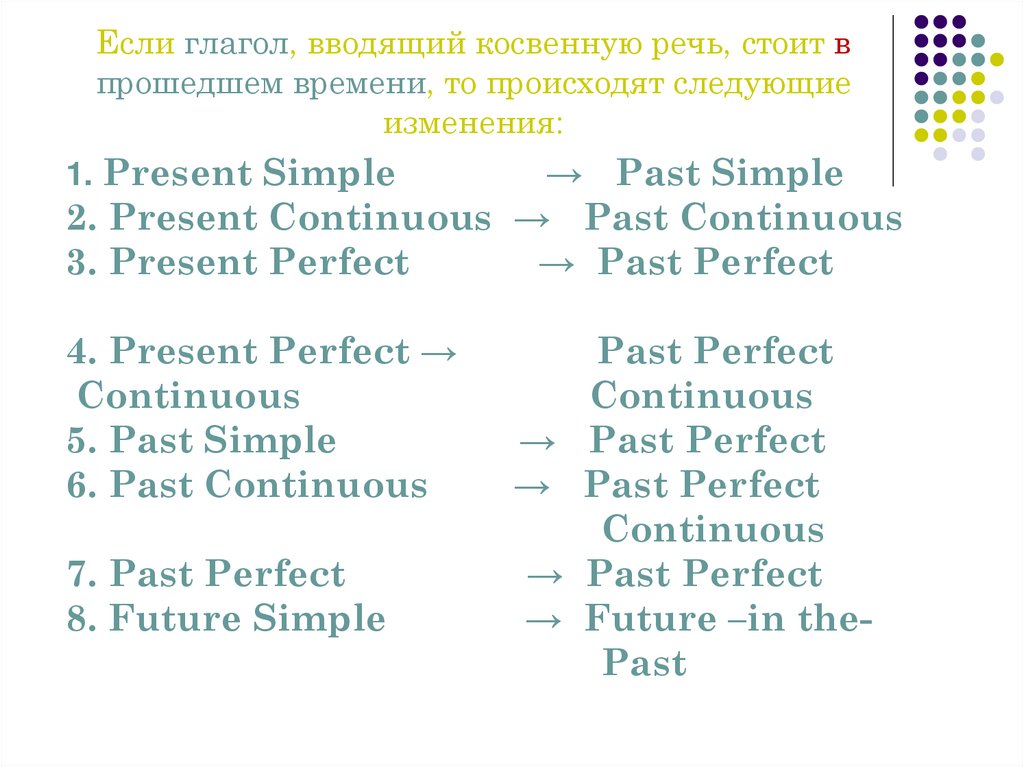
4. Если глагол, вводящий косвенную речь, стоит в прошедшем времени, то происходят следующие изменения:
1. Present Simple→ Past Simple
2. Present Continuous → Past Continuous
3. Present Perfect
→ Past Perfect
4. Present Perfect →
Continuous
5. Past Simple
6. Past Continuous
7. Past Perfect
8. Future Simple
Past Perfect
Continuous
→ Past Perfect
→ Past Perfect
Continuous
→ Past Perfect
→ Future –in thePast
5.
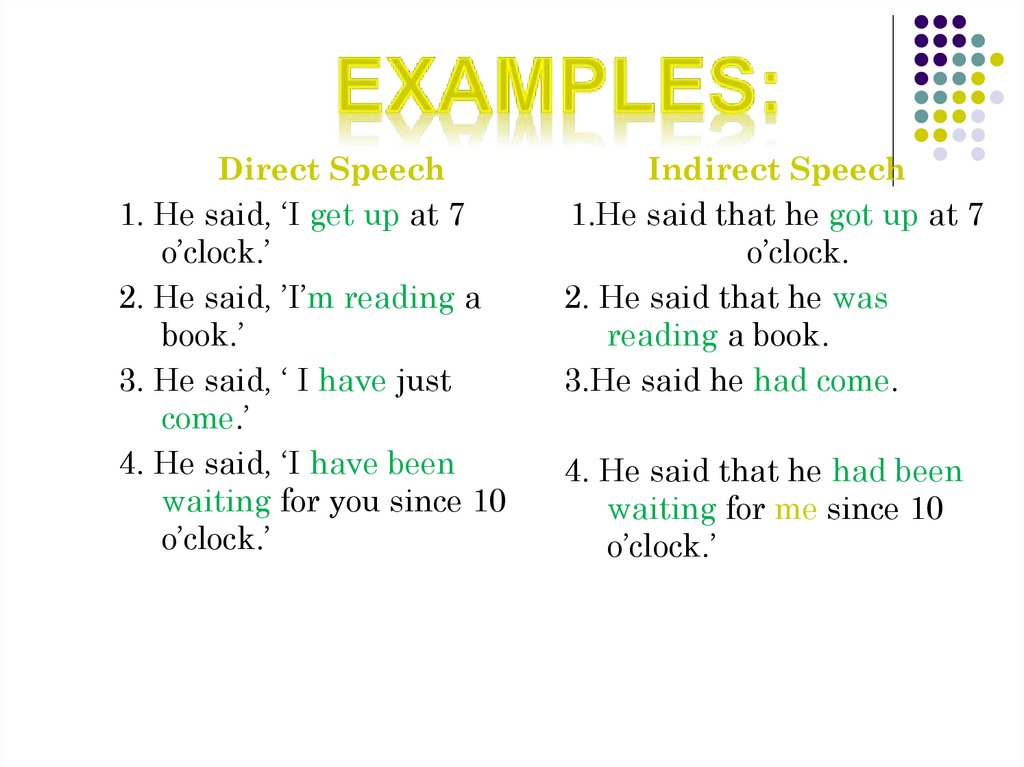
Direct Speech1. He said, ‘I get up at 7
o’clock.’
2. He said, ’I’m reading a
book.’
3. He said, ‘ I have just
come.’
4. He said, ‘I have been
waiting for you since 10
o’clock.’
Indirect Speech
1.He said that he got up at 7
o’clock.
2. He said that he was
reading a book.
3.He said he had come.
4. He said that he had been
waiting for me since 10
o’clock.’
6. Наречия времени и места изменяются следующим образом
Direct Speech1. today
2. yesterday
3. tomorrow
4. two days ago
5. last week
6. next month
Indirect speech
1. that day
2. the day before
3. the following day
4. two days before
5. the week before
6. the following month
7.
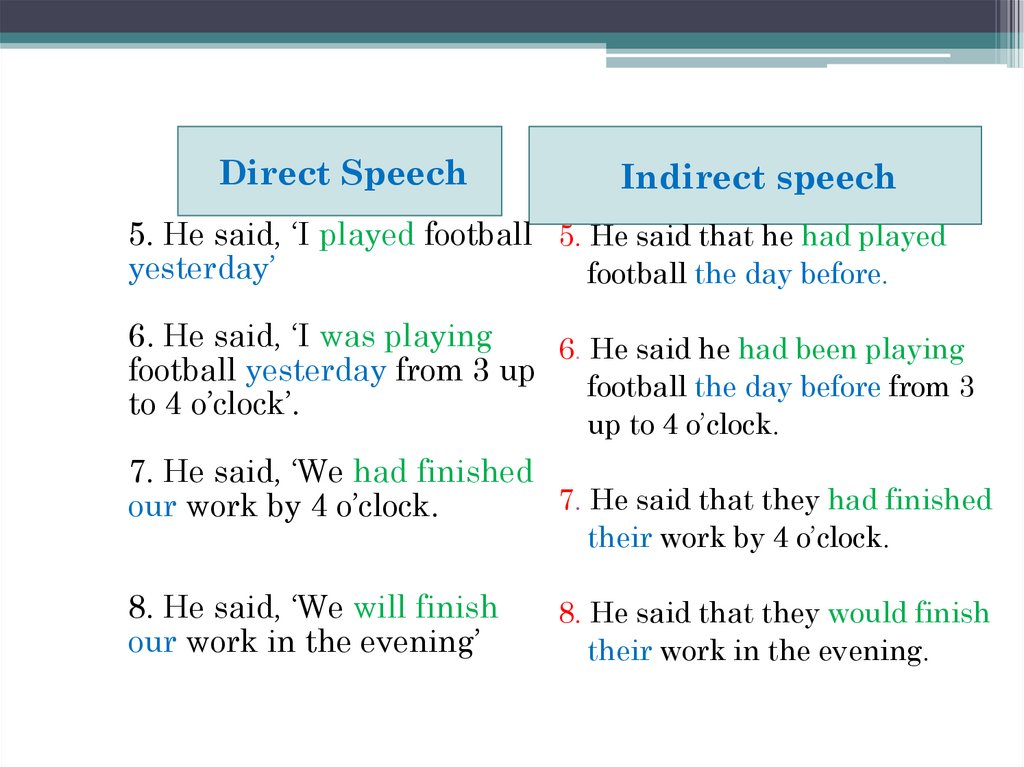
Direct SpeechIndirect speech
5. He said, ‘I played football 5. He said that he had played
yesterday’
football the day before.
6. He said, ‘I was playing
6. He said he had been playing
football yesterday from 3 up
football the day before from 3
to 4 o’clock’.
up to 4 o’clock.
7. He said, ‘We had finished
7. He said that they had finished
our work by 4 o’clock.
their work by 4 o’clock.
8. He said, ‘We will finish
our work in the evening’
8. He said that they would finish
their work in the evening.
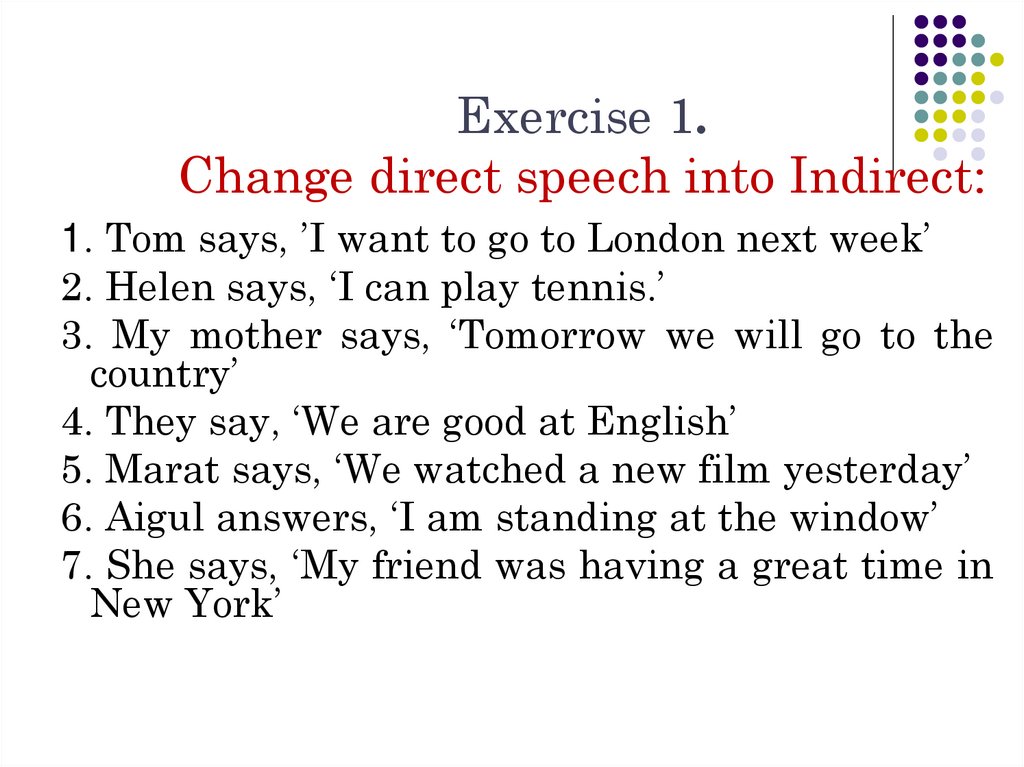
8. Exercise 1. Change direct speech into Indirect:
1. Tom says, ’I want to go to London next week’2. Helen says, ‘I can play tennis.’
3. My mother says, ‘Tomorrow we will go to the
country’
4. They say, ‘We are good at English’
5. Marat says, ‘We watched a new film yesterday’
6. Aigul answers, ‘I am standing at the window’
7. She says, ‘My friend was having a great time in
New York’
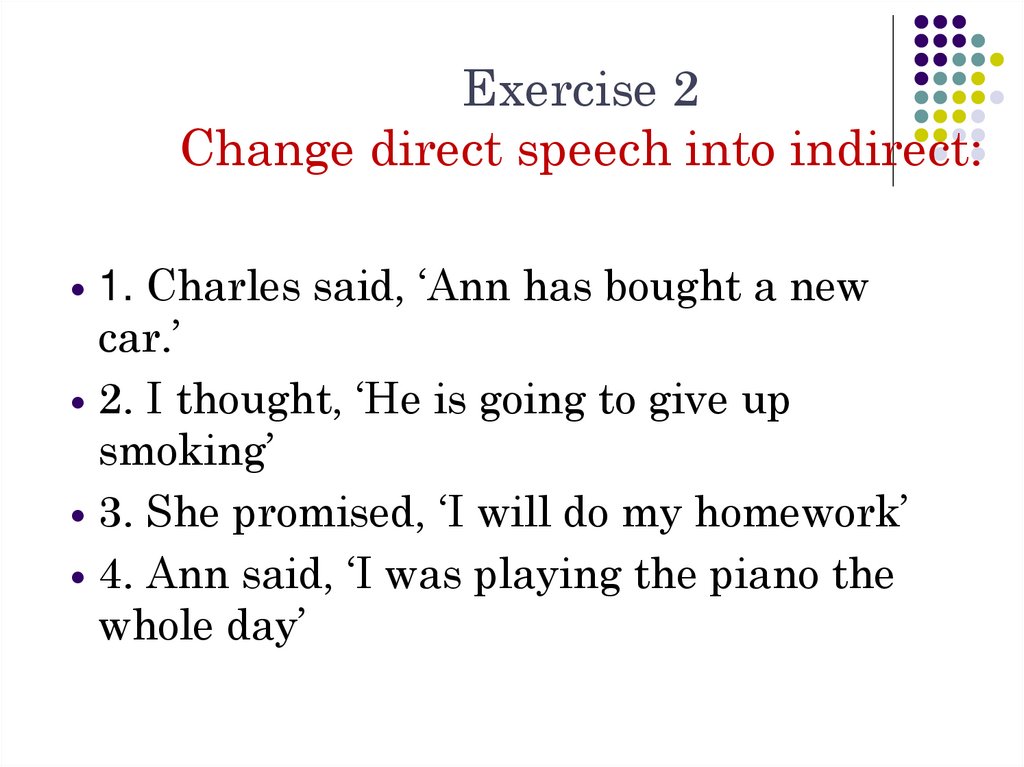
9. Exercise 2 Change direct speech into indirect:
1. Charles said, ‘Ann has bought a newcar.’
2. I thought, ‘He is going to give up
smoking’
3. She promised, ‘I will do my homework’
4. Ann said, ‘I was playing the piano the
whole day’
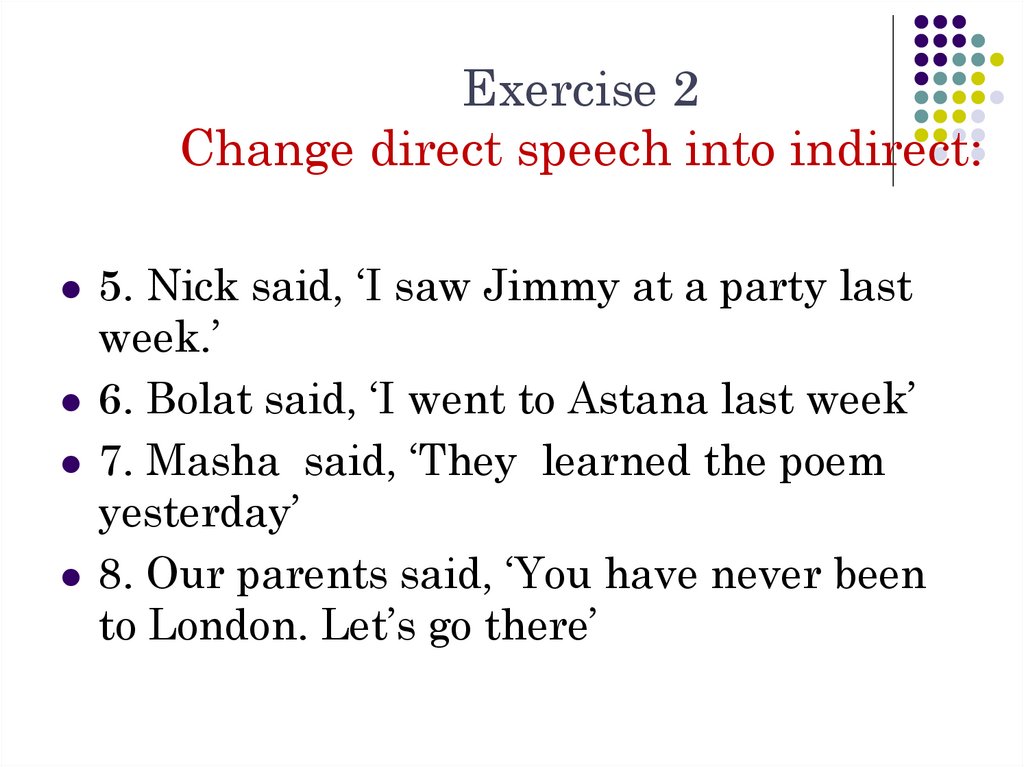
10. Exercise 2 Change direct speech into indirect:
5. Nick said, ‘I saw Jimmy at a party lastweek.’
6. Bolat said, ‘I went to Astana last week’
7. Masha said, ‘They learned the poem
yesterday’
8. Our parents said, ‘You have never been
to London. Let’s go there’
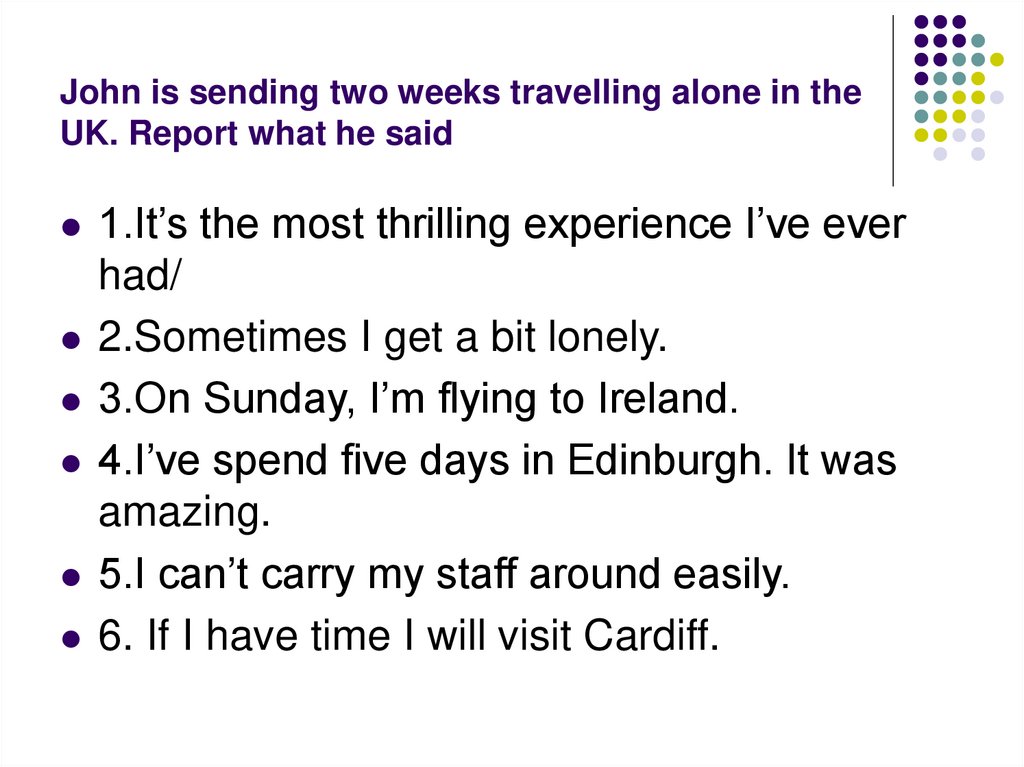
11. John is sending two weeks travelling alone in the UK. Report what he said
1.It’s the most thrilling experience I’ve everhad/
2.Sometimes I get a bit lonely.
3.On Sunday, I’m flying to Ireland.
4.I’ve spend five days in Edinburgh. It was
amazing.
5.I can’t carry my staff around easily.
6. If I have time I will visit Cardiff.
12. Say or tell? (Said or told?)
Глаголы say и tell переводятся "говорить", тем не менеемежду ними есть вполне ощутимое различие.
Разница употребления say и tell заключается в следующем:
после tell будет стоять "лицо" (smb), которое чаще всего
выражено местоимением в объектном падеже (me, her, him,
us, them, you), а после say наоборот, "лицо" употреблять
нельзя: tell smb - сказать кому-то, say smth - сказать что-то.
Например: I often tell them how to practice English.
I often say the wrong thing.
"Сказать кому-то" при помощи say все же возможно, но
необходимо добавить to: "say to": What did you say to her?
13.
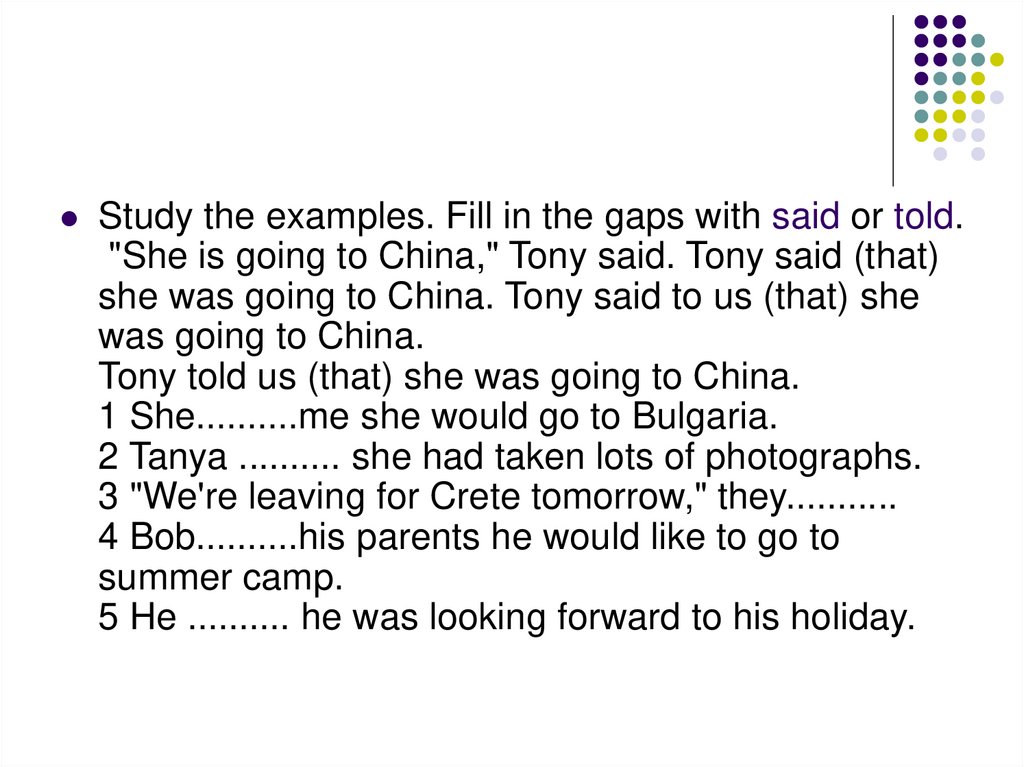
Study the examples. Fill in the gaps with said or told."She is going to China," Tony said. Tony said (that)
she was going to China. Tony said to us (that) she
was going to China.
Tony told us (that) she was going to China.
1 She..........me she would go to Bulgaria.
2 Tanya .......... she had taken lots of photographs.
3 "We're leaving for Crete tomorrow," they...........
4 Bob..........his parents he would like to go to
summer camp.
5 He .......... he was looking forward to his holiday.