


 Промышленность
Похожие презентации:




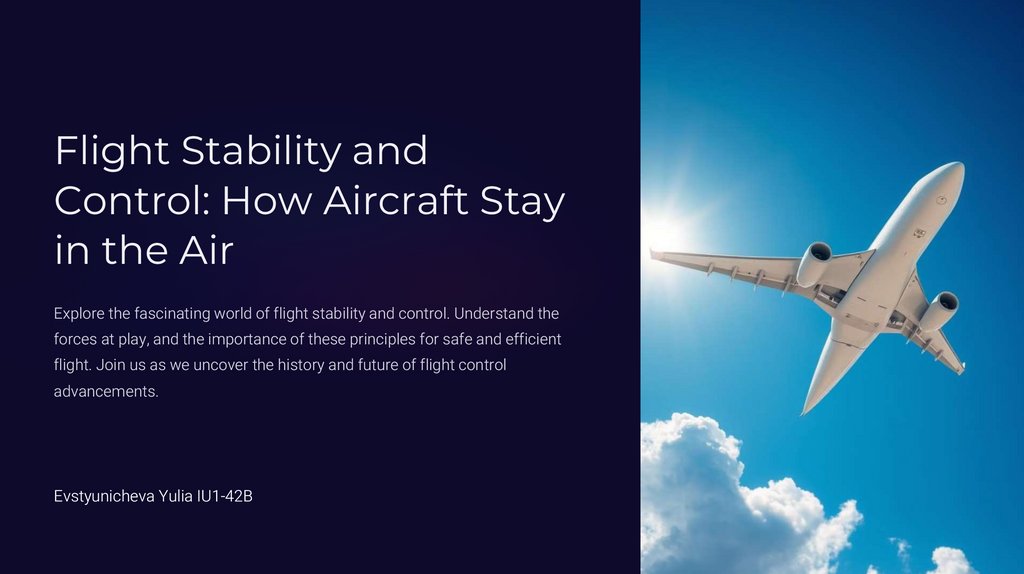
Flight Stability and Control: How Aircraft Stay in the Air
1.
Flight Stability andControl: How Aircraft Stay
in the Air
Explore the fascinating world of flight stability and control. Understand the
forces at play, and the importance of these principles for safe and efficient
flight. Join us as we uncover the history and future of flight control
advancements.
Evstyunicheva Yulia IU1-42B
2.
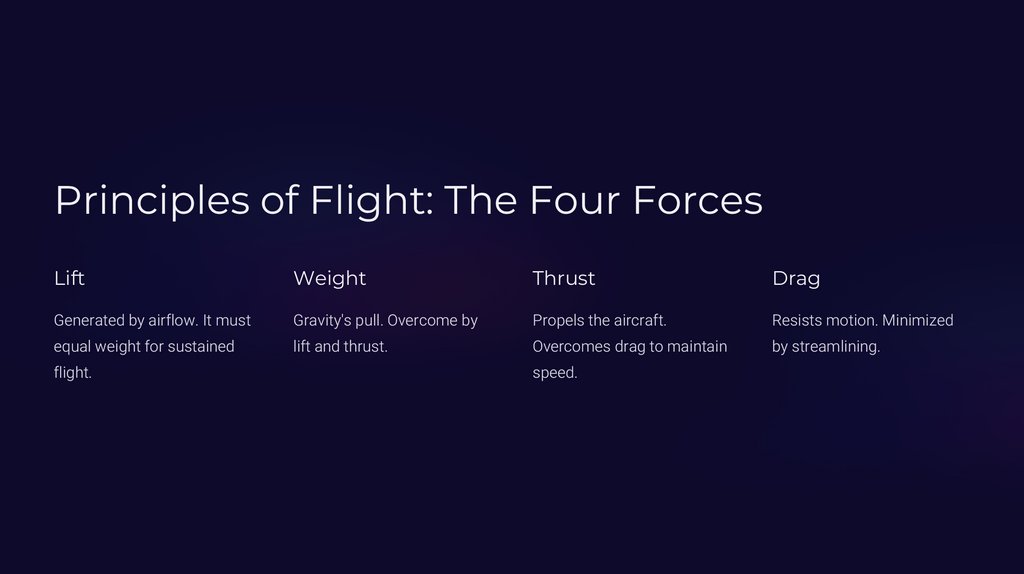
Principles of Flight: The Four ForcesLift
Weight
Thrust
Drag
Generated by airflow. It must
Gravity's pull. Overcome by
Propels the aircraft.
Resists motion. Minimized
equal weight for sustained
lift and thrust.
Overcomes drag to maintain
by streamlining.
flight.
speed.
3.
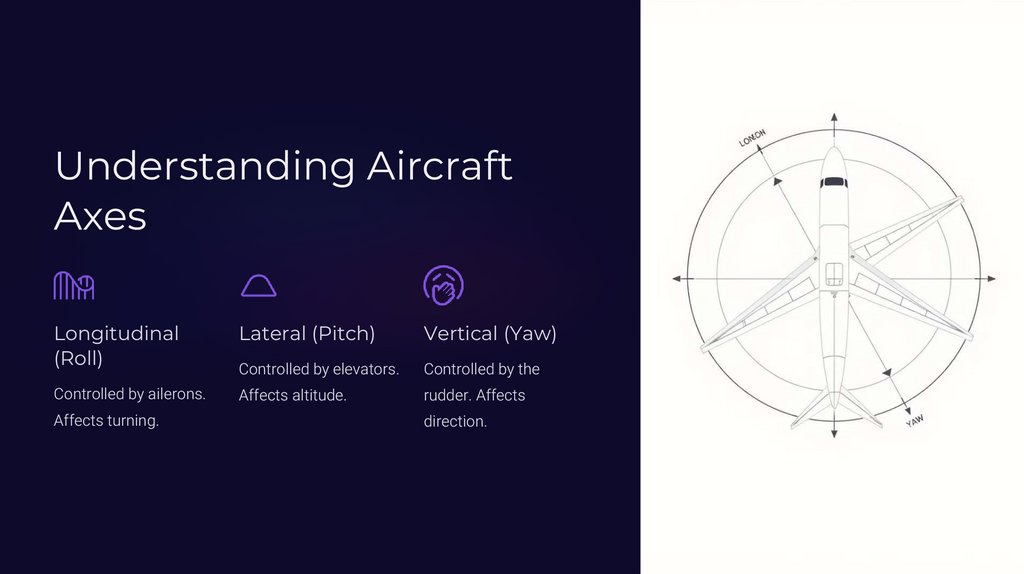
Understanding AircraftAxes
Longitudinal
(Roll)
Lateral (Pitch)
Vertical (Yaw)
Controlled by elevators.
Controlled by the
Controlled by ailerons.
Affects altitude.
rudder. Affects
Affects turning.
direction.
4.
Static StabilityPositive
Negative
Returns to original state.
Diverges from original state.
Neutral
Stays in the new state.
5.
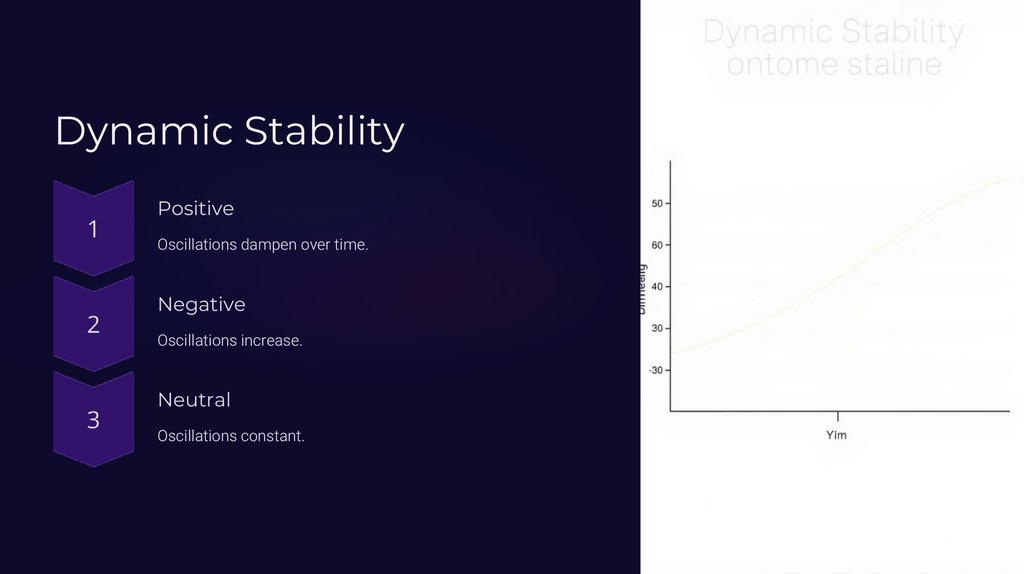
Dynamic StabilityPositive
Oscillations dampen over time.
Negative
Oscillations increase.
Neutral
Oscillations constant.
6.
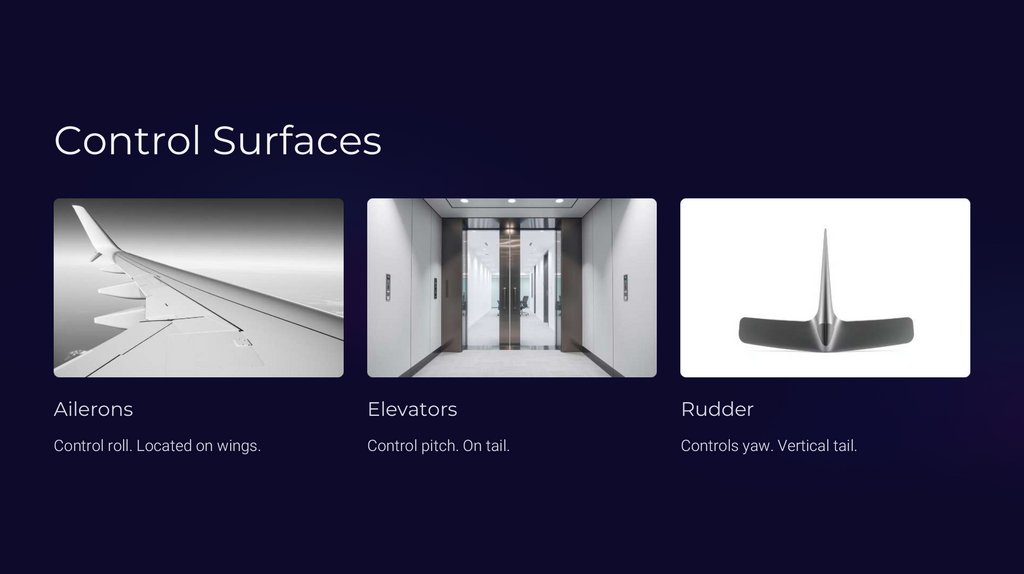
Control SurfacesAilerons
Elevators
Rudder
Control roll. Located on wings.
Control pitch. On tail.
Controls yaw. Vertical tail.
7.
Pilot Input and Control SystemsMechanical
Fly-by-wire
Direct connection. Simple and reliable.
Electronic control. Enhanced stability.
8.
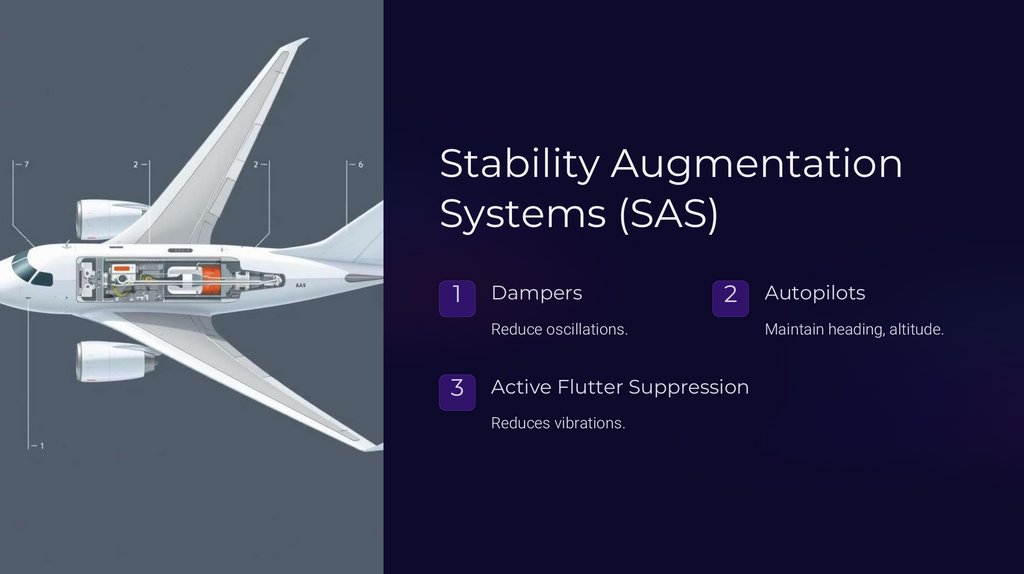
Stability AugmentationSystems (SAS)
1
Dampers
2
Reduce oscillations.
3
Active Flutter Suppression
Reduces vibrations.
Autopilots
Maintain heading, altitude.
9.
Advanced ControlSystems
1
Adaptive Control
Adjusts to flight conditions.
2
Model Predictive Control
Optimizes control actions.
3
Artificial Intelligence
Autonomous flight, advanced decisions.
10.
Conclusion: The Future ofFlight
Flight stability and control are vital. Ongoing advancements are improving
safety. The future holds autonomy, AI, and better protection. The sky's the
limit for flight control tech innovation.