 Экономика
Похожие презентации:










Economic Crisis and Social Issues
1.
2.
• Economic Crisis and Social IssuesTo understand how Vivienne Westwood and her brand became symbols of an era, it is important to
examine the historical context of Britain in the 1970s. This was a time of profound social, economic,
and political upheaval, which influenced culture, fashion, and art.
The 1970s in Britain were a period of economic decline. The country faced:
• - High inflation: Prices for goods and services rose, lowering the standard of living.
• - Unemployment: Many industries, such as coal and steel, were in decline, leading to mass layoffs.
• - Energy crisis: In 1973, the oil crisis caused by the OPEC embargo led to a sharp increase in fuel
prices and energy shortages. In Britain, this resulted in rolling blackouts and the introduction of a
"three-day workweek" in 1974.
These problems created a sense of uncertainty about the future, especially among young people,
who felt abandoned and disillusioned with the government.
Political Instability
• The 1970s were a time of political tension:
• - Changes in government: Power shifted from the Conservatives to Labour and back, but neither
party could offer effective solutions to the economic problems.
• - Strikes and trade union movements: Workers actively fought for their rights, leading to mass
strikes, including the famous miners' strikes in 1972 and 1974. This caused significant disruptions
to the economy and further exacerbated social conflicts.
• - Growing inequality: The gap between the rich and the poor widened, fueling public discontent.
3.
Cultural Rebellion: Punk as a Response to the CrisisAgainst this backdrop, the punk movement emerged as a cultural response to social and economic hardships. Punk was not just a music genre—it was an ideology
that expressed protest against the system, traditional values, and the establishment.
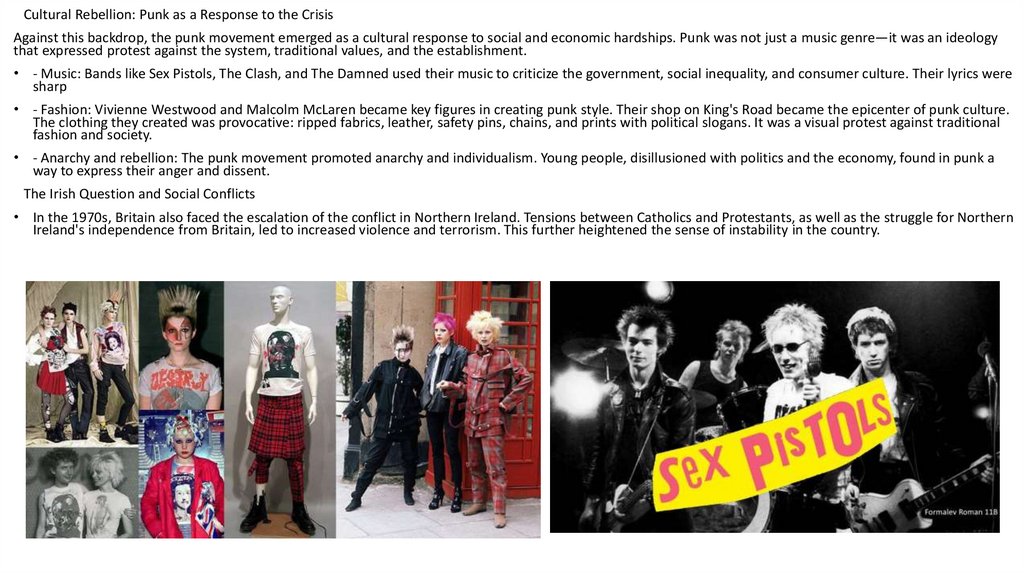
• - Music: Bands like Sex Pistols, The Clash, and The Damned used their music to criticize the government, social inequality, and consumer culture. Their lyrics were
sharp
• - Fashion: Vivienne Westwood and Malcolm McLaren became key figures in creating punk style. Their shop on King's Road became the epicenter of punk culture.
The clothing they created was provocative: ripped fabrics, leather, safety pins, chains, and prints with political slogans. It was a visual protest against traditional
fashion and society.
• - Anarchy and rebellion: The punk movement promoted anarchy and individualism. Young people, disillusioned with politics and the economy, found in punk a
way to express their anger and dissent.
The Irish Question and Social Conflicts
• In the 1970s, Britain also faced the escalation of the conflict in Northern Ireland. Tensions between Catholics and Protestants, as well as the struggle for Northern
Ireland's independence from Britain, led to increased violence and terrorism. This further heightened the sense of instability in the country.
4.
The emergence of the Vivienne Westwood brand isa fascinating story closely tied to the cultural,
social, and political changes in Britain during the
1970s. Let’s break down how it all happened.
The Beginning: Collaboration with Malcolm
McLaren
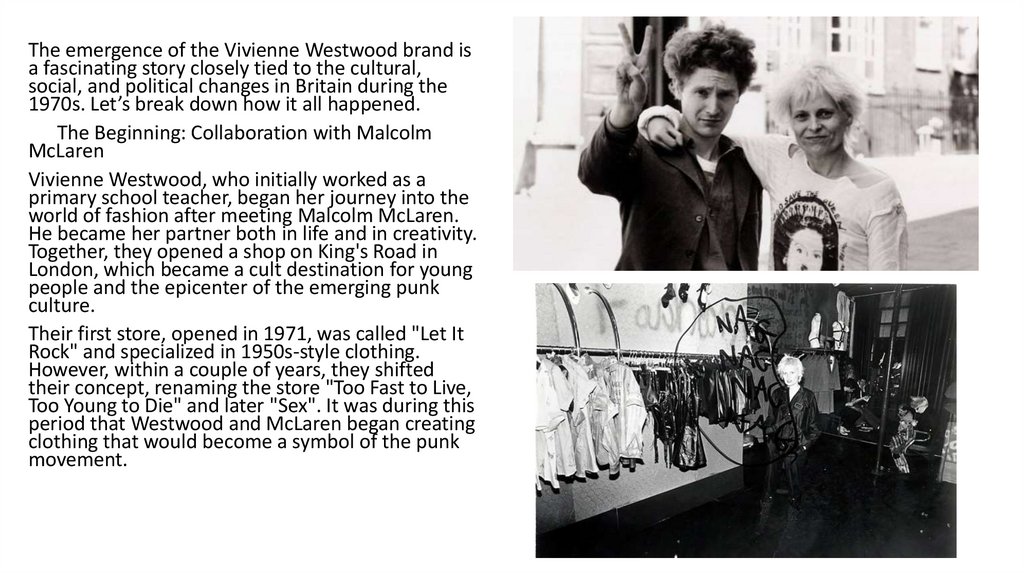
Vivienne Westwood, who initially worked as a
primary school teacher, began her journey into the
world of fashion after meeting Malcolm McLaren.
He became her partner both in life and in creativity.
Together, they opened a shop on King's Road in
London, which became a cult destination for young
people and the epicenter of the emerging punk
culture.
Their first store, opened in 1971, was called "Let It
Rock" and specialized in 1950s-style clothing.
However, within a couple of years, they shifted
their concept, renaming the store "Too Fast to Live,
Too Young to Die" and later "Sex". It was during this
period that Westwood and McLaren began creating
clothing that would become a symbol of the punk
movement.
5.
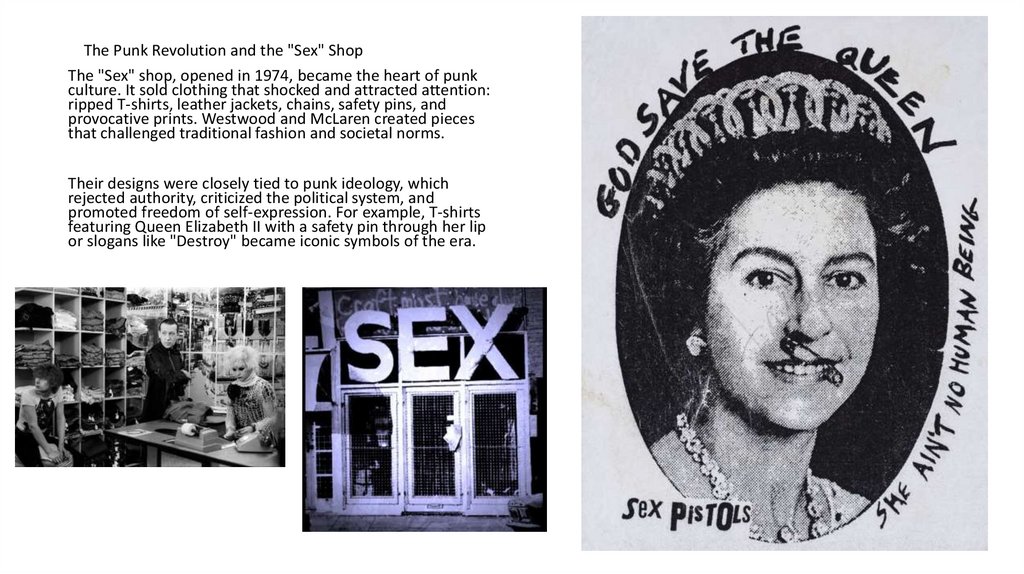
The Punk Revolution and the "Sex" ShopThe "Sex" shop, opened in 1974, became the heart of punk
culture. It sold clothing that shocked and attracted attention:
ripped T-shirts, leather jackets, chains, safety pins, and
provocative prints. Westwood and McLaren created pieces
that challenged traditional fashion and societal norms.
Their designs were closely tied to punk ideology, which
rejected authority, criticized the political system, and
promoted freedom of self-expression. For example, T-shirts
featuring Queen Elizabeth II with a safety pin through her lip
or slogans like "Destroy" became iconic symbols of the era.
6.
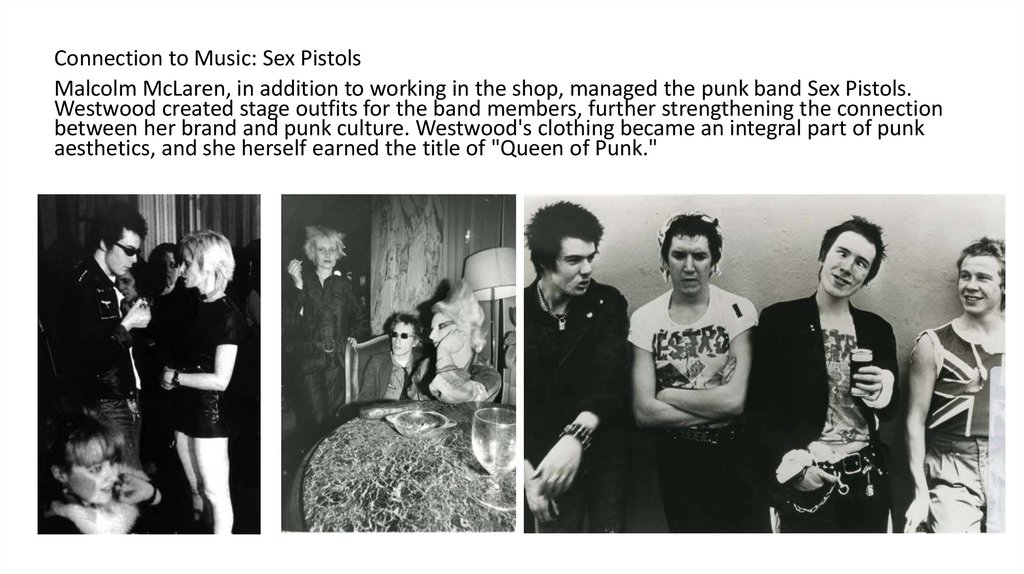
Connection to Music: Sex PistolsMalcolm McLaren, in addition to working in the shop, managed the punk band Sex Pistols.
Westwood created stage outfits for the band members, further strengthening the connection
between her brand and punk culture. Westwood's clothing became an integral part of punk
aesthetics, and she herself earned the title of "Queen of Punk."
7.
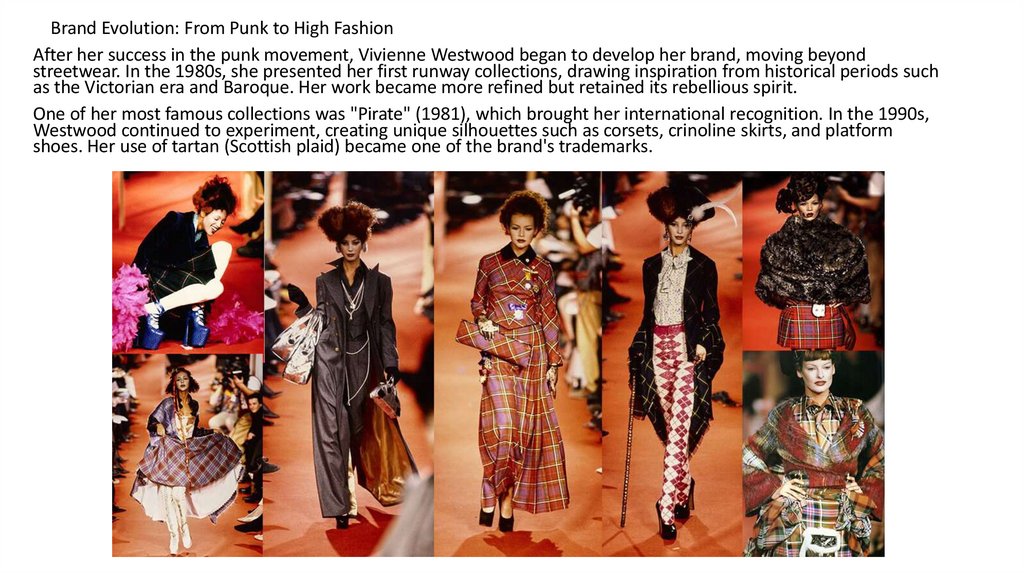
Brand Evolution: From Punk to High FashionAfter her success in the punk movement, Vivienne Westwood began to develop her brand, moving beyond
streetwear. In the 1980s, she presented her first runway collections, drawing inspiration from historical periods such
as the Victorian era and Baroque. Her work became more refined but retained its rebellious spirit.
One of her most famous collections was "Pirate" (1981), which brought her international recognition. In the 1990s,
Westwood continued to experiment, creating unique silhouettes such as corsets, crinoline skirts, and platform
shoes. Her use of tartan (Scottish plaid) became one of the brand's trademarks.
8.
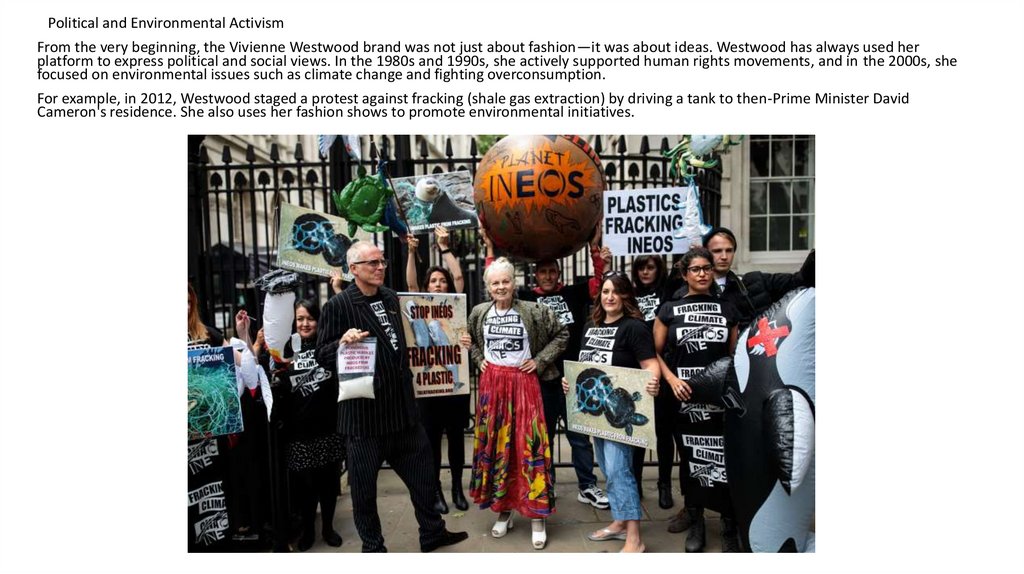
Political and Environmental ActivismFrom the very beginning, the Vivienne Westwood brand was not just about fashion—it was about ideas. Westwood has always used her
platform to express political and social views. In the 1980s and 1990s, she actively supported human rights movements, and in the 2000s, she
focused on environmental issues such as climate change and fighting overconsumption.
For example, in 2012, Westwood staged a protest against fracking (shale gas extraction) by driving a tank to then-Prime Minister David
Cameron's residence. She also uses her fashion shows to promote environmental initiatives.
9.
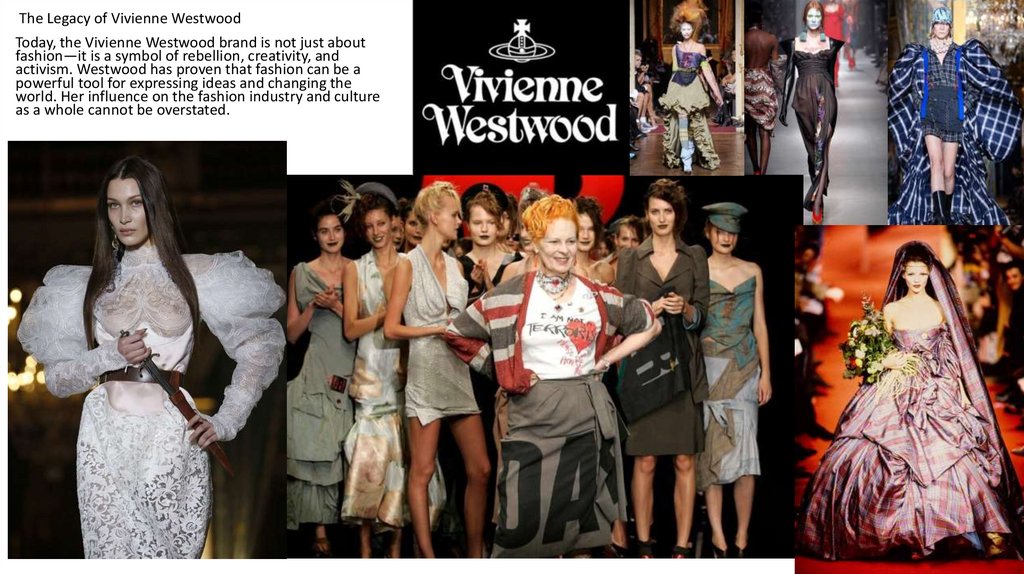
The Legacy of Vivienne WestwoodToday, the Vivienne Westwood brand is not just about
fashion—it is a symbol of rebellion, creativity, and
activism. Westwood has proven that fashion can be a
powerful tool for expressing ideas and changing the
world. Her influence on the fashion industry and culture
as a whole cannot be overstated.
10.
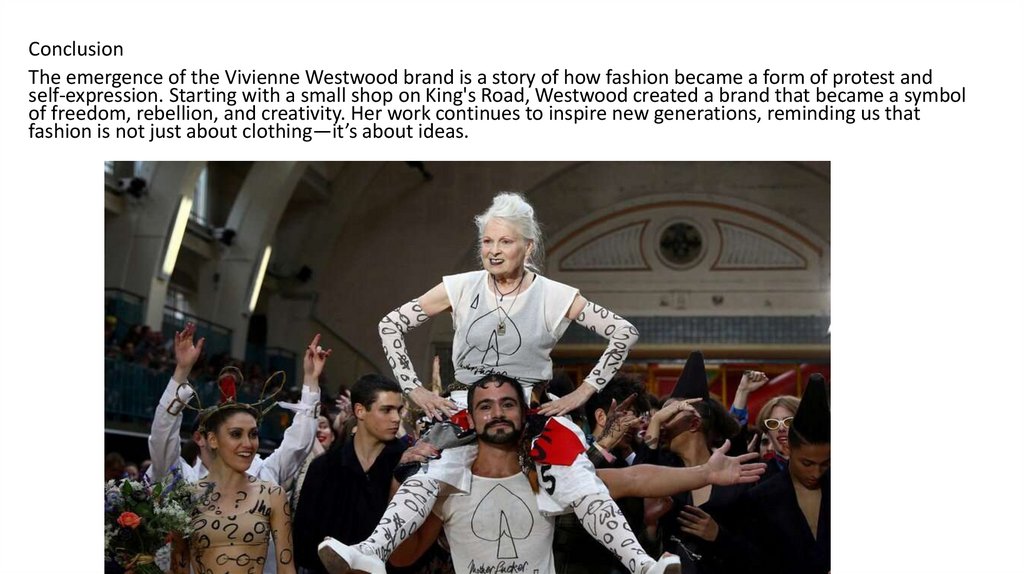
ConclusionThe emergence of the Vivienne Westwood brand is a story of how fashion became a form of protest and
self-expression. Starting with a small shop on King's Road, Westwood created a brand that became a symbol
of freedom, rebellion, and creativity. Her work continues to inspire new generations, reminding us that
fashion is not just about clothing—it’s about ideas.