












 Информатика
Похожие презентации:







Convolutional neural networks (CNNs)
1.
Convolutional neuralnetworks (CNNs)
Faculty of Engineering and
Natural Sciences
2.
Contents● Introduction
● Basic building blocks
● Architecture
● Parameter sharing &
sparsity
● Popular architectures
● Training CNNs
● Regularization techniques
● Conclusion
3.
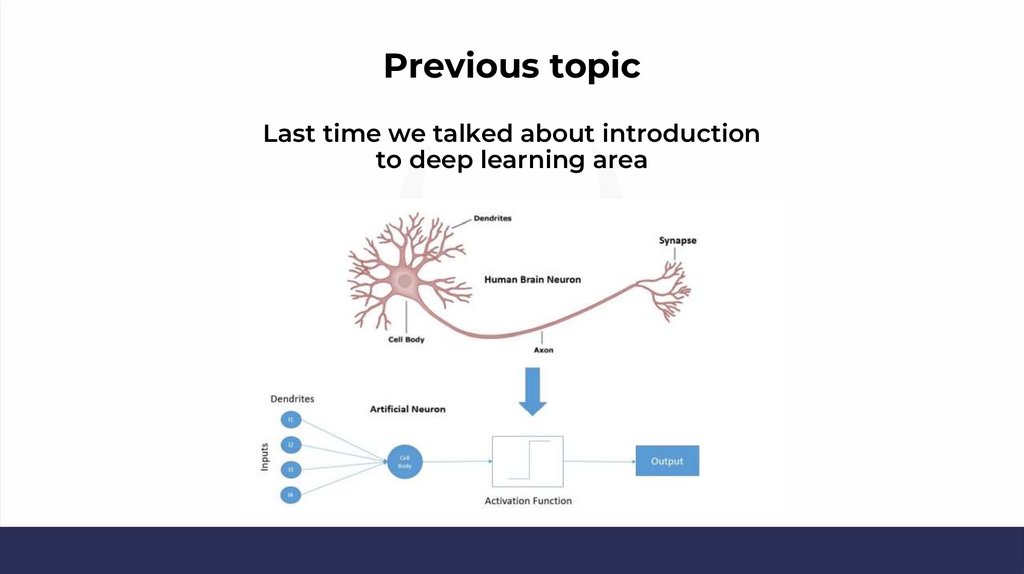
Previous topicLast time we talked about introduction
to deep learning area
4.
Introduction to CNNs5.
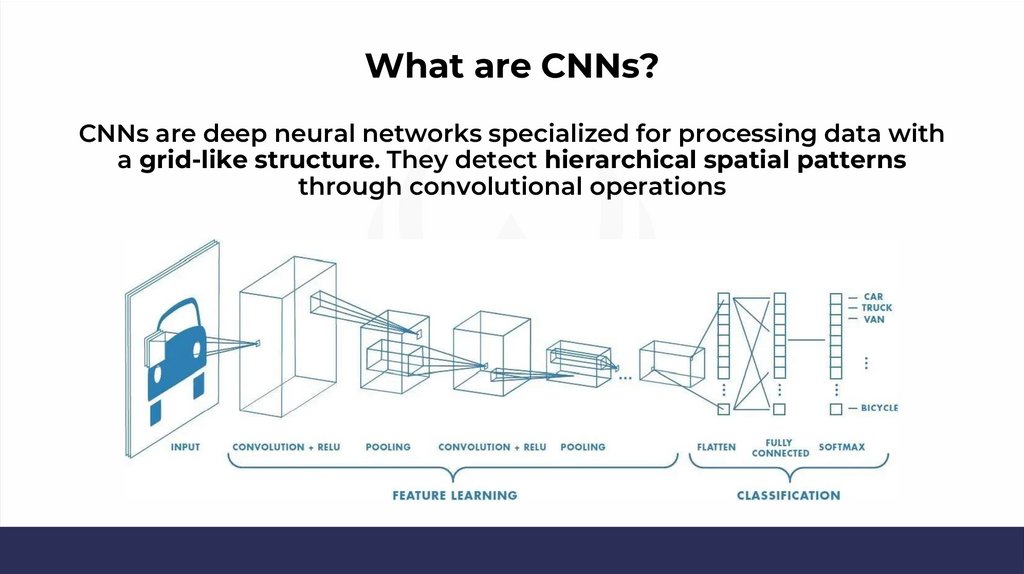
What are CNNs?CNNs are deep neural networks specialized for processing data with
a grid-like structure. They detect hierarchical spatial patterns
through convolutional operations
6.
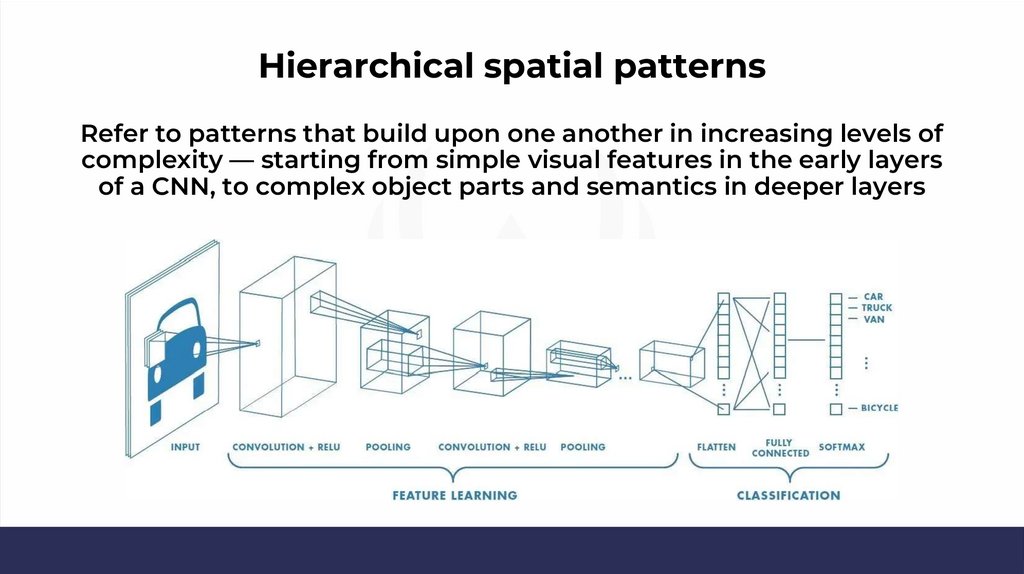
Hierarchical spatial patternsRefer to patterns that build upon one another in increasing levels of
complexity — starting from simple visual features in the early layers
of a CNN, to complex object parts and semantics in deeper layers
7.
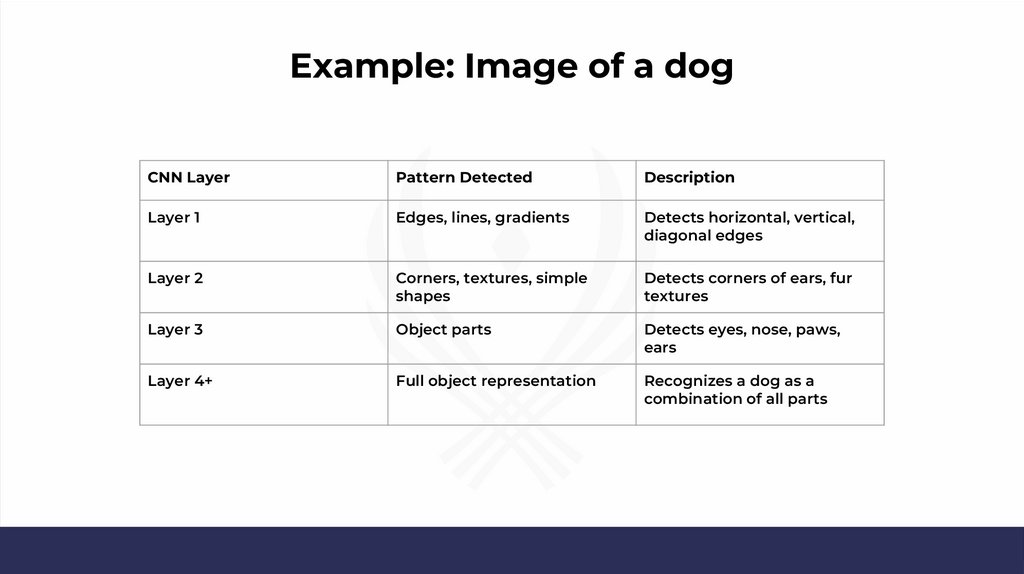
Example: Image of a dogCNN Layer
Pattern Detected
Description
Layer 1
Edges, lines, gradients
Detects horizontal, vertical,
diagonal edges
Layer 2
Corners, textures, simple
shapes
Detects corners of ears, fur
textures
Layer 3
Object parts
Detects eyes, nose, paws,
ears
Layer 4+
Full object representation
Recognizes a dog as a
combination of all parts
8.
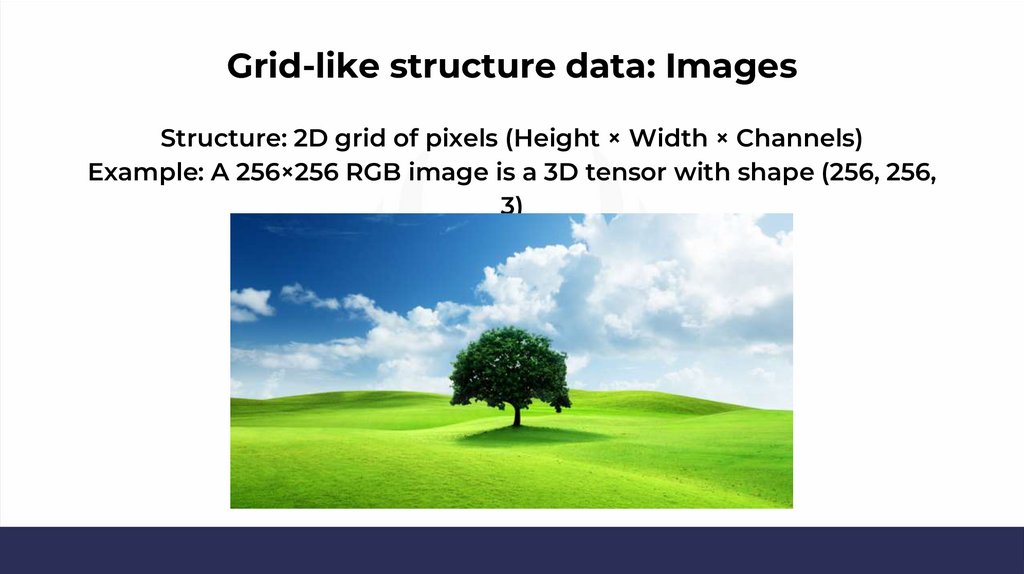
Grid-like structure data: ImagesStructure: 2D grid of pixels (Height × Width × Channels)
Example: A 256×256 RGB image is a 3D tensor with shape (256, 256,
3)
9.
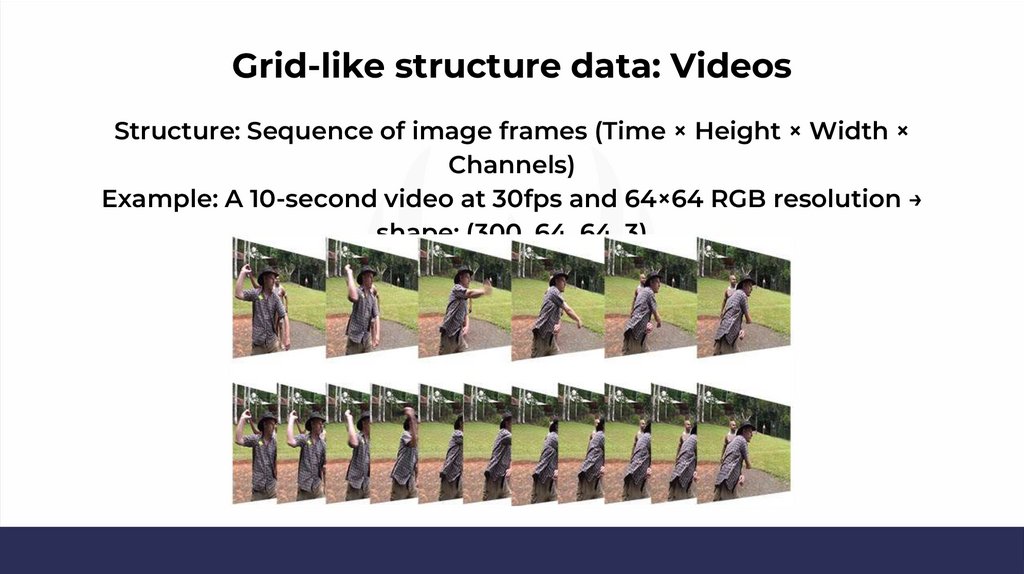
Grid-like structure data: VideosStructure: Sequence of image frames (Time × Height × Width ×
Channels)
Example: A 10-second video at 30fps and 64×64 RGB resolution →
shape: (300, 64, 64, 3)
10.
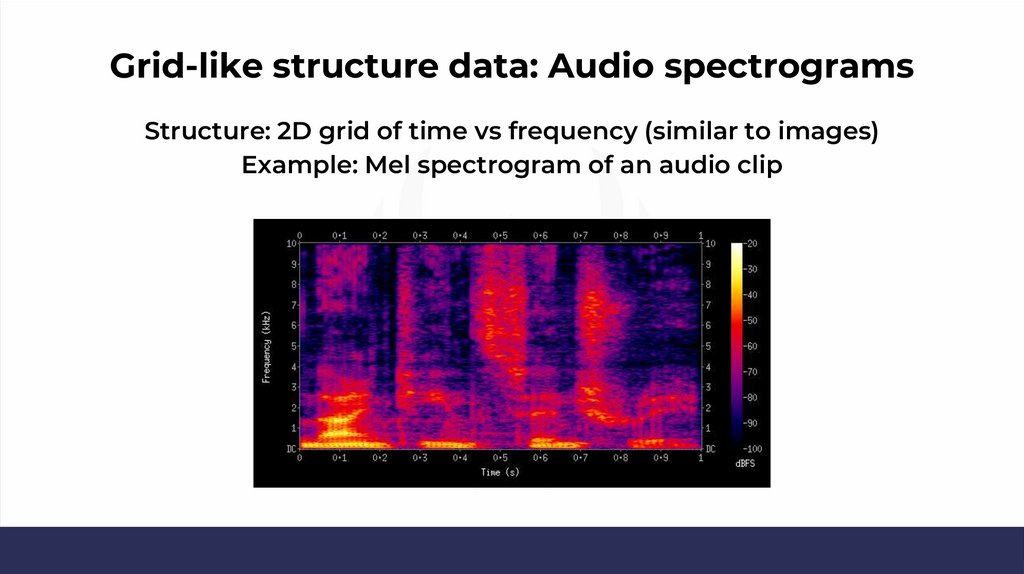
Grid-like structure data: Audio spectrogramsStructure: 2D grid of time vs frequency (similar to images)
Example: Mel spectrogram of an audio clip
11.
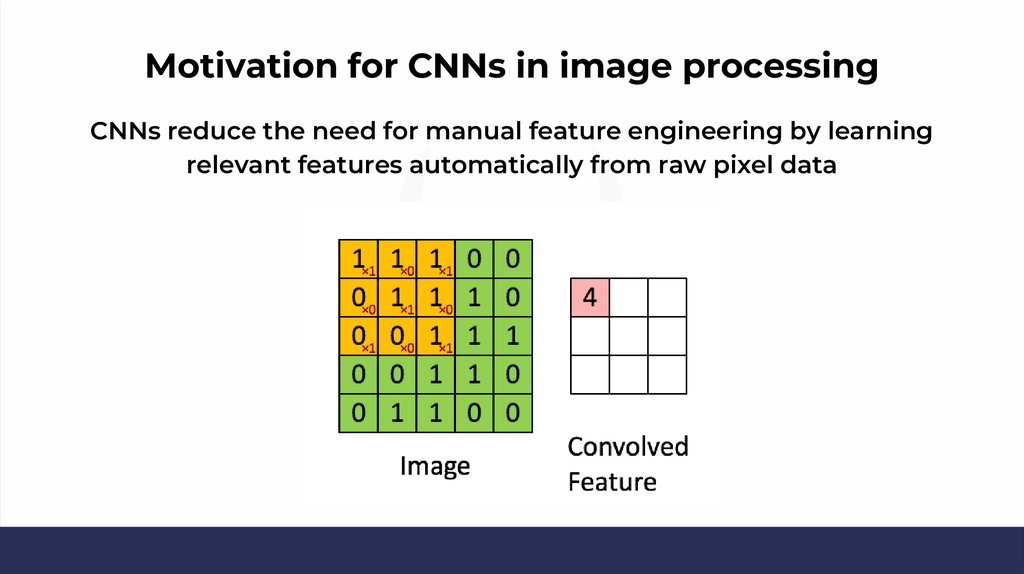
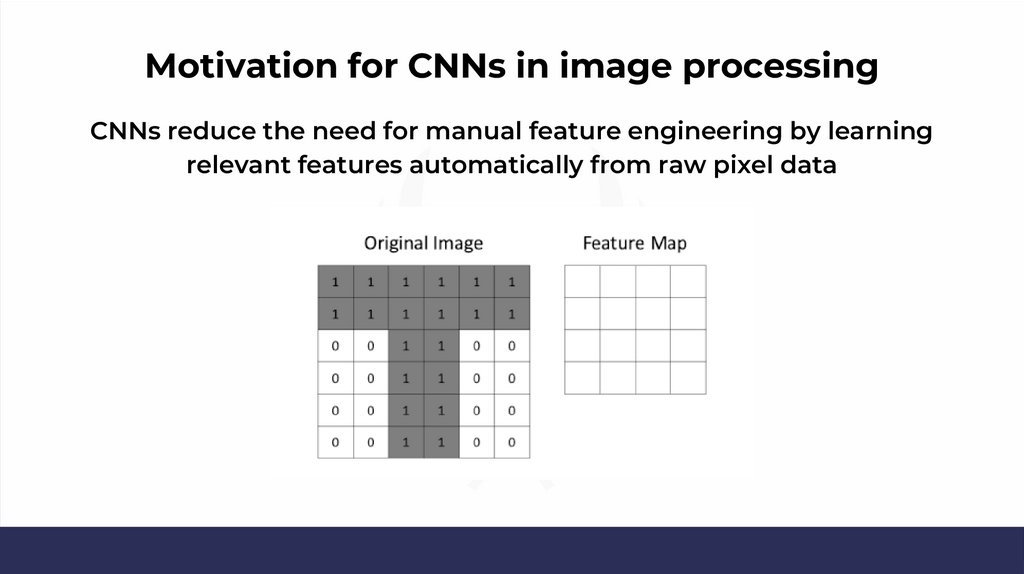
Motivation for CNNs in image processingCNNs reduce the need for manual feature engineering by learning
relevant features automatically from raw pixel data
12.
Motivation for CNNs in image processingCNNs reduce the need for manual feature engineering by learning
relevant features automatically from raw pixel data
13.
Basic building blocks14.
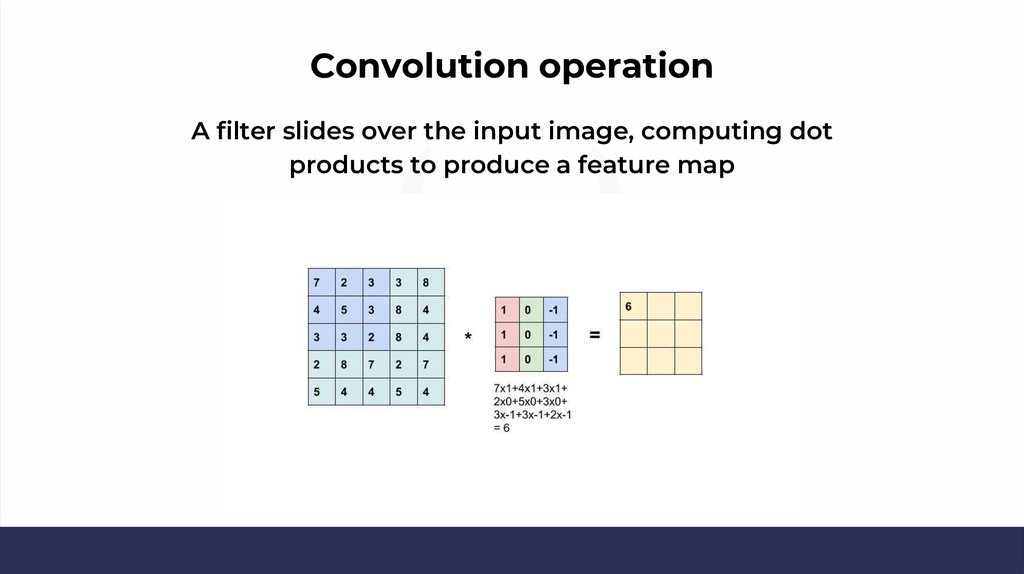
Convolution operationA filter slides over the input image, computing dot
products to produce a feature map
15.
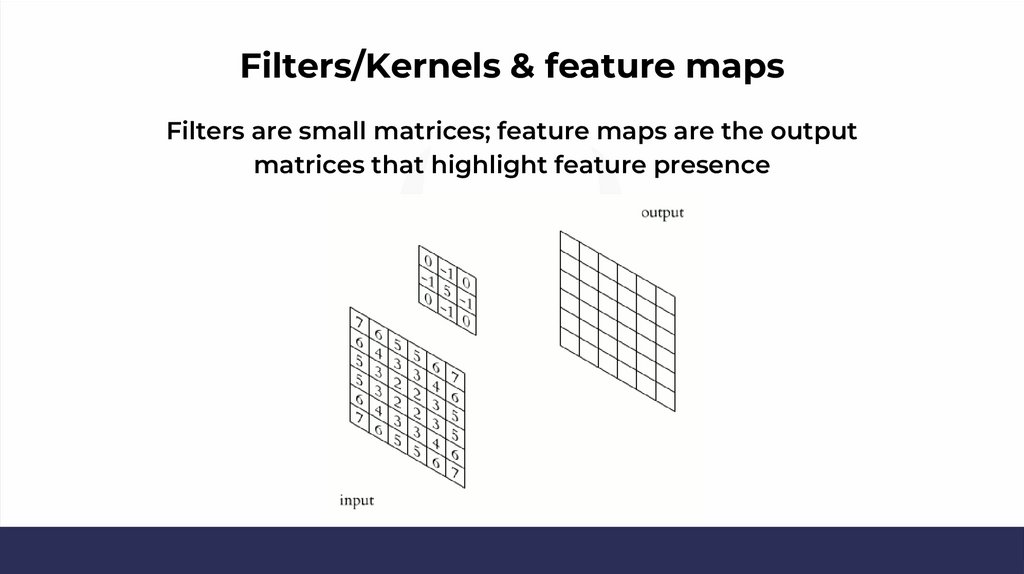
Filters/Kernels & feature mapsFilters are small matrices; feature maps are the output
matrices that highlight feature presence
16.
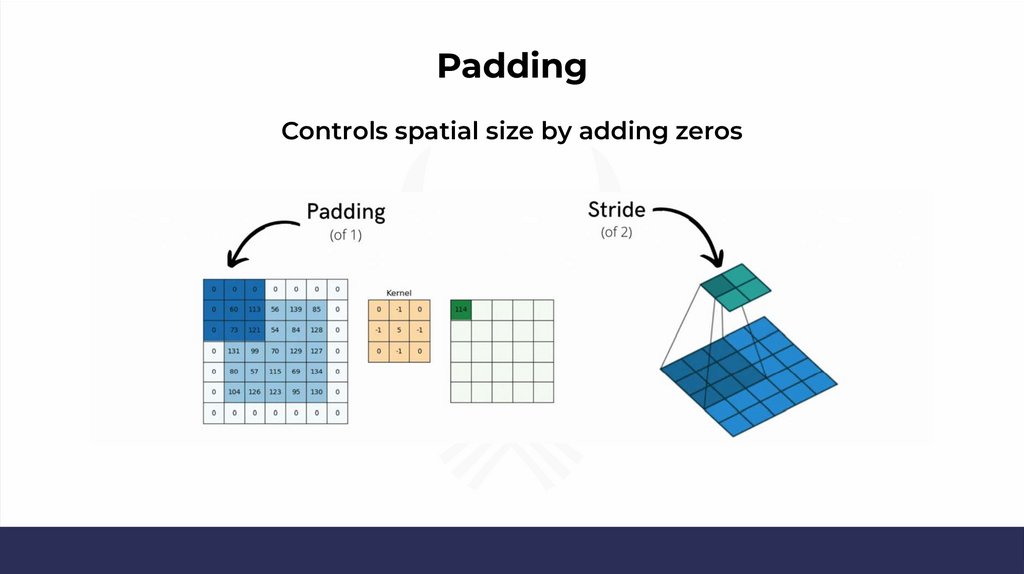
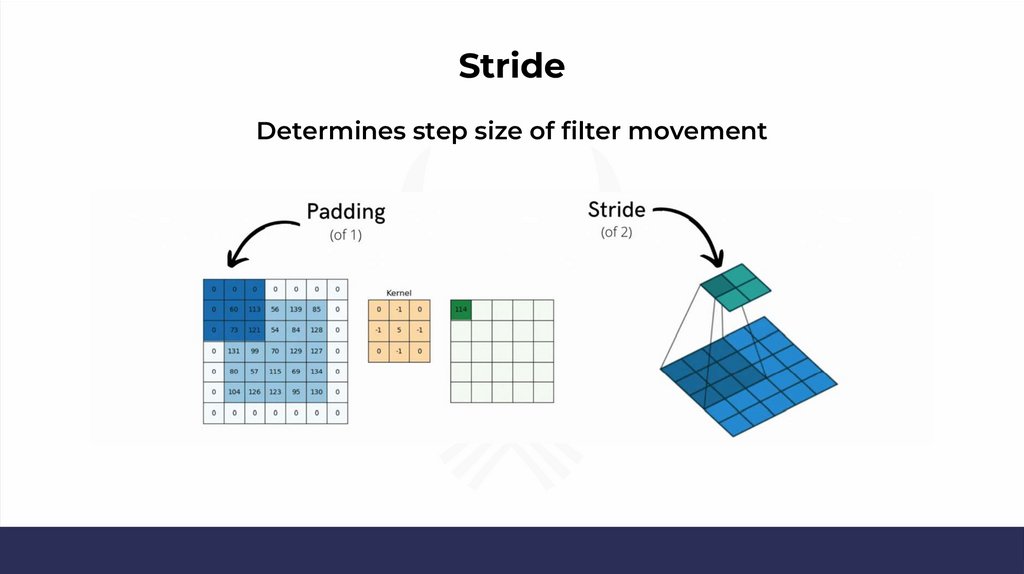
PaddingControls spatial size by adding zeros
17.
StrideDetermines step size of filter movement
18.
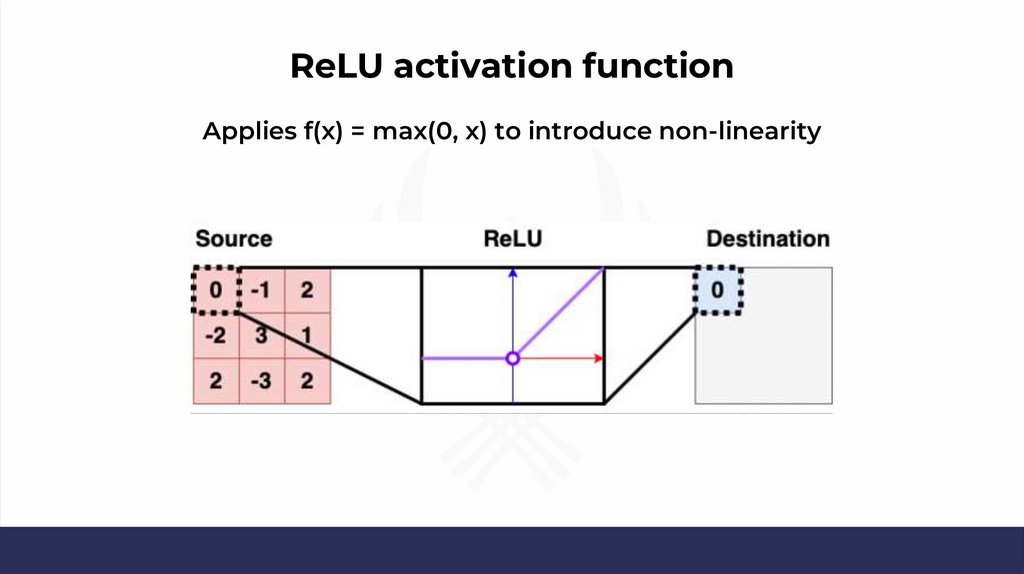
ReLU activation functionApplies f(x) = max(0, x) to introduce non-linearity
19.
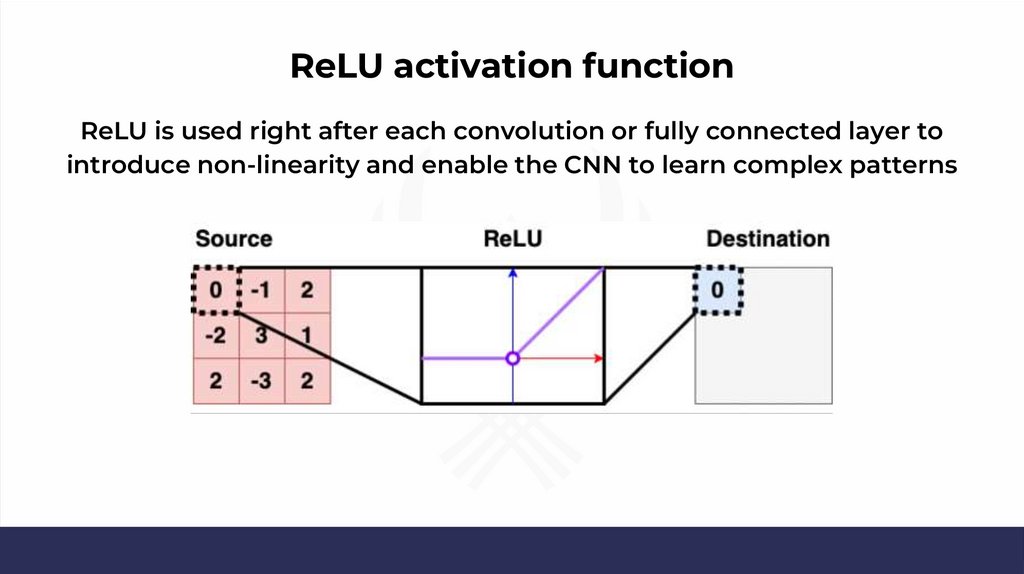
ReLU activation functionReLU is used right after each convolution or fully connected layer to
introduce non-linearity and enable the CNN to learn complex patterns
20.
CNN architecture21.
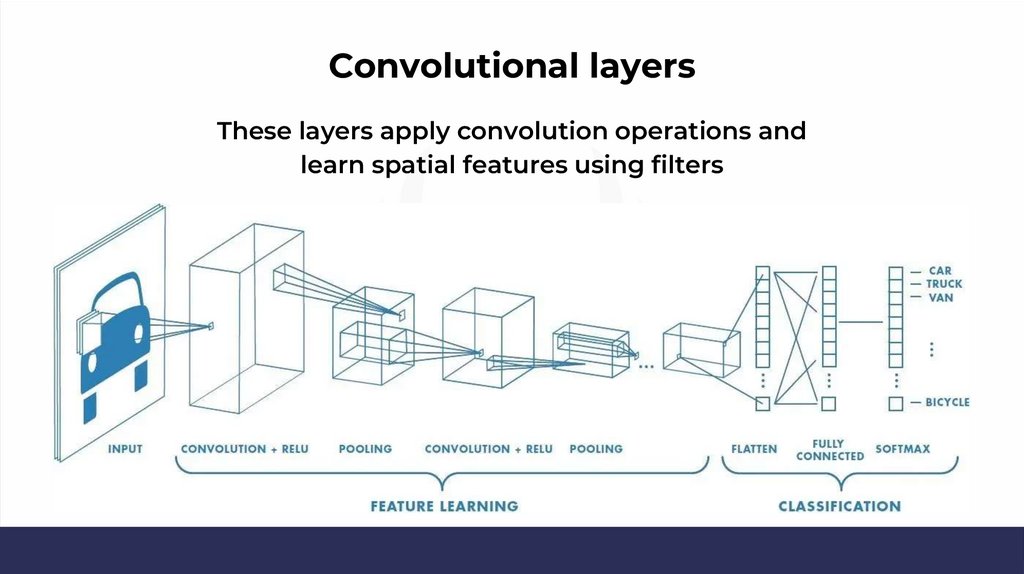
Convolutional layersThese layers apply convolution operations and
learn spatial features using filters
22.
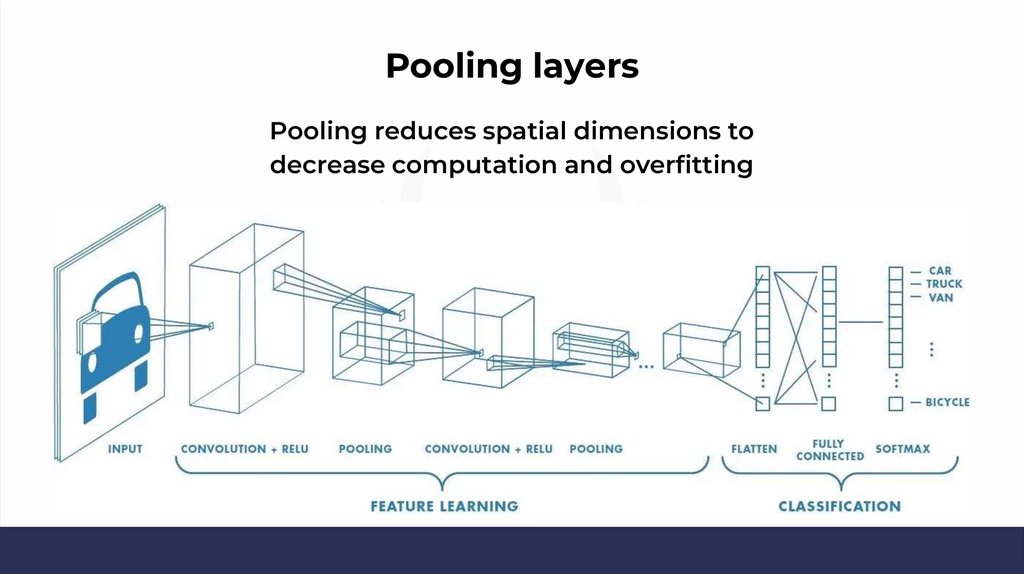
Pooling layersPooling reduces spatial dimensions to
decrease computation and overfitting
23.
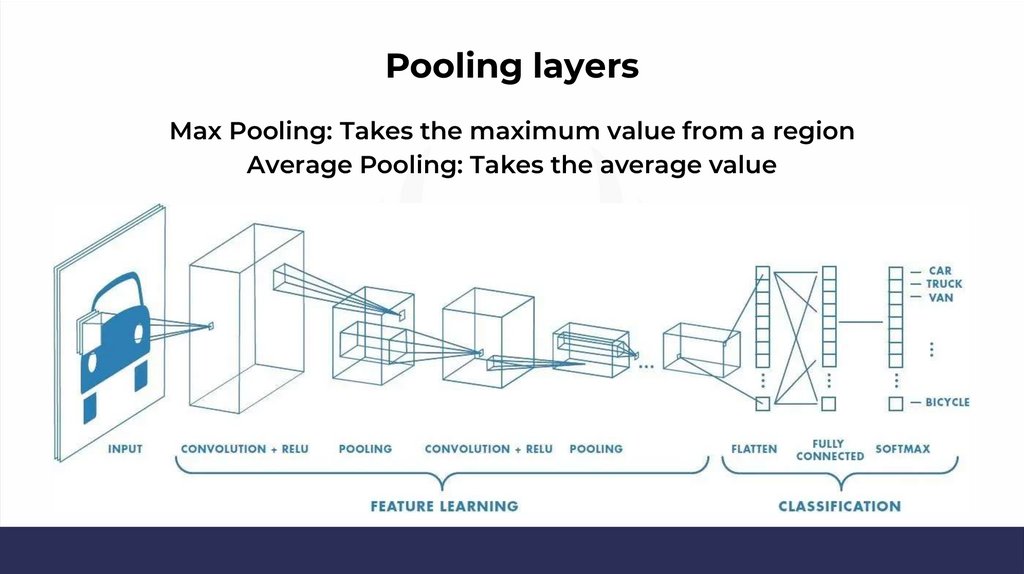
Pooling layersMax Pooling: Takes the maximum value from a region
Average Pooling: Takes the average value
24.
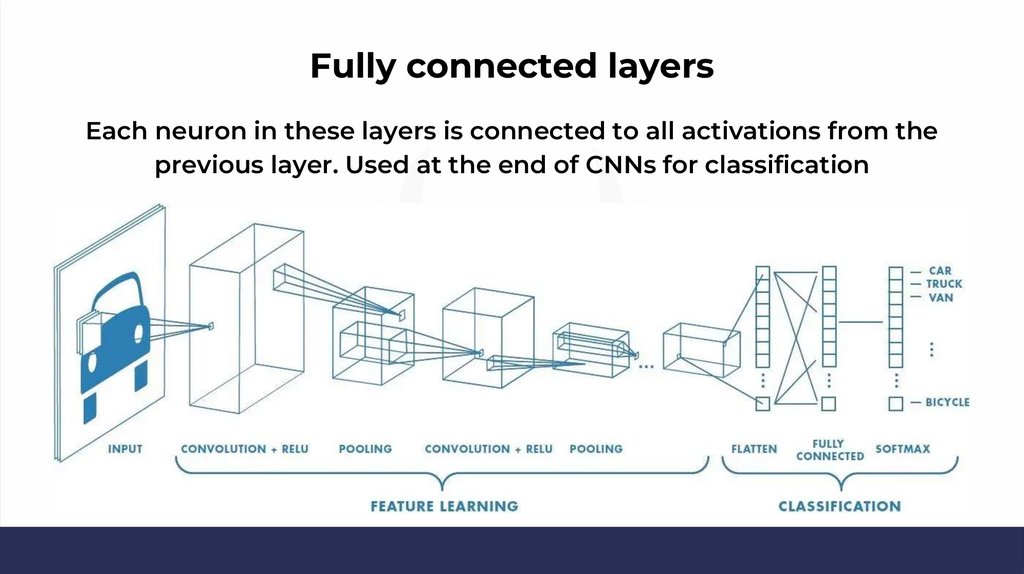
Fully connected layersEach neuron in these layers is connected to all activations from the
previous layer. Used at the end of CNNs for classification
25.
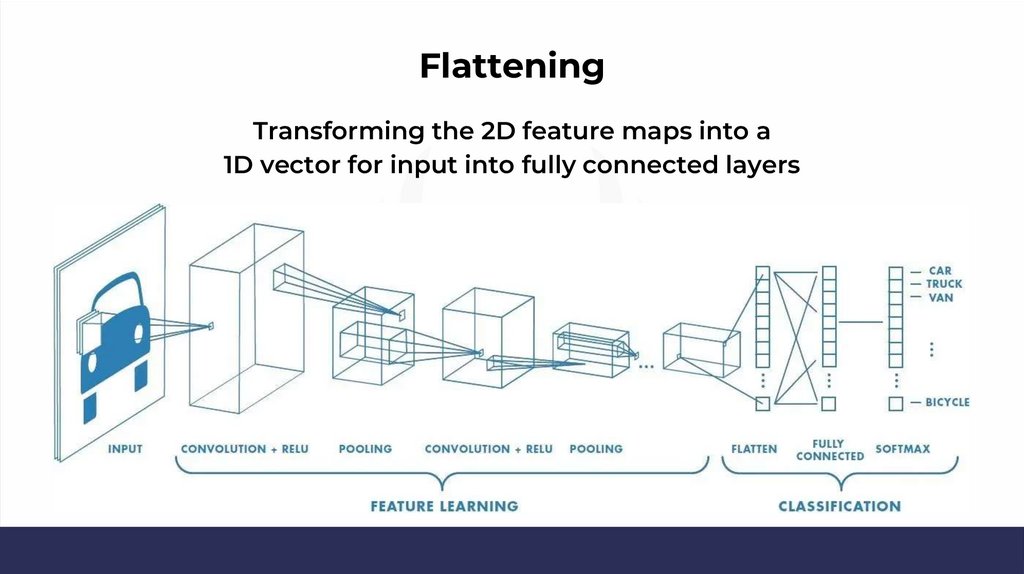
FlatteningTransforming the 2D feature maps into a
1D vector for input into fully connected layers
26.
Parameter sharing & sparsity27.
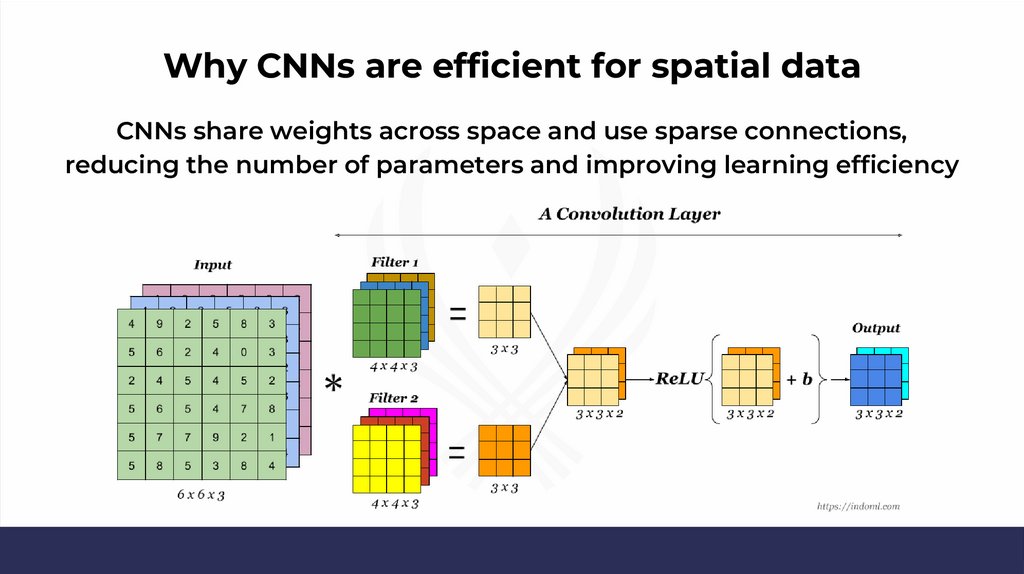
Why CNNs are efficient for spatial dataCNNs share weights across space and use sparse connections,
reducing the number of parameters and improving learning efficiency
28.
Popular CNN architectures29.
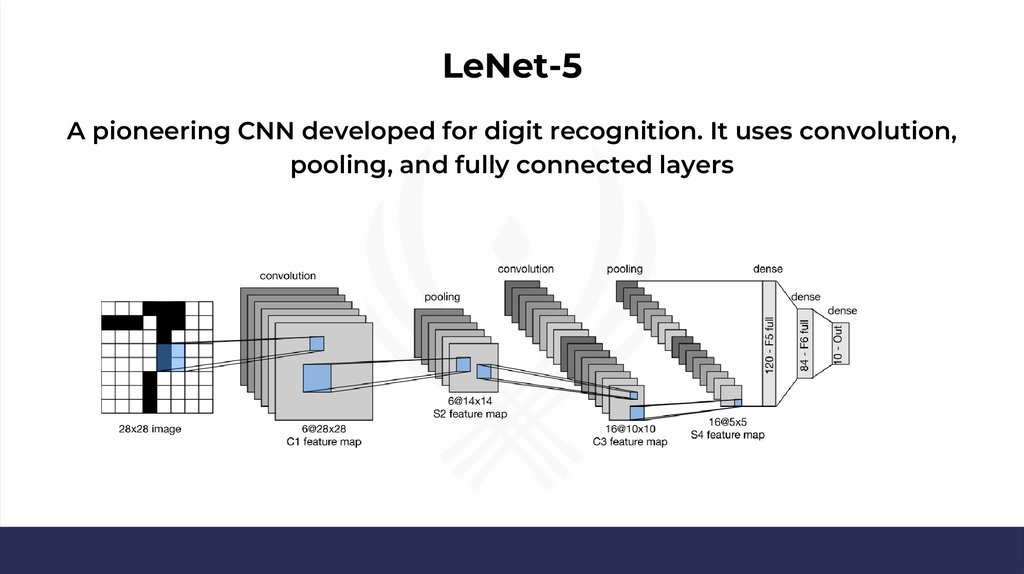
LeNet-5A pioneering CNN developed for digit recognition. It uses convolution,
pooling, and fully connected layers
30.
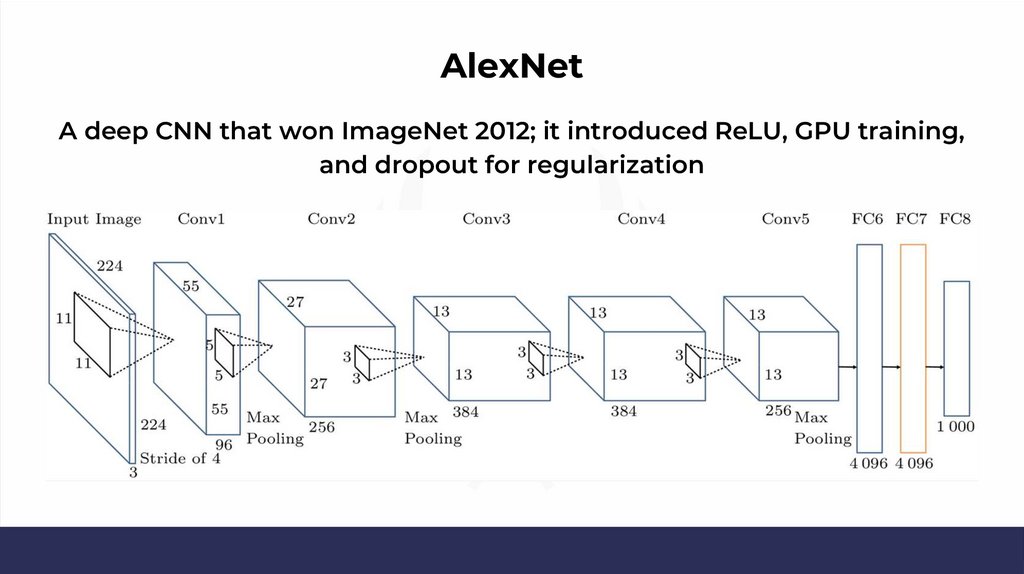
AlexNetA deep CNN that won ImageNet 2012; it introduced ReLU, GPU training,
and dropout for regularization
31.
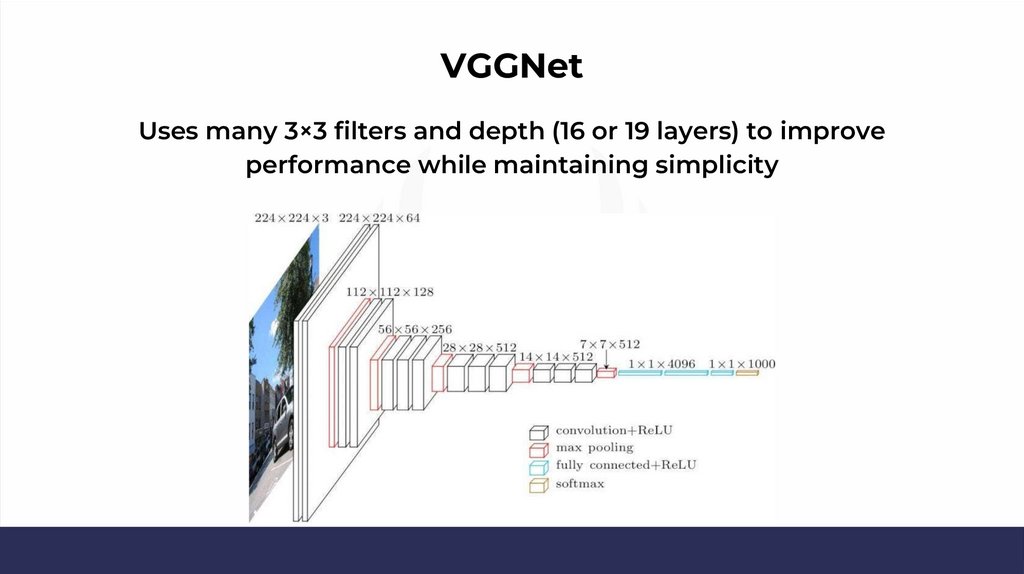
VGGNetUses many 3×3 filters and depth (16 or 19 layers) to improve
performance while maintaining simplicity
32.
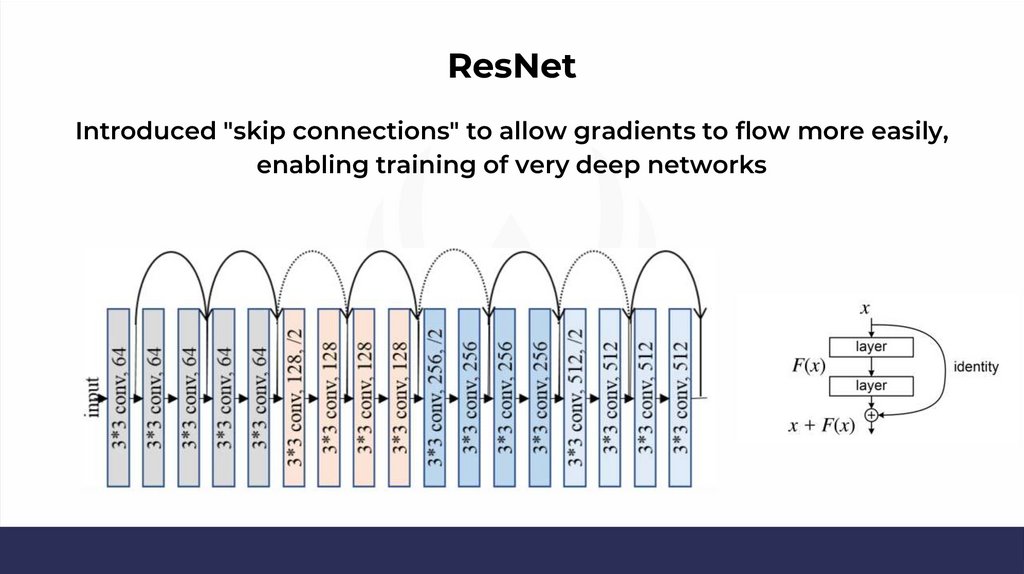
ResNetIntroduced "skip connections" to allow gradients to flow more easily,
enabling training of very deep networks
33.
Training CNNs34.
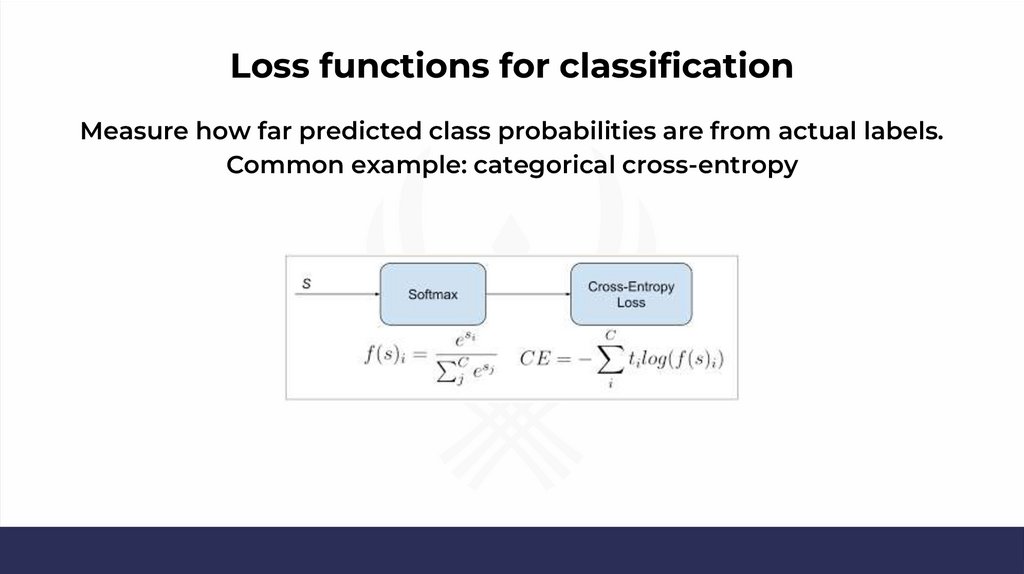
Loss functions for classificationMeasure how far predicted class probabilities are from actual labels.
Common example: categorical cross-entropy
35.
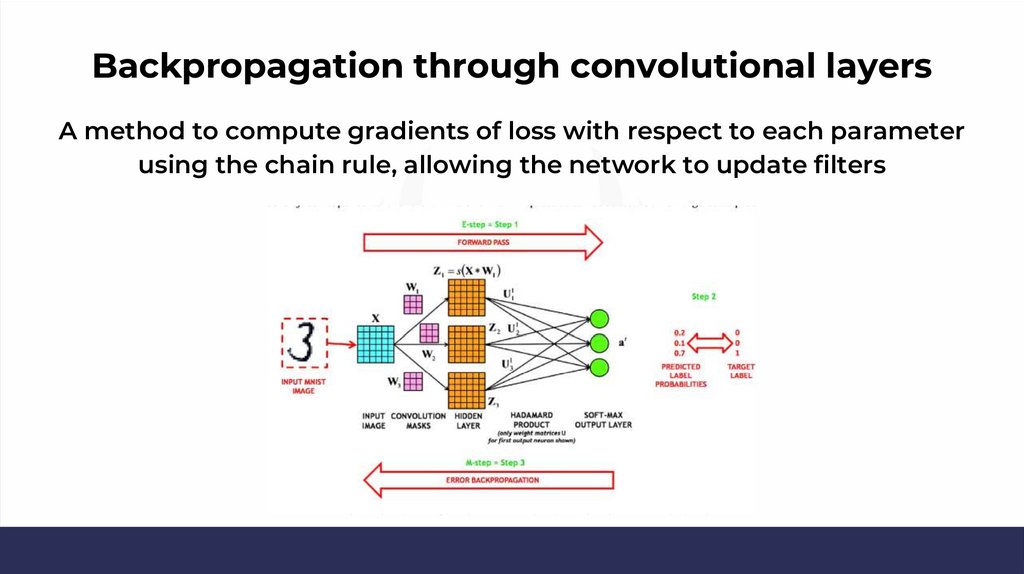
Backpropagation through convolutional layersA method to compute gradients of loss with respect to each parameter
using the chain rule, allowing the network to update filters
36.
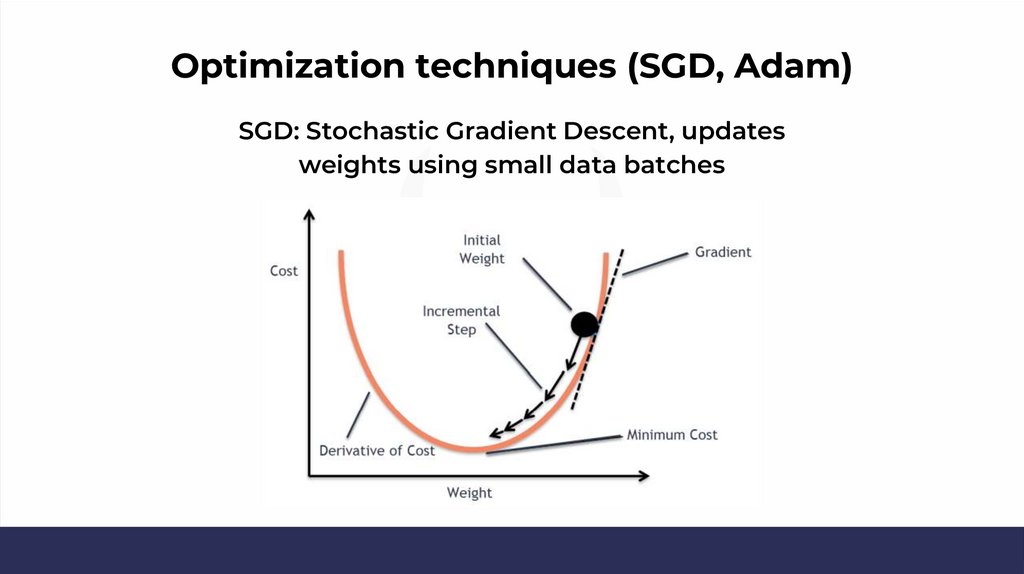
Optimization techniques (SGD, Adam)SGD: Stochastic Gradient Descent, updates
weights using small data batches
37.
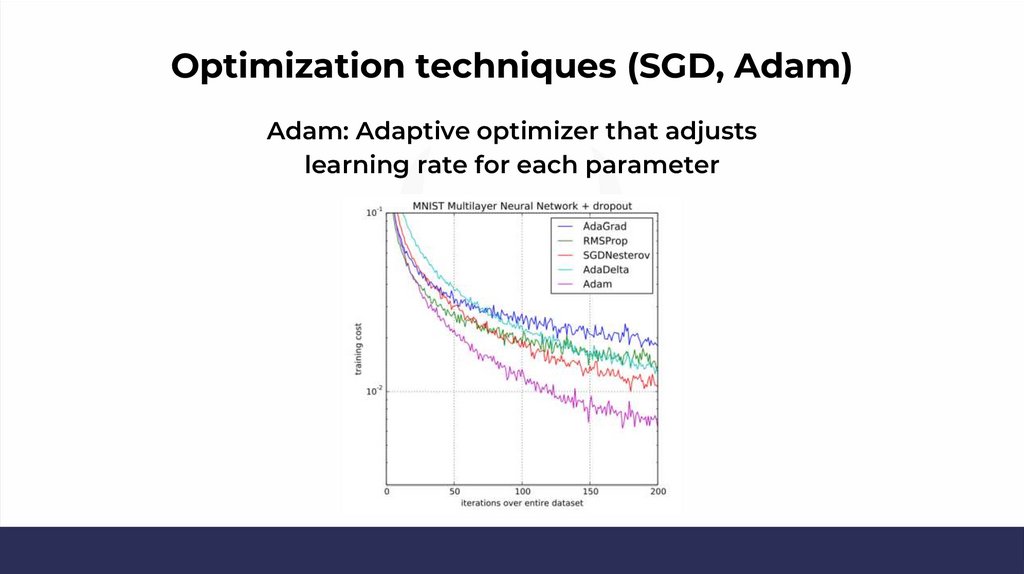
Optimization techniques (SGD, Adam)Adam: Adaptive optimizer that adjusts
learning rate for each parameter
38.
Regularization techniques39.
DropoutRandomly deactivates neurons
during training to prevent overfitting
40.
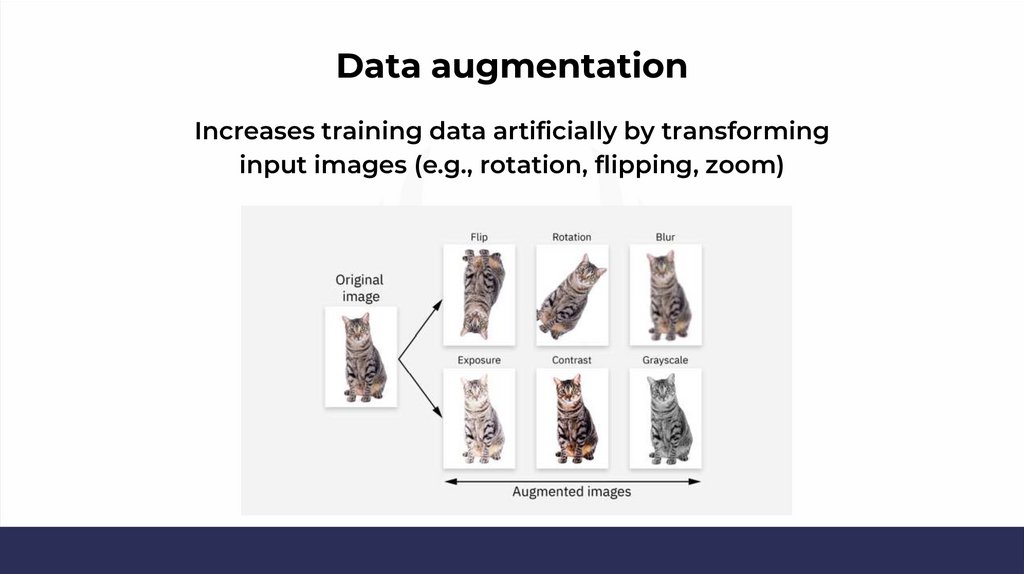
Data augmentationIncreases training data artificially by transforming
input images (e.g., rotation, flipping, zoom)
41.
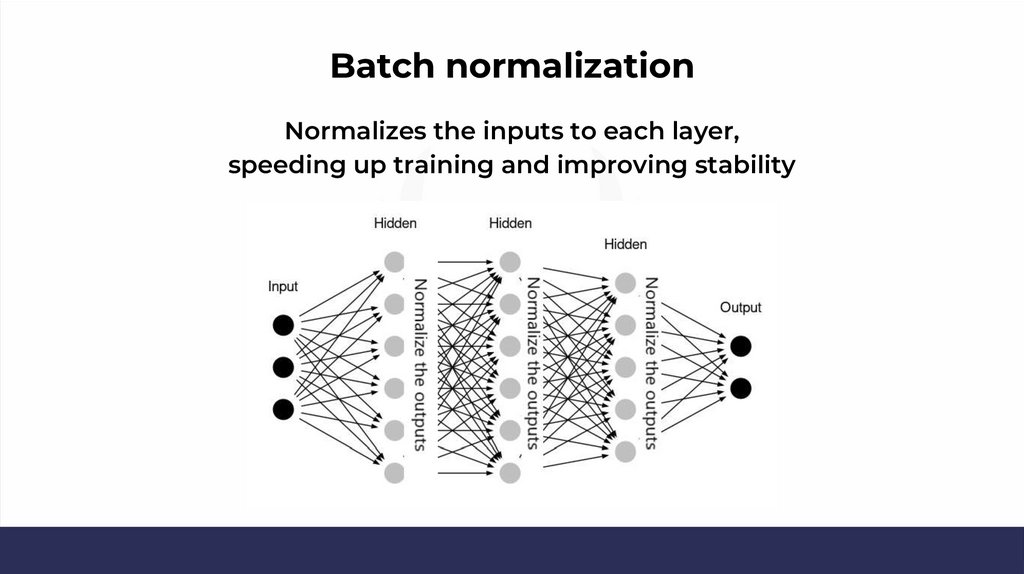
Batch normalizationNormalizes the inputs to each layer,
speeding up training and improving stability
42.
CNNs in practice43.
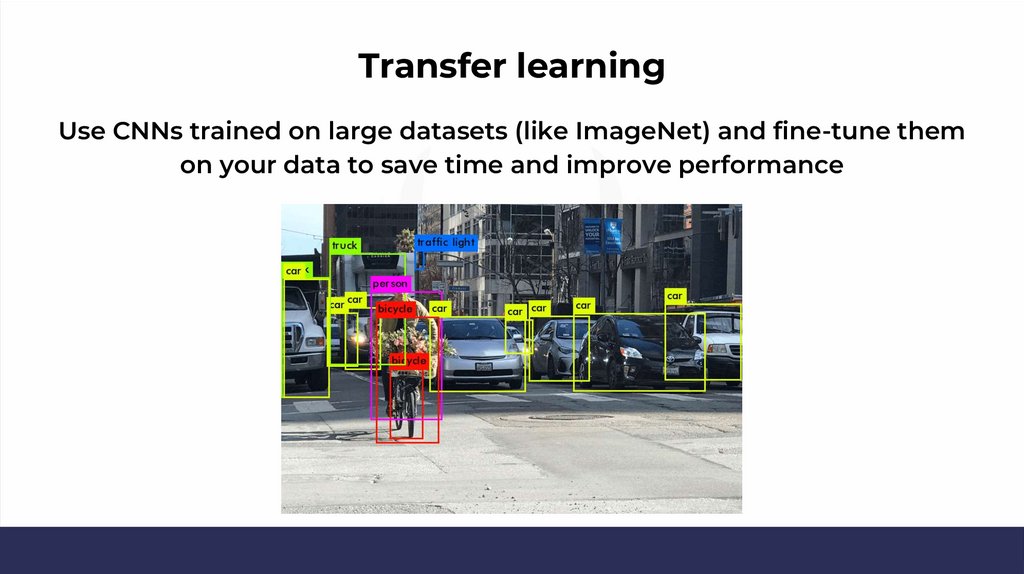
Transfer learningUse CNNs trained on large datasets (like ImageNet) and fine-tune them
on your data to save time and improve performance
44.
Limitations & Challenges45.
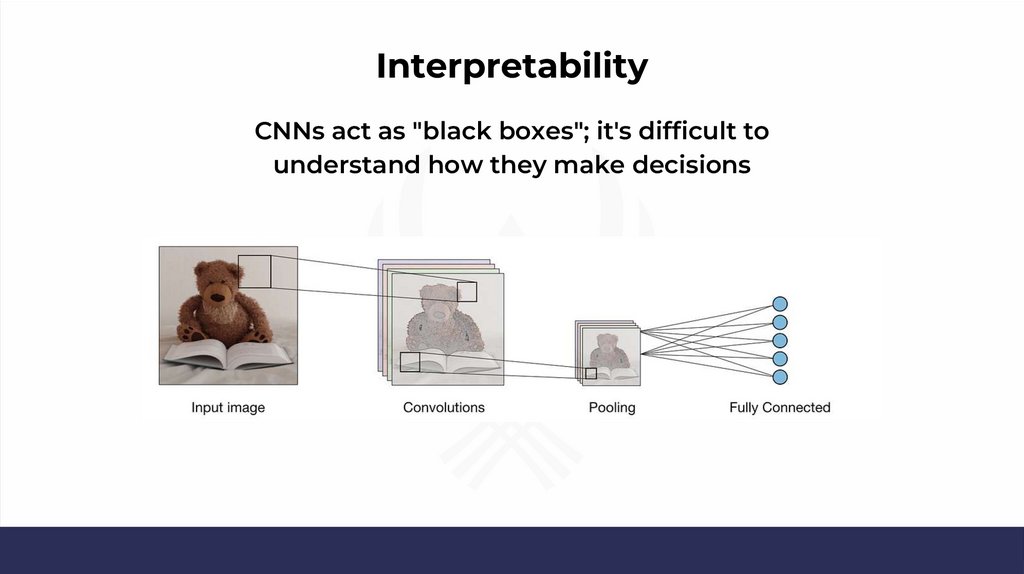
InterpretabilityCNNs act as "black boxes"; it's difficult to
understand how they make decisions
46.
Computational costTraining CNNs requires significant
GPU resources and time
47.
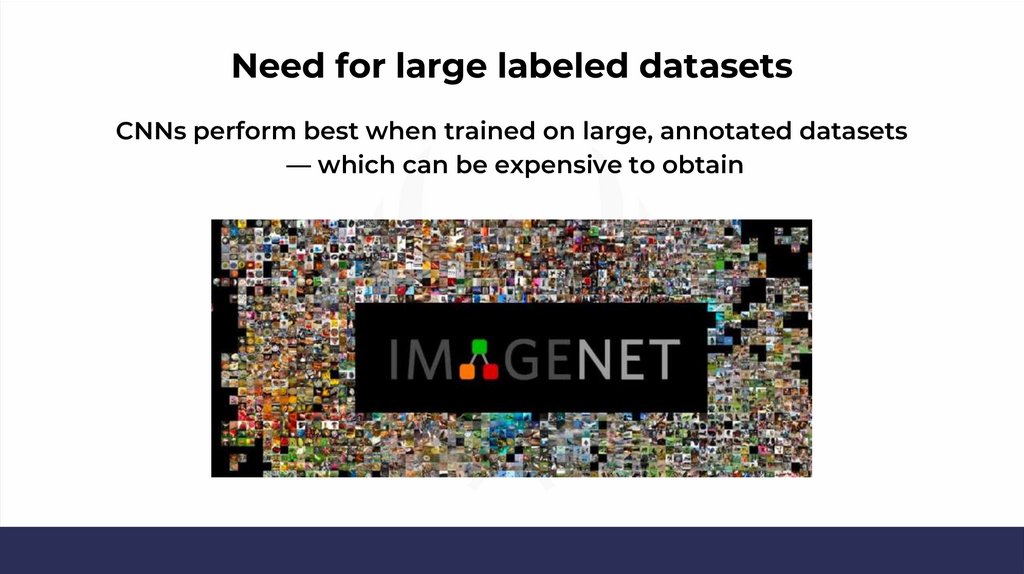
Need for large labeled datasetsCNNs perform best when trained on large, annotated datasets
— which can be expensive to obtain