
 Культурология
Похожие презентации:









Fashion in the 20th Century: A Revolution in Style
1. Fashion in the 20th Century: A Revolution in Style
МБОУ Заворонежская СОШFashion in the 20th Century:
A Revolution in Style
Ученица 9а класса
Золотова Елизавета
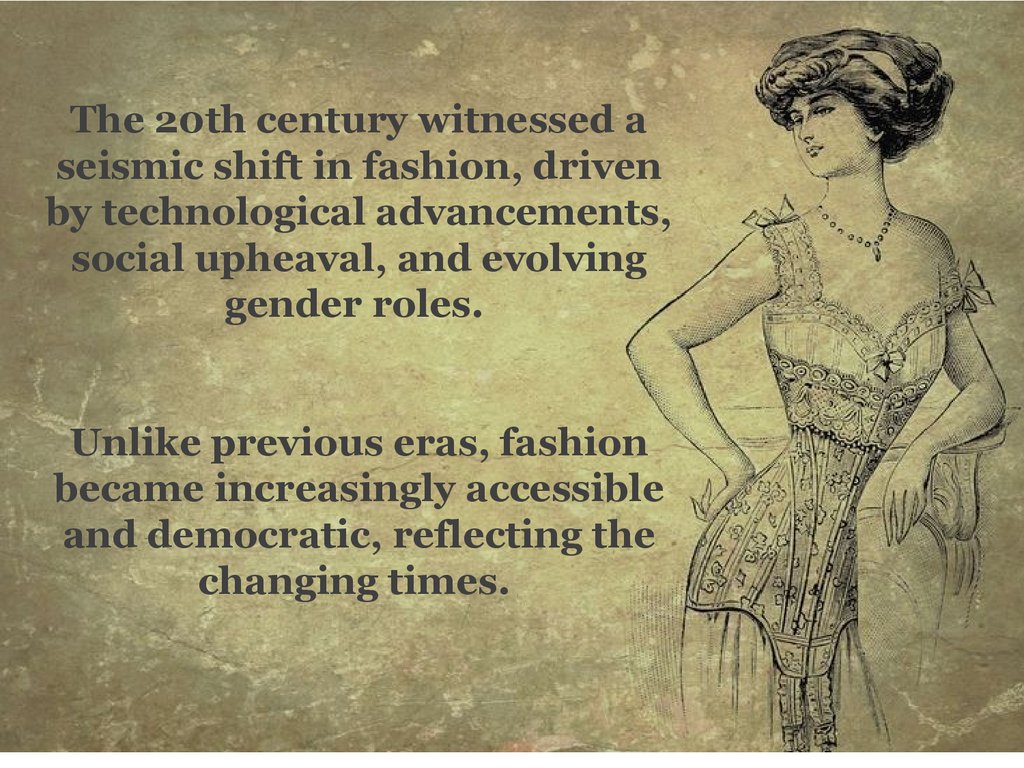
2. The 20th century witnessed a seismic shift in fashion, driven by technological advancements, social upheaval, and evolving
gender roles.Unlike previous eras, fashion
became increasingly accessible
and democratic, reflecting the
changing times.
3. From the restrictive silhouettes of the Edwardian era to the daring styles of the late 20th century, each decade offered a
unique sartoriallandscape.
4.
The Early Years (1900-1920 s):Liberation from Restraint
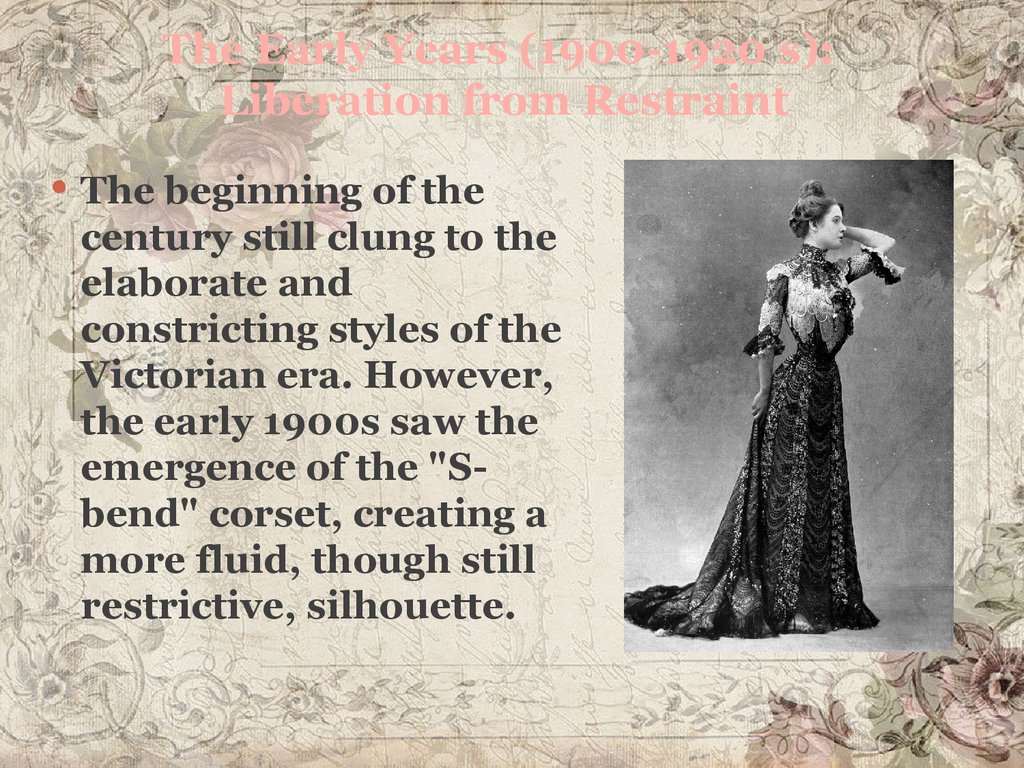
The beginning of the
century still clung to the
elaborate and
constricting styles of the
Victorian era. However,
the early 1900s saw the
emergence of the "Sbend" corset, creating a
more fluid, though still
restrictive, silhouette.
5. The Early Years (1900-1920 s): Liberation from Restraint
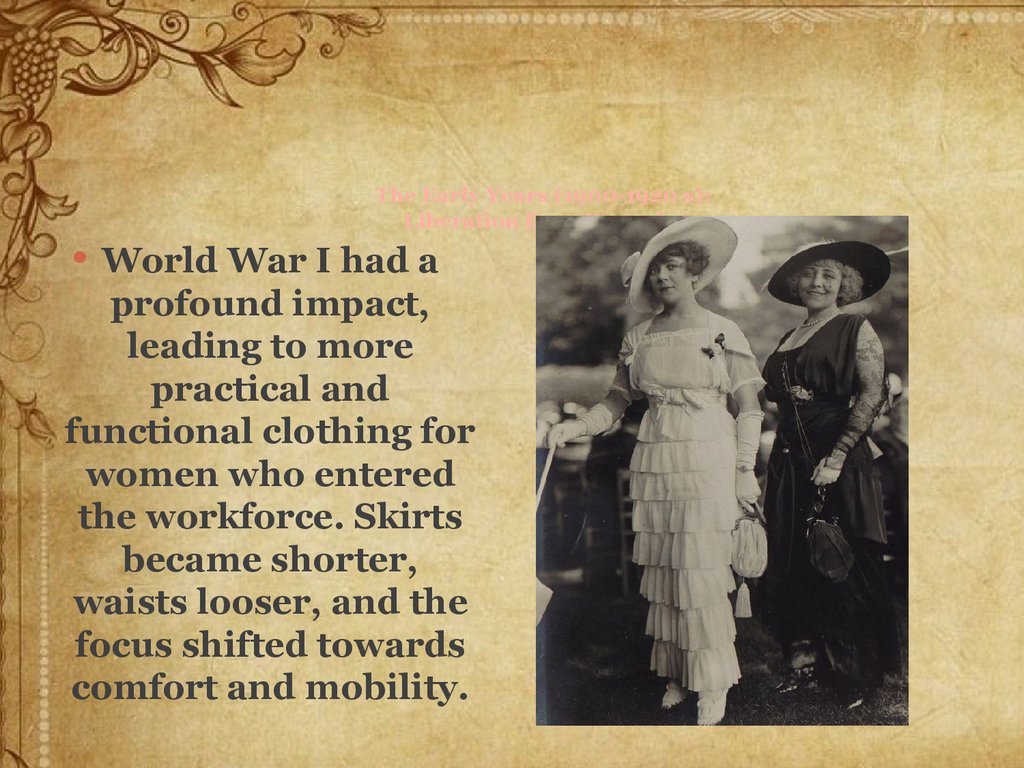
World War I had aprofound impact,
leading to more
practical and
functional clothing for
women who entered
the workforce. Skirts
became shorter,
waists looser, and the
focus shifted towards
comfort and mobility.
6. The Early Years (1900-1920 s): Liberation from Restraint
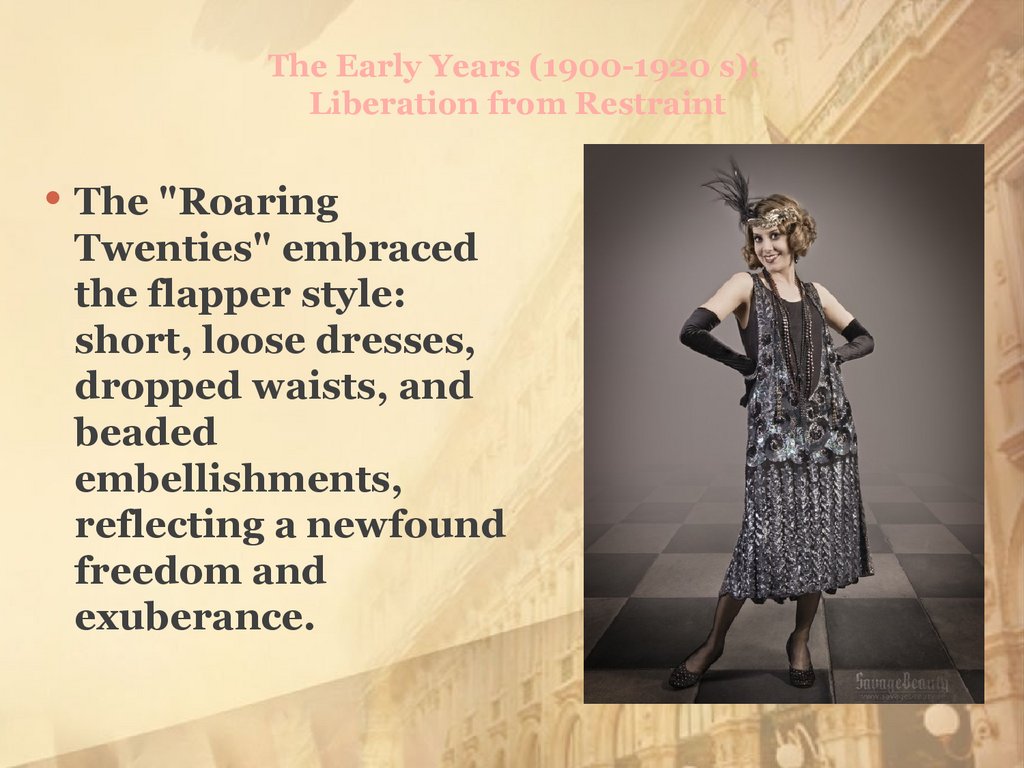
The "RoaringTwenties" embraced
the flapper style:
short, loose dresses,
dropped waists, and
beaded
embellishments,
reflecting a newfound
freedom and
exuberance.
7.
Mid-Century Style (1930s-1960s):Elegance and Rebellion
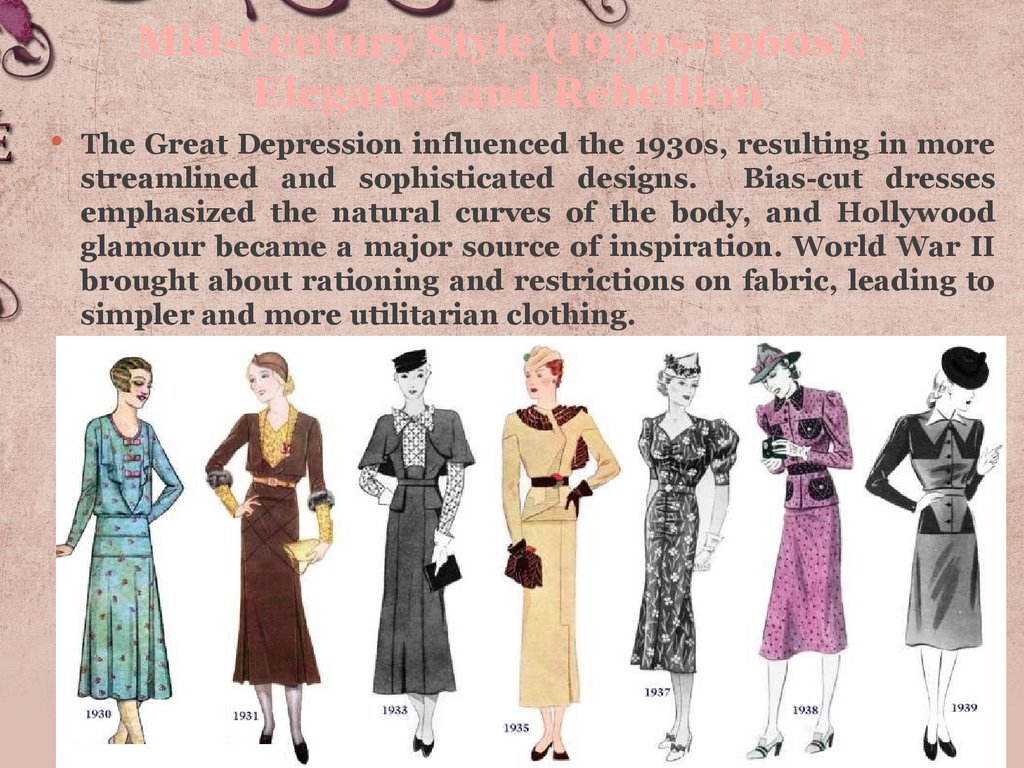
The Great Depression influenced the 1930s, resulting in more
streamlined and sophisticated designs.
Bias-cut dresses
emphasized the natural curves of the body, and Hollywood
glamour became a major source of inspiration. World War II
brought about rationing and restrictions on fabric, leading to
simpler and more utilitarian clothing.
8. Mid-Century Style (1930s-1960s): Elegance and Rebellion
Mid-Century Style (1930s-1960s):and Rebellion
TheElegance
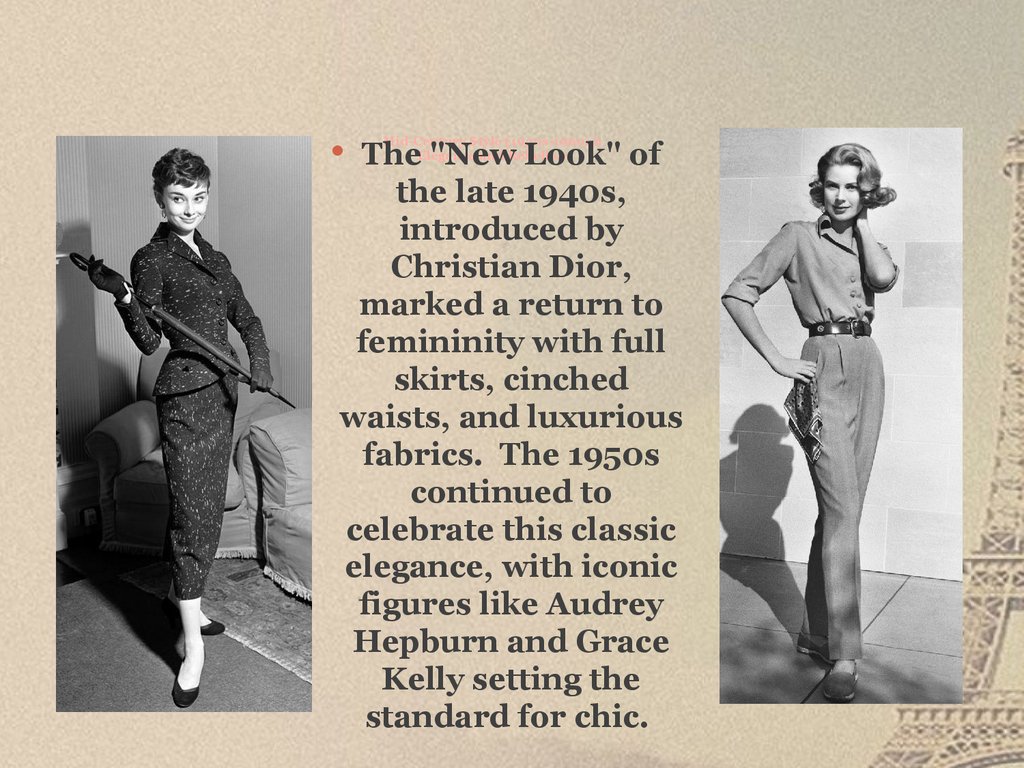
"New
Look" of
the late 1940s,
introduced by
Christian Dior,
marked a return to
femininity with full
skirts, cinched
waists, and luxurious
fabrics. The 1950s
continued to
celebrate this classic
elegance, with iconic
figures like Audrey
Hepburn and Grace
Kelly setting the
standard for chic.
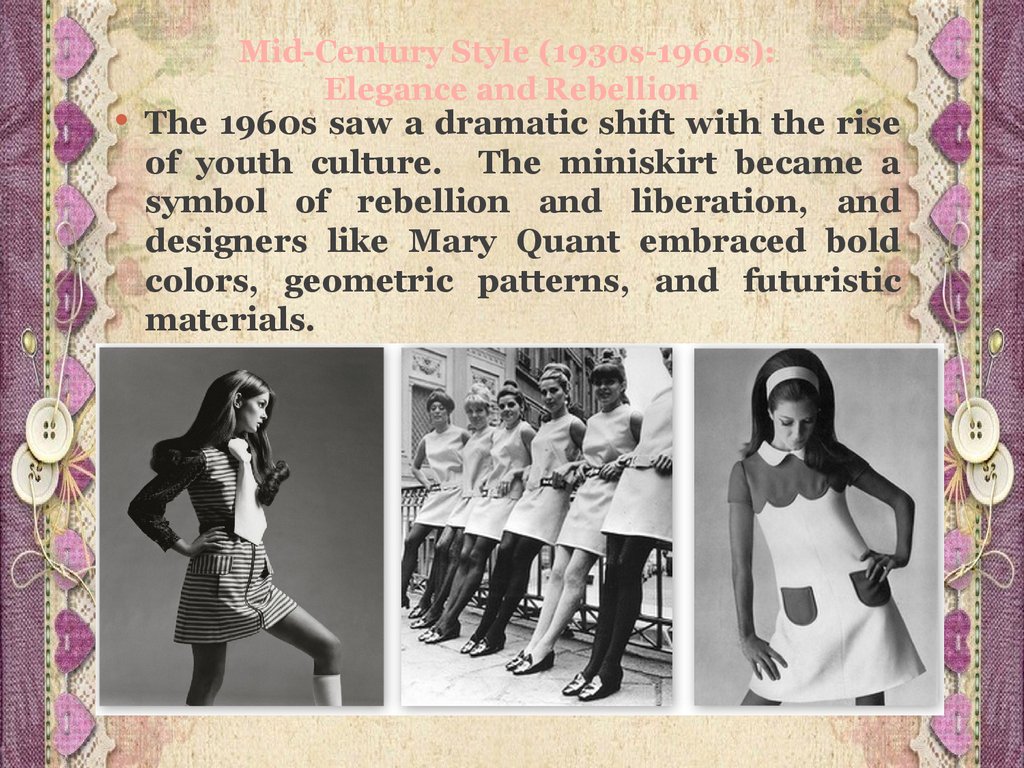
9. Mid-Century Style (1930s-1960s): Elegance and Rebellion
The 1960s saw a dramatic shift with the riseof youth culture. The miniskirt became a
symbol of rebellion and liberation, and
designers like Mary Quant embraced bold
colors, geometric patterns, and futuristic
materials.
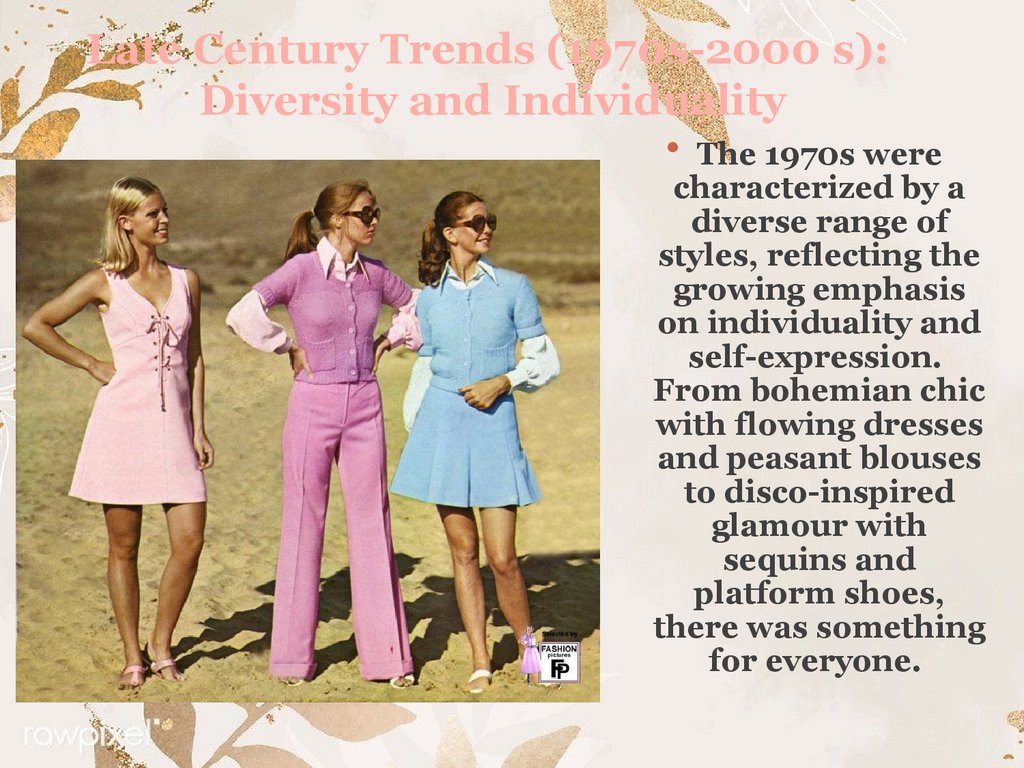
10.
Late Century Trends (1970s-2000 s):Diversity and Individuality
The 1970s were
characterized by a
diverse range of
styles, reflecting the
growing emphasis
on individuality and
self-expression.
From bohemian chic
with flowing dresses
and peasant blouses
to disco-inspired
glamour with
sequins and
platform shoes,
there was something
for everyone.
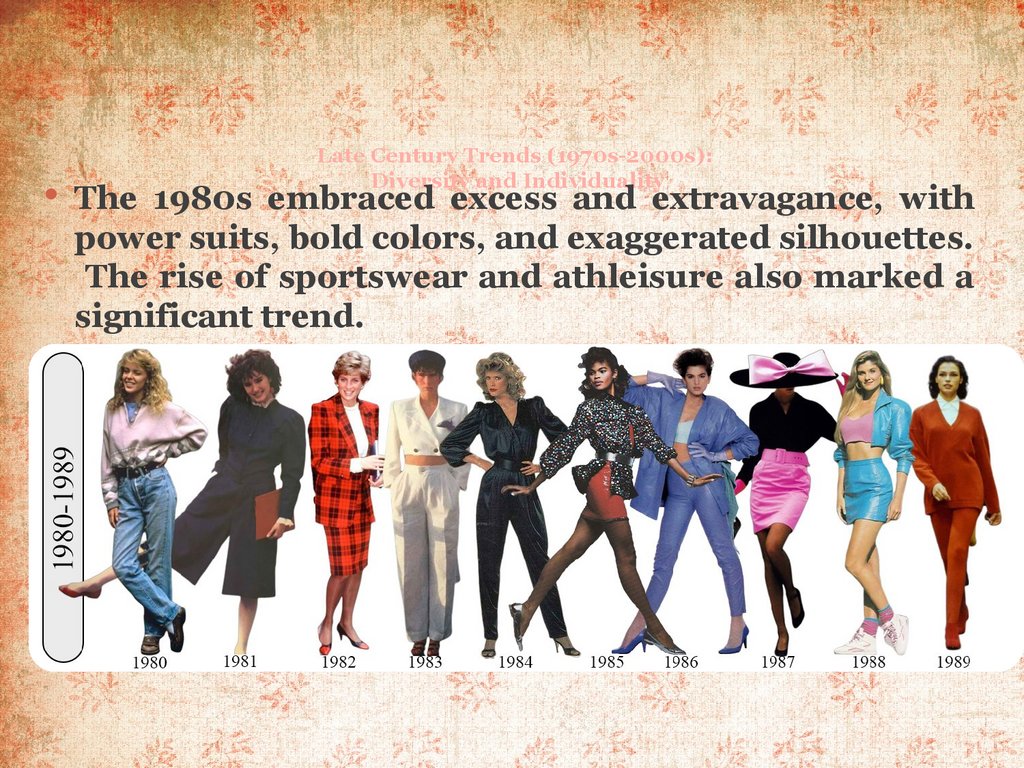
11. Late Century Trends (1970s-2000s): Diversity and Individuality
The 1980s embraced excess and extravagance, withpower suits, bold colors, and exaggerated silhouettes.
The rise of sportswear and athleisure also marked a
significant trend.
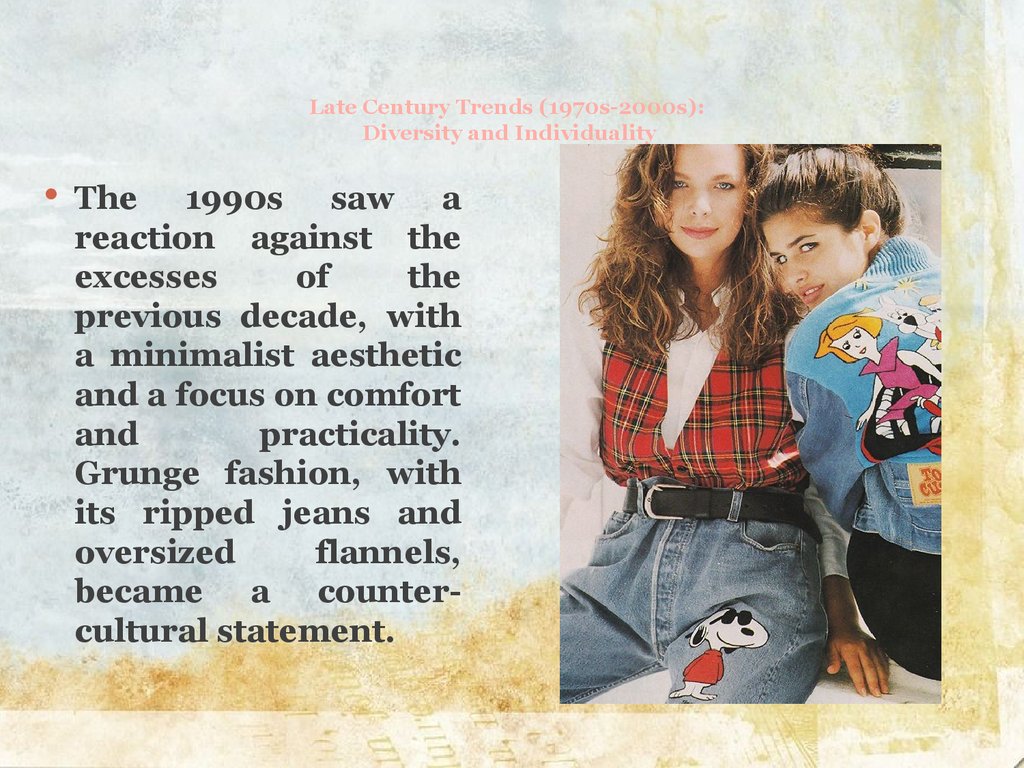
12. Late Century Trends (1970s-2000s): Diversity and Individuality
The1990s saw a
reaction against the
excesses
of
the
previous decade, with
a minimalist aesthetic
and a focus on comfort
and
practicality.
Grunge fashion, with
its ripped jeans and
oversized
flannels,
became a countercultural statement.
13. Late Century Trends (1970s-2000s): Diversity and Individuality
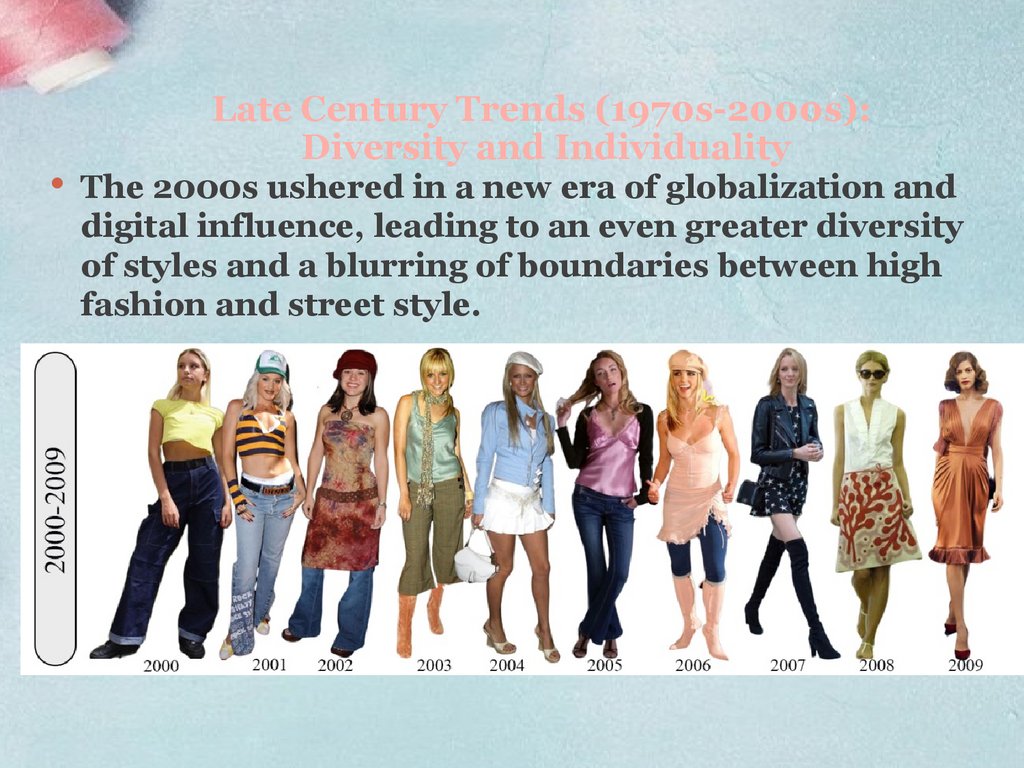
The 2000s ushered in a new era of globalization anddigital influence, leading to an even greater diversity
of styles and a blurring of boundaries between high
fashion and street style.
14.
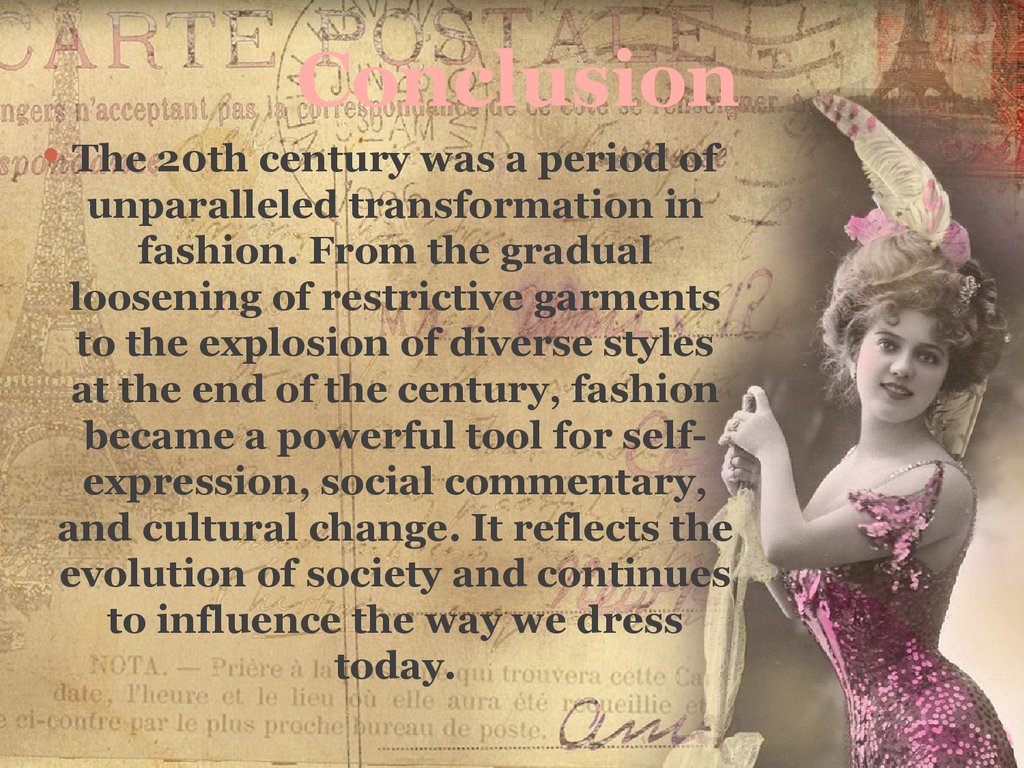
ConclusionThe 20th century was a period of
unparalleled transformation in
fashion. From the gradual
loosening of restrictive garments
to the explosion of diverse styles
at the end of the century, fashion
became a powerful tool for selfexpression, social commentary,
and cultural change. It reflects the
evolution of society and continues
to influence the way we dress
today.