









 Менеджмент
 Социология
Похожие презентации:









Employability Skills - 401. Module 3. Intercultural Communication and Workplace Etiquettes
1. Rise Above With Acharya
Uzbekistan2. Employability Skills -401 MODULE 3
3. Intercultural Communication and Workplace Etiquettes
4. Define Culture.
1.The way of life especially generalcustoms and behavior.
2.The attitudes behavior, opinions, etc. for
a particular group of people within
society.
3.Music, art, literature, theatre.
5. Three components of culture are
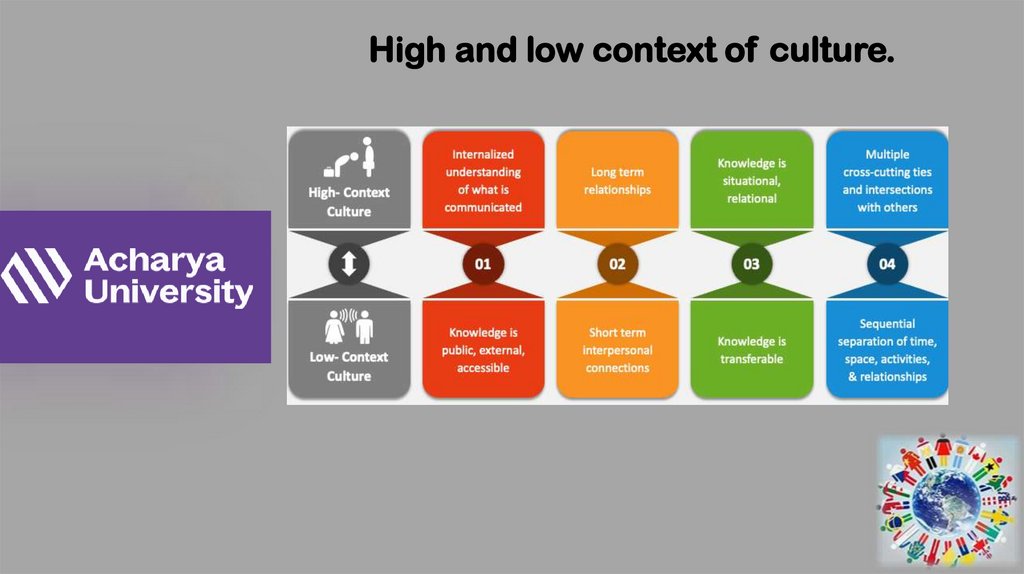
6. High and low context of culture.
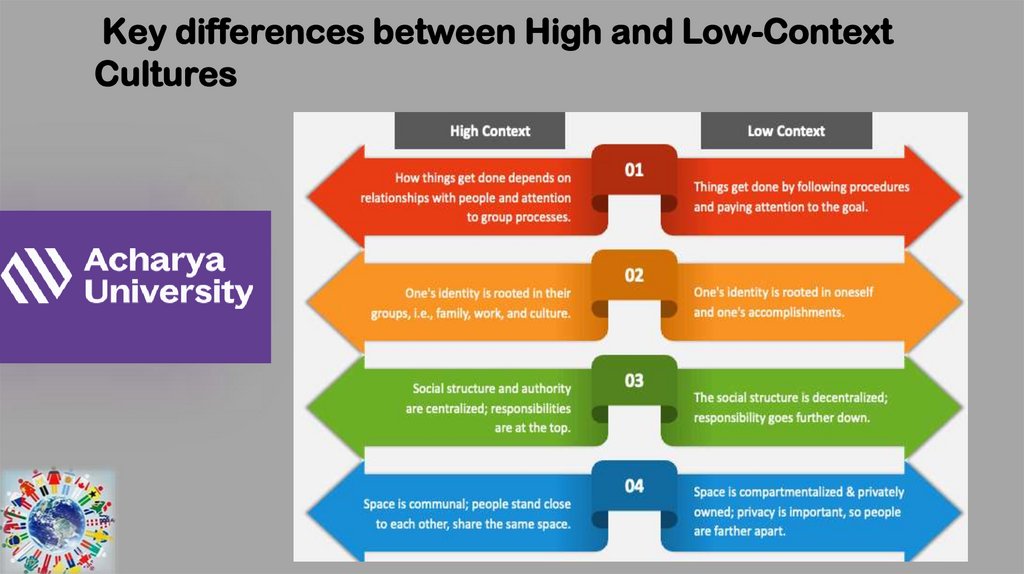
7. Key differences between High and Low-Context Cultures
8.
9. What Is Intercultural Communication?
1.Communication between people from differentcultures.
2.Sometimes used synonymously with crosscultural communication
3.Occurs when large and important cultural
differences create dissimilar interpretations
and expectations about how to communicate
competently.
10. Why is Intercultural communication important?
11. Importance of Intercultural Communication at Work
1.Enhance collaboration2.Increase Creativity
3.Improve employee engagement
4.Global Competitiveness
12. Tips - Improving Intercultural Communication at Work
1.Educate yourself and your team2.Practice active listening
3.Be aware of non-verbal
communication
4.Adapt your communication style
5.Use clear and simple language
13. Culture Shock
Feeling of uncertainty , confusion, or anxietythat people may experience when being a
new surroundings or country
14. Why is culture shock important to understand?
1.Helps individuals prepare for globalexperiences.
2. Reduces frustration and increases cultural
adaptation.
3. Improves intercultural communication and
workplace diversity management
15. Symptoms of culture shock
1.Homesickness2.Anxiety or frustration
3.Difficulty in social interactions
4. Feeling isolated or misunderstood
5. Physical discomfort (headaches, fatigue)
16. How to overcome culture shock?
1.Keep an open mind2. Learn the local language
3.Engage with locals
4.Be patient with yourself
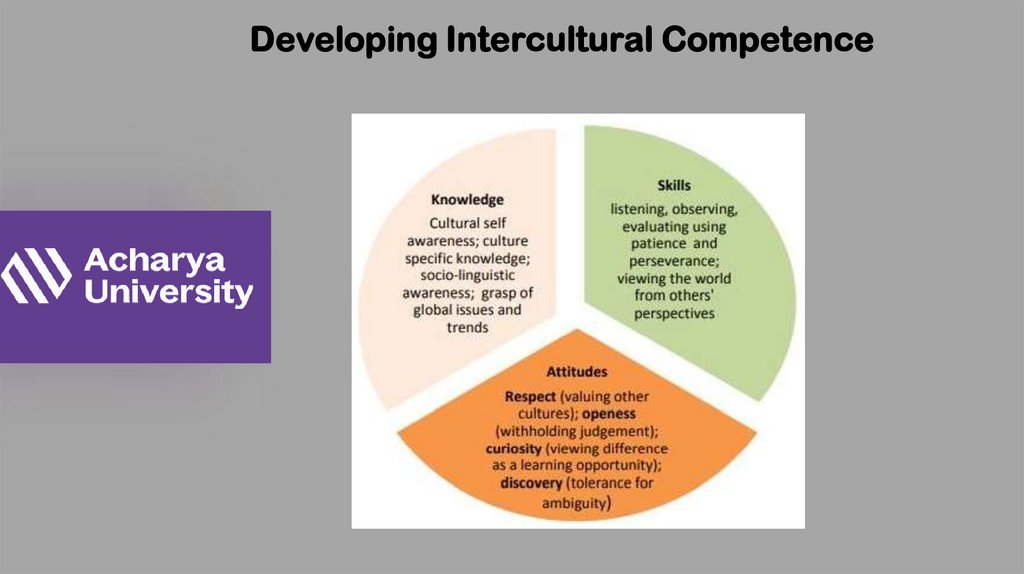
17. Developing Intercultural Competence
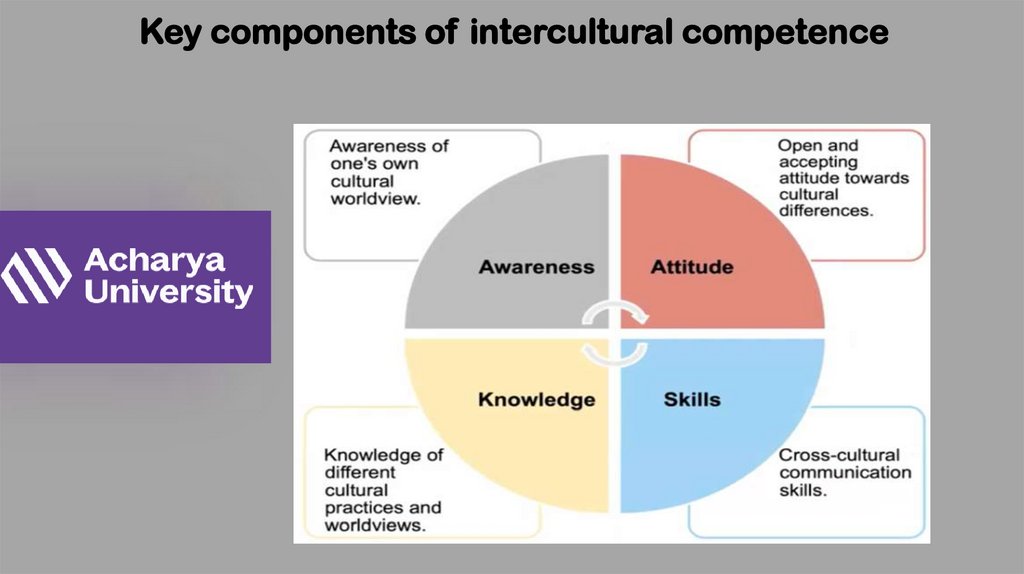
18. Key components of intercultural competence
19. Why is intercultural competence important?
1. For global business success and multiculturalteamwork
2. Enhances relationships and reduces
misunderstandings in diverse workplaces
3. Promotes inclusivity, respect, and collaboration in
an interconnected world.
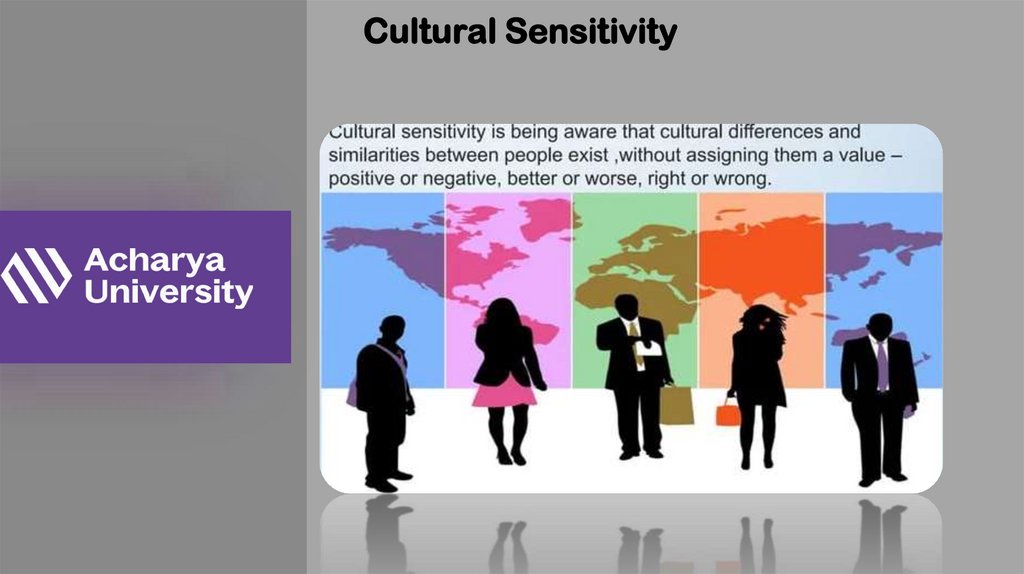
20. Cultural Sensitivity
21. Key Elements of Cultural Sensitivity
1. Awareness2. Knowledge
3. Empathy
4. Adaptability
22. How to develop cultural sensitivity?
1. Educate yourself2. Observe and Listen
3. Be Open to Feedback
4. Engage in Cross-Cultural Interactions
5. Respect Cultural Differences
23. Benefits of Cultural Sensitivity in the Workplace
1. Enhances Communication and Collaboration2. Increases employee satisfaction and retention
3. Employees feel more valued and respected, leading to
increased job satisfaction
4. Boosts creativity and innovation
5. Strengthens global competitiveness
6. Improves workplace morale and inclusion
7. Reduces workplace conflicts
8. Enhances customer relations and brand reputation
9. Supports compliance with diversity and inclusion
policies
24. What is Global Etiquette?
What is Global Etiquette?1. Etiquette refers to the set of customs,
behaviours, and professional norms that guide
respectful and effective communication in an
international business setting.
2. Understanding global etiquette helps avoid
misunderstandings, builds trust, and strengthens
relationships with international clients, partners,
and colleagues
25. Key aspects of global workplace etiquette
1. Greetings & Communication2. Business Meetings
3. Dress Code
4. Gift-Giving Etiquette
5. Hierarchy and Respect
26. Developing Cultural Awareness in the Workplace
1. Educate Yourself2. Be Open-Minded
3. Adapt Communication Styles
4. Practice Active Listening
5. Respect Time Zones & Holidays
27. Professional Communication Source
1. The Communication Process2. Written Communication
3. Oral Communication
4. Interpersonal Communication
5. Communication Technology
6. Cross-Cultural Communication
28.
29. Behavioral Etiquette in workplace
1. Politeness and Professionalism2. Non-verbal communication
3. Active Listening
4. Effective Written Communication
5. Empathy and Emotional Intelligence
6. Respecting Hierarchy and Authority
7. Cultural Sensitivity
8. Positive Attitude and Courtesy
9. Handling Conflict Professionally
10. Appropriate Use of Technology
30. Behavioural etiquette includes
Be yourself – and allow others to treat you withrespect
Say “Thank You”
Give Genuine Compliments
Don’t be Boastful, Arrogant or Loud
Listen Before Speaking
Speak with Kindness and Caution
Do Not Criticize or Complain
Be Punctual
Do Not Embarrass Others
31. Effective collaboration across cultures: Adapting communication styles for multinational teams.
1.2.
3.
4.
5.
6.
7.
8.
9.
10.
Understand Cultural Differences
Adapt Your Communication Style
Be Mindful of Non-Verbal Cues
Embrace Active Listening
Be Patient with Language Barriers
Foster Inclusivity
Adjust Conflict Resolution Strategies
Leverage Technology for Better Communication
Show Respect for Local Customs and Traditions
Encourage Cross-Cultural Training
32. Principles of respect, responsibility, and confidentiality.
Key Aspects of Respect:1. Acknowledging Differences
2. Active Listening
3. Politeness and Courtesy
4. Appreciating Contributions
5. Non-Discrimination
.
33. Key Aspects of Responsibility
1. Accountability2. Dependability
3. Commitment to Quality
4. Self-Discipline
5. Ethical Decision-Making
34. Key Aspects of Confidentiality
1. Protecting Sensitive Information2. Discretion
3. Maintaining Trust
4. Boundaries
5. Respecting Privacy