
 Менеджмент
Похожие презентации:








Product Training (Rus)
1. Product Training
PRODUCT TRAINING2. Agenda
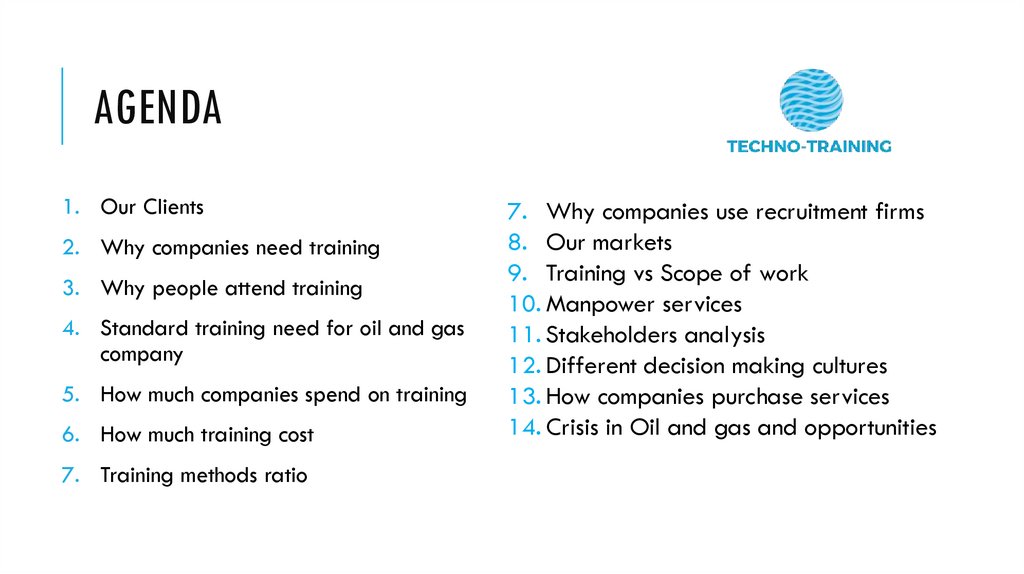
AGENDA1. Our Clients
2. Why companies need training
3. Why people attend training
4. Standard training need for oil and gas
company
5. How much companies spend on training
6. How much training cost
7. Training methods ratio
7. Why companies use recruitment firms
8. Our markets
9. Training vs Scope of work
10. Manpower services
11. Stakeholders analysis
12. Different decision making cultures
13. How companies purchase services
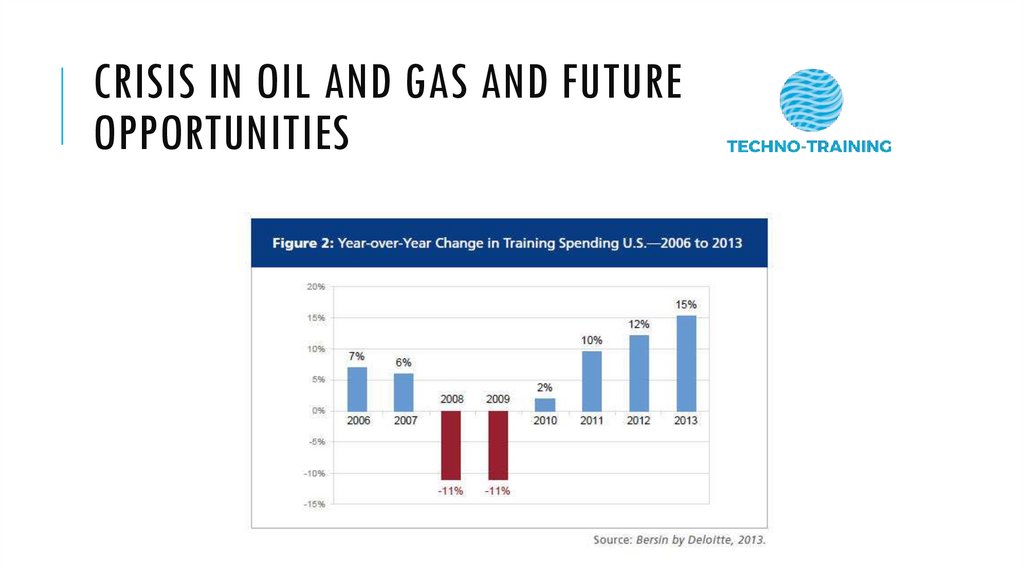
14. Crisis in Oil and gas and opportunities
3. Our clients
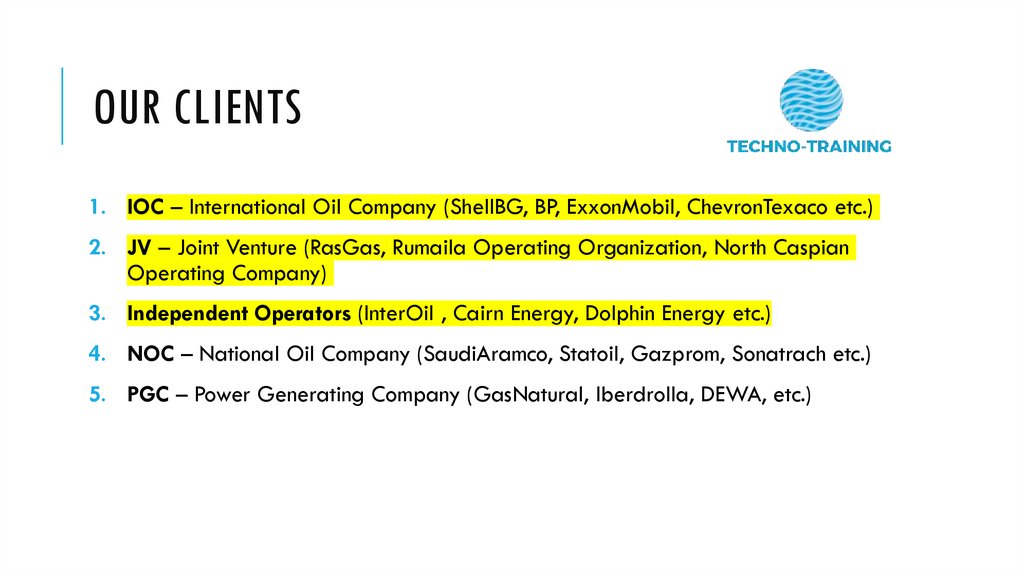
OUR CLIENTS1. IOC – International Oil Company (ShellBG, BP, ExxonMobil, ChevronTexaco etc.)
2. JV – Joint Venture (RasGas, Rumaila Operating Organization, North Caspian
Operating Company)
3. Independent Operators (InterOil , Cairn Energy, Dolphin Energy etc.)
4. NOC – National Oil Company (SaudiAramco, Statoil, Gazprom, Sonatrach etc.)
5. PGC – Power Generating Company (GasNatural, Iberdrolla, DEWA, etc.)
4. Why companies need training
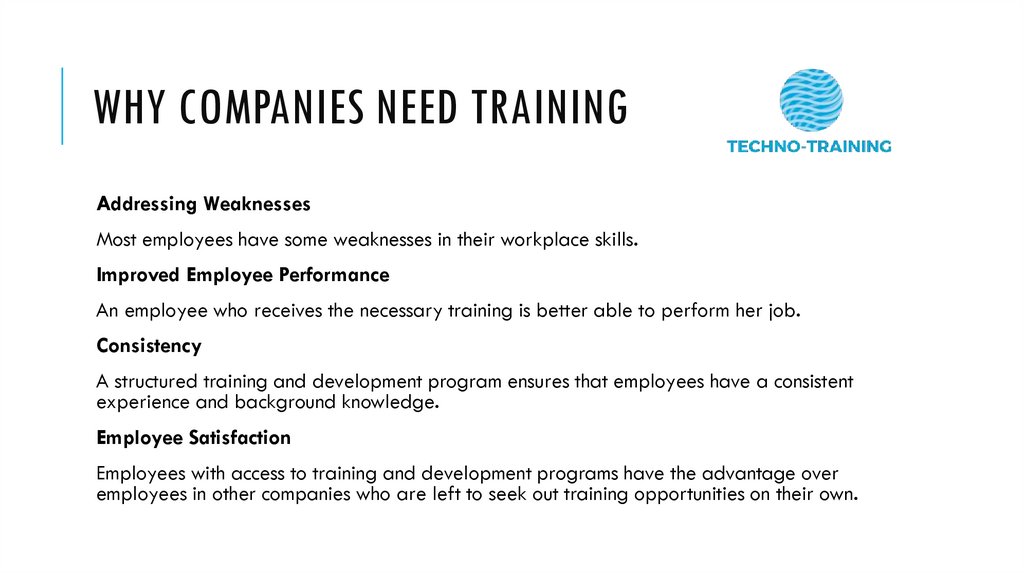
WHY COMPANIES NEED TRAININGAddressing Weaknesses
Most employees have some weaknesses in their workplace skills.
Improved Employee Performance
An employee who receives the necessary training is better able to perform her job.
Consistency
A structured training and development program ensures that employees have a consistent
experience and background knowledge.
Employee Satisfaction
Employees with access to training and development programs have the advantage over
employees in other companies who are left to seek out training opportunities on their own.
5. Why people attend training
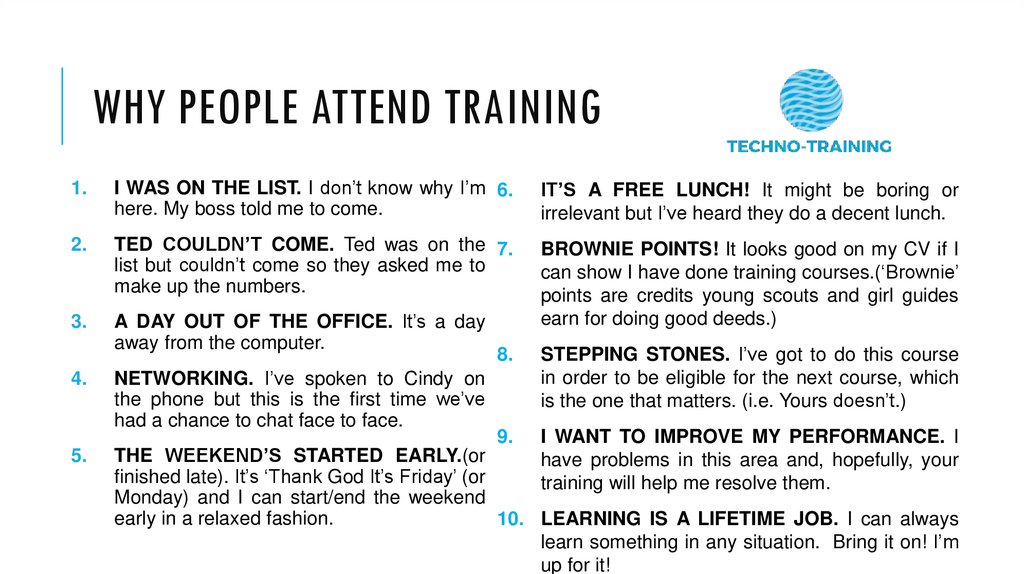
WHY PEOPLE ATTEND TRAINING1.
I WAS ON THE LIST. I don’t know why I’m 6.
here. My boss told me to come.
IT’S A FREE LUNCH! It might be boring or
irrelevant but I’ve heard they do a decent lunch.
2.
TED COULDN’T COME. Ted was on the 7.
list but couldn’t come so they asked me to
make up the numbers.
3.
A DAY OUT OF THE OFFICE. It’s a day
away from the computer.
BROWNIE POINTS! It looks good on my CV if I
can show I have done training courses.(‘Brownie’
points are credits young scouts and girl guides
earn for doing good deeds.)
4.
5.
NETWORKING. I’ve spoken to Cindy on
the phone but this is the first time we’ve
had a chance to chat face to face.
8.
STEPPING STONES. I’ve got to do this course
in order to be eligible for the next course, which
is the one that matters. (i.e. Yours doesn’t.)
9.
I WANT TO IMPROVE MY PERFORMANCE. I
have problems in this area and, hopefully, your
training will help me resolve them.
THE WEEKEND’S STARTED EARLY.(or
finished late). It’s ‘Thank God It’s Friday’ (or
Monday) and I can start/end the weekend
early in a relaxed fashion.
10. LEARNING IS A LIFETIME JOB. I can always
learn something in any situation. Bring it on! I’m
up for it!
6. Standard” Training Needs
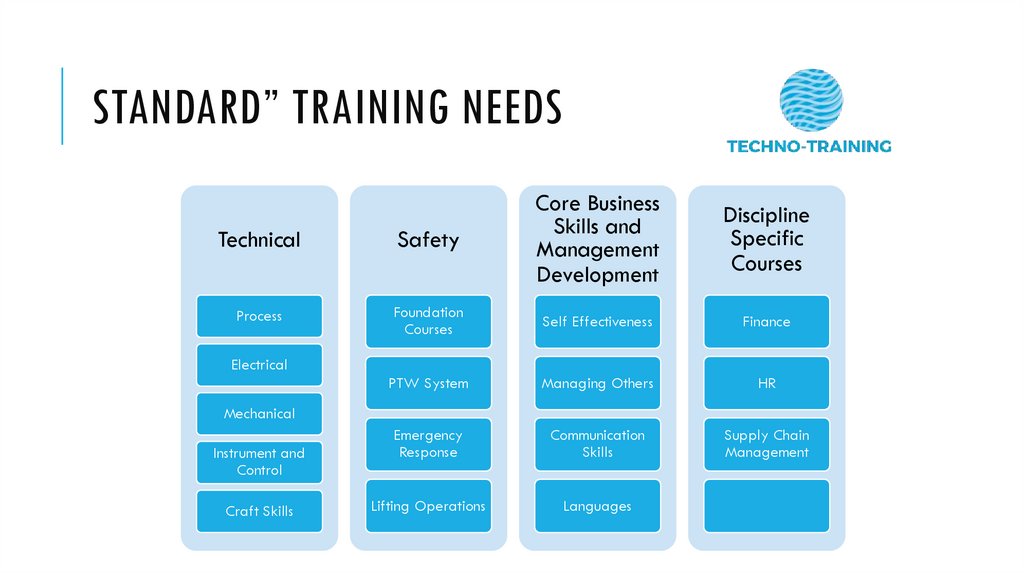
STANDARD” TRAINING NEEDSTechnical
Safety
Core Business
Skills and
Management
Development
Process
Foundation
Courses
Self Effectiveness
Finance
PTW System
Managing Others
HR
Emergency
Response
Communication
Skills
Supply Chain
Management
Lifting Operations
Languages
Discipline
Specific
Courses
Electrical
Mechanical
Instrument and
Control
Craft Skills
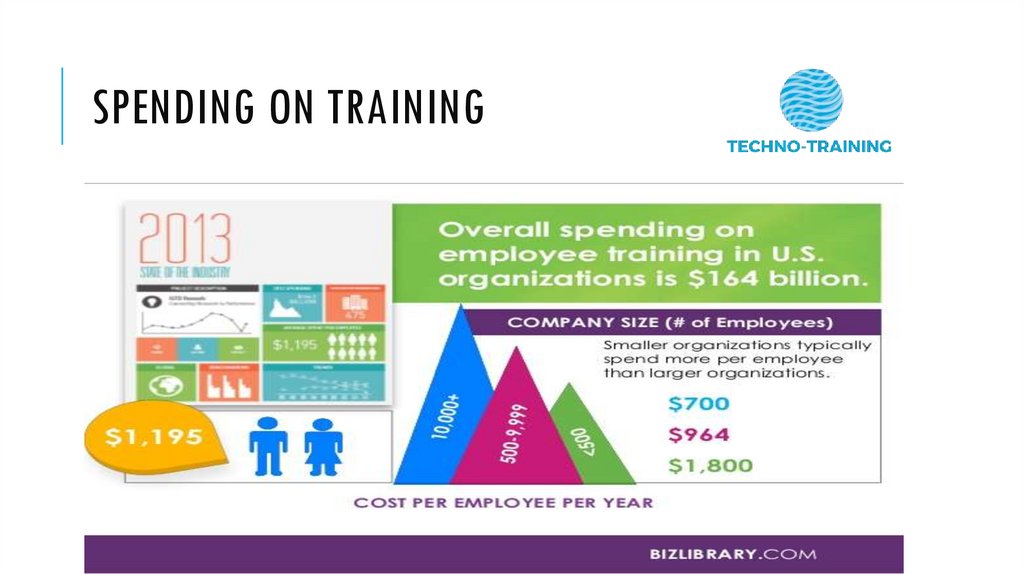
7. Spending on training
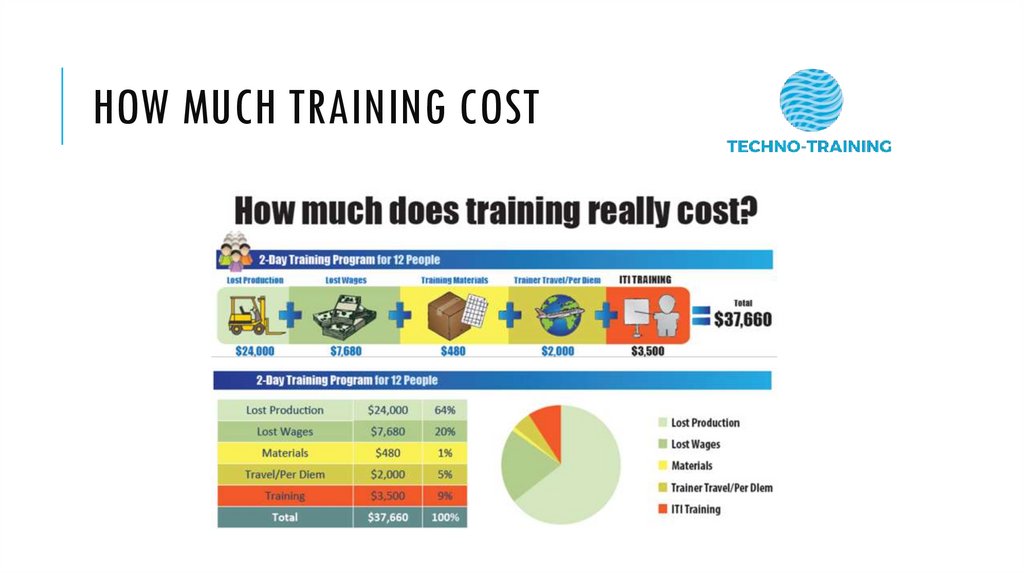
SPENDING ON TRAINING8. How much training cost
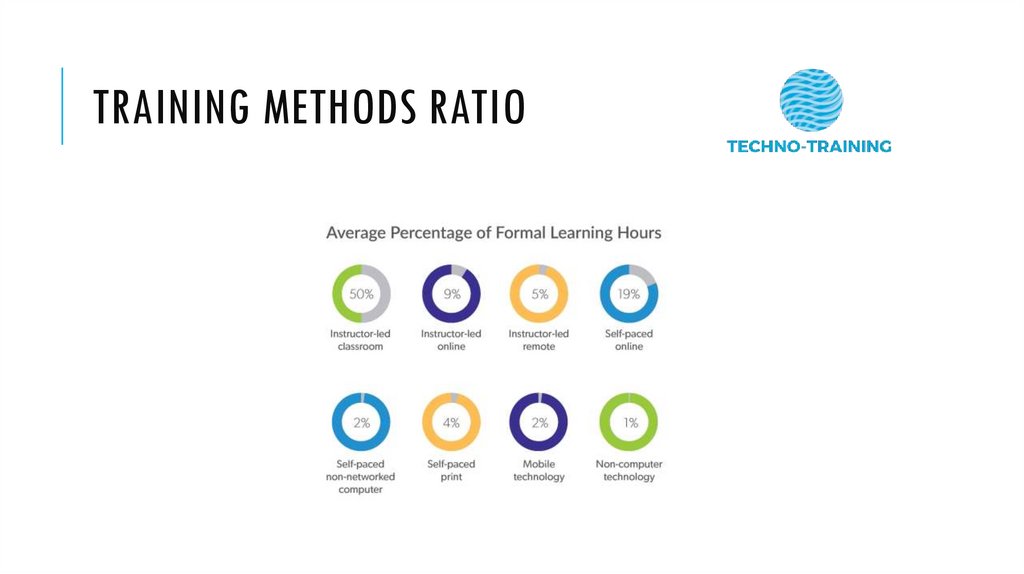
HOW MUCH TRAINING COST9. Training methods ratio
TRAINING METHODS RATIO10. Why companies use recruitment firms
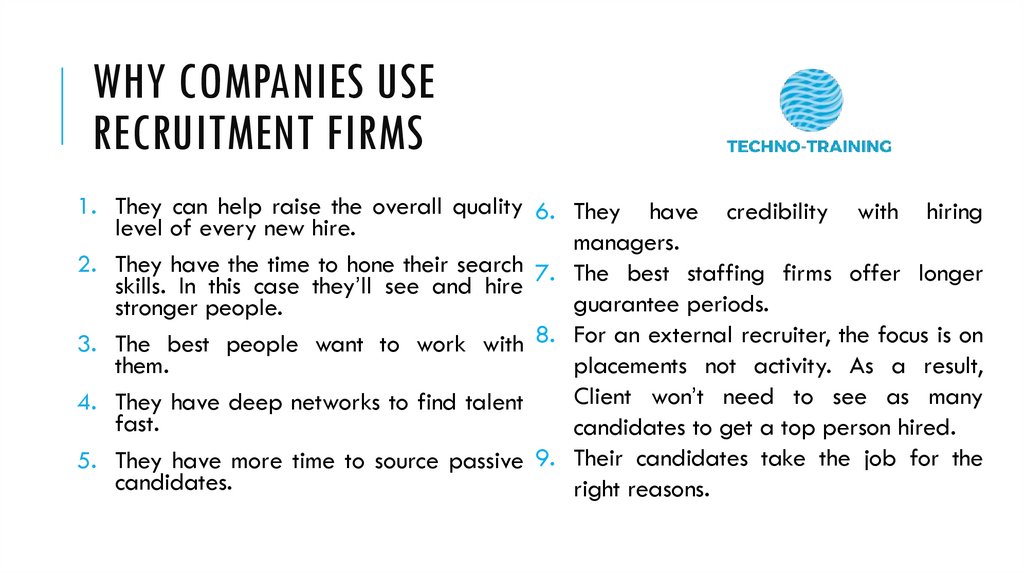
WHY COMPANIES USERECRUITMENT FIRMS
1. They can help raise the overall quality 6.
level of every new hire.
2. They have the time to hone their search 7.
skills. In this case they’ll see and hire
stronger people.
3. The best people want to work with 8.
them.
4. They have deep networks to find talent
fast.
5. They have more time to source passive 9.
candidates.
They have credibility with hiring
managers.
The best staffing firms offer longer
guarantee periods.
For an external recruiter, the focus is on
placements not activity. As a result,
Client won’t need to see as many
candidates to get a top person hired.
Their candidates take the job for the
right reasons.
11. our key markets
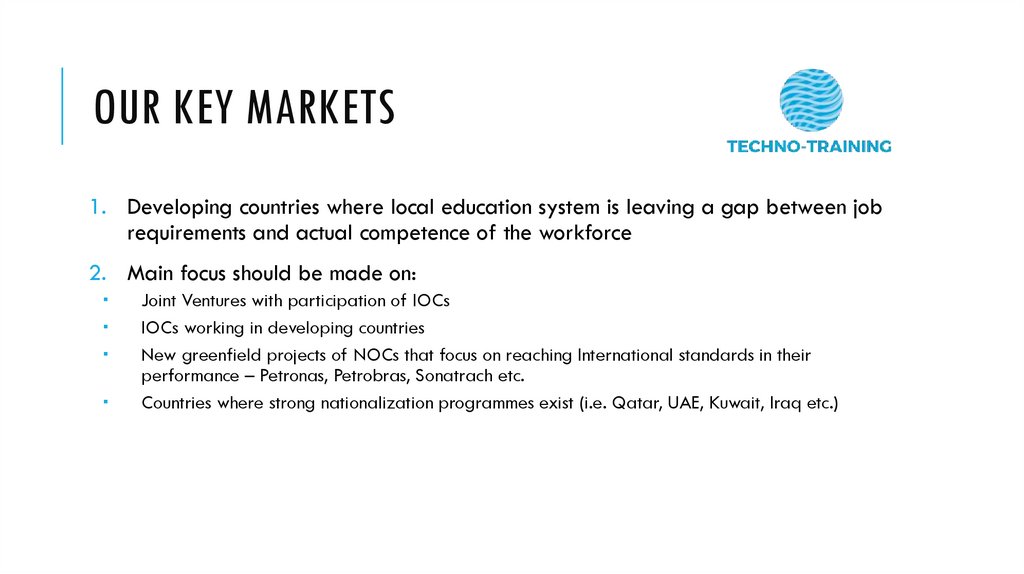
OUR KEY MARKETS1. Developing countries where local education system is leaving a gap between job
requirements and actual competence of the workforce
2. Main focus should be made on:
Joint Ventures with participation of IOCs
IOCs working in developing countries
New greenfield projects of NOCs that focus on reaching International standards in their
performance – Petronas, Petrobras, Sonatrach etc.
Countries where strong nationalization programmes exist (i.e. Qatar, UAE, Kuwait, Iraq etc.)
12. training VS Scope of work
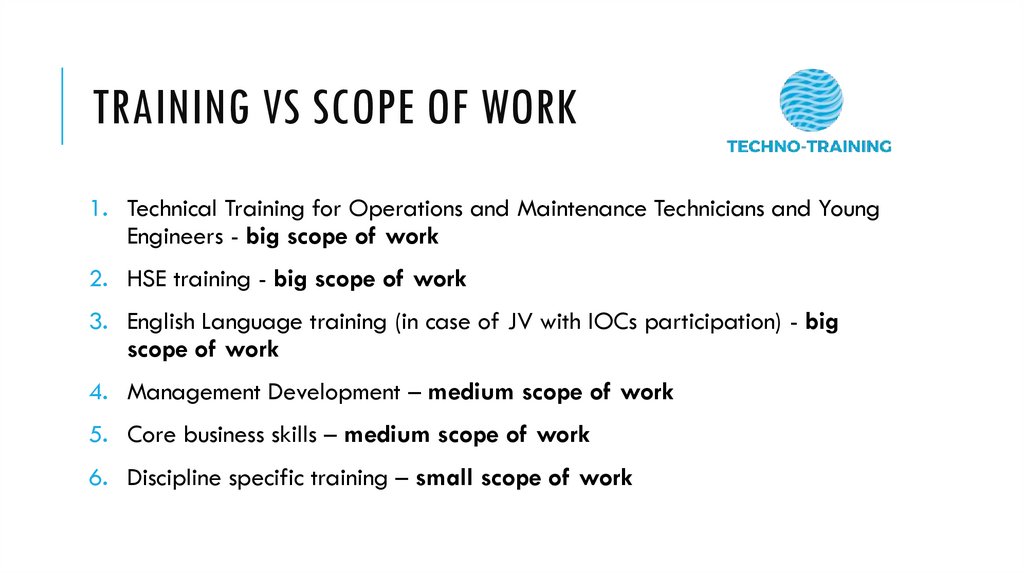
TRAINING VS SCOPE OF WORK1. Technical Training for Operations and Maintenance Technicians and Young
Engineers - big scope of work
2. HSE training - big scope of work
3. English Language training (in case of JV with IOCs participation) - big
scope of work
4. Management Development – medium scope of work
5. Core business skills – medium scope of work
6. Discipline specific training – small scope of work
13. manpower services
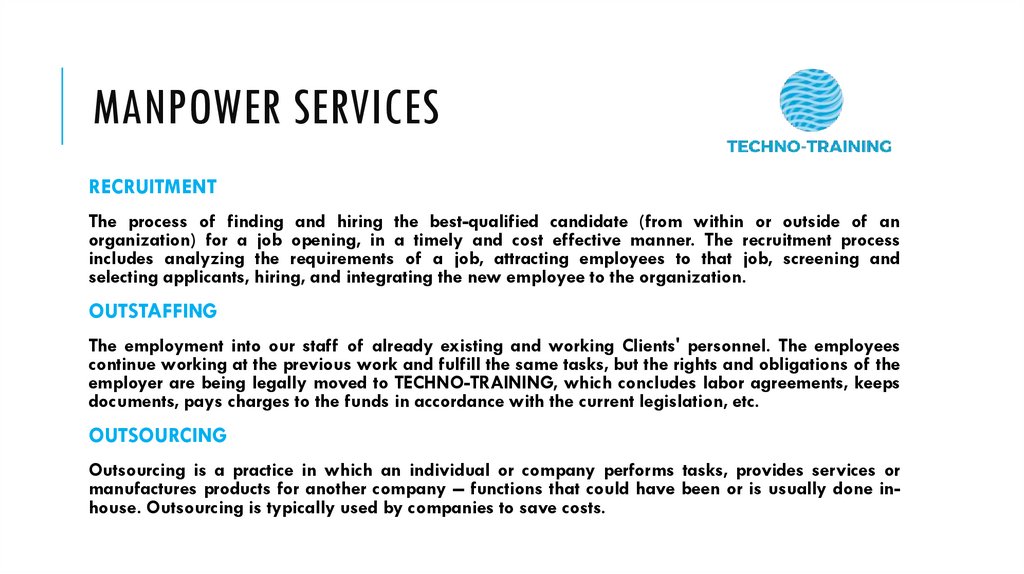
MANPOWER SERVICESRECRUITMENT
The process of finding and hiring the best-qualified candidate (from within or outside of an
organization) for a job opening, in a timely and cost effective manner. The recruitment process
includes analyzing the requirements of a job, attracting employees to that job, screening and
selecting applicants, hiring, and integrating the new employee to the organization.
OUTSTAFFING
The employment into our staff of already existing and working Clients' personnel. The employees
continue working at the previous work and fulfill the same tasks, but the rights and obligations of the
employer are being legally moved to TECHNO-TRAINING, which concludes labor agreements, keeps
documents, pays charges to the funds in accordance with the current legislation, etc.
OUTSOURCING
Outsourcing is a practice in which an individual or company performs tasks, provides services or
manufactures products for another company -- functions that could have been or is usually done inhouse. Outsourcing is typically used by companies to save costs.
14. Key stakeholders organizational structure
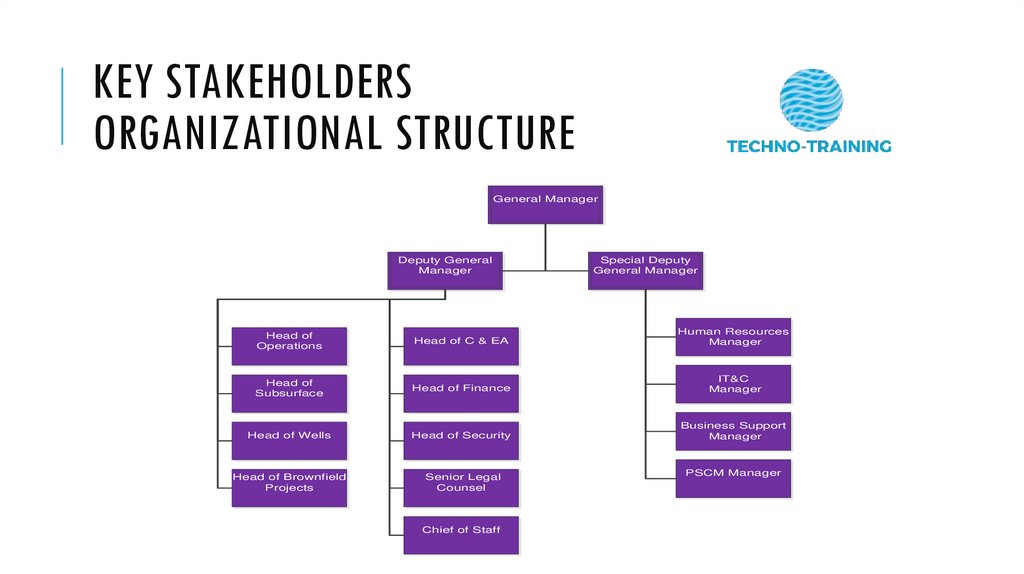
KEY STAKEHOLDERSORGANIZATIONAL STRUCTURE
General Manager
Deputy General
Manager
Special Deputy
General Manager
Head of
Operations
Head of C & EA
Human Resources
Manager
Head of
Subsurface
Head of Finance
IT&C
Manager
Head of Wells
Head of Security
Business Support
Manager
Head of Brownfield
Projects
Senior Legal
Counsel
Chief of Staff
PSCM Manager
15. Key stakeholders organizational structure
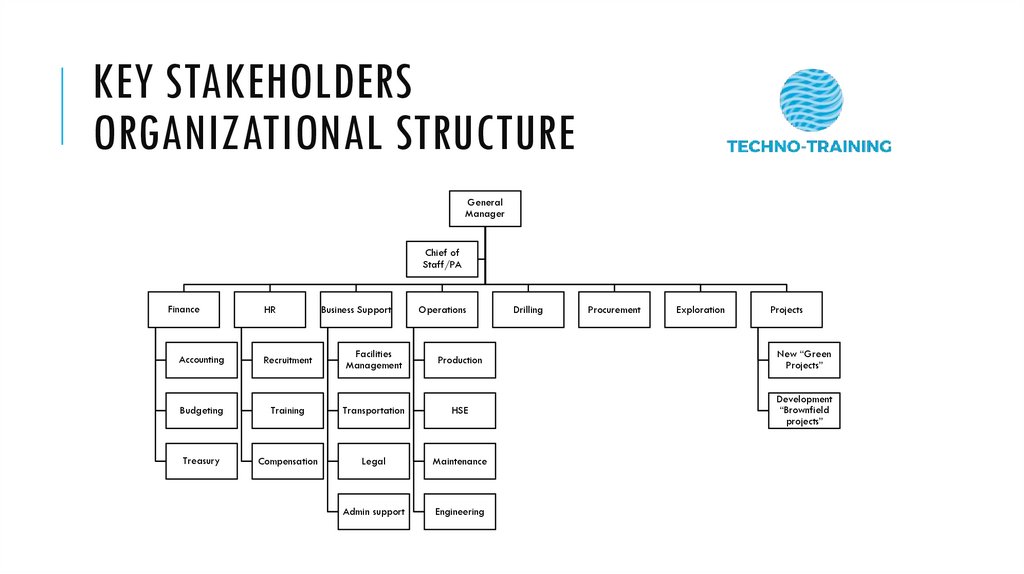
KEY STAKEHOLDERSORGANIZATIONAL STRUCTURE
General
Manager
Chief of
Staff/PA
Finance
HR
Business Support
Operations
Drilling
Procurement
Exploration
Projects
Accounting
Recruitment
Facilities
Management
Production
New “Green
Projects”
Budgeting
Training
Transportation
HSE
Development
“Brownfield
projects”
Treasury
Compensation
Legal
Maintenance
Admin support
Engineering
16. Key stakeholders (job titles)
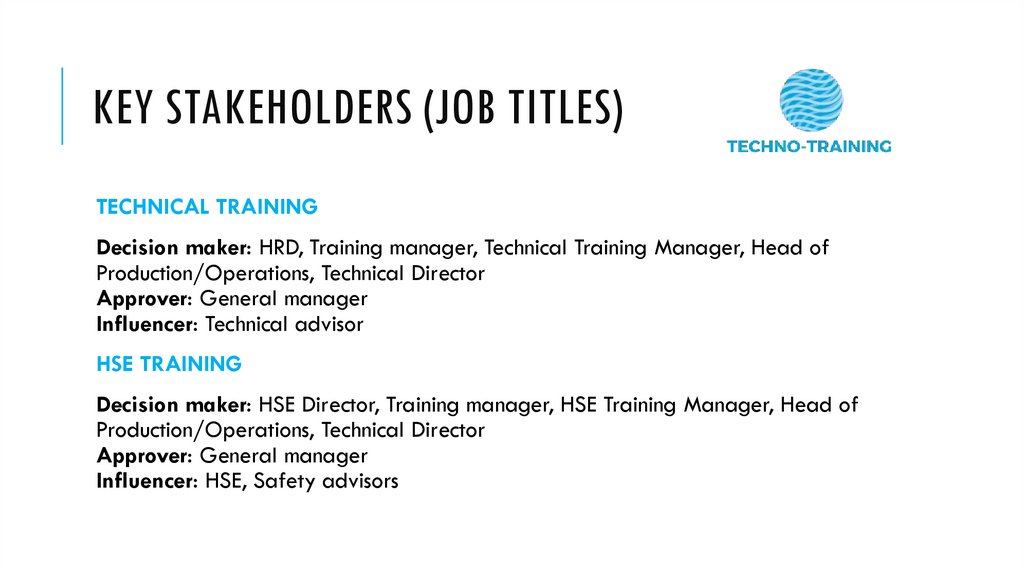
KEY STAKEHOLDERS (JOB TITLES)TECHNICAL TRAINING
Decision maker: HRD, Training manager, Technical Training Manager, Head of
Production/Operations, Technical Director
Approver: General manager
Influencer: Technical advisor
HSE TRAINING
Decision maker: HSE Director, Training manager, HSE Training Manager, Head of
Production/Operations, Technical Director
Approver: General manager
Influencer: HSE, Safety advisors
17. Key stakeholders (job titles)
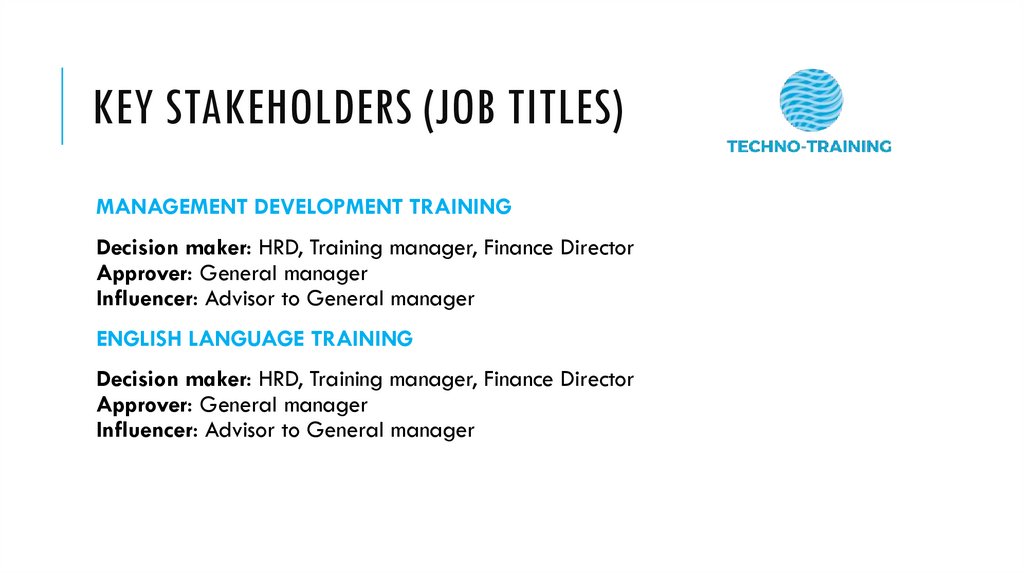
KEY STAKEHOLDERS (JOB TITLES)MANAGEMENT DEVELOPMENT TRAINING
Decision maker: HRD, Training manager, Finance Director
Approver: General manager
Influencer: Advisor to General manager
ENGLISH LANGUAGE TRAINING
Decision maker: HRD, Training manager, Finance Director
Approver: General manager
Influencer: Advisor to General manager
18. Key stakeholders (job titles)
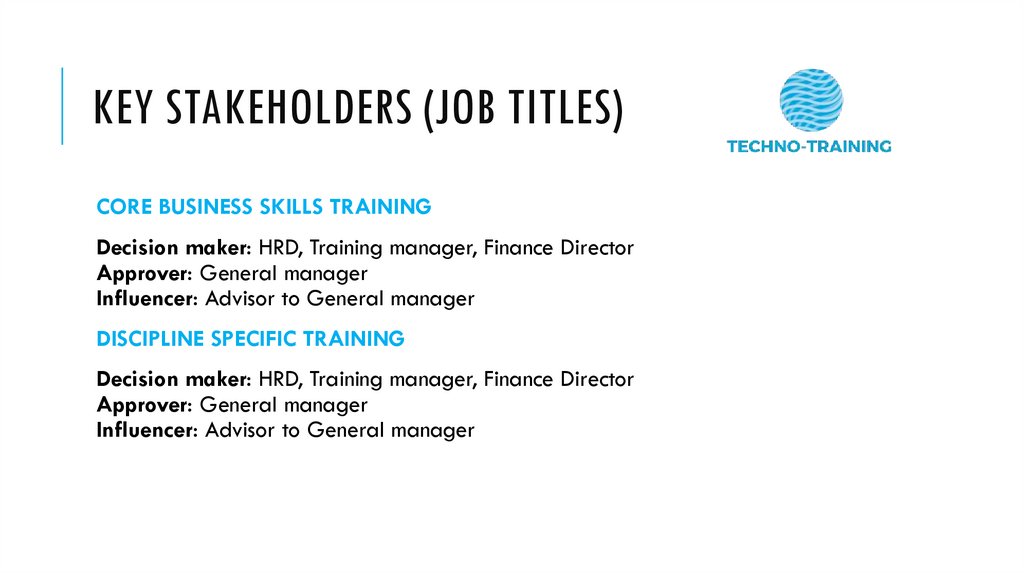
KEY STAKEHOLDERS (JOB TITLES)CORE BUSINESS SKILLS TRAINING
Decision maker: HRD, Training manager, Finance Director
Approver: General manager
Influencer: Advisor to General manager
DISCIPLINE SPECIFIC TRAINING
Decision maker: HRD, Training manager, Finance Director
Approver: General manager
Influencer: Advisor to General manager
19. Key stakeholders (job titles)
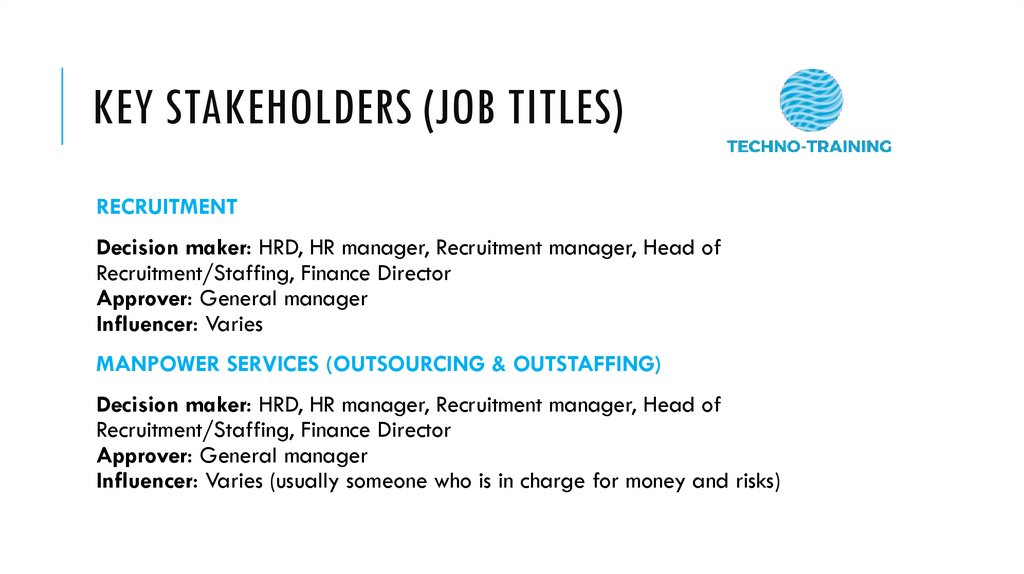
KEY STAKEHOLDERS (JOB TITLES)RECRUITMENT
Decision maker: HRD, HR manager, Recruitment manager, Head of
Recruitment/Staffing, Finance Director
Approver: General manager
Influencer: Varies
MANPOWER SERVICES (OUTSOURCING & OUTSTAFFING)
Decision maker: HRD, HR manager, Recruitment manager, Head of
Recruitment/Staffing, Finance Director
Approver: General manager
Influencer: Varies (usually someone who is in charge for money and risks)
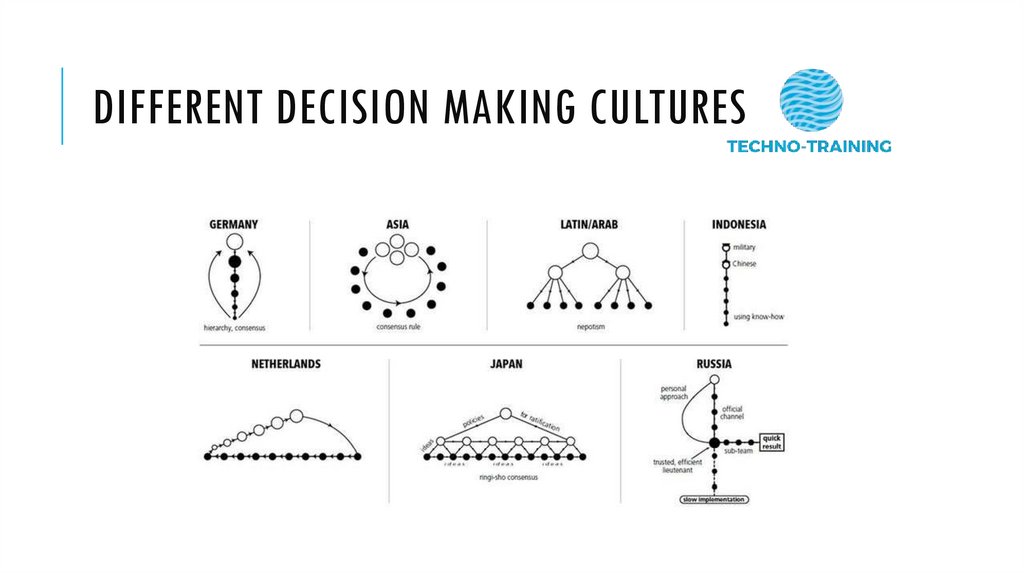
20. Different decision making cultures
DIFFERENT DECISION MAKING CULTURES21. Как компании закупают Услуги
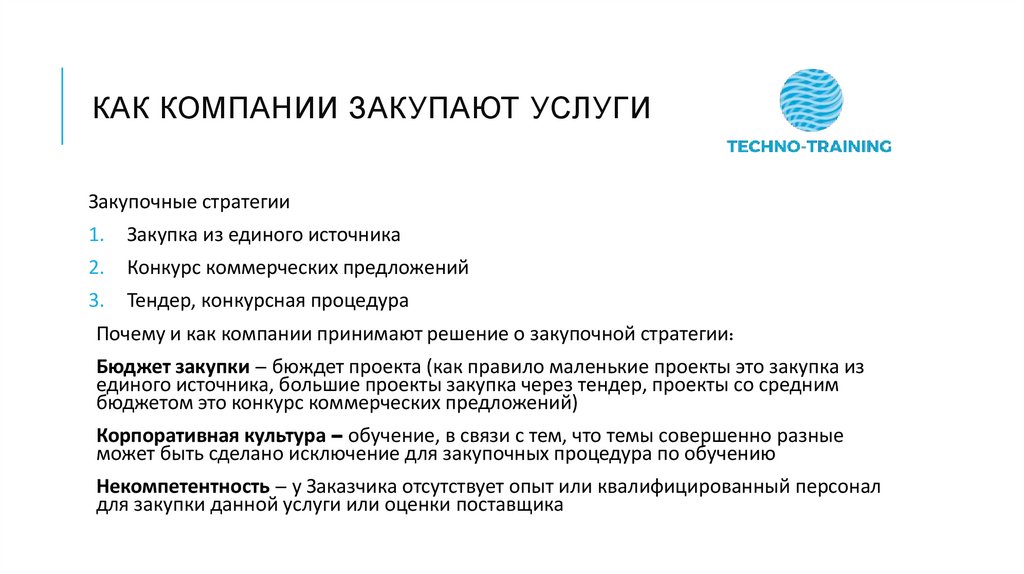
КАК КОМПАНИИ ЗАКУПАЮТ УСЛУГИЗакупочные стратегии
1.
Закупка из единого источника
2.
Конкурс коммерческих предложений
3.
Тендер, конкурсная процедура
Почему и как компании принимают решение о закупочной стратегии:
Бюджет закупки – бюждет проекта (как правило маленькие проекты это закупка из
единого источника, большие проекты закупка через тендер, проекты со средним
бюджетом это конкурс коммерческих предложений)
Корпоративная культура – обучение, в связи с тем, что темы совершенно разные
может быть сделано исключение для закупочных процедура по обучению
Некомпетентность – у Заказчика отсутствует опыт или квалифицированный персонал
для закупки данной услуги или оценки поставщика
22. Виды контрактов
ВИДЫ КОНТРАКТОВРазовая сделка (четкопрописаный объем работ и услуг)
Рамочный договор (перечень товаров и услуг определен, срок договора
указан, но длительный период действия договора):
1 год
2 года или 1+1 (через 1 года после начала действия контракта принимается
решение продлевать его еще на один год или нет)
3 года или 2+1 (продление договора возможно через 2 года на 1 год)
4 года или 2+2
5 лет или 3+ 2
23. Crisis in oil and gas and future opportunities
CRISIS IN OIL AND GAS AND FUTUREOPPORTUNITIES