 Интернет
Похожие презентации:








Facebook's Biggest Data. Leak: A Deep Dive
1.
Facebook's Biggest DataLeak: A Deep Dive
Unpacking the unprecedented privacy breach and its lasting
implications.
2.
THE STORY UNFOLDSThe Revelation: What Happened
and When
In April 2021, a massive trove of personal data belonging to over 533 million Facebook users from 106 countries was exposed
on a low-level hacking forum. This wasn't a fresh hack, but rather older data from 2019 that had resurfaced, stemming from a
vulnerability Facebook patched that same year. The leak included phone numbers, Facebook IDs, full names, locations,
birthdates, bios, and in some cases, email addresses, creating a significant privacy crisis.
3.
Anatomy of the Breach: Scale and Scope ofUser Data Exposed
Global Reach
Personal Identifiers
Sensitive Details
Over 533 million users across
Leaked data included phone
While not universally present,
106 countries were affected,
numbers, Facebook IDs, full
email addresses were also
making it one of the largest data
names, locations, birthdates,
exposed for a significant portion
exposures in Facebook's history.
and biographical details,
of affected accounts,
offering a comprehensive profile
heightening the risk of phishing
of users.
and identity theft.
4.
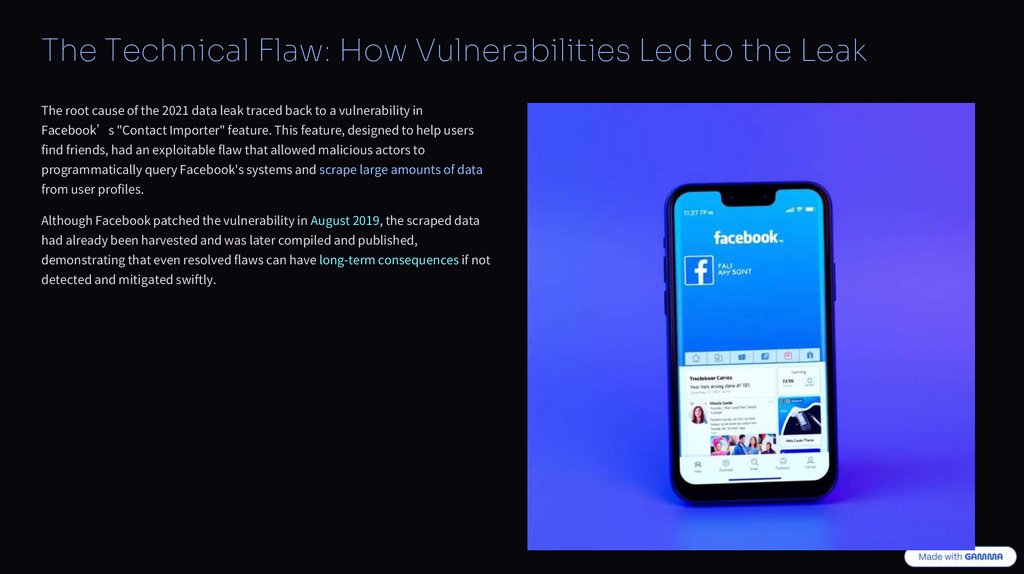
The Technical Flaw: How Vulnerabilities Led to the LeakThe root cause of the 2021 data leak traced back to a vulnerability in
Facebook’s "Contact Importer" feature. This feature, designed to help users
find friends, had an exploitable flaw that allowed malicious actors to
programmatically query Facebook's systems and scrape large amounts of data
from user profiles.
Although Facebook patched the vulnerability in August 2019, the scraped data
had already been harvested and was later compiled and published,
demonstrating that even resolved flaws can have long-term consequences if not
detected and mitigated swiftly.
5.
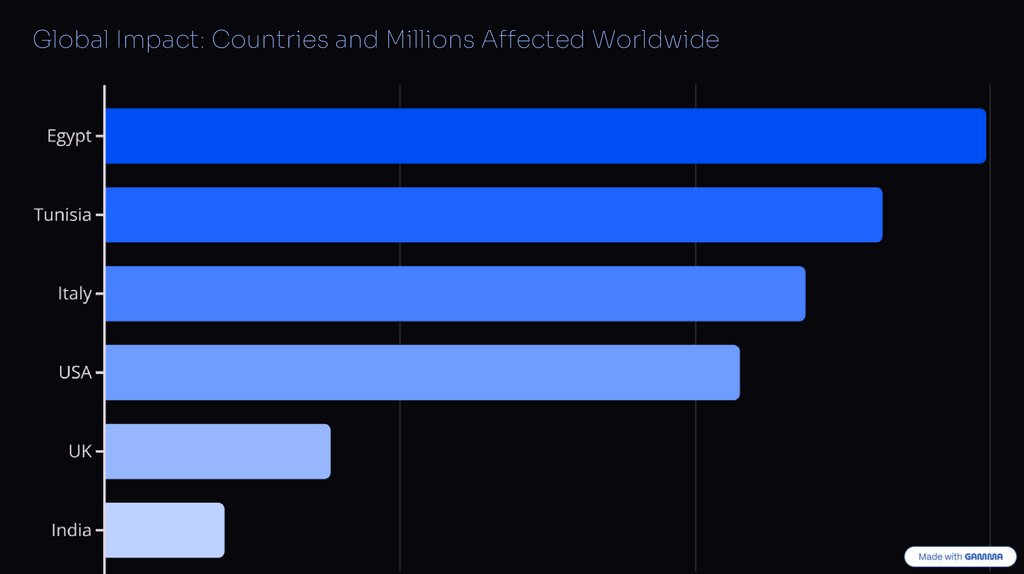
Global Impact: Countries and Millions Affected Worldwide6.
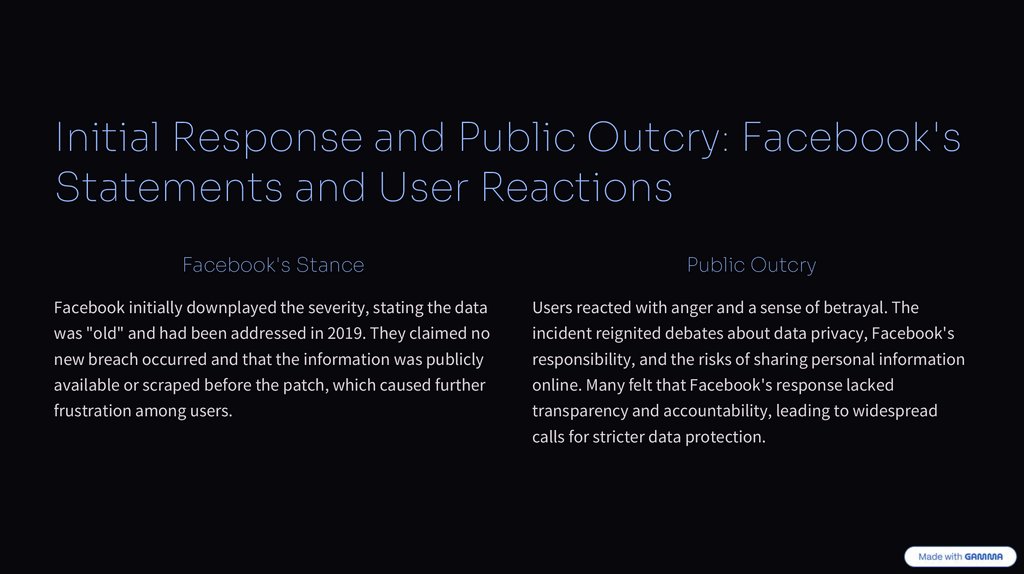
Initial Response and Public Outcry: Facebook'sStatements and User Reactions
Facebook's Stance
Public Outcry
Facebook initially downplayed the severity, stating the data
Users reacted with anger and a sense of betrayal. The
was "old" and had been addressed in 2019. They claimed no
incident reignited debates about data privacy, Facebook's
new breach occurred and that the information was publicly
responsibility, and the risks of sharing personal information
available or scraped before the patch, which caused further
online. Many felt that Facebook's response lacked
frustration among users.
transparency and accountability, leading to widespread
calls for stricter data protection.
7.
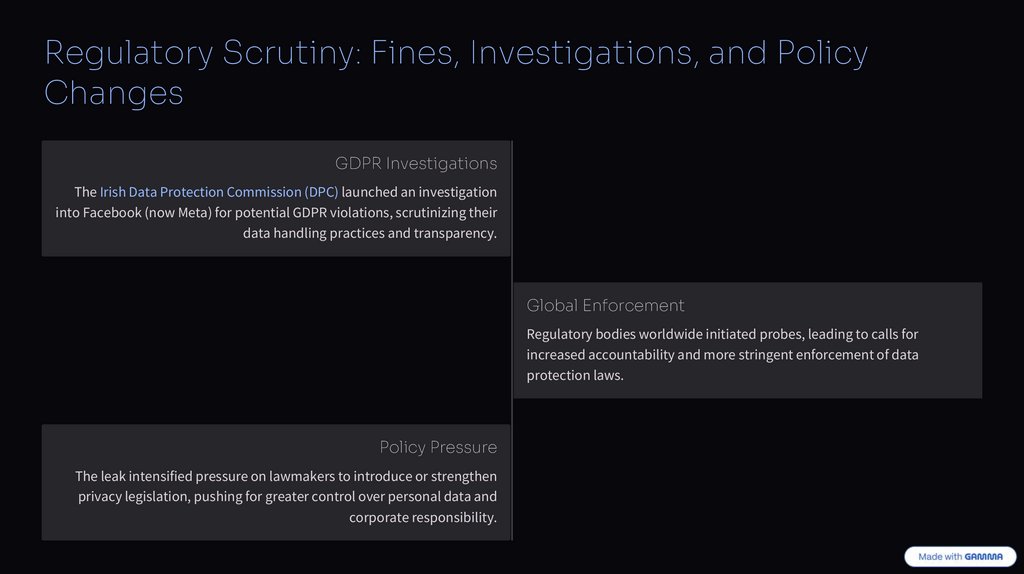
Regulatory Scrutiny: Fines, Investigations, and PolicyChanges
GDPR Investigations
The Irish Data Protection Commission (DPC) launched an investigation
into Facebook (now Meta) for potential GDPR violations, scrutinizing their
data handling practices and transparency.
Global Enforcement
Regulatory bodies worldwide initiated probes, leading to calls for
increased accountability and more stringent enforcement of data
protection laws.
Policy Pressure
The leak intensified pressure on lawmakers to introduce or strengthen
privacy legislation, pushing for greater control over personal data and
corporate responsibility.
8.
Erosion of Trust: How the Leak Reshaped UserPerception
"This isn't just a data leak; it's a breach of the unspoken
contract between users and platforms. My trust is
shattered."
— Disgruntled Facebook User, Online Forum
The 2021 data leak significantly eroded user trust in Facebook. For many, it highlighted the company's perceived lax attitude
towards data security and transparency. The incident intensified public skepticism about how social media platforms collect,
store, and utilize personal information, leading to a noticeable shift in user behavior and a greater demand for privacyfocused alternatives. This decline in trust has posed a long-term challenge for Facebook's brand reputation and user
engagement.
9.
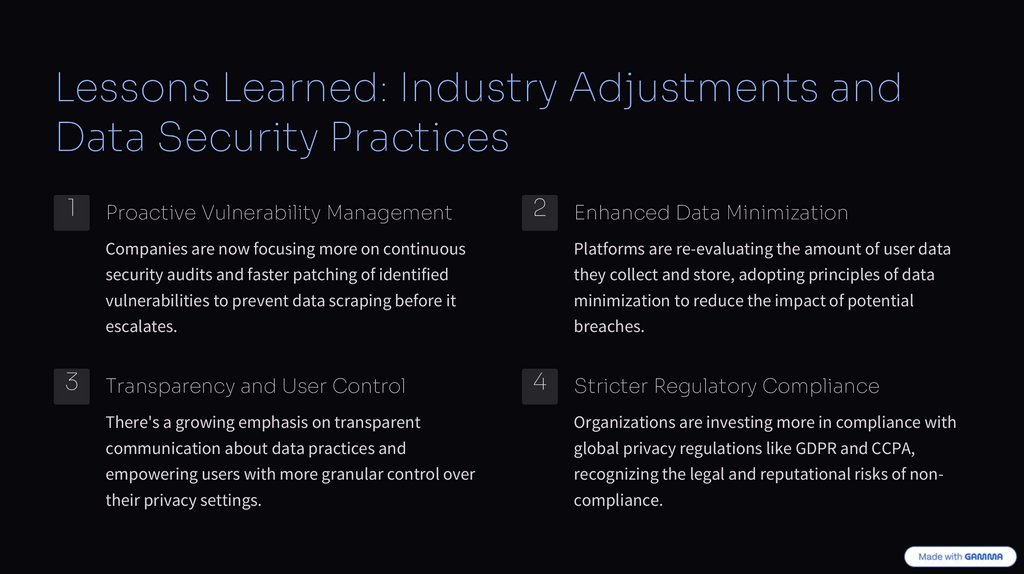
Lessons Learned: Industry Adjustments andData Security Practices
1
3
Proactive Vulnerability Management
2
Enhanced Data Minimization
Companies are now focusing more on continuous
Platforms are re-evaluating the amount of user data
security audits and faster patching of identified
they collect and store, adopting principles of data
vulnerabilities to prevent data scraping before it
minimization to reduce the impact of potential
escalates.
breaches.
Transparency and User Control
4
Stricter Regulatory Compliance
There's a growing emphasis on transparent
Organizations are investing more in compliance with
communication about data practices and
global privacy regulations like GDPR and CCPA,
empowering users with more granular control over
recognizing the legal and reputational risks of non-
their privacy settings.
compliance.
10.
THE ROAD AHEADMoving Forward: The
Future of Privacy and
Accountability on
Social Platforms
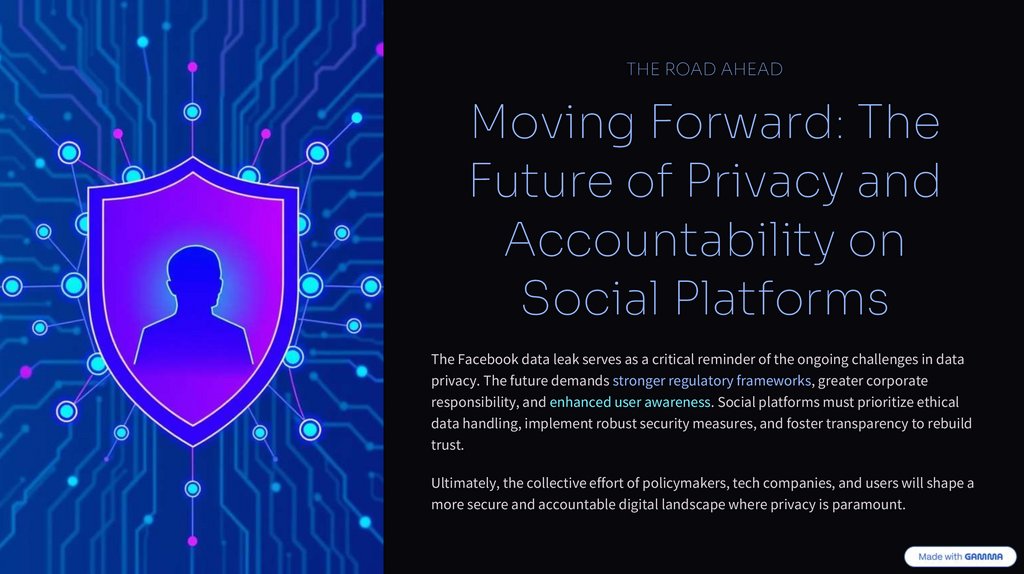
The Facebook data leak serves as a critical reminder of the ongoing challenges in data
privacy. The future demands stronger regulatory frameworks, greater corporate
responsibility, and enhanced user awareness. Social platforms must prioritize ethical
data handling, implement robust security measures, and foster transparency to rebuild
trust.
Ultimately, the collective effort of policymakers, tech companies, and users will shape a
more secure and accountable digital landscape where privacy is paramount.