 История
Похожие презентации:








Genesis of Nomadism. Lecture 1
1. Genesis of Nomadism
Lecture #12.
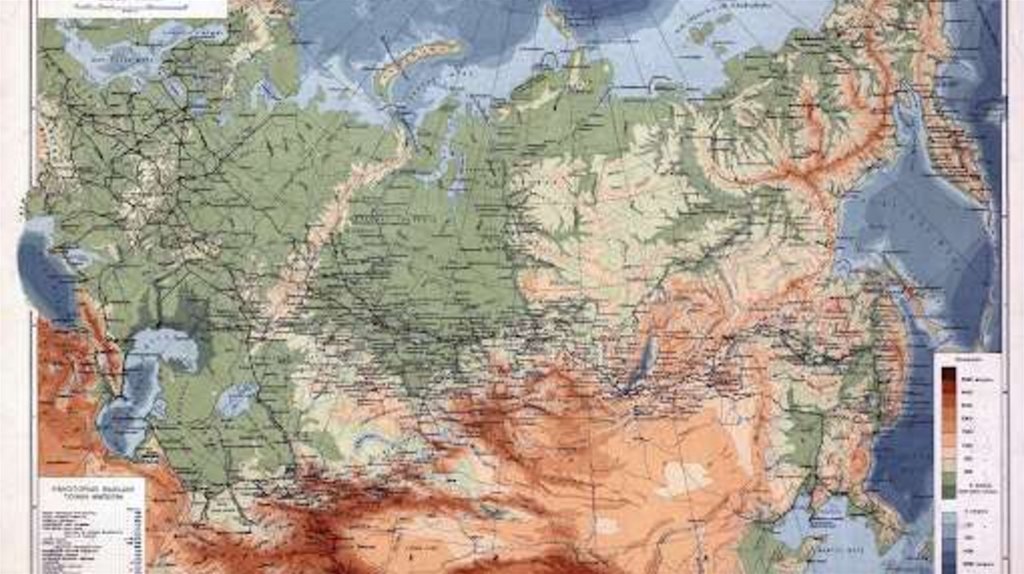
3. Eurasia in Antiquity
• The Stone Age – 2nd millennium BC-2nd thousandBC (Southern Kazakhstan)
• Moistier culture
• The Neolithic Period
• The Bronze Age – 4th millennium BC-1st
millennium BC (Central, Northern and Eastern
Kazakhstan)
• The Andronov culture
• The Tasmolin culture
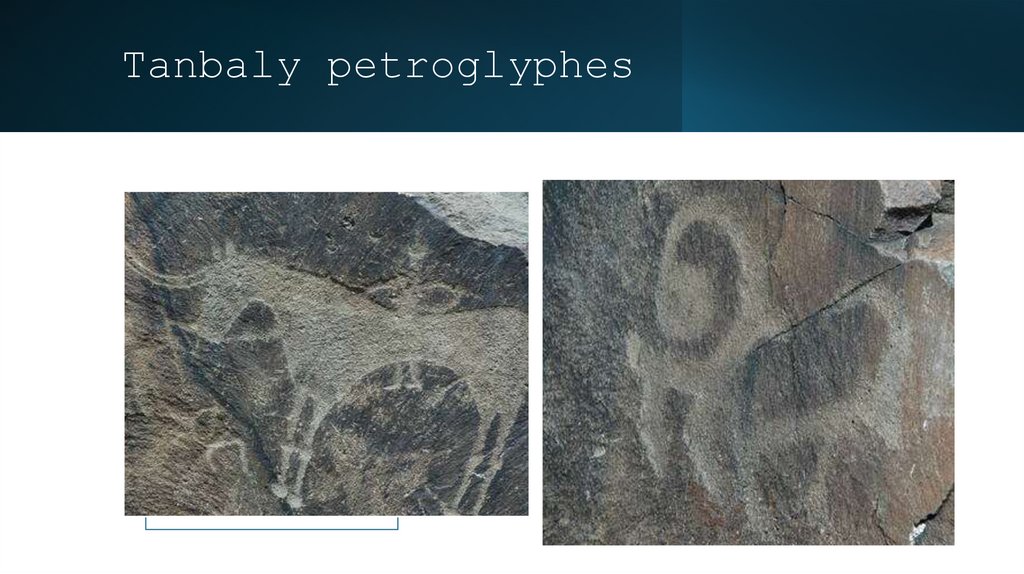
4. Tanbaly petroglyphes
5. Origins of nomadism I
• Eurasia’s ecological and geographicalsettings at the beginning of the first
millennium BC
• “oasis-in-the steppe” (Owen Lattimore)
• Domestication of wild horses
• Invention of the stirrup and saddles
• Nomadic- sedentary interactions
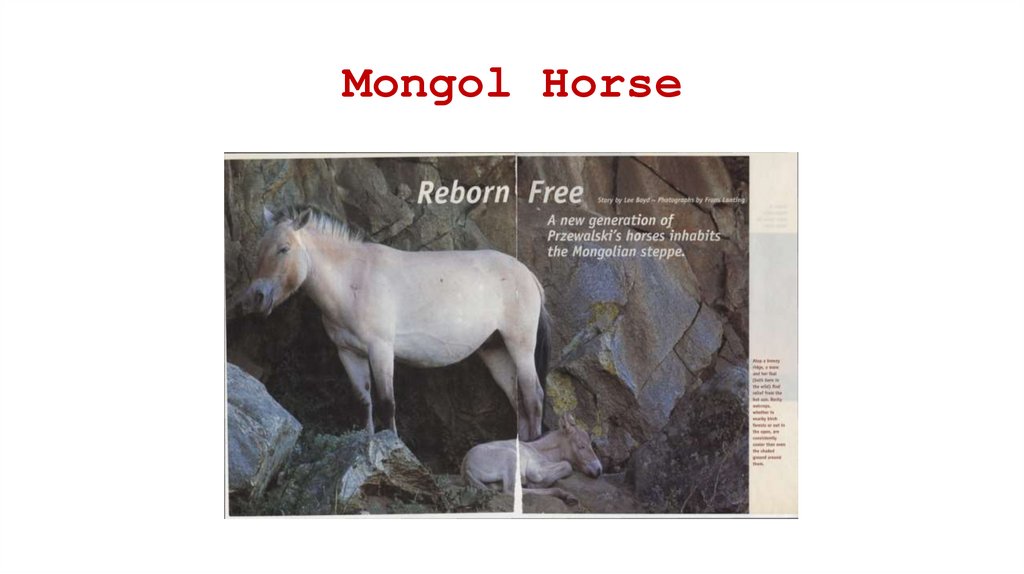
6. Mongol Horse
7. Origins of Nomadism II
• The system of steppe wells• The emergence of iron tools
• The use of animals as a means of
transportation
• The system of seasonal migrations
with livestock
8. Types of cattle breeding
• Sedentary• Hunting
• Semi-nomadic
• Nomadic
• Travelnomadism
9. Social Organization
• Tribe and kinship• Extended and basic kinship units of the
social organization of Kazakh
communities: juz, taipa, ru, ata balasy,
auyl
• Genealogies (shezhire) and its role in
the organization and operation of nomadic
communities
10. Human Civilization
• General Stages of Human Civilization:• Agrarian (preindustrial), commercial
(industrial) and informational
(postindustrial)
• Traditional, industrial and postindustrial (Rene Genon)
11. Nomadic Civilization
• Breeding of enduring breeds of animals• Putting up mobile herds
• System of seasonal migrations
• Metal smelting and the manufacture of
metal products
• Nomadic warfare
• Oral tradition
12. The Rise of Proto and Early Turks (3rd Century BC-2nd Century AD)
• The Saka (VIII-III BC, the earlyIron Age)
• The Massagets
• The Sarmatians
• The Hunnu (III-II BC)
• The Kangui (Kangles)
• The Wusun (Uisun)
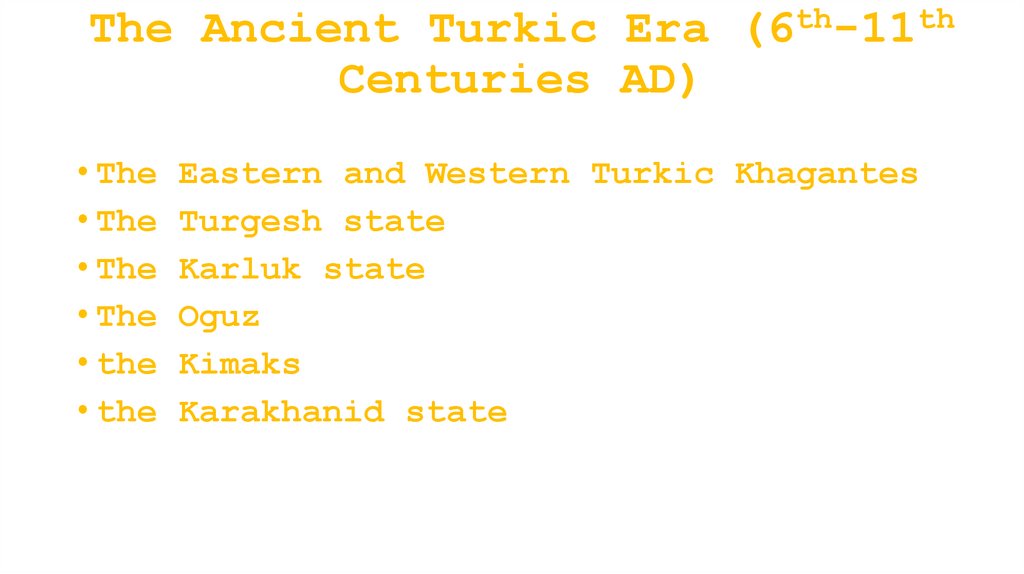
13. The Ancient Turkic Era (6th-11th Centuries AD)
The Ancient Turkic EraCenturies AD)
th
th
(6 -11
• The Eastern and Western Turkic Khagantes
• The Turgesh state
• The Karluk state
• The Oguz
• the Kimaks
• the Karakhanid state
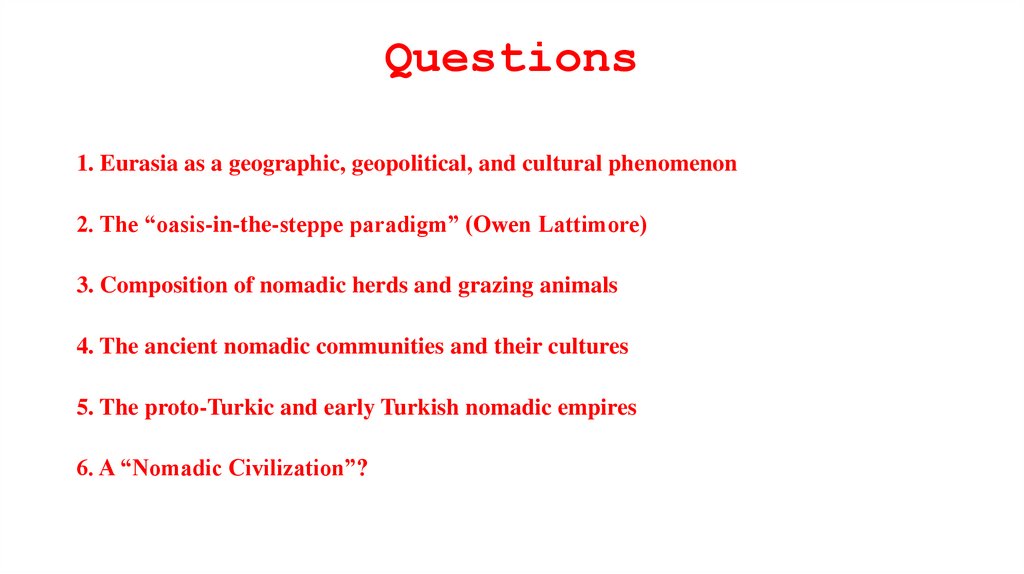
14. Questions
1. Eurasia as a geographic, geopolitical, and cultural phenomenon2. The “oasis-in-the-steppe paradigm” (Owen Lattimore)
3. Composition of nomadic herds and grazing animals
4. The ancient nomadic communities and their cultures
5. The proto-Turkic and early Turkish nomadic empires
6. A “Nomadic Civilization”?