


 Финансы
Похожие презентации:








Time Value of Money: Intuition and Discounting
1.
Time Value of Money:Intuition and Discounting
Michael R. Roberts
William H. Lawrence Professor of Finance
The Wharton School, University of Pennsylvania
Copyright © Michael R. Roberts
2.
This TimeTime Value of Money
• Intuition, tools, and discounting
Copyright © Michael R. Roberts
3.
IntuitionCopyright © Michael R. Roberts
4.
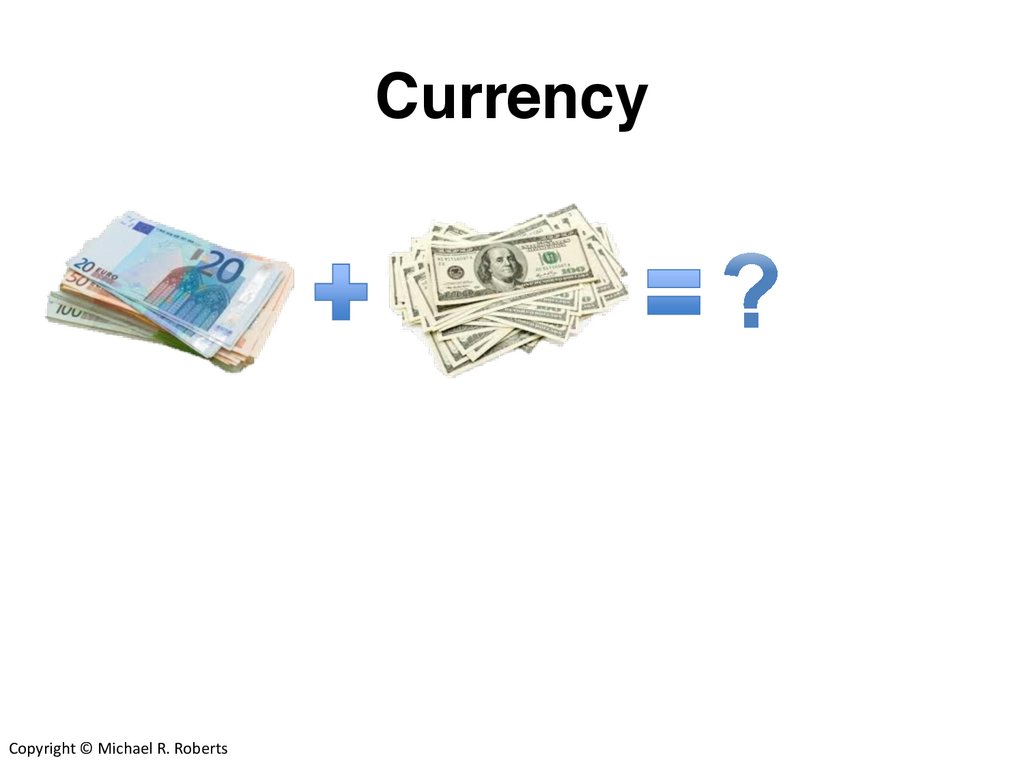
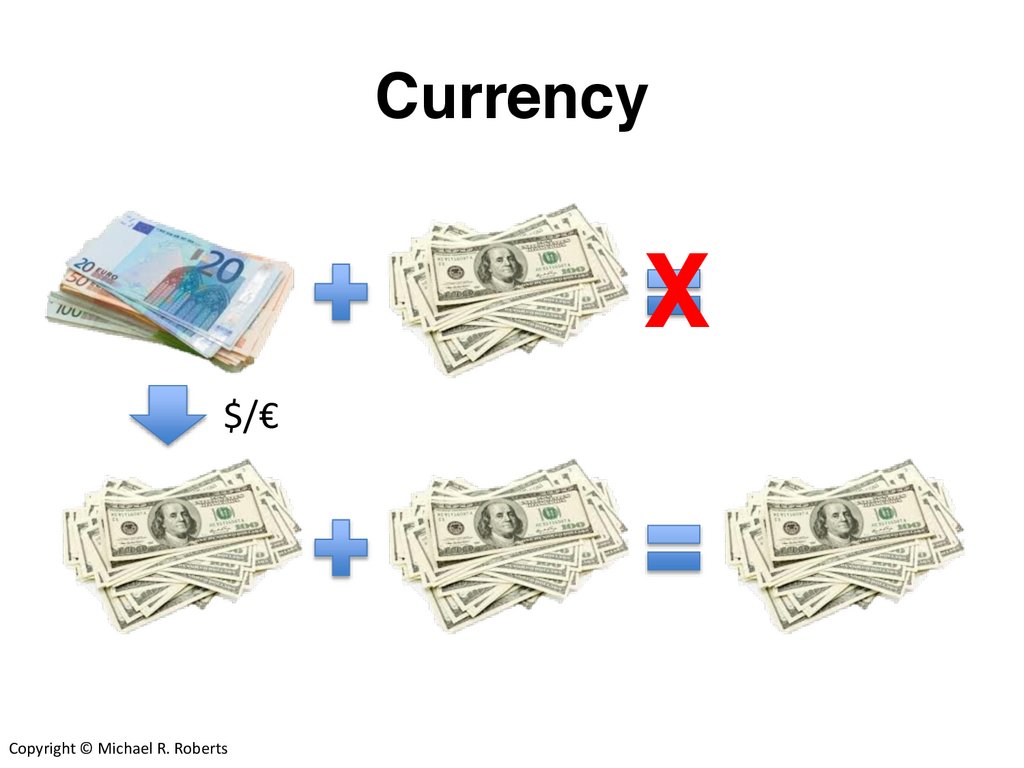
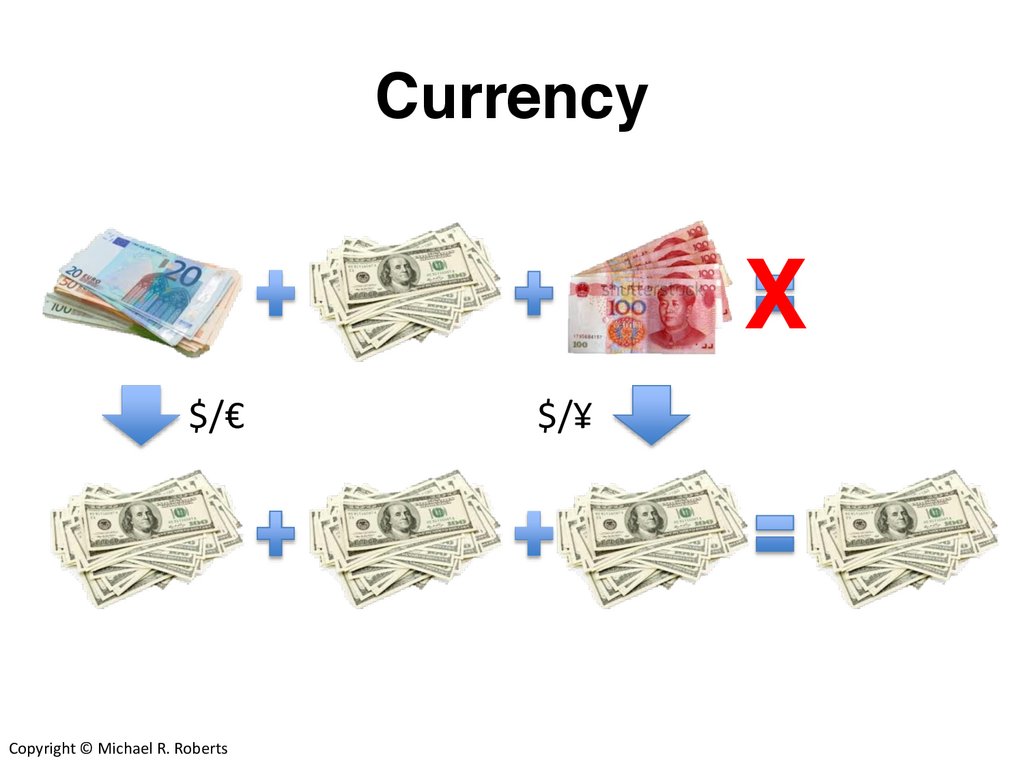
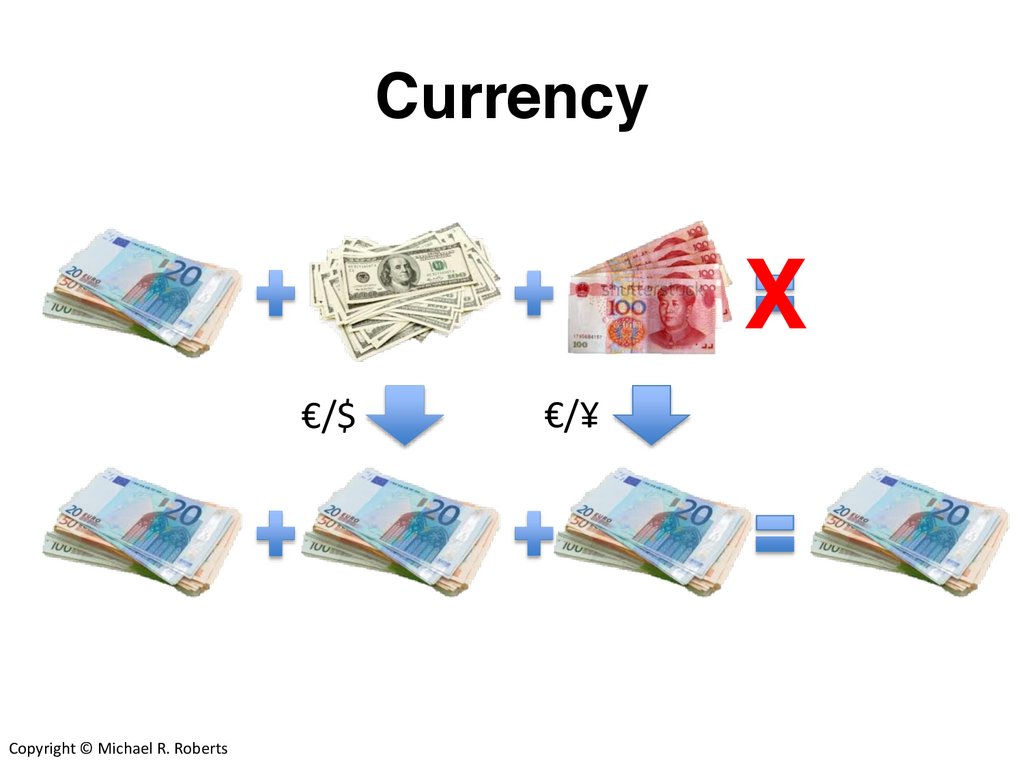
CurrencyCopyright © Michael R. Roberts
5.
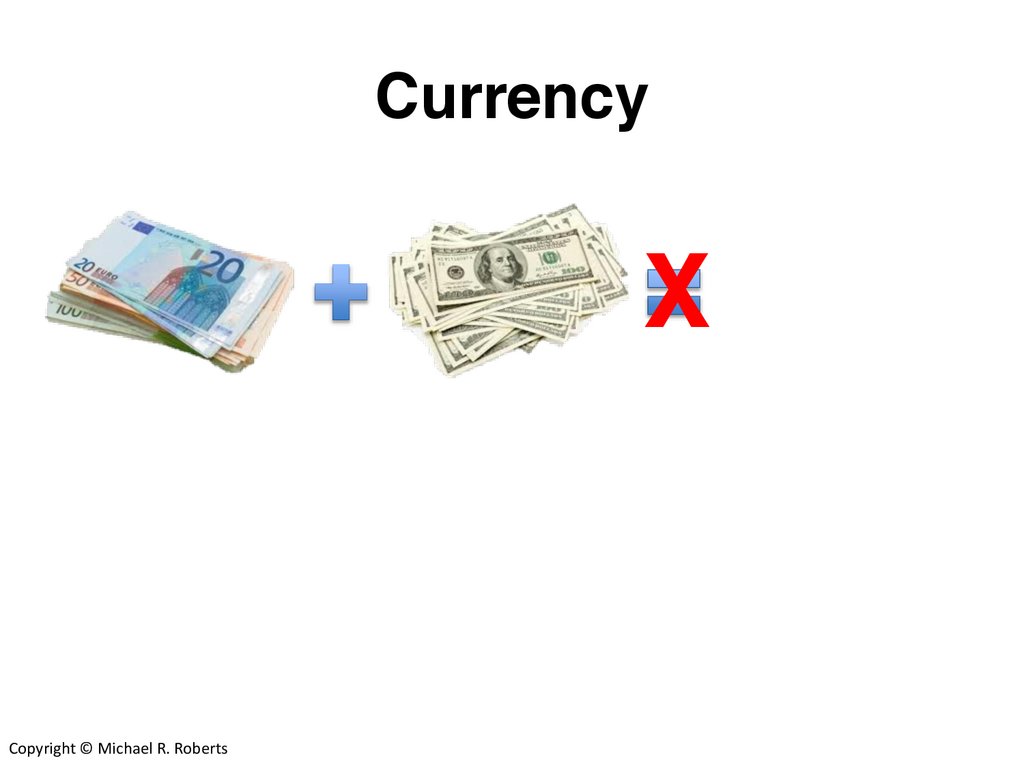
CurrencyX
Copyright © Michael R. Roberts
6.
CurrencyX
$/€
Copyright © Michael R. Roberts
7.
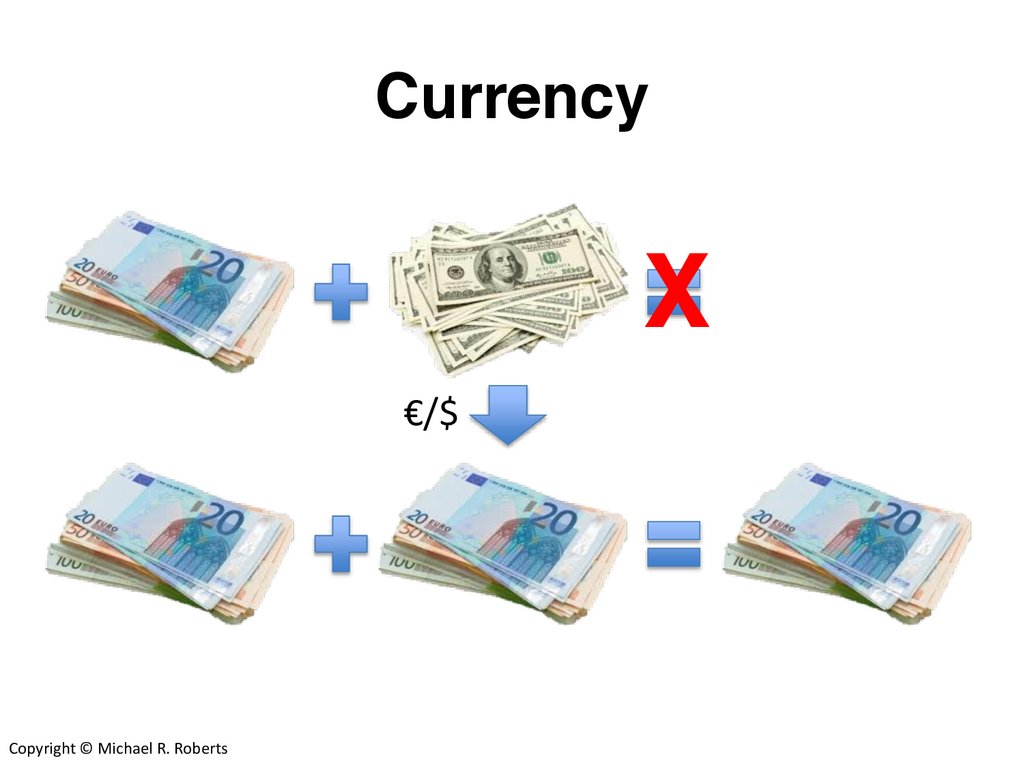
CurrencyX
€/$
Copyright © Michael R. Roberts
8.
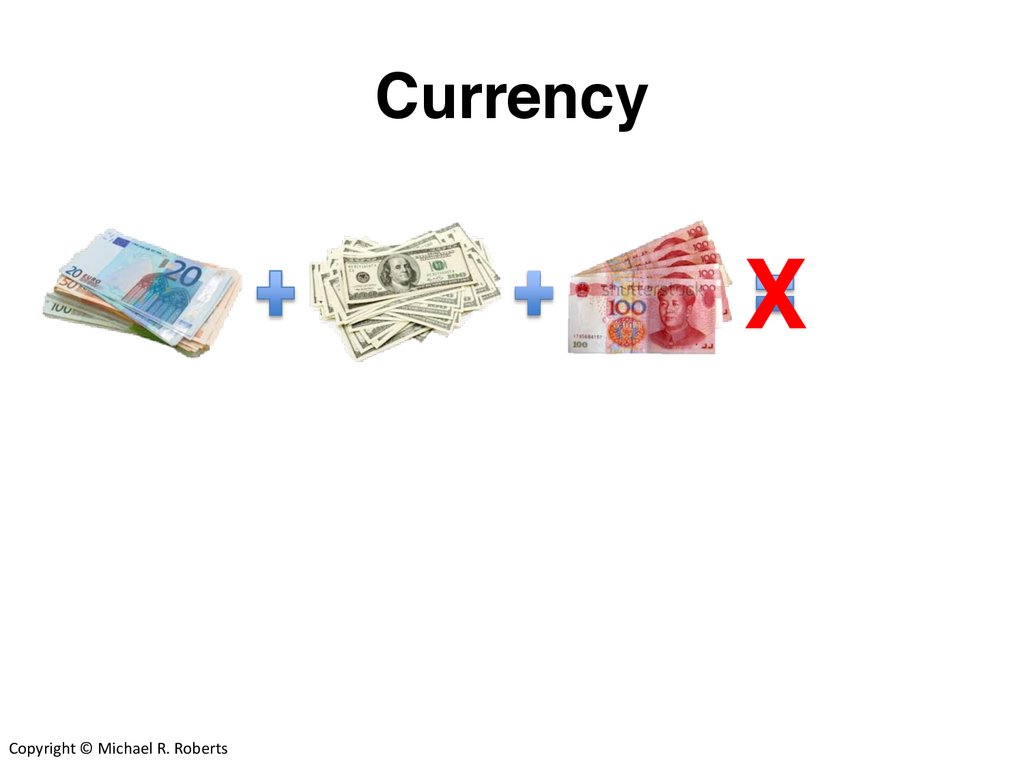
CurrencyX
Copyright © Michael R. Roberts
9.
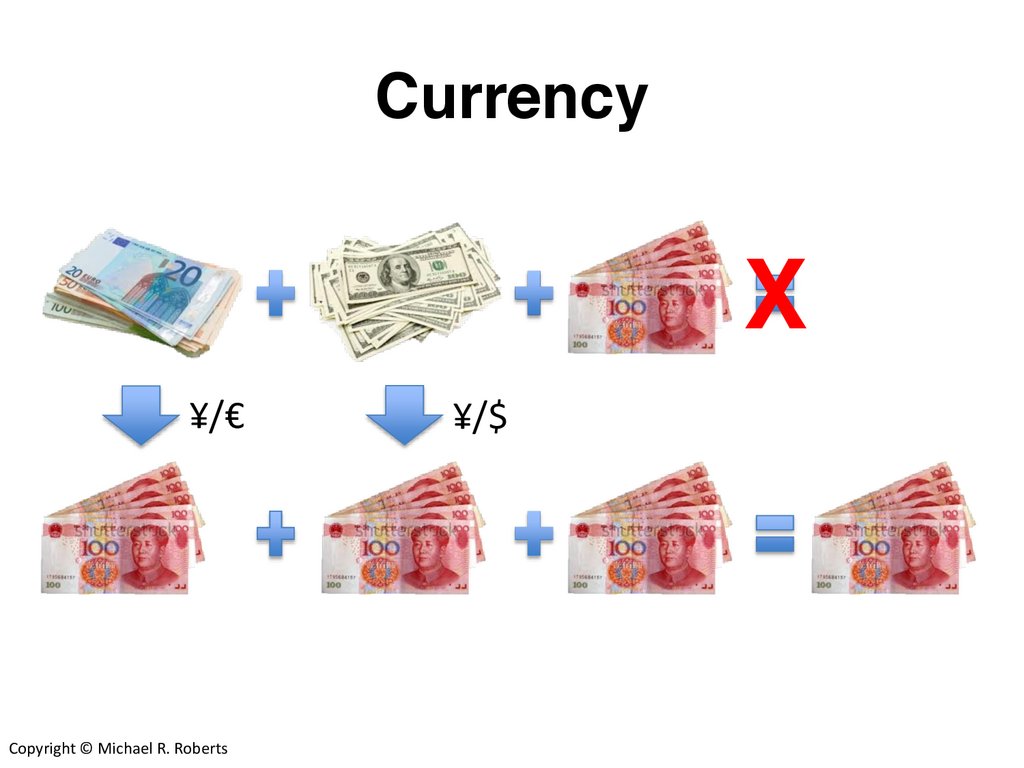
CurrencyX
¥/€
Copyright © Michael R. Roberts
¥/$
10.
CurrencyX
$/€
Copyright © Michael R. Roberts
$/¥
11.
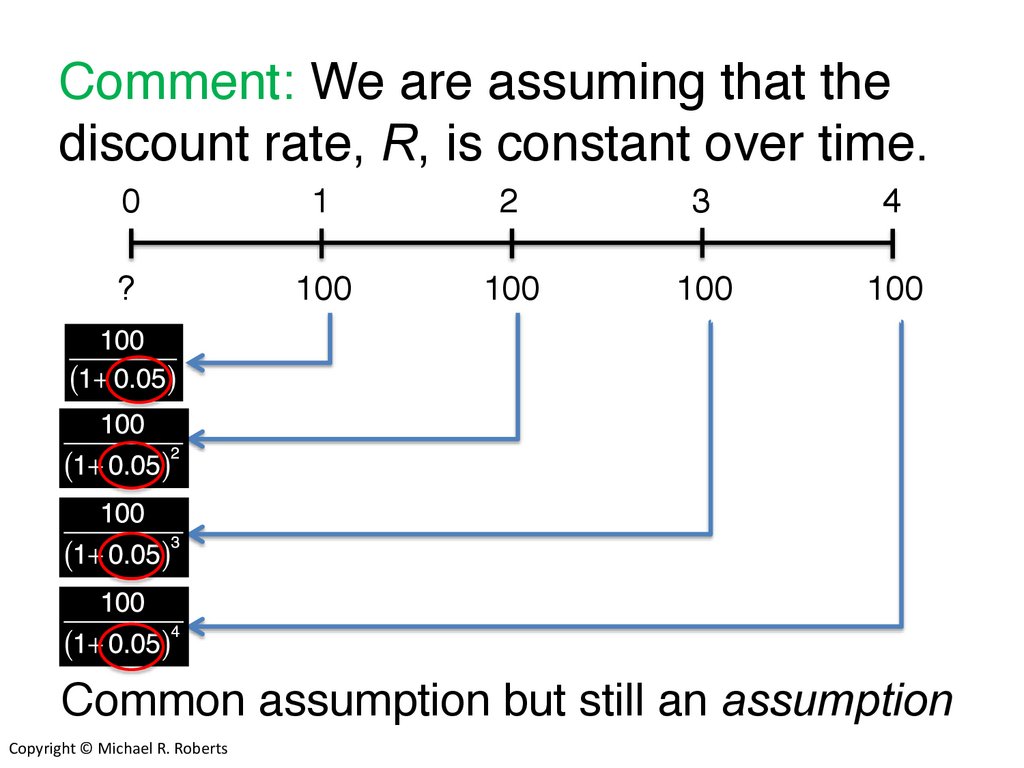
CurrencyX
€/$
Copyright © Michael R. Roberts
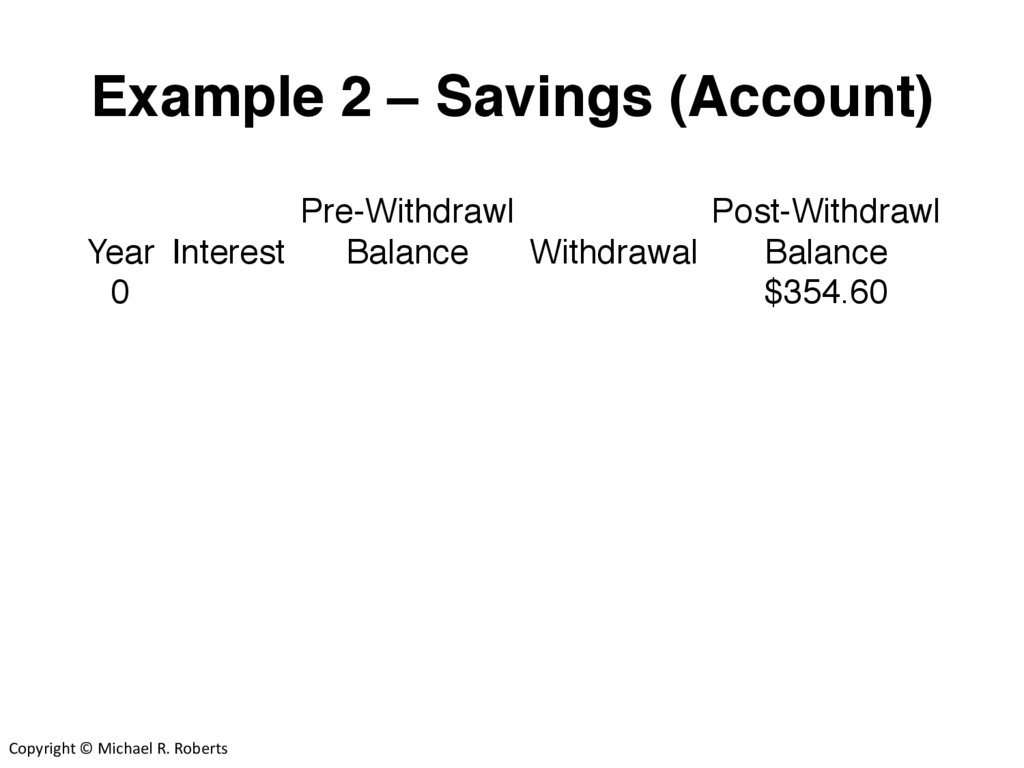
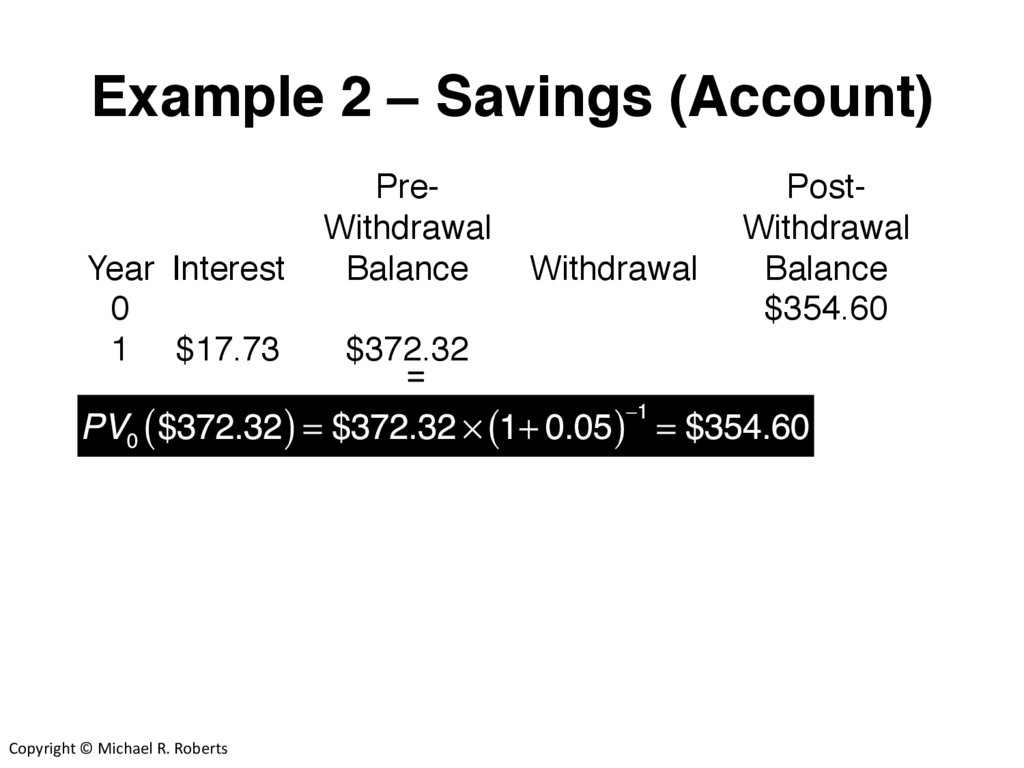
€/¥
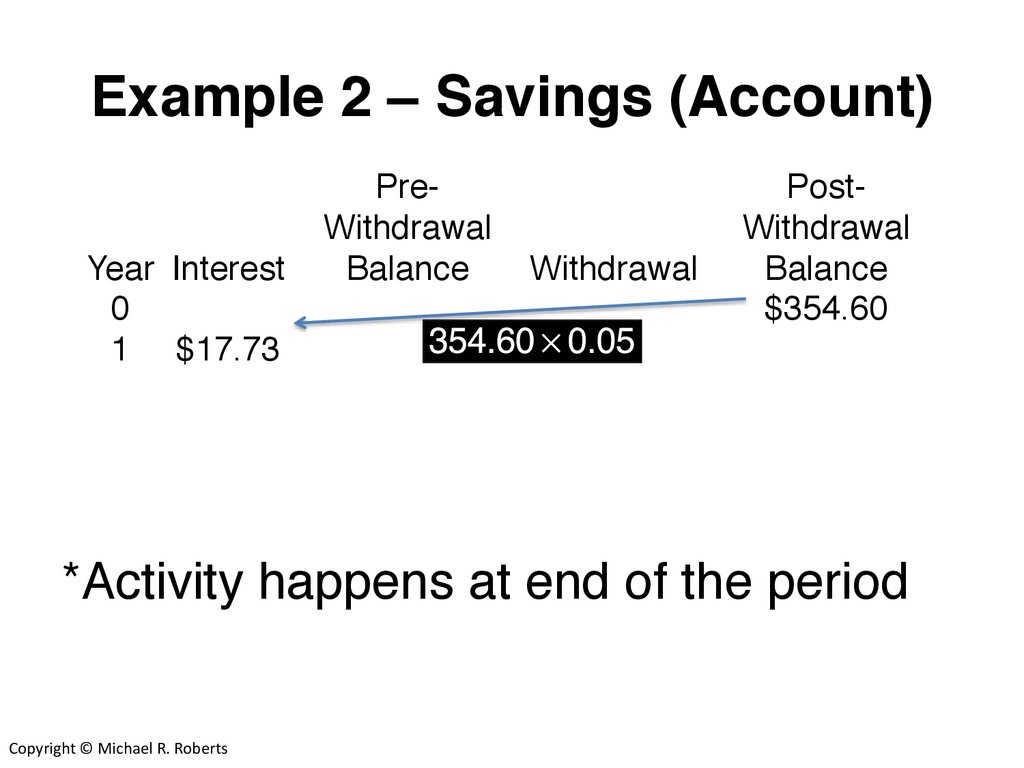
12.
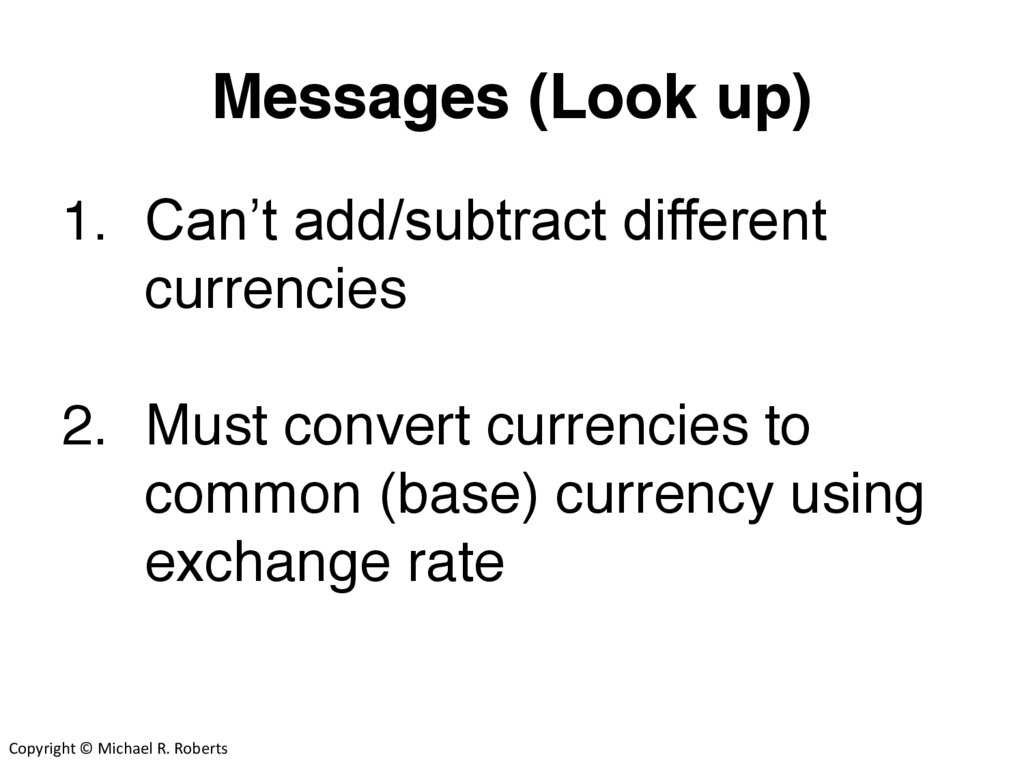
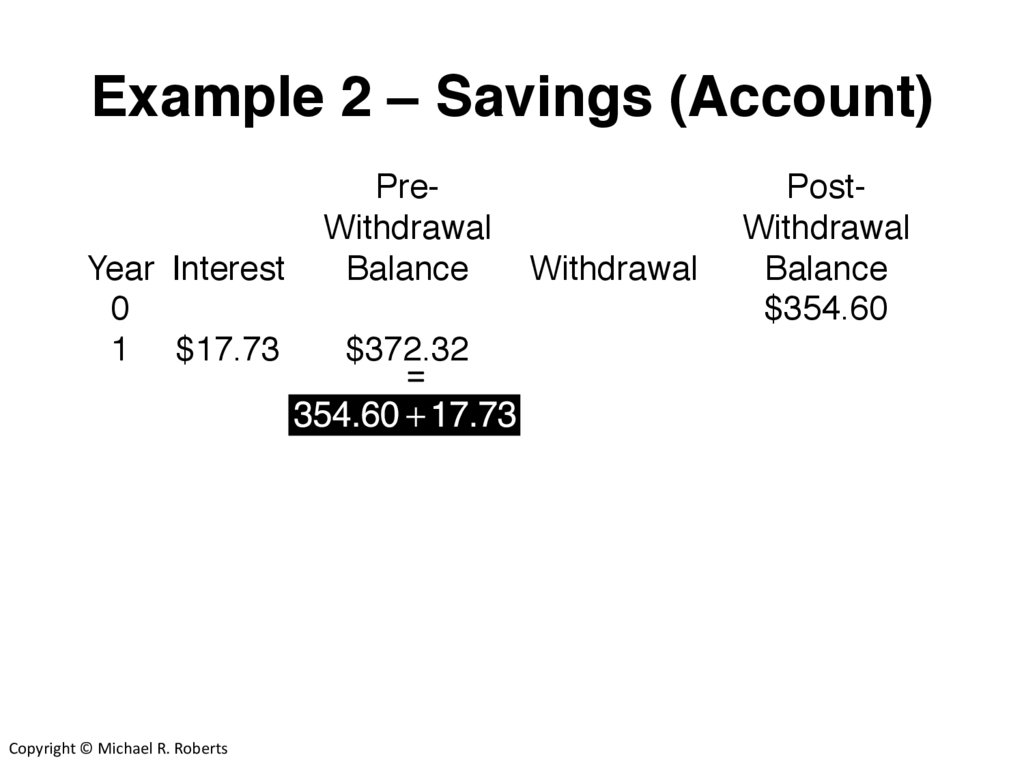
Messages (Look up)1. Can’t add/subtract different
currencies
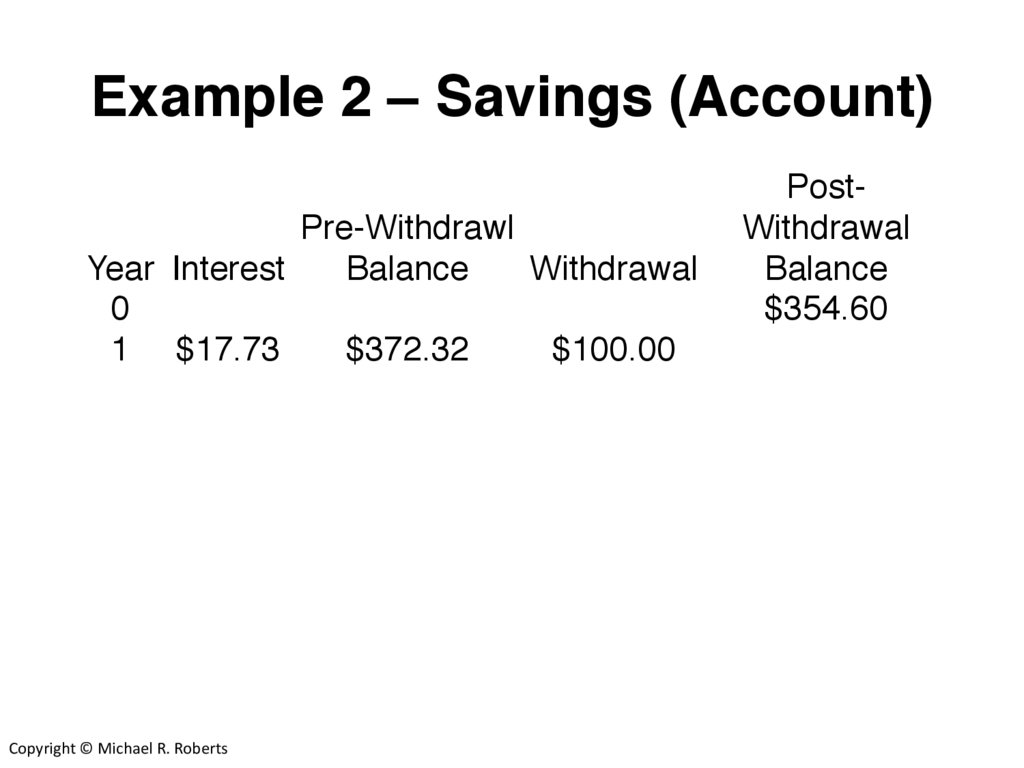
2. Must convert currencies to
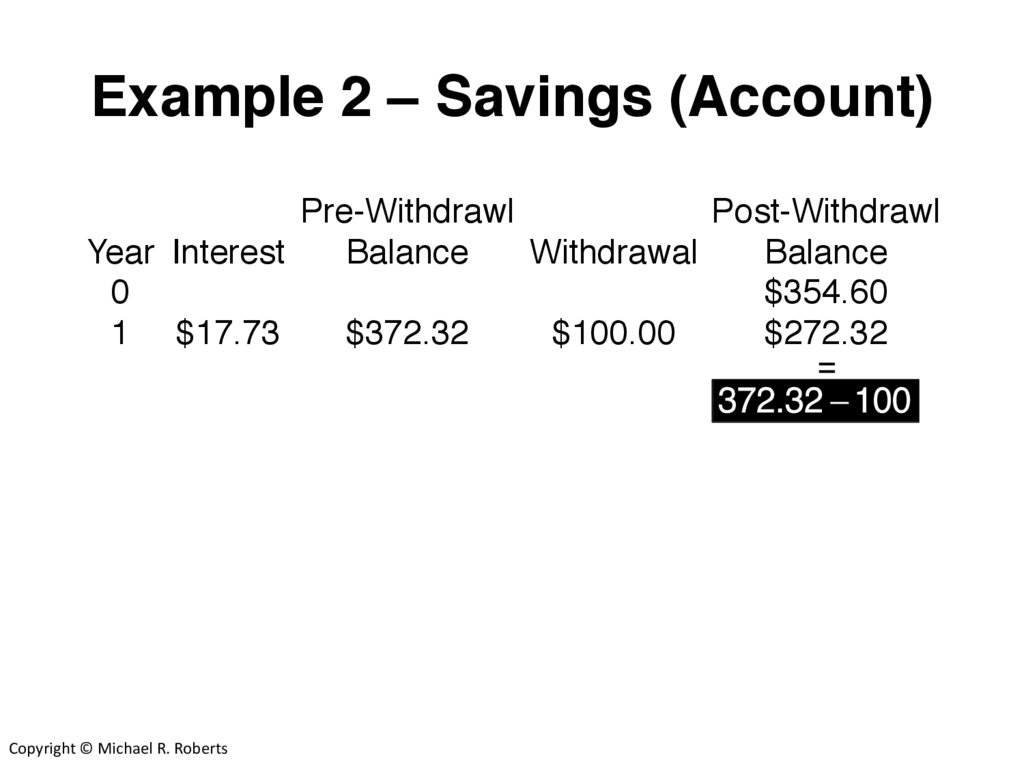
common (base) currency using
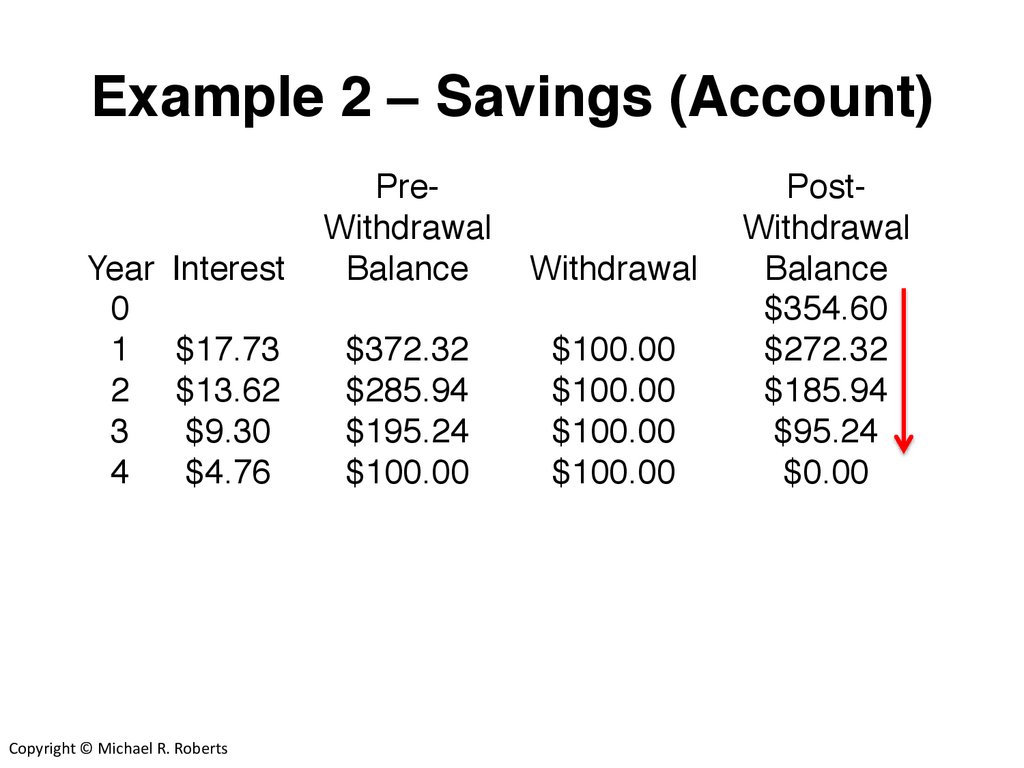
exchange rate
Copyright © Michael R. Roberts
13.
Time Value of MoneyCopyright © Michael R. Roberts
14.
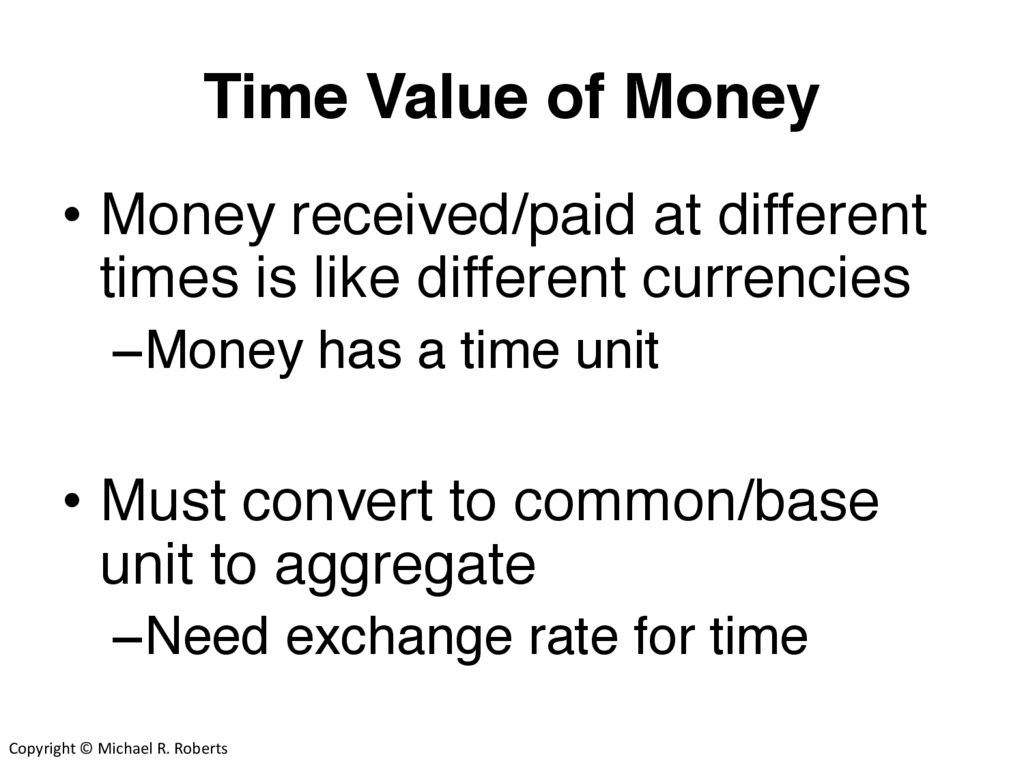
Time Value of Money• Money received/paid at different
times is like different currencies
–Money has a time unit
• Must convert to common/base
unit to aggregate
–Need exchange rate for time
Copyright © Michael R. Roberts
15.
THE TOOLS: TIME LINE &DISCOUNT FACTOR
Copyright © Michael R. Roberts
16.
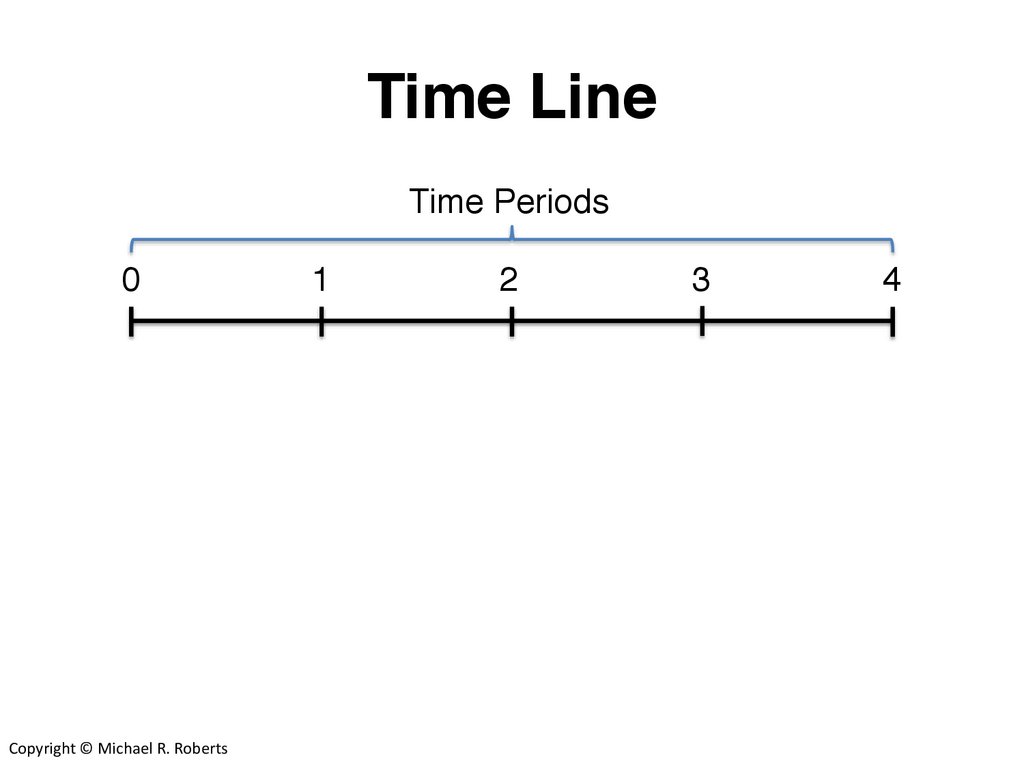
Time LineTime Periods
0
Copyright © Michael R. Roberts
1
2
3
4
17.
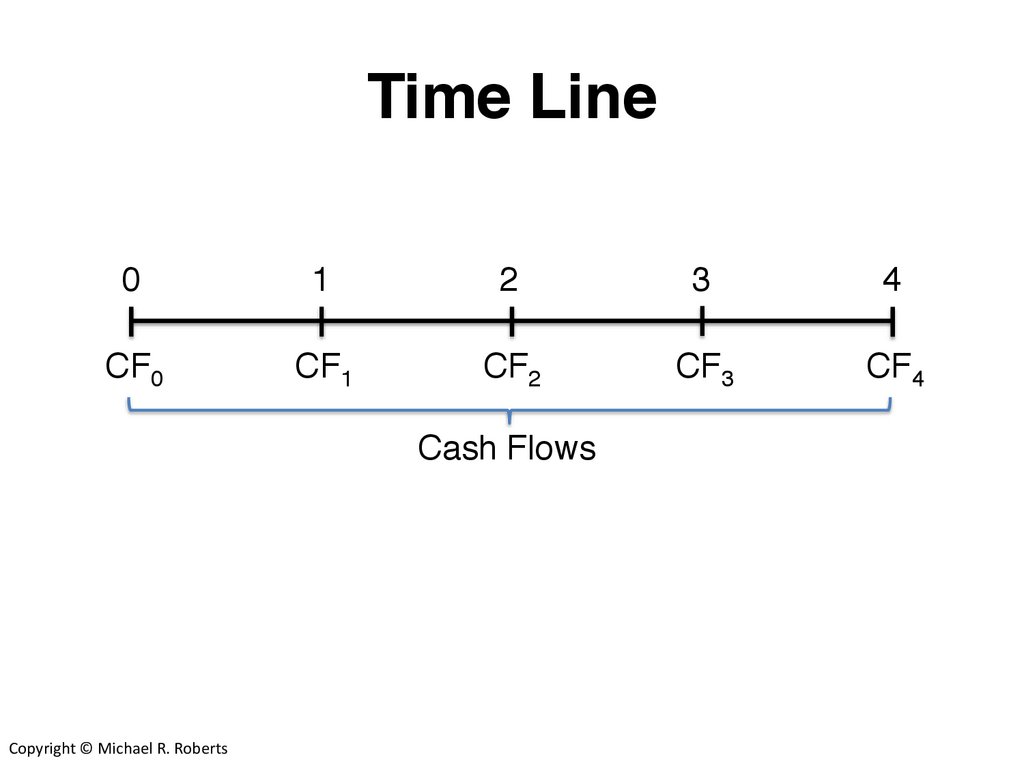
Time Line0
1
2
3
4
CF0
CF1
CF2
CF3
CF4
Cash Flows
Copyright © Michael R. Roberts
18.
Time Line0
1
2
3
4
CF0
CF1
CF2
CF3
CF4
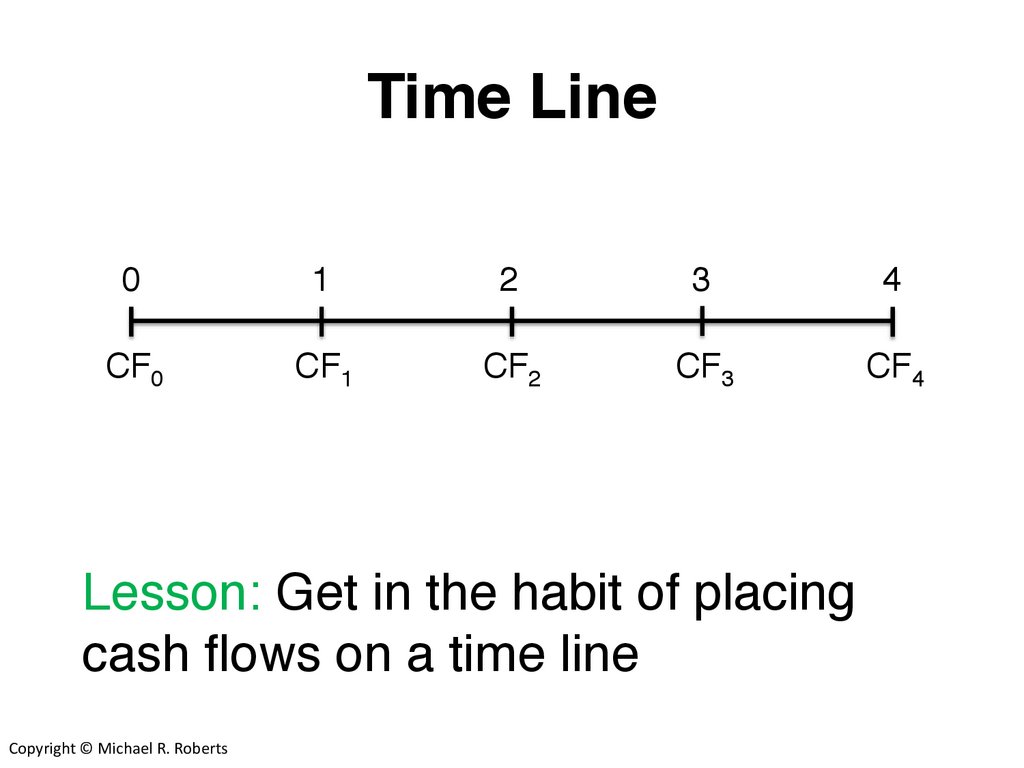
Lesson: Get in the habit of placing
cash flows on a time line
Copyright © Michael R. Roberts
19.
Aggregating Cash Flows0
1
2
3
4
CF0
CF1
CF2
CF3
CF4
?
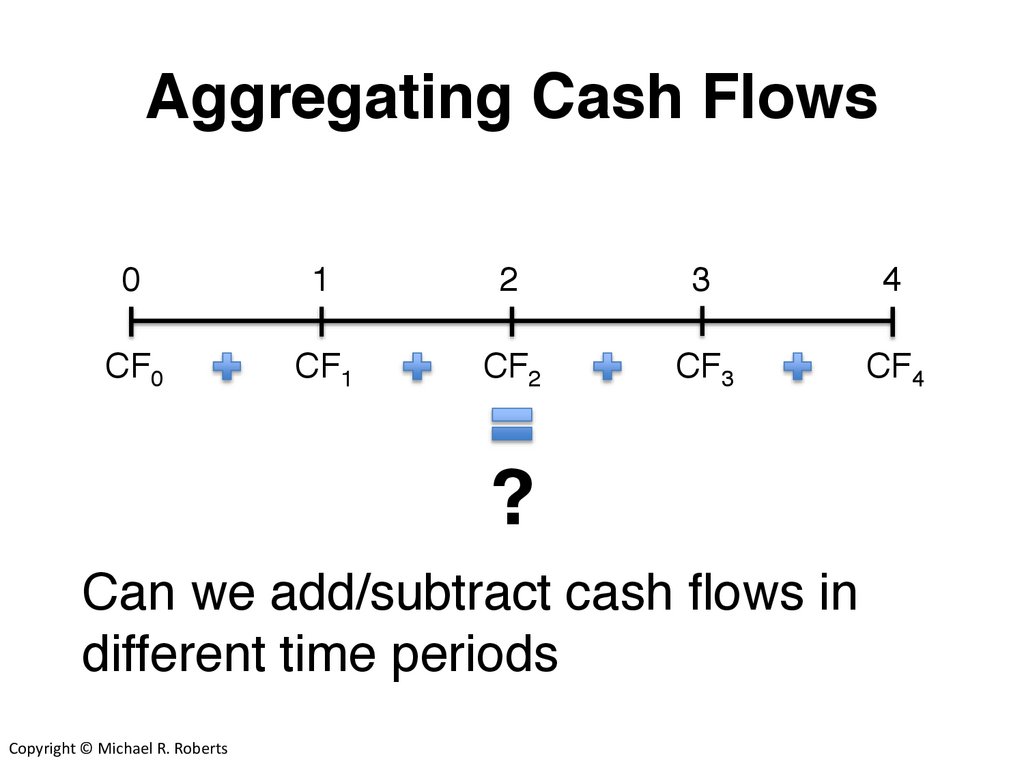
Can we add/subtract cash flows in
different time periods
Copyright © Michael R. Roberts
20.
Aggregating Cash Flows0
1
2
3
4
CF0
CF1
CF2
CF3
CF4
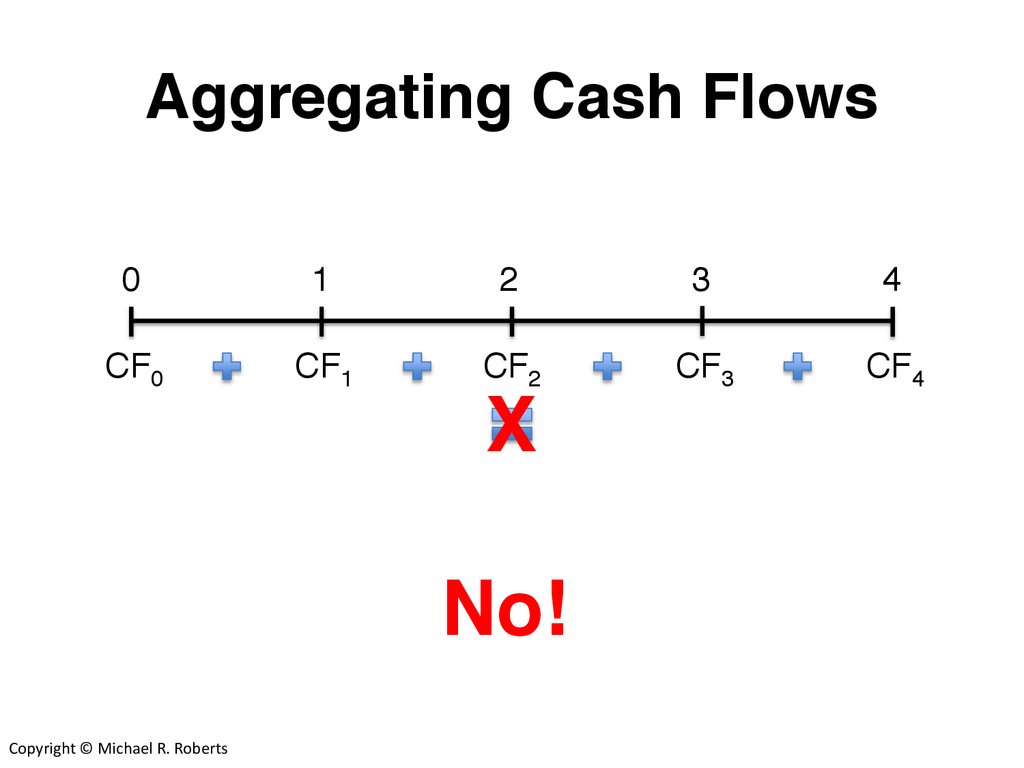
X
No!
Copyright © Michael R. Roberts
21.
Aggregating Cash Flows0
1
2
3
4
CF0
CF1
CF2
CF3
CF4
X
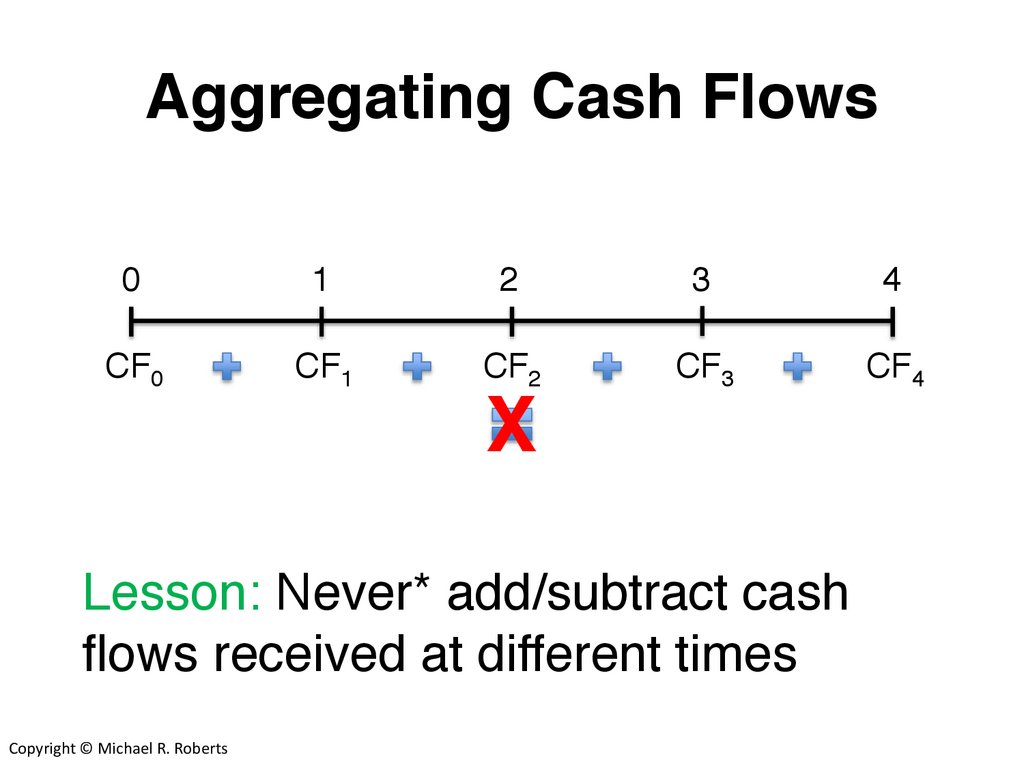
Lesson: Never* add/subtract cash
flows received at different times
Copyright © Michael R. Roberts
22.
Aggregating Cash Flows0
1
2
3
4
CF0
CF1
CF2
CF3
CF4
X
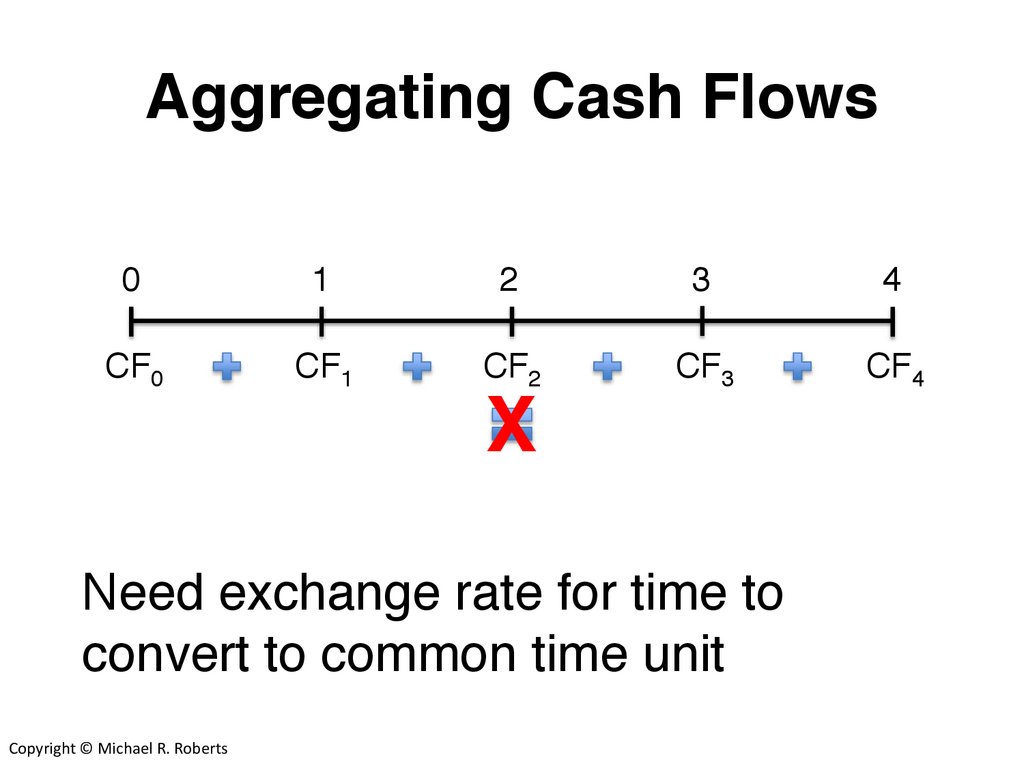
Need exchange rate for time to
convert to common time unit
Copyright © Michael R. Roberts
23.
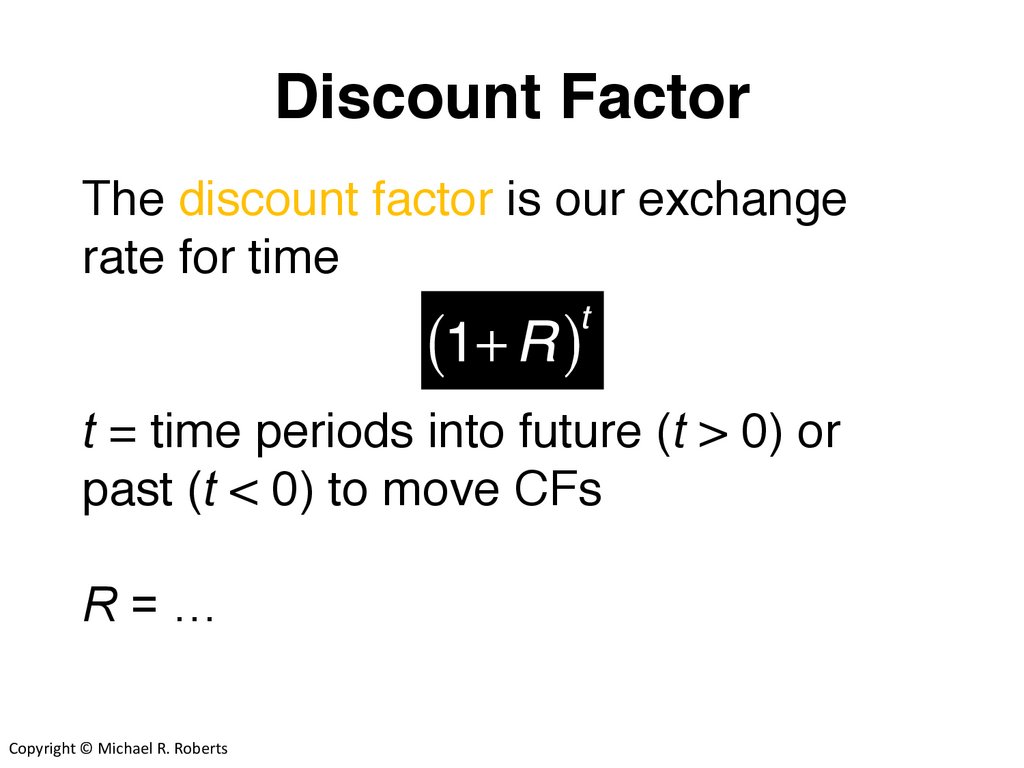
Discount FactorThe discount factor is our exchange
rate for time
t = time periods into future (t > 0) or
past (t < 0) to move CFs
R=…
Copyright © Michael R. Roberts
24.
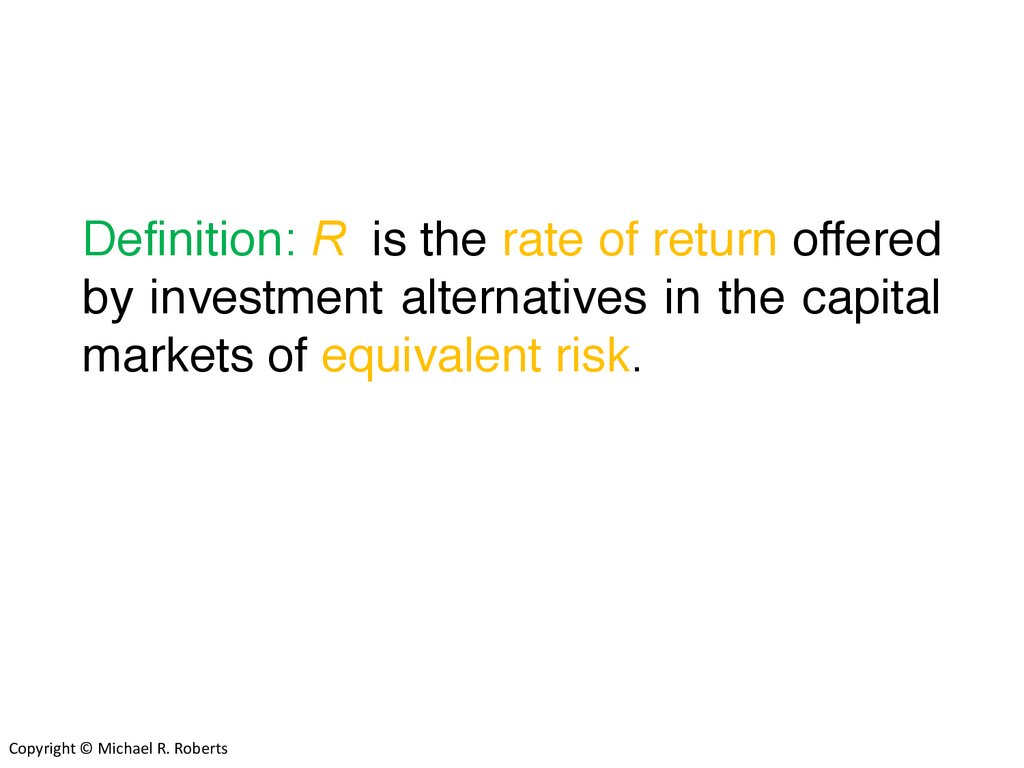
Definition: R is the rate of return offeredby investment alternatives in the capital
markets of equivalent risk.
Copyright © Michael R. Roberts
25.
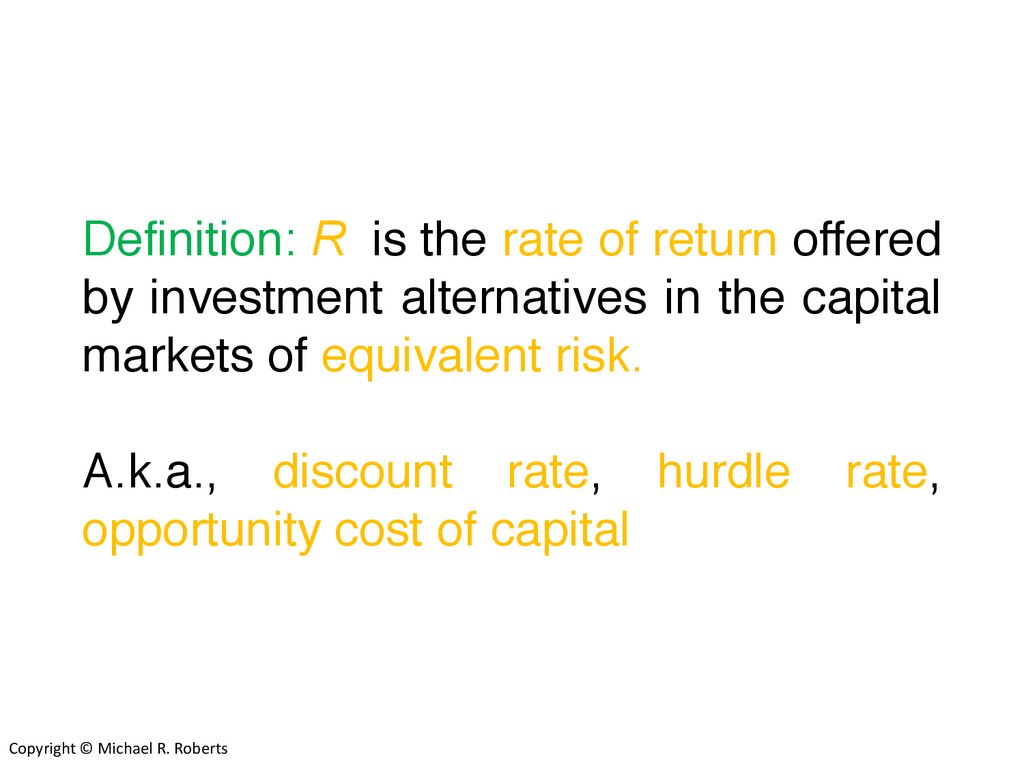
Definition: R is the rate of return offeredby investment alternatives in the capital
markets of equivalent risk.
A.k.a., discount rate, hurdle
opportunity cost of capital
Copyright © Michael R. Roberts
rate,
26.
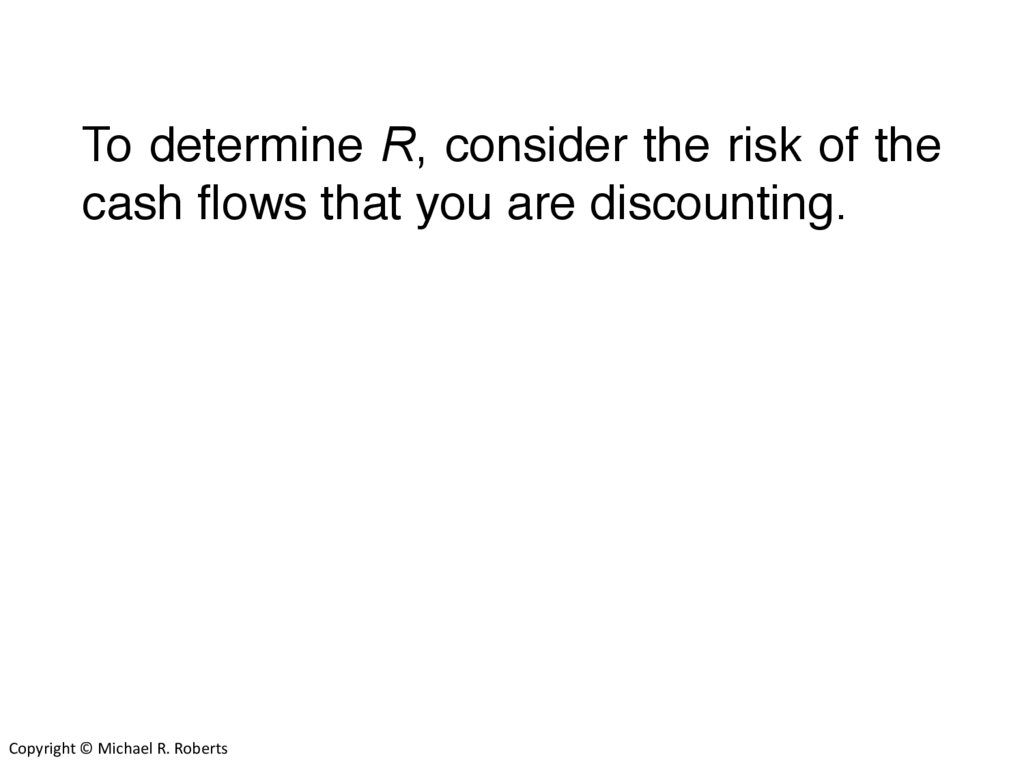
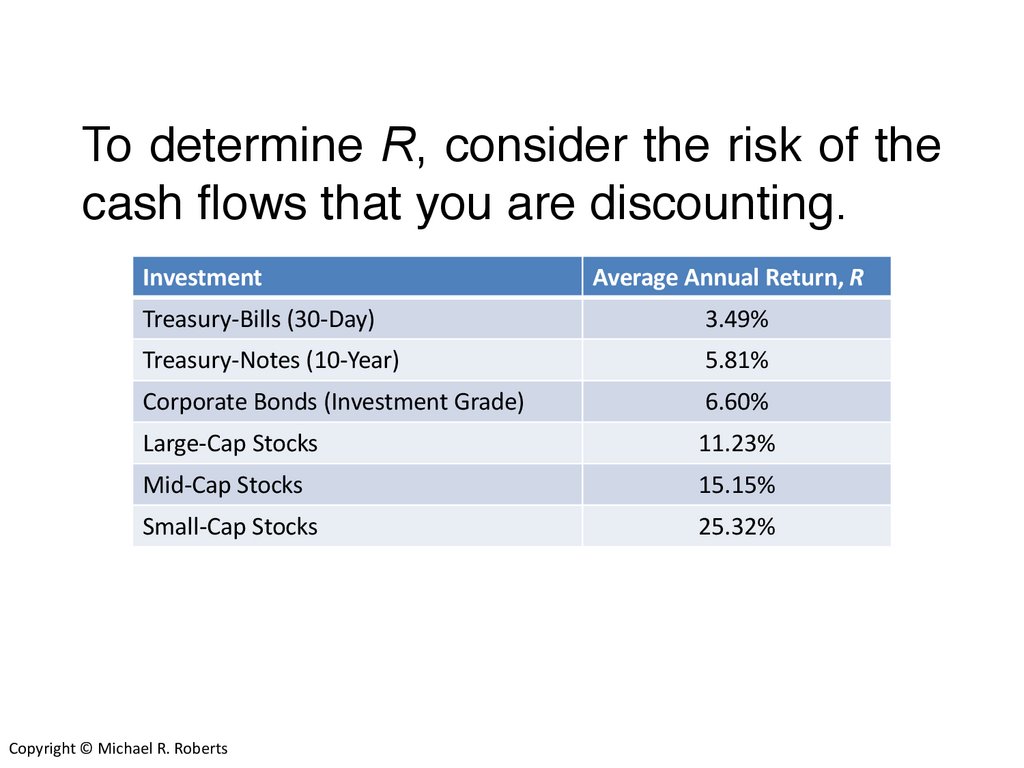
To determine R, consider the risk of thecash flows that you are discounting.
Copyright © Michael R. Roberts
27.
To determine R, consider the risk of thecash flows that you are discounting.
Investment
Average Annual Return, R
Treasury-Bills (30-Day)
3.49%
Treasury-Notes (10-Year)
5.81%
Corporate Bonds (Investment Grade)
6.60%
Large-Cap Stocks
11.23%
Mid-Cap Stocks
15.15%
Small-Cap Stocks
25.32%
Copyright © Michael R. Roberts
28.
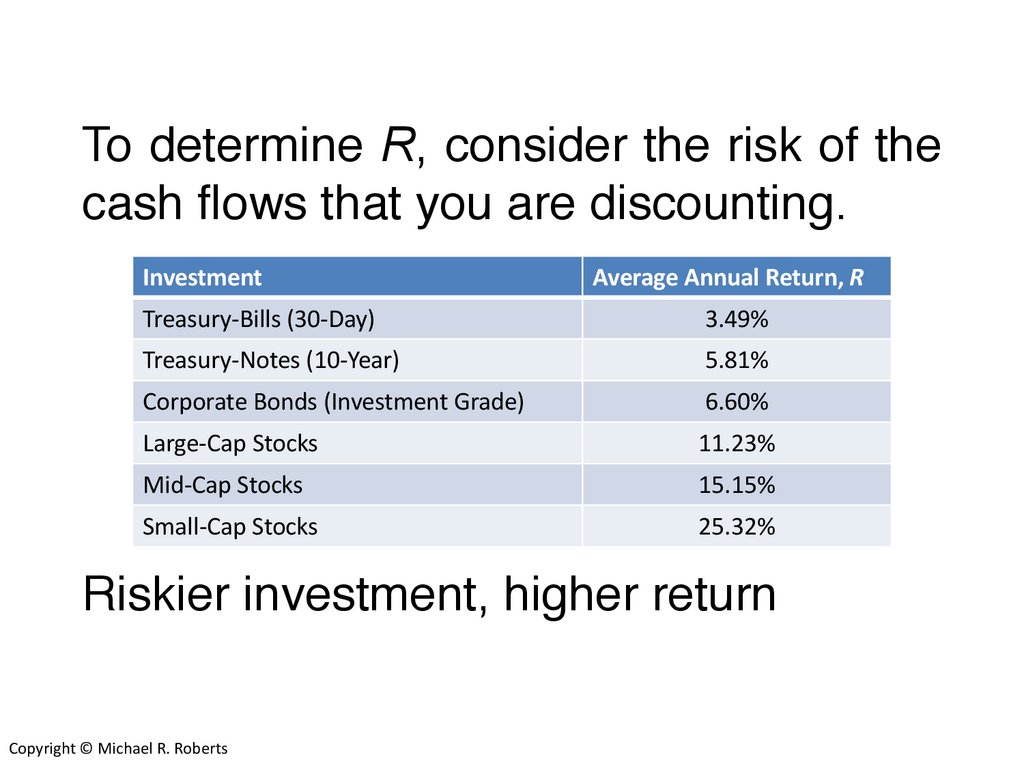
To determine R, consider the risk of thecash flows that you are discounting.
Investment
Average Annual Return, R
Treasury-Bills (30-Day)
3.49%
Treasury-Notes (10-Year)
5.81%
Corporate Bonds (Investment Grade)
6.60%
Large-Cap Stocks
11.23%
Mid-Cap Stocks
15.15%
Small-Cap Stocks
25.32%
Riskier investment, higher return
Copyright © Michael R. Roberts
29.
USING THE TOOLS:DISCOUNTING
Copyright © Michael R. Roberts
30.
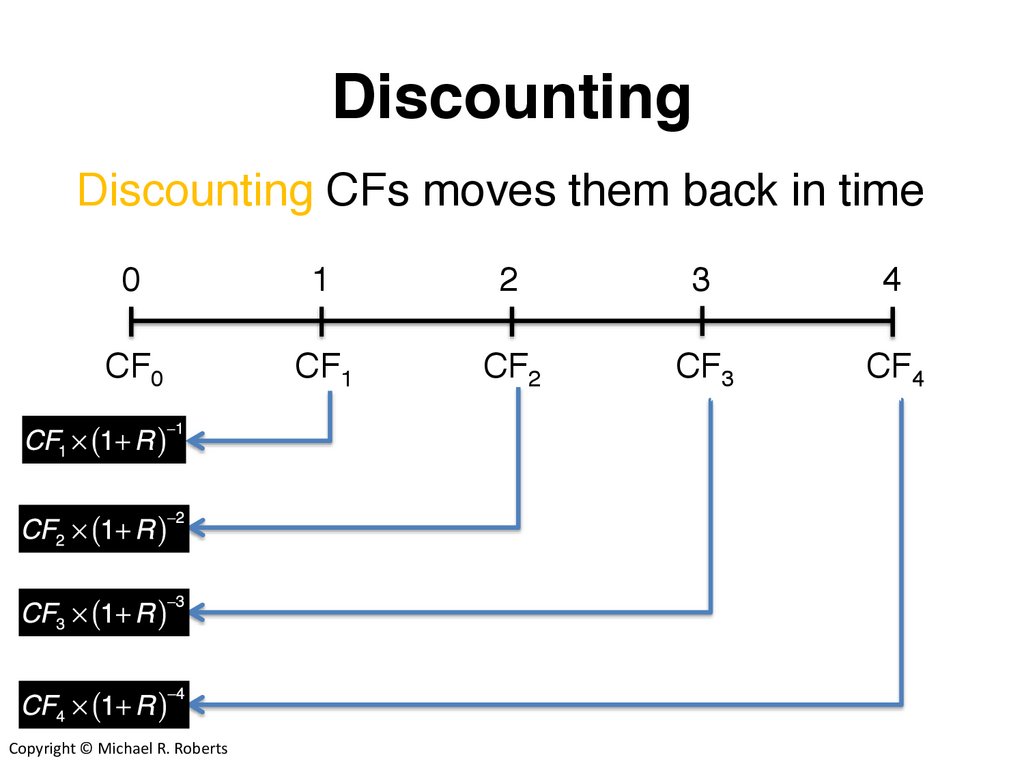
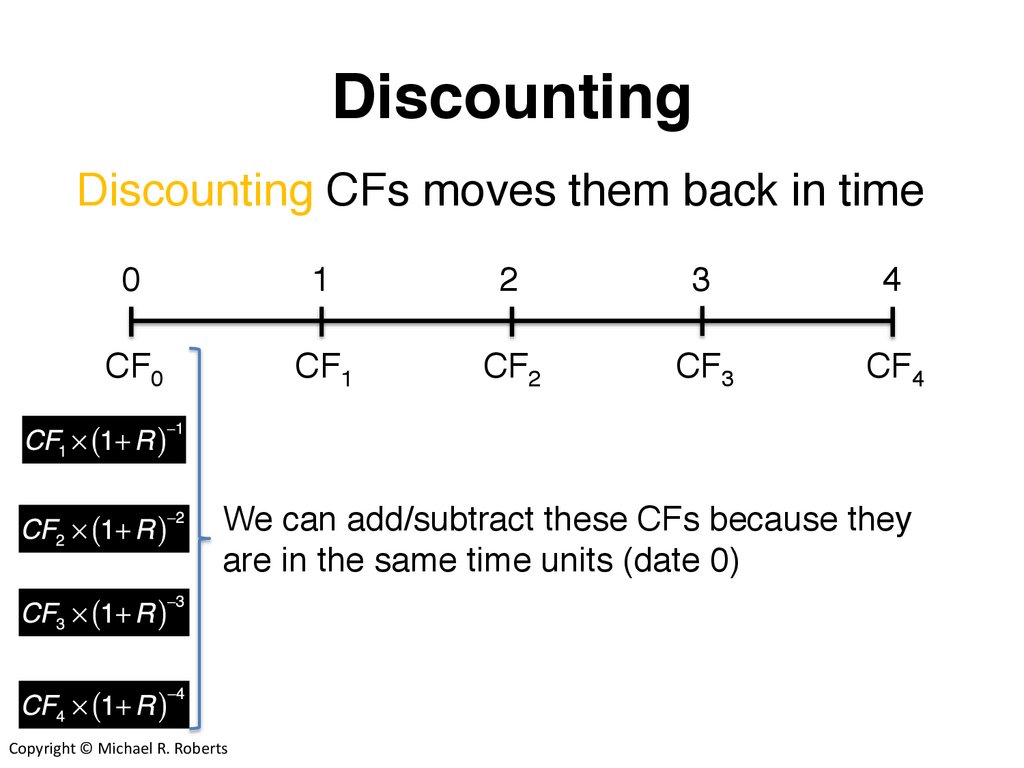
DiscountingDiscounting CFs moves them back in time
0
1
2
3
4
CF0
CF1
CF2
CF3
CF4
Copyright © Michael R. Roberts
31.
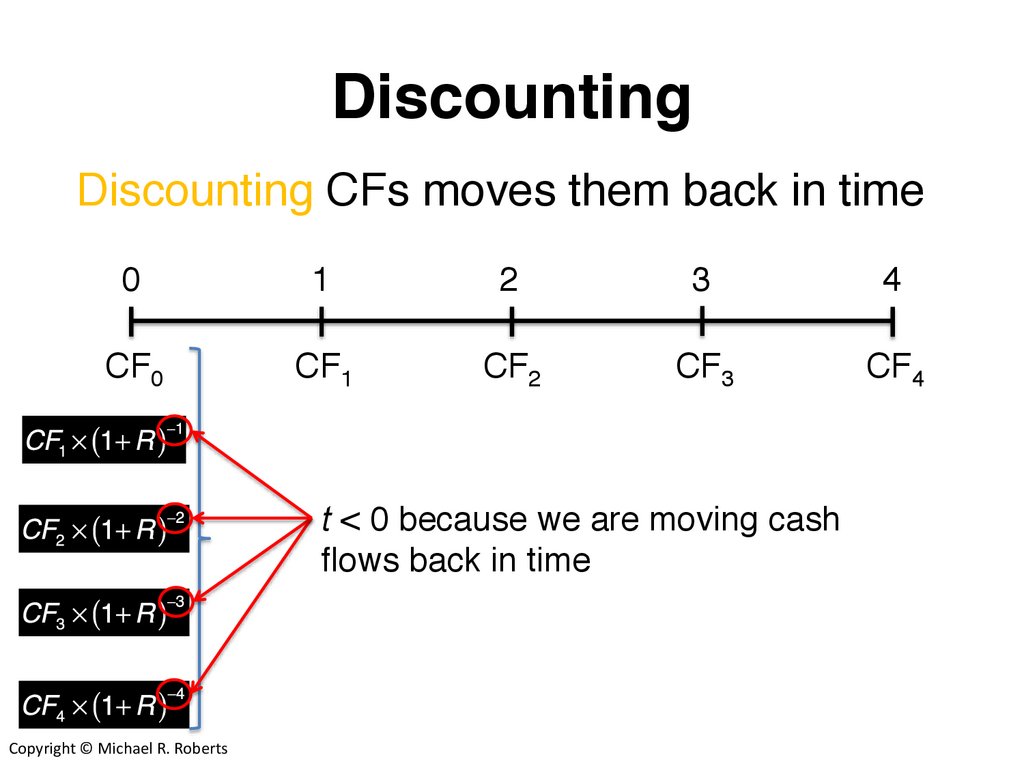
DiscountingDiscounting CFs moves them back in time
0
1
2
3
4
CF0
CF1
CF2
CF3
CF4
t < 0 because we are moving cash
flows back in time
Copyright © Michael R. Roberts
32.
DiscountingDiscounting CFs moves them back in time
0
1
2
3
4
CF0
CF1
CF2
CF3
CF4
We can add/subtract these CFs because they
are in the same time units (date 0)
Copyright © Michael R. Roberts
33.
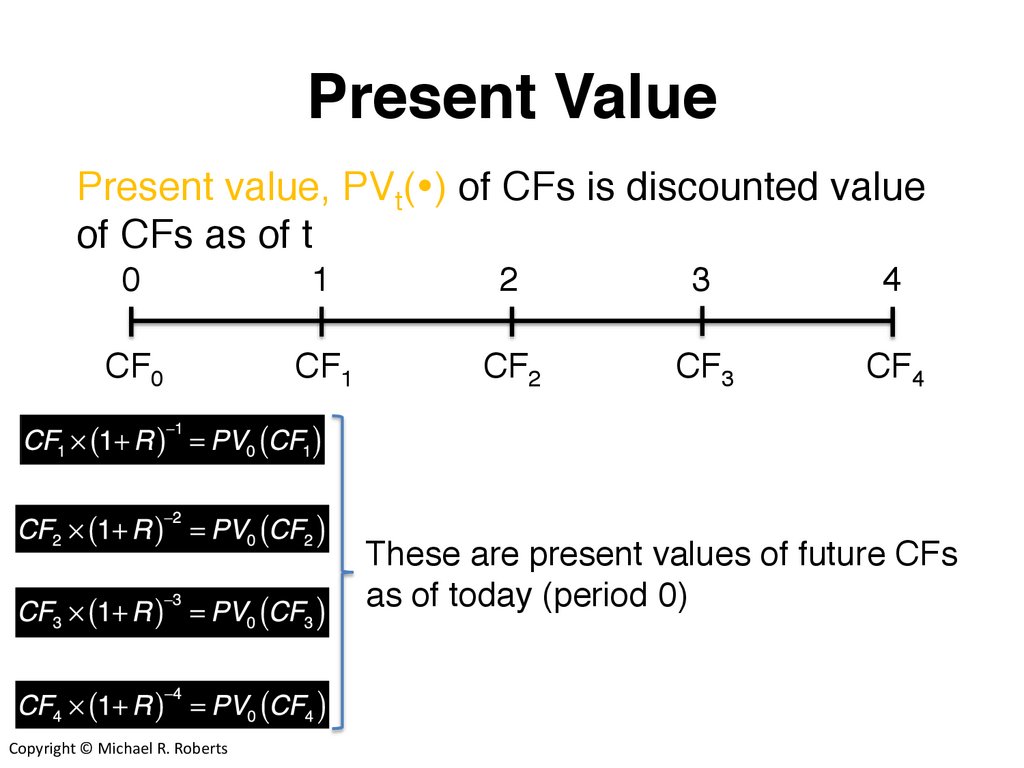
Present ValuePresent value, PVt( ) of CFs is discounted value
of CFs as of t
0
1
2
3
4
CF0
CF1
CF2
CF3
CF4
These are present values of future CFs
as of today (period 0)
Copyright © Michael R. Roberts
34.
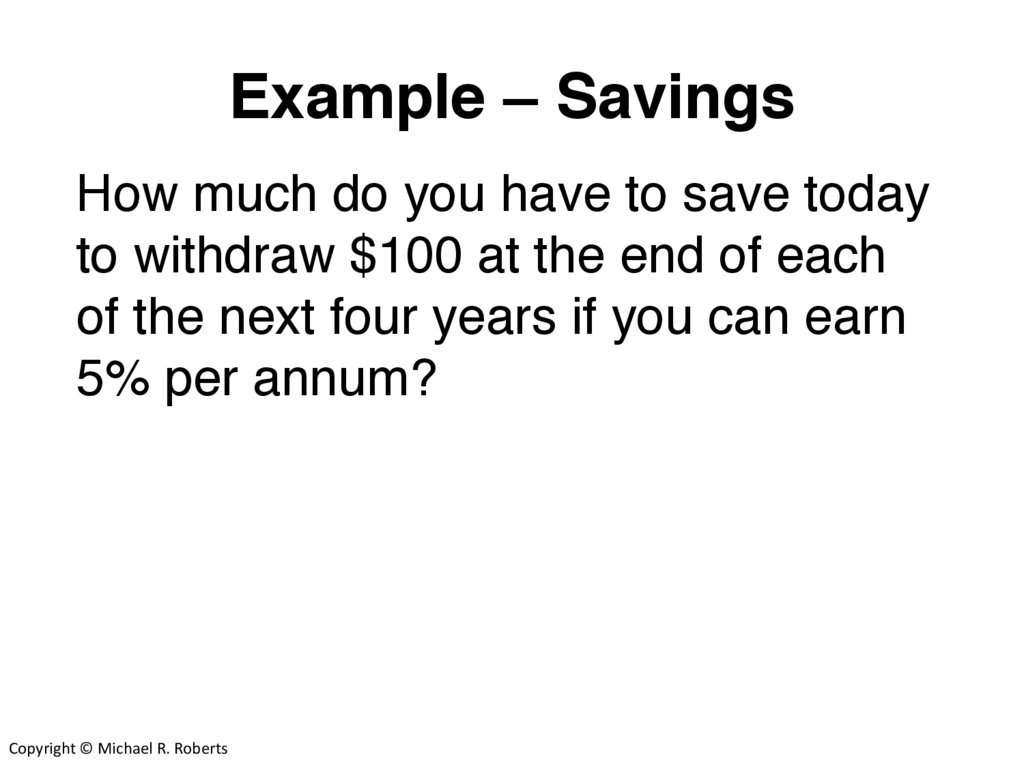
Example – SavingsHow much do you have to save today
to withdraw $100 at the end of each
of the next four years if you can earn
5% per annum?
Copyright © Michael R. Roberts
35.
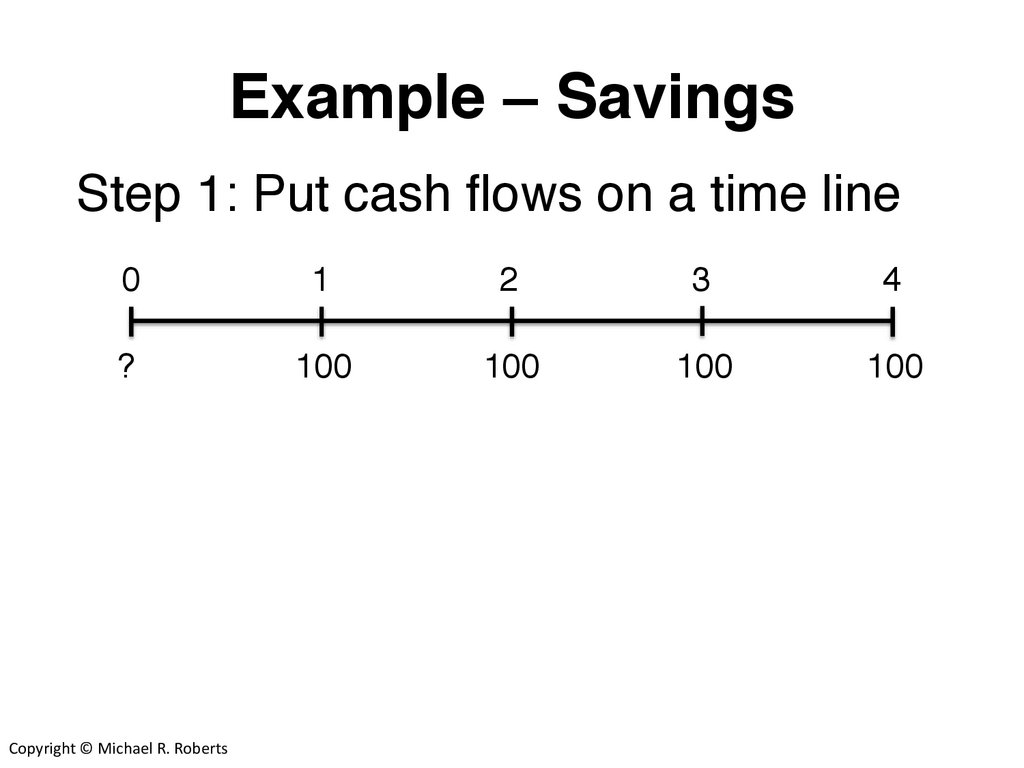
Example – SavingsStep 1: Put cash flows on a time line
0
1
2
3
4
?
100
100
100
100
Copyright © Michael R. Roberts
36.
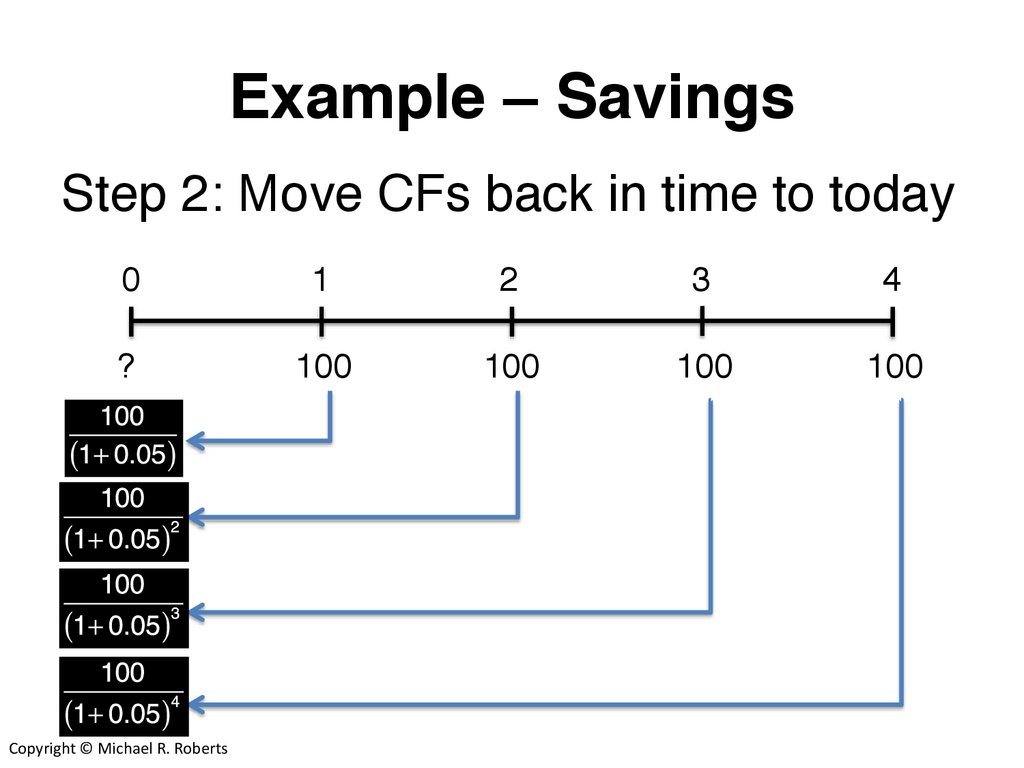
Example – SavingsStep 2: Move CFs back in time to today
0
1
2
3
4
?
100
100
100
100
Copyright © Michael R. Roberts
37.
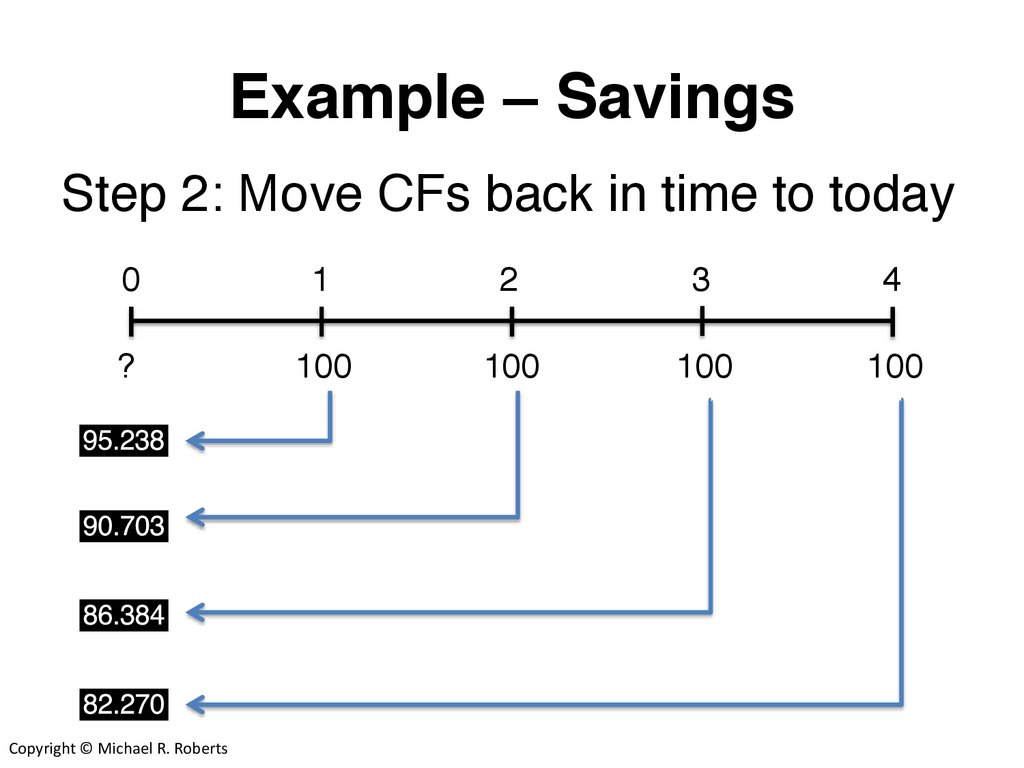
Example – SavingsStep 2: Move CFs back in time to today
0
1
2
3
4
?
100
100
100
100
Copyright © Michael R. Roberts
38.
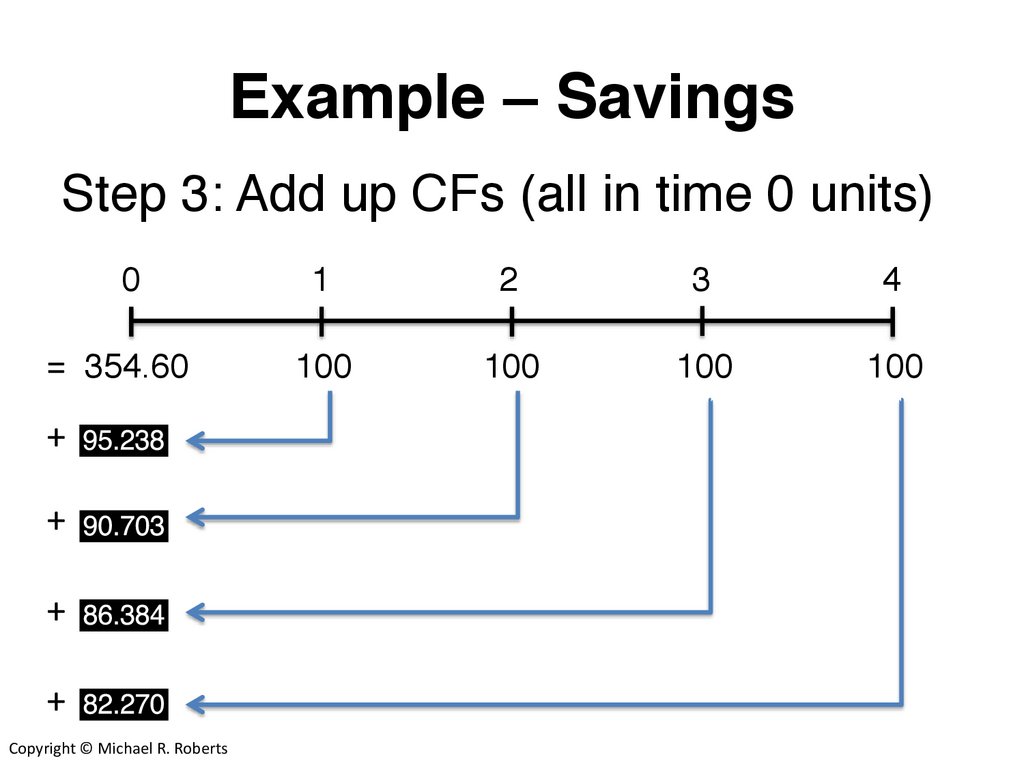
Example – SavingsStep 3: Add up CFs (all in time 0 units)
0
1
2
3
4
= 354.60
100
100
100
100
+
+
+
+
Copyright © Michael R. Roberts
39.
Example – Savings0
1
2
3
4
354.60
100
100
100
100
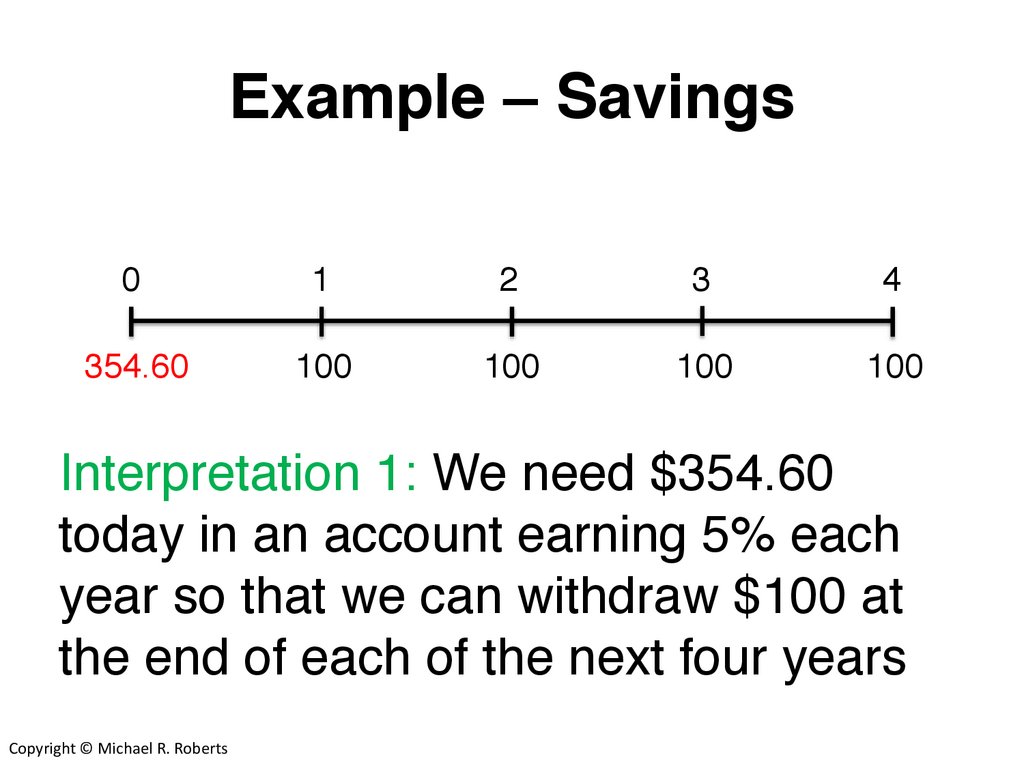
Interpretation 1: We need $354.60
today in an account earning 5% each
year so that we can withdraw $100 at
the end of each of the next four years
Copyright © Michael R. Roberts
40.
Example – Savings0
1
2
3
4
354.60
100
100
100
100
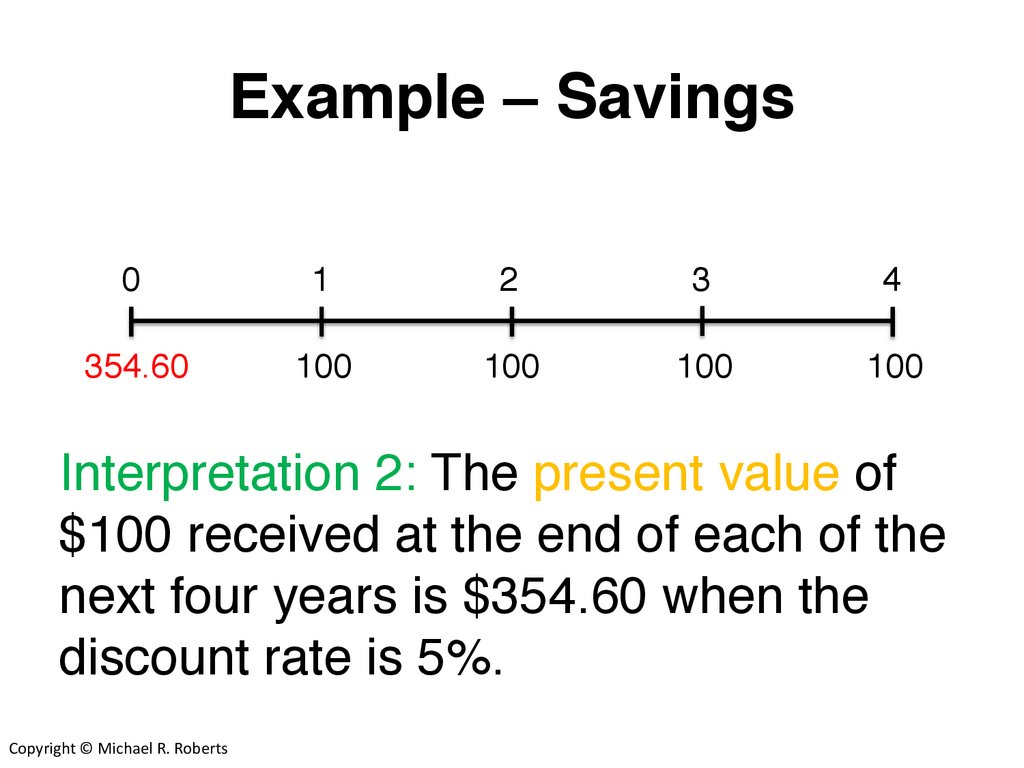
Interpretation 2: The present value of
$100 received at the end of each of the
next four years is $354.60 when the
discount rate is 5%.
Copyright © Michael R. Roberts
41.
Example – Savings0
1
2
3
4
354.60
100
100
100
100
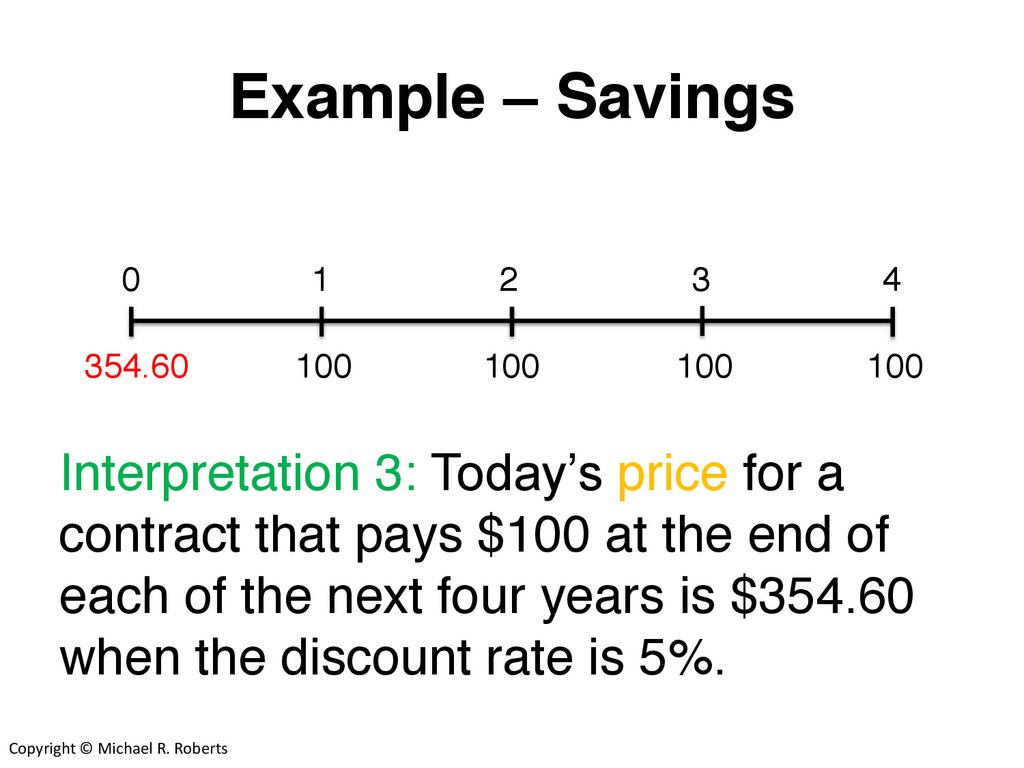
Interpretation 3: Today’s price for a
contract that pays $100 at the end of
each of the next four years is $354.60
when the discount rate is 5%.
Copyright © Michael R. Roberts
42.
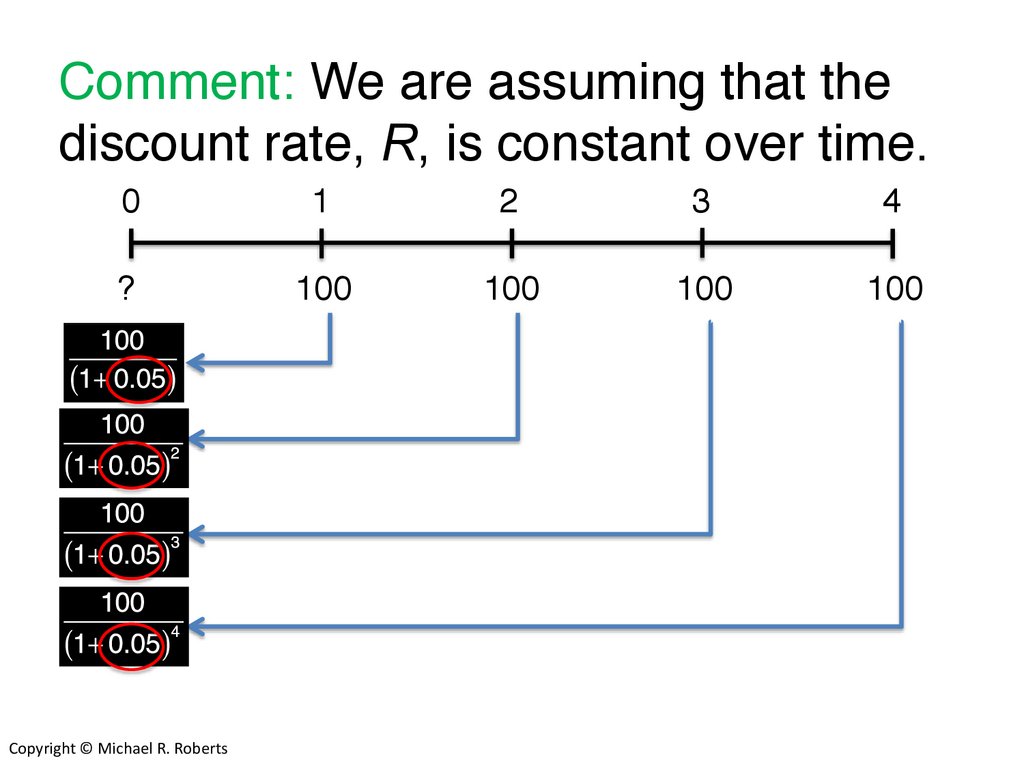
Comment: We are assuming that thediscount rate, R, is constant over time.
Copyright © Michael R. Roberts
43.
Comment: We are assuming that thediscount rate, R, is constant over time.
0
1
2
3
4
?
100
100
100
100
Copyright © Michael R. Roberts
44.
Comment: We are assuming that thediscount rate, R, is constant over time.
0
1
2
3
4
?
100
100
100
100
Common assumption but still an assumption
Copyright © Michael R. Roberts
45.
Example 2 – Savings (Account)Pre-Withdrawl
Post-Withdrawl
Year Interest
Withdrawal
Balance
Balance
0
$354.60
Copyright © Michael R. Roberts
46.
Example 2 – Savings (Account)Year Interest
0
1 $17.73
PreWithdrawal
Balance
Withdrawal
PostWithdrawal
Balance
$354.60
*Activity happens at end of the period
Copyright © Michael R. Roberts
47.
Example 2 – Savings (Account)Year Interest
0
1 $17.73
Copyright © Michael R. Roberts
PreWithdrawal
Balance
$372.32
=
Withdrawal
PostWithdrawal
Balance
$354.60
48.
Example 2 – Savings (Account)Year Interest
0
1 $17.73
Copyright © Michael R. Roberts
PreWithdrawal
Balance
$372.32
=
Withdrawal
PostWithdrawal
Balance
$354.60
49.
Example 2 – Savings (Account)Pre-Withdrawl
Year Interest
Balance
Withdrawal
0
1 $17.73
$372.32
$100.00
Copyright © Michael R. Roberts
PostWithdrawal
Balance
$354.60
50.
Example 2 – Savings (Account)Pre-Withdrawl
Post-Withdrawl
Year Interest
Balance
Withdrawal
Balance
0
$354.60
1 $17.73
$372.32
$100.00
$272.32
=
Copyright © Michael R. Roberts
51.
Example 2 – Savings (Account)Year Interest
0
1 $17.73
2 $13.62
3
$9.30
4
$4.76
Copyright © Michael R. Roberts
PreWithdrawal
Balance
Withdrawal
$372.32
$285.94
$195.24
$100.00
$100.00
$100.00
$100.00
$100.00
PostWithdrawal
Balance
$354.60
$272.32
$185.94
$95.24
$0.00
52.
SummaryCopyright © Michael R. Roberts
53.
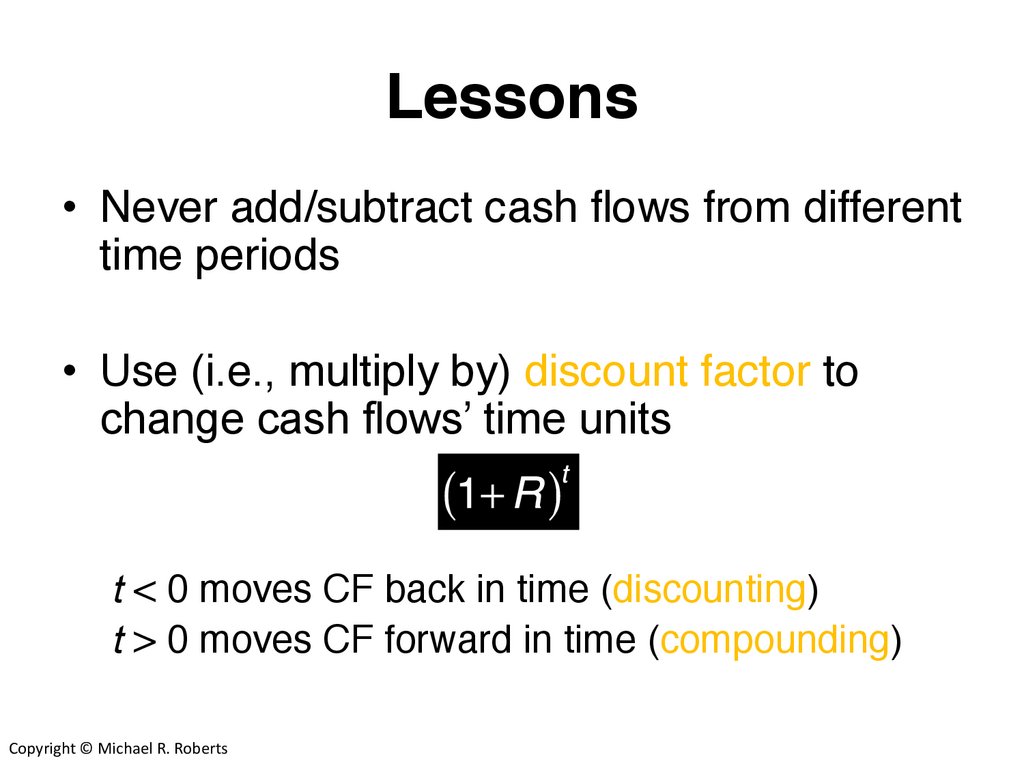
Lessons• Never add/subtract cash flows from different
time periods
• Use (i.e., multiply by) discount factor to
change cash flows’ time units
t < 0 moves CF back in time (discounting)
t > 0 moves CF forward in time (compounding)
Copyright © Michael R. Roberts
54.
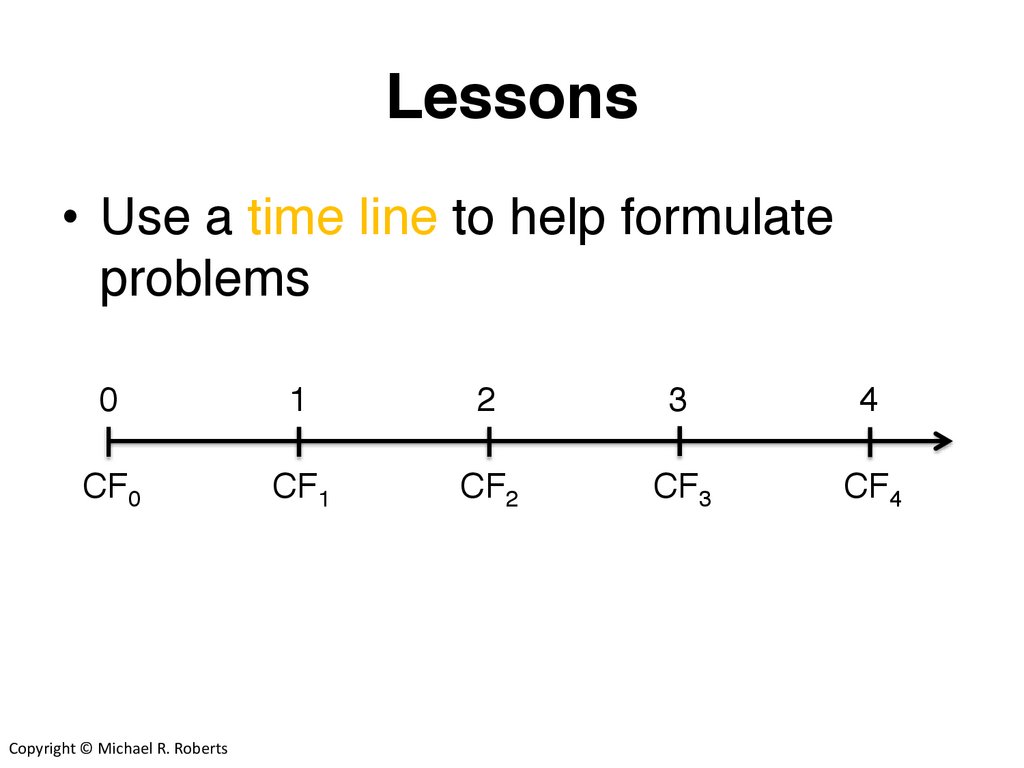
Lessons• Use a time line to help formulate
problems
0
1
2
3
4
CF0
CF1
CF2
CF3
CF4
Copyright © Michael R. Roberts
55.
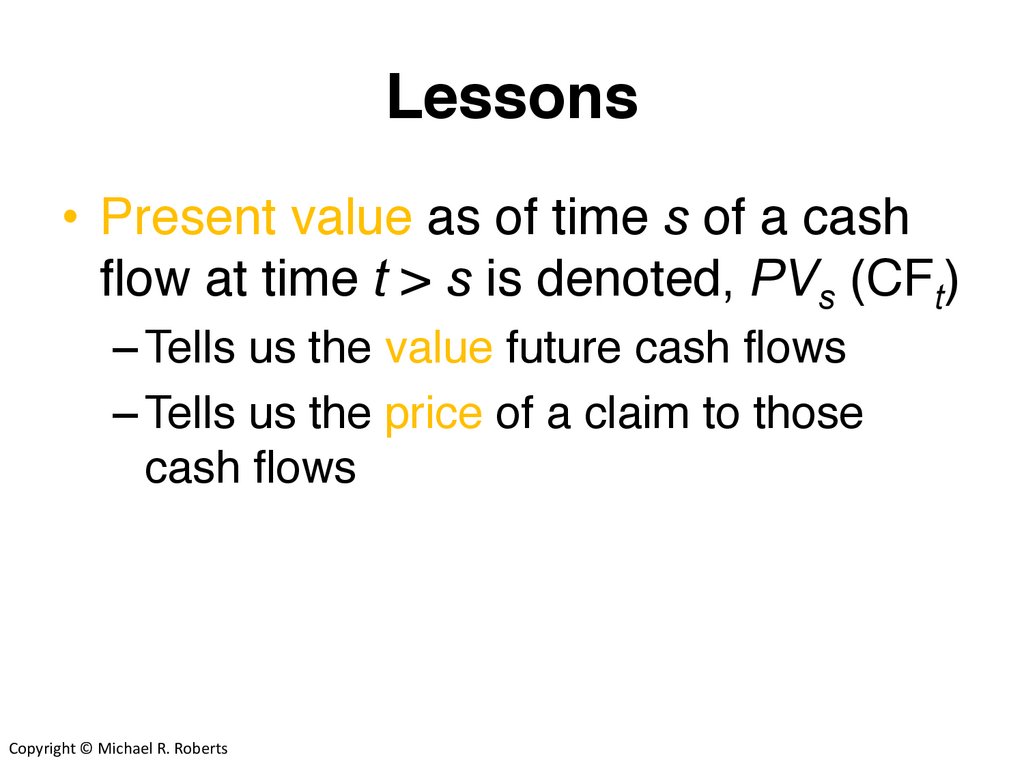
Lessons• Present value as of time s of a cash
flow at time t > s is denoted, PVs (CFt)
– Tells us the value future cash flows
– Tells us the price of a claim to those
cash flows
Copyright © Michael R. Roberts
56.
Coming up next• Compounding
Copyright © Michael R. Roberts